Yorkie Potty Training Regression
Few things are as frustrating for a dedicated Yorkie parent as thinking you’ve finally mastered potty training, only for your tiny companion to suddenly start having accidents inside again. You feel like you've gone backwards, questioning everything you did before. This guide dives deep into why your Yorkshire Terrier might be experiencing potty training regression, helping you understand the common triggers and offering practical, empathetic solutions to get back on track.
Understanding Yorkie Potty Training Regression
It’s easy to feel utterly defeated when your perfectly house-trained Yorkshire Terrier suddenly starts having accidents indoors. One day they're reliably going outside, and the next, you're stepping in a puddle in the living room. This isn't just a minor inconvenience; it's a bewildering and often upsetting experience for any pet owner, especially when you've invested so much time and effort into their initial training.
What is Potty Training Regression?
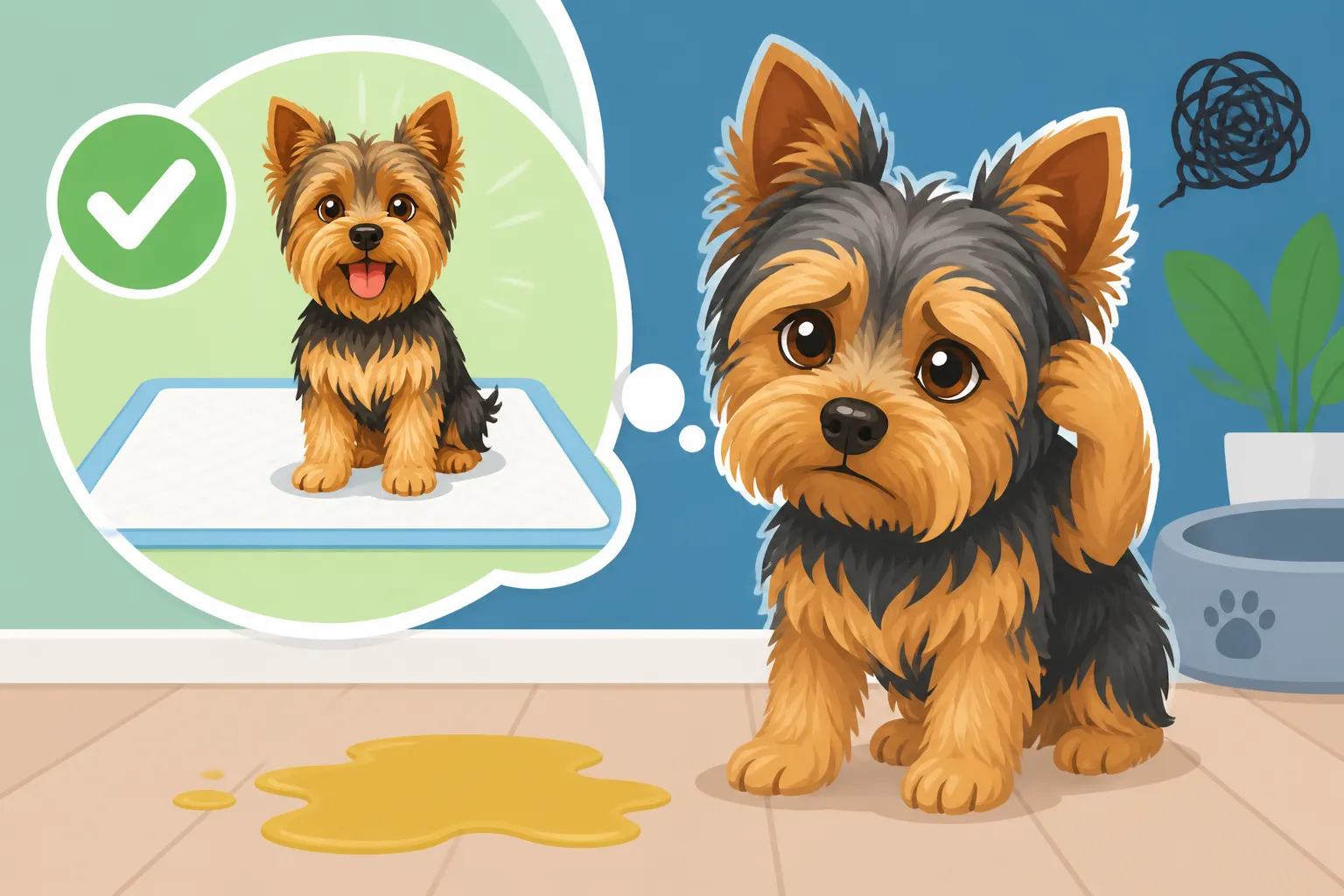
Potty training regression, at its core, refers to a dog reverting to old habits or developing new ones of eliminating inside the home, despite having previously been reliably house-trained. This isn't the same as a puppy who is still in the process of learning the ropes and simply hasn't fully grasped the concept of going potty outside yet. True regression implies a dog knew what was expected of them, demonstrated that knowledge consistently, and has now, for various reasons, stopped adhering to those learned behaviors. It's not about them "forgetting"; it's about a change in their circumstances, health, or emotional state that impacts their ability or willingness to perform the trained behavior.
For instance, you might have a 3-year-old Yorkie, Fifi, who has gone months, even years, without a single accident. She always uses the doggy door or signals when she needs to go out. Then, seemingly overnight, she starts leaving puddles on your kitchen floor. This scenario perfectly exemplifies regression – a departure from established, successful behavior. Understanding this distinction is the first crucial step in addressing the problem.
Why Regression Feels So Deflating
The emotional toll of potty training regression on pet parents can be surprisingly heavy. You pour so much love, patience, and effort into raising and training your Yorkie, often celebrating those small victories along the way. When regression hits, it can feel like a personal failure, as if you've done something wrong or your training efforts were in vain. Many owners express feelings of frustration, confusion, disappointment, and even anger, which are all completely normal reactions to such a setback. You might wonder if your Yorkie is acting out of spite, but it's vital to remember that dogs don't think like that. Their behaviors, even frustrating ones, almost always stem from an underlying need or issue, not malice.
It's also particularly frustrating with a small breed like a Yorkshire Terrier because their accidents, while small, can accumulate quickly and create significant odors if not caught immediately. Their tiny bladders are often a contributing factor to the sheer frequency of accidents when something goes awry. The constant vigilance, the need for enzymatic cleaners, and the fear of guests discovering an unpleasant smell can make your home feel less like a sanctuary and more like a constant clean-up zone. Validating these feelings is important; you're not alone in experiencing this, and there are concrete steps you can take to regain control and help your furry friend.
Common Causes Behind Sudden Accidents
When your Yorkie starts having accidents after being perfectly house-trained, the first thing to remember is that it's rarely just "being naughty." There's almost always an underlying reason, and these reasons generally fall into three categories: medical, behavioral/emotional, and environmental/routine changes. Pinpointing the exact cause is crucial for effective intervention.
Medical Conditions Leading to Regression
Before you assume a behavioral problem, a trip to the vet should always be your absolute first step. Many medical conditions can manifest as a sudden inability to hold urine or feces, or an increased urge to eliminate. Ignoring this possibility can lead to prolonged suffering for your Yorkie and frustration for you.
Common culprits include:
- Urinary Tract Infections (UTIs): These are incredibly common in dogs, including Yorkies. A UTI causes discomfort, a frequent urge to urinate, and sometimes difficulty holding it. Your Yorkie might strain, urinate in small, frequent amounts, or even have blood in their urine. You can learn more about Signs Your Yorkshire Terrier Is Sick and specific conditions like Yorkshire Terrier Bladder Stones: Signs and Care, which often present similarly.
- Bladder Stones: These painful mineral formations can irritate the bladder lining, causing increased urgency, frequent urination, and sometimes blockages.
- Kidney Disease: Impaired kidney function can lead to increased thirst and, consequently, increased urination. A dog with kidney disease may need to go more frequently and might not be able to hold it as long.
- Diabetes: Similar to kidney disease, diabetes often causes excessive thirst and urination (polydipsia and polyuria), making accidents more likely.
- Cushing's Disease: This hormonal disorder leads to excessive cortisol production, which can also cause increased thirst and urination, along with other symptoms like hair loss and a pot-bellied appearance.
- Cognitive Dysfunction Syndrome (CDS): Often referred to as "doggy Alzheimer's," CDS affects older Yorkies. They may become disoriented, forget their training, or simply lose awareness of when and where they are eliminating. If your Yorkie is getting on in years, this is a distinct possibility. Our guide on Yorkshire Terrier Senior Care Guide offers further insights into age-related changes.
Consider Sarah’s 5-year-old Yorkie, Pip, who had been perfectly house-trained since she was a puppy. One week, Pip suddenly started having accidents inside multiple times a day, often without any warning. Sarah, initially frustrated, quickly realized Pip was also drinking much more water than usual. A prompt vet visit revealed a severe urinary tract infection. Once Pip was on antibiotics, the accidents stopped, and she returned to her perfectly house-trained self. This anecdote underscores the absolute necessity of ruling out medical issues first.
Behavioral and Emotional Triggers
Once medical causes are ruled out, behavioral and emotional factors are often the next most likely culprits for potty training regression. Yorkies, despite their small size, are sensitive and intelligent dogs who can be deeply affected by their emotional environment.
- Separation Anxiety: Yorkies are prone to developing separation anxiety due to their strong bond with their owners. If your Yorkie has accidents only when left alone, accompanied by other signs like destructive chewing, excessive barking, or frantic greeting when you return, it's a strong indicator of anxiety. Accidents in these cases are often not about needing to go, but a physiological response to stress. For more on this, check out our article on Yorkie Separation Anxiety: Signs and Fixes.
- Fear and Anxiety: Loud noises (fireworks, thunderstorms), new people or pets entering the home, or even a sudden change in routine can trigger anxiety, leading to accidents. A fearful dog might urinate submissively or out of sheer stress.
- Submissive or Excitement Urination: Some Yorkies, particularly puppies or highly sensitive adults, may urinate a small amount when overly excited (e.g., during greetings) or when feeling submissive (e.g., when scolded or approached assertively). This isn't true regression in the sense of 'needing to go,' but rather an involuntary physical response.
- Marking Behavior: Unneutered male Yorkies, and sometimes even spayed females, might begin marking territory inside the home, especially if a new pet has been introduced or they detect the scent of another animal nearby. This usually involves small amounts of urine sprayed on vertical surfaces.
- Attention-Seeking: While not malicious, some dogs learn that having an accident gets a strong reaction from their owner, even if it's negative attention. If your Yorkie gets minimal attention and then has an accident, they might be trying to elicit a response.
- Incomplete Prior Training: Sometimes, what appears to be regression is actually the surfacing of gaps in earlier training. Perhaps your Yorkie was never fully proofed to consistently go outside in all conditions or always signal effectively.
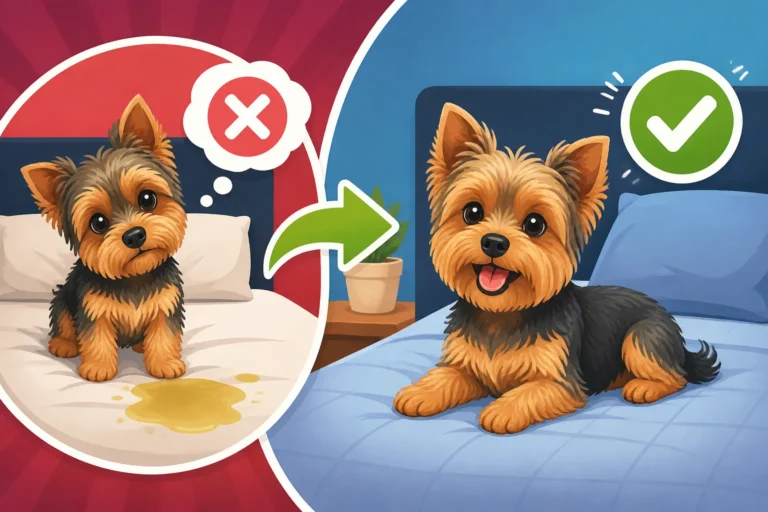
Mark's Yorkie, Bella, was always a clingy companion. After he transitioned from working from home to a new office job, Bella, who had been perfectly house-trained for years, started peeing on his bed almost every day he was gone. When Mark installed a pet camera, he saw Bella pacing and whining for hours before having an accident. It became clear it wasn't a bladder issue, but a profound distress from being left alone – a classic sign of separation anxiety.
Environmental and Routine Changes
Dogs are creatures of habit, and Yorkies are no exception. Any significant disruption to their environment or daily routine can be enough to throw off their house-training.
- Changes in Residence: Moving to a new home is a huge stressor for dogs. New sights, sounds, smells, and a completely different layout can confuse and overwhelm them, leading to accidents as they try to navigate and re-establish their territory.
- Changes in Schedule: Your schedule dictates your Yorkie's schedule. If your work hours change, leading to longer periods between potty breaks, or if your morning routine shifts, your Yorkie might not be able to hold it. Similarly, a new family member (human or pet) can disrupt established routines.
- Inconsistent Potty Breaks: Even slight inconsistencies in your part—missing a regular potty break, letting them out too late, or not giving them enough time outside—can quickly lead to accidents. If your Yorkie is accustomed to a specific frequency, a deviation can cause issues.
- Weather Conditions: Many Yorkies dislike going out in the rain, snow, or extreme cold. If the weather changes significantly, they might refuse to go outside or rush their business, only to finish inside later.
- New Furniture or Smells: Dogs are highly scent-driven. New furniture might smell inviting, or old accident spots that weren't cleaned with an enzymatic cleaner can still attract them back, even months later.
The Johnson family, along with their Yorkie, Gus, moved from a suburban house with a large yard to a small apartment in downtown San Diego. Gus, who had always had free access to a doggy door, suddenly started having accidents inside the apartment. The change in environment, the lack of an easy outdoor space, and the bustling city noises that made him hesitant to go outside all contributed to his regression. It wasn't that Gus forgot; it was that his entire world, and the rules within it, had been completely upended.
Differentiating Regression from Other Potty Problems
Understanding why your Yorkie is having accidents is key, and a big part of that is figuring out if it's truly regression or if something else is at play. Sometimes, what seems like a setback is actually a sign that your initial training wasn't as solid as you thought, or it could be a completely new, emerging issue.
True Regression vs. Incomplete Training
This distinction is fundamental to choosing the right approach.
-
True Regression: This is when a dog with a well-established history of perfect house-training suddenly starts having accidents again. They knew the rules, demonstrated consistent compliance over a significant period, and then, for reasons (often medical, emotional, or environmental), their behavior shifts. It's like a seasoned chess player suddenly forgetting how the knight moves – something serious has changed. The focus here is on identifying and addressing that change, rather than starting training from scratch.
Think of an adult Yorkie, like Charlie, who has lived with his family for five years, never once having an accident inside. His family moves to a new house, and suddenly Charlie is peeing on the carpet. This is true regression; the trigger is the environmental change, not a lack of understanding the basic concept of house-training.
-
Incomplete Training: This occurs when a dog, often a younger one, never fully solidified their house-training in the first place. Perhaps they had periods of success, but always with intermittent accidents, or they only understood the rules under specific circumstances (e.g., only on a pee pad, but not outside). In these cases, the problem isn't a reversion but rather a lack of complete mastery. The solution involves going back to basics, reinforcing foundational training, and ensuring consistency across all environments and situations.
Consider a Yorkie puppy, Luna, who is 8 months old. She's been "potty trained" on pee pads, but still frequently has accidents on the rug when she's excited or if her owner doesn't catch her signals immediately. While she knows to some extent where to go, her training isn't fully ingrained, and she hasn't generalized the concept to all appropriate spots or learned to hold it for extended periods. This would be incomplete training, not regression. Our Yorkshire Terrier Potty Training Guide and How to Potty Train a Yorkie Puppy cover foundational training extensively.
Recognizing Specific Signs and Patterns
Observing the details of your Yorkie's accidents can provide invaluable clues about the underlying cause. Don't just clean it up; analyze it!
- Frequency and Volume: Is your Yorkie having tiny, frequent accidents, or large puddles? Small, frequent urination, especially with straining, often points to a UTI or bladder irritation. Large volume accidents, particularly if your dog is also drinking more, could suggest diabetes or kidney issues.
- Location of Accidents: Does your Yorkie consistently go in one specific spot? This might indicate a lingering scent attracting them back, or it could be a preferred "safe" spot if they are anxious. Are they marking vertical surfaces (legs of furniture, walls)? This points to marking behavior. Are accidents happening near the door or their crate when you're gone? This might suggest separation anxiety or simply being unable to hold it.
- Timing of Accidents: Do accidents only happen when you're away (separation anxiety)? Immediately after waking up or eating (need for a quick potty break)? When visitors arrive (excitement or submissive urination)? At night (older dog, medical issue)? After a particular event (e.g., a loud noise)?
- Accompanying Behaviors: Does your Yorkie show any other symptoms? Increased thirst, lethargy, loss of appetite, straining to urinate, whimpering, or blood in the urine are strong indicators of a medical problem. Behavior like pacing, whining, chewing, or destructive acts when alone further support separation anxiety. If you notice signs like limping or discomfort, you may want to review our guide on How to Tell If a Yorkie Is in Pain, as pain can also contribute to accidents.
Here’s a helpful table to quickly differentiate common scenarios:
| Sign/Behavior | Potential Cause | What to Look For |
|---|---|---|
| Sudden, frequent accidents | UTI, Bladder Stones, Diabetes, Kidney Issues | Increased thirst, straining, blood in urine, strong odor |
| Accidents only when left alone | Separation Anxiety, Stress | Destructive chewing, howling, pacing, clinging |
| Accidents in specific spots | Marking, Incomplete cleaning, Scent remnants | Urinating on vertical surfaces, small amounts |
| Urinating during greetings | Submissive Urination, Excitement Urination | Low posture, tail tucked, sometimes dribbling |
| Accidents with no warning | Medical issue, Cognitive decline (senior Yorkies) | No signaling, just going wherever they are |
| Straining or painful urination | UTI, Bladder Stones, Prostate issues (males) | Crying out, hunched posture, frequent attempts |
| Accidents after major life change | Environmental change, Stress | Moving, new pet, new routine, specific event |
The Importance of a Vet Check-Up
We cannot stress this enough: always start with a visit to your veterinarian. Even if you are convinced the issue is behavioral, a medical problem could be contributing or even be the sole cause. A vet check-up provides peace of mind and, more importantly, ensures your Yorkie isn't suffering from an easily treatable condition.
During the visit, your vet will likely perform a thorough physical examination, ask about your Yorkie's history and the specifics of the accidents, and may recommend diagnostic tests such as a urinalysis (to check for UTIs, crystals, or other abnormalities), blood tests (to check kidney function, glucose levels, etc.), or even imaging like X-rays or ultrasound (to look for bladder stones or other structural issues). This diagnostic process is critical. Without ruling out medical causes, any behavioral intervention you attempt might be ineffective and simply prolong your Yorkie's discomfort. Our guide on When to Take Your Yorkie to the Vet offers more details on preparing for such appointments.
Implementing Effective Solutions
Once you've ruled out medical issues with your vet, or if you've identified behavioral or environmental triggers, it’s time to implement a proactive and consistent plan to address the potty training regression. Remember, patience and consistency are your greatest tools here.
Re-establishing a Strict Potty Schedule
The most effective way to combat regression is to go back to basics, essentially treating your Yorkie like a young puppy again. This means re-establishing a strict and predictable potty schedule.
- Frequent Potty Breaks: Take your Yorkie outside (or to their designated potty area) much more frequently than you think they need to go. Aim for every 2-3 hours, especially right after waking up, within 15-20 minutes of eating or drinking, and before bed. Small breeds like Yorkies have tiny bladders, so more frequent trips are often necessary.
- Leash Them Out: Even if you have a fenced yard, take your Yorkie out on a leash for potty breaks. This ensures they focus on the task at hand rather than getting distracted by squirrels or smells. It also allows you to supervise closely and reward them immediately.
- Supervise, Supervise, Supervise: When indoors, keep your Yorkie on a leash tethered to you, or within your line of sight. This way, you can intercept any squatting behaviors before an accident occurs. If you see signs they're about to go (sniffing intently, circling, suddenly stopping play), immediately scoop them up and take them outside.
- "No Free Feeding": Scheduled meals can help you predict when your Yorkie will need to eliminate. Feed meals at consistent times, then take them out shortly after. This is often more effective than leaving food out all day.
- Generous Rewards: Every single time your Yorkie successfully eliminates outside, celebrate with enthusiasm! Give them a high-value treat (something they really love, like a small piece of cooked chicken or cheese), verbal praise, and a little playtime. Make going potty outside the most rewarding experience ever.
Maria had been struggling with Daisy, her 4-year-old Yorkie, who started having accidents every evening. After a vet visit confirmed Daisy was healthy, Maria implemented a strict new schedule. She set an alarm for every two hours, took Daisy out on a leash, and the moment Daisy finished peeing, Maria would say "Good potty!" in a cheerful voice and give her a tiny, irresistible piece of hot dog. It felt like puppy boot camp, but within a week, Daisy's indoor accidents had completely stopped, and she was once again reliably asking to go out.
Enhancing Your Cleaning and Management Routine
Cleaning up accidents thoroughly is paramount; if the scent of urine remains, your Yorkie will be drawn back to that spot like a magnet.
- Enzymatic Cleaners are Non-Negotiable: Regular household cleaners might make a spot smell clean to humans, but they don't break down the enzymes in pet urine that dogs can still detect. You absolutely need a high-quality enzymatic cleaner (available at pet stores or on Amazon) to truly neutralize the odor and discourage repeat accidents. Soak the affected area thoroughly, let it sit according to package directions, then blot dry.
- Crate Training for Management: If your Yorkie is crate-trained and views their crate as a safe, den-like space, it can be an invaluable tool. Dogs are generally reluctant to soil their sleeping area. When you cannot actively supervise your Yorkie, placing them in their appropriately-sized crate for short periods can prevent accidents. Remember, the crate should be a positive place, never used for punishment. Our Yorkshire Terrier Crate Training Guide offers detailed advice on proper crate training.
- Physical Barriers and Gates: Use baby gates to restrict your Yorkie's access to certain areas of the house where accidents have occurred. This allows you to manage their environment and limit opportunities for mistakes.
- Tethering: As mentioned, keeping your Yorkie on a leash attached to you while you're home allows for immediate supervision and intervention. This is a highly effective, albeit temporarily inconvenient, management strategy.
Addressing Underlying Behavioral Issues
If the regression stems from anxiety, fear, or other behavioral problems, merely re-establishing a potty schedule might not be enough. You'll need to address the root cause of the emotional distress.
- For Separation Anxiety:
- Gradual Departures: Practice leaving your Yorkie alone for very short periods, gradually increasing the duration. The goal is to keep them under their anxiety threshold.
- Mental Stimulation: Provide puzzle toys filled with treats, long-lasting chews, or a frozen Kong before you leave to distract them and associate your departure with something positive.
- Calming Aids: Consult your vet about calming diffusers (like Adaptil), supplements, or, in severe cases, anti-anxiety medication.
- Training Resources: Online platforms like BAXTER & Bella offer comprehensive, step-by-step training programs that can be incredibly helpful for addressing separation anxiety and building overall confidence in dogs. Their guided approach can empower owners to tackle these challenging behaviors effectively.
- For Fear/Anxiety (e.g., Loud Noises):
- Create a Safe Haven: Provide a comfortable, quiet den or crate where your Yorkie can retreat when scared.
- Desensitization and Counter-Conditioning: Slowly expose your Yorkie to the triggers at a low intensity while pairing them with positive experiences (treats, praise).
- For Marking Behavior:
- Neuter/Spay: If your Yorkie is intact, consider spaying or neutering, as this often reduces hormonal marking.
- Deep Clean: Use enzymatic cleaners on all marked spots, as the residual scent is a powerful attractant.
- Supervision and Interruption: Catch your Yorkie in the act and calmly interrupt them, immediately taking them outside to the appropriate potty spot.
- Increase Exercise and Mental Stimulation: A bored or under-exercised Yorkie can become anxious or seek attention through undesirable behaviors, including accidents. Ensure your Yorkie gets adequate physical activity and mental enrichment daily. Even short training sessions or puzzle toys can make a big difference. Our guide on Yorkshire Terrier Exercise Needs provides more ideas.
Preventing Future Setbacks
Overcoming potty training regression is a huge accomplishment, but the journey doesn't end there. To prevent a relapse, you need to maintain vigilance, consistency, and a proactive approach to your Yorkie's health and well-being.
Maintaining Consistency and Routine
The golden rule of dog training, especially house-training, is consistency. Dogs thrive on routine and predictability; it reduces their stress and helps them understand expectations.
- Stick to the Schedule: Even after your Yorkie is back on track, try to maintain consistent feeding times, potty breaks, and exercise routines. Slight deviations are inevitable in life, but aim for a general rhythm. If your schedule changes for a prolonged period, gradually adjust your Yorkie's routine to match. For instance, if you're suddenly working longer hours, consider hiring a dog walker or enlisting a trusted friend to provide an midday potty break.
- Consistent Cues and Rewards: Always use the same verbal cue (e.g., "Go potty!") when taking them out, and continue to generously reward them for successful elimination outdoors, even if it’s not as high-value as during the regression period. This reinforces the positive association with going outside.
- Designated Potty Spot: Try to encourage your Yorkie to use the same spot outside consistently. This helps them understand the purpose of that area and often encourages faster elimination.
Remember the Johnsons and their Yorkie, Gus, who struggled after moving to an apartment? Once they had successfully re-potty trained him, they made sure his new routine was rock-solid. Every morning, regardless of weather, Gus was taken out for a walk to relieve himself. Evening walks were equally consistent. They invested in a sturdy indoor pee pad for emergencies and ensured it was always clean, but their primary focus was always outdoor elimination, maintaining the routine diligently.
Continued Positive Reinforcement and Environment Checks
Positive reinforcement isn't just for training; it's a lifelong approach to building a strong bond and encouraging good behavior. Never resort to punishment for accidents. Your Yorkie doesn't understand "revenge" or "spite." Punishment only teaches them to fear you or to hide their accidents, making the problem harder to solve.
- Reward the Good: Focus on catching your Yorkie doing something right and reward it. If they signal to go out, praise them. If they go outside, praise and treat them. This builds confidence and reinforces desired behaviors.
- Thorough Cleaning is Ongoing: Even if accidents are rare, always use an enzymatic cleaner for any missed spots. A tiny dribble could lead to a bigger problem if the scent attracts your Yorkie back. Keep a bottle of your preferred enzymatic cleaner (readily available on Amazon) handy for immediate clean-up.
- Regular Home Assessment: Periodically assess your home environment. Are there new furniture items that might be tempting? Have new scents been introduced? Is your Yorkie's designated potty area still easily accessible and appealing? For instance, an older Yorkie might struggle with stairs or slippery surfaces, so ensuring a clear path to their outdoor spot is essential.
- Refresher Training: Sometimes, short, fun "refresher" training sessions on basic commands can keep your Yorkie sharp and engaged, strengthening your bond and their responsiveness.
Proactive Health Management
Many cases of potty training regression have a medical root, so prioritizing your Yorkie's health is a powerful preventative measure.
- Regular Vet Check-Ups: Schedule routine veterinary examinations, at least once a year for adult Yorkies and twice a year for seniors. These check-ups allow your vet to catch potential health issues like UTIs, kidney problems, or diabetes early, before they escalate and cause behavioral symptoms like house-soiling. Early detection often means easier treatment and less distress for your dog.
- Monitor for Changes: Be attuned to any changes in your Yorkie's drinking habits, urination frequency, appetite, or energy levels. Increased thirst, straining during urination, or unusual lethargy should prompt a call to your vet. Don't wait for accidents to start before addressing these signs. Our comprehensive guide on Yorkshire Terrier Health Problems to Know can help you stay informed about potential issues.
- Appropriate Diet and Hydration: Ensure your Yorkie is on a high-quality, vet-approved diet that supports their overall health. Monitor their water intake; proper hydration is crucial, but excessive drinking could signal an underlying issue.
When Professional Help Becomes Necessary
Sometimes, despite your best efforts and diligence, potty training regression persists. It's important to recognize when you've reached the limits of what you can handle on your own and when it's time to bring in the experts. There's no shame in seeking professional help; in fact, it's a sign of a responsible and loving pet parent.
Recognizing When You're Stuck
If you've diligently worked through all the strategies mentioned above—you've had a clean bill of health from the vet, implemented a strict potty schedule, used enzymatic cleaners religiously, and addressed apparent behavioral triggers—and yet your Yorkie is still consistently having accidents after several weeks, it’s a clear signal that the issue might be more complex than you initially thought.
You might feel a growing sense of helplessness or even despair. Perhaps you've tried everything you've read online or heard from friends, and nothing seems to stick. This feeling of being "stuck" is your cue that it's time to consult a professional. It's not about admitting defeat; it's about acknowledging that some problems require a specialized perspective and expertise that goes beyond general advice. Don't let your frustration fester, as it can inadvertently impact your relationship with your Yorkie.
Consulting a Professional Dog Trainer or Behaviorist
For persistent behavioral issues, a certified professional dog trainer or a veterinary behaviorist can provide invaluable assistance.
- Professional Dog Trainer: A good trainer can observe your Yorkie's behavior in your home environment, identify subtle cues or triggers you might be missing, and develop a customized training plan. They can help refine your communication with your dog, teach new coping mechanisms for anxiety, and ensure your house-training protocols are foolproof. Look for trainers who use positive reinforcement methods and have experience with small breeds and house-soiling issues. Organizations like the Certification Council for Professional Dog Trainers (CCPDT) or the Association of Professional Dog Trainers (APDT) can help you find qualified individuals in your area.
Online training programs, such as those offered by BAXTER & Bella, can also be an excellent resource for a structured approach. They provide comprehensive modules and often offer one-on-one coaching, which can be particularly beneficial if you're unable to find a local trainer or prefer to work at your own pace from home. They often cover everything from basic obedience to complex behavioral issues like separation anxiety, giving you the tools and support you need. - Veterinary Behaviorist: For more severe or complex cases, especially those involving profound anxiety, fear-based aggression, or suspected cognitive dysfunction, a veterinary behaviorist is the most appropriate expert. These individuals are veterinarians who have gone on to complete extensive residency training in animal behavior, making them uniquely qualified to diagnose and treat behavioral problems from both a medical and behavioral perspective. They can prescribe medication in conjunction with behavior modification techniques, offering a comprehensive treatment plan that addresses both the psychological and physiological aspects of the problem. This is particularly relevant if your Yorkie has a deep-seated anxiety that manifests as accidents, and you suspect medication might be part of the solution.
Veterinary Behaviorists for Complex Cases
A veterinary behaviorist is often the last resort for issues that haven't responded to conventional training or when an underlying medical component is suspected alongside behavioral factors. For example, if your senior Yorkie is showing signs of cognitive decline along with accidents, a veterinary behaviorist can distinguish between age-related confusion and other issues, offering a treatment plan that might include both behavioral modifications and appropriate medication to manage cognitive function and anxiety. They can help you understand the nuances of Yorkie Eye Problems Explained or Yorkie Knee Problems Explained and how chronic pain might influence house-soiling behavior in older dogs.
They're equipped to handle cases where aggression stemming from fear causes submissive urination, or situations where a Yorkie's general anxiety is so high that it overrides all learned behaviors. Their holistic approach ensures that no stone is left unturned in understanding and treating your Yorkie's regression, providing the best possible chance for a successful resolution and a happier, accident-free home life for everyone involved.
Disclaimer
The information provided in this guide is for general educational purposes only and should not be considered a substitute for professional veterinary advice. Always consult with a qualified veterinarian or certified dog behaviorist for any health or behavior concerns regarding your Yorkshire Terrier.