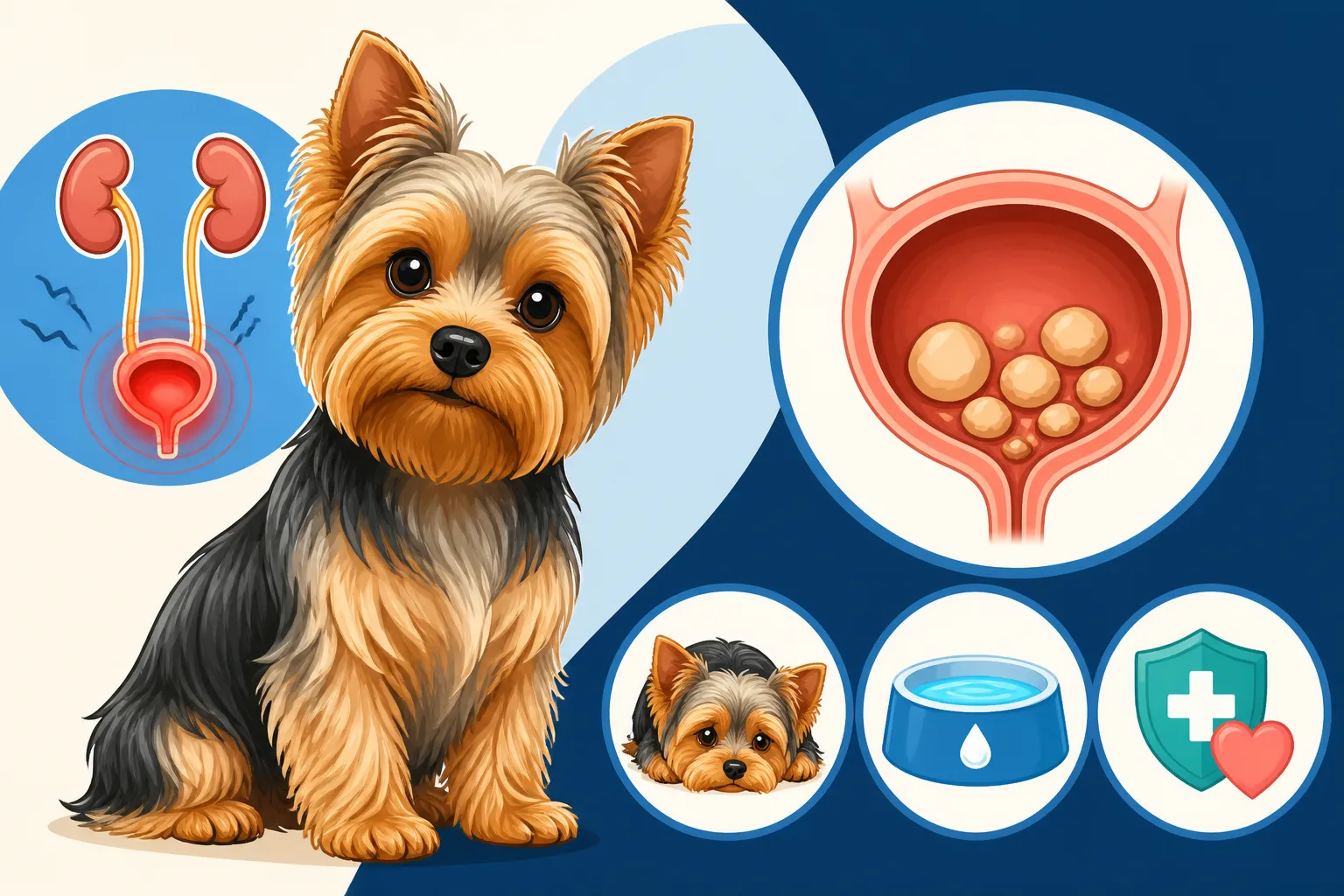
Yorkshire Terrier Bladder Stones: Signs and Care
Finding out your beloved Yorkshire Terrier has bladder stones can be incredibly distressing. You might notice your little one straining to pee, having accidents around the house, or even see a terrifying reddish tint in their urine, leaving you worried and wondering what’s going on and how to make them feel better. This comprehensive guide will walk you through everything you need to know about Yorkshire Terrier bladder stones, from understanding why they form to recognizing the signs, getting a diagnosis, exploring treatment options, and implementing long-term care strategies to keep your furry friend healthy.
Understanding Yorkshire Terrier Bladder Stones
When we talk about bladder stones in our Yorkies, we’re delving into a common, yet often painful, urinary tract issue that can seriously impact their quality of life. It’s not just a minor inconvenience; these stones can range from tiny crystals to significant concretions that block the urinary tract, and knowing the ins and outs is the first step toward effective care.
What Are Bladder Stones and Why Do Yorkies Get Them?
Bladder stones, or uroliths, are essentially mineral deposits that form in your dog's bladder. Think of them like kidney stones in humans, but located in the bladder. They're composed of various minerals, and the most common types found in Yorkshire Terriers are calcium oxalate and struvite stones. Struvite stones often develop in conjunction with a urinary tract infection, as certain bacteria can alter the urine's pH, creating an ideal environment for these crystals to form and grow. Calcium oxalate stones, on the other hand, tend to form in more acidic urine and are often linked to genetic predispositions or metabolic imbalances, rather than infection.
Yorkies, due to their small size and genetic makeup, are unfortunately highly prone to developing these bothersome stones. Their compact urinary systems can be more susceptible to the conditions that lead to crystal formation. For example, some Yorkies might have a slight anatomical variation that makes their urinary flow less efficient, or they might simply have a genetic tendency to excrete higher levels of stone-forming minerals in their urine. This predisposition means that even with careful management, a Yorkie might be more at risk than other breeds. It's a frustrating reality for many Yorkie parents, but understanding this inherent vulnerability is key to proactive care and vigilance.
The Role of Breed Predisposition
The fact that Yorkshire Terriers are disproportionately affected by bladder stones isn't just a coincidence; it's deeply rooted in their breed-specific characteristics. For one, their smaller stature can mean a more concentrated urine output if they aren't adequately hydrated, which increases the likelihood of mineral precipitation. More significantly, genetic studies have pointed to a strong hereditary component in the formation of certain stone types, particularly calcium oxalate stones, in breeds like the Yorkie. This means that if a Yorkie's parents or grandparents had bladder stones, the puppy might be inherently more likely to develop them too.
Furthermore, the general metabolism and dietary sensitivities of Yorkshire Terriers can play a role. Some Yorkies might have subtle imbalances in how their bodies process certain minerals, leading to an overload in the urine. This isn't always something you can visibly see or feel in your dog until symptoms become apparent. This strong genetic link underscores why it's so important for breeders to screen for such predispositions and for owners to be extra vigilant about their Yorkie’s urinary health. Being aware of the Common Yorkshire Terrier Genetic Conditions can help you anticipate potential health challenges and work proactively with your vet.
Recognizing the Signs of Bladder Stones in Your Yorkie
One of the biggest challenges with bladder stones is that our furry friends can't tell us what's wrong. It's up to us, as their loving caregivers, to tune into their subtle cues and understand when something isn't quite right. Recognizing the signs early can make a huge difference in treatment outcomes and your Yorkie’s comfort.
Subtle Early Symptoms You Might Miss
Initially, the signs of bladder stones can be incredibly subtle, easily mistaken for normal quirks or minor behavioral changes. You might notice your Yorkie seems to be asking to go outside more often than usual, or perhaps they are lingering at their water bowl, drinking a little more. They might strain slightly when they urinate, or their stream might seem weaker or interrupted. Sometimes, a Yorkie might start having small accidents in the house, even if they've been perfectly potty trained for years. These aren't necessarily full-blown puddles, but maybe a few drops or a wet spot where they usually don't go.
Another common, yet overlooked, symptom is a change in your dog’s demeanor. They might be a bit more lethargic, less enthusiastic about playtime, or seem a little withdrawn. They could be experiencing discomfort that isn't severe enough to make them cry out, but enough to make them feel generally unwell. Pay close attention if your Yorkie starts licking their genital area more frequently, as this can be an attempt to soothe irritation caused by the stones. These early indicators are crucial and warrant a call to your vet, because catching issues like Yorkie Emergency Symptoms to Never Ignore early can prevent more severe complications.
Obvious and Urgent Indicators
As bladder stones grow larger or cause more significant irritation, the symptoms become far more pronounced and often signal an urgent need for veterinary attention. The most alarming sign is the presence of blood in your Yorkie's urine, known as hematuria. This can range from a faint pink tint to a noticeable reddish or brownish discoloration. Seeing this can be incredibly frightening for any pet parent, and it should prompt an immediate vet visit. Your Yorkie might also visibly strain and hunch their back when attempting to urinate, making repeated, unproductive squatting attempts. They might even whine or cry out in pain during this process.
In severe cases, bladder stones can completely block the urethra, especially in male Yorkies due to their narrower urinary anatomy. A complete blockage is a life-threatening emergency where your dog cannot urinate at all. If you see your Yorkie trying desperately to pee but nothing comes out, or only a few drops, and they are becoming increasingly distressed, lethargic, or even vomiting, this is a veterinary emergency. Without prompt intervention, a blocked bladder can lead to kidney damage, bladder rupture, and even death. It’s essential to know When to Take Your Yorkie to the Vet for such critical situations.
How These Symptoms Differ from Other Urinary Issues
It's easy to confuse the symptoms of bladder stones with other common urinary tract issues, such as a simple urinary tract infection (UTI). Many of the signs overlap: increased frequency of urination, straining, and even accidents. However, there are some key differences. While UTIs often respond quickly to antibiotics, bladder stones may not show improvement with antibiotics alone, especially if they are calcium oxalate stones not caused by infection. A recurrent UTI, where symptoms keep returning shortly after antibiotic treatment, can sometimes be a red flag that there's an underlying issue like bladder stones that needs to be addressed.
Additionally, a Yorkie with bladder stones might show more pronounced signs of pain during urination, or the blood in their urine might be more persistent even after initial treatment for a suspected UTI. Sometimes, Yorkies can also suffer from Yorkshire Terrier Pancreatitis: Signs and Care, which, while not urinary, can present with generalized abdominal discomfort and lethargy that might make initial diagnosis tricky without proper veterinary examination. The key is that while some symptoms are shared, the persistence or severity of signs, especially blood in the urine or complete inability to urinate, strongly points towards a more serious mechanical obstruction or irritation caused by stones.
Here's a quick comparison of common urinary symptoms:
| Symptom | Possible UTI | Possible Bladder Stones |
|---|---|---|
| Increased Urination Frequency | Yes | Yes |
| Straining to Urinate | Yes | Yes (often more severe) |
| Accidents in the House | Yes | Yes |
| Blood in Urine (Hematuria) | Less common, often mild | Yes, can be significant |
| Licking Genital Area | Yes | Yes |
| Painful Urination | Mild to moderate | Moderate to severe |
| Inability to Urinate | No | Yes (Emergency!) |
| Lethargy / Changes in Behavior | Yes | Yes |
| Recurrence after Antibiotics | Less common | Common (if stones present) |
Diagnosing Bladder Stones: What to Expect at the Vet
When you suspect your Yorkie might have bladder stones, a trip to the veterinarian is the essential next step. They have the tools and expertise to accurately diagnose the problem and differentiate it from other conditions. Don’t hesitate to reach out to your vet; early diagnosis can often lead to less invasive treatment options.
Initial Examination and Urine Analysis
When you bring your Yorkie in, your vet will start with a thorough physical examination, feeling your dog’s abdomen for any signs of discomfort or an enlarged bladder. They’ll also take a detailed history from you, asking about all the symptoms you’ve observed, your Yorkie’s diet, water intake, and any recent changes. This information is vital for narrowing down the possibilities.
The cornerstone of initial diagnosis for any urinary issue is a urinalysis. Your vet will collect a urine sample, preferably a "cystocentesis" sample, which is taken directly from the bladder using a needle. This method provides the cleanest sample, free from environmental contamination. The urinalysis will check several things:
- pH Level: This indicates how acidic or alkaline your dog's urine is, which is crucial because different types of stones form in different pH environments. For example, struvite stones thrive in alkaline urine, while calcium oxalate stones prefer acidic conditions.
- Specific Gravity: This measures the concentration of the urine. Highly dilute urine can sometimes reduce stone formation, while very concentrated urine can increase risk.
- Presence of Blood, Protein, Glucose, etc.: These can indicate infection, inflammation, or other systemic health issues.
- Microscopic Examination: This is where the magic happens! The vet will look for the presence of crystals (calcium oxalate, struvite, etc.), bacteria, and inflammatory cells. Seeing a large number of specific crystals in the urine often strongly suggests the presence of bladder stones of that type, or at least a predisposition to form them.
Imaging Techniques: X-rays and Ultrasound
While urinalysis can strongly suggest bladder stones, definitive diagnosis usually requires imaging. This is where X-rays (radiographs) and ultrasound come into play, giving your vet a clear picture of what’s happening inside your Yorkie’s bladder.
X-rays are often the first imaging choice because they are quick and relatively inexpensive. Most types of bladder stones, like struvite and calcium oxalate, are "radiopaque," meaning they show up clearly on an X-ray as white, dense objects within the bladder. Your vet can see their size, shape, and number, which is incredibly helpful for planning treatment. However, some less common stone types, such as urate or cystine stones, are "radiolucent" and won't be visible on a standard X-ray. In these cases, or if the X-ray is inconclusive, your vet will recommend an ultrasound.
Ultrasound provides a more detailed, real-time view of the bladder and surrounding structures. It can detect even radiolucent stones that X-rays miss. An ultrasound allows the vet to see the bladder wall for thickening or inflammation, assess the kidneys, and check for any blockages in the urethra. It's particularly useful for determining if stones are located in the urethra, potentially causing an obstruction, or if there are other issues contributing to the urinary signs. Combining these two imaging techniques gives your vet the most comprehensive understanding of your Yorkie’s condition, ensuring that no stone is left unturned, so to speak. Your vet will also likely recommend looking into pet insurance options like Healthy Paws to help manage the Yorkshire Terrier Vet Costs and Health Budget associated with these diagnostics and potential treatments.
Treatment Options for Yorkshire Terrier Bladder Stones
Once bladder stones are diagnosed, your vet will work with you to determine the best course of action. Treatment depends heavily on the type of stone, its size, number, and location, as well as your Yorkie’s overall health. There are generally three main approaches: dietary management, medical dissolution, and surgical intervention.
Dietary Management and Lifestyle Changes
For certain types of bladder stones, particularly struvite stones, diet plays a huge role in both treatment and prevention. Specialized prescription diets are formulated to change the urine’s pH and contain controlled levels of minerals like magnesium and phosphorus, which are components of struvite stones. These diets also encourage increased water intake, which helps dilute the urine, making it less hospitable for stone formation and growth. A good example of such a diet would be one from brands like Royal Canin Urinary SO or Hill's Prescription Diet c/d Multicare, which are specifically designed for this purpose.
For calcium oxalate stones, dietary management is more focused on prevention of recurrence after removal, as these stones typically cannot be dissolved by diet alone. These diets often have controlled levels of calcium and oxalate, and aim to create a urine environment that discourages new stone formation. Regardless of the stone type, increasing your Yorkie’s water intake is paramount. This can be achieved by adding water to their kibble, offering wet food, or encouraging them to drink more by using a water fountain. Regular potty breaks also help, as a full bladder gives minerals more time to settle and form crystals. This is a critical part of How to Keep a Yorkshire Terrier Healthy, focusing on their overall well-being.
Medical Dissolution Therapy
Medical dissolution is a fantastic non-surgical option, but it's primarily effective for struvite stones. This involves feeding a specific prescription diet designed to dissolve the stones over several weeks or months, often combined with antibiotics if a urinary tract infection is present. The diet works by creating an acidic urine environment and reducing the building blocks for struvite stones, essentially causing them to break down and pass. During this period, your vet will regularly monitor your Yorkie's progress with repeat urinalyses and X-rays or ultrasounds to ensure the stones are shrinking.
Calcium oxalate stones, unfortunately, cannot typically be dissolved with diet or medication once they have formed. This is a major difference and why identifying the stone type is so critical. If your Yorkie has calcium oxalate stones, medical dissolution is not a viable treatment, and other options will need to be considered. The commitment to a strict prescription diet during dissolution therapy is key. Even a small amount of regular dog food or treats not approved by your vet can hinder the process, making it longer and less effective. Your vet will provide detailed instructions and a timeline, and adhering to them faithfully is vital for success.
Surgical Intervention
When dietary and medical approaches aren't suitable, or if the stones pose an immediate threat (like a complete urinary blockage), surgical removal is the most definitive solution. This procedure, called a cystotomy, involves surgically opening the bladder to remove the stones. It’s a common and generally safe procedure performed by a veterinary surgeon. After the stones are removed, they are sent to a lab for analysis, which is crucial for identifying their exact composition. This lab analysis then guides the long-term management strategy to prevent recurrence.
Surgery is often recommended for:
- Large stones: Stones too big to pass or dissolve.
- Calcium oxalate stones: As they don't dissolve.
- Obstructive stones: Stones causing a urinary blockage, which is an emergency.
- Recurrent infections: If stones are continually harboring bacteria.
Post-surgery, your Yorkie will need a period of recovery, which includes pain medication, antibiotics, and restricted activity. Your vet will explain all aspects of the recovery process, and it’s important to follow their instructions carefully to ensure proper healing and minimize complications. While surgery can be daunting, it often provides immediate relief and a clear path forward. Investing in pet insurance like Healthy Paws can be incredibly helpful for managing the unexpected costs associated with surgical procedures for conditions like bladder stones.
Preventing Recurrence and Long-Term Care Strategies
Having a Yorkie prone to bladder stones means that proactive, lifelong management is absolutely essential. The goal isn’t just to treat the current stones, but to create an environment where new ones are unlikely to form. This requires a dedicated approach, regular monitoring, and a strong partnership with your veterinarian.
The Importance of a Tailored Diet
After your Yorkie has been diagnosed with and treated for bladder stones, a tailored diet becomes the cornerstone of their preventive care. The exact dietary recommendations will depend entirely on the type of stone identified through analysis. For struvite stones, your vet might recommend continuing a prescription urinary diet long-term, perhaps one that helps maintain an acidic urine pH and controls mineral levels. For calcium oxalate stones, the diet will aim to prevent their formation by carefully balancing calcium and oxalate intake, and often promoting dilute urine. Brands like Royal Canin and Hill's offer various maintenance formulas designed for long-term urinary health.
It's vital that you stick to this diet strictly. This means no table scraps, no unauthorized treats, and no switching foods without consulting your vet. Even small deviations can throw off the delicate balance the diet is trying to achieve and potentially lead to new stone formation. Think of it as a prescription for life – a delicious one for your Yorkie, hopefully! Your vet might also discuss options for Yorkshire Terrier Food For Sensitive Stomach if dietary changes also need to address digestive issues.
Monitoring and Regular Vet Check-ups
Consistent monitoring is crucial for detecting any signs of recurrence early. Your vet will likely recommend regular check-ups, which will include repeat urinalyses every few months. These urinalyses will track the urine pH, specific gravity, and critically, look for the presence of any new crystals or bacteria. Even if your Yorkie seems perfectly healthy, these check-ups are non-negotiable for at-risk individuals. They might also suggest periodic imaging, such as an X-ray or ultrasound, to visually inspect the bladder for any new stone formation before they become large or problematic.
You, as the pet parent, also play a vital role in daily monitoring. Keep an eye on your Yorkie’s urination habits: is there any straining, increased frequency, blood in the urine, or inappropriate urination? If you notice any changes, contact your vet immediately. Don't wait for things to escalate. Early intervention can often mean the difference between a minor dietary adjustment and another round of expensive treatments or even surgery. Remember, vigilance is your best tool in managing your Yorkie’s health, especially with a condition like bladder stones. This vigilance is also key to understanding the Signs Your Yorkshire Terrier Is Sick in general.
Hydration and Environmental Enrichment
Beyond diet and vet visits, maintaining excellent hydration is one of the simplest yet most effective ways to prevent bladder stones. Dilute urine means that minerals are less concentrated and less likely to clump together to form crystals. Always ensure your Yorkie has access to fresh, clean water. Consider a ceramic or stainless steel bowl, as plastic can sometimes harbor bacteria. A pet water fountain can also encourage more drinking, as many dogs prefer moving water. Adding a little warm water to their kibble or feeding wet food can also significantly boost their daily fluid intake.
Environmental enrichment also plays a subtle but important role. Stress can sometimes impact a dog's overall health and even contribute to urinary issues. Ensure your Yorkie has a comfortable, safe environment, regular exercise appropriate for a small breed, and plenty of mental stimulation. This helps reduce stress and promotes a generally healthy lifestyle. Regular, frequent potty breaks are also critical; don't make your Yorkie hold their urine for extended periods. This gives crystals less time to form and accumulate in the bladder. By combining these strategies, you’re not just managing a medical condition, you're embracing a holistic approach to your Yorkie's long-term health and happiness.
Disclaimer
The information provided in this guide is for informational purposes only and does not constitute veterinary medical advice. Always consult with a qualified veterinarian for any health concerns or before making any decisions related to your pet's care.