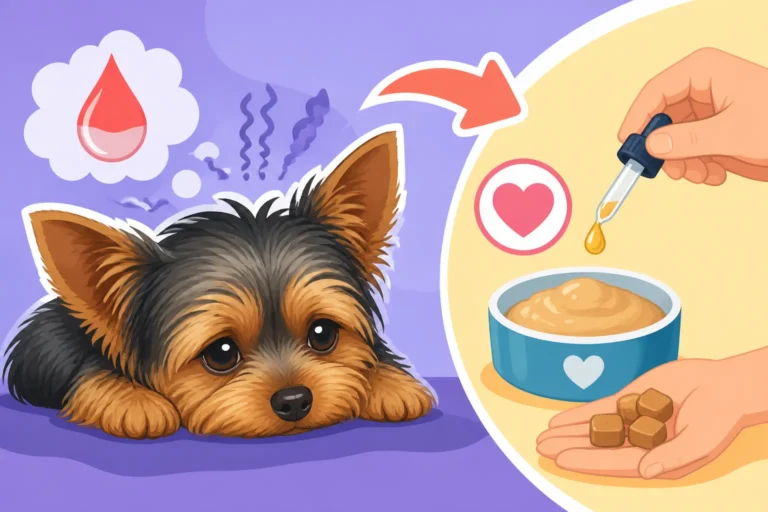
Yorkshire Terrier Vet Costs and Health Budget
A Yorkshire Terrier weighs about as much as a bag of sugar, so many owners assume the vet bills will be small too. Then the first dental cleaning with extractions arrives, or a limping puppy turns out to need knee surgery, and the budget collapses. This guide breaks down what Yorkie healthcare really costs over a lifetime and how to plan for it calmly.
Why Small Dogs Do Not Mean Small Vet Bills
The size of a dog affects the cost of food, medication doses and some anaesthetic drugs, but most of a vet bill is not about weight. You pay for the vet’s time, the clinic’s equipment, lab work, imaging and the skill of the surgical team. An X-ray of a four-pound Yorkie costs roughly the same as an X-ray of a forty-pound spaniel. A knee surgery on a tiny dog can be more delicate, not less.
Yorkies also live a long time, often 13 to 16 years, which is wonderful and also means more years of exams, vaccines and senior bloodwork. On top of that, the breed carries a handful of well-known inherited problems that tend to show up at predictable stages of life. If you know what they are, you can budget for them rather than being ambushed. For an overview of how long the breed lives and why, see Yorkshire Terrier Lifespan Overview.
The Breed-Specific Risks That Drive Costs
The conditions that most often appear on Yorkie invoices are dental disease, patellar luxation, tracheal collapse, portosystemic liver shunts and hypoglycemia in young puppies. Dental disease is close to universal in the breed because their small mouths crowd the teeth, trap food and encourage tartar. Kneecap problems are common in toy breeds, and a collapsing trachea produces the famous honking cough that sends many owners rushing to the clinic.
None of these means your dog will be sick. Many Yorkies sail through life with nothing more than routine care and a few cleanings. But a sensible budget assumes that at least one of these issues will show up at some point, because statistically it often does.
Where You Live Changes the Numbers
The figures in this guide are typical US ranges at general practices and specialty hospitals. A wellness exam in a rural town can cost half of what the same visit costs in Manhattan, San Francisco or Seattle. Emergency and specialty hospitals in big cities sit at the top of every range. If you want to compare regions in more detail, Yorkie Cost by Region goes further. Whatever your location, call two or three clinics and ask for their exam fee and their typical dental cleaning estimate; those two numbers tell you a lot about local pricing.
Routine Care Costs Year by Year
Routine care is the predictable part of the budget, and it is also the part that keeps the expensive problems small. Skipping it to save money nearly always costs more later.
The First Year
Puppy year is front-loaded. Expect a series of three or four vaccine visits, deworming, a fecal test, microchipping and, for most owners, a spay or neuter. Many Yorkie puppies also need a baby tooth extraction because retained deciduous teeth are common in the breed, and vets often do this during the spay or neuter anaesthetic. Our Yorkshire Terrier First-Year Costs Breakdown goes through every line item, and Cost to Spay or Neuter a Yorkie covers that single procedure in depth.
A realistic first-year veterinary spend is often in the range of $700 to $1,500 before any illness, depending on whether surgery is done at a low-cost clinic or a full-service hospital. Owners who adopt an adult that has already been vaccinated and spayed will spend much less in year one.
The Adult Years
From roughly age one to eight, a healthy Yorkie needs one wellness exam a year, booster vaccines, parasite prevention and regular dental care. The table below shows a typical annual range for a healthy adult.
| Routine item | Typical yearly cost |
|---|---|
| Wellness exams, one or two visits | $60 to $200 |
| Core and lifestyle vaccines | $75 to $150 |
| Flea, tick and heartworm prevention | $200 to $400 |
| Heartworm and fecal testing | $60 to $120 |
| Dental cleaning, averaged per year | $300 to $800 |
| Total | $695 to $1,670 |
The dental line is the one owners underestimate most. A professional cleaning under anaesthesia for a Yorkie typically lands somewhere between $400 and $1,000 without extractions, and many Yorkies need one every one to two years. Spreading that across the years gives the per-year figure in the table. You can read more in Yorkie Dental Cleaning Cost.
The Senior Years
After about age eight, most vets recommend two exams a year plus annual senior bloodwork and a urine test. Those screenings catch kidney, liver and heart changes early, when they are cheaper to manage. Budget an extra $200 to $500 a year for senior screening on top of routine care, and expect medication costs if your dog develops a heart murmur or arthritis. The Senior Yorkshire Terrier Health Checklist lists the checks worth asking for.
The Big-Ticket Health Problems and What They Cost
This is where a health budget earns its keep. The ranges below are typical for US general practice and specialty care. Your vet’s estimate is always the figure that matters.
| Condition | Common treatment | Typical cost range |
|---|---|---|
| Dental disease with extractions | Cleaning, X-rays, extractions under anaesthesia | $500 to $2,500 |
| Patellar luxation | Surgical correction per knee | $1,500 to $4,000 |
| Tracheal collapse, mild | Cough suppressants, weight control, harness | $300 to $1,000 per year |
| Tracheal collapse, severe | Tracheal stent at a specialist | $3,000 to $6,000 |
| Portosystemic shunt | Diagnostics plus surgery | $2,500 to $6,000 |
| Puppy hypoglycemia crisis | Emergency visit, glucose, monitoring | $200 to $1,000 |
Dental Disease
Dental disease is the most likely cost you will face. Untreated, it causes pain, tooth loss and infection that can affect the heart and kidneys. Daily brushing and good chews reduce the frequency of cleanings, but they rarely remove the need entirely. A cleaning becomes expensive when dental X-rays reveal rotten roots that must come out; each extraction adds to the bill. If you keep up with home care, you are far more likely to stay at the low end of the range. Read Yorkie Dental Disease: Costs and Prevention for a practical routine.
Knees, Trachea and Liver
Patellar luxation is graded from one to four. Grades one and two are often managed with weight control, joint support and muscle-building exercise, and many dogs never need surgery. Grades three and four, or a dog that keeps skipping and limping, usually need surgery, sometimes on both knees. That is how a single diagnosis can turn into an $8,000 problem.
Tracheal collapse is usually managed medically for years. The main ongoing costs are medication and rechecks, plus the switch from a collar to a harness. Stents are reserved for dogs that struggle to breathe despite treatment.
A portosystemic shunt, often called a liver shunt, typically shows up in young dogs that grow poorly, act strangely after meals or have repeated urinary problems. Diagnosis needs bloodwork, bile acid testing and imaging, and treatment is often surgery followed by a special diet. It is the single most expensive common Yorkie diagnosis, and it often appears before the dog is two years old. Yorkshire Terrier Portosystemic Shunt: Treatment Options explains the medical and surgical paths.
Emergencies
Emergency hospitals charge an entry fee before any treatment, often $100 to $250, and then add diagnostics and care. A tiny dog that eats something toxic, falls off a sofa or is attacked by a larger dog can run up $1,000 to $3,000 in one night. Knowing the warning signs helps you act early, and Yorkie Emergency Symptoms to Never Ignore is worth reading before you ever need it.
Building a Realistic Yorkie Health Budget
A health budget has three layers: routine care you pay every year, an emergency fund for the unexpected, and a decision about insurance. Getting all three in place is what lets you say yes to treatment without panicking.
A Monthly Savings Plan
Using the adult routine range above, a healthy Yorkie costs about $58 to $139 a month in routine care when you divide the yearly total by twelve. Many owners round that to roughly $100 a month and put it into a separate savings account by automatic transfer. That habit alone covers vaccines, prevention and most dental cleanings without a credit card.
On top of that, aim for an emergency fund of $2,000 to $3,000. It sounds like a lot, but it covers most single emergencies and gives you breathing space if surgery is needed. Building it at $50 a month takes three to five years, so start in puppyhood if you can. The How Much to Budget for a Yorkie Emergency guide walks through how to size the fund for your situation.
Choosing Pet Insurance
Insurance turns large, unpredictable bills into a predictable monthly premium. For a breed with known inherited risks, many owners find it worthwhile, especially when bought early before any condition is recorded as pre-existing. Providers such as Healthy Paws focus on accident and illness cover, and the best time to compare them is while your puppy is still healthy.
When comparing any policy, check these points:
- Whether hereditary and congenital conditions such as patellar luxation and liver shunts are covered.
- Whether there is a waiting period for orthopaedic conditions, which some insurers set longer than for illness.
- How the deductible works, either per year or per condition.
- The reimbursement percentage and whether there is an annual or lifetime cap.
- Whether dental illness, not just dental injury, is included.
- How premiums rise as your dog ages.
Healthy Paws, like most accident and illness insurers, does not usually cover routine wellness care, so your monthly savings still matter. Check the provider’s own pages for current prices, deductibles and reimbursement options, because these change and vary by location and the dog’s age. Our Pet Insurance for Yorkshire Terriers guide compares the main types of cover in more detail.
Insurance or Savings Alone
Some owners prefer to self-insure by saving the equivalent of a premium every month. That works well if your dog stays healthy or if you start with a large cushion. It works badly when a liver shunt is diagnosed at eight months old and your fund holds a few hundred dollars. The honest answer for most families is a mix: insurance for the catastrophic bills, savings for routine care and deductibles. If you go the insurance route, Healthy Paws and its competitors all publish sample policies, so read the exclusions before you buy rather than after a claim.
Ways to Lower Costs Without Cutting Corners
Saving money on vet care should never mean skipping care. It means paying for it in the cheapest sensible way.
Prevention Is the Best Discount
Brush your Yorkie’s teeth daily, or as close to daily as you can. Keep your dog lean, because extra weight worsens both knee and tracheal problems. Use a harness instead of a collar. Feed small, frequent meals to young puppies to prevent hypoglycemia. These habits cost very little, and each one directly reduces the odds of the expensive diagnoses in the table above.
Smart Ways to Pay Less
- Ask for an itemised estimate before any non-emergency procedure and ask which items are essential.
- Compare dental cleaning estimates from two or three clinics, making sure each includes dental X-rays.
- Look into wellness plans offered by some clinics, which spread routine costs into monthly payments.
- Use low-cost vaccine clinics for boosters if your regular vet supports it.
- Buy prescription prevention through your vet or a reputable pharmacy and compare prices.
- Ask whether a veterinary school hospital near you offers reduced-cost specialist care.
Choosing the Right Vet Partner
A vet who knows toy breeds will spot early dental and knee problems, explain options frankly and help you plan financially. Look for a clinic that is open about prices, offers dental X-rays as standard and has an emergency plan for after hours. The guide on How to Choose a Vet for a Yorkie has a list of questions to ask on your first visit.
Planning a Yorkie health budget is less about predicting every bill and more about never being forced to choose between your dog’s wellbeing and your bank balance. Put aside a steady monthly amount, build an emergency cushion, decide early whether insurance suits you, and invest in the daily habits that keep the expensive problems away.
Disclaimer
This article is for general informational purposes only and does not constitute professional advice. Laws, prices and regulations vary by location and change over time. Consult a qualified professional for guidance on your specific situation.