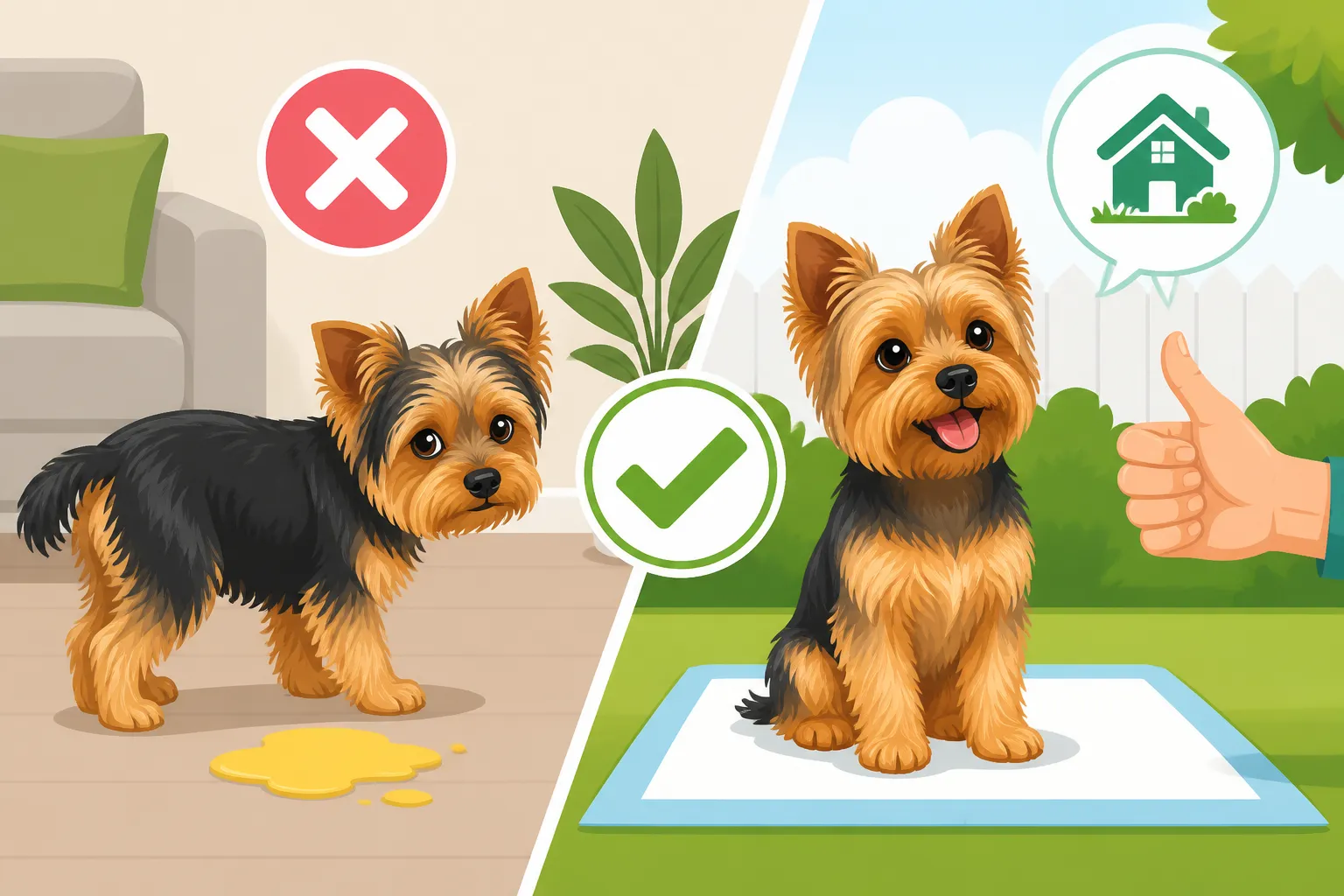
How to Stop a Yorkie from Peeing Inside
It’s incredibly frustrating, not to mention disheartening, when you find that tell-tale puddle or pile inside your home, especially when you thought your little Yorkshire Terrier was fully potty trained. You clean it up, sigh, and wonder if you'll ever truly get a handle on this. Rest assured, you're not alone, and there are many effective strategies to help your Yorkie understand where they need to do their business. This comprehensive guide will walk you through identifying the root causes of indoor accidents and provide actionable steps to get your furry friend consistently going outside.
Understanding Why Your Yorkie is Peeing Inside
Before you can effectively tackle the problem, it’s crucial to understand why your Yorkie might be having accidents indoors. It’s rarely out of spite or a lack of intelligence; more often than not, it boils down to health, environment, or a gap in their training. Thinking like a detective here can save you a lot of future headaches.
Medical Reasons for Inappropriate Urination
This is always the first place to start, no matter how well-behaved your Yorkie normally is. A sudden change in potty habits almost always warrants a trip to the vet. Your little one can’t tell you in words that they’re not feeling well, so accidents might be their only way of communicating discomfort or pain.
One of the most common culprits is a urinary tract infection (UTI). Just like in humans, a UTI can make a dog feel a sudden, urgent need to urinate, often leading to accidents because they simply can't hold it or get outside fast enough. Other symptoms might include frequent attempts to urinate with little output, straining, or even blood in the urine. Similarly, bladder stones can cause similar symptoms and a lot of discomfort. These tiny stones can irritate the bladder lining, increasing the urge to go. Kidney disease, though less common for sudden accidents in young dogs, can also impact a dog's ability to concentrate urine, leading to increased frequency and volume of urination. Diabetes is another condition that causes increased thirst and, consequently, increased urination. If your Yorkie is drinking more than usual, this could be a sign.
For our beloved senior Yorkies, cognitive dysfunction syndrome, often likened to canine dementia, can lead to accidents. They might forget their training, get disoriented, or simply lose awareness of their need to go. If you notice other signs of aging, such as confusion, changes in sleep patterns, or a decrease in activity, this could be a contributing factor. It's a good idea to read up on Yorkshire Terrier Health Problems to Know and definitely consult your vet to rule out any underlying health issues. A vet visit can provide peace of mind or identify an easily treatable condition, so please don't skip this critical step. They might even suggest checking out a guide on Yorkshire Terrier Senior Care Guide if age is a factor.
Behavioral and Training Gaps
Once medical issues are off the table, we can dive into the behavioral and training aspects. This is where most indoor peeing issues for Yorkies usually reside, especially given their sometimes stubborn nature and tiny bladders.
A significant portion of accidents stems from a lack of proper potty training or inconsistent reinforcement. Maybe you adopted an adult Yorkie who wasn't fully house-trained in their previous home, or perhaps your adorable puppy just isn't quite grasping the concept yet. For puppies, their tiny bladders mean they simply cannot hold it for very long, so even short delays in getting them outside can lead to accidents. It’s not that they don’t want to go outside; they just can’t wait. Understanding their physical limitations, especially during puppyhood, is key. If you have a young one, our Yorkshire Terrier Puppy Health Guide might offer additional insights into their early needs.
Submissive urination is another common issue, especially in shy or easily startled Yorkies. This often happens when they are overly excited or feel intimidated, perhaps when greeting new people, during scolding, or when you come home after a long day. It’s an involuntary response, not a deliberate act. Excitement urination is similar, often occurring when they can't contain their joy, like when you arrive home and they just can't hold their bladder anymore. These aren't acts of defiance but rather emotional overflow.
Marking behavior is distinct from simply peeing to relieve themselves. Both intact male and female Yorkies can mark their territory, though it's more prevalent in males. This usually involves small amounts of urine sprayed on vertical surfaces like furniture legs, walls, or curtains. It's a way of communicating their presence and claiming an area. If your Yorkie is doing this, it's a different problem with different solutions than general house-soiling.
Finally, stress, anxiety, or even fear can trigger indoor accidents. Yorkies are known for being quite sensitive and can develop Yorkshire Terrier Separation Anxiety Solutions if left alone for too long or if there's a significant change in their routine or environment. A new baby, a move to a new house, or even just being left alone for longer than they're comfortable with can lead to accidents. Fear from loud noises, like thunderstorms or fireworks, can also cause them to lose bladder control. They might feel too scared to go outside, or the fear simply causes them to release.
Essential Potty Training Strategies for Yorkies
Once you've ruled out medical causes, it's time to roll up your sleeves and implement some solid, consistent potty training strategies. Consistency is truly the name of the game when it comes to Yorkies and their potty habits. You're building a new habit, and that takes time, repetition, and a lot of patience.
Establishing a Consistent Schedule
This is probably the single most important piece of advice for any dog, but especially for a small breed like a Yorkie with a small bladder. They thrive on routine, and a predictable schedule helps them understand when and where they are expected to do their business.
For puppies, this means taking them out very frequently – every 1-2 hours when they’re awake, immediately after waking up from naps, within 5-10 minutes of eating or drinking, and certainly after any intense playtime. Young puppies can generally hold their bladder for about one hour per month of age, so an 8-week-old puppy can only hold it for about two hours at most. This means you need to be proactive, not reactive. Don’t wait for them to show signs of needing to go; take them out regularly like clockwork. Even if it feels like you're constantly heading outside, remember that every successful outdoor potty break is a step closer to a fully house-trained dog.
For adult dogs, even those you're "re-potty training," a consistent schedule is still vital. Aim for at least 4-6 trips outdoors daily, depending on their age and individual needs. This should include first thing in the morning, last thing at night, after meals, and before you leave the house. Weekends should follow the same schedule as weekdays to prevent confusion. If you're struggling with an older dog, our guide on How to House Train an Adult Yorkie offers tailored advice. Keeping a log of when your Yorkie eats, drinks, and eliminates can help you identify patterns and anticipate their needs, making the schedule even more effective.
Crate Training and Confinement
Crate training isn't just about keeping your Yorkie contained; it's a powerful potty training tool because dogs naturally don't want to soil their sleeping area. When used correctly, a crate can significantly speed up the house-training process.
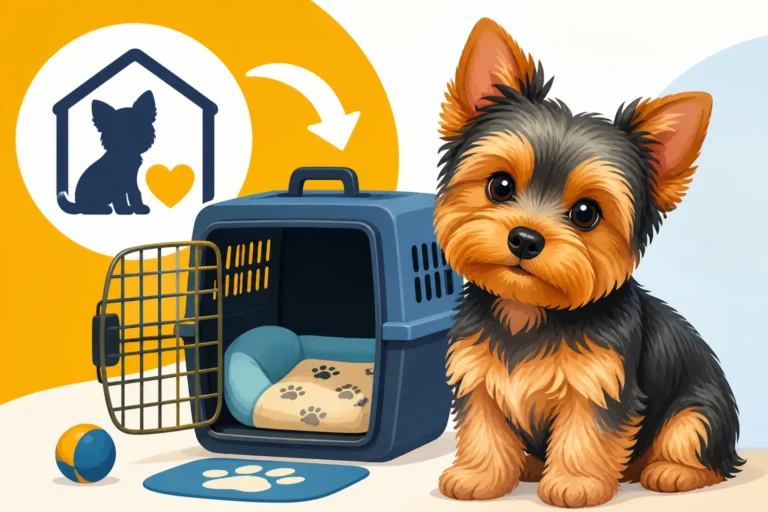
The key to successful crate training is choosing the right size. Your Yorkie's crate should be just large enough for them to stand up, turn around, and lie down comfortably. If the crate is too large, they might use one end as a sleeping area and the other as a "bathroom," defeating the purpose. You can use a divider in a larger crate to adjust the size as they grow. When they are in their crate, they learn to hold it, and as soon as you let them out, you immediately take them outside to their designated potty spot. This teaches them to associate going outside with relief.
Never use the crate as punishment, as this will create a negative association and make your Yorkie fearful of it. The crate should be a safe, comfortable den. Ensure it has a soft bed, and maybe a chew toy to keep them occupied. When you can't actively supervise your Yorkie, especially a puppy, confinement in a pet-safe area like a playpen or a small, puppy-proofed room with easy-to-clean floors is a great alternative. This limits their opportunities to have accidents in inappropriate places and makes cleanup much simpler if an accident does occur. For more detailed steps on this, refer to our Yorkshire Terrier Crate Training Guide.
Positive Reinforcement and Rewards
When it comes to training a Yorkie, positive reinforcement is your best friend. They are intelligent and eager to please, but also sensitive. Scolding or punishing them for accidents after the fact is not only ineffective but can also make them fearful of you, leading them to hide their accidents. Your Yorkie won't connect your anger to an accident they had five minutes ago. They'll just associate your presence with negativity.
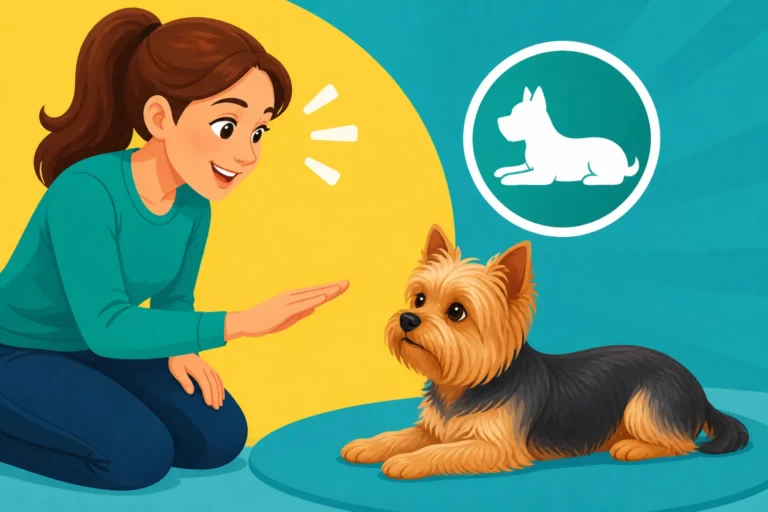
Instead, focus on rewarding good behavior. Every single time your Yorkie potties outside in the appropriate spot, throw a party! Use high-value treats (tiny pieces of cooked chicken, cheese, or their favorite soft treats work wonders), enthusiastic verbal praise ("Good potty! Yes!"), and gentle petting. Deliver the reward immediately after they finish going, so they clearly understand what they are being rewarded for. This immediate feedback is crucial for them to make the connection: "Going outside means good things happen!"
Consider using a clicker if you're serious about precision training. The clicker marks the exact moment of desired behavior, followed by the treat. This can be incredibly effective for clear communication. If your Yorkie is having trouble connecting the dots, you can even use a specific verbal cue ("Go potty!") just as they are squatting to help them associate the phrase with the act. The goal is to make going potty outside the most rewarding thing they can do. This positive approach fosters a strong bond and a confident, house-trained companion. For more insights on this overall process, refer to our comprehensive Yorkshire Terrier Potty Training Guide.
Addressing Specific Indoor Peeing Scenarios
Sometimes, indoor accidents aren't just about general house-training. There might be specific behavioral nuances at play that require a more targeted approach. Let's delve into some common ones.
Dealing with Marking Behavior
Marking is a distinct behavior from simply relieving a full bladder. When a Yorkie marks, they typically lift a leg (though females can also do a small squat) and deposit a small amount of urine on vertical surfaces. This is a territorial behavior, a way of saying "I was here!" or "This is mine!"
The single most effective step to reduce or eliminate marking behavior is spaying or neutering your Yorkie. Hormones play a huge role in marking, and altering your dog significantly reduces the hormonal drive to mark. This doesn't mean it will disappear overnight, especially if the behavior is already ingrained, but it makes the retraining process much easier. If your Yorkie is already spayed or neutered, then the marking is likely a learned behavior or a response to anxiety or perceived threats.
Thorough cleaning of marked areas is paramount. If your Yorkie can still smell their urine, they're more likely to mark that spot again. Regular household cleaners might remove the visible stain, but they won't eliminate the enzymatic scent markers that only dogs can detect. You need an enzymatic cleaner designed specifically for pet stains. Brands like Nature's Miracle or Rocco & Roxie Supply Co. (available on Amazon, for example) are excellent for breaking down those scent molecules. Apply generously, let it sit, and blot according to the product instructions.
While you're working on it, meticulous supervision is key. When your Yorkie is inside, they should be either actively supervised by you, in their crate, or tethered to you with a leash. This prevents them from slipping away unnoticed to mark. If you see them sniffing or getting ready to mark, interrupt them with a sharp clap or "Ah-ah!" and immediately take them outside to their designated potty spot. Reward them enthusiastically if they go outside. This teaches them that marking indoors is unacceptable, but going outside is highly rewarded.
Managing Anxiety-Related Accidents
Anxiety is a common trigger for indoor accidents in sensitive breeds like Yorkies. Whether it's separation anxiety, fear of loud noises, or general stress, the emotional overload can lead to a loss of bladder control.
For separation anxiety, which often manifests as accidents, destructive chewing, or excessive barking when you leave, a multi-faceted approach is needed. First, ensure your Yorkie gets enough physical exercise and mental stimulation before you leave. A tired dog is a calm dog. Second, practice gradual departures. Start by leaving for just a few minutes, then slowly increase the time. Don't make a big fuss when you leave or return; keep greetings and goodbyes calm and low-key. Providing engaging toys, like Kongs filled with frozen peanut butter, as you leave can distract them and create a positive association with your departure. Consider leaving on a radio or TV for background noise. In severe cases, a vet might recommend medication in conjunction with behavior modification, or you could consult a certified professional dog behaviorist.
Creating a safe haven for your Yorkie can also help with general anxiety. This might be their crate, a cozy bed in a quiet corner, or a small room where they feel secure during stressful events like thunderstorms or fireworks. Some Yorkies benefit from thunder vests or calming diffusers that release canine pheromones. If their accidents are fear-related, avoid coddling them excessively during the event, as this can inadvertently reward the fear. Instead, act calmly and provide a safe space. Your goal is to manage their environment and gradually desensitize them to their triggers, which takes time and patience.
Re-Potty Training Adult or Rescue Yorkies
Bringing an adult or rescue Yorkie into your home is a wonderful thing, but they often come with their own history, which might include inconsistent or non-existent house-training. The good news is that adult dogs can absolutely be successfully re-potty trained, but you need to approach it as if they are a brand-new puppy.
This means starting from scratch with the basics. Immediately establish a consistent potty schedule, just as you would with a puppy. Take them out frequently – first thing in the morning, after meals, after naps, before bed, and several times in between. Use a leash for all potty breaks, even in a fenced yard, to ensure they actually go and to reinforce that outdoor trips are for business, not just playtime. Reward lavishly with high-value treats and praise every single time they go outside. This helps them understand what you want.
Supervision is non-negotiable during the initial re-training phase. If you can't watch them, they should be in their crate or a confined, puppy-proofed area. If you discover an accident, clean it thoroughly with an enzymatic cleaner and move on. Never punish them for an accident you didn't witness. The key is to prevent accidents from happening in the first place by being vigilant and proactive. Some rescue Yorkies may have been accustomed to using pee pads. If this is the case, you can use the pads near the door, gradually moving them closer and closer to the outside until they are eventually phased out completely. This transition needs to be gradual to minimize stress and confusion for your dog. For specific advice, you might want to review our article on How to House Train an Adult Yorkie.
Tools and Tips for Success
Having the right tools and knowing a few extra tricks can make a world of difference in your journey to a fully house-trained Yorkie. These aren't just conveniences; they're integral parts of a successful training program.
Effective Cleaning Protocols
This cannot be stressed enough: if your Yorkie has an accident inside, you must clean it properly. Simply wiping it up with paper towels and a general household cleaner isn't enough. Dog urine contains enzymes and pheromones that are invisible to the human eye but are a huge beacon to your dog, telling them, "Hey, this is a great place to pee again!"
To truly neutralize the odor and prevent repeat offenses, you need an enzymatic cleaner. These cleaners contain beneficial bacteria that literally eat away at the odor-causing organic matter in urine. Brands like Nature's Miracle, Simple Solution, or Rocco & Roxie Supply Co. (widely available on Amazon and in pet stores) are highly recommended. Always follow the product instructions carefully: typically, you'll need to blot up as much urine as possible first, then saturate the soiled area with the enzymatic cleaner, allowing it to air dry for several hours or even overnight. This gives the enzymes time to work. Don't scrub; blotting is key. You might need to cover the area with a towel while it dries to prevent your Yorkie from returning to the spot. Getting rid of the scent completely breaks the cycle of marking or repeat accidents.
Harnesses, Leashes, and Outdoor Gear
Your Yorkie's outdoor experiences are directly linked to their potty success, and the right gear can make those trips much more pleasant and effective for both of you. For a small breed like a Yorkie, a harness is almost always preferable to a collar for walks and potty breaks. Yorkies are prone to tracheal collapse, and pulling on a collar can put undue pressure on their delicate trachea, leading to coughing or even serious injury.
A well-fitting harness distributes pressure across their chest and shoulders, making walks safer and more comfortable. Look for a harness that is secure, but not restrictive, allowing for full range of motion. A good quality, non-retractable leash, about 6 feet long, provides enough slack for them to explore and find a spot to relieve themselves, while still keeping them safely under your control. When you take your Yorkie out for a potty break, always take them directly to their designated spot, even if it's just a small patch of grass. Use your verbal cue ("Go potty!") and wait patiently. Don't immediately turn it into a play session until after they've done their business, so they learn the purpose of the outing. Our guide on Best Harness for a Yorkshire Terrier can help you choose the ideal fit for your furry friend.
Incorporating Professional Guidance and Online Resources
Sometimes, despite your best efforts, you might find yourself stuck. This is absolutely nothing to be ashamed of. Every dog is an individual, and some challenges require a bit more expertise.
If you’ve ruled out medical issues and have been consistently applying training strategies without seeing improvement, it might be time to seek professional help. A certified professional dog trainer or a canine behaviorist can observe your Yorkie's behavior, identify nuances you might be missing, and develop a customized training plan. They can offer invaluable insights into why your Yorkie is peeing inside and provide hands-on guidance. Some trainers even specialize in small breeds or specific behavioral issues like separation anxiety or marking.
Beyond in-person help, there are fantastic online resources available. For comprehensive training, platforms like BAXTER & Bella offer online puppy and dog training programs that can be incredibly helpful for owners seeking structured guidance. These programs often include video tutorials, live Q&A sessions, and access to trainers, all from the comfort of your home. They can be especially useful for busy individuals or those who don't have local access to high-quality trainers. Additionally, many reputable online communities and forums can provide support and shared experiences. Remember, you're not on this journey alone, and leveraging expert knowledge can significantly improve your chances of success.
Here's a quick comparison of common indoor peeing reasons and solutions:
| Reason for Indoor Peeing | Common Symptoms | Primary Solutions | Additional Tips |
|---|---|---|---|
| Medical Issue (e.g., UTI) | Sudden increase in frequency/urgency, straining, blood in urine, painful urination, changes in thirst. | Immediate Vet Visit to diagnose and treat. | Don't delay a vet trip. Medical conditions are often easily treatable but need professional diagnosis. Ask your vet about Yorkshire Terrier Dental Care Guide as well, since overall health is connected. |
| Lack of Proper Training | Accidents sporadic or frequent, especially in young puppies or new rescues. | Consistent Potty Schedule, Positive Reinforcement, Crate Training. | Take out frequently (every 1-2 hours for puppies, after waking, eating, playing). Reward heavily for outdoor success. Supervise closely. |
| Marking Behavior | Small amounts of urine on vertical surfaces (furniture, walls), often by intact dogs. | Spay/Neuter, Enzymatic Cleaners, Supervision & Redirection. | Consult vet about alteration. Clean thoroughly to remove scent. Interrupt and redirect to outdoor potty spot. |
| Separation Anxiety | Accidents only when alone, accompanied by barking, destructive chewing, pacing. | Gradual Departures, Enrichment Toys, Professional Help (if severe). | Practice short absences. Provide puzzle toys. Avoid dramatic goodbyes/hellos. Consider a dog walker for longer absences. |
| Excitement/Submissive Urination | Accidents during greetings, intense play, or perceived scolding/threat. | Keep Greetings Low-Key, Avoid Punishing Accidents, Build Confidence. | Greet calmly. Ignore excited jumping until calm. Build positive associations with new people/situations. Avoid hovering over them when they go. |
| Fear/Phobias (e.g., Thunderstorms) | Accidents only during specific fearful events, dog may hide, tremble, pace. | Create Safe Space, Calming Aids (vests, diffusers), Desensitization. | Provide a cozy, quiet retreat. Consider a Thundershirt or Adaptil diffuser. Consult trainer for desensitization protocols if ongoing. |
Remember, consistency, patience, and understanding are your greatest assets when tackling indoor peeing with your Yorkie. It won't happen overnight, but with dedication, you can help your little companion master their potty habits.
Disclaimer
This article provides general information and recommendations regarding Yorkshire Terrier health and behavior. It is not a substitute for professional veterinary advice. Always consult with a qualified veterinarian for any health concerns or before making any decisions about your pet's medical care or training regimen. Individual results may vary.