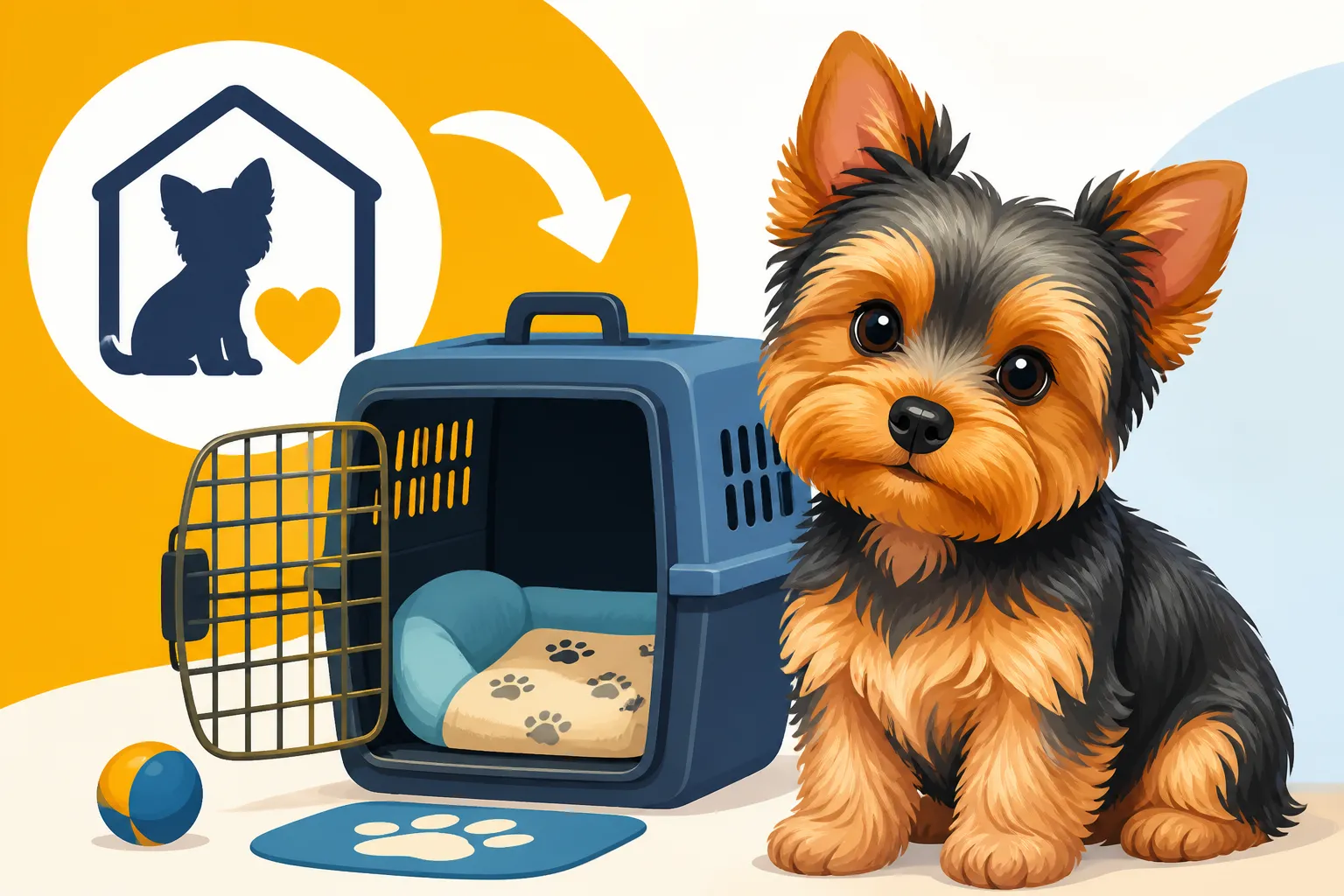
How to Crate Train a Yorkie
Bringing a new Yorkshire Terrier into your home is an exciting time, but let's be honest, it can also come with its fair share of anxieties. One of the biggest hurdles many Yorkie parents face is the struggle with house training, managing separation anxiety, or simply creating a safe space for their tiny companion. It’s frustrating when your precious pup has accidents inside, chews on things they shouldn't, or barks incessantly when you leave the room. This comprehensive guide is here to walk you through the entire process of crate training your Yorkie, transforming a potential source of stress into a tool for security, effective potty training, and peace of mind for both you and your beloved furry friend.
Understanding Why Crate Training Benefits Your Yorkie and You!
When you think of a crate, you might envision a cage, which immediately brings up negative feelings for many pet parents. However, for dogs, a properly introduced crate is far from a jail. It taps into their natural instincts and, when used correctly, can become one of the most invaluable tools in your Yorkie's life, and yours. It's about providing security, not confinement.
The Crate as a Safe Den, Not a Jail
Yorkies, despite their small stature, carry the instincts of their wild canine ancestors. In the wild, canids seek out small, enclosed spaces like dens or burrows for safety, sleep, and raising their young. This natural denning instinct is incredibly strong. When you introduce a crate positively, you're not imprisoning your Yorkie; you're offering them a secure, private haven where they can feel safe and relaxed. Imagine it as their own little bedroom or a cozy hideaway from the bustling household.
For a tiny dog like a Yorkie, the world can feel big and overwhelming. A crate gives them a predictable space where they can retreat when they need to unwind, feel stressed, or simply want a quiet nap away from human feet or other pets. This sense of security can significantly reduce anxiety, especially if your Yorkie is prone to being startled by loud noises or sudden movements. It’s their personal sanctuary, a place where they know they won't be bothered, which is particularly beneficial for small breeds that might otherwise feel constantly vulnerable.
Essential for Potty Training Success
One of the most powerful reasons to embrace crate training, especially for a breed that can sometimes be a bit challenging to housebreak, is its undeniable impact on potty training. Dogs, by instinct, are clean animals. They naturally resist soiling their sleeping area, provided it's appropriately sized and they aren't left for excessively long periods. This fundamental instinct is the cornerstone of effective crate-based potty training.
When your Yorkie is in their crate, they learn to "hold it" because they don't want to make a mess where they sleep. This teaches them bladder and bowel control, which is a crucial skill for successful housebreaking. Instead of giving them free rein of the house where they might have accidents in hidden corners, the crate provides a controlled environment. When you take them out, you immediately bring them to their designated potty spot, associating going outside with relief and rewards. This positive reinforcement cycle is incredibly effective. For a deeper dive, check out our guide on How to Potty Train a Yorkie Puppy.
Safety and Management When You Can't Supervise
Let's face it, we can't have our eyes on our Yorkies every single second of the day. This is where a crate becomes an invaluable management tool. When you're busy cooking dinner, taking a shower, or simply need to leave the house for a bit, the crate ensures your Yorkie's safety and protects your home. It prevents them from chewing on dangerous electrical cords, ingesting toxic household items, or having accidents on your pristine carpet.
Beyond daily use, crates are incredibly practical for travel, vet visits, or when guests come over. A Yorkie accustomed to their crate will find car rides less stressful, as they feel secure in their familiar space. During veterinary visits, having a comfortable, secure place to rest can reduce anxiety. And when Aunt Mildred visits, who isn't a "dog person," your Yorkie can relax safely in their den without causing (or experiencing) any unwanted interactions. It's about proactive safety and stress reduction in various real-life scenarios.
Choosing the Right Crate for Your Little Companion
Selecting the perfect crate isn't just about picking one off the shelf; it's about finding a "just right" space that caters to your Yorkie's size, temperament, and your lifestyle. The wrong crate can hinder your training efforts, so let's explore the options to make an informed decision.
Sizing It Up: The Goldilocks Principle
The size of the crate is absolutely crucial, especially for potty training. The "Goldilocks principle" applies here: it shouldn't be too big, and it shouldn't be too small. A crate that's too large allows your Yorkie to potty in one corner and sleep in another, defeating the purpose of teaching them to hold it. A crate that's too small, on the other hand, will be uncomfortable and could cause them to dread being inside.
For most adult Yorkshire Terriers, a crate measuring approximately 18-24 inches in length will be appropriate. The key is that your Yorkie should be able to stand up, turn around, and lie down comfortably without touching the sides or the top of the crate. If you're starting with a puppy, many crates come with a divider panel, which is incredibly useful. You can adjust the size of the crate as your puppy grows, ensuring it's always "just right." You can find more specific recommendations in our article about Yorkie Crate Size Guide.
Types of Crates: Wire, Plastic, Soft-Sided, and Furniture Styles
There's a wide variety of crates available, each with its own benefits and drawbacks. Your choice will depend on your specific needs, your home environment, and your Yorkie's comfort level. You can easily find a vast selection on platforms like Amazon.
-
Wire Crates: These are the most common and often the most versatile. They offer excellent ventilation and visibility, allowing your Yorkie to see what's happening around them. Many come with a removable tray for easy cleaning and a divider panel for puppy training. They are sturdy but can feel less den-like for some dogs. Brands like MidWest Homes for Pets offer excellent wire crates.
-
Plastic Crates (Airline Approved): These crates provide more of a cozy, den-like feel, as they have fewer open sides. They are great for Yorkies who prefer a darker, more enclosed space. They are also ideal for travel, especially if you plan on flying with your Yorkie, as many meet airline requirements. However, visibility and ventilation are more limited compared to wire crates. Petmate is a well-known brand for plastic travel crates.
-
Soft-Sided Crates: Lightweight and collapsible, soft-sided crates are fantastic for portability, such as taking your Yorkie to a friend's house or to a dog class. They are usually made of durable fabric over a frame. However, they are not suitable for puppies who are still prone to chewing, as they can be easily damaged, and they offer less protection than wire or plastic crates. They're best for fully crate-trained Yorkies who aren't chewers.
-
Furniture Style Crates: These are designed to blend seamlessly into your home decor, often looking like an end table or a piece of furniture. They can be a beautiful and functional option if aesthetics are a priority. They are typically made of wood or metal and offer a sturdy, attractive solution. However, they are generally more expensive and less portable than other types.
Must-Have Crate Accessories
Once you've chosen the perfect crate, a few accessories can make it even more inviting and comfortable for your Yorkie. These additions are key to creating that "safe den" feeling.
-
Comfy Bedding: A soft, comfortable bed or mat is essential. Initially, especially during potty training, you might want to use a simple, washable mat or a few old towels. Once your Yorkie is reliably house-trained, you can upgrade to a more plush bed. Just make sure whatever you choose is chew-resistant and easy to clean. Avoid overly fluffy blankets at first, as some Yorkies might pull them into a pile and use them as a "potty pad."
-
Safe Chew Toys: Providing appropriate chew toys within the crate can help alleviate boredom and give your Yorkie something positive to focus on. Look for durable, vet-approved toys like Kongs (filled with peanut butter or treats) or Nylabones. These can be particularly helpful for longer stays. Always ensure the toy is size-appropriate and cannot be swallowed.
-
Water Bottle (Optional): While a water bowl might spill, a small, drip-proof water bottle attached to the side of the crate can provide hydration without the mess. This is especially useful for older Yorkies or those prone to accidents if a bowl is present. For younger puppies or shorter crating times, ensuring they have access to water before and after crate time is usually sufficient.
The Step-by-Step Crate Training Process: Making it Positive
Crate training should always be a positive experience for your Yorkie. Never, ever use the crate as punishment. The goal is for your pup to associate their crate with comfort, security, and rewards, not fear or isolation. Patience and consistency are your two best friends here.
Introducing the Crate: Lures and Treats
The very first step is to make the crate seem like the most wonderful place on earth. Start by placing the crate in a common area of your home, like the living room, where your Yorkie spends a lot of time. Leave the door open, propped if necessary, and place a soft blanket and a few high-value treats inside. Think tiny pieces of cooked chicken, cheese, or their favorite small training treats.
Encourage your Yorkie to explore the crate on their own. You can toss treats just inside the door, then further in, coaxing them to enter. Use a happy, encouraging tone. When they go in, even for a second, shower them with praise and more treats. Don't force them in. Let them come and go freely at first. The idea is to build a positive association, so they view the crate as a source of good things. This initial stage might take several short sessions over a day or two.
Closing the Door: Short Stays and Gradual Increase
Once your Yorkie is comfortably entering the crate, eating treats inside, and staying for a few moments, you can start gently closing the door. Begin with extremely short durations. Toss a treat in, let them go in, close the door for 2-5 seconds, then immediately open it and praise them. Repeat this several times, gradually increasing the time the door is closed by a few seconds each time.
The key is to open the door before your Yorkie starts to whine or panic. If they do start to fuss, wait for a brief moment of quiet (even just a second) before opening the door, so you don't inadvertently teach them that whining gets them out. As they become comfortable with short periods, start stepping away from the crate, then leaving the room for a minute or two, always returning before they get distressed. This teaches them that you always come back. Remember, this process is about building tolerance and trust, so don't rush it. It might take days or even weeks to build up to longer durations. Our guide on How to Crate Train a Yorkie for the First Time offers even more detail on these early steps.
Creating a Positive Association: Meals and Play
To further solidify the crate as a positive space, incorporate routine activities like meal times and play. Begin by feeding your Yorkie their meals inside the crate. Place their food bowl at the back of the crate. As they become comfortable, close the door while they eat. Open the door once they've finished. This transforms the crate into a place where good things (delicious food!) happen regularly.
You can also engage in short, positive play sessions around the crate. Hide small treats in the crate for them to "find," or throw their favorite soft toy inside for a quick retrieve game. Whenever your Yorkie willingly enters the crate, even just to sniff around, offer praise and a small reward. Reputable online training programs, like those from BAXTER & Bella, often emphasize positive reinforcement techniques that can be applied effectively to crate training. The more positive experiences your Yorkie has inside and around their crate, the stronger their happy association with it will become.
Handling Common Crate Training Challenges with Yorkies
Even with the best intentions and a positive approach, you might encounter a few bumps in the road. Yorkies are smart and can be particular, so understanding common challenges and how to address them is crucial for success.
Whining, Barking, and Separation Anxiety
One of the most frequent complaints during crate training is the whining and barking. It's important to distinguish between different types of vocalizations. Is your Yorkie whining because they genuinely need to go potty, or are they expressing their displeasure at being confined?
If you've just put them in the crate after a potty break, and it's only been a short time since their last one, chances are they're trying to get your attention. In this scenario, it's vital to ignore the attention-seeking whining. Going to them or letting them out while they are fussing will inadvertently teach them that noise gets them what they want. Wait for a moment of silence, even if it's just a second, before you approach the crate or let them out. This reinforces that quiet behavior earns your attention. However, if the crying is prolonged and frantic, especially if they are a young puppy, they might genuinely be scared or need to potty. This requires more gentle handling and making sure their needs are met, not letting them "cry it out" for extended periods. Sometimes, excessive vocalization can be a symptom of Yorkie Separation Anxiety: Signs and Fixes, which might require a more holistic approach to training.
Accidents in the Crate
Finding an accident in your Yorkie's crate can be incredibly frustrating, especially when you thought they were getting the hang of potty training. There are typically a few reasons why this might happen:
- Crate is too big: As mentioned earlier, if the crate allows enough space for your Yorkie to potty in one area and still have a clean space to sleep, they will often do so. Use a divider to adjust the size until it's just big enough for them to stand, turn around, and lie down.
- Left too long: Puppies, especially young Yorkies, have tiny bladders. They simply cannot hold it for very long. If you're leaving a young puppy in a crate for several hours, accidents are inevitable. Follow age-appropriate guidelines for crate time (e.g., puppy's age in months + 1 hour is a rough maximum for daytime, but often less for very young pups).
- Not properly housebroken: If your Yorkie isn't reliably house-trained yet, accidents are more likely. The crate is a tool to aid potty training, but it's not a magical fix. You still need a consistent potty schedule.
- Medical issue: Occasionally, accidents in the crate can indicate a urinary tract infection or other health concern. If accidents are sudden or frequent despite proper training, consult your vet.
When an accident happens, clean the crate thoroughly with an enzymatic cleaner (like Nature's Miracle or Rocco & Roxie Supply Co.) to eliminate any lingering odors that might encourage them to use that spot again. Never scold or punish your Yorkie for an accident in their crate; it can create a negative association with the crate, making training much harder.
Refusal to Enter or Fear of the Crate
Some Yorkies, due to past negative experiences or just a naturally anxious personality, might outright refuse to enter the crate or show clear signs of fear. If your Yorkie is actively resisting, trying to escape, or showing signs of distress (tail tucked, trembling, excessive drooling, panicked barking), you need to slow down and revisit the positive introduction steps.
- Never force them: Forcing a fearful Yorkie into a crate will only exacerbate their fear.
- Make it irresistible: Line the crate with their favorite, most comfortable bedding. Scatter high-value treats inside when they aren't looking. Leave the door open permanently for a few days, letting them explore at their own pace.
- Eat near the crate: Feed meals just outside the crate, gradually moving the bowl closer, then just inside the entrance, and eventually inside the crate with the door open.
- Positive reinforcement only: Every interaction with the crate should be positive. Praise and reward heavily for any voluntary interaction. You might also want to look into other general Yorkshire Terrier Behavior Problems and Solutions if anxiety is a broader issue.
If fear is severe, consider seeking guidance from a certified professional dog trainer. Sometimes a different approach, or simply the expertise of an experienced professional, can make all the difference.
Advanced Crate Training and Long-Term Use
Crate training isn't just for puppies. It's a skill that can benefit your Yorkie throughout their entire life. As they mature, the way you utilize the crate might evolve, but its fundamental role as a safe, secure space remains constant.
Extending Crate Time Gradually
Once your Yorkie is comfortable with short periods in the crate, you can gradually extend the duration. The general rule of thumb for how long a dog can be crated during the day is typically their age in months plus one, up to a maximum of about 6-8 hours for an adult dog (and even then, that's pushing it for a small breed that may need to potty more frequently). For very young Yorkie puppies (8-10 weeks), they generally can't hold it for more than 2-3 hours during the day. At night, puppies can often hold it longer, sometimes up to 5-6 hours by 3-4 months old, because their metabolism slows down.
When you need to leave your Yorkie for longer stretches, ensure they've had plenty of exercise and a potty break right before crating. Provide mentally stimulating toys, like a Kong filled with frozen peanut butter or cream cheese, to keep them occupied. Don't make a big fuss when you leave or return; keep departures and arrivals calm and low-key to avoid building up excitement or anxiety. Our article on How to Leave a Yorkie Home Alone has further tips for these situations.
Transitioning Beyond the Crate
As your Yorkie matures and becomes reliably house-trained and trustworthy around the house, you might wonder if they still need the crate. The decision to transition away from crating for extended periods or overnight is a personal one, based on your dog's individual behavior and your comfort level.
When you decide to grant more freedom, do it gradually. Start by leaving the crate door open while you're home but busy in another room. Progress to leaving them in a confined dog-proofed area (like a kitchen with a baby gate) for short periods while you leave the house. Monitor their behavior with a pet camera if you're concerned. Even if you stop crating them regularly, it's always a good idea to keep the crate available and open in your home. Many dogs will continue to use it as their personal bed or retreat, reinforcing its positive association. It's their safe space, always there if they need it.
Crate Training for Travel and Guests
The benefits of crate training extend far beyond everyday home life. A Yorkie who is comfortable and secure in their crate will have a much easier time adapting to new environments, which is invaluable for travel or when accommodating visitors.
For car travel, a crate provides a safe and secure way to transport your Yorkie, preventing distractions for the driver and protecting your pup in case of a sudden stop or accident. Many airlines require dogs of a certain size to travel in specific types of crates (often plastic, airline-approved carriers). Having your Yorkie accustomed to this space well in advance makes the journey significantly less stressful for them. When staying in hotels or with friends, their crate becomes their familiar "home away from home," reducing anxiety in unfamiliar surroundings. Similarly, when you have guests over, your crated Yorkie can relax peacefully, minimizing stress for everyone involved, especially if your guests are not used to small, excitable dogs. The crate is truly a versatile tool for ensuring your Yorkie's well-being in a multitude of situations.
Here's a quick comparison of common crate types to help you decide:
| Crate Type | Pros | Cons | Best For |
|---|---|---|---|
| Wire Crate | Excellent ventilation, good visibility, collapsible, often with dividers, easy to clean. | Less "den-like" feel, can be noisy if dog moves around, some dogs may feel exposed. | Everyday home use, puppy training (with divider), good for most temperaments, cost-effective. |
| Plastic Crate | Den-like, cozy, good for anxious dogs, airline-approved (many models), durable, easy to clean. | Limited ventilation and visibility, bulkier for storage, can be heavy. | Travel (especially air travel), dogs who prefer enclosed spaces, promoting a sense of security. |
| Soft-Sided Crate | Lightweight, highly portable, collapsible for storage, comfortable. | Not suitable for chewers or escape artists, less durable, harder to clean deep messes. | Fully crate-trained dogs, temporary use (e.g., dog shows, visits), car travel for calm dogs. |
| Furniture Crate | Aesthetically pleasing, blends with decor, doubles as furniture. | Expensive, heavy, not portable, may have limited size options. | Owners prioritizing home aesthetics, permanent placement in a living area, non-chewing, crate-trained dogs. |
Disclaimer
The information provided in this guide is for general informational purposes only and does not constitute veterinary advice. Always consult with a qualified veterinarian or professional dog trainer for any health concerns or before implementing any new training regimen for your Yorkshire Terrier. Every dog is an individual, and what works for one may not work for another.