How to Stop Yorkie Excessive Barking
Oh, the infamous Yorkie bark! If you’re reading this, chances are you've experienced the sheer volume and persistence a tiny Yorkshire Terrier can produce. It's not just a little yap; it can be an incessant, ear-splitting symphony that leaves you feeling frazzled and your neighbors… well, less than thrilled. Many Yorkie parents feel completely overwhelmed, wondering if their beloved companion will ever truly be "quiet." This guide is here to walk you through understanding why your Yorkie barks so much and, more importantly, equip you with realistic, empathetic strategies to finally get that barking under control.
Understanding Why Your Yorkie Barks Excessively
It’s easy to get frustrated when your Yorkie seems to bark at every single leaf that blows by, but understanding the root cause is the first step toward a calmer home. Yorkies aren't just barking to annoy you; there's always a reason, even if it's not immediately obvious.
The Terrier Instinct and Breed Predisposition
Let's be real, Yorkshire Terriers were originally bred for a job: catching rats in textile mills. And what do you do when you find a rat? You alert everyone! This deep-seated instinct to be vigilant and vocal is literally in their DNA. They are small dogs with big personalities and an even bigger sense of duty when it comes to "protecting" their home and their people. This means they are naturally more prone to alert barking than many other breeds.
Their sharp senses make them quick to notice changes in their environment, whether it's the mail carrier, a squirrel on the fence, or someone walking past your window. What might seem insignificant to us is a potential "intruder" or an event that requires immediate notification to a Yorkie. This strong prey drive and territorial nature can lead to a lot of barking, even if there's no actual threat. It's not malice; it's simply their breeding shining through, making them excellent, albeit noisy, little watchdogs.
Many Yorkie owners initially find this alertness endearing, thinking it's cute how their tiny dog guards the house. However, without proper management and training, this natural tendency can quickly escalate into excessive barking that becomes a real problem. Recognizing that this isn't a "bad" behavior, but rather an instinct, helps us approach the issue with more patience and understanding.
Common Triggers for Excessive Barking
Barking isn't a one-size-fits-all behavior; it manifests in various forms, each with its own underlying trigger. Identifying which type of barking your Yorkie is doing is crucial for effective intervention. For instance, an alert bark at the doorbell sounds different from a frantic, high-pitched bark born of anxiety or a demanding "feed me now!" bark.
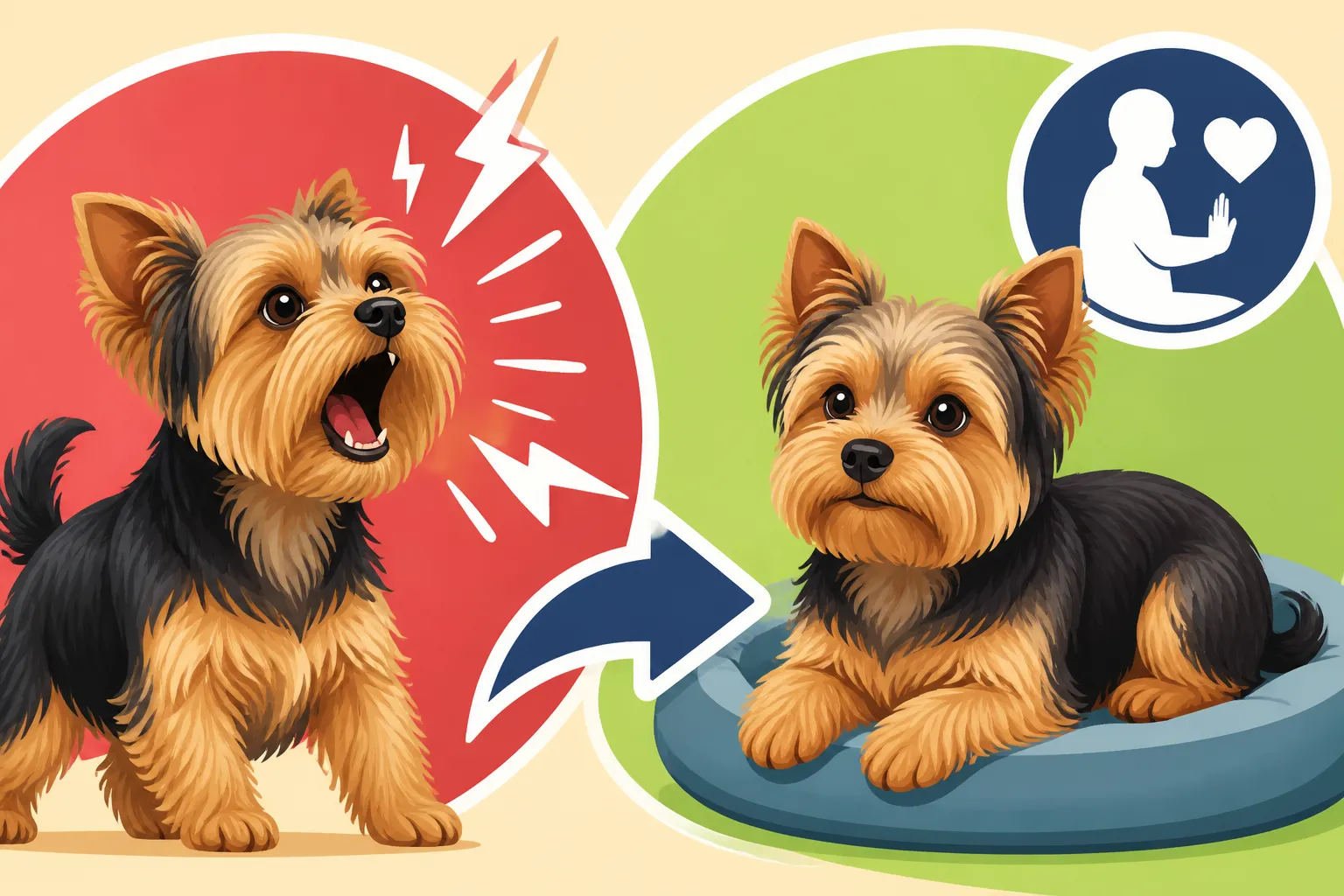
One of the most common is alert barking. This happens when your Yorkie perceives something new or unusual in their environment – a knock at the door, a stranger walking by the window, another dog barking down the street. They are simply letting you know, "Hey! Something's out there!" Another frequent offender is demand barking, where your Yorkie barks to get your attention for food, playtime, or cuddles. They quickly learn that barking gets a reaction, and any reaction, even negative attention, reinforces the behavior.
Then there's boredom barking or frustration barking. A Yorkie left alone for too long with insufficient physical or mental stimulation might bark out of sheer boredom or frustration. They have energy and intelligence, and if it's not channeled constructively, it can come out in vocalizations. Lastly, anxiety barking, especially related to Yorkshire Terrier Separation Anxiety Solutions, can be heartbreaking. This is often accompanied by other signs like pacing, destructive chewing, or inappropriate urination when you're away. Understanding these nuances helps you tailor your approach.
Health Issues That Can Cause Barking
While most barking stems from behavioral or instinctual reasons, it's vital not to overlook potential medical causes. Imagine if you had a toothache; you might groan or complain, and a Yorkie's way of expressing discomfort or pain is often through increased vocalization. Older Yorkies, in particular, can develop health conditions that manifest as unusual or excessive barking.
Conditions like chronic pain from arthritis or a hidden injury, dental disease (which is incredibly common in Yorkies, as explored in Yorkshire Terrier Dental Care Guide), or even an ear infection can cause a dog to bark more than usual. They might be trying to tell you something hurts, or they might be acting out due to discomfort. A sudden change in barking habits, especially if it's accompanied by other symptoms like lethargy, changes in appetite, or reluctance to be touched, warrants immediate veterinary attention.
Cognitive Dysfunction Syndrome (CDS), often referred to as "doggy dementia," is another significant concern for senior Yorkies. Dogs with CDS might bark aimlessly, especially at night, or seem disoriented. Hearing loss can also contribute, as a dog who can't hear as well might bark louder to compensate or bark more frequently because they're startled easily. Before embarking on a rigorous training regimen, always rule out these underlying health issues. A vet check-up is an investment in your Yorkie's well-being and your peace of mind.
Essential First Steps to Address Barking
Before you even think about "training" in the traditional sense, there are some foundational steps that are absolutely crucial. Without these, any training efforts might just feel like you're bailing water out of a leaky boat.
Rule Out Medical Concerns
This cannot be stressed enough: your first call should always be to your veterinarian if your Yorkie's barking has suddenly escalated or changed in nature. Even if you suspect it's purely behavioral, a clean bill of health provides invaluable peace of mind and ensures you're not missing a critical underlying issue. A veterinarian can conduct a thorough examination, including checking their ears, teeth, joints, and overall physical condition.
They might perform blood tests to check for conditions like hypothyroidism or other metabolic imbalances that could affect behavior. For older Yorkies, a vet might specifically look for signs of cognitive decline or chronic pain that could be prompting the increased vocalization. Don't fall into the trap of self-diagnosing or assuming it's "just" a behavioral problem without professional input. The Yorkie Emergency Symptoms to Never Ignore article offers more insights into serious signs that require immediate attention.
Once your vet confirms your Yorkie is physically healthy, you can proceed with behavioral training with confidence, knowing you've addressed the most fundamental aspect of their well-being. This step is a non-negotiable part of responsible pet ownership and lays the groundwork for any successful training intervention. Skipping it could mean you're treating symptoms instead of the actual problem.
Identify the Root Cause
Once medical issues are off the table, your next detective work involves pinpointing exactly what triggers your Yorkie's barking. This isn't always as simple as it sounds because Yorkies can be complex little beings. Start by keeping a barking log for a few days, or even a week. Note down when your Yorkie barks, for how long, what was happening just before the barking started, and how you (and others in the household) responded.
For example, did they bark when someone walked by the window? Was it when you picked up your keys? Did they bark at you while you were eating dinner? Was it late at night seemingly for no reason? This log will help you identify patterns. You might discover your Yorkie primarily barks at the mail carrier, indicating alert barking, or perhaps they bark every time you sit down to work, suggesting attention-seeking behavior.
Understanding these specific triggers is paramount because it informs your training strategy. You wouldn't use the same approach for a Yorkie barking at squirrels as you would for one barking out of separation anxiety. This careful observation phase is foundational to effectively How to Stop Yorkie Excessive Barking.
Consistency and Patience are Key
Let's be honest, we all want a quick fix, especially when the barking is grating on our nerves. But training a Yorkie, especially when it comes to ingrained behaviors like barking, requires immense consistency and a healthy dose of patience. Your Yorkie didn't learn to bark excessively overnight, and they won't unlearn it overnight either. Every single member of your household must be on the same page and respond to barking in the exact same way, every single time.
Inconsistency is the biggest enemy of successful training. If one family member ignores demand barking, but another gives in just once, your Yorkie learns that if they bark long enough or loudly enough, they might eventually get what they want. This essentially puts the behavior on an "intermittent reinforcement schedule," which actually makes it harder to extinguish. It's like a slot machine – sometimes you win, sometimes you don't, but that occasional win keeps you pulling the lever.
Remember, Yorkies are smart. They pick up on subtle cues and learn quickly what works. Your commitment to a consistent approach, even when you're tired or frustrated, will be the single most important factor in seeing lasting results. This journey isn't a sprint; it's a marathon, and your calm, consistent leadership will guide your Yorkie to a quieter state.
Training Strategies for Barking Reduction
Once you've ruled out medical issues and identified triggers, it's time to dive into specific training techniques. These aren't magic bullets, but with consistent application, they can significantly reduce unwanted barking.
Teaching the "Quiet" Command
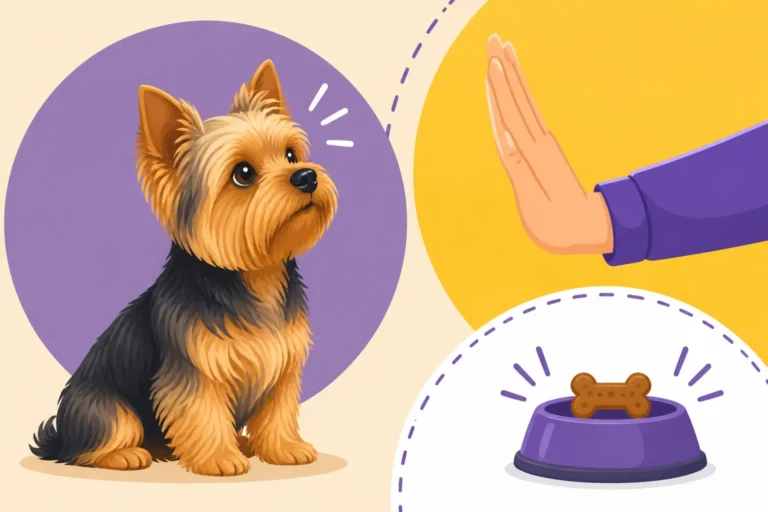
Teaching your Yorkie the "Quiet" command is incredibly empowering because it gives them an alternative, acceptable behavior rather than just punishing the barking. This method focuses on positive reinforcement, which is always the most effective way to train a Yorkie. Start by intentionally setting up a barking trigger, like having someone ring the doorbell lightly or knocking on the door.
When your Yorkie barks (which they will!), let them bark 2-3 times. Then, hold a high-value treat (something really enticing, like small pieces of cooked chicken or cheese) near their nose. The moment they stop barking to sniff the treat, say "Quiet!" and immediately give them the treat. The key is to mark the silence, not the barking. If they continue barking, move the treat away and try again. Repeat this many times over short, frequent sessions.
As your Yorkie starts to understand that "Quiet!" means to stop barking for a treat, gradually increase the duration of silence required before rewarding them. Instead of immediately rewarding after 2 seconds, wait for 4, then 6, then 10. Slowly phase out the need for a treat every time, but always praise them profusely. This command can be a lifesaver for situations like the mail carrier or when someone comes to the door, giving you a tool to manage the noise. This is a core component of How to Train a Yorkshire Terrier.
Desensitization and Counter-Conditioning
For triggers that are easily identifiable, like the doorbell or specific outside noises, desensitization and counter-conditioning are powerful tools. Desensitization means gradually exposing your Yorkie to the trigger at a low intensity, while counter-conditioning means changing their emotional response to that trigger from negative (barking, fear) to positive (calm, happy).
Let's use the doorbell example. Start by recording your doorbell sound. Play it back at a very low volume, so low that your Yorkie notices it but doesn't react with barking. The moment you play it, immediately give them a high-value treat and praise. Repeat this many times. Slowly, over days or weeks, gradually increase the volume of the doorbell. If your Yorkie barks, you've gone too fast; reduce the volume again. The goal is for them to associate the sound of the doorbell with good things (treats!) rather than with an intruder to be barked at.
You can apply this to other triggers too, such as the sound of children playing outside, car doors slamming, or even the sight of people walking by the window. For visual triggers, you might use window film or frosted glass to obscure the view initially, then gradually allow small glimpses while pairing it with treats. This systematic approach, as detailed in How to Socialize a Yorkshire Terrier, reconditions their emotional response and can significantly reduce the intensity and frequency of their barking.
Managing Demand Barking and Attention-Seeking
Demand barking is often one of the most frustrating types because it's directly aimed at you. Your Yorkie has learned that barking gets results, whether it’s food, a toy, a walk, or just a pat on the head. The absolute best way to stop demand barking is to consistently ignore it. This is incredibly hard, as the barking will often escalate (called an "extinction burst") before it gets better, but it's essential.
When your Yorkie barks for attention, food, or a toy, turn your back, walk away, or leave the room. Do not make eye contact, do not speak to them, and absolutely do not give in to their demands. The moment they quiet down, then you can give them what they wanted or offer praise and attention. This teaches them that silence gets them what they want, not barking. It sounds simple, but it requires ironclad consistency from everyone in the household.
It's also important to teach them alternative, polite ways to ask for things. For instance, if they bark for food, teach them to sit patiently by their bowl. If they bark for playtime, teach them to bring you a toy quietly. You can also proactively give them attention and engage in play when they are not barking, reinforcing calm behavior. Over time, your Yorkie will learn that barking is ineffective, and calm, polite behavior yields far better results.
Environmental Management and Lifestyle Adjustments
Sometimes, the most effective "training" isn't about teaching new commands but about changing the environment and routine to prevent the barking from starting in the first place.
Reducing Triggers in the Home
A significant amount of Yorkie barking is reactive – they see or hear something, and they respond. By managing their environment, you can dramatically reduce the number of triggers they encounter daily. For window barkers, simply closing the blinds or curtains, especially in rooms facing high-traffic areas, can work wonders. If you still want some natural light, consider using frosted window film on the lower panes or strategically placing plants to block their view.
Another helpful tool is a white noise machine or even just leaving a radio or TV on. This can help muffle outside sounds that might trigger alert barking, making your home feel a little more insulated from the hustle and bustle of the outside world. This is especially useful if your Yorkie barks at every distant siren or the sound of your neighbor's dog. For door-related barking, you might consider having a bell or chimes at the door that you ring a few seconds before knocking, allowing you to prepare your Yorkie with a "quiet" command or distraction.
For some Yorkies, a designated "safe space" like a crate can be invaluable. If they are overstimulated, sending them to their comfortable crate with a chew toy can help them decompress. Learn more about appropriate crate usage in Yorkie Crate Size Guide. By actively managing the stimuli in their environment, you empower your Yorkie to be calmer and less reactive.
Ensuring Adequate Mental and Physical Stimulation
A bored Yorkie is often a noisy Yorkie. Despite their small size, Yorkshire Terriers are intelligent and energetic dogs that require both physical and mental stimulation to be well-behaved. Don't underestimate their need for activity just because they're small enough to be lapdogs. Short, regular walks are essential, not just for potty breaks, but also for sniffing, exploring, and burning off energy. The article on Yorkshire Terrier Exercise Needs provides great ideas for keeping them active.
Beyond physical exercise, mental enrichment is equally important. Puzzle feeders, like those from popular brands found easily on Amazon, make your Yorkie "work" for their food, engaging their brains. Training sessions, even just 10-15 minutes a day, teaching new tricks or reinforcing old commands, provide excellent mental exercise. You can also incorporate interactive toys that dispense treats or require problem-solving.
A tired Yorkie, both physically and mentally, is a quiet Yorkie. If your Yorkie is barking out of boredom, simply upping their game in terms of daily activity and enrichment can make a world of difference. This proactive approach prevents many barking incidents before they even start, turning a bored, frustrated barker into a happily tired companion.
Addressing Separation Anxiety
Separation anxiety is a serious and distressing condition for many Yorkies, and excessive barking is a common symptom. This isn't naughty barking; it's panic barking. If your Yorkie barks, howls, or whines incessantly when you leave, and also exhibits other behaviors like destructive chewing, inappropriate urination or defecation, or attempts to escape, it's highly likely they are suffering from separation anxiety.
Addressing this requires a multi-faceted approach. One key strategy is desensitization to your departure cues. Your Yorkie likely knows your routine before you leave – you grab your keys, put on your coat, pick up your bag. Start performing these actions without actually leaving. Grab your keys, then put them back down. Put on your coat, then take it off and sit on the couch. This helps to break the association between these actions and your impending departure.
Gradually increase the time you're away, starting with just a few seconds, then a minute, then five minutes, and so on. Only return when your Yorkie is quiet. You can monitor them with a pet camera to ensure you're returning at the right time. For more severe cases, professional help from a veterinary behaviorist might be necessary. They can assess the situation and, if appropriate, prescribe medication in conjunction with behavior modification. For deeper insights into managing this challenge, refer to the detailed guide on Yorkshire Terrier Separation Anxiety Solutions.
Tools and Resources to Aid Barking Control
While consistency and training are paramount, certain tools and resources can certainly give you a helping hand in your journey to curb excessive barking.
Effective Training Aids
When it comes to training your Yorkie, having the right tools can make the process smoother and more effective. A front-clip harness, for example, is excellent for leash training and provides better control without putting pressure on their delicate trachea, which is especially important for Yorkies prone to Yorkshire Terrier Collapsing Trachea: Signs and Care. These are readily available on Amazon and from many pet retailers. High-value treats are also crucial for positive reinforcement. Think small, soft, and irresistible morsels your Yorkie absolutely adores, like tiny pieces of cheese, cooked chicken, or specialized training treats.
Clicker training is another fantastic aid. A clicker provides a precise marker for the exact moment your Yorkie performs the desired behavior, which then follows with a treat. This clarity helps your Yorkie understand much faster what behavior you are rewarding. While bark collars (like citronella or vibration collars) exist, they should be used with extreme caution and ideally under the guidance of a professional trainer. Many trainers advise against them as they can suppress barking out of fear rather than teaching an alternative, calm behavior, and may even exacerbate anxiety in some sensitive Yorkies.
For dogs that bark when they're alone, a pet camera allows you to monitor their behavior and intervene (e.g., via two-way audio) or time your returns perfectly for training. Using appropriate, humane tools that focus on teaching and rewarding good behavior will always yield better long-term results than relying on harsh corrections or punishment.
Professional Help: Trainers and Behaviorists
Sometimes, despite your best efforts, you might feel like you're hitting a wall with your Yorkie's barking. This is not a sign of failure on your part, but rather an indication that it's time to call in the cavalry! Professional dog trainers and veterinary behaviorists have the expertise and experience to diagnose complex behavioral issues and create tailored training plans.
A certified professional dog trainer, especially one experienced with small breeds or terrier temperaments, can observe your Yorkie's barking firsthand, identify subtle triggers you might have missed, and teach you the specific techniques to manage it. They can provide hands-on guidance, refine your timing, and help you understand canine body language. For those who prefer structured learning, online platforms and programs like BAXTER & Bella offer comprehensive training courses that can be done from the comfort of your home, providing step-by-step instructions and support. These can be particularly helpful for building a strong foundation of obedience and addressing various Yorkshire Terrier Behavior Problems and Solutions.
For severe cases of barking, particularly those linked to anxiety, aggression, or deep-seated fears, a veterinary behaviorist is the most appropriate professional. These are veterinarians with specialized training in animal behavior. They can address both the behavioral and potential medical/neurological components of the problem, and can even prescribe medication if necessary, to help your Yorkie cope while you work on behavior modification. Don't hesitate to seek help; it's an investment in your Yorkie's well-being and your household's peace.
Creating a Consistent Schedule and Routine
Just like humans, Yorkies thrive on routine and predictability. A consistent daily schedule can significantly reduce anxiety and, consequently, barking. When your Yorkie knows when to expect their meals, potty breaks, playtime, and training sessions, they feel more secure and are less likely to resort to demand barking or barking out of uncertainty. This structure provides a sense of stability that is calming for many dogs.
Establish regular times for waking up, feeding (refer to Yorkshire Terrier Feeding Guide by Age for appropriate portions), potty breaks, and walks. Stick to these times as closely as possible every day, even on weekends. For example, if your Yorkie gets two walks a day, try to keep them around the same time. If they're used to a midday play session, make sure that happens.
A consistent routine also helps with managing boredom and energy levels. If your Yorkie is regularly exercised and mentally stimulated as part of their daily schedule (as discussed in Yorkshire Terrier Daily Care Routine), they will be less likely to have pent-up energy that manifests as excessive barking. This predictability reduces stress, which in turn leads to a calmer, quieter, and happier Yorkie.
Barking Type and Solution Overview
To help you get a quick handle on different barking scenarios and their corresponding solutions, here's a handy table. Remember, consistent application is key!
| Barking Type | Common Triggers | Yorkie's Motivation | Effective Solutions | What to Avoid |
|---|---|---|---|---|
| Alert/Territorial | Doorbell, strangers, mail carrier, outside noises, other dogs | Warning you of perceived threats | Teach "Quiet" command, desensitize to triggers, block visual access, use white noise. | Yelling, running to the door, inadvertently rewarding. |
| Demand/Attention | You're eating, on the phone, ignoring them, holding a favorite toy | Wants something (food, play, attention) | Ignore completely until quiet, reward silence, teach "polite" ways to ask (e.g., sit). | Giving in, scolding (still attention). |
| Boredom/Frustration | Left alone too long, insufficient exercise/mental stimulation | Under-stimulated, needs an outlet | Increase physical exercise, provide puzzle toys, incorporate mental games, more training. | Leaving alone with nothing to do, assuming small dogs don't need activity. |
| Anxiety/Fear | Being left alone, loud noises (thunder, fireworks), new environments | Feeling unsafe, stressed, or panicking | Desensitize to triggers, create safe space, gradual exposure, consider professional behaviorist. | Punishing anxiety, forcing interaction with fear triggers. |
| Excitement/Play | Playtime with you, other dogs, greeting visitors | Expressing joy, enthusiasm, social interaction | Redirect with appropriate play, teach "quiet" during play, manage greetings to be calmer. | Over-exciting, allowing chaotic greetings. |
| Pain/Discomfort | Sudden increase in barking, accompanying other symptoms | Communicating pain or illness | Immediate vet visit. Rule out medical conditions like dental issues, arthritis, ear infections, etc. | Ignoring, assuming it's purely behavioral. |
| Age-Related/Dementia | Disorientation, confusion, especially at night | Cognitive decline, seeking reassurance | Vet consultation for management, consistent routine, gentle reassurance, nightlights. | Scolding confusion, expecting old dogs to behave like puppies. |
Disclaimer
The information provided in this guide is for general educational purposes only and should not be considered a substitute for professional veterinary advice. Always consult with a qualified veterinarian or certified professional dog trainer for any health concerns or before implementing significant changes to your pet's care or training regimen. Individual results may vary depending on your Yorkie's specific situation, temperament, and health.