How to Stop a Yorkie from Biting
It’s incredibly frustrating, even heartbreaking, when your sweet little Yorkshire Terrier starts to bite. Whether it's those sharp puppy nips that draw blood, persistent play biting, or something more concerning like growling and snapping, it can leave you feeling confused, worried, and even a little scared. You might wonder if you're doing something wrong, or if your beloved Yorkie has a deeper issue. This comprehensive guide is here to shed light on why Yorkies bite and, more importantly, equip you with practical, empathetic strategies to gently but effectively curb this behavior, ensuring a safe and happy home for everyone.
Understanding Why Your Yorkie Bites
Before we can address biting, we need to understand its root causes. Biting is a natural form of communication for dogs, but in our human world, it’s not acceptable. Pinpointing why your Yorkie is biting is the first crucial step toward finding a solution. It’s rarely out of malice; usually, it’s a learned behavior, a cry for help, or a misunderstanding.
Puppy Nipping and Teething
Ah, the "puppy shark" phase! If you’ve got a young Yorkie, chances are you’re intimately familiar with those razor-sharp puppy teeth. This isn't aggression; it's a completely normal part of development. Puppies explore the world with their mouths, just like human toddlers. They learn about bite pressure from their littermates and mother. When they nip too hard, their sibling yelps, and play stops, teaching them to be gentler. Without this crucial feedback from their litter, or if they were separated too early, they miss out on vital lessons in bite inhibition.
Beyond exploration, teething is a significant factor. From about 3 weeks to 6 months of age, puppies are losing their baby teeth and growing in their adult set. This process can be quite uncomfortable, and chewing on anything and everything — including your fingers, ankles, or even furniture — helps to soothe their aching gums. It’s their way of trying to relieve the discomfort, and unfortunately, your skin can become an easy target if there aren't better options available. Understanding this phase is key to managing it patiently. Many of the behaviors described in our Yorkie Puppy Biting Phase Explained article also touch upon this natural developmental stage.
Play Biting and Excitement Nips
Even older Yorkies can engage in play biting or excitement nips. This often happens when they get overly stimulated during playtime, like a spirited game of tug-of-war or chase. Their natural instincts take over, and they might mouth or gently nip at your hands or clothing as an extension of their play. While it might seem harmless if it's not painful, it's a behavior that should still be managed, as it can escalate or be misinterpreted by others, especially children.
Sometimes, these nips can also occur when they're particularly excited, such as when you come home, or during an energetic greeting. They might jump up and mouth your hands or wrists, a behavior that is often accompanied by wiggling bodies and happy barks. While their intentions are friendly, the act of biting, even softly, should be discouraged to prevent accidental injury and to ensure they understand appropriate boundaries. It’s important to remember that even small nips can be alarming and potentially hurtful for someone unfamiliar with your dog.
Fear, Anxiety, or Pain-Related Biting
This is where biting becomes more serious and warrants immediate attention. A Yorkie who bites out of fear, anxiety, or pain isn't being "naughty"; they are desperately trying to communicate distress or protect themselves. Imagine being in constant discomfort or feeling trapped and vulnerable—you’d react too. A dog in pain, perhaps from an injury or an underlying health issue, might snap or bite if touched in a sensitive area. This is a common reason why a previously gentle dog might suddenly bite. If you notice a sudden change in behavior, always consider a vet visit first.
Anxious or fearful Yorkies might bite if they feel threatened, cornered, or overwhelmed. This could be triggered by unfamiliar people, loud noises, new environments, or even certain handling techniques they find uncomfortable. Dogs often give subtle warning signs before biting – a stiff posture, growling, lip licking, yawning, or a tucked tail – but these can be easily missed. It's vital to recognize these signs and respect them. For more details on overall health, our guide on Yorkshire Terrier Health Problems to Know can offer insights into potential underlying issues that might cause pain or discomfort.
Resource Guarding and Territoriality
Resource guarding is when a dog becomes possessive over certain items – food, toys, their bed, or even a person – and will growl, snap, or bite to prevent others from approaching or taking them away. This isn't necessarily aggression towards you as much as it is a deep-seated instinct to protect what they perceive as valuable. It can be a scary behavior to witness, especially when it involves something as innocuous as their favorite squeaky toy or their food bowl.
Territoriality, on the other hand, is when a Yorkie guards a specific space, like your home, yard, or even your lap. They might bark frantically at strangers passing by the window or snap if someone gets too close to their perceived territory while they are on your couch. This behavior often stems from a lack of proper socialization and confidence, coupled with a strong protective instinct inherent in many terrier breeds. It's their way of saying, "This is mine, and I'm defending it!" Understanding these nuances is crucial for implementing effective training.
Essential First Steps to Address Biting
Once you've got a clearer picture of why your Yorkie might be biting, it's time to take action. The initial steps involve managing the behavior safely and setting up your environment for success. It's about preventing the biting from happening while you teach them better habits.
Immediate Reactions to Biting
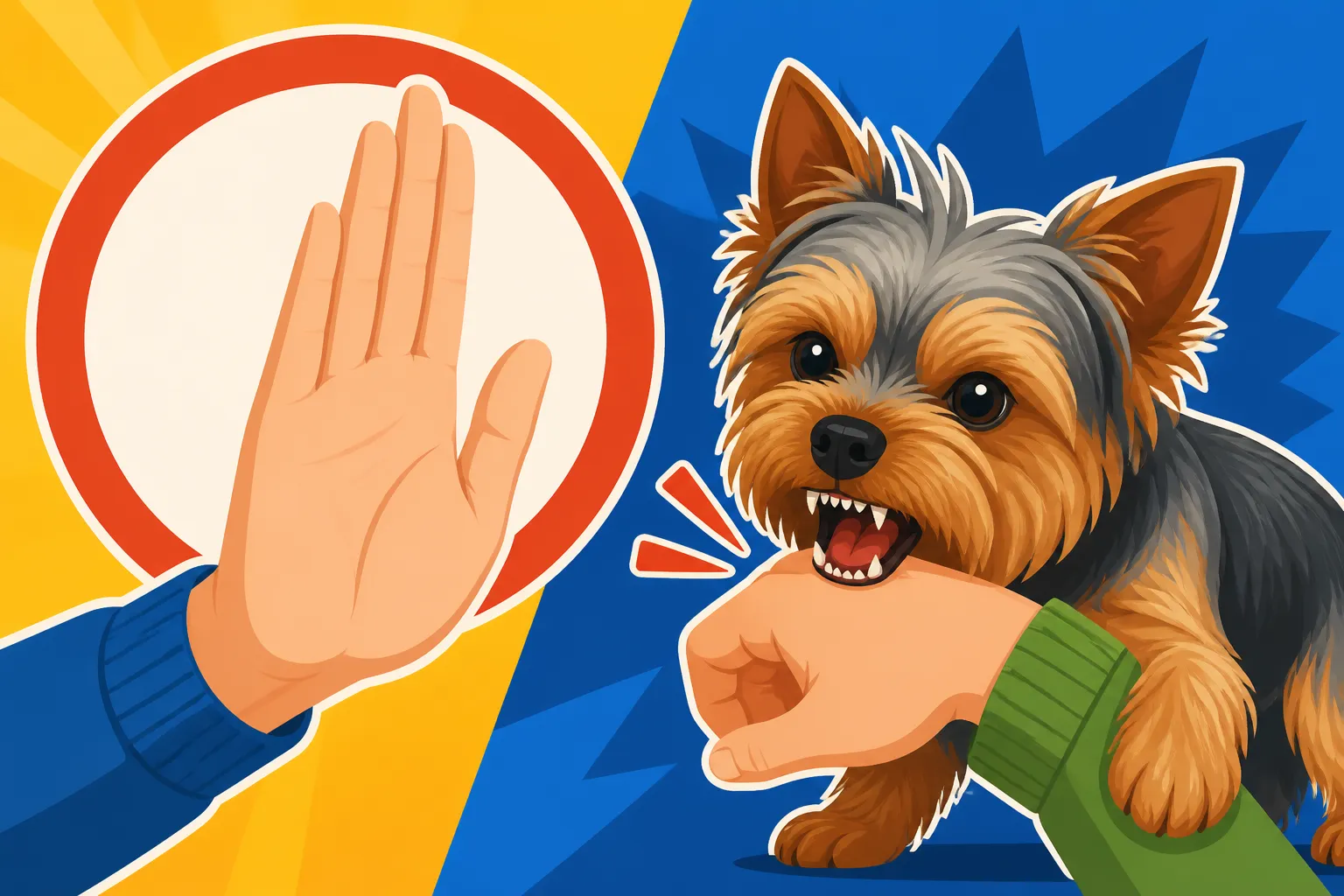
When your Yorkie bites, your immediate reaction is incredibly important. Yelling, punishing, or hitting them will only make the situation worse, potentially increasing their fear or confusion, and damaging your bond. Dogs don't understand punishment in the way humans do; they just learn to fear your reactions. Instead, focus on clear, consistent communication.
For puppy nipping or play biting, a sharp "yelp" or "ouch!" in a high-pitched voice, mimicking a littermate's cry, can be very effective. Immediately withdraw your attention and your hand. Turn your back, or even leave the room for 10-20 seconds. This teaches them that biting means the fun stops. This technique, often called "reverse time-out," is a powerful tool because what your Yorkie wants most is your attention and interaction. When you resume play, if they bite again, repeat the process. Consistency is paramount here. The goal is to teach bite inhibition, as detailed in our guide on (How to Teach a Yorkie to Leave It) or(How to Teach a Yorkie to Quiet).
Management Strategies for Safety
Until the biting behavior is under control, your priority is to ensure the safety of everyone in the household, especially children or vulnerable adults. This means actively managing situations that could lead to biting. If your Yorkie is prone to nipping guests, consider putting them in a separate room with a chew toy or in their crate when visitors arrive. A comfortable crate, introduced positively, can be an excellent safe haven. For tips on how to introduce this, you might find our article on How to Crate Train a Yorkie helpful.
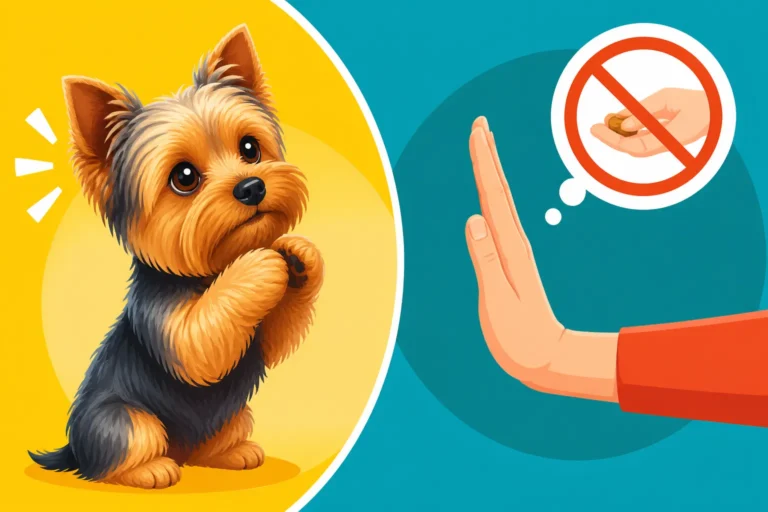
For resource guarding, avoid directly confronting your Yorkie over guarded items. Instead, use a "trade" method: offer a high-value treat in exchange for the item, gradually teaching them that good things happen when you approach their prized possessions. Always supervise interactions between your Yorkie and children. Teach children how to interact respectfully with dogs, avoiding sudden movements, grabbing toys, or getting too close to their face. A well-fitted harness, like those available on Amazon, can also provide better control during walks and prevent lunging if your Yorkie is prone to territorial barking at other dogs or people.
Providing Appropriate Chew Toys and Outlets
Yorkies, especially puppies, have a strong need to chew. If they don't have appropriate outlets, they'll find their own – and that often means your hands, shoes, or furniture. Invest in a variety of durable, safe chew toys. Look for different textures and hardness levels. Rubber toys, Nylabones, Kongs (which can be stuffed with peanut butter or yogurt and frozen for extended engagement), and even safe dental chews can be excellent choices. Rotate these toys to keep them interesting.
Providing plenty of mental and physical stimulation is also crucial. A bored Yorkie is often a destructive or nippy Yorkie. Regular, short walks, interactive puzzle toys, and short training sessions can help burn off excess energy and engage their minds. For example, brands like BAXTER & Bella often recommend enrichment toys as part of their comprehensive puppy training programs to keep dogs happily occupied. Remember, a tired Yorkie is often a well-behaved Yorkie. This is especially true when discussing Yorkshire Terrier Behavior Problems and Solutions, as many issues stem from unmet needs.
| Biting Type | Common Cause | Immediate Reaction | Long-Term Solution |
|---|---|---|---|
| Puppy Nipping | Teething, exploration, learning bite inhibition | "Yelp" + brief time-out | Provide chew toys, teach bite inhibition |
| Play Biting | Over-excitement during play, attention-seeking | Stop play immediately, ignore briefly | Redirect to toys, teach impulse control |
| Fear/Anxiety Bite | Feeling threatened, pain, overwhelm | Create space, identify trigger, avoid punishment | Desensitization, vet check, professional help |
| Resource Guarding | Protecting perceived valuable items or space | Do not challenge, trade for higher value item | Positive association, "trade" game, professional help |
| Territoriality | Guarding home/family, lack of socialization | Manage environment, remove from trigger | Socialization, confidence building, consistent training |
Training Techniques to Curb Biting
Once you have the immediate reactions and management strategies in place, it’s time to focus on active training. This is where you teach your Yorkie what to do instead of biting, using positive, reward-based methods.
Bite Inhibition Training
Bite inhibition is perhaps the most important lesson a puppy can learn. It's not about stopping them from biting altogether (dogs will always use their mouths), but teaching them how hard they can bite without causing harm. As mentioned, littermates teach this by yelping and stopping play. You need to simulate this.
When your Yorkie's teeth make contact with your skin, even gently, let out a high-pitched "ouch!" or "yelp!" immediately. Then, let your hand go limp and withdraw it. Give a quick 10-20 second "time-out" by turning away or walking out of the room. After the short time-out, return and resume play. If the biting is still too hard, repeat the process. The goal is to get to the point where they can mouth your hand very gently without you reacting. This teaches them to control the pressure of their bite. It might take many repetitions, but consistency is key. This forms a foundational understanding for all future interactions. For comprehensive insights into puppy development, refer to our Yorkshire Terrier Puppy Health Guide.
Redirection and Positive Reinforcement
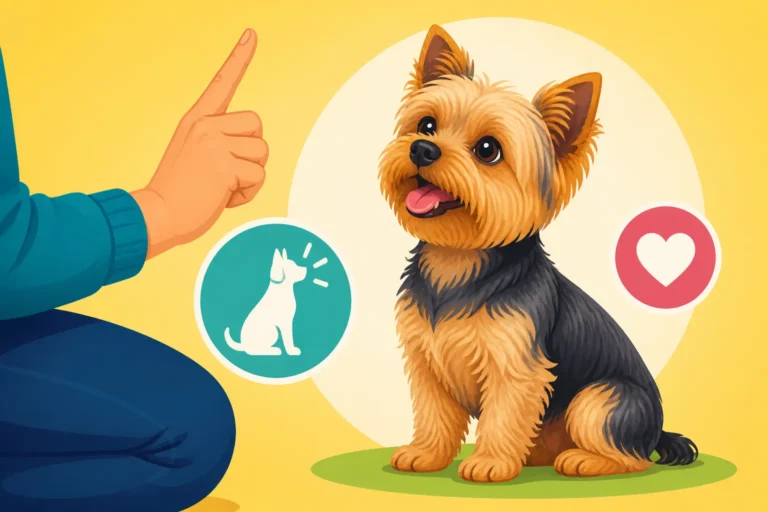
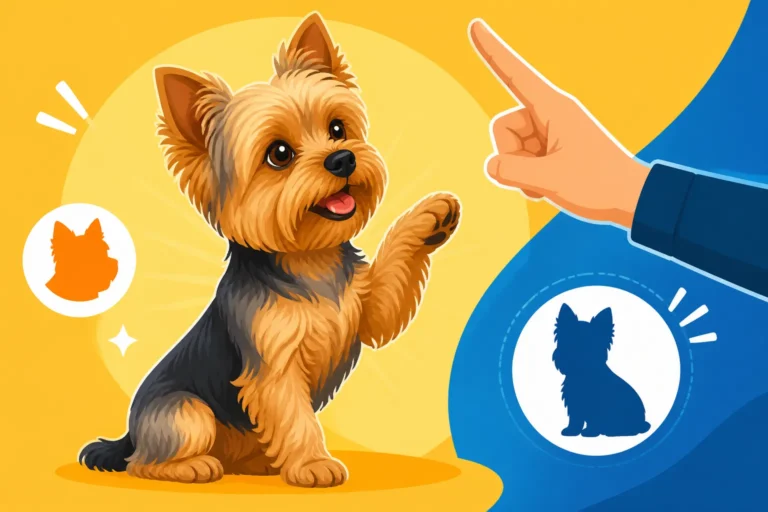
Once your Yorkie understands bite inhibition, the next step is redirection. When they go to nip your hands, immediately redirect their attention and mouth to an appropriate chew toy. As soon as they take the toy in their mouth, praise them calmly and reward them with a treat. This teaches them that chewing on a toy gets them positive attention and rewards, while chewing on you makes the fun stop.
Positive reinforcement is the backbone of effective dog training. Instead of focusing on what you don't want them to do, reward what you do want them to do. If your Yorkie comes to you for pets and doesn't nip, praise and reward them. If they calmly chew their toy instead of your furniture, praise and reward. This method is far more effective and builds a stronger, more trusting relationship than punishment. Many resources, including online dog training platforms like BAXTER & Bella, are built entirely around positive reinforcement principles. Learning to utilize Positive Reinforcement Training for Yorkies can truly transform their behavior.
Desensitization and Counter-Conditioning
For Yorkies who bite out of fear, anxiety, or territoriality, desensitization and counter-conditioning are powerful techniques. Desensitization means gradually exposing your dog to the trigger (e.g., a stranger, a specific sound, or handling) at a low intensity where they don't react fearfully. Counter-conditioning means changing their emotional response from negative (fear, anxiety) to positive (happiness, relaxation) by associating the trigger with something wonderful, like high-value treats.
For example, if your Yorkie nips at the groomer due to fear, start by simply handling their paws, ears, and mouth gently at home, giving them delicious treats with each touch. Gradually increase the intensity and duration. If a particular sound makes them anxious, play the sound at a very low volume while feeding them their favorite meal. Slowly increase the volume over days or weeks. This process takes time, patience, and careful observation, but it’s incredibly rewarding as it helps your Yorkie build confidence and reduces their need to bite out of fear.
Addressing Specific Biting Scenarios
Biting manifests in different ways, and while the core training principles remain, tailoring your approach to specific scenarios can be highly effective.
Biting During Playtime
It's natural for Yorkies to get a little over-excited during play. When their teeth make contact with your skin during a game, even if it's not hard, end the game immediately. Say "Oops, too rough!" or "Game over!" in a calm, firm voice, and withdraw your attention. You can stand up and walk away, or put the toy away for a few minutes. This teaches your Yorkie that biting stops the fun. After a short break, you can re-engage with a toy, reminding them to only mouth the toy, not your hands.
Another strategy is to introduce a specific toy for interaction games. For instance, if you're playing tug, ensure your hands are only touching the handle or a section of the toy, and never the part your Yorkie is biting. If their teeth accidentally touch your hand, the game stops instantly. This consistent feedback helps them understand the boundaries of appropriate play. It's about teaching impulse control and reinforcing the idea that your hands are not toys. Providing a variety of Best Toys for Yorkshire Terriers can also help redirect their chewing urges.
Nipping at Strangers or During Grooming
Nipping at strangers often stems from fear, lack of socialization, or an instinct to protect you. If your Yorkie nips at visitors, preemptively manage the situation. Keep them on a leash in the house when guests arrive, or put them in their crate with a special, long-lasting chew. As they calm down, you can slowly introduce them to guests, always supervised. Have guests offer treats (toss them, don't hand-feed initially) and ignore the dog until they initiate contact. This teaches your Yorkie that strangers bring good things, rather than being threats. For guidance on introducing your dog to new people, our article on How to Socialize a Yorkie Puppy is a great resource.
Biting during grooming, nail trims, or vet visits is often a fear response. Again, desensitization is key. Practice handling their paws, ears, mouth, and body at home, pairing each touch with a delicious treat. Make these sessions short, positive, and frequent. If they show any signs of discomfort, stop, wait for them to relax, and then try again more gently. For severe cases, a muzzle might be necessary for safety during grooming or vet procedures, but always introduce a muzzle positively, making it an enjoyable experience, not a punishment. Your vet can provide advice on a comfortable fit and positive introduction.
Handling Resource Guarding or Aggression
Resource guarding requires a delicate and cautious approach. Never try to snatch an item away from a resource-guarding Yorkie, as this can escalate the behavior and lead to a more severe bite. Instead, focus on the "trade" game. Start with low-value items: when your Yorkie has a toy, approach and offer a higher-value treat. When they drop the toy to take the treat, praise them and give them the original toy back (or a different one). Gradually work up to higher-value items. The goal is to teach them that your approach means something better is coming, making them happy to give up what they have.
If resource guarding is severe or escalates to aggressive growling, snapping, or biting, it is imperative to seek professional help. This is not a behavior to tackle alone, as incorrect methods can be dangerous and worsen the problem. Aggression, whether rooted in fear, pain, or guarding, always warrants expert intervention to ensure safety and effective modification. Yorkie Aggression: Causes and Solutions delves into these complex behaviors more deeply.
When to Seek Professional Help
It’s easy to feel overwhelmed when dealing with a biting Yorkie. While many minor nipping issues can be resolved with consistent at-home training, there are clear signs that professional help is needed. Recognizing these indicators isn't a sign of failure, but rather a responsible step towards ensuring your Yorkie's well-being and the safety of everyone around them.
Recognizing Escalating or Persistent Biting
If your Yorkie's biting is becoming more frequent, more intense, or if they are no longer giving warning signs before biting (like growling or lip-licking), it's a serious concern. A bite that breaks the skin, particularly from an adult dog, is a red flag. If the behavior is persistent despite consistent application of the training techniques discussed, or if you feel fearful or intimidated by your own dog, it's time to call in a professional. Ignoring escalating biting can lead to more dangerous situations and make the problem harder to resolve in the long run.
Moreover, if the biting seems to come out of nowhere, without any clear trigger, or if it's directed at you or family members unexpectedly, this is also a sign that an expert needs to evaluate the situation. Sometimes, what seems like random aggression could be a symptom of a deeper issue that requires specialized insight. Don't hesitate or feel ashamed; many dog owners face similar challenges, and help is readily available.
Consulting a Vet to Rule Out Medical Issues
Any sudden onset of biting, or a significant change in a dog's temperament, should always start with a visit to your veterinarian. As mentioned earlier, pain, discomfort, or an underlying medical condition can cause a previously gentle dog to become irritable and resort to biting. Conditions such as dental pain, arthritis, neurological issues, thyroid imbalances, or even sensory decline (like worsening eyesight or hearing, which can increase fear) can trigger aggressive behavior.
Your vet can conduct a thorough physical examination and recommend diagnostic tests to rule out any health problems. Addressing an underlying medical issue can often completely resolve the biting behavior. If no medical cause is found, your vet can then refer you to a reputable dog behavior specialist or a veterinary behaviorist who can delve deeper into behavioral causes. When considering costs, it's always good to be prepared; our article on Yorkshire Terrier Vet Costs and Health Budget provides a comprehensive overview.
Working with a Certified Professional Dog Trainer or Behaviorist
If medical issues have been ruled out, or if the biting is clearly behavioral but beyond your comfort or skill level to manage, seeking help from a certified professional dog trainer or a veterinary behaviorist is the next crucial step. These professionals have specialized knowledge and experience to diagnose the root cause of the biting and develop a safe, effective, and humane modification plan tailored to your Yorkie's specific needs.
Look for trainers who use positive reinforcement methods and are certified by reputable organizations (e.g., CCPDT, KPA, IAABC). A veterinary behaviorist is a veterinarian who has undergone extensive additional training in animal behavior and can prescribe medication if anxiety or fear is a significant contributing factor. Don't be afraid to ask for qualifications and references. Investing in professional guidance can save you immense stress, ensure your dog's safety, and help you build a stronger, happier relationship with your beloved Yorkshire Terrier. For more general training advice, our How to Train a Yorkshire Terrier article provides a great foundation.
Disclaimer
Please note that this article is intended for informational purposes only and is not a substitute for professional veterinary advice. If your Yorkshire Terrier is exhibiting aggressive biting behavior, especially if it's severe or sudden, please consult with your veterinarian or a certified professional dog behaviorist immediately. They can provide an accurate diagnosis and a personalized treatment plan for your dog's specific needs.