How to Train a Yorkie Without Treats
Many Yorkie parents find themselves in a bind, struggling with training their tiny bundles of joy, especially when traditional treat-based methods aren't quite clicking or lead to a perpetually snack-demanding pup. It's a common frustration to feel like your Yorkie only listens when food is involved, leaving you wondering how to build a deeper, more reliable bond. This guide will dive deep into effective strategies for how to train a Yorkie without treats, focusing on methods that build trust, clear communication, and a strong relationship.
Why Consider Training Without Treats for Your Yorkie
It's easy to fall into the trap of constantly having a treat pouch on hand when training your Yorkshire Terrier. After all, they’re so small, and those puppy-dog eyes can melt even the sternest resolve. But while treats can be a fantastic tool, relying on them exclusively can sometimes create unforeseen challenges. Exploring treat-free training isn't about being harsh; it's about building a more profound connection and a more reliable set of behaviors for your beloved companion.
The Downsides of Exclusive Treat Training
Yorkies are incredibly intelligent little dogs, and they can quickly learn that obedience directly correlates with a tasty reward. While this might seem effective initially, what happens when you don't have a treat readily available? This is a common pitfall for many owners. Your adorable fluffball might transform into a "show me the money" kind of trainee, only performing tricks or responding to commands when there’s an edible incentive. This can be incredibly frustrating, particularly when you need instant recall at a busy dog park or simply want them to settle down without constantly reaching for the treat pouch. It often means the underlying motivation isn't truly compliance or bonding, but rather a transactional exchange.
Another significant issue, especially for a small breed like the Yorkie, is managing their tiny tummies. Yorkies are prone to hypoglycemia, and too many treats, even small ones, can impact their diet and overall health. If you're using treats for every single positive reinforcement, you might inadvertently be overfeeding them or introducing too many calories, which can quickly lead to weight issues. Finding a healthy balance is tough, and it can sometimes feel like you’re sacrificing their well-being for the sake of training progress. Furthermore, for those Yorkies with sensitive stomachs or food allergies, finding suitable treats can be a constant struggle, making traditional training even more difficult and stressful for both you and your pup.
Consider the practicalities in real-world environments. Imagine you're out on a bustling city street or a lively park, and you desperately need your Yorkie to immediately respond to a "come" command. Fumbling for a treat in your pocket while distractions abound might be too slow, and the treat itself might not be powerful enough to override a strong instinct to chase a squirrel or greet another dog. Relying solely on food can hinder your Yorkie's ability to respond reliably in high-distraction scenarios where a treat isn't always practical or impactful enough to capture their attention. This dependence limits their readiness for truly diverse situations, which is crucial for their safety and your peace of mind.
Building a Stronger Bond and Intrinsic Motivation
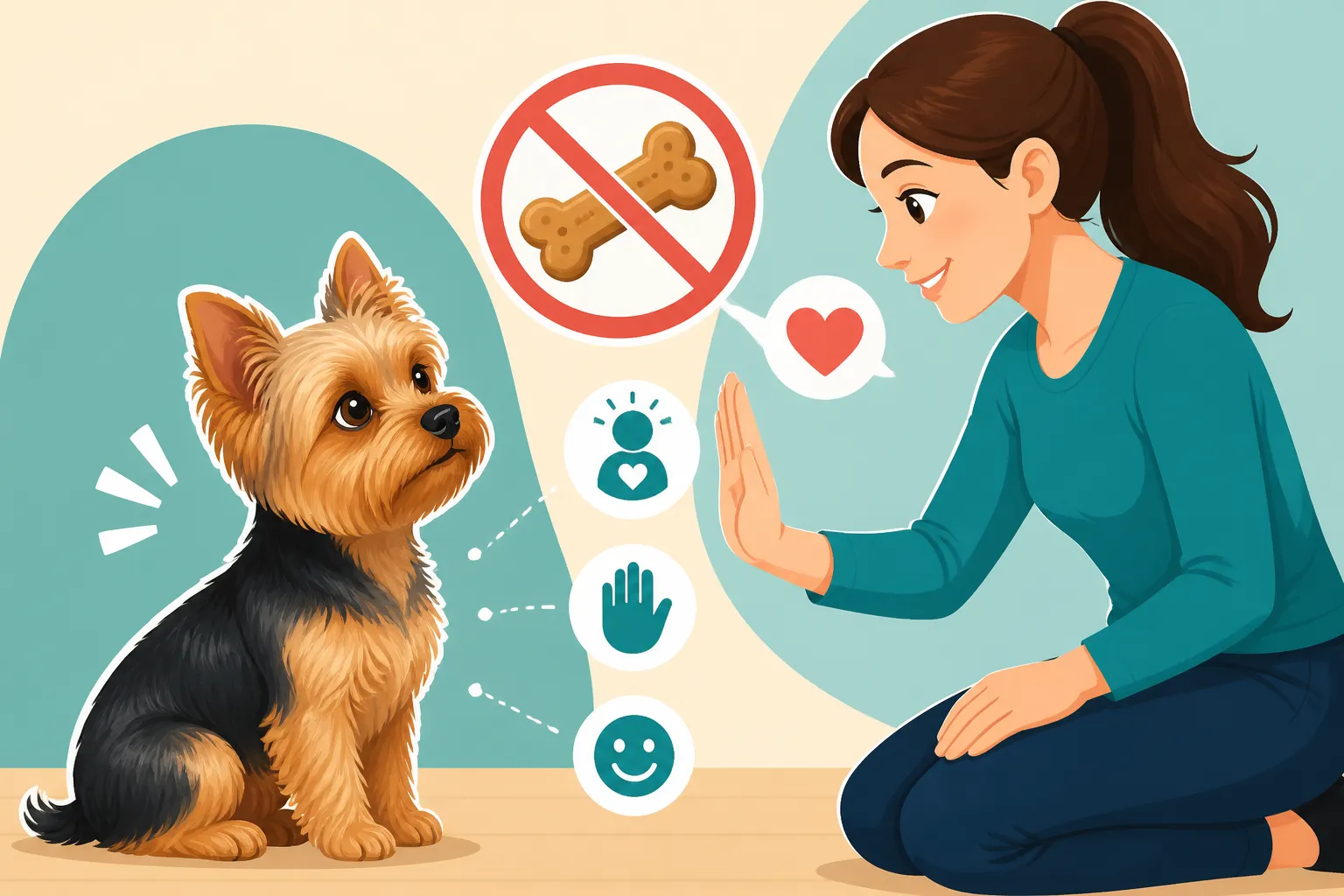
Training without relying on food shifts the focus from external rewards to intrinsic motivation, thereby significantly strengthening the bond between you and your Yorkshire Terrier. When your Yorkie learns to respond to your cues because they trust you, understand your expectations, and genuinely want to please you, that marks a whole new level of connection. This deeper relationship means they're not merely performing for a snack; they're engaging with you because you are their leader, their protector, and their most valued companion. This cultivates a much more reliable, joyful, and deeply connected training experience for both of you, moving beyond mere obedience to genuine partnership.
This approach actively encourages your Yorkie to think and problem-solve, rather than just mechanically repeating actions for food. It taps into their natural desire for attention, praise, and playtime, which are incredibly potent motivators for this breed. Think about it: a Yorkie thrives on being the center of attention, on being held, praised, and engaged with. These non-food rewards, when delivered effectively, become incredibly powerful. It teaches them that positive interactions with you are their ultimate reward, which provides a far more sustainable and robust foundation for lifelong good behavior than any amount of tasty kibble ever could. For more on general training philosophies, check out How to Train a Yorkshire Terrier.
Ultimately, the goal is to have a Yorkie who listens because they understand and respect your communication, not because they're constantly looking for a handout. This cultivates a dog who is more confident in their responses, less dependent on external stimuli, and truly connected to you as the source of all good things. It's about building a partnership where your voice, your gestures, and your very presence are the most powerful motivators available to shape their actions and reinforce desirable behaviors. This deepens the trust and mutual respect that forms the bedrock of a fulfilling relationship.
Understanding Yorkie Motivators Beyond Food
Yorkshire Terriers are little bundles of personality, often driven by a strong desire for interaction and attention. While food can certainly grab their attention, understanding their other powerful motivators is key to successful treat-free training. Tapping into what genuinely excites and pleases your Yorkie will open up a whole new world of rewarding possibilities.
The Power of Praise and Affection
Yorkies are notorious for their big personalities in tiny bodies, and they absolutely thrive on attention and affection from their favorite humans. For many Yorkshire Terriers, a genuinely enthusiastic "Good boy!" or "Good girl!", coupled with a gentle scratch behind the ears, a loving stroke down their back, or a happy vocalization, is just as rewarding, if not more so, than a tiny piece of chicken. The key is to make your praise authentic, immediate, and genuinely heartfelt. Your voice should convey genuine joy and approval, making it clear they've done something truly wonderful. Think about how you’d praise a child for a job well done—it’s not just the words, but the tone, the smile, the positive energy, and the connection you share.
Immediate and consistent praise reinforces the desired behavior precisely in the moment it happens. If your Yorkie sits when you ask, immediately follow it with warm words and affection. Don't wait until they’ve already moved on or lost focus. This quick feedback loop helps them powerfully associate their action with your positive response. Many Yorkies are highly attuned to their owner's emotions and body language, so your beaming smile, excited posture, and soft touch speak volumes. This builds their confidence in understanding what you want and encourages them to eagerly repeat behaviors that earn them such wonderful attention and approval.
This isn't just about saying "good dog" in a monotone voice. It's about creating a multi-sensory, positive experience for your Yorkie. A little happy dance, a unique joyful vocalization, a gentle chin rub – whatever your individual Yorkie particularly enjoys as a sign of your intense approval. This creates a positive emotional association with the training exercise itself, making them eager to participate and learn. This is especially true for those Yorkies who are very bonded to their owners and view your happiness and approval as their ultimate goal, making it a powerful and intrinsic reward.
Engaging Play as a High-Value Reward
For an energetic and playful breed like the Yorkshire Terrier, a quick game can be an incredibly potent motivator, often surpassing the appeal of a food treat. A short game of fetch with their favorite mini-tennis ball, a quick tug-of-war with a soft toy, or even just a few seconds of chasing a dangling flirt pole can be much more exciting and rewarding than a piece of kibble. This taps directly into their natural instincts for play and provides an outlet for their boundless energy, making training sessions feel less like work and more like an exciting, interactive game. The trick is to carefully identify what kind of play your individual Yorkie enjoys most. Is it chasing? Retrieving? Mouthing a particular type of squeaky toy?
Using play as a reward means you need to be an active, enthusiastic participant. It's not just about passively tossing a toy; it's about engaging with them, making the play session short, intense, and incredibly exciting. As soon as your Yorkie performs the desired behavior, mark it with your praise and then immediately initiate their favorite game for a few thrilling moments. This teaches them that listening to your commands leads directly to something they absolutely adore doing. This method is particularly effective for active commands like "come" or "fetch," where you want to build speed, enthusiasm, and a strong positive association with the action.
Consider investing in a variety of small, durable toys that can be easily carried in your pocket or a small training bag for impromptu sessions. You might find that a specific squeaky toy, perhaps one easily found on Amazon, becomes the ultimate prize for your Yorkie, making it an excellent high-value, treat-free reward. Rotate their toys to keep their interest piqued and ensure that play remains a powerful and novel incentive. This keeps them guessing and excited about what wonderful reward might come next, further reinforcing their eagerness to learn and respond to your cues.
Environmental Rewards and Activity Privileges
Beyond direct interaction with you, the environment itself can offer powerfully motivating, treat-free rewards. For instance, if your Yorkie is patiently waiting at the door without jumping or barking, the immediate reward for their calm behavior could be the privilege of going outside for a much-anticipated walk. If they sit politely before you open their crate, the reward is gaining access to their cozy, safe space. These are often referred to as "life rewards" – things your dog naturally desires to do anyway, which you can strategically leverage as powerful positive reinforcement. It effectively teaches them that good behavior is the key that unlocks desirable experiences and privileges.
Think about common, everyday scenarios in your Yorkie's life: does your Yorkie love to greet visitors at the door? Have them sit calmly for a few seconds before they get to say hello and receive attention. Do they get incredibly excited when you pick up the leash, practically bouncing off the walls? Ask for a "sit" or a "stay" before you clip it onto their harness. These mundane, everyday moments seamlessly transform into valuable training opportunities where you're using something they already desire intensely as the reward for compliance. This makes the training naturally integrate into their daily routine, consistently reinforcing good manners and impulse control without needing a single treat.
Even simple things like getting to jump on the couch for a cuddle (if allowed), receiving their favorite long-lasting chew toy, or being released from a "stay" command to explore a new area in the park can be huge motivators for a Yorkie. The essential component here is controlling access to these desired activities and using that control to reinforce good choices and behaviors. This method helps your Yorkie profoundly understand that you are the gateway to all good things in their world, further solidifying your role as their benevolent leader and enhancing their responsiveness to your guidance and commands.
Here’s a quick overview of treat-free motivators:
| Motivator Type | Examples for Yorkies | How to Implement | Benefits |
|---|---|---|---|
| Praise | Enthusiastic "Good Boy/Girl!", happy tone, specific verbal cues | Immediate, high-pitched verbal praise, varied words | Builds positive association, strengthens verbal cues, confidence |
| Affection | Gentle head rubs, ear scratches, belly rubs, snuggle time | A few seconds of desired physical contact, close interaction | Reinforces bond, provides comfort and reassurance, emotional reward |
| Play | Quick fetch, tug-of-war, chasing a favored toy | Short, energetic burst of play with a specific toy | Taps into natural instincts, outlet for energy, high-value for active dogs |
| Privileges | Door opening for a walk, leash attachment, access to a favorite spot | Use desired activities as rewards for specific behaviors | Teaches patience, builds self-control, integrates training into daily life |
| Freedom | Release from a "stay" command, off-leash time in a safe area | Granting freedom to explore or move after compliance | Motivates obedience, reinforces recall, builds trust |
Practical Treat-Free Training Techniques
Now that we understand what motivates our little Yorkies beyond food, let’s get into the nitty-gritty of how to actually implement these powerful treat-free training methods. These techniques focus on clear communication, timing, and leveraging your dog's natural desires to achieve fantastic results. For broader training context, refer to our Positive Reinforcement Training for Yorkies guide.
Marker Words and Verbal Praise
A "marker word" functions very similarly to the clicker in traditional clicker training, but with the added convenience of not requiring an external device or physical treat. It's a short, distinct, consistent word or sound, like "Yes!" or "Good!", that you say the exact moment your Yorkie performs the desired action. The primary purpose is to precisely mark the specific behavior you are rewarding. For instance, the second your Yorkie's bottom touches the floor for a "sit," you exclaim "Yes!" in an excited tone. This precise timing is crucial for your dog to understand exactly what they did correctly.
To make your chosen marker word effective, you need to "charge" it initially. This means consistently pairing the word with something your Yorkie does find inherently rewarding, even if that's a quick, loving pet, a cheerful stroke, or a short burst of play. For example, say "Yes!" and immediately follow with a vigorous ear scratch. The goal is for the marker word itself to become a conditioned reinforcer, signaling to your Yorkie that they’ve done something right and a wonderful reward (of any kind you choose) is imminent. This process establishes a clear, consistent line of communication that your Yorkie can quickly understand and rely upon.
Once fully charged, your marker word becomes an incredibly versatile training tool. It allows you to precisely communicate to your Yorkie exactly what specific action or moment earned your approval, even if the tangible reward (like a pet, play, or privilege) comes a second or two later. This precision is absolutely crucial for effective learning, especially when teaching more complex behaviors. Always remember to follow your marker word with some form of positive, non-food reinforcement to maintain its high value and keep your Yorkie engaged and motivated in the training process.
Utilizing Lure and Fade Techniques with Non-Food Rewards
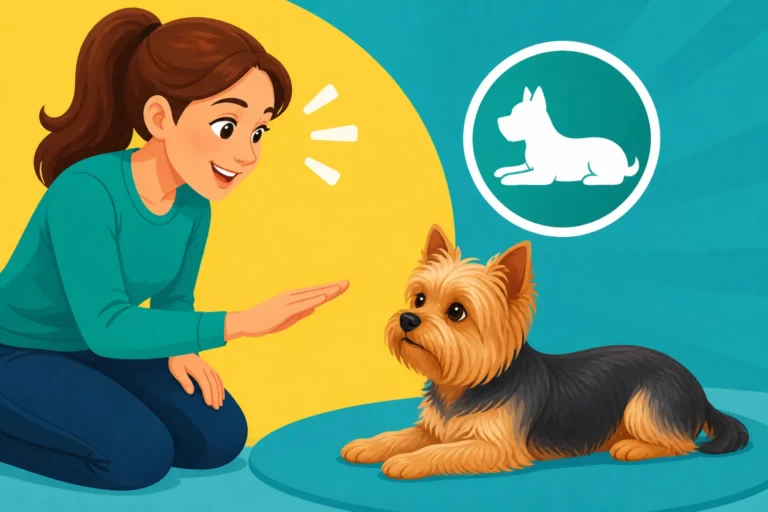
The lure and fade technique is a fantastic, versatile method for teaching brand new behaviors, and it works wonderfully even without the use of food treats. Instead of using a food lure to guide your Yorkie, you can strategically use a high-value toy, your open hand gestures, or even your body movement to gently guide your Yorkie into the desired position or action. For example, to teach "sit," you might hold a favorite small, enticing toy just above their head and slowly move it backward over their back. As their head naturally follows the toy, their rear end will typically lower. The instant they sit, you mark the behavior with your chosen marker word and immediately give them the toy for a quick, joyful play session.
The "fade" part of this technique is absolutely crucial for long-term success. Once your Yorkie reliably performs the action with the lure, you must begin to gradually reduce the prominence and obviousness of the lure. This means making your hand gesture much smaller and less exaggerated, or moving the toy less overtly, until your Yorkie performs the action with just your verbal command and perhaps a subtle hand signal. The ultimate goal is for your Yorkie to associate the verbal cue directly with the action itself, rather than becoming dependent on the presence of the lure. This process demands patience, keen observation, and unwavering consistency from you.
This technique proves particularly effective for teaching a wide range of commands such as "down," "stay," "spin," or even "come." For "down," you might lure them to the floor with a low hand gesture. For "stay," you can use your hand as a visual barrier, rewarding them with enthusiastic praise and a clear release cue when they hold their position. The key is to keep all training sessions short, incredibly fun, and consistently positive, always aiming to end on a high note, even if it's just one perfectly executed repetition. For detailed guidance on specific commands, consider our How to Teach a Yorkie Basic Commands guide.
Incorporating Real-Life Scenarios and Environmental Reinforcement
Training should not be confined solely to dedicated, formal sessions; it should be seamlessly integrated into your Yorkie's daily life, becoming an ongoing dialogue. This is where the power of environmental reinforcement truly shines. Think about all the moments throughout the day when your Yorkie naturally desires something: to go outside, to eat their meal, to play, to get on the couch for cuddles, or even just to be picked up. Each of these moments becomes a golden opportunity to politely ask for a desired behavior before you grant that desire.
For instance, before you put down their food bowl, ask for a clear "sit" and a "stay." Once they comply calmly for a few seconds, release them with an enthusiastic "Okay!" to their meal. This teaches vital impulse control and powerfully reinforces the command with a highly desired natural reward. Before opening the door for a walk, ask for a "wait" at the threshold. Their reward for waiting patiently is the thrilling adventure outside. This isn't just about teaching isolated commands; it's about teaching good manners, self-control, and responsiveness in real-world contexts, making these behaviors truly reliable and ingrained. Our Yorkshire Terrier Potty Training Guide also highlights the importance of routine-based reinforcement.
This effective method also necessitates that you, the owner, are consistent, observant, and proactive. Pay close attention to what your Yorkie desires most at any given moment and use that desire as positive leverage. If they're pawing at you for attention, gently ask for a "down" or a "place" command on their bed first. Once they're calmly settled, then you can go over and give them a wonderful scratch and praise. This strategic approach teaches them that polite requests and good, calm behavior are what earn them the good things in life, rather than demanding or unruly actions. It also profoundly establishes you as the most valuable resource in their world, ensuring your Yorkie consistently looks to you for guidance, direction, and all forms of positive rewards. Many reputable training programs, such as those offered by BAXTER & Bella, strongly emphasize this "learn-to-earn" philosophy as a foundational element of positive, treat-free training.
Overcoming Challenges and Troubleshooting Treat-Free Training
Embarking on a treat-free training journey with your Yorkie can be incredibly rewarding, but it’s not without its bumps in the road. It’s important to acknowledge that every dog is an individual, and some days will be more challenging than others. Knowing how to navigate these hurdles with patience and understanding is crucial for long-term success.
Patience and Consistency are Key
Let's be realistic, training a Yorkie without treats can sometimes feel like an uphill battle. They're small, can possess a stubborn streak, and those big, pleading eyes can make you question every decision. But the absolute truth is that unwavering patience and relentless consistency are your most powerful superpowers here. You won't necessarily see instant results like you might with a high-value treat, and that’s perfectly okay. Building a deep, trust-based relationship and solid behaviors takes dedicated time and countless positive repetitions. Don't get discouraged if a new command takes longer to stick than expected, or if your Yorkie seems to have "forgotten" something they knew yesterday; this is a normal part of the learning process.
Consistency means that every single person in the household needs to be entirely on the same page regarding training methods and expectations. If one family member uses treats and another relies strictly on praise, or if commands are given differently (e.g., "Sit" vs. "Sit down"), it will inevitably create confusion for your Yorkie. Take the time to sit down with your family and establish clear, agreed-upon rules, verbal commands, and preferred non-food rewards. For example, if "sit" is always followed by enthusiastic praise and a gentle pet, ensure everyone consistently adheres to this. This uniformity helps your Yorkie understand precisely what's expected of them and what positive outcomes they can anticipate, significantly accelerating the learning process.
Always remember that nearly every interaction you have with your Yorkie is a potential training opportunity. From the moment your Yorkie wakes up until they settle down for the night, you are constantly shaping their behavior, either intentionally or unintentionally. If you only focus on training during designated, formal sessions, you're missing out on a huge portion of the day where you could be reinforcing good habits and polite behaviors with praise, engaging play, or granting privileges. Make training an intrinsic part of your daily lifestyle, rather than viewing it as a separate, burdensome task.
Handling Distractions and Regression
Distractions are the arch-nemesis of any dog trainer, and Yorkies, with their keen senses, curious nature, and sometimes feisty demeanor, are certainly no exception. When you're transitioning from treat-based training or starting treat-free from scratch, it is absolutely vital to begin practicing new behaviors in a low-distraction environment, such as your quiet living room or a calm hallway. Once your Yorkie is reliably performing commands in that controlled setting, you can then gradually introduce minor distractions – perhaps a family member quietly walking by, a television softly playing in the background, or a non-squeaky toy placed innocently on the floor. Only after mastering these small steps should you consider moving to slightly more distracting environments like the backyard, and eventually, bustling public spaces.
It is entirely normal for your Yorkie to seemingly "forget" commands when a brand new or overwhelming distraction is introduced. This isn't defiance or stubbornness; it's simply that their brain is overloaded and processing too much information at once. Instead of punishing them for failing, gracefully go back a step in your training progression. Reduce the level of distraction, simplify the command, and rebuild their confidence again. For example, if you were practicing "come" in a busy park and they ignored you for a passing squirrel, revert to practicing "come" in a securely fenced yard with minimal distractions. Rebuild their confidence and reliability in a controlled setting before attempting to tackle that squirrel challenge again.
Regression can also occur when routines unexpectedly change, or if your Yorkie is feeling unwell, stressed, or experiencing an emotional upheaval. Be empathetic and observe their overall well-being. If your Yorkie suddenly stops responding to a command they once knew perfectly, consider if anything significant in their environment or routine has changed. Have you been less consistent in your training? Is there a new pet or person in the household? Sometimes, a few refresher sessions in a familiar, calm environment, coupled with extra praise and cherished playtime, is all it takes to gently get them back on track. For severe behavioral issues like How to Stop a Yorkie from Barking or Yorkie Separation Anxiety: Signs and Fixes, revisiting dedicated resources might offer additional insights and strategies to complement your treat-free approach.
Seeking Professional Guidance if Needed
While this guide offers a comprehensive approach to treat-free training, there might be times when you encounter a particularly stubborn roadblock, or your Yorkie exhibits particularly challenging or persistent behaviors that you feel ill-equipped to handle alone. There is absolutely no shame in seeking professional help from a qualified dog trainer. A certified professional dog trainer, especially one who specializes in positive reinforcement and can adapt their methods to treat-free approaches, can provide invaluable personalized advice and hands-on guidance. They possess the expertise to observe your Yorkie's unique personality, your specific interactions, and identify subtle cues or areas for improvement that you might inadvertently overlook as an owner.
When you are searching for a professional trainer, it is crucial to inquire about their training philosophy and the specific methods they employ. Ensure that their approach aligns well with your goal of treat-free training and positive reinforcement, avoiding any trainers who advocate for harsh or aversive techniques. A truly good trainer won't simply tell you what to do; they will actively demonstrate the techniques, provide immediate feedback, guide you through the process, and ultimately empower you to become a more effective and confident trainer for your own Yorkie. They can also provide specialized strategies to address specific issues like How to Train a Stubborn Yorkie or more complex behavioral patterns, ensuring that the training is perfectly tailored to your dog's individual needs and temperament.
Do not wait until you feel completely overwhelmed or at your wit's end before seeking assistance. Early intervention for persistent behavioral issues can often make a world of difference, preventing problems from escalating. Even a few targeted sessions with a qualified professional can equip you with the essential tools, refine your communication skills, and boost your confidence to continue your treat-free training journey successfully. They can introduce advanced concepts, help you fine-tune your timing and body language, and ensure your communication with your Yorkie is as clear, consistent, and effective as humanly possible, fostering a stronger, more harmonious relationship.
Disclaimer
The information provided in this article is for general informational and educational purposes only and is not a substitute for professional veterinary advice. Always consult with a qualified veterinarian or certified professional dog trainer for any health or behavior concerns regarding your Yorkshire Terrier.