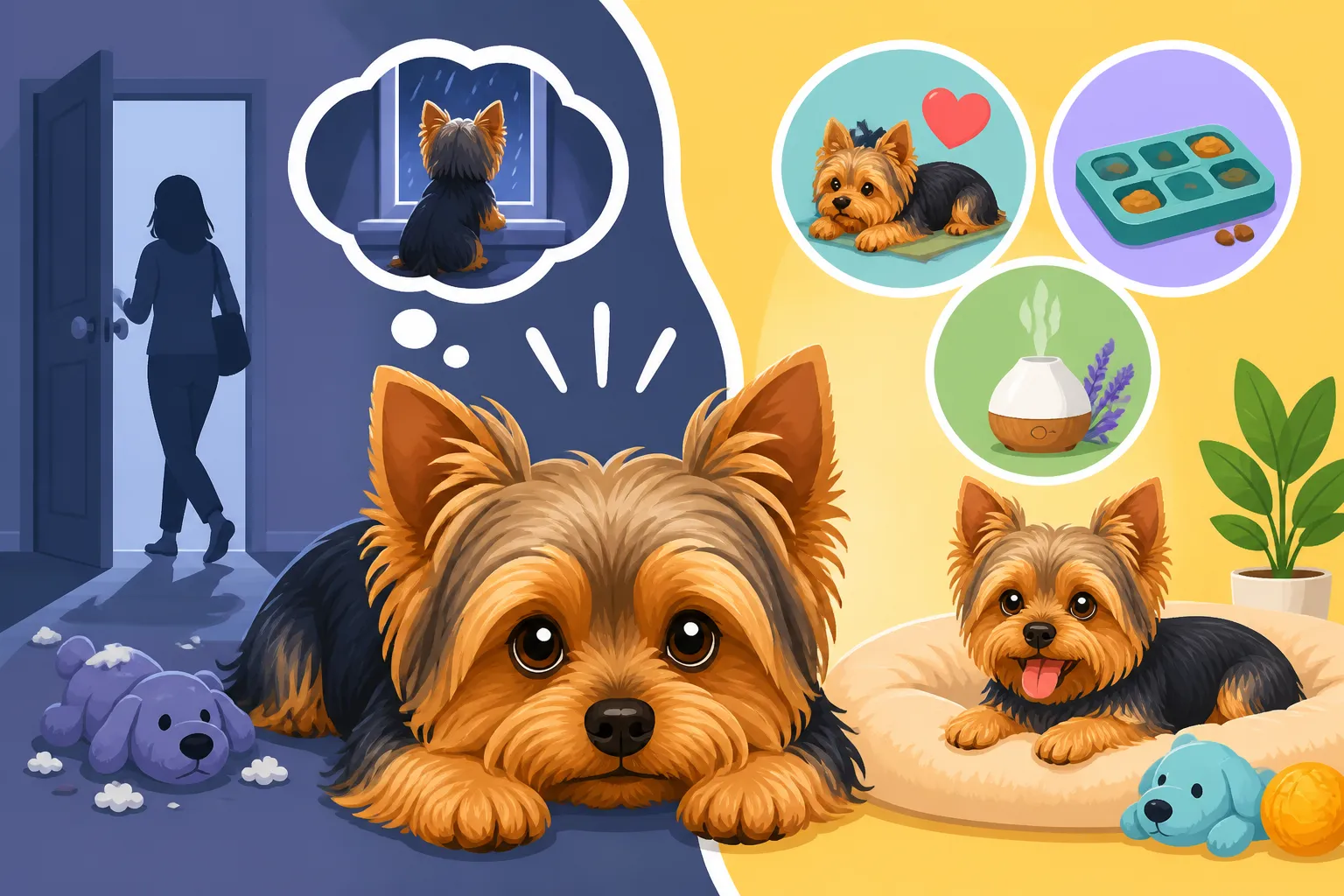
Yorkshire Terrier Separation Anxiety Solutions
It's heartbreaking to leave your tiny Yorkshire Terrier at home, only to return to a symphony of barks, shredded cushions, or anxious puddles on the floor. Many Yorkie parents feel this unique blend of guilt and frustration when their beloved companion struggles with being alone. This comprehensive guide is here to shed light on Yorkshire Terrier separation anxiety, help you understand its causes, and equip you with practical, empathetic solutions to bring peace back to your home and your little one's heart.
Understanding Yorkshire Terrier Separation Anxiety
Few things are as distressing as seeing your furry family member in a state of panic, especially when you’re the cause of it, even indirectly. Yorkshire Terriers, with their deeply loyal and often "velcro dog" personalities, can be particularly prone to separation anxiety. It's not just a behavioral quirk; it's a genuine distress response, and recognizing it for what it is—a cry for help—is the first step toward finding relief for your pup.
What Exactly Is Separation Anxiety in Yorkies?
Separation anxiety isn't just about your Yorkie being a little sad you left or mildly annoyed that they're alone. It's a profound behavioral condition where a dog experiences extreme stress and panic when separated from their primary attachment figure, usually you. Think of it as a panic attack for dogs. They aren't acting out of spite or trying to be naughty; they are genuinely terrified and don't know how to cope with the sudden absence of their human. This isn't a choice your Yorkie is making; it's an involuntary response driven by intense fear.
The severity can range, but at its core, it's about the emotional distress of isolation. This isn't just a matter of your Yorkie being a bit bored and deciding to chew on a shoe. A bored dog might just nap or look out the window. A dog with separation anxiety exhibits a clear pattern of distress that goes far beyond simple boredom, often escalating to destructive behaviors, excessive vocalization, or even self-harm attempts as they desperately try to reunite with you. Understanding this distinction is crucial to approaching the problem effectively and with the compassion your Yorkie deserves.
Common Signs and Symptoms to Look For
Spotting separation anxiety isn't always easy, especially if your Yorkie seems perfectly fine when you’re home. The key is observing their behavior before, during, and immediately after your absence. Some signs are obvious, while others are more subtle indicators of underlying distress. It’s not just about a single incident, but a consistent pattern of these behaviors when left alone.
One of the most common signs you might notice is excessive barking or howling. Your neighbors might be the first to alert you to this, as your Yorkie protests your departure with a vocal outpouring that can last for hours. Another clear indicator is destructive chewing or scratching, particularly around exit points like doors and windows, as if they are trying to break free and find you. You might come home to scratched doorframes, torn blinds, or even damaged walls. Beyond that, inappropriate urination or defecation, even in a previously house-trained dog, is a strong sign that anxiety, not a lack of training, is the issue. Sometimes, these accidents are accompanied by drooling or panting, even when the temperature is normal, suggesting physiological stress.
More subtle signs can include pacing, trembling, or incessant licking of themselves (which can lead to hot spots) when they're alone. Some Yorkies will refuse to eat or drink while you're gone, despite being hungry or thirsty. If you have a camera, you might even observe them obsessively watching the door, whimpering, or engaging in repetitive behaviors. It’s a lot to take in, and it's certainly not a pleasant discovery to realize your little companion is suffering so much. Keep a log of these behaviors, noting frequency and intensity, as this information will be invaluable in finding a path forward. If you're seeing signs like constant pacing, drooling, or frantic attempts to escape, these can be serious indicators that your Yorkie is truly struggling.
Why Yorkies Are Prone to Separation Anxiety
You might wonder why such a tiny, seemingly robust breed can be so susceptible to something as emotionally draining as separation anxiety. It often comes down to their inherent traits and how they've been bred and raised. Yorkies, by nature, are incredibly devoted and thrive on human companionship. They were originally bred to be ratters, but quickly transitioned into beloved lapdogs and companions, forging strong bonds with their owners. This intense attachment, while endearing, can become a double-edged sword when they're left alone.
Their small size often means they're carried more, sleep in beds with owners, and are rarely left unsupervised, especially as puppies. This constant proximity, while lovely, can inadvertently prevent them from learning how to self-soothe or feel comfortable being independent. When they grow up with almost constant human interaction, being left alone can feel like a profound betrayal or an unbearable void. It’s not their fault, nor is it necessarily yours; it’s a consequence of their breed’s affectionate nature and how we, as loving owners, interact with them. For a deeper dive into their inherent characteristics, you might want to read our guide on Yorkshire Terrier Temperament and Personality.
Furthermore, Yorkies often exhibit what's sometimes called "small dog syndrome," where their little bodies house big personalities and even bigger anxieties. They might feel more vulnerable when left alone, lacking the physical size to feel secure or defend themselves in their environment, even if that environment is just their own home. Their keen senses, particularly hearing, can also make them more reactive to outside noises, amplifying their fear when they're without their human protector. All these factors combine to create a perfect storm, making separation anxiety a prevalent issue within the breed.
Identifying the Root Causes of Your Yorkie's Anxiety
Understanding the "why" behind your Yorkie's separation anxiety is critical for tailoring effective solutions. It’s not always obvious, and often, it’s a combination of factors rather than a single trigger. Digging into their history and current lifestyle can provide invaluable clues, helping you address the problem at its source instead of just managing the symptoms.
Past Experiences and Traumas
Just like humans, dogs can carry emotional baggage from their past. If your Yorkie was adopted from a shelter, a rescue, or even if they came from a less-than-ideal breeding situation, they might have experiences that contribute to their anxiety. Abandonment, frequent changes in ownership, or periods of being left alone for extended durations in their formative months can all hardwire a fear of solitude. They learn to associate being alone with negative feelings or even physical distress.
Even Yorkies who have been with you since puppyhood might have experienced a subtle trauma. Perhaps a sudden loud noise scared them when you stepped out briefly, or they were left alone too soon and too long as a very young pup. These early experiences, even if they seem minor to us, can leave lasting impressions on a sensitive Yorkie. It creates an expectation of distress whenever you prepare to leave, making them dread your departure long before you're even out the door. It’s important to approach these historical factors with empathy, recognizing that your Yorkie's anxiety is often a learned response to perceived threats, even if those threats are no longer present.
Lifestyle Changes and Routine Disruptions
Dogs are creatures of habit, and Yorkies, in particular, thrive on predictable routines. Any significant change in their daily life can throw them off balance and trigger anxiety. Think about what might have recently shifted in your household. Did you start a new job with different hours? Did you move to a new home? Did a family member leave, or a new one arrive (human or pet)? Even seemingly positive changes, like adopting another pet, can disrupt the delicate balance of your Yorkie's world and impact their sense of security.
For example, if you suddenly went from working from home every day to going into an office, that abrupt shift from constant companionship to sudden solitude can be incredibly jarring. The once-familiar silence of the home now feels empty and scary. Similarly, changes in their feeding schedule, walk times, or even where they sleep can contribute. The consistency that once provided comfort is gone, leaving them feeling vulnerable and unsure. These disruptions chip away at their sense of safety and predictability, leading to increased anxiety when you’re not there to reassure them.
Owner Behavior and Reinforcement
This can be a tough pill to swallow for loving Yorkie owners, but sometimes our own behaviors, however well-intentioned, can inadvertently contribute to or reinforce separation anxiety. Showering your Yorkie with excessive attention right before you leave, or making a huge fuss upon your return, can inadvertently amplify the significance of your departures and arrivals. If your leaving is a dramatic event, it tells your Yorkie, "This is a big deal!"
Similarly, if you respond to their anxious whining or barking before you leave by going back to comfort them, you’re unintentionally teaching them that their anxious behaviors work to bring you back. This creates a cycle where the anxiety is rewarded, making it harder to break. It doesn't mean you love your Yorkie too much, but it means the way you express that love around departures needs to be adjusted. Recognizing and modifying these patterns in your own interactions is a powerful step in helping your Yorkie become more independent and secure. Our guide on Yorkie Training Mistakes to Avoid can offer further insights into this.
Creating a Calming and Secure Home Environment
A dog’s environment plays a huge role in their emotional state. For a Yorkie struggling with separation anxiety, their home can feel like a vast, unpredictable, and scary place when you're gone. Transforming that space into a haven of calm and security is a foundational step in helping them cope. It's about more than just physical comfort; it's about fostering a sense of psychological safety that allows them to relax, even in your absence.
The Importance of a Safe Space
Every Yorkie needs a designated safe space where they can retreat and feel protected, especially when left alone. This isn't a punishment; it's their personal sanctuary. For many Yorkies, a properly introduced and positive-association-filled crate can be this safe haven. The crate should be just large enough for them to stand up, turn around, and lie down comfortably. Cover it with a blanket to create a den-like feel, and always include soft bedding and a favorite toy. The key is that this space is associated with positive experiences – treats, gentle praise, and naps – never with isolation or fear.
If a crate isn't suitable or preferred, a small, enclosed room like a laundry room, bathroom, or a quiet corner with a baby gate can serve a similar purpose. The idea is to limit their access to the entire house, which can feel overwhelming, and instead provide a manageable, predictable area. This safe space should be consistently available, not just when you leave. They should be encouraged to go there voluntarily throughout the day for rest, creating a strong positive association. This predictability helps them feel grounded and secure when their world suddenly shrinks with your departure. For more information, check out our guide on How to Crate Train a Yorkie for the First Time.
Enrichment and Mental Stimulation When Alone
A bored Yorkie is more likely to become an anxious Yorkie, especially when left alone. Mental stimulation is just as important as physical exercise for these intelligent little dogs. Providing engaging, long-lasting activities before you leave can help redirect their focus from your departure to a positive, self-soothing task. This isn't just a distraction; it’s a way to burn mental energy and promote calmness.
Consider puzzle toys that dispense treats, like a KONG stuffed with peanut butter or yogurt and frozen, or a LickiMat smeared with a healthy spread. These can keep your Yorkie occupied for a significant period, making them work for their reward and stimulating their minds. You can find a wide variety of these on platforms like Amazon. Rotate toys regularly to keep them novel and exciting. Some owners also find success with leaving on dog-specific calming music or talk radio at a low volume. This can mask outside noises that might trigger alarm and create a consistent, soothing auditory environment. The goal is to make their solo time less about waiting for you and more about enjoyable, independent activities.
Desensitization to Departure Cues
Yorkies are incredibly perceptive and often pick up on subtle cues that signal your impending departure long before you even pick up your keys. Jingling keys, grabbing your coat, putting on shoes, or even the specific routine you follow before heading out the door can all become anxiety triggers. The solution isn't to sneak out, which can actually worsen anxiety by making your departures unpredictable and more startling. Instead, it's about desensitizing them to these cues.
Start by performing these "departure rituals" repeatedly throughout the day, but without actually leaving. Pick up your keys, walk to the door, put on your coat, then simply sit down and watch TV. Do this dozens of times a day, incrementally increasing the time you spend doing the action before returning to normal activities. The goal is to break the association between these cues and your actual departure, making them meaningless. Over time, your Yorkie will learn that grabbing your keys doesn’t always mean you're leaving, thus reducing their anticipatory anxiety. This is a slow, methodical process, but it's incredibly effective in chipping away at the foundation of their fear.
Training Strategies for Building Independence
Training isn’t just about teaching "sit" and "stay"; it’s a powerful tool for building your Yorkie's confidence and independence, which are crucial for overcoming separation anxiety. These strategies focus on gradually increasing their comfort with being alone and associating positive experiences with your absence. Patience and consistency are paramount here, as progress will likely be incremental.
Gradual Absence Training
This is the cornerstone of treating separation anxiety. The goal is to slowly increase the time your Yorkie is left alone, always keeping them below their anxiety threshold. You start tiny, literally seconds. Begin by stepping out of sight for a few seconds, then returning. If your Yorkie remains calm, reward them. If they show any signs of anxiety, you’ve gone too far and need to shorten the duration next time. The trick is to prevent anxiety from ever escalating, so they only experience successful, calm absences.
Slowly, over days and weeks, you'll increase the duration of your absences. This might mean stepping out for 30 seconds, then a minute, then five minutes, eventually working up to longer periods. During these absences, your Yorkie should have their safe space, enrichment toys, and calming aids in place. Never make a big deal about leaving or returning; keep your exits and entries calm and low-key. The idea is to teach them that your departures are temporary and that you will always return, making the experience predictable and non-threatening. For advice on how to handle their reactions, refer to our article on How to Stop a Yorkie Barking When Left Alone.
Crate Training as a Tool for Security
While not every dog takes to a crate, for many Yorkies, a properly introduced crate can become an invaluable tool for managing separation anxiety. It provides that den-like, secure space we discussed earlier, which can be comforting when the house feels empty. However, forcing an anxious Yorkie into a crate or using it as punishment will only exacerbate their fear. Crate training for separation anxiety must be done with extreme care and positive reinforcement.
Introduce the crate as a positive place by feeding meals inside it, hiding treats, and offering chew toys while the door is open. Gradually, close the door for short periods while you are still in the room, extending the time only when your Yorkie is relaxed. Never leave them in the crate if they are actively panicking or trying to escape, as this will only create negative associations. The crate should be a place where they choose to be, where they feel safe and cozy, making it a powerful resource when you need to step out. It provides a sense of control and predictability in an otherwise overwhelming situation.
Teaching "Stay" and Independent Play
Teaching your Yorkie to "stay" is more than just a trick; it's a foundational command that builds impulse control and, crucially, fosters independence. Start with short durations in the same room, gradually increasing the distance and time. This teaches them that they can be separated from you physically for a short period and that you will always return to release them. This skill directly translates to feeling more comfortable when you're in another room or out of the house.
Alongside "stay," encourage independent play. Instead of always initiating play, provide toys and praise them when they engage with a toy on their own, even if it's just for a few minutes. You can place an engaging toy in their safe space and reward them for playing with it while you’re nearby but not directly interacting. The goal is to show them that solo activities can be rewarding and enjoyable, rather than something to dread. This gradual shift towards self-entertainment and self-reliance is a critical component in alleviating the loneliness and fear associated with your absence. Many online dog training programs, like those offered by BAXTER & Bella, include modules on these types of independence-building exercises.
Tools and Aids to Help Manage Anxiety
While training and environmental adjustments are primary, various products and aids can significantly support your Yorkie's journey to overcoming separation anxiety. These tools aren't magic bullets, but when used in conjunction with a solid training plan, they can help alleviate symptoms and make the process smoother for both of you.
Calming Products and Supplements
There’s a growing market of calming products designed to help reduce anxiety in dogs. These can range from pheromone diffusers, like Adaptil, which release synthetic dog-appeasing pheromones that mimic those produced by a mother dog, creating a sense of safety. These diffusers can be plugged into an outlet in your Yorkie's safe space and left on while you're away. They don't sedate your dog but aim to create a calming atmospheric effect.
Another option is calming supplements. Many contain natural ingredients like L-theanine, chamomile, valerian root, or CBD. These are designed to promote relaxation without causing drowsiness. Brands like Zesty Paws or VetriScience offer popular options for Best Calming Chews for Yorkshire Terriers. Always consult your veterinarian before introducing any new supplement to ensure it's appropriate for your Yorkie's specific health needs and won't interact negatively with any existing medications. What works for one dog might not work for another, so it can take some trial and error to find the right fit.
Interactive Toys and Puzzle Feeders
We touched on enrichment earlier, but it's worth reiterating the power of the right interactive toys and puzzle feeders. These aren't just for fun; they serve a crucial purpose in redirecting anxious energy and engaging your Yorkie's mind. A well-chosen puzzle can turn an otherwise stressful period into a focused, rewarding activity. The mental effort required to get treats out of a KONG Wobbler or a snuffle mat can be surprisingly tiring and satisfying.
Look for durable toys that can withstand enthusiastic chewing, especially if your Yorkie tends to be destructive when anxious. Dispensing toys that require manipulation, like those from PetSafe or Nina Ottosson, are excellent choices. Filling them with a portion of their daily kibble or healthy treats ensures they’re working for their food, promoting a sense of accomplishment. Having a few different types of these toys and rotating them keeps your Yorkie interested and prevents boredom, which can often lead back to anxious behaviors. You can find a vast selection of these on Amazon to suit different levels of difficulty.
Technology for Monitoring and Interaction
In today’s connected world, technology offers some truly invaluable tools for managing separation anxiety. Dog cameras, such as those from Furbo or Petcube, allow you to monitor your Yorkie while you're away. This isn't just for peace of mind; it's crucial for understanding the exact moment anxiety begins and how it manifests. This data helps you fine-tune your gradual absence training, ensuring you don't push your Yorkie past their threshold.
Many of these cameras also offer two-way audio, allowing you to speak to your Yorkie, and some even dispense treats remotely. While constant interaction isn't the goal (we want to build independence, not foster dependence on a remote voice), an occasional reassuring word or treat dispenser during a particularly calm moment can reinforce good behavior. Just be mindful not to use it to reward anxious behavior, as this can be counterproductive. The ability to watch and learn from your Yorkie's solo behavior is an incredibly powerful diagnostic and management tool.
When Professional Help Is Needed
Sometimes, despite your best efforts, your Yorkie's separation anxiety can feel overwhelming and beyond your capacity to manage alone. There's absolutely no shame in seeking professional help. In fact, it's often the smartest and most compassionate thing you can do for your struggling companion. These experts have the knowledge and experience to provide tailored strategies and, if necessary, medical interventions.
Consulting a Veterinarian
Your first stop should always be your veterinarian. While separation anxiety is primarily a behavioral issue, it’s vital to rule out any underlying medical conditions that might be contributing to or mimicking anxiety symptoms. For instance, an undiagnosed bladder infection could be causing inappropriate urination, or chronic pain could be making your Yorkie more irritable and anxious when left alone. Your vet can perform a thorough physical examination and recommend any necessary diagnostics.
Beyond ruling out medical issues, your veterinarian can also discuss potential pharmaceutical interventions if the anxiety is severe and debilitating. They can prescribe anti-anxiety medications that, when used in conjunction with a robust behavior modification plan, can significantly reduce your Yorkie's stress levels. These medications are not a standalone solution but can act as a crucial crutch, helping to calm your Yorkie enough so that the training can actually take effect. They can discuss dosages, potential side effects, and how to best integrate medication into your overall treatment plan, ensuring your Yorkie's safety and well-being. Knowing When to Take Your Yorkie to the Vet for these behavioral issues is just as important as for physical ailments.
Working with a Certified Professional Dog Trainer
Once medical issues are ruled out, engaging a certified professional dog trainer or a veterinary behaviorist is highly recommended for moderate to severe cases of separation anxiety. These professionals specialize in understanding canine behavior and can create a customized behavior modification plan tailored specifically to your Yorkie's needs and the specifics of your household. They can observe your Yorkie's behavior firsthand (sometimes via video recordings you provide) and identify triggers you might have missed.
A good trainer will use positive reinforcement methods and guide you through the gradual absence training, desensitization, and counter-conditioning techniques with expertise. They can provide invaluable feedback, help you adjust your timing, and keep you on track, which is often difficult when you're emotionally invested in your dog's distress. Look for trainers certified by organizations like the Certification Council for Professional Dog Trainers (CCPDT) or the Karen Pryor Academy. Their guidance can be the difference between months of frustration and measurable progress for your Yorkie.
Medication as a Last Resort
For some Yorkies, especially those with severe, debilitating separation anxiety that causes them extreme distress or even self-harm, medication may become a necessary component of treatment. This is typically considered a last resort, after other behavioral and environmental modifications have been attempted or when the anxiety is so intense that your Yorkie cannot even begin to learn. As mentioned, medication is almost never a sole treatment; it's a tool to reduce the intensity of the anxiety enough for behavior modification to be effective.
The goal of anti-anxiety medication for dogs isn't to sedate them into submission, but rather to lower their overall anxiety threshold, making them more receptive to learning and less prone to panic. Your vet might prescribe selective serotonin reuptake inhibitors (SSRIs) like fluoxetine (Prozac) or tricyclic antidepressants (TCAs) like clomipramine (Clomicalm). These medications need time to build up in your Yorkie's system and are typically given daily for an extended period. In some cases, a fast-acting situational anxiolytic might be prescribed for acute panic attacks during the initial training phase. It's a serious decision, and one that should always be made in close consultation with your veterinarian, understanding the potential benefits and side effects.
Long-Term Management and Prevention
Addressing separation anxiety in your Yorkshire Terrier isn't a quick fix; it's a journey that requires ongoing commitment and adaptation. Once you've made significant progress, the work isn't over. Long-term management and preventative strategies are essential to maintain your Yorkie's confidence and ensure their continued well-being. It’s about building a resilient companion who can navigate life’s changes with less fear.
Maintaining Consistency in Routine
As we've discussed, Yorkies thrive on routine. Consistency is the bedrock of their security. While life inevitably throws curveballs, strive to maintain as much predictability as possible in your Yorkie's daily schedule. This includes regular feeding times, consistent potty breaks, predictable walk times, and dedicated play or training sessions. When they know what to expect, their overall anxiety levels tend to decrease, making them more resilient to the stress of your occasional absence.
Even small inconsistencies can sometimes chip away at their sense of security. If your schedule changes frequently, try to build in specific rituals around your departure and return that remain constant. For example, always give them a specific puzzle toy with a treat just before you leave, or always engage in a short, calm cuddle session when you come home. These anchor points in their day provide comfort and reassurance, no matter what else is shifting around them. This also relates to preventing issues like Yorkie Potty Training Regression, as a consistent schedule minimizes accidents caused by stress or confusion.
Continued Socialization and Exposure
Don't let the fear of separation anxiety lead you to over-coddle your Yorkie or isolate them. Continued positive socialization and exposure to various people, places, and other calm dogs are vital for building a well-adjusted, confident dog. A well-socialized Yorkie is generally more adaptable and less likely to panic in novel situations, including being left alone. Regular, positive interactions outside the home reinforce the idea that the world isn't a scary place and that you are a reliable, safe leader.
This doesn’t mean throwing your anxious Yorkie into a chaotic dog park. Instead, it involves carefully managed, positive experiences. Puppy classes, structured play dates with known calm dogs, and short, pleasant outings to dog-friendly stores or parks where they can observe without being overwhelmed are all beneficial. These experiences broaden their worldview and build their resilience, making them less dependent on your constant presence for security. For guidance on introducing them to others, consider our article on How to Introduce a Yorkie to Other Dogs.
Recognizing and Adapting to Changes
Life is dynamic, and your Yorkie’s needs and emotional state can change over time. It’s important to remain observant and adapt your strategies as needed. What worked perfectly for a year might need tweaking if you move, get a new job, or if your Yorkie enters their senior years. Pay attention to subtle shifts in their behavior that might indicate a re-emergence of anxiety or a new source of stress.
Regular check-ins with your veterinarian are always a good idea, as they can help assess their overall health and advise on any age-related changes that might affect their anxiety levels. If new challenges arise, don't hesitate to revisit the training strategies outlined here or re-engage with a professional trainer. Remember, managing separation anxiety is an ongoing process of understanding, empathy, and consistent effort. Your Yorkie relies on you to be their guide and advocate, and by staying attuned to their needs, you can ensure they lead a happy, confident life, whether you're by their side or just out for a bit.
| Anxiety Management Strategy | Description | Best For | Pros | Cons |
|---|---|---|---|---|
| Gradual Absence Training | Incrementally increasing time alone, always staying below anxiety threshold. | All levels of anxiety, especially mild to moderate. | Addresses root cause, builds true independence. | Requires significant patience and time, must be done meticulously. |
| Crate Training (Positive) | Creating a safe, den-like space associated with positive experiences. | Yorkies who accept or can be trained to accept a crate. | Provides security, limits destructive behavior. | Can exacerbate fear if done incorrectly, not suitable for all dogs. |
| Pheromone Diffusers (e.g., Adaptil) | Releases synthetic dog-appeasing pheromones to create a calming atmosphere. | Mild to moderate anxiety, used as an aid with training. | Non-invasive, continuous effect, no side effects. | May not work for all dogs, can be costly over time. |
| Calming Supplements | Oral supplements with natural ingredients (L-theanine, CBD, etc.) to promote relaxation. | Mild to moderate anxiety, used as an aid with training. | Easy to administer, often well-tolerated. | Efficacy varies by dog, must consult vet, results not immediate. |
| Interactive Puzzle Toys | Toys that dispense treats or require mental effort to solve. | All levels of anxiety, for mental enrichment. | Redirects focus, provides mental stimulation, can be long-lasting. | Can be destroyed by aggressive chewers, some Yorkies may lose interest quickly. |
| Dog Monitoring Camera | Allows remote observation and sometimes two-way audio/treat dispensing. | All levels, especially for owner peace of mind and data collection. | Provides crucial insights into behavior, helps fine-tune training. | Can be costly, doesn't directly treat anxiety, can lead to over-monitoring. |
| Professional Trainer/Behaviorist | Expert guidance, customized behavior modification plans. | Moderate to severe anxiety, when home efforts are insufficient. | Tailored approach, professional support, high success rate. | Can be expensive, requires commitment from owner. |
| Anti-Anxiety Medication | Prescription drugs (SSRIs, TCAs) to lower anxiety threshold. | Severe, debilitating anxiety, in conjunction with training. | Can enable training by reducing panic, provides significant relief. | Must be vet-prescribed, potential side effects, not a standalone cure, long-term commitment. |
Disclaimer
The information provided in this article is for general informational purposes only and is not intended as a substitute for professional veterinary advice, diagnosis, or treatment. Always seek the advice of your veterinarian or other qualified pet health provider with any questions you may have regarding a medical condition or treatment for your Yorkshire Terrier. Never disregard professional veterinary advice or delay in seeking it because of something you have read in this article.