How to Teach a Yorkie to Touch
Getting your adorable Yorkshire Terrier to learn new tricks can sometimes feel like trying to teach a tiny, fluffy philosopher. They’re smart, no doubt, but often have their own ideas about how things should go! However, teaching your Yorkie the "touch" command is not only achievable but incredibly rewarding, laying a fantastic foundation for future training and strengthening your bond. This comprehensive guide will walk you through every step, troubleshoot common hiccups, and help your little companion master this fun and useful trick.
Understanding the "Touch" Command for Yorkies
The "touch" command is more than just a cute parlor trick; it's a fundamental building block in positive reinforcement dog training. For a small breed like a Yorkshire Terrier, who can sometimes be prone to timidity or overexcitement, "touch" can be a fantastic way to build confidence and channel their energy productively.
What is "Touch" and Why It's Beneficial
At its core, the "touch" command means your Yorkie will gently tap their nose to a designated target, usually your hand or a target stick, upon command. When they do, they get a reward! It seems simple, but the benefits are pretty profound. First, it offers incredible mental stimulation. Yorkies, despite their small size, are intelligent dogs that thrive on having a "job" to do. A mentally stimulated Yorkie is a happier, less mischievous Yorkie.
Beyond mental exercise, "touch" is a fantastic confidence booster. For a Yorkie who might be a little shy or hesitant in new situations, being able to confidently perform a known command, especially one that involves interacting with a target, can make them feel more secure. Imagine a nervous Yorkie at the vet; if they can perform "touch" on your hand, it provides a sense of routine and comfort. Furthermore, it's a stellar foundation for more complex behaviors. Once they understand "touch," you can use it to teach them to ring a bell to go outside, close a cabinet, or even weave through your legs. It teaches them to focus, respond to cues, and understand that their actions lead to positive outcomes. This is a vital part of building a cooperative and joyful relationship.
Gathering Your Training Essentials
Before you dive into the fun, it's a good idea to have your tools ready. You don't need much, but having the right items makes the process smoother and more effective.
The primary tool you'll need is a target stick. This is typically a lightweight stick with a small, soft ball or rubber tip at the end. While you can certainly start by using just your finger, a dedicated target stick provides a clear, consistent object for your Yorkie to aim for, which is especially helpful in the early stages and for avoiding accidental nips. You can find these easily online on platforms like Amazon.
Next, you'll want high-value treats. For a Yorkie, "high-value" often means something small, soft, and incredibly delicious that they don't get all the time. Think tiny pieces of cooked chicken, cheese, or specialized training treats. These treats should be pea-sized or smaller to prevent overfeeding and ensure quick consumption, keeping your Yorkie focused. Avoid dry, crunchy treats that take too long to chew, as this breaks the flow of the training session.
Finally, a clicker is highly recommended. A clicker is a small device that makes a distinct "click" sound. It's used as a marker, telling your Yorkie the exact instant they performed the correct action. Dogs learn incredibly fast when they get immediate, precise feedback. The click means "yes, that's what I wanted, and a treat is coming!" If you're new to clicker training, don't worry, it's easy to pick up, and your Yorkie will quickly associate the sound with good things. For more on getting started with structured training, you might want to look into resources like "How to Train a Yorkshire Terrier".
The Step-by-Step "Touch" Training Process
Now for the exciting part! Consistency and positive reinforcement are your best friends here. Keep sessions short, fun, and always end on a high note.
Introducing the Target and Capturing the Behavior
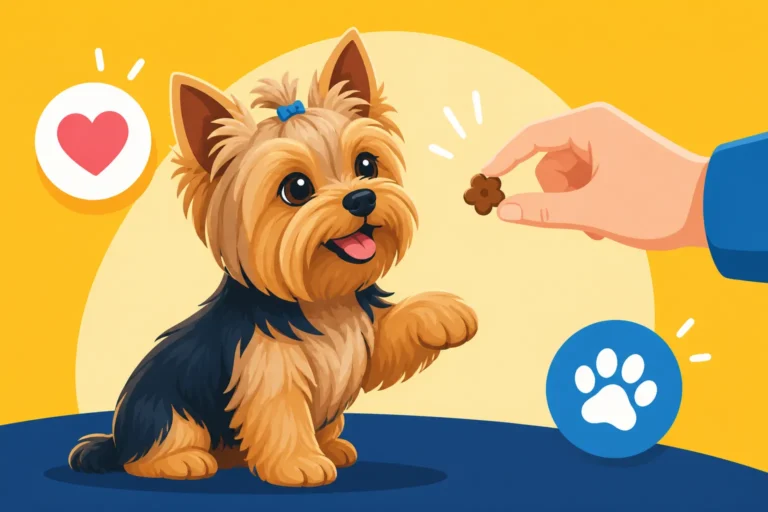
The very first step is to introduce your Yorkie to the target stick and encourage them to investigate it with their nose. Sit in a quiet area with your Yorkie. Hold the target stick a few inches in front of their nose. The moment their nose touches the tip – even if it's just a brush – click the clicker and immediately offer a treat. Don't say anything yet, just click and treat.
Repeat this several times. Your Yorkie might initially be curious, then perhaps a little hesitant, but they'll quickly start to understand that touching this stick makes good things happen. If they ignore the stick, try dabbing a tiny bit of peanut butter or a soft treat on the end of the stick to encourage them to sniff and lick it. The moment their nose makes contact, click and treat. The goal here is to "capture" the behavior of them touching the stick with their nose. You'll probably do about 5-10 repetitions per short session, aiming for 2-3 sessions a day.
Gradually, as your Yorkie starts actively nose-poking the stick, you can begin to move the stick slightly to the left or right, making them take a small step to touch it. This helps them understand that they need to seek out the target. Always remember the click-and-treat immediately after the nose touch. This precise timing is crucial for effective learning. If your Yorkie seems confused or frustrated, make it easier again. Training should always be a positive experience. For puppies, particularly, keeping it light and fun is key, as discussed in "Yorkshire Terrier Puppy Training Schedule".
Adding the Verbal Cue and Clicker Mechanics
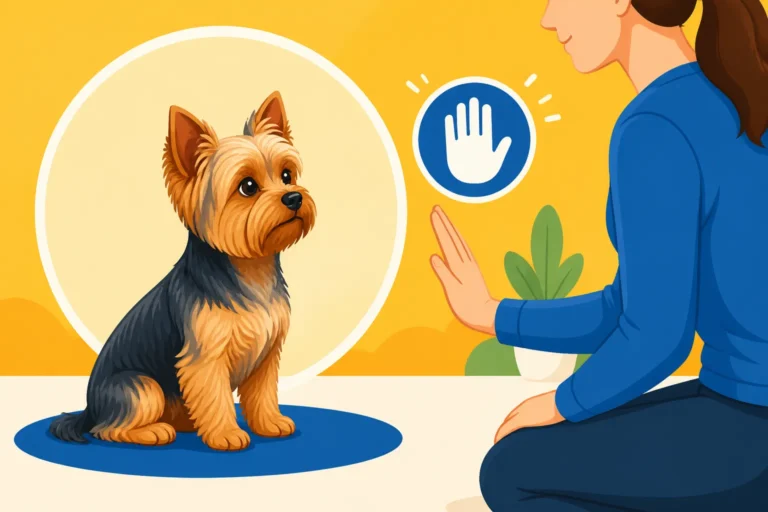
Once your Yorkie is reliably touching the target stick with their nose when you present it, it's time to introduce the verbal command. As you present the target stick, say "Touch!" (or whatever word you prefer, like "Boop!"). The very instant their nose makes contact, click and give them a treat.
The sequence should always be: Verbal Cue ("Touch!") -> Present Target -> Yorkie Touches -> CLICK -> Treat.
Practice this sequence repeatedly. Your Yorkie will begin to associate the sound of "Touch!" with the action of nose-poking the stick. As they get better, you can start to delay presenting the stick for a split second after the verbal cue, giving them a chance to anticipate the action. The clicker's role is to mark the exact moment of success, bridging the gap between the action and the treat. Without the click, the Yorkie might not know exactly what they did right to earn the treat.
Generalizing the Command and Fading the Target
After your Yorkie consistently responds to "Touch!" with the stick, it's time to make the command more versatile.
- Varying Position: Start holding the stick in different positions – higher, lower, to your side. Make your Yorkie move a bit to touch it. This helps them understand the action of touching, not just touching it in one specific spot.
- Fading the Stick to Your Hand: Once they're good with the stick, you can start using your open palm as the target. Present your hand and say "Touch!" When they nose-poke your hand, click and treat. You can even hold the target stick in one hand and offer your other hand as the target, gradually making the target stick less prominent until it's just your hand.
- Generalizing Locations: Practice "touch" in different rooms of your house, then in your yard, and eventually in more distracting environments like a quiet park. The more places you practice, the more solidified the command becomes. Just remember to start easy in new environments and gradually increase the difficulty. If your Yorkie is easily distracted, work on focus exercises first. Building on socialization skills can also help with this, as detailed in "How to Socialize a Yorkie Puppy".
- Fading the Clicker and Treats: This is a gradual process, not an abrupt stop. Once the command is reliable, start by rewarding with a treat every other time, then every third time, and so on, while still clicking for every correct touch. Eventually, you'll only click and treat occasionally, interspersing it with verbal praise and petting. You want the behavior to be intrinsically rewarding and responsive to your praise, not solely dependent on a constant stream of food.
Navigating Common Training Hurdles
It's completely normal to hit a few bumps in the road when training a Yorkie. They're intelligent but can also be quite opinionated and easily distracted. Don't get discouraged!
When Your Yorkie Isn't Responding
One common frustration is when your Yorkie seems to lose interest or just isn't "getting it." This usually stems from a few key areas.
- Low-Value Treats: Is your Yorkie truly motivated by the treats you're offering? If they're turning their nose up, literally, try something new and more appealing. A tiny piece of hot dog, liver paste, or even their favorite soft kibble might do the trick. Remember, it needs to be irresistible.
- Long Sessions: Yorkies have short attention spans. If your training sessions are dragging on for more than 5-7 minutes, you're probably losing them. Keep it short, sweet, and always end before they get bored.
- Too Much Distraction: Are you training in a busy area? Start in a quiet room with minimal distractions. Once they've mastered the command in a calm environment, then gradually introduce more stimuli.
- Confusion: Are your cues clear? Is your timing consistent with the clicker and treat? If you're clicking too late or too early, your Yorkie won't understand what behavior earned the reward. Go back to basics if needed, making it super easy for them to succeed.
- Physical Discomfort: Sometimes, a lack of enthusiasm for movement-based commands could hint at a physical issue. While rare, it's worth considering if they are otherwise lethargic or showing other signs of discomfort. For more serious health concerns that could impact training, reading up on things like "Yorkie Knee Problems Explained" or "Signs Your Yorkshire Terrier Is Sick" can be helpful.
Dealing with Distractions and Over-Excitement
Yorkies are often tiny bundles of energy and curiosity, which can translate to easily getting distracted or over-excited during training.
- Start Small: As mentioned, always begin in a low-distraction environment. A quiet kitchen or living room without other pets or people walking through is ideal.
- Gradual Increase: Once they're performing "touch" flawlessly in a quiet space, slowly introduce minor distractions. Maybe turn on some soft music, then have a family member sit quietly in the room, then move to a slightly busier area.
- Engage and Re-engage: If your Yorkie gets distracted, don't scold them. Simply make a happy sound, wiggle the target stick a bit, or make a kissing noise to re-engage their attention. The moment they look at you or the target, praise them and then retry the command.
- Pre-Training Exercise: Sometimes, a short walk or a quick play session before training can help burn off some excess energy, allowing your Yorkie to focus better. A tired Yorkie is often a more attentive student.
- "Focus" Command First: If distractions are a consistent problem, consider teaching a "look at me" or "focus" command before attempting "touch" in distracting environments. This teaches your Yorkie to give you their attention on cue.
Consistency and Patience for Lasting Results
This might be the most challenging part for us humans! Consistency means everyone in the household uses the same command ("Touch!"), the same target, and the same reward system. If one person says "Boop!" and another says "Nose!", your Yorkie will get confused.
Patience is also paramount. Some Yorkies pick up "touch" in a few sessions, while others might take weeks. Don't compare your Yorkie to others. Celebrate every small victory. If you're feeling frustrated, end the session on an easy command your Yorkie knows, and try again later. Never punish your Yorkie for not getting it right; this only creates fear and anxiety, making them less likely to engage in training. Remember that learning is a process, and every dog learns at their own pace. Sticking to a routine and being predictable will help your Yorkie immensely. You can find more tips on avoiding common pitfalls in "Yorkie Training Mistakes to Avoid".
Expanding Your Yorkie's "Touch" Skills
Once your Yorkie is a "touch" pro, the possibilities open up for even more fun and useful commands!
Advanced Applications and Variations
The basic "touch" command is just the beginning. You can expand it in numerous creative ways:
- Target Different Objects: Instead of your hand or a stick, teach your Yorkie to touch a specific toy, a door handle, a bell, or a soft box. This is done by first making the object the "target" (holding the target stick near it if needed, or dabbing a treat on it), and then transferring the "touch" command to that new object. For instance, if you want your Yorkie to ring a bell to go outside, you'd teach them to "touch" the bell, then eventually fade the verbal cue to just waiting for them to independently touch the bell when they need to potty.
- "Touch" on Body Parts: You can teach your Yorkie to touch different parts of your body – "Touch knee!" or "Touch foot!" This adds complexity and can be a fun way to interact.
- Distance "Touch": Gradually increase the distance between you and the target. Start with a step, then two, until your Yorkie can run across the room to touch a target. This builds impulse control and responsiveness.
- "Go Touch": This variation involves sending your Yorkie to a specific target you've placed somewhere. You point to a target (like a specific cone or mat) across the room and say "Go touch!" This is a fantastic exercise for mental focus and directional cues. It’s a great way to challenge their intelligence, a trait often highlighted in the "Yorkshire Terrier Intelligence Ranking".
Transitioning to New Commands
The "touch" command is incredibly versatile as a foundational skill for teaching other behaviors.
- Spin/Twist: Hold the target stick or your hand near your Yorkie's nose and move it in a small circle, encouraging them to follow it. As their nose follows, they'll naturally spin. The moment they complete the spin, click and treat. Add the verbal cue "Spin!" once they consistently follow your hand.
- Close a Door/Drawer: If you want your Yorkie to close a low-lying cabinet or a light door, teach them to "touch" the handle or the edge of the door. Once they reliably touch it, you can add a slight push to the movement with your hand, then fade your help until they're pushing it themselves.
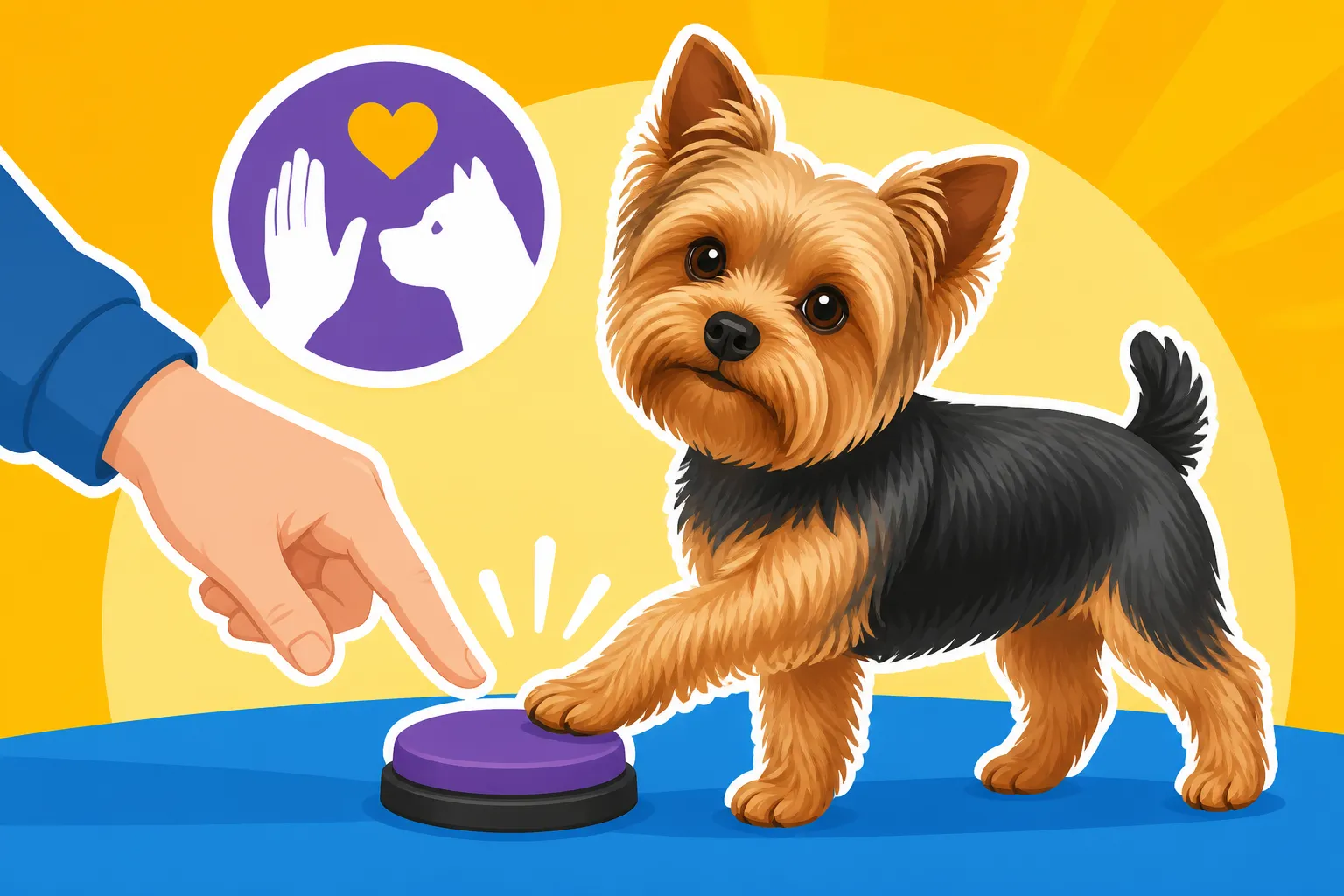
- Ring a Bell: This is a classic "touch" derivative. Hang a bell (like a jingle bell) on a door. Teach your Yorkie to "touch" the bell. Once they do, consistently take them outside for a potty break. They'll quickly associate ringing the bell with going out. This is a very practical application of the "touch" command. For more specific training, you could also explore guides like "How to Teach a Yorkie to Go Potty".
By mastering "touch," your Yorkie gains confidence, and you gain a powerful tool for communication and further training. It truly enriches your relationship and opens up a world of learning opportunities for your clever little companion.
Troubleshooting Table: When "Touch" Isn't Clicking
Sometimes, despite your best efforts, things don't go as planned. Here's a quick reference for common issues and potential solutions:
| Problem | Possible Cause | Solution |
|---|---|---|
| Yorkie ignores the target stick/hand | Treats aren't motivating enough; high distractions | Use higher-value, super delicious, pea-sized treats. Move to a quieter, distraction-free environment. Dab a tiny bit of peanut butter or soft cheese on the target to encourage initial sniffing/licking. Keep sessions very short (2-3 minutes). |
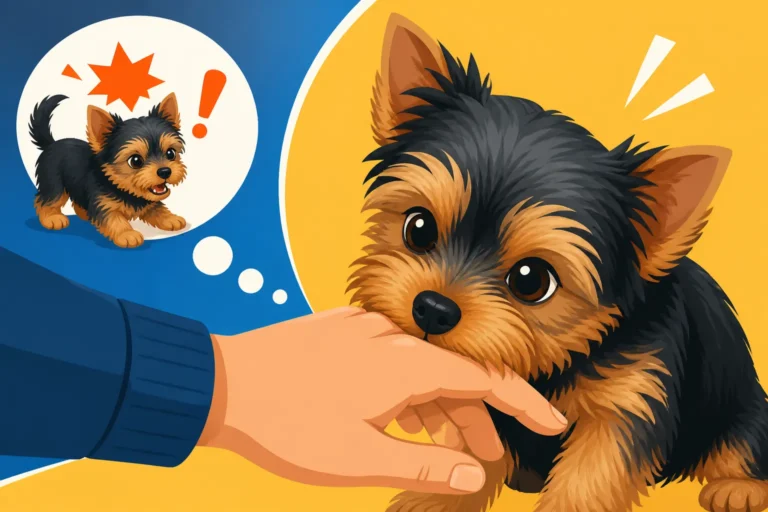
| Yorkie tries to bite the stick | Treats too large; over-excitement; confusion | Ensure treats are tiny and consumed quickly. Reinforce a gentle nose touch, not biting. If biting persists, hold the stick slightly out of reach so they have to reach with their nose. Immediately click/treat for the gentlest contact. If you need assistance with biting behavior, look into "How to Stop a Yorkie from Biting". |
| Yorkie only touches sometimes | Inconsistent timing; inconsistent reinforcement | Be precise with your clicker timing – click the instant the nose touches. Reward every single successful touch, especially in early stages. Ensure everyone in the household uses the same command and technique. Go back to basics, making it super easy for them to succeed repeatedly. |
| Yorkie gets easily distracted | Environment too stimulating; lack of focus training | Start training in a very quiet room. Gradually introduce distractions one at a time. Do a quick play session or walk before training to burn off energy. Practice a "look at me" command before attempting "touch" in new environments. |
| Yorkie seems fearful of the stick | Unfamiliar object; previous negative association | Introduce the stick slowly. Let your Yorkie sniff it without pressure. Place it on the floor with treats around it. Don't force interaction. Try using your finger as a target first, then slowly introduce the stick by holding it still and letting them investigate on their own terms. |
| Yorkie only responds to one person | Only one person is consistently training | All family members should participate in short, consistent training sessions using the same commands, hand signals, and reward system. This generalizes the command to different people. |
| Yorkie just sits/lays down after "touch" | Session is too long; bored; tired | Keep training sessions very brief, typically 3-5 minutes. End on a high note before your Yorkie loses interest. Take breaks between sessions. Ensure they're not tired or overstimulated from other activities. |
| Yorkie barks during training | Over-excitement; frustration; attention-seeking | If barking is due to over-excitement, try calming the environment or a short break. If it's frustration, make the task easier. If it's attention-seeking, ignore the barking and only reward silence and the correct behavior. Consult "How to Stop Yorkie Excessive Barking" if barking becomes a persistent problem. |
Disclaimer
This guide provides general information and training advice. Every Yorkshire Terrier is an individual, and results may vary. If your Yorkie exhibits aggression, severe fear, or other behavioral issues that you feel are beyond your ability to manage, please consult with a certified professional dog trainer or a veterinary behaviorist. They can provide personalized guidance and support for your specific situation.