How to Teach a Yorkie to Play Dead
Teaching your adorable Yorkshire Terrier a fun trick like "play dead" can feel a bit daunting. You might worry they're too small, too stubborn, or just won't get it, leaving you feeling a little frustrated with the whole process. But don't you worry, with the right approach and a sprinkle of patience, your little furball can absolutely master this impressive feat. This guide will walk you through the precise steps to teach your Yorkie to "play dead," ensuring it's a positive and enjoyable experience for both of you.
Understanding Your Yorkie's Unique Learning Style
Before we dive into the nitty-gritty of training, it’s really important to remember that Yorkies, despite their small stature, have big personalities and specific traits that influence how they learn. They're intelligent, yes, but also can be quite opinionated and easily distracted. Understanding these nuances will set you up for success and prevent a lot of head-scratching moments.
The Terrier Temperament
Yorkshire Terriers descend from working terrier breeds, which means they have an inherent drive, intelligence, and a tenacious spirit. This can be a double-edged sword: on one hand, their smarts make them capable of learning a wide array of commands and tricks. On the other hand, their stubbornness, a common trait in terriers, means they might decide a command isn't worth their effort if the motivation isn't high enough. You might find your Yorkie giving you a look that says, "What's in it for me?" before they even consider performing.
Their alert nature also means they can be easily sidetracked by a new smell, a distant sound, or even a fly buzzing by. This isn't them being disobedient; it's just their terrier instincts kicking in. Because of this, creating a calm, distraction-free training environment is paramount, especially in the initial stages. Don't beat yourself up if your Yorkie seems to lose focus quickly; it's perfectly normal for the breed. Just adjust your expectations and environment accordingly.
Motivation is Key
When it comes to training any dog, but especially a Yorkie, high-value motivation is your secret weapon. For some Yorkies, a favorite squeaky toy might do the trick, but for most, irresistible treats are the way to their hearts and their willingness to learn. Think small, soft, smelly treats that they don't get all the time. Pieces of boiled chicken, cheese, or specialized training treats often work wonders.
The goal is to make the reward so appealing that your Yorkie is eager to perform the desired action. If they're not excited about what you're offering, they're much less likely to engage. Experiment with different treats to find your Yorkie's absolute favorite. You'll know you've hit the jackpot when their eyes light up and they become intensely focused on you during training sessions. Remember, consistent positive reinforcement is far more effective than any form of punishment or scolding, which can just make them shut down. For more on this, check out our guide on Positive Reinforcement Training for Yorkies.
Step-by-Step Guide to Teaching "Play Dead"
Now that we understand our Yorkie’s unique brain, let’s get down to business. Teaching "play dead" is essentially a series of smaller, achievable steps. We'll build on foundational commands and use luring to guide your Yorkie into position, making it easy for them to succeed.
The "Down" Command Foundation
The "play dead" trick heavily relies on your Yorkie already knowing and reliably performing the "down" command. If your Yorkie isn't solid on "down," I highly recommend spending some time perfecting that first. It's truly the cornerstone of this trick. Once your Yorkie can consistently lie down on command, you're ready to move forward. If you need a refresher, our article on How to Teach a Yorkie to Down can help you get there.
To begin, get your Yorkie into a "down" position. Have a super high-value treat ready. With your Yorkie lying down, gently call their name to get their attention, then give your "down" command. As soon as their elbows hit the floor, reward them immediately with praise and a treat. Repeat this several times until they are quickly responding to the "down" cue. This reinforces the starting position we need for "play dead."
Lure to the Side
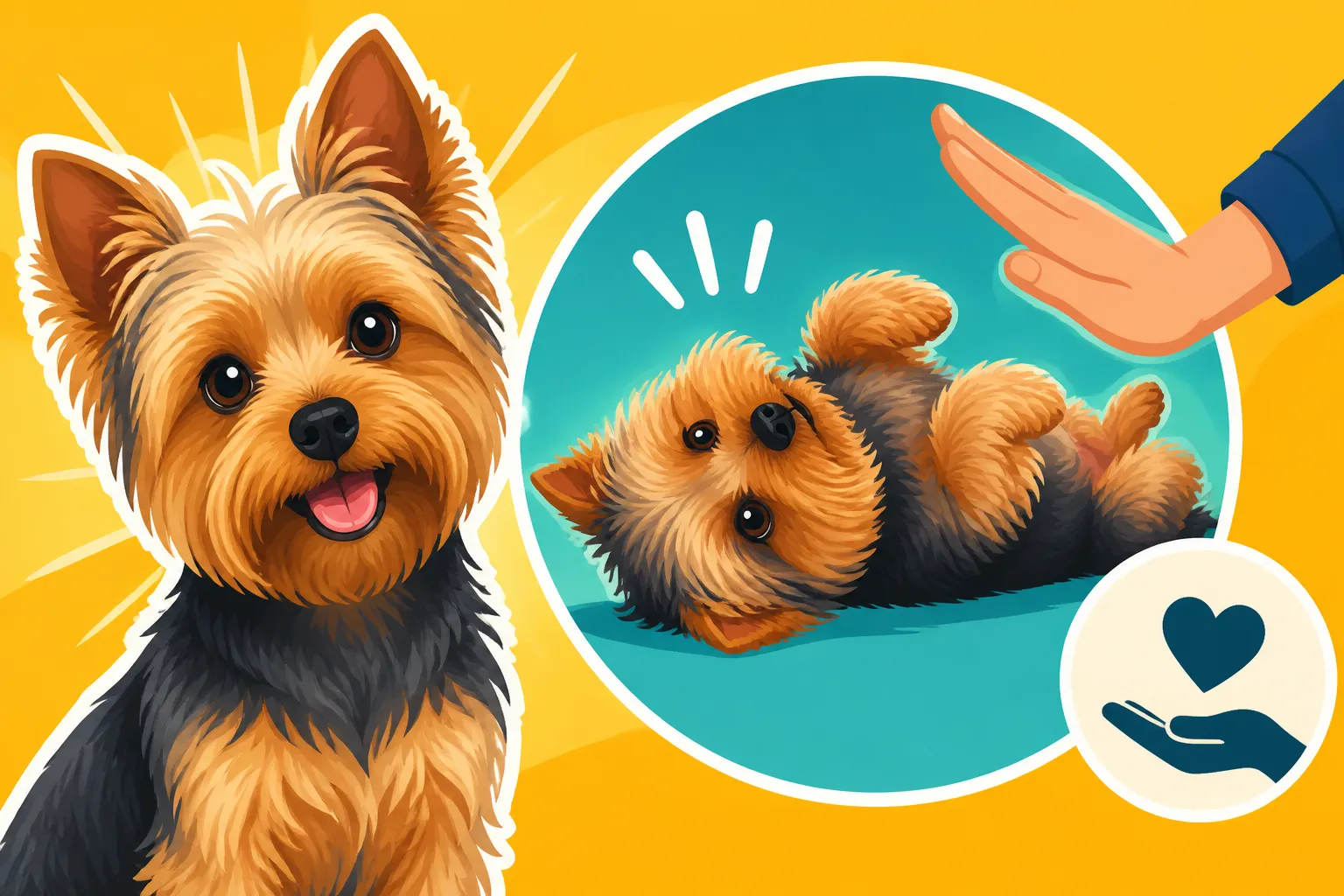
This is where the magic starts to happen! Once your Yorkie is in a solid "down," take another high-value treat and slowly bring it from their nose towards their shoulder, then sweep it towards the side of their head and further around until their body naturally rolls onto its side. The treat acts as a magnet, guiding their head and body. As they roll, they'll end up lying on their side or back.
The key here is slow and smooth. If you move the treat too quickly, your Yorkie might pop up or get frustrated. The moment their entire body is on its side, immediately mark the behavior with a verbal cue like "yes!" or a clicker, and give them the treat. Practice this luring technique multiple times in short, engaging sessions. You're teaching them that rolling onto their side leads to a fantastic reward. Don't worry about adding the "play dead" verbal cue just yet; we're focusing on the physical motion.
Adding the Verbal Cue and Hand Signal
Once your Yorkie is consistently rolling onto their side when you lure them with the treat, it's time to introduce the actual command and a hand signal. Consistency is key here. Choose a clear verbal cue, like "Bang!" or "Play Dead!" and a distinct hand signal, perhaps forming a "gun" with your hand or making a sweeping motion.
Here's how to integrate it:
- Get your Yorkie into the "down" position.
- Say your chosen verbal cue ("Bang!") and immediately follow with your hand signal.
- Right after, use your treat to lure them into the side-lying position, just as you practiced.
- As soon as they're on their side, mark and reward enthusiastically.
Repeat this sequence many times. The goal is for your Yorkie to associate the verbal cue and hand signal with the action of rolling over. Eventually, you'll fade the lure by making the treat motion smaller and smaller until your Yorkie performs the trick based solely on the verbal and hand cues. You can find excellent training treats on platforms like Amazon, making sure they are tiny enough for your Yorkie and won't cause them to chew extensively and lose focus.
Practice and Proofing
Practice makes perfect, and with Yorkies, short, frequent sessions are much more effective than long, drawn-out ones. Aim for 5-10 minute sessions, a few times a day. Keep it fun and end on a positive note, even if it means doing an easier trick they know well.
Once your Yorkie reliably "plays dead" in a quiet, familiar environment, it's time for "proofing." This means practicing the trick in different locations with varying levels of distraction. Start with mild distractions, like another person in the room, then gradually introduce more challenging environments, like your backyard or a quiet park. Remember to always reward heavily when they perform correctly in new situations. This helps generalize the command so they understand it means the same thing, no matter where they are. Remember to praise them liberally! Your enthusiasm is a huge motivator for your Yorkie.
Common Challenges and Troubleshooting
Even with the best intentions and methods, you might run into a few bumps in the road. Don't get discouraged! This is completely normal in dog training. Let's look at some common issues and how to tackle them.
My Yorkie Won't Stay Down
One of the most common frustrations is when your Yorkie pops up before they fully roll over, or they just can't seem to hold the "down" position long enough. This often indicates that the "down" command itself needs more reinforcement, or that your Yorkie isn't quite motivated enough to stay put.
Go back to basics. Spend more time practicing just the "down" and "stay" commands. Use a long-lasting, high-value treat (like a small dollop of peanut butter on a spoon, or a chew stick that's gone quickly) to reward them for staying in the down position for incrementally longer periods. Gradually increase the duration before they get the release cue and their reward. You can also work on How to Teach a Yorkie to Stay in isolation until it's rock-solid. Some dogs benefit from structured online programs like BAXTER & Bella, which offer comprehensive guides and support for foundational commands that are crucial for advanced tricks. Their step-by-step videos can really help if you're feeling stuck.
My Yorkie Just Lays on Their Back
Sometimes, instead of rolling gracefully onto their side, a Yorkie might just flop onto their back, looking adorable but not quite doing the "play dead" we're aiming for. This is usually due to the lure being swept too far over their head, encouraging a full roll rather than a side-lie.
Adjust your luring technique. When your Yorkie is in the "down" position, bring the treat to their nose, then slowly move it back towards their ear on one side. This should encourage them to turn their head and eventually their body to that side. The key is to stop the lure's path before it goes over their spine, prompting them to settle on their hip rather than rolling all the way onto their back. Reward immediately the moment they hit the correct side-lying position, even if it's just for a second. Gradually increase the duration of the side-lie.
Distractions and Consistency
Yorkies can be easily distracted, which can make training frustrating. If your Yorkie is having trouble focusing, take a step back and simplify the environment. Start training in a quiet room with no other pets, people, or tempting smells. As they get better, slowly introduce minor distractions.
Consistency from you is also paramount. Everyone in the household should use the same verbal cues, hand signals, and reward system. Inconsistent training can confuse your Yorkie and slow down progress. Make sure your training sessions are short, frequent, and always positive. If you find yourself getting frustrated, take a break. Your Yorkie will pick up on your mood. Remember, training is a bonding experience, not a chore! Our guide on Yorkie Training Mistakes to Avoid offers even more insights into keeping your training on track.
Making Training Fun and Engaging
If training feels like a chore for you, it definitely will for your Yorkie too. The best results come from sessions that are enjoyable, stimulating, and reinforce the incredible bond you share.
Short, Positive Sessions
Imagine trying to concentrate on a task for a long time when you're tiny and have a short attention span – that's often what it's like for a Yorkie! Longer training sessions can quickly lead to boredom, frustration, and a lack of engagement from your furry friend. Instead, break your training down into bite-sized chunks.
Aim for sessions that last no more than 5 to 10 minutes at a time. Do two or three of these short bursts throughout the day rather than one long one. This keeps your Yorkie interested and eager for the next session. Always end on a positive note, even if it means asking them to do an easy trick they already know, like "sit" or "down," and rewarding them heavily. This leaves them feeling successful and happy, making them look forward to training next time.
The Right Rewards
We touched on this earlier, but it's worth reiterating: the right reward can make all the difference. While some Yorkies are motivated by praise or a favorite toy, most will respond best to high-value treats. These aren't just any treats; these are the special, super-tasty ones they only get during training.
Think about what really gets your Yorkie excited. Is it tiny pieces of cooked chicken, a bit of low-fat cheese, or special soft training treats? You can find a vast selection of appropriate training treats on Amazon, making it easy to experiment and find what your Yorkie loves most. Make sure they are pea-sized or smaller so your Yorkie can gobble them down quickly without getting distracted by chewing. This allows for rapid-fire rewarding, which is crucial for marking the exact moment they perform the desired behavior. The better the reward, the more willing your Yorkie will be to put in the effort! For more detailed advice, check out Best Treats for Training a Yorkie.
Incorporating Play
Training doesn't have to be all formal commands and structured drills. Incorporating play into your routine can make learning feel less like work and more like fun. For Yorkies, whose playful nature is often intertwined with their intelligence, this can be incredibly effective.
Use playtime to practice tricks in a relaxed setting. For example, if your Yorkie loves to chase a toy, you can integrate "play dead" by having them "drop" the toy, then give the "Bang!" cue and reward them for falling to the side. You can also use games like "find the treat" to mentally stimulate them, which can improve their focus during more structured training. Remember, mental stimulation is just as important as physical exercise for a smart breed like the Yorkie. You might even find ideas for Mental Stimulation Games for Yorkies to keep them engaged and prevent boredom. This holistic approach makes training a joyful journey, strengthening your bond and showcasing your Yorkie's amazing capabilities.
| Training Step | Action | Key Tips |
|---|---|---|
| 1. Foundation: Down | Ensure your Yorkie reliably performs the "down" command on cue. | Practice in a quiet area. Use high-value treats and praise. Make sure they hold the position for a few seconds. |
| 2. Lure to Side | With your Yorkie in "down," use a treat to lure their head towards their shoulder, sweeping to the side. | Move the treat slowly and smoothly. Reward immediately when they roll onto their side. Repeat until consistent. Avoid luring too far over their back. |
| 3. Add Cue & Signal | Introduce a verbal cue ("Bang!", "Play Dead!") and a hand signal just before the lure. | Always say the cue/show the signal before the lure. Gradually make the lure smaller until the Yorkie responds to the cue alone. Be consistent with your chosen cue/signal. |
| 4. Practice & Proof | Practice in short, frequent sessions. Introduce mild distractions gradually. | Keep sessions 5-10 minutes. End on a positive note. Practice in different locations to generalize the command. Always use positive reinforcement. |
| 5. Fade Lure | Reduce reliance on the treat lure until your Yorkie performs the trick with only the verbal/hand cue. | Start with an empty hand motion that mimics the lure. Reward for correct performance even without the visible treat. |
Disclaimer
This article is for general informational purposes only and does not constitute professional advice. Laws, prices and regulations vary by location and change over time. Consult a qualified professional for guidance on your specific situation.