How to Teach a Yorkie to High Five
It's incredibly frustrating when you see other dogs effortlessly performing cute tricks like "high five," and you wonder if your clever but sometimes stubborn Yorkshire Terrier will ever master something similar. You know they're smart, but getting them to actually do what you want can feel like a monumental task. This guide is here to walk you through, step-by-step, how to teach your Yorkie to give a charming high five, turning that frustration into a rewarding bonding experience for both of you.
Getting Ready for Your High-Five Training Sessions
Before you even think about starting to teach your Yorkie a new trick, it's crucial to set yourself and your furry friend up for success. Just like us, dogs learn best in an environment that's free from distractions and when they're feeling relaxed and motivated. This preparation stage is often overlooked, but it makes all the difference in how quickly and happily your Yorkie will learn.
Gathering Your Essential Training Supplies
Think of this as equipping your training toolkit. You don't need a lot, but what you do need should be readily available and of good quality. The right supplies can significantly enhance your training effectiveness.
First and foremost, you'll need high-value treats. These aren't just any old kibble. High-value treats are small, soft, and utterly irresistible to your Yorkie. Think tiny pieces of cooked chicken, cheese, or even specific training treats designed for high motivation. The smaller, the better, as you'll be giving many throughout a session, and you don't want to overfeed your pup or distract them with chewing. You can often find a fantastic variety of these types of treats on Amazon, along with other training essentials. Next up is a clicker. While not strictly mandatory, clicker training is incredibly effective for clearly communicating to your dog the exact moment they performed the desired behavior. The click acts as a precise marker, telling your Yorkie, "Yes! That's it! And a treat is coming!" It helps them understand faster than just saying "good dog" and giving a treat. Finally, find a quiet, distraction-free space. This might be your living room after everyone's settled down, or a secluded corner of a bedroom. The goal is to minimize anything that could pull your Yorkie's attention away from you and the task at hand. If there’s too much going on, your Yorkie’s tiny brain might just get overwhelmed and decide that squirrel outside the window is far more interesting than your attempts to teach them something new.
Setting the Right Training Mood and Duration
Imagine trying to learn a new skill when you're stressed, exhausted, or bored. Your Yorkie feels the same way! Their attention spans, especially when they're young or easily distracted, are pretty short. This means our training sessions need to be tailored to their natural inclinations.
The key here is short, positive, and fun sessions. Aim for 2-5 minutes per session, and try to do 2-3 sessions per day. This might not sound like a lot, but consistency over intensity is what truly builds success. Always end the session on a positive note, even if it means asking them to do an easy trick they already know, like "sit," and then praising them enthusiastically. This leaves them wanting more, rather than feeling frustrated or bored. It’s also important to remember that every Yorkie is an individual. Some might pick things up in a few sessions, while others might take weeks. Patience is your best friend here. If you find yourself getting frustrated, it’s time to take a break. Your Yorkie will pick up on your mood, and if you’re stressed, they’ll be less likely to engage. You want them to associate training with good times and tasty rewards, which strengthens your bond and makes them eager for the next session.
The Step-by-Step Guide to Teaching the High Five
Now for the fun part! Teaching the high five is a multi-step process that builds on itself. Don't rush through these stages; let your Yorkie master each one before moving on. Patience is truly a virtue when training these intelligent but sometimes strong-willed little dogs.
The "Paw" Prerequisite: Building the Foundation
If your Yorkie already knows how to "shake a paw," you're one step ahead! You can probably skip this section. But if not, this is where we start. The "high five" is essentially an elevated "paw" trick, so mastering the basic paw is crucial.
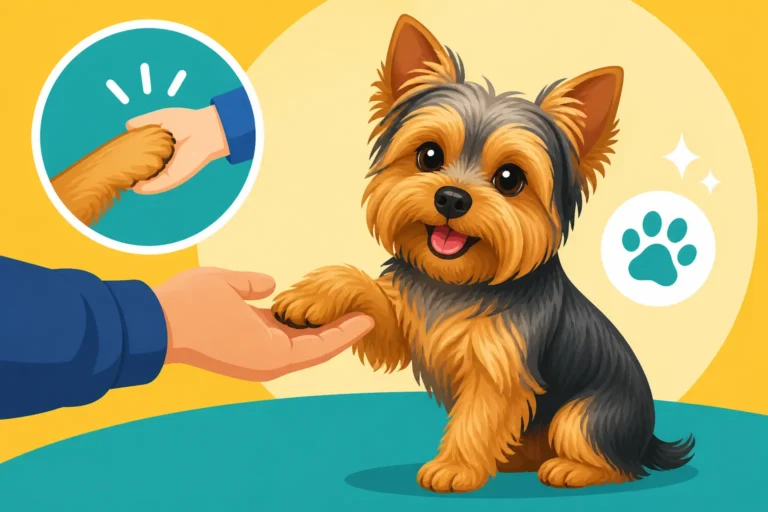
Start by having your Yorkie sit in front of you. Hold a high-value treat in your closed fist. Let your Yorkie sniff your hand. Most Yorkies, being the curious little creatures they are, will try to get to the treat. They might nose it, lick it, or gently paw at your hand. The moment their paw touches your hand, click (if you're using a clicker) and immediately open your hand to give them the treat. Repeat this several times. Once they consistently paw at your hand to get the treat, you can add the verbal cue. Just before they paw, say "Paw!" in a clear, cheerful voice. When their paw touches, click and treat. Gradually, you’ll find they associate the word "Paw" with the action of lifting their paw. Practice this until they reliably offer their paw when you give the command. This foundational step is incredibly important for their understanding of the upcoming "high five" motion. For more foundational commands, you might find our guide on How to Teach a Yorkie Basic Commands helpful.
Elevating the Paw: The High Five Gesture
Once your Yorkie is a pro at "paw," it's time to literally elevate the trick. This step involves guiding their paw to a higher position, closer to a true high five.
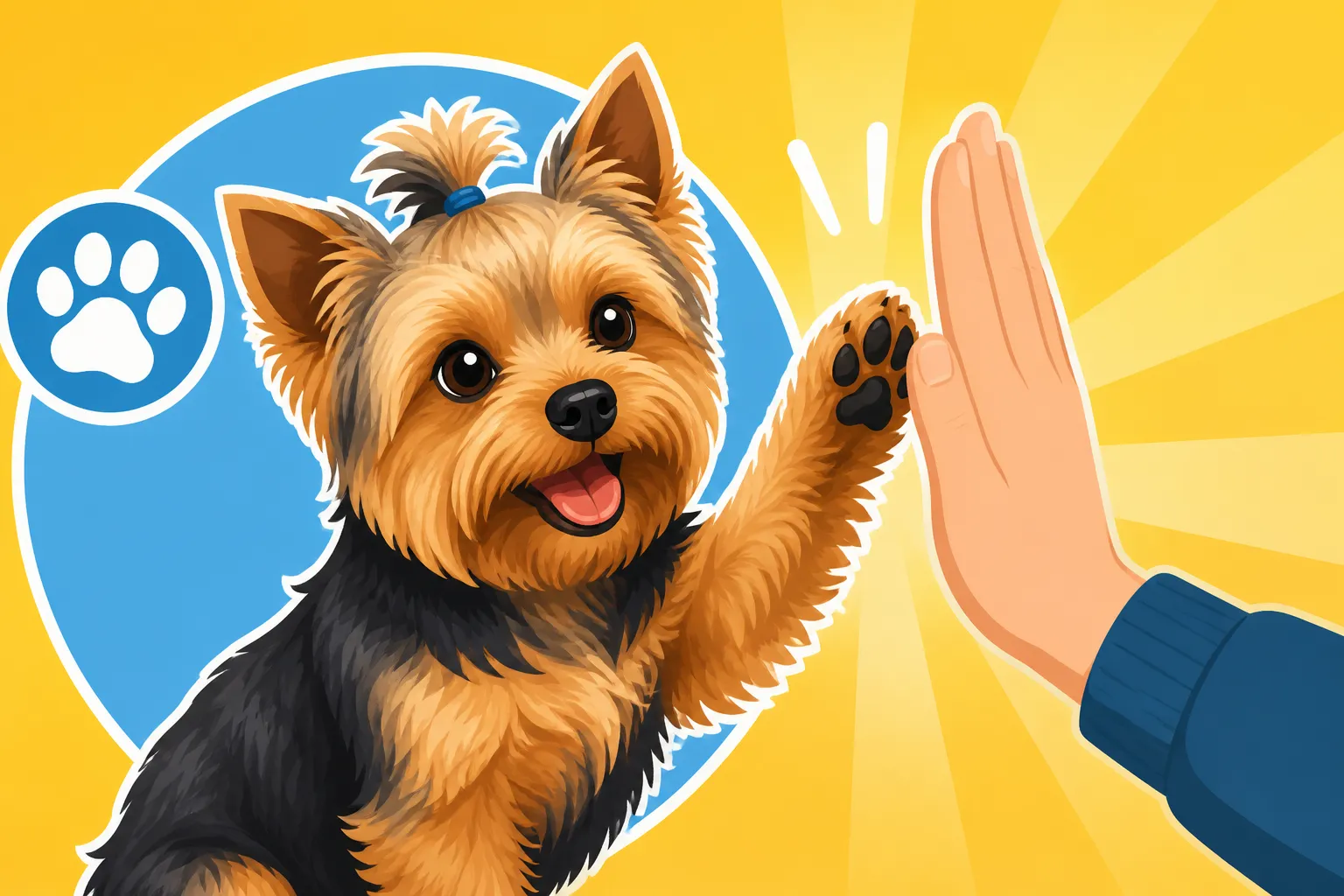
Have your Yorkie sit in front of you again. Hold a treat in your non-dominant hand. With your dominant hand, present your open palm to your Yorkie, similar to how you would for a human high five, but lower down at first. Give your "Paw!" command. When they lift their paw to your hand, guide their paw slightly upwards with your open palm, just an inch or two higher than their usual "paw" position. The instant their paw connects with your palm in this slightly elevated position, click and reward with the treat from your other hand. The key here is to make sure the treat comes from the hand that wasn't holding their paw, so they don't just associate the treat with your guiding hand. Repeat this several times, gradually raising your hand a little higher each time. The goal is for them to eventually reach up and touch your open palm when you present it. Remember to keep the sessions short to avoid frustration. If your Yorkie seems confused, go back to the basic "paw" a few times to rebuild their confidence.
Adding the Verbal Cue: "High Five!"
Now that your Yorkie is consistently reaching for your raised hand, it’s time to associate that action with a new, distinct verbal command.
As your Yorkie is about to touch your raised hand, say "High Five!" in an enthusiastic tone. As soon as their paw makes contact, click and immediately give the high-value treat. Repeat this process, always saying "High Five!" right before the action. The timing of the verbal cue is important – you want to say it before the action, not after, so they learn to associate the sound with the impending movement. Over time, your Yorkie will start to anticipate the "High Five!" command and perform the action without you having to guide their paw as much. This is where the magic truly starts to happen!
Phasing Out the Lure and Hand Target
This is often the trickiest part, as our Yorkies become very reliant on our hands being a target or a treat dispenser. The goal is for them to perform the "High Five!" on the verbal cue alone, with your hand simply presenting the high-five gesture without a treat in sight.
First, start by pretending to have a treat in your hand when you present your palm for the high five. Don't actually have one. Give the "High Five!" command. If they perform the action, click and then immediately pull a treat from your pocket or a nearby treat pouch and reward them. This teaches them that even without seeing the treat, performing the trick still yields a reward. Gradually, you can make your high-five hand gesture less pronounced. Instead of a full, open palm, you might just offer a slightly cupped hand or even just two fingers. The ultimate goal is for them to respond to your verbal cue and a subtle hand gesture, showing they truly understand the command. If they struggle, go back a step and reinforce with visible treats before trying to fade them out again. Consistency, as mentioned in our guide on Yorkie Training Mistakes to Avoid, is absolutely critical here.
Troubleshooting Common High-Five Hurdles
Even the smartest Yorkies can hit a snag or two when learning a new trick. It’s completely normal, and it doesn't mean you or your dog are failing. It just means you need to adjust your approach and understand why they might be struggling.
My Yorkie Just Licks My Hand
This is perhaps the most common frustration when teaching "paw" or "high five." Your Yorkie is showing affection, but it's not the desired behavior for the trick!
If your Yorkie starts licking your hand instead of pawing or touching it, gently withdraw your hand, don't say anything, and wait a few seconds. Then, try again. The key is to only reward the desired behavior. If they lick, they get no click and no treat. This teaches them that licking doesn't get them what they want, but pawing does. You might also try moving your hand slightly higher or to the side, making it a bit harder to lick but still accessible for a paw. Some Yorkies are super eager for treats, so if their nose is glued to your hand, try making your hand a flat, firm surface rather than a tempting treat-holder. The moment you feel even the lightest touch of a paw, that's your cue to click and treat. Patience and precise timing are your allies in overcoming the lick-attack!
Lack of Interest or Frustration
Sometimes, your Yorkie might just seem bored, distracted, or even get genuinely frustrated if they don't understand what you're asking. Recognizing these signs is crucial.
If your Yorkie yawns, looks away, starts sniffing the floor, or whines, these are all signs they might be losing interest or feeling overwhelmed. Stop the session immediately. Forcing them to continue will only create negative associations with training. Take a break, play a short game, or go for a quick potty break outside. Come back to it later, keeping the next session even shorter and perhaps going back to an easier step or even a trick they already know perfectly. Rebuilding their confidence and making it fun again is paramount. It’s also worth re-evaluating your treats. Are they truly high-value? Sometimes a change in treat can re-ignite enthusiasm. Also, ensure you’re not asking for too much too soon. Break down the trick into even smaller micro-steps if necessary. A program like BAXTER & Bella offers comprehensive online training resources that can help if you feel stuck or need more personalized guidance for these common issues.
Consistency is Key: Short and Sweet Sessions
It's easy to get excited and want to do long training sessions, especially when your Yorkie is finally "getting it." But this can quickly lead to burnout for both of you.
Remember those 2-5 minute sessions? Stick to them like glue. Little and often beats long and infrequent every single time. Consistent, positive reinforcement in short bursts reinforces the learning without overwhelming your Yorkie. Think of it like a human learning a new language – short, daily practice is far more effective than cramming once a week. Incorporate these mini-sessions into your daily routine. Maybe a quick "High Five!" before their meal, or during a play break. This regularity helps solidify the command in their memory. You can even combine it with other activities, like practicing "sit" and "stay" before moving to "High Five!". Consistency is a huge factor in preventing Yorkshire Terrier behavior problems and solutions from escalating.
| Problem Area | Common Sign(s) | Solution |
|---|---|---|
| Licking Hand | Yorkie licks your palm instead of pawing | Immediately withdraw hand, no click, no treat. Re-present hand after a few seconds. Only reward a paw touch. Try a firmer, flatter hand presentation. |
| Lack of Interest | Yawns, sniffs ground, looks away, moves away | End session immediately. Take a break (playtime, potty). Use higher-value treats. Return to an easier step. Shorten sessions further. |
| Frustration | Whining, growling, excessive barking, nipping | Stop immediately. Go back to a trick they know well to build confidence. Re-evaluate if the steps are too big. Consult online resources or a professional trainer. |
| Inconsistent Action | Performs trick sometimes, not others | Ensure consistent command, hand signal, and reward timing. Practice in different locations (low distraction first). Don't move on until the current step is 90% reliable. |
| Not Getting It | Doesn't understand what you want, no progress | Break the trick into even smaller micro-steps. Revisit the "paw" command. Use a stronger lure. Make sure your rewards are immediate and highly desirable. |
Advancing the Trick and Maintaining the Fun
Once your Yorkie is confidently dishing out high fives, you’ve not only taught them a cool trick but also reinforced your bond and demonstrated their incredible learning capacity. But why stop there? Learning can always be an ongoing, joyful process.
"High Ten" and Other Variations
The beauty of teaching a foundational trick like "High Five!" is that it opens the door to more complex and impressive variations. You can build upon this knowledge to keep your Yorkie engaged and show off their cleverness even more.
A natural progression from "High Five!" is "High Ten!" This simply means teaching your Yorkie to offer both paws. You can start by asking for a "High Five!" and as they offer one paw, gently tap their other paw to encourage them to lift it slightly, then click and treat for both paws being presented. Alternatively, you can teach them to "wave" goodbye by holding your hand up and slightly waving it, and rewarding them when they mimic the motion with their paw. Another fun one is "Fist Bump," where you present a closed fist instead of an open palm. Again, you’d initially lure their paw to your fist, then gradually fade the lure. The key is to keep the steps small and manageable, always rewarding the slightest approximation of the desired behavior. These variations not only impress your friends but also provide great mental stimulation for your Yorkie, which is just as important as physical exercise for a healthy, happy dog.
Incorporating into Daily Life and Maintaining the Skill
A trick isn't truly mastered until your Yorkie can perform it reliably in different environments and contexts. And like any skill, if you don't use it, you might lose it!
Once your Yorkie knows "High Five!", start asking for it in various low-distraction environments. Maybe in the backyard, or when a quiet friend comes over. This helps generalize the behavior so they don't just associate it with one specific spot in your living room. When guests visit, it’s a wonderful way to showcase your Yorkie’s intelligence and charm. Imagine the smiles when your little pup greets someone with a confident high five! But remember, always keep it positive and don't force them if they're not in the mood. To maintain the skill, incorporate occasional practice into your daily routine. It doesn't have to be a formal training session. A quick "High Five!" before their meal or before going for a walk, followed by praise and a small treat, is enough to keep the skill sharp. This keeps their minds active and strengthens the bond you share, proving that your little companion is capable of so much more than just being adorable. After all, a well-trained Yorkie is a happy Yorkie, and consistent positive reinforcement is a wonderful way to foster a lifetime of good behavior.
Disclaimer
This guide offers general advice for training Yorkshire Terriers. Every dog is an individual, and training outcomes can vary. Always prioritize your dog's safety and well-being. If you encounter persistent behavioral issues or aggression, consult with a certified professional dog trainer or veterinary behaviorist for personalized guidance. The author and publisher are not responsible for any incidents that may arise from following this advice.