How to Teach a Yorkie to Speak
It's incredibly frustrating when your adorable little Yorkshire Terrier decides to use their powerful voice at all the wrong times, whether it's at the mailman, a leaf blowing by, or just because they feel like it. While constant, uncontrolled barking can drive any owner a little crazy, teaching your Yorkie to "speak" on command can actually be a fantastic way to gain control over their vocalizations. This comprehensive guide will walk you through the precise steps to teach your clever companion this fun and useful trick, and, just as importantly, how to teach them to be quiet when asked.
Understanding Your Yorkie's Natural Inclination to Bark
Before we even begin talking about teaching your Yorkie to "speak," it's vital to grasp why they bark in the first place. Yorkies are terriers, through and through, meaning they were originally bred for hunting small vermin. This heritage instilled in them a keen sense of awareness and a natural tendency to be vocal alarms. That big bark coming from such a small package isn't just for show; it's a deeply ingrained trait.
The Many Reasons Why Yorkies Bark
Yorkshire Terriers are expressive little dogs, and their barks are their primary way of communicating with us and their environment. It’s not always about being "naughty" – often, they’re just trying to tell you something important, at least from their perspective!
One common reason is to alert. A knock at the door, a squirrel in the yard, or even a sudden strange sound can trigger their natural watch dog instinct. They see it as their job to let you know. Another frequent cause is attention-seeking. If your Yorkie barks and you immediately look at them, talk to them, or give them a treat, you've just reinforced that barking gets results. This is often an unconscious habit we, as owners, fall into. Boredom or a lack of mental and physical stimulation can also lead to excessive barking, as can separation anxiety if they're left alone for too long. Sometimes, it’s sheer excitement or playfulness. They might bark when they want to play, when you come home, or when they're interacting with other dogs. Understanding these triggers is the first step in gaining control over their vocal habits, whether you're trying to figure out Why Is My Yorkie Barking At Night or just general nuisance barking.
How Teaching "Speak" Can Lead to Better Bark Control
It might seem counterintuitive to teach a dog to bark more when you're hoping for less barking, but hear me out. The "speak" command isn't about encouraging indiscriminate barking. Instead, it's about putting their vocalizations on cue. When your Yorkie learns to bark on command, they also learn that barking is something they can choose to do, and more importantly, choose not to do.
This process gives you a channel for communication and control. By teaching them to "speak" and then immediately following up with a "quiet" command, you're teaching them the valuable skill of modulating their voice. It empowers you as the owner to dictate when the barking happens, rather than being at the mercy of every doorbell or passing pedestrian. Think of it as teaching a child when it's appropriate to shout versus when to use their "inside voice." It’s a core component of Yorkshire Terrier Obedience Training Basics, fostering a more harmonious home environment by giving you a tool to manage one of their most prominent behaviors.
Step-by-Step Guide to Teaching the "Speak" Command
Teaching your Yorkie to "speak" is a fun and rewarding process that relies heavily on positive reinforcement. Consistency, patience, and high-value treats are your best friends here.
Capturing the Bark: When Your Yorkie Barks Naturally
The first step is to "capture" a bark that your Yorkie offers spontaneously. This means waiting for them to bark on their own and then immediately marking and rewarding that behavior.
Start by having some high-value treats ready – small, soft, and super tasty bits that your Yorkie absolutely loves. Think tiny pieces of cooked chicken, cheese, or specialized training treats. Have them handy in your pocket. Now, you need to find something that reliably makes your Yorkie bark. Common triggers include:
- A knock on the door or doorbell ring (have someone help you if needed).
- Someone walking past your window.
- The sound of another dog barking (you can find videos of this on YouTube).
- A playful tease with a favorite toy, getting them excited.
When your Yorkie barks in response to one of these triggers, as soon as the bark happens, say "Yes!" or use a clicker (many excellent clickers are available on Amazon) and then immediately give them a treat. The timing is crucial here. You want to mark the exact moment of the bark, so your Yorkie connects the sound with the reward. If you're using a clicker, the click is the marker, followed by the treat. Repeat this process several times in short, upbeat sessions. Don't let it drag on, or your Yorkie might lose interest. The goal is for them to understand, "Barking = yummy treat!"
Associating the Command: Adding the Verbal Cue
Once your Yorkie understands that barking gets them a reward, it's time to introduce the verbal command "speak."
In your next training session, set up your trigger again (the doorbell, the person walking by, etc.). Just before your Yorkie barks, say "Speak!" in a clear, happy voice. The moment they bark, immediately follow with your marker word ("Yes!") or click, and then give them that delicious treat. The sequence should be: "Speak!" (trigger) -> Yorkie barks -> "Yes!"/Click -> Treat.
Repeat this many times. The idea is to create a strong association in your Yorkie's mind: the word "speak" predicts the bark, which then leads to a reward. Keep these sessions brief and positive. If your Yorkie isn't barking, go back to just capturing the bark without the verbal cue until they're reliably offering it again. Some dogs might be a bit stubborn, but with enough repetition and enticing rewards, they'll start to put it together. This consistent positive reinforcement is key to any successful How to Train a Yorkshire Terrier endeavor.
Fading the Prompt: Getting Your Yorkie to Bark on Command Alone
Now for the magic moment! Once your Yorkie is consistently barking when you say "Speak!" and use your trigger, it's time to try fading out the trigger.
Start by saying "Speak!" with a little more enthusiasm, but don't introduce the external trigger right away. For instance, instead of knocking on the door, just stand there, say "Speak!" and wait a second. If your Yorkie barks, immediately mark and reward. If they don't, you can go back to using the trigger, or try a different, less intense trigger.
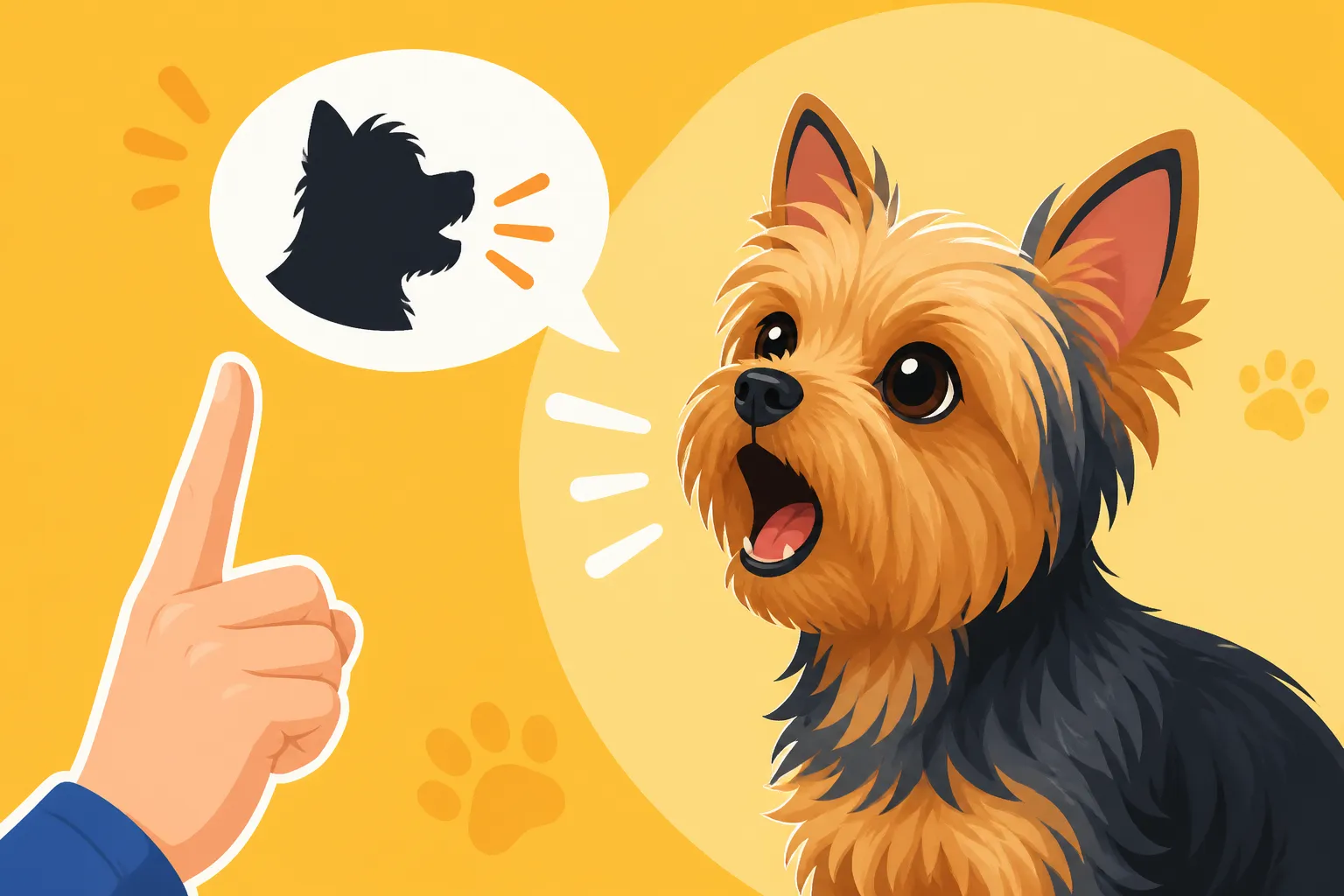
The goal is for your Yorkie to bark simply at the sound of your voice saying "Speak!" without needing the visual or auditory prompt. This might take a bit of patience. Some Yorkies catch on quickly, while others need more repetition. Keep your sessions short, fun, and always end on a successful note. If your Yorkie is having a hard time, try giving a subtle body cue along with "Speak," like pointing your finger or raising your hand, then gradually fade that cue as well. This iterative process is what helps build strong command recognition.
Introducing the "Quiet" Command for Balanced Vocal Control
Teaching your Yorkie to "speak" is only half the battle. To truly have control over their vocalizations, you absolutely must pair it with a solid "quiet" command. This is where the real management of their natural chattiness comes into play, ensuring you can prompt barking when desired and stop it when needed.
Why the "Quiet" Command is Absolutely Essential
Imagine you’ve successfully taught your Yorkie to "speak" on cue. That’s fantastic! But what happens if they keep barking after the command, or if they decide to "speak" at an inappropriate moment? Without a "quiet" command, you’ve essentially just trained them to bark on request, but haven't given yourself a way to turn it off. The "quiet" command is the indispensable counterpart to "speak." It transforms their barking from an uncontrolled outburst into a tool that you can direct.
A reliable "quiet" command is crucial for maintaining peace in your home and neighborhood, especially given how vocal Yorkies can be. It helps differentiate between a playful "speak" and an annoying, persistent bark. It teaches your Yorkie self-control and reinforces that you are the one who dictates when it's appropriate to make noise. Without it, you might find yourself inadvertently encouraging more general barking, which is the opposite of what most Yorkie parents want. Learning How to Teach a Yorkie the Quiet Command is truly a game-changer for managing their expressive nature.
Training for Silence: The Art of the "Quiet" Cue
Teaching "quiet" builds directly on the "speak" command. You need your Yorkie to be barking first, so you can then teach them to stop.
Here’s how to do it:
- Get Them to "Speak": Ask your Yorkie to "Speak!" If they bark, fantastic. Let them bark two or three times.
- Introduce the "Quiet" Cue: While they are barking, hold a high-value treat right up to their nose. The treat should be so close that they can smell it intensely. Most dogs will stop barking, even for a brief second, to sniff the treat.
- Mark and Reward the Silence: The instant they stop barking, even if it's just for a moment, say "Quiet!" (or "Shush," "Enough," whatever word you choose) followed immediately by your marker word ("Yes!" or click) and then give them the treat.
- Repeat and Lengthen Silence: Practice this many times. Over successive sessions, gradually increase the duration of silence you require before giving the treat. Start with one second of silence, then two, then three, and so on. If they break the silence and bark again before you've marked and rewarded, simply pull the treat away, wait for them to bark again (or prompt "speak"), and then try the "quiet" sequence again.
- Practice in Various Settings: Once they are consistent in a quiet environment, gradually introduce distractions. This helps generalize the command.
This process is about rewarding the absence of barking after the cue. It might take longer than teaching "speak," as Yorkies love to voice their opinions! Patience and clear, consistent signals are paramount. Online training platforms, like those offered by BAXTER & Bella, often have excellent video tutorials that demonstrate the precise timing needed for successful "quiet" training, which can be incredibly helpful visually.
Advanced Tips and Troubleshooting for Yorkie Vocalizations
Even with the best intentions and consistent training, you might run into some bumps in the road when managing your Yorkie's vocalizations. It’s a normal part of owning such a spirited breed!
Distinguishing Between Trained "Speak" and Nuisance Barking
One of the biggest challenges for Yorkie owners is to differentiate between the trained "speak" command and their natural tendency to engage in excessive or nuisance barking. When you teach "speak," you're asking for a deliberate, cued bark. Nuisance barking, on the other hand, is usually reactive, incessant, and often triggered by anxiety, territoriality, boredom, or attention-seeking.
The key distinction lies in your cue. A trained "speak" should only happen when you say the command. If your Yorkie is barking at the delivery person even without your "speak" cue, that’s nuisance barking, and it needs to be addressed separately. You wouldn't reward a nuisance bark, but you would reward a cued "speak." This can be tricky because Yorkies are smart and can quickly learn to offer behaviors they think will get them a reward. If your Yorkie barks at the mailman and you say "speak!" and then reward, they might associate the mailman's presence with the cue to bark.
To avoid this, strictly reserve your "speak" command for training sessions or specific, desired moments. For nuisance barking, redirect their attention, or use your "quiet" command if you've already established it. Consistency here is critical; otherwise, you could accidentally reinforce the very barking you're trying to control. For more in-depth strategies on handling general noise, check out resources like How to Stop a Yorkie from Barking.
The Importance of Consistency and Positive Reinforcement
Any successful dog training, especially with a clever and sometimes stubborn breed like a Yorkie, hinges on unwavering consistency and the power of positive reinforcement. Your Yorkie thrives on routine and clear expectations.
- Be Consistent: Everyone in the household needs to use the same commands and follow the same rules. If one person allows barking at the doorbell and another scolds it, your Yorkie will be confused and training will suffer. Establish clear boundaries and stick to them.
- Keep it Positive: Always use rewards (treats, praise, playtime) when your Yorkie performs the desired action. Never punish them for not understanding a command; instead, re-evaluate your teaching method or break the steps down further. Punishing a Yorkie for barking can actually increase their anxiety, leading to more problematic vocalizations. Positive reinforcement, as discussed in Positive Reinforcement Training for Yorkies, builds trust and makes training a joyful experience for both of you.
- High-Value Rewards: For Yorkies, treats often rule! Make sure the treats you're using are truly motivating. Small pieces of cooked chicken, turkey hot dogs, or specific soft training treats are usually far more appealing than dry kibble. The value of the treat directly correlates to their motivation to perform. Finding the Best Treats for Training a Yorkies can make a huge difference in engagement.
- Short, Fun Sessions: Yorkies have short attention spans. Keep training sessions brief – 5 to 10 minutes, a few times a day. End on a high note, even if it means asking them to do an easier command they know perfectly, like "sit," and then rewarding them. This keeps them eager for the next session.
When to Consider Professional Help for Barking Issues
While teaching "speak" and "quiet" can significantly improve your control over your Yorkie's vocalizations, some barking behaviors may stem from deeper issues that are beyond the scope of basic command training. If you find your Yorkie's barking is:
- Excessive and Constant: Despite your best efforts, they bark for extended periods, seemingly without cause, and are difficult to interrupt.
- Accompanied by Other Problem Behaviors: Such as destructive chewing, house-soiling, or frantic pacing, especially when left alone. This could indicate Yorkshire Terrier Separation Anxiety Solutions.
- Aggressive or Fear-Based: Barking that is accompanied by growling, snapping, lunging, or clear signs of fear or anxiety towards specific people, dogs, or situations. This points to more complex Yorkshire Terrier Behavior Problems and Solutions that require expert intervention.
- Disrupting Your Life Significantly: If the barking is causing severe stress in your household, leading to neighbor complaints, or preventing you from enjoying time with your dog.
In these situations, it’s always best to consult with a certified professional dog trainer or a veterinary behaviorist. These experts can assess the root cause of the barking, whether it's anxiety, territoriality, or something else, and develop a tailored behavior modification plan. They have the knowledge and experience to tackle persistent issues, often using techniques like desensitization and counter-conditioning that are harder to implement effectively on your own. Investing in professional guidance can save you a lot of frustration and help your Yorkie lead a happier, calmer life.
Maximizing Your Yorkie's Vocal Training
Now that you’ve got a handle on the "speak" and "quiet" commands, you can integrate them into your Yorkie’s daily life and even use them as a stepping stone for more advanced communication. The real benefit comes from making these commands practical and reinforcing them regularly.
Practicing in Diverse Environments
Once your Yorkie reliably performs "speak" and "quiet" in the quiet confines of your living room, it’s time to take the show on the road – or at least, to different parts of your house and yard! Dogs don't automatically generalize commands, meaning they might understand "speak" perfectly in the kitchen but be completely baffled by it in the park.
Start small: move your training sessions to another room, then the backyard, then a quiet street corner, and eventually places with more distractions like a park. Each new environment is like starting over slightly, so be patient and prepared to use higher-value treats initially. If your Yorkie struggles, go back to a less distracting environment until they regain confidence, then gradually reintroduce the challenge. The goal is for them to understand that "speak" and "quiet" mean the same thing, no matter where they are or what's going on around them. This helps reinforce their overall ability to focus, especially if you sometimes feel your Yorkie Not Listening: What to Do.
Table: Stages of Yorkie Vocal Command Training
Here's a quick overview of the progression you'll follow when teaching your Yorkie to "speak" and then to be "quiet," along with what you should be doing and what to expect from your furry friend.
| Training Stage | Your Action (What You Do) | Yorkie's Expected Response | Reward/Outcome | Key Learning for Yorkie |
|---|---|---|---|---|
| 1. Capturing Bark | Identify a trigger (knock, doorbell), prepare treat. | Barks spontaneously | "Yes!"/Click immediately + High-value Treat | Barking gets a treat! |
| 2. Associate Speak | "Speak!" + Trigger. | Barks in response to trigger | "Yes!"/Click immediately + High-value Treat | "Speak!" predicts bark and treat. |
| 3. Fade Trigger | "Speak!" (without trigger), wait for bark. | Barks solely on "Speak!" command | "Yes!"/Click immediately + High-value Treat | "Speak!" means bark, no trigger needed. |
| 4. Introduce Quiet | "Speak!" (Yorkie barks), hold treat to nose, say "Quiet!". | Stops barking for a second | "Yes!"/Click for silence + High-value Treat | Silence after "Quiet!" gets a treat. |
| 5. Lengthen Silence | "Quiet!" (wait for longer silence). | Holds silence for increasing duration | "Yes!"/Click for silence + High-value Treat | Longer silence after "Quiet!" is rewarded. |
| 6. Generalization | Practice "Speak" & "Quiet" in new places & with distractions. | Performs commands reliably | Praise + Treat/Click for success | Commands work everywhere, even with noise. |
Incorporating into Daily Life and Communication
Once your Yorkie is solid on both commands, start using them in practical scenarios. For example, if you know the mailman is coming, you might give the "speak" command once, let them get it out of their system, and then immediately follow up with "quiet" before they launch into an uncontrolled barking spree. This helps them understand that they can alert you, but that you control the duration.
You can also use "speak" as a fun trick to show off their intelligence to friends and family. This positive attention reinforces the behavior in a low-pressure way. For mental stimulation, which is crucial for intelligent breeds, consider adding this and other tricks to games. Perhaps a game of "find the treat" where they have to "speak" before you hide it. These kinds of activities are excellent mental exercise for your Yorkshire Terrier Temperament and Personality.
Remember, training is an ongoing journey, not a destination. Continue to practice "speak" and "quiet" regularly, even if it's just once or twice a day, to keep the commands fresh in your Yorkie's mind. This continuous reinforcement will strengthen their understanding and solidify these valuable communication tools for years to come.
Disclaimer
This article is intended for informational purposes only and is not a substitute for professional veterinary advice. Always consult with a qualified veterinarian or certified dog trainer for any health concerns or before implementing any new training techniques, especially if your Yorkie exhibits aggressive or extreme behavioral issues. Individual results may vary based on your dog's age, temperament, health, and previous training.