How to Fix a Yorkie Barking On Walks
It's incredibly frustrating, isn't it? You just want to enjoy a peaceful stroll with your adorable Yorkshire Terrier, soaking up some sunshine, but instead, every passing dog, squirrel, or even a leaf blown by the wind turns into an ear-splitting barking match. It's embarrassing, stressful, and makes you dread putting on that leash. This guide is here to help you understand why your Yorkie barks on walks and, more importantly, provide practical, step-by-step strategies to turn those chaotic walks into calm, enjoyable experiences for both of you.
Understanding Why Your Yorkie Barks on Walks
Before we can "fix" a behavior, we really need to understand the root cause. It's easy to just label it as "bad behavior," but in reality, your Yorkie is trying to communicate something, often out of instinct or learned responses. Unlike larger dogs, Yorkies are small but mighty, often packed with big personalities and terrier-level feistiness. This combination can lead to some rather vocal outbursts on walks.
The Terrier Instinct at Play
Yorkshire Terriers, despite their dainty appearance, are true terriers at heart. They were originally bred in Yorkshire, England, to catch rats and other small vermin in textile mills and mines. This history means they come hardwired with a few key traits that directly contribute to barking:
- High Prey Drive: That sudden lunge and bark at a squirrel or a bird isn't just random; it's their inner hunter kicking in. They see small, fast-moving things as targets. This instinct is incredibly strong and hard to suppress completely, but it can be managed.
- Alertness and Watchfulness: Yorkies are naturally vigilant. In their original role, they needed to be aware of every rustle and movement. On walks, this translates to noticing everything and often feeling compelled to alert you (and the entire neighborhood) to it. A new person walking by, a bicycle, a delivery truck – it all falls under their watchful eye.
- "Big Dog" Mentality in a Small Body: Many Yorkies act like they're much larger than they are. This isn't arrogance; it's often a defense mechanism. They might bark at a larger dog not out of aggression, but because they feel vulnerable and want to create distance or sound intimidating. It’s a "bark first, ask questions later" approach to perceived threats.
Common Triggers for Leash Reactivity
Barking on walks is often a form of "leash reactivity." This isn't full-blown aggression, but rather an over-the-top reaction to certain stimuli while constrained by a leash. Identifying these specific triggers is your first big step.
- Other Dogs: This is perhaps the most common trigger. Whether your Yorkie wants to play, is fearful, or feels territorial, seeing another dog can set off a flurry of barks. The type of bark can even give you a clue: a high-pitched, excited bark might mean they want to interact, while a low growl leading to barks often indicates fear or defensiveness.
- People: Strangers, especially those who approach too quickly, make direct eye contact, or wear hats/hoods, can be perceived as threatening. Kids running and screaming are also huge triggers for many small dogs who might feel overwhelmed or threatened by their unpredictable movements and loud noises.
- Moving Objects: Skateboards, bicycles, strollers, cars, or even joggers can mimic the quick, darting movements of prey, triggering that innate prey drive. The movement itself can also be startling and lead to an alarm bark.
- Sounds: Sudden loud noises like car backfires, construction sounds, or even a distant siren can startle your sensitive Yorkie and provoke a series of alert barks. Remember, their hearing is much more acute than ours!
- Territoriality: Some Yorkies may see their walking route as "their" territory, and any other dog or person entering it is an intruder that needs to be announced (loudly!). This is particularly true if you walk the same route daily.
Pinpointing Your Yorkie's Specific Barking Triggers
Before you can implement any effective training, you need to become a detective. What exactly sets your Yorkie off? Is it every dog, or just big dogs? Is it men with beards, or all strangers? The more specific you can get, the better you can tailor your approach.
Keeping a Barking Log
This might sound a little over the top, but trust me, it’s incredibly helpful. For a week or two, carry a small notebook or use your phone's notes app during every walk. When your Yorkie barks, jot down the following:
- Date and Time: Helps identify patterns.
- Location: Was it a busy street, a quiet park path, or near a specific house?
- The Trigger: What did they bark at? Be super specific (e.g., "golden retriever on leash 20 feet away," "delivery truck pulling up," "jogger wearing bright yellow").
- Your Yorkie’s Body Language: Before and during the bark. Were their ears perked? Tail up or tucked? Fur bristling? Were they pulling on the leash?
- Your Reaction: Did you pull on the leash? Yell? Try to soothe them? This is important because your reaction can inadvertently reinforce the behavior.
- Outcome: Did the barking stop? How long did it last?
After a week, review your log. You'll likely see clear patterns emerge. You might realize your Yorkie only barks at dogs that are off-leash, or only at children on scooters. This data is gold for your training plan.
Understanding Your Yorkie's Communication
It’s crucial to differentiate between different types of barks. A high-pitched, rapid "yip-yip-yip" often indicates excitement or frustration at not being able to greet, whereas a lower, guttural "woof-woof" with stiff body language might signal fear or aggression. Understanding your Yorkie's specific "bark-abulary" will help you respond appropriately.
For instance, if your Yorkie is excited-barking at another dog, your goal might be to teach them polite greetings. If they are fear-barking, your focus will be on building confidence and creating a sense of safety. These nuances are vital for effective training. You can learn a lot by observing their Yorkshire Terrier Temperament and Personality.
Step-by-Step Training Strategies to Reduce Barking
Now that you've identified the "what" and the "why," it’s time for the "how." The key here is consistency, patience, and positive reinforcement. Remember, we’re teaching your Yorkie a new way to react, and that takes time.
Management: Preventing the Behavior
While you're working on training, management is your best friend. This means doing everything you can to prevent your Yorkie from practicing the unwanted barking behavior. Every time they bark, it reinforces the habit.
- Avoid Triggers: If you know a certain street is full of off-leash dogs or a particular time brings out all the joggers, adjust your walking route or schedule. Walk at quieter times of day.
- Increase Distance: If your Yorkie barks at other dogs, cross the street or turn a corner before they hit their "barking threshold." The goal is to keep them under threshold, meaning they notice the trigger but don't react negatively.
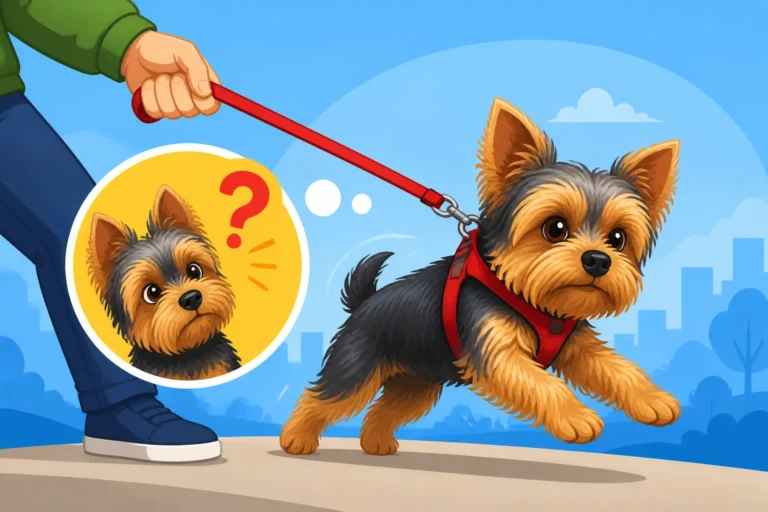
- Use a Front-Clip Harness: A standard collar or back-clip harness can allow your Yorkie to pull and strain, exacerbating their reactivity. A front-clip harness, like those readily available on Amazon, discourages pulling by redirecting their momentum sideways when they try to lunge. This gives you more control and can reduce their ability to "wind up" for a bark. Look for brands known for comfortable, secure fits for small breeds.
- Change Up Your Routine: If your Yorkie is territorial about the same route every day, try exploring new neighborhoods or paths. Novelty can sometimes reduce territorial guarding.
Counter-Conditioning and Desensitization
These are powerful techniques that go hand-in-hand to change your Yorkie’s emotional response to their triggers.
- Desensitization: Gradually exposing your Yorkie to their triggers at a level they can handle without reacting. Start far away, where they can see the trigger but don't bark.
- Counter-Conditioning: Changing their negative emotional response (fear, frustration, excitement) to a positive one. This is done by pairing the trigger with something wonderful, like high-value treats.
Here’s how it works:
- Find the Right Distance: Start your walk, and when you spot a known trigger (e.g., another dog), immediately create distance until your Yorkie notices the trigger but doesn't react with barking or lunging. This is their "threshold."
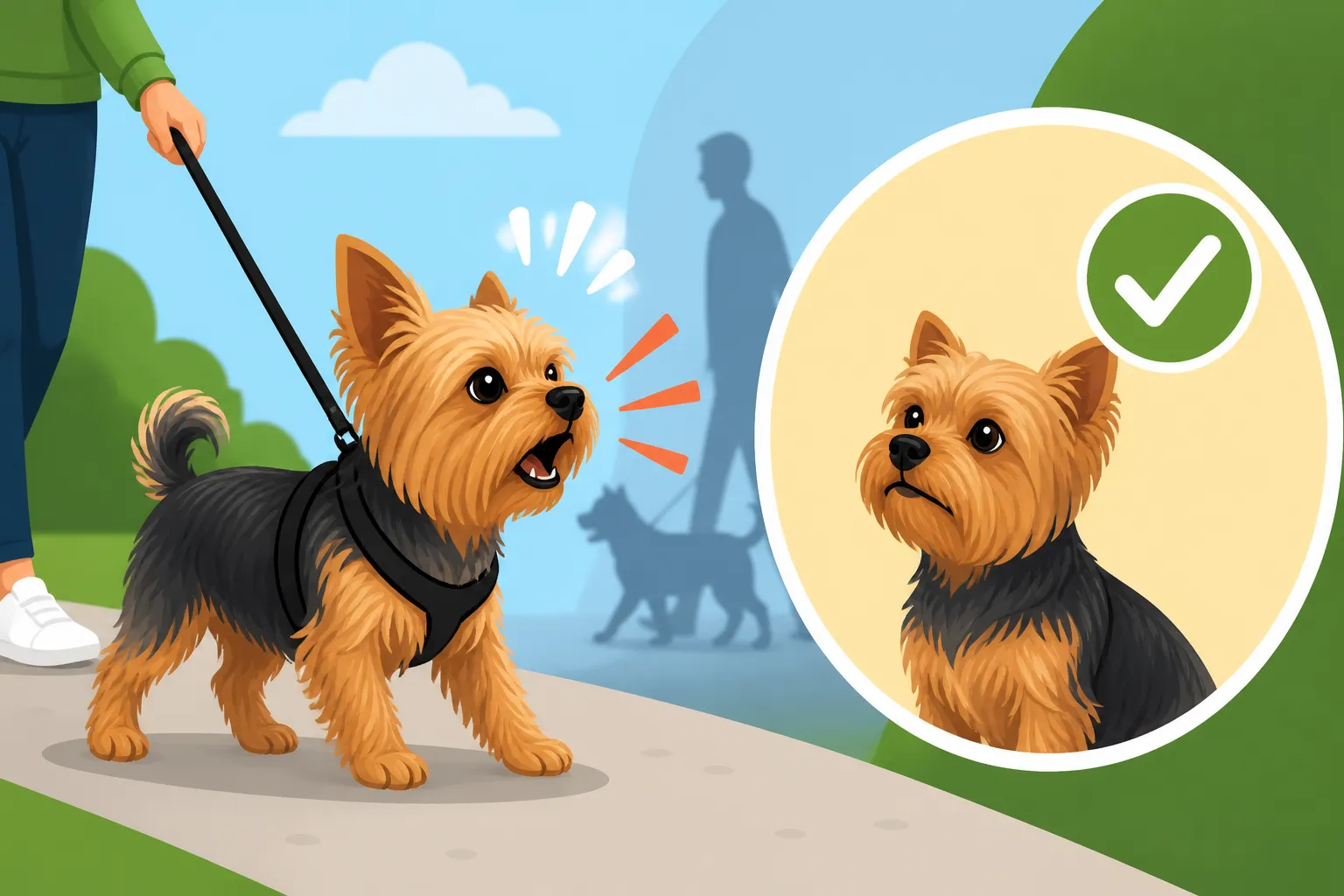
- "Look at That!" Game: As soon as your Yorkie looks at the trigger (but before they start to bark), say "Yes!" or use a clicker, and immediately give them a super high-value treat (cooked chicken, cheese, hot dogs work wonders for Yorkies!).
- Repeat, Repeat, Repeat: The moment the trigger disappears from sight, stop the treats. The idea is: "Trigger appears = yummy treats! Trigger disappears = no treats." You want them to associate the presence of the trigger with good things happening.
- Gradually Reduce Distance: Over days and weeks, as your Yorkie consistently looks at the trigger and then at you for a treat instead of barking, you can gradually decrease the distance. Never rush this step. If they start barking, you've moved too close, too fast. Increase the distance again.
This process essentially rewires their brain: "Oh, another dog! That means good things are coming from my human, not something to bark at!" It requires immense patience, but it’s incredibly effective. This technique is a cornerstone of Positive Reinforcement Training for Yorkies.
Teaching a "Focus" or "Watch Me" Command
This command teaches your Yorkie to look at you on cue, diverting their attention from potential triggers.
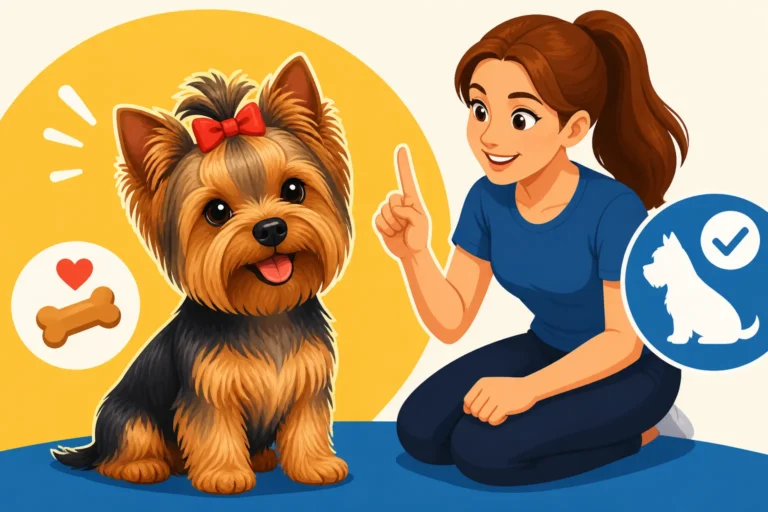
- Practice Indoors: Hold a treat near your nose. When your Yorkie makes eye contact, say "Watch Me" (or "Focus") and give them the treat. Practice this many times a day in short sessions.
- Add Distractions Gradually: Once they reliably respond indoors, try it in your backyard, then a quiet street, and finally in more distracting environments.
- Use on Walks: When you see a trigger approaching, before your Yorkie has a chance to react, ask for "Watch Me." When they look at you, reward heavily. This gives them an alternative, desirable behavior to perform instead of barking.
Practicing Impulse Control
Yorkies can be quite impulsive. Teaching them commands that build impulse control can be beneficial.
- "Leave It": Teach your Yorkie to ignore something on command. Practice this at home with treats on the floor, then gradually move to distractions on walks like dropped food or a discarded wrapper. This can extend to ignoring other dogs or people.
- "Wait" or "Stay": Practicing these commands can help your Yorkie learn to pause and focus on you even when they see something exciting. For instance, if you spot a trigger, you can ask your Yorkie to "Wait" by your side, reward them for holding the position, and then continue walking.
Essential Tools and Resources for Training
Having the right equipment and support can make a huge difference in your success.
Effective Leashes and Harnesses
As mentioned, a good harness is paramount. For a Yorkie, comfort and fit are key to prevent chafing and ensure their delicate trachea isn't put under strain.
- Front-Clip Harness: Brands like Blue-9 Balance Harness or the Easy Walk Harness (available on platforms like Amazon) are excellent choices. They provide control without putting pressure on the neck. When your Yorkie tries to pull, the leash attachment on the chest gently turns them to the side, making pulling less effective and less rewarding. This can be a game-changer for Yorkie Leash and Harness Training.
- Long Line: For practicing recall and giving your Yorkie a sense of freedom in a safe, controlled environment (like a quiet park), a 15-30 foot long line can be very useful. Ensure it's lightweight and doesn't drag them down.
High-Value Treats and Treat Pouches
When training, especially for reactivity, standard kibble often won't cut it. You need something truly irresistible.
- High-Value Treats: Think small pieces of cooked chicken, lean beef, cheese, or specialized soft training treats. The higher the value, the more motivating it will be for your Yorkie to pay attention to you rather than the distraction. Zuke's Mini Naturals are a popular choice for their size and palatability.
- Treat Pouch: A wearable treat pouch keeps treats easily accessible so you can reward instantly. Timing is everything in dog training; a delayed reward loses its impact.
| Barking Trigger | Immediate Action | Long-Term Training Focus | Recommended Gear |
|---|---|---|---|
| Other Dogs | Increase distance, "Watch Me," high-value treats | Counter-conditioning, parallel walks | Front-clip harness, treat pouch |
| People/Strangers | Cross street, "Watch Me," cheerful tone | Positive association with strangers | Treat pouch, comfortable leash |
| Moving Objects | Redirect attention, "Leave It," engage with toy | Desensitization to movement | Interactive toy, long line (safe area) |
| Loud Sounds | Keep walking calmly, reward for ignoring | Build confidence, positive association | Background noise (at home) |
| Territoriality | Vary routes, practice "Watch Me" in new places | General obedience, confidence building | GPS tracker (for new areas) |
Professional Guidance and Online Resources
Sometimes, despite your best efforts, you might need an extra hand.
- Certified Professional Dog Trainer (CPDT-KA): A qualified trainer can assess your Yorkie's specific situation and provide personalized strategies. They can observe your Yorkie's body language and help you fine-tune your techniques. Look for trainers who use positive reinforcement methods.
- Online Training Platforms: Services like BAXTER & Bella offer comprehensive online puppy and dog training programs that include video tutorials and live Q&A sessions. While not specific to Yorkies, their positive reinforcement approach is highly adaptable and can provide a structured framework for tackling various behaviors, including leash reactivity. These programs often break down complex training concepts into digestible steps, which can be great if you prefer to learn at your own pace from home.
Consistency and Patience: The Long Game
Training a Yorkie to stop barking on walks is rarely an overnight fix. It's a journey that requires commitment and understanding.
Why Consistency is Crucial
Dogs thrive on routine and predictability. If you only practice these strategies some of the time, your Yorkie will get mixed signals. One day barking works (because you didn't manage the situation well), and the next it doesn't. This inconsistency makes it much harder for them to learn.
- Everyone on Board: If you live with family, ensure everyone who walks the Yorkie uses the exact same commands and techniques. A united front is essential.
- Short, Frequent Sessions: Instead of one long, overwhelming training session, aim for multiple short, focused bursts of training throughout the day. Yorkies have short attention spans, so 5-10 minute sessions are often more effective.
Managing Setbacks and Frustration
There will be days when it feels like you've made no progress, or even gone backward. This is normal.
- Don't Get Discouraged: Every dog learns at their own pace. What works quickly for one Yorkie might take longer for another. Celebrate small victories, like a walk with only one bark instead of ten, or your Yorkie glancing at you instead of lunging.
- Re-evaluate and Adjust: If a strategy isn't working, don't be afraid to go back to your barking log, analyze the triggers again, or seek professional advice. Perhaps you're moving too fast, or your treats aren't high-value enough.
- Your Mood Matters: Dogs are incredibly adept at reading our emotions. If you go into a walk feeling stressed and anxious about potential barking, your Yorkie will pick up on that, which can exacerbate their own anxiety. Try to remain calm, confident, and positive. Make walks a positive experience for you too!
Remember, training builds a stronger bond between you and your Yorkshire Terrier. It teaches them that you are their reliable leader, and that they can trust you to handle challenging situations, reducing their need to "take over" with barking. This dedication contributes significantly to How to Keep a Yorkshire Terrier Healthy by reducing stress and improving their mental well-being.
Disclaimer
This article is intended for informational purposes only and does not substitute for professional veterinary or behavioral advice. If your Yorkshire Terrier's barking is accompanied by signs of aggression, severe anxiety, or other concerning behaviors, please consult with a qualified veterinarian or a certified professional dog trainer for a personalized assessment and guidance.