Yorkshire Terrier Crate Training Guide
Bringing a spirited Yorkshire Terrier into your home is an absolute joy, but let's be honest, the idea of getting them to love a small, enclosed space like a crate can feel like an uphill battle. Many Yorkie parents struggle with the guilt or frustration of trying to implement crate training, fearing it's mean or just won't work for their particular furry friend. This comprehensive guide is here to walk you through every step of the process, ensuring your Yorkie learns to view their crate as a safe, cozy den, not a punishment, making life easier and safer for both of you.
Why Crate Train Your Yorkshire Terrier?
Crate training isn't just about giving your Yorkie a place to sleep; it's a vital tool that promotes safety, helps with housetraining, and can even reduce anxiety. It's perfectly normal to feel a bit hesitant about confining your tiny companion, but when done correctly, a crate becomes their personal sanctuary, a place where they feel secure and can retreat from the hustle and bustle of daily life. Think of it as their own little bedroom.
Providing a Safe and Secure Den
In the wild, canids naturally seek out small, enclosed spaces for shelter and to raise their young. This innate denning instinct is still present in our domesticated dogs, including the sophisticated Yorkshire Terrier. A properly introduced crate taps into this instinct, offering a safe haven where your Yorkie can feel protected from perceived threats or simply enjoy some uninterrupted quiet time. During thunderstorms, fireworks, or when unfamiliar guests are over, their crate can be a stress-reducing sanctuary.
For example, if you have a busy household with children or other pets, your Yorkie might sometimes feel overwhelmed. Their crate offers a private space where they know they won't be bothered, allowing them to decompress and relax. This secure feeling contributes significantly to their overall well-being and can prevent them from developing stress-related behaviors, like excessive barking or destructive chewing, because they always have a calm retreat available. It's particularly useful when you have a young puppy who needs frequent naps away from stimulation, ensuring they get the rest crucial for their development.
An Invaluable Aid for Potty Training
One of the most significant benefits of crate training, especially for a new puppy or even an adult Yorkie with housetraining challenges, is its effectiveness in preventing accidents. Dogs are inherently clean creatures and are generally reluctant to soil their sleeping area. This natural aversion makes the crate a powerful ally in teaching your Yorkie bladder and bowel control.
When your Yorkie is in their appropriately sized crate, they learn to hold their bladder for longer periods, rather than just relieving themselves whenever the urge strikes indoors. This helps them build muscle control and understand the concept that there are designated "potty spots" outside. By consistently taking them directly from their crate to their potty area outdoors, you establish a clear routine. For more detailed guidance, our article on How to Potty Train a Yorkie Puppy provides an excellent resource. This method dramatically speeds up the housetraining process and minimizes frustrating indoor accidents, saving your carpets and your sanity.
Managing Behavior and Preventing Destructive Habits
Yorkies, despite their small size, are intelligent and can be quite mischievous. Left unsupervised, especially during their puppy phase, they can quickly get into trouble – chewing on furniture, shoes, or electrical cords, which isn't just annoying, but potentially dangerous. Crate training provides a safe, temporary space to contain your Yorkie when you can't actively supervise them, preventing these destructive behaviors before they even start.
Imagine you're cooking dinner, or perhaps stepping out for a short errand. Instead of worrying about what havoc your curious Yorkie might be wreaking, you can rest easy knowing they are safe and contained in their crate. This isn't a punishment; it's a responsible management strategy. It teaches them patience and allows them to relax independently. This controlled environment also helps mitigate issues like separation anxiety by teaching them that being alone in their den is a normal and calm experience, rather than something to panic about.
Choosing the Right Crate for Your Yorkie
Selecting the perfect crate is paramount to your Yorkie's comfort and your training success. It's not a one-size-fits-all situation, and what works for a Great Dane certainly won't work for a tiny Yorkshire Terrier. Investing a little time in research now will pay off immensely in the long run. You want something safe, comfortable, and appropriately sized.
Ensuring Proper Crate Size
The "right" size for a Yorkie's crate is often misunderstood. Many people mistakenly believe bigger is better, but for crate training, especially for potty training, this isn't true. The crate should be just large enough for your Yorkie to stand up, turn around comfortably, and lie down in a natural position. If the crate is too big, your Yorkie might use one end as a sleeping area and the other as a potty area, defeating the purpose of housetraining.
For a standard Yorkshire Terrier, a crate typically sized around 18-24 inches in length is usually sufficient. However, it's best to measure your individual Yorkie. Have them stand up, measure from the tip of their nose to the base of their tail, and add about 2-4 inches for length. For height, measure from the top of their head to the floor while standing, and add 2-4 inches. Many wire crates come with dividers, which are incredibly useful. You can start with a smaller section for a puppy and expand it as they grow and their bladder control improves. This makes a single crate purchase adaptable for their entire puppyhood.
Exploring Crate Types and Materials
There's a surprising variety of crates available, each with its own advantages. Your choice might depend on your lifestyle, your home aesthetic, and your Yorkie's personality. You can find a wide variety of suitable crates on Amazon, making it easy to compare options.
Wire Crates: These are the most common and versatile. They offer excellent ventilation and visibility, often come with dividers, and fold flat for easy storage and transport. The downside can be a less "den-like" feel, but this can be remedied by draping a blanket over it.
Plastic Crates (Airline Approved): These provide more of a secure, enclosed den feel, which some Yorkies prefer. They're also often airline-approved, making them ideal if you plan to travel with your Yorkie. Ventilation is typically through small holes on the sides.
Soft-Sided Crates: Lightweight and portable, these are great for travel, dog shows, or temporary confinement. They are usually made of fabric with mesh windows. However, they are not suitable for puppies or Yorkies who are chewers, as they can easily be damaged.
Furniture-Style Crates: These are designed to blend in with your home decor, often doubling as end tables. They can be beautiful additions to your home, offering both functionality and aesthetic appeal, but they tend to be more expensive.
When making your choice, consider your Yorkie's temperament. A nervous Yorkie might prefer the enclosed feel of a plastic crate, while a curious one might enjoy the visibility of a wire crate. Always prioritize safety and durability, especially with a determined little chewer.
Thoughtful Crate Placement in Your Home
Where you place the crate significantly impacts your Yorkie's acceptance of it. The goal is to make the crate a positive space, not a lonely isolation chamber. Avoid placing the crate in an area that feels cut off from family life or in a high-traffic zone where your Yorkie won't be able to relax.
A good spot is often in a common area like the living room or kitchen, especially initially. This allows your Yorkie to feel part of the family without constantly being underfoot. During the night, consider moving the crate into your bedroom or a nearby hallway. Young puppies, in particular, benefit from being close to their human family at night, as it reduces anxiety and helps them feel secure. As they become more comfortable, you can gradually move the crate to its permanent nighttime location if you prefer. Avoid placing the crate in direct sunlight or next to drafty windows or vents, as extreme temperatures can make the crate uncomfortable and create negative associations.
Essential Preparations Before Crate Training
Before you even think about closing that crate door, there are some crucial steps to take to set your Yorkie up for success. Crate training isn't just about the physical crate; it's about creating a positive experience and association. Rushing this stage can lead to fear and resistance, making the entire process much harder.
Making the Crate an Irresistible Retreat
The crate should never feel like a jail. Instead, it needs to be the most inviting, comfortable, and desirable spot in your home. This means making it cozy and associating it with all things good.
Start by placing a soft, comfortable bed or blanket inside. Yorkies love to burrow, so a plush, cave-like bed can be a real hit. Add a few safe, favorite toys – perhaps a Kong stuffed with a delicious treat like peanut butter (ensure it's xylitol-free!) or a durable chew toy. The goal is for your Yorkie to discover these goodies inside the crate and begin to associate the space with positive experiences. You might even toss a few high-value treats into the crate randomly throughout the day, leaving the door open, so your Yorkie can "find" them on their own. This creates a game and builds curiosity. Never force your Yorkie into the crate; let them explore it on their own terms.
Gathering Your Crate Training Supplies
Having the right tools at hand will make the training process smoother and more efficient. It’s like preparing for a big project; you wouldn’t start building a house without a toolbox, right? Crate training is no different.
Here’s a quick checklist of essentials:
- Appropriate-sized crate: As discussed, this is critical.
- Comfy bedding: A soft blanket, a dedicated crate bed, or a favorite towel.
- High-value treats: Small, soft, and extra-tasty treats that your Yorkie absolutely loves. Think boiled chicken, cheese, or specialized training treats. Brands like Wellness or Zuke's often make great options.
- Long-lasting chew toys: Kongs, bully sticks, or Nylabones can keep your Yorkie occupied and happy in the crate.
- Water dispenser (optional): Some crates can attach a small, spill-proof water bottle, especially for longer stays, though this should be used cautiously to avoid accidents.
- Pheromone spray (optional): Products like Adaptil can sometimes help calm anxious dogs by mimicking natural appeasing pheromones.
- Enzyme cleaner: Accidents happen, especially during potty training. A good enzyme cleaner will eliminate odors, preventing your Yorkie from being drawn back to the same spot.
Having these items ready prevents interruptions during training sessions and ensures you’re always prepared to reward positive behavior or address setbacks promptly.
Mental Preparation for You and Your Yorkie
Crate training requires patience, consistency, and a positive mindset from you. Your Yorkie will pick up on your energy, so if you're stressed or frustrated, they will be too. Approach the process with a calm, confident, and encouraging attitude.
Understand that every Yorkie is an individual. Some will take to the crate almost immediately, while others might need weeks or even months of gradual introduction. Avoid comparing your Yorkie's progress to others. Celebrate small victories, like a few minutes spent calmly in the crate, and don't get discouraged by setbacks. Consistency is key; erratic training schedules or using the crate inconsistently will only confuse your Yorkie. The goal is to build a positive association, not to force compliance. Remind yourself that you're doing this for their safety and well-being. For deeper insights into managing Yorkie behavior, consider checking out our guide on Yorkshire Terrier Behavior Problems and Solutions.
Introducing Your Yorkie to the Crate: The Positive Approach
This is where the real work (and fun!) begins. The first few interactions with the crate are critical. Our aim is to make the crate a super fun place, a voluntary choice, and a source of good things, not a place they're tricked or forced into. Remember the mantra: never use the crate as punishment.
Making First Impressions Count
Your Yorkie's initial experience with the crate should be entirely positive and low-pressure. Keep the crate door open and secure it so it won't swing shut unexpectedly and startle them. Place some yummy treats or a favorite toy just inside the entrance. Let your Yorkie discover them at their own pace.
Avoid pushing them in or closing the door on them initially. If they sniff around, go in, grab the treat, and come right back out, that's a win! Praise them softly and offer another treat. Repeat this several times over short sessions throughout the day. You can even sit near the crate and toss treats inside while casually talking to them. The idea is to make the crate seem like a magical treasure chest. Some trainers, like those at BAXTER & Bella, emphasize making this discovery phase a game, building curiosity and positive associations right from the start. This foundational step is crucial for fostering a sense of security and trust in their new den.
Using Treats, Toys, and Gentle Encouragement
Once your Yorkie is comfortable walking into the crate to retrieve treats with the door open, you can start to encourage them to stay inside for very brief periods. Toss a high-value treat deep into the crate, so they have to fully enter to get it. As they're munching, quietly close the door for just a second or two, then immediately open it and praise them enthusiastically. This should be so quick that they barely notice the door closed.
Gradually increase the time the door is closed by a few seconds. Always stay nearby, speak in a calm, encouraging voice, and keep the sessions very short and positive. If your Yorkie shows any signs of distress – whining, scratching, or trying to get out – open the door immediately. You’ve gone too fast. Next time, back up a step and shorten the duration. A good long-lasting chew toy, like a Kong filled with frozen wet food, can be a fantastic distraction and positive association. Give them the Kong only when they are in the crate, helping them associate the crate with special, delicious rewards.
Gradual Increase of Stay Time
Once your Yorkie is comfortable with the door being closed for 15-30 seconds, you can begin to leave the room for brief moments. Start by simply stepping out of sight for a few seconds, then returning and quietly opening the door. Don't make a big fuss when you return; you want to normalize your departures and arrivals. If your Yorkie is calm, offer quiet praise and release them.
Slowly extend the time you're out of sight, building up to a few minutes, then 10 minutes, and so on. Always ensure your Yorkie has been to the bathroom before crating them for these longer periods. Distraction toys like the Kong are especially helpful here. As your Yorkie progresses, you'll find they become more relaxed in their crate. This gradual exposure helps prevent separation anxiety by teaching them that you will always return. Our article on How to Leave a Yorkie Home Alone provides more comprehensive advice on helping your Yorkie cope with being alone.
Crate Training Schedules: Puppies vs. Adult Yorkies
While the basic principles of positive reinforcement remain the same, the pace and specifics of crate training will differ significantly between a tiny, energetic Yorkie puppy and a more settled adult. Understanding these differences is key to creating an effective and stress-free schedule.
Puppy Crate Training Milestones
Yorkie puppies have small bladders and boundless energy, requiring frequent potty breaks and structured rest. Their crate training schedule needs to be intensive and consistent to build good habits quickly.
A typical puppy schedule might look like this:
| Time of Day | Activity | Crate Time | Notes |
|---|---|---|---|
| Early Morning | Wake up, immediate potty break outside, breakfast | 1-2 hours | Short supervised play, then back to crate with a chew toy. |
| Mid-Morning | Potty break, short play/training, water | 1-2 hours | Crate again for a nap. Puppies need a lot of sleep! |
| Lunchtime | Potty break, lunch, supervised play | 1-2 hours | Repeat cycle. |
| Afternoon | Potty break, short training, quiet time | 1-2 hours | Another nap in the crate. |
| Early Evening | Potty break, dinner, longer play session | 1-2 hours | Active time before evening wind-down. |
| Late Evening | Potty break, quiet time with family | 4-6 hours | Final potty break, then into crate for the night. |
| Middle of Night | Potty break (for very young puppies) | — | If needed, minimal interaction, straight out and back in. |
Very young puppies (8-12 weeks old) might only be able to hold their bladder for 1-2 hours during the day, extending to 3-4 hours at night initially. As they grow, their bladder control improves, and you can gradually extend the crate time. Always take your puppy directly from the crate to their potty spot, praising and rewarding them for going. Consistency with this routine is vital for successful housetraining, which you can read more about in our Yorkshire Terrier Potty Training Guide guide.
Crate Training an Older Yorkie
Crate training an adult Yorkie, especially one who hasn't been crated before or has had negative experiences, can present different challenges than with a puppy. They might have established habits or anxieties that need careful, patient unlearning.
The key is to go even slower than with a puppy. An adult Yorkie needs to learn that the crate is a positive space, and this might take more time and repeated positive associations. Start with all the positive introduction steps: leaving the door open, tossing treats inside, feeding meals near and then inside the crate. Instead of focusing on long stays immediately, prioritize building confidence and comfort with the crate itself. If your adult Yorkie exhibits signs of anxiety, consider using calming aids or consulting with a professional trainer. For adult dogs, it's particularly helpful to associate the crate with specific calming activities, like a special chew toy they only get in the crate. Consistency is still paramount, as highlighted in our article on How to House Train an Adult Yorkie.
Nighttime Crating Strategies
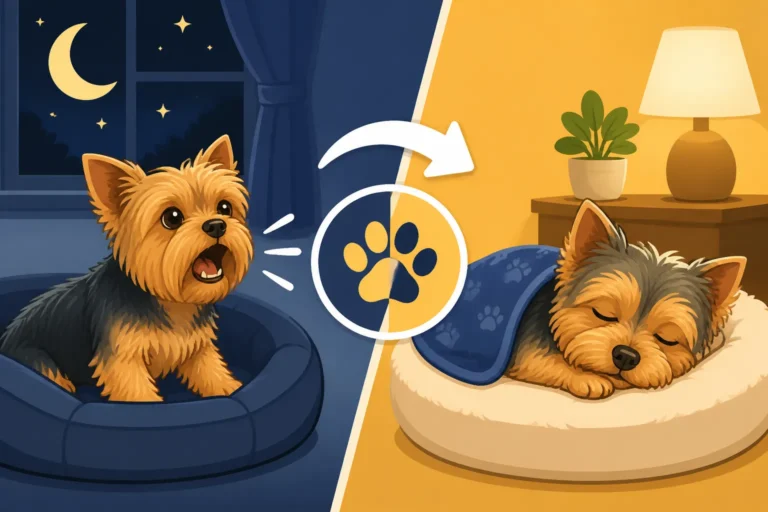
Nighttime can be a particularly challenging time for crate training, especially for young puppies who miss the warmth and security of their littermates. The goal is to ensure they feel safe and minimize middle-of-the-night potty emergencies.
Initially, place the crate in your bedroom or very close to your bed. This allows your Yorkie to hear and smell you, providing comfort and reassurance. It also makes it easier for you to hear them if they need a potty break. If they start to whine at night, first consider if they need to go out. Young puppies will almost certainly need at least one middle-of-the-night trip outside. Keep these trips all-business: no playing, no talking, just out to potty and immediately back into the crate. If you're certain they don't need to go out, wait for a brief pause in whining before praising them quietly. Never open the crate door when they are actively crying, as this teaches them that crying gets them out. For more tips on nocturnal routines, see How to Get a Yorkie to Sleep Through the Night. As your Yorkie matures and develops better bladder control, you can gradually move the crate to a different location if you prefer, ensuring they remain comfortable and secure.
Troubleshooting Common Crate Training Challenges
It’s completely normal to encounter a few bumps in the road during crate training. Don’t get discouraged if your Yorkie doesn’t take to it immediately! Many common issues can be resolved with patience, understanding, and a slight adjustment to your approach. The key is to address problems proactively and not let them escalate.
Addressing Whining and Barking in the Crate
One of the most common and often frustrating challenges is a Yorkie who whines or barks excessively in the crate. It pulls at your heartstrings, especially when it happens at night or when you’re trying to leave the house. But it’s crucial to understand why they might be doing it before you can effectively address it.
First, rule out any immediate needs. Does your Yorkie need to go potty? Are they hungry or thirsty? Are they too hot or too cold? Once these basic needs are met, consider if they are feeling anxious or if they are simply testing boundaries. For a Yorkie who is testing boundaries, giving in to their cries by letting them out immediately reinforces the idea that whining works. Instead, wait for a brief moment of silence – even just a second – then calmly open the crate door. This teaches them that quiet behavior earns their release. If your Yorkie's barking is particularly disruptive at night, our guide on How to Stop a Yorkie from Barking At Night might offer additional strategies. If the whining or barking is accompanied by other signs of extreme distress (panting, drooling, frantic scratching), it could be true anxiety, which requires a different approach, potentially involving a vet or professional trainer.
Overcoming Anxiety and Fear of the Crate
Some Yorkies develop genuine anxiety or fear around the crate, often due to negative past experiences, being forced into the crate, or simply an overly sensitive temperament. This is different from a puppy testing limits; a fearful dog will show clear signs of distress even when the door is open.
If your Yorkie is truly fearful, you need to go back to basics, creating an overwhelmingly positive association. Start by simply leaving the crate door open and letting it become a natural part of the environment. Feed all meals near the crate, then gradually move the food bowl closer, then just inside the crate. Don't close the door at all until your Yorkie is happily eating their entire meal inside the crate for several days in a row. Use extra high-value treats and praise every tiny step toward the crate. Consider putting an old T-shirt or blanket with your scent on it inside the crate to provide comfort. For a really anxious Yorkie, a cover over the crate can provide a den-like sense of security. Never scold or punish a fearful Yorkie for not wanting to go in the crate; this will only worsen their fear. For more on general anxiety, see Yorkie Separation Anxiety: Signs and Fixes.
Handling Potty Accidents in the Crate
Finding a potty accident in the crate can be incredibly frustrating, especially since dogs typically don't like to soil their sleeping area. This usually points to one of a few issues: the crate is too big, your Yorkie was left in too long, or they weren't thoroughly potty-trained before crating.
If your Yorkie is having accidents, first ensure the crate is appropriately sized. As mentioned, it should only be large enough for them to stand, turn around, and lie down. If it's too big, use a divider to reduce the space. Second, re-evaluate your schedule. Is your Yorkie being left in the crate for longer than they can reasonably hold it? Puppies, in particular, need very frequent potty breaks. For a detailed guide on appropriate crate sizing, refer to our article on Yorkie Crate Size Guide. Third, if your Yorkie is still having accidents despite correct sizing and reasonable duration, it might be a sign that they need a refresher on basic potty training outside of the crate. Clean any accidents thoroughly with an enzymatic cleaner to remove all scent traces, preventing your Yorkie from wanting to eliminate there again. Never punish your Yorkie for an accident in the crate, as this will only teach them to hide their accidents and fear the crate.
Advanced Crate Training and Long-Term Use
Once your Yorkie is a happy, confident crated companion, you've unlocked a whole new level of flexibility and safety for both of you. But crate training isn't a "one and done" deal. It's an ongoing journey that evolves with your Yorkie's age and needs. Understanding how to extend crate time safely, maintain positive associations, and eventually transition out (if desired) is essential for long-term success.
Extending Crate Time Safely
A well-adjusted adult Yorkie can typically be crated for 4-6 hours during the day, provided they've had ample exercise and a potty break beforehand. However, this isn't a hard and fast rule; every dog is different. It’s crucial to respect your individual Yorkie’s limits. Puppies, of course, have much shorter limits.
When extending crate time, do so gradually. If your Yorkie is comfortable for two hours, try two and a half, then three. Always ensure they have a safe chew toy or a mentally stimulating treat (like a Kong) to keep them occupied and happy during longer stays. Make sure they are truly settled and relaxed before you leave for an extended period. Never use the crate for excessively long periods (e.g., more than 6-8 hours for an adult, or overnight if they have access to an outdoor potty spot, and definitely not the whole workday plus overnight). This can lead to physical discomfort, psychological distress, and can erode their positive association with the crate. Always pair longer crate times with sufficient exercise and mental stimulation before and after, making sure they're genuinely tired and content.
Maintaining Positive Associations with the Crate
Even after your Yorkie is fully crate trained, it's vital to keep the crate a positive place. Don't just use it when you're leaving or for bedtime. Occasionally, toss treats in there, or hide a favorite toy for them to find. Feed them their meals in the crate, even with the door open.
The crate should always be associated with good things. Avoid using it as punishment or sending your Yorkie to their crate when you're angry. This can quickly turn their safe den into a scary place. If you maintain positive associations, your Yorkie will often choose to nap in their crate voluntarily, seeing it as their personal, cozy retreat. This ongoing reinforcement ensures the crate remains a useful and cherished tool throughout their life. Many modern training philosophies, including those promoted by BAXTER & Bella, emphasize continued positive reinforcement to keep the crate a happy place.
When and How to Transition Out of the Crate
Some Yorkie owners eventually choose to transition their dog out of the crate, allowing them free roam of a certain area or the entire house when unsupervised. This is a personal decision and not necessary for all dogs or families. Many dogs, including adult Yorkies, genuinely enjoy having their crate as a permanent den.
If you do decide to transition out, it should be a slow, gradual process, and only once your Yorkie is completely reliable with housetraining, has no destructive chewing habits, and exhibits no separation anxiety when left alone. Start by leaving the crate door open while you are away, but confining them to a small, puppy-proofed room (e.g., a kitchen with a baby gate). Gradually increase the size of the unsupervised area over weeks or months. If you notice any accidents or destructive behavior, you've moved too fast, and it's time to return to crating or a smaller confined area. For senior Yorkies, the crate often remains a comforting, secure space, especially as their cognitive function or physical mobility might decline. Our guide on Yorkshire Terrier Senior Care Guide touches on how familiar routines and spaces can be particularly beneficial for older dogs.
Crate Training Myths and Misconceptions
There's a lot of misinformation swirling around about crate training, often leading new Yorkie parents to feel guilty or make choices that aren't in their dog's best interest. Let's bust some of these common myths and set the record straight, so you can approach crate training with confidence and clarity.
Is Crate Training Cruel?
This is perhaps the most common misconception. Many people mistakenly view a crate as a cage, feeling that confining a dog, especially a tiny one like a Yorkie, is inherently cruel or unfair. This couldn't be further from the truth when crate training is done correctly and positively.
As we've discussed, dogs have a natural denning instinct. A crate, when introduced properly, mimics this den, providing a safe, secure, and private space where your Yorkie can retreat and feel protected. It’s their personal bedroom, a place they can go to escape overstimulation, rest, or simply chew on a favorite toy in peace. It prevents them from getting into dangerous situations (like chewing electrical cords) when unsupervised, and aids in vital housetraining. Cruelty comes from improper use – forcing a dog into a crate, leaving them for excessive periods, or using it as punishment. When done with patience, love, and positive reinforcement, crate training is a kind and responsible part of dog ownership, offering immense benefits for your Yorkie's safety and well-being.
Using the Crate as Punishment
This is a surefire way to ruin all your positive crate training efforts. The crate should never be used as a place for punishment. If your Yorkie misbehaves, scolding them and then putting them in their crate will immediately create a negative association. They will begin to fear the crate, seeing it as a consequence for bad behavior rather than a safe haven.
Instead, if your Yorkie misbehaves, redirect their attention to an appropriate activity or use a firm "no" and then ignore them for a short period. The crate should always be a place of comfort and security. If you want your Yorkie to go into their crate, use a cheerful, encouraging tone and offer a treat or toy. The crate's value as a training tool and a peaceful retreat will be severely undermined if it's associated with fear or anger. Consistency here is key to building and maintaining a positive perception of their den.
The Idea of a "Forever" Crate
While many dogs, including Yorkies, enjoy and benefit from having a crate throughout their lives, the idea that a dog must be crated forever is a misconception. For some owners and dogs, the crate becomes an indispensable part of their routine, offering a secure sleeping space or a safe zone when visitors are over. For others, once housetraining and reliable behavior are established, they may choose to transition their Yorkie to having free roam of a safe, puppy-proofed area of the house.
The decision to continue crating or to transition out is entirely up to you and your Yorkie's individual needs and temperament. Some Yorkies, even when given free rein, will choose to sleep in their open crate simply because it's their comfortable den. Others may prefer a dog bed in the living room. The important thing is that the crate has served its purpose, providing a foundation of safety, security, and good habits. It's a tool, and like any tool, its use can adapt over time as your Yorkie matures and their needs change.
Disclaimer
This guide provides general information on Yorkshire Terrier crate training. Every dog is an individual, and results may vary. If your Yorkie exhibits severe anxiety, aggression, or other persistent behavioral issues during crate training, please consult with a certified professional dog trainer or a veterinary behaviorist for personalized advice and support.