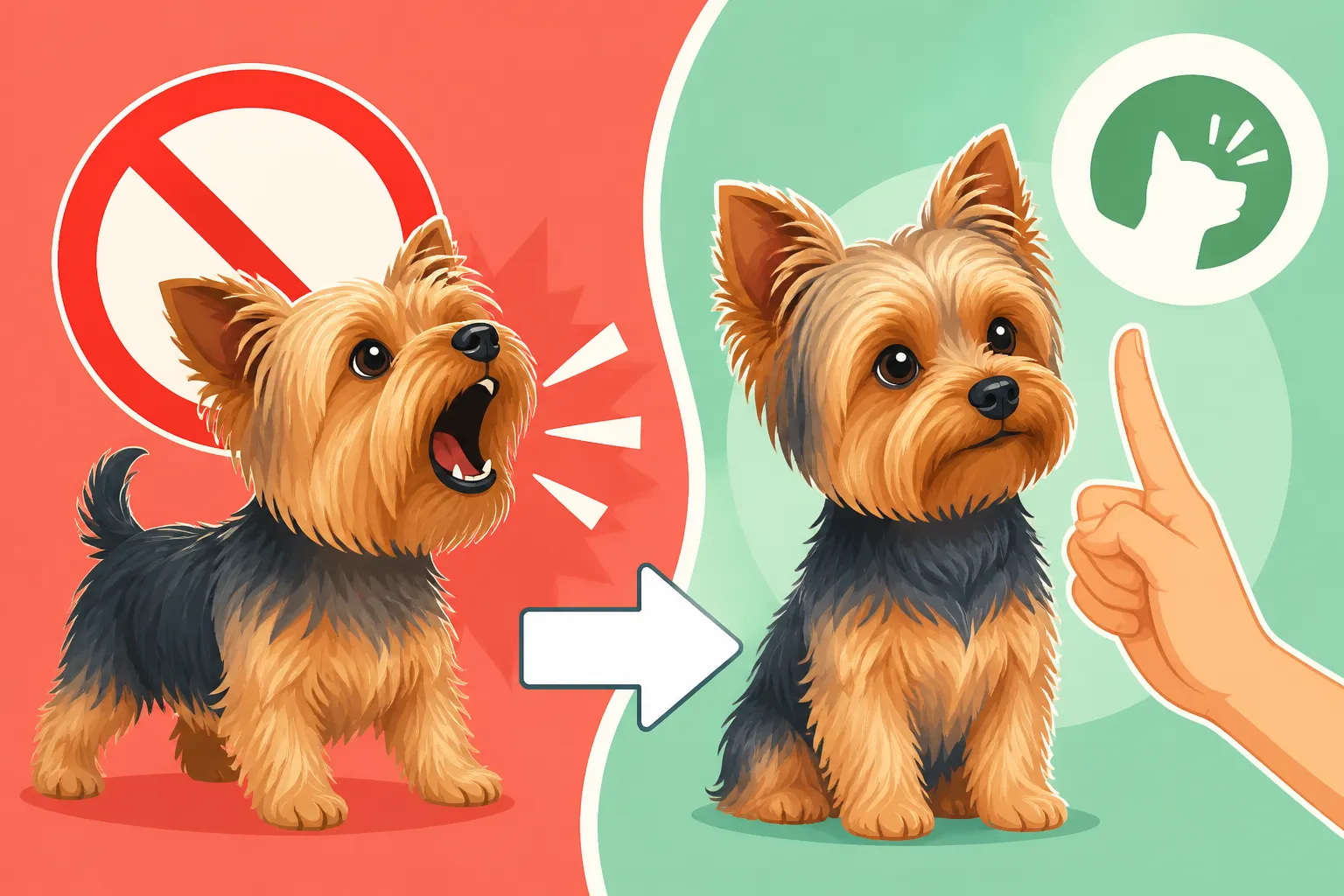
How to Stop a Yorkie from Barking
That incessant barking, whether it's at the mail carrier, a squirrel outside, or seemingly nothing at all, can be one of the most frustrating aspects of living with a Yorkshire Terrier. Many Yorkie parents feel like they're constantly saying "quiet" or apologizing to neighbors. This comprehensive guide will delve into the root causes of your Yorkie's barking habits and provide actionable, empathetic strategies to help you achieve a calmer, quieter household.
Understanding Why Your Yorkie Barks Excessively
Before we can even think about "stopping" the barking, it's crucial to understand why your little Yorkie is vocalizing in the first place. Yorkies are not just noisy for the sake of it; barking is a fundamental form of communication for dogs, and for a breed with such a rich terrier history, it's often hardwired into their DNA. Dismissing it as mere "bad behavior" misses the entire point and makes finding a solution much harder.
Communication, Not Just Noise
Imagine trying to tell someone something incredibly important, but all you could do was make sounds. That's a bit like your Yorkie. They're trying to convey a message, express an emotion, or react to their environment. A bark might mean, "Hey, there's someone at the door!" or "I'm bored, play with me!" or even "I'm scared and need reassurance." Learning to interpret these barks is the first step toward effective management. If you consistently ignore or punish barking without addressing the underlying message, your Yorkie will likely just get more frustrated and bark louder, or develop other anxiety-related behaviors. It's like turning off a fire alarm without checking for smoke – you might silence the noise, but the problem still festers.
Common Triggers for Yorkie Barking
Yorkies are particularly sensitive to their surroundings, and their small size often makes them feel more vulnerable, leading to heightened alert systems. Several common triggers can set off a barking spree. One of the most frequent is environmental stimuli, such as passersby, other dogs, squirrels, or unfamiliar sounds like the mail truck or construction. A sudden knock at the door or the ring of a doorbell can also trigger a cascade of alert barking.
Another huge factor is attention-seeking. Yorkies are intelligent and quickly learn that barking gets them what they want – whether it's a pat, food, or a toy. If you've ever found yourself giving in to a barking Yorkie just to get a moment of peace, you've inadvertently reinforced this behavior. Boredom and a lack of mental or physical stimulation also play a significant role. A Yorkie with pent-up energy or a sharp mind that isn't being challenged will often resort to barking to alleviate their restlessness. Think of it as a child acting out because they have nothing productive to do.
Lastly, emotional states like fear, anxiety, or frustration can be powerful triggers. A Yorkie who is afraid of strangers might bark defensively. One experiencing Yorkshire Terrier Separation Anxiety Solutions might bark incessantly when left alone. Understanding these specific triggers is paramount because each type of barking requires a slightly different approach.
The Role of Breed Tendencies
Let's be real: Yorkshire Terriers were originally bred to be ratters. This means they have an innate instinct to be alert, watchful, and vocal. They needed to signal to their owners when they detected pests, and that sharp, piercing bark was a crucial tool. This historical purpose is still deeply ingrained in their genetics. They’re essentially tiny guard dogs with big personalities!
While we no longer rely on them to clear out rat infestations in Yorkshire textile mills, that strong territorial instinct and keen awareness of their surroundings persist. They tend to be very observant and will readily alert you to anything they perceive as an intrusion or a change in their environment. It’s not necessarily a flaw; it's a feature of the breed. Recognizing this inherent trait helps us approach their barking with more patience and realistic expectations. We’re not trying to eliminate barking entirely – that’s unrealistic and unfair – but rather to manage and redirect it so it doesn't become excessive or disruptive. Their small stature also often makes them feel the need to compensate with a mighty bark, asserting their presence in a big world.
Addressing Different Types of Barking
Since barking isn't a one-size-fits-all problem, neither are the solutions. Identifying the specific type of barking your Yorkie is engaging in will dictate the most effective training and management strategies. It’s like being a detective for your dog's vocalizations!
Alert Barking and Territorial Barking
This is probably the most common type of barking you'll encounter with a Yorkie. They see or hear something, and boom, the alarm sounds. This could be someone walking past your window, the mail carrier, another dog, or a noise from next door. Their intention is to alert you to a perceived intrusion or change in their territory, whether that's your house, yard, or even their spot on the couch.
To manage alert and territorial barking, the goal isn't to stop them from ever notifying you, but to teach them to do so calmly and then quiet down quickly. One effective method is desensitization and counter-conditioning. For instance, if your Yorkie barks at people walking by the window, you might try limiting their visual access with frosted film or curtains. When you do allow them to see outside, sit with them and reward them with high-value treats (like small pieces of chicken or cheese) before they start barking at a trigger. The moment they notice the trigger but don't bark, give them a treat and praise. The idea is to change their emotional response from "intruder!" to "Oh, a person! That means treats!"
For doorbell or knocking, practice makes perfect. Have a friend or family member ring the doorbell a few times a day. Each time, before your Yorkie can launch into a barking frenzy, calmly say "Quiet!" (or your chosen command), then immediately give them a treat. When they stay quiet, even for a moment, reward them. The moment they bark, the treat disappears, and you restart. This takes a lot of repetition and patience. Remember, you're teaching them a new, desired behavior. You can also teach them to go to a designated "place" (like their bed) when someone comes to the door, which gives them a job and helps redirect their focus. For more on foundational commands, you might find How to Teach a Yorkie Basic Commands helpful.
Attention-Seeking Barking
Ah, the "pay attention to me!" bark. This is often accompanied by pawing, nudging, or staring. Your Yorkie has learned that if they bark, you'll eventually look at them, talk to them, or even give them what they want – whether it's food, a toy, or to be picked up. This behavior is usually inadvertently reinforced by us, their loving but sometimes exasperated humans.
The key to stopping attention-seeking barking is to ignore it completely. This sounds harsh, but it's essential. The moment your Yorkie starts barking for attention, turn your back, walk away, or simply stop all interaction. Do not make eye contact, do not talk to them, do not touch them. Wait until they are quiet, even for a second, and then give them the attention they craved. This teaches them that barking doesn't work, but quiet behavior does. Consistency is vital here. If you give in even once after a long period of ignoring, you've just taught them that they need to bark longer and louder next time to get what they want.
You also need to proactively provide attention when they are quiet and well-behaved. Reward calm lying, quiet play, or simply resting. This reinforces the idea that good behavior gets positive results. Make sure they have a designated "off-switch" time, perhaps with a chew toy, so they learn to entertain themselves without constantly demanding your focus.
Boredom and Frustration Barking
A bored Yorkie is a creative Yorkie, and that creativity often manifests as barking. If your Yorkie isn't getting enough physical exercise, mental stimulation, or simply feels restless, they'll find a way to release that energy, and barking is an easy outlet. This can often sound like repetitive, sometimes higher-pitched barks, or a series of "yap-yap-yaps" for no apparent reason.
The solution here is multifaceted and centers on enrichment. First, ensure your Yorkie is getting enough physical activity. While they are small, Yorkies still need daily walks and playtime. Even a brisk 20-minute walk twice a day can make a huge difference. Inside, engage them with interactive toys. Puzzle feeders, treat-dispensing toys, and snuffle mats can challenge their minds and keep them occupied. Brands like Kong or West Paw offer durable options you can find on Amazon.
Consider regular training sessions, too. How to Train a Yorkshire Terrier goes beyond just obedience; it’s a fantastic way to provide mental stimulation. Even 5-10 minutes of training per day, practicing tricks or basic commands, can tire out a Yorkie’s brain surprisingly well. A dog who is mentally and physically satisfied is far less likely to resort to barking out of sheer boredom or frustration. Rotating toys can also keep things fresh and exciting, preventing them from getting bored with the same old objects.
Fear and Anxiety Barking
This type of barking is often deeply rooted in emotion and requires a sensitive approach. A Yorkie might bark due to fear of strangers, loud noises (like thunderstorms or fireworks), or separation anxiety. This barking usually sounds more frantic, sometimes whiny, and can be accompanied by other anxiety signs like trembling, pacing, panting, or destructive chewing.
For fear-based barking, the goal is to help your Yorkie feel safe and secure. This might involve creating a safe haven (like a crate or a cozy den) where they can retreat when feeling overwhelmed. For specific fears like thunder, try to distract them with play or treats before the storm gets intense. Desensitization, gradually exposing them to very low levels of the feared stimulus while providing positive reinforcement, can also be effective, but often requires professional guidance.
Yorkshire Terrier Separation Anxiety Solutions is a critical resource if your Yorkie barks excessively when left alone. This involves teaching them to be comfortable alone through gradual desensitization, providing engaging toys (like a frozen Kong stuffed with peanut butter), and ensuring their environment is calming. In severe cases of fear or anxiety, your veterinarian might recommend anxiety-reducing supplements or even medication to help manage the underlying emotional distress, often in conjunction with behavior modification. Remember, punishing a fearful dog will only increase their fear and worsen the barking.
Foundation Training for Quieter Yorkies
Effective barking management isn't just about reacting to barks; it's about building a strong foundation of communication and control. These training techniques empower you to guide your Yorkie toward calmer behavior in various situations.
The "Quiet" Command
Teaching your Yorkie the "Quiet" command is invaluable. It gives you a direct way to communicate what you want them to do when they start barking. Here's a step-by-step approach:
- Trigger the Bark: This might sound counterintuitive, but you need your Yorkie to bark so you can teach them to stop. Have a friend knock on the door, or simply wait for them to bark at something natural.
- Allow a Few Barks: Let them get a few barks out. You don't want to interrupt their natural instinct too quickly.
- Introduce the "Quiet" Command and Interrupt: Once they've barked a few times, say "Quiet!" in a firm, calm voice. Immediately after, use an interrupter that stops the barking. This could be a sudden, sharp clap, a loud "shhh" sound, or even presenting a high-value treat to their nose. The goal is to break their focus on the barking trigger.
- Reward Silence: The instant your Yorkie stops barking and is quiet, even for a second, immediately reward them with a high-value treat and enthusiastic praise (e.g., "Good quiet!").
- Increase Duration: Gradually increase the amount of time they need to stay quiet before receiving the reward. Start with one second, then two, then three, and so on.
- Practice in Various Scenarios: Once they understand the command in a controlled setting, start practicing in different environments and with different triggers. Consistency is key. Every time they bark excessively, use the "Quiet" command.
It's important never to yell "Quiet!" in an angry tone, as this can scare your Yorkie or simply sound like you're barking with them, reinforcing the behavior. The goal is to teach them a new, desired response.
Impulse Control Exercises
Yorkies, with their spirited terrier nature, can sometimes struggle with impulse control. They see it, they want it, they bark about it! Training exercises that teach patience and self-control are incredibly beneficial for reducing reactive barking.
The "Leave It" command is a cornerstone of impulse control. Teach your Yorkie to ignore something tempting (a treat on the floor, a toy) until you give them permission. Start simple, with a treat in your closed hand. Say "Leave It" and wait until they disengage. The moment they look away, reward them with a different, even higher-value treat. Gradually progress to leaving a treat on the floor, covered by your hand, then uncovered. This helps them understand that ignoring an immediate impulse leads to a better reward.
The "Stay" command also builds impulse control. Asking them to stay in a designated spot while you walk away teaches them patience and that good things come to those who wait. These types of exercises teach your Yorkie to think before reacting and can significantly reduce the instances of barking driven by pure impulse or over-excitement. For more general training approaches, our How to Train a Yorkshire Terrier guide offers a solid framework.
Consistent Routine and Environment
Dogs thrive on routine and predictability. A consistent daily schedule helps your Yorkie feel secure and reduces anxiety, which can often be a underlying factor in excessive barking. This means establishing regular times for feeding, walks, playtime, and potty breaks.
A predictable environment also plays a huge role. Try to keep their designated resting areas, feeding spots, and play zones consistent. If your Yorkie is prone to barking at external stimuli, evaluate their immediate environment. Can you block their view of the street during certain times of the day with curtains or privacy film? Can you use a white noise machine or turn on some calming music to muffle outside sounds that trigger them?
For example, if your Yorkie barks every morning when the kids leave for school, try to establish a calm activity for them during that time, like a puzzle feeder. If they bark when you come home, teach them to sit calmly to greet you instead of jumping and barking for attention. The more predictable and calm their world, the less reason they’ll have to sound the alarm or seek attention through disruptive vocalizations. This stability is particularly important for small breeds who can easily feel overwhelmed.
| Type of Barking | Common Triggers | Underlying Emotion | Training Strategy | Management Tip |
|---|---|---|---|---|
| Alert/Territorial | Doorbell, mail carrier, passersby, other dogs | Watchfulness, defense | "Quiet" command, desensitization, counter-conditioning | Block sightlines, white noise, designated "place" command |
| Attention-Seeking | Owner ignoring, desire for play/food | Frustration, demand | Ignore barking, reward silence, proactive positive attention | Provide interactive toys, schedule playtimes |
| Boredom/Frustration | Lack of exercise/mental stimulation, confinement | Restlessness, agitation | Command training, impulse control, enrichment | Increase walks, puzzle toys, regular training sessions |
| Fear/Anxiety | Loud noises, strangers, separation | Insecurity, distress | Desensitization, counter-conditioning, build confidence | Safe space (crate), calming aids, vet consultation |
Environmental Management and Lifestyle Adjustments
Sometimes, the most effective "training" isn't about teaching a command, but about managing your Yorkie's environment to prevent the barking from starting in the first place. Think of it as setting them up for success.
Reducing Visual and Auditory Stimuli
Yorkies have incredibly keen senses, and their small stature often makes them feel vulnerable, leading them to be highly reactive to what they see and hear. If your Yorkie spends all day barking at everything that moves outside the window, the simplest solution might be to remove the trigger.
Consider installing window film on lower panes, using opaque curtains or blinds during peak "trigger" times (like school dismissal or mail delivery), or simply arranging your furniture so your Yorkie can't perch and survey the street. If they bark at sounds, a white noise machine or a fan placed near the window or door can help muffle external noises that might otherwise set them off. You could also try leaving a radio or TV on low to create a consistent ambient soundscape that masks sudden, jarring sounds. For example, if you live in a busy urban area like Brooklyn and your Yorkie reacts to every siren, creating a consistent indoor sound buffer can significantly reduce their stress and barking.
For Yorkies who bark incessantly at the sound of the doorbell or a knock, you might even consider temporarily disconnecting your doorbell or putting a "please knock quietly" sign on your door. While these aren't long-term solutions, they give you a chance to work on training in a controlled environment without constant interruptions. This proactive approach prevents the barking behavior from becoming a deeply ingrained habit.
Enriching Your Yorkie's Environment
A bored dog is a destructive or noisy dog. Yorkies are intelligent little creatures, and they need mental engagement just as much as they need physical exercise. If their environment isn't stimulating enough, they'll find their own "fun," and often that means barking.
Interactive toys are your best friend here. Puzzle feeders that dispense kibble or treats as your Yorkie manipulates them can keep them occupied for significant periods. LickiMats or snuffle mats provide mental stimulation through sniffing and licking, which are naturally calming behaviors for dogs. Brands like Outward Hound offer a variety of puzzle toys that are great for small breeds. You can find many excellent options on Amazon.
Rotate their toys regularly to keep things fresh and exciting. Don't leave all their toys out all the time; instead, introduce one or two new ones each day or week to maintain novelty. Consider hiding treats around the house for them to "hunt" or engaging them in short, fun training sessions throughout the day. These activities burn mental energy, making them less likely to resort to barking out of sheer lack of anything else to do. A happy, stimulated Yorkie is a quiet Yorkie.
Ensuring Adequate Exercise and Mental Stimulation
It’s easy to look at a tiny Yorkie and assume they don't need much exercise, but that's a common misconception. While they won't be running marathons, they are still terriers with energy to burn. A lack of appropriate physical and mental exertion is a huge contributor to excessive barking and other undesirable behaviors.
Your Yorkie needs at least two good walks a day, even if they're relatively short. These walks aren't just for potty breaks; they're crucial opportunities for sniffing, exploring, and burning off physical energy. Sniffing itself is a fantastic form of mental stimulation, engaging their primary sense and tiring them out. Don't underestimate the power of a "sniffari" walk where you let them lead and explore scents. If you're looking for ways to boost their activity, our Yorkshire Terrier Exercise Needs guide can offer more tailored advice.
Beyond walks, dedicate time to active play. Fetch, tug-of-war (with appropriate rules), or chasing a flirt pole can provide intense bursts of physical and mental exertion. For rainy days or those living in apartments in places like Seattle, where outdoor time can be limited, indoor games like "hide and seek" with treats or toys can be a great substitute. Remember that physical exercise also helps reduce stress and anxiety, leading to a calmer dog overall. A tired Yorkie is much more likely to be a quiet Yorkie.
Tools and Aids for Barking Management
While training and environmental changes are paramount, sometimes a little extra help can make a significant difference in managing persistent barking. These tools should always be used as aids in conjunction with positive reinforcement training, not as standalone solutions.
Anti-Bark Devices and Their Efficacy
When the barking becomes relentless, it's natural to look for quick fixes, and anti-bark devices often come to mind. These typically fall into a few categories: ultrasonic devices, which emit a high-frequency sound when barking is detected; vibration collars, which deliver a mild vibration; and citronella spray collars, which release a burst of citronella scent. It's crucial to understand that these tools are designed to interrupt barking, not to teach your dog why they shouldn't bark.
Ultrasonic devices can be effective for some dogs, but many Yorkies quickly habituate to the sound or simply learn to bark through it. They also don't work for all dogs, as some are less sensitive to the high-pitched sound. Vibration collars provide a physical sensation that can be distracting without causing pain. These can be useful for interrupting attention-seeking barking or providing a cue that barking is unwanted. However, some sensitive Yorkies might find them distressing. Citronella spray collars are generally considered a more humane alternative to static correction collars, as the spray is startling but harmless. The aversion to the scent and sensation can deter barking.
It's absolutely vital that if you choose to use any of these devices, you do so under the guidance of a professional and always pair them with positive reinforcement. For instance, if using a citronella collar, ensure you reward your Yorkie for being quiet after the spray, teaching them the desired behavior. Never rely solely on these devices; they should complement a comprehensive training plan focused on teaching your Yorkie an alternative, acceptable behavior. Misuse can lead to increased anxiety or a negative association with the device itself. You can find various types of these devices on platforms like Amazon, but choose wisely and always prioritize your dog's well-being.
Harnesses and Leashes for Better Control
While not directly "anti-bark" tools, the right equipment for walks and outdoor excursions can indirectly help manage barking by giving you better control and reducing leash reactivity. For small breeds like Yorkies, a properly fitted harness is almost always preferable to a collar for walks. A harness distributes pressure across their chest and shoulders, preventing strain on their delicate trachea, which is particularly important for Yorkies prone to Yorkshire Terrier Collapsing Trachea: Signs and Care.
When you have better control over your Yorkie on a leash, you can more easily manage their reactions to triggers. If they start to bark at another dog or person, a comfortable, secure harness allows you to gently redirect their attention or move them away from the stimulus without causing discomfort or potential injury. A longer leash (6-foot standard) can also give you more flexibility to create distance from triggers, which can be a key strategy in preventing reactive barking. Brands like Kurgo or Ruffwear offer small, escape-proof harnesses suitable for Yorkies.
Pairing a good harness with leash training is essential. Teach your Yorkie to walk politely on a loose leash, focusing on you rather than the environment. This foundational training, combined with proper equipment, makes walks a more positive and less barking-prone experience for both of you.
Professional Training Programs
Sometimes, despite your best efforts, excessive barking persists, or you might feel overwhelmed by the process. This is when professional help can be a game-changer. Dog trainers and behaviorists have the expertise to assess your Yorkie's specific barking triggers and develop a tailored training plan.
A good professional can help identify nuances in your Yorkie's behavior that you might miss, such as subtle body language cues indicating anxiety or fear. They can guide you through advanced desensitization and counter-conditioning techniques, or help you implement a consistent behavior modification program. For instance, an online program like BAXTER & Bella, which provides comprehensive obedience training and behavioral guidance, can be incredibly helpful. They offer resources and support that can be applied to complex issues like persistent barking, helping you understand the 'why' behind the bark and the 'how' to address it effectively.
Choosing the right professional is crucial. Look for certified professional dog trainers (CPDT-KA) or certified applied animal behaviorists (CAAB). Avoid any trainer who advocates for harsh punishment or aversive methods, as these can severely damage your Yorkie's trust and worsen anxiety-related barking. An effective trainer will use positive reinforcement methods that build your dog's confidence and strengthen your bond. Remember, investing in professional guidance isn't a sign of failure; it's a smart decision for the long-term well-being and tranquility of your household. For persistent behavioral issues, seeking professional help is a vital step in Yorkshire Terrier Behavior Problems and Solutions.
Addressing Specific Scenarios
Barking often isn't a general behavior; it's triggered by particular situations. Learning to address these specific contexts is key to a quieter life with your Yorkie.
Barking at the Doorbell or Strangers
This is a classic Yorkie behavior. That doorbell rings, or a stranger appears, and your pint-sized protector goes into overdrive. For Yorkies, this isn't just a sound; it's an announcement of an intruder, and their job is to sound the alarm.
The goal here is to teach your Yorkie an alternative, calm behavior when the doorbell rings or a visitor arrives. One highly effective method is the "Go to Place" command. Teach your Yorkie to go to their bed or mat and stay there when prompted. Practice this extensively without a doorbell trigger, rewarding generously. Once they understand "Go to Place," start incorporating the doorbell. Have a friend ring the bell (or use a recording), and immediately ask your Yorkie to "Go to Place." Reward them heavily for complying. If they start to bark, calmly redirect them to their place. This gives them a job, keeps them out of the direct line of interaction, and gives you a chance to manage the situation calmly.
For barking at strangers on walks or through windows, focus on desensitization and counter-conditioning. If your Yorkie barks at everyone they see, identify their threshold – the distance at which they notice a stranger but don't yet react. Stay at that distance, and as a stranger passes, give your Yorkie high-value treats (like small pieces of cheese or chicken). The goal is to create a positive association: "Stranger means yummy treats!" Gradually decrease the distance as your Yorkie becomes more comfortable. If your Yorkie is prone to barking at strangers, you might also be interested in How to Socialize a Yorkshire Terrier for more tips on positive interactions.
Barking When Left Alone
This is often a clear sign of Yorkie Separation Anxiety: Signs and Fixes. Yorkies can form incredibly strong bonds with their owners, and being left alone can trigger significant distress, manifesting as persistent barking, howling, destructive chewing, or even accidents indoors.
The primary strategy here is to gradually accustom your Yorkie to being alone. Start with very short durations. Leave the room for a few seconds, return when they are quiet, and reward them. Slowly increase the time, always returning before they start barking, if possible. If they do bark, wait for a brief moment of silence before returning, so you're not rewarding the barking.
Creating a comfortable, safe space for them when you leave is also crucial. This might be a How to Crate Train a Yorkie to ensure they feel secure in their den. Provide engaging, long-lasting distractions, like a Kong toy filled with frozen peanut butter or cream cheese. Ensure they've had adequate exercise and a potty break before you leave, so their basic needs are met. For severe cases, consider installing a pet camera to monitor their behavior and allow you to understand their triggers better. Sometimes, a calming supplement or a visit to the vet to discuss anti-anxiety medication might be necessary in conjunction with behavior modification.
Nighttime Barking
Nighttime barking can be incredibly disruptive, affecting both your sleep and your neighbors'. This can stem from various reasons, including boredom, needing to potty, anxiety, or reacting to nocturnal sounds.
First, rule out medical issues or legitimate needs. Is your Yorkie restless? Do they need to go out? Are they in pain (which can be a reason for Why Is My Yorkie Whining)? Ensure they have a final potty break right before bed. Their sleeping arrangements might also play a role. Some Yorkies do better in a crate next to the owner's bed, providing security and reassurance, especially for puppies. An older Yorkie might benefit from Yorkshire Terrier Senior Care Guide which includes tips on comfort and routine for aging dogs.
To address anxiety or reactivity to night sounds, try a white noise machine or a fan in their sleeping area to mask external noises. Ensure they are getting enough physical and mental exercise during the day so they are genuinely tired at night. Avoid stimulating play or treats too close to bedtime. If they bark for attention in the middle of the night, try to ignore it, provided you’ve ruled out all other needs. Giving in, even with a quick "shush," can inadvertently reinforce the behavior. Consistency is key to teaching them that nighttime is for sleeping, not for barking.
When to Seek Professional Help
While many barking issues can be managed with consistent training and environmental adjustments, there are times when the problem is more deeply rooted or simply beyond what a typical pet parent can handle alone. Knowing when to call in the cavalry can save you a lot of stress and prevent the problem from escalating.
Recognizing Persistent or Severe Barking
How do you know if your Yorkie's barking crosses the line from "typical terrier talk" to "problematic"? If the barking is constant, uncontrollable, lasts for extended periods, or occurs in multiple situations despite your best efforts, it's likely time for professional intervention.
Signs that indicate severe barking include:
- Non-stop barking that continues for minutes or even hours, often triggered by minor stimuli.
- Destructive behavior coupled with barking when left alone, suggesting severe separation anxiety.
- Aggressive barking accompanied by growling, snapping, or lunging at people or other dogs, indicating fear or territorial aggression that needs expert handling.
- Self-harm or extreme distress (like excessive panting, drooling, or frantic pacing) during barking episodes.
- Your own well-being is suffering, whether from lack of sleep, stress, or conflicts with neighbors.
If you find yourself constantly frustrated, yelling at your dog, or feeling helpless, it's a clear signal that the current approach isn't working and a fresh perspective is needed. This isn't a failure on your part, but rather an acknowledgment that some behavioral challenges require specialized knowledge.
Consulting a Veterinarian
Before delving deep into behavioral training, the very first step for persistent barking should always be a visit to your veterinarian. This is crucial because many underlying medical conditions can manifest as changes in behavior, including increased vocalization. Your Yorkie might be barking because they are in pain, uncomfortable, or experiencing an age-related cognitive decline.
For example, a Yorkie with dental disease might bark or whine due to mouth pain. An older Yorkie developing deafness might bark more out of confusion or frustration because they can't hear you or their environment as well. Other conditions like thyroid imbalances, neurological issues, or even urinary tract infections can cause irritability and increased vocalization. Your vet can perform a thorough physical examination, run necessary diagnostics, and rule out any health problems that might be contributing to the barking. If a medical issue is found, addressing it might significantly reduce or eliminate the barking. If no medical cause is found, your vet can then refer you to a reputable dog behaviorist or trainer. Your vet can also discuss options for anti-anxiety medication if the barking is fear or anxiety-driven, which can be an important tool to help your dog learn new behaviors in a calmer state. For information on general health concerns, see Yorkshire Terrier Health Problems to Know.
Working with a Certified Dog Trainer or Behaviorist
Once medical causes are ruled out, a certified professional dog trainer or a veterinary behaviorist is your best resource for addressing complex barking issues. These professionals have specialized knowledge in canine behavior and can offer personalized solutions.
A certified professional dog trainer (CPDT-KA) can assess your Yorkie's body language, triggers, and your family's dynamics to develop a tailored training plan. They can teach you effective communication techniques, help you implement behavior modification protocols, and guide you through advanced exercises like desensitization and counter-conditioning. Many trainers offer in-home consultations, which are invaluable for observing your Yorkie in their natural environment and addressing specific home-based triggers. Look for trainers who use positive, reward-based methods, as punitive methods can worsen anxiety and aggression.
For very severe or ingrained barking problems, especially those linked to deep-seated fear, anxiety, or aggression, a veterinary behaviorist (DACVB) is often the most appropriate choice. These individuals are veterinarians who have gone on to complete extensive residency training in animal behavior. They can prescribe medication if necessary (which a regular trainer cannot) and combine pharmacological intervention with behavior modification for the most comprehensive approach. They are equipped to handle cases where the barking is a symptom of a more complex underlying psychological condition. Don't hesitate to seek their expertise – it's an investment in your Yorkie's well-being and your peace of mind. To find the right fit, you may want to consult How to Choose a Vet for a Yorkie and ask for behaviorist recommendations.
Disclaimer
The information provided in this guide is for general educational purposes only and should not be considered a substitute for professional veterinary advice. Always consult with your veterinarian or a qualified professional dog trainer for any health concerns or before implementing any new training methods or behavioral interventions for your Yorkshire Terrier.