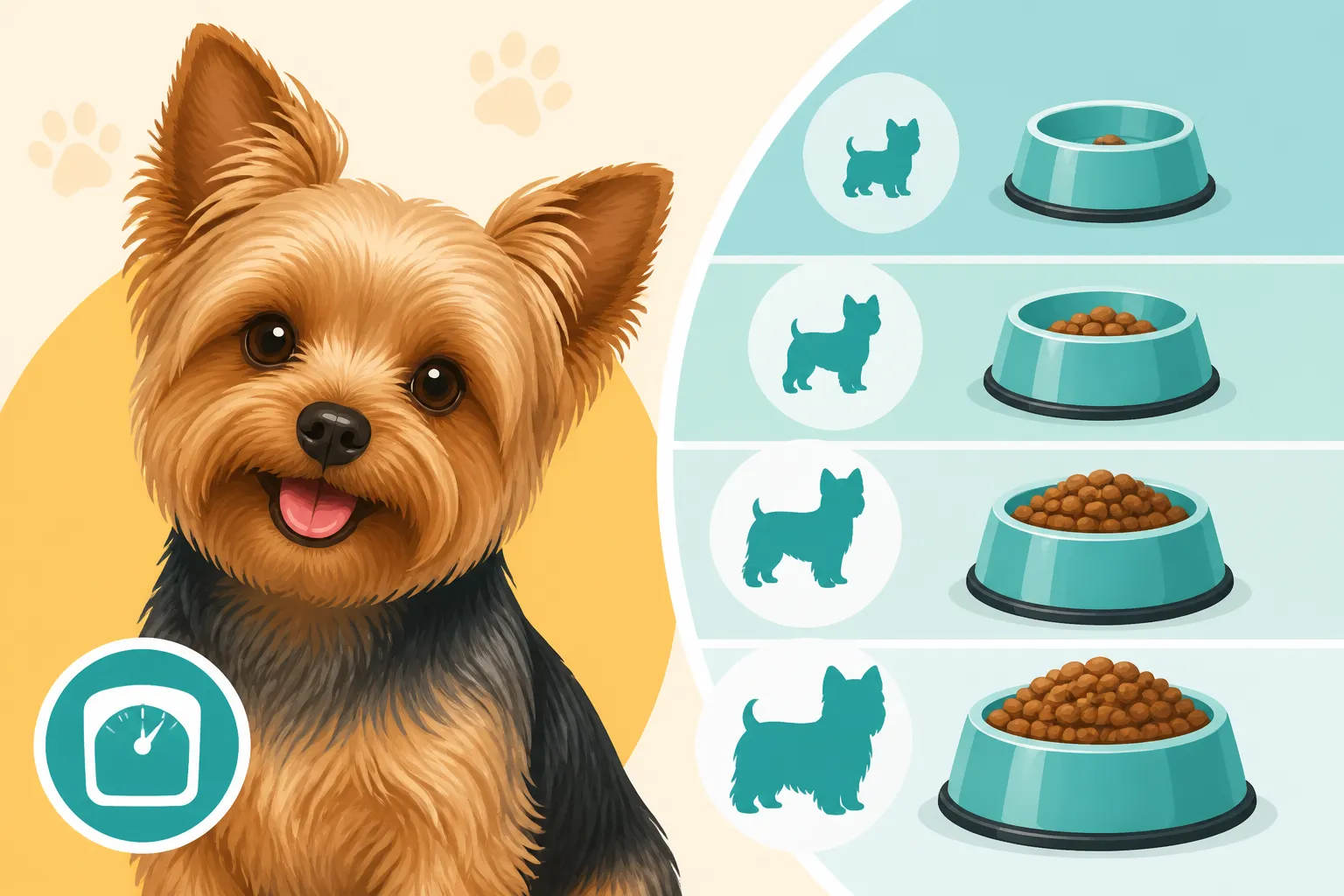
Portion Sizes for a Yorkie by Weight
It’s a common frustration, isn't it? You stare at that tiny bag of dog food, then at your even tinier Yorkshire Terrier, and wonder how on earth you're supposed to get the portion size just right. It feels like a guessing game sometimes, especially when every pound (or even ounce!) makes such a difference for these little dynamos. Getting their food portions right isn't just about preventing them from getting too chubby or too thin; it's fundamental to their overall health, energy levels, and even their long-term well-being. This guide is here to demystify the process, helping you confidently determine the perfect meal size for your beloved Yorkie based on their individual weight and needs.
Understanding Your Yorkie's Unique Nutritional Needs
Yorkshire Terriers might be small, but they come with a big personality and a surprisingly robust metabolism for their size. Their nutritional requirements are quite specific, differing significantly from those of larger breeds. It’s not simply a matter of scaling down a big dog's meal; it's about providing the right balance of nutrients in an appropriate volume for their compact bodies.
Why Breed-Specific Diets Matter
Imagine trying to feed a grown human an infant's diet, or vice versa – it just wouldn't work, right? The same principle applies to our canine companions, especially with breeds as distinct as the Yorkshire Terrier. Yorkies have unique physiological characteristics that influence their dietary needs. For instance, they're prone to certain health issues, such as Yorkshire Terrier Hypoglycemia Signs and Care as puppies, and Yorkie Dental Disease Prevention as they age, which can often be managed or prevented with proper nutrition. Their small mouths and delicate digestive systems also benefit from kibble sizes and formulations designed specifically for toy breeds.
Many commercial dog food brands now offer formulas tailored to small breeds, often with smaller kibble pieces that are easier for Yorkies to chew and digest. These foods are usually more calorie-dense, meaning your Yorkie gets the energy they need without having to eat a huge volume of food, which could overwhelm their tiny tummies. Opting for a high-quality food is paramount. You might consider checking out reputable online pet supply stores like Chewy for their extensive selection and detailed nutritional information to help you compare options.
Factors Influencing Calorie Requirements
Beyond just breed, several factors play a crucial role in determining how many calories your individual Yorkie needs each day. It’s not a one-size-fits-all equation, which is where a lot of the confusion can come in for devoted pet parents.
Firstly, age is a massive factor. A rambunctious Yorkshire Terrier Puppy Health Guide that’s growing like a weed needs significantly more calories per pound of body weight than a sedentary Yorkshire Terrier Senior Care Guide. Puppies are burning energy to grow bone, muscle, and brain tissue, plus they often have boundless energy. As they transition into adulthood, their growth plateaus, and their calorie needs stabilize. Senior Yorkies, on the other hand, often have slower metabolisms and reduced activity levels, meaning their caloric intake should typically decrease to prevent unhealthy weight gain. We’ve covered this in more detail in our Yorkshire Terrier Feeding Guide by Age.
Secondly, activity level is huge. Is your Yorkie a couch potato who enjoys short strolls around the block, or are they an energetic explorer who loves brisk walks, playtime, and perhaps even doggy sports? An active Yorkie who spends a good portion of their day zipping around will naturally burn more calories than their more relaxed counterparts. You might have two Yorkies of the exact same weight, but their activity levels could mean vastly different ideal portion sizes.
Thirdly, their metabolism and overall health also play a part. Just like people, some Yorkies simply have faster metabolisms. A Yorkie recovering from an illness or managing a condition might have different dietary needs. For example, a Yorkie dealing with Yorkie Pancreatitis Signs and Care would require a very specific, low-fat diet. Always consult with your veterinarian if your Yorkie has health concerns, as they can provide personalized recommendations. You can learn more about general health considerations in our Yorkshire Terrier Health Problems to Know article.
Decoding Dog Food Labels and Portion Guidelines
Walking down the dog food aisle or browsing online, you're hit with a dizzying array of brands and bags, each with its own feeding chart. It can be overwhelming. But understanding how to read these labels and, more importantly, how to apply them to your unique Yorkie, is key to getting those portion sizes just right.
The Importance of Accurate Weight Measurement
Before you even glance at a food label, you need to know your Yorkie's current, accurate weight. This is the absolute foundation of proper portion control. Eyeballing it simply won't cut it for such a small breed where a pound can make a significant difference.
Regularly weighing your Yorkie helps you track their progress and identify any concerning weight fluctuations early. If you don’t have a small pet scale at home, here's a simple trick: weigh yourself, then pick up your Yorkie and weigh yourself again while holding them. Subtract your weight from the combined weight, and voilà! You have your Yorkie's weight. Many vets also have precise scales, and a quick visit for a weight check is always a good idea. Knowing their current weight allows you to cross-reference with feeding charts and also helps you monitor if your current feeding regimen is effective. A healthy Yorkie Weight Healthy Range by Age ensures they avoid problems like obesity or malnourishment.
Interpreting Manufacturer's Feeding Charts
Most dog food bags come with a feeding chart, usually a table that lists suggested daily portions based on your dog's weight. However, these charts are often quite generic and serve as a starting point, not a definitive rule.
Here’s why they need careful interpretation:
- Broad Weight Ranges: The charts often group dogs into broad weight categories (e.g., "up to 10 lbs"). A 3-pound Yorkie will have vastly different caloric needs than a 9-pound Yorkie, even if both fall into the "up to 10 lbs" category.
- Activity Levels: Many charts provide a single recommendation without distinguishing between an active and a sedentary dog. Some might offer "less active" and "more active" columns, but even then, your definition of "active" might differ from the manufacturer's.
- Calorie Density Varies: Not all dog foods are created equal. One cup of Brand A kibble might have 350 calories, while one cup of Brand B might have 450 calories. The feeding chart is specific to that particular food's calorie density, which is usually listed as "kcal/cup" or "kcal/kg" somewhere on the bag (often in tiny print!). This is a critical piece of information that many owners overlook. Understanding how to read dog food labels, especially the caloric content, is something we dive into in our How to Read a Dog Food Label for Yorkies article.
When using a manufacturer's chart, always start with the lower end of the recommended range for your Yorkie's weight, especially if they are less active. Then, monitor their weight and body condition closely. Are they gaining weight? Cut back a little. Are they looking too thin? Increase slightly. It's an ongoing process of observation and adjustment.
Calculating Daily Calorie Intake by Weight
Since generic feeding charts can be, well, a bit too generic for our precise little Yorkies, a more accurate approach involves calculating their daily calorie needs. This gives you a baseline to work from and helps you understand why one food might require a different portion size than another.
Practical Formula for Active vs. Less Active Yorkies
The most common way to estimate a dog's daily calorie needs is using a formula based on their Resting Energy Requirement (RER) and then applying a multiplier for their activity level. Don't worry, it's simpler than it sounds!
Step 1: Calculate RER (Resting Energy Requirement)
The RER is the energy your Yorkie burns just by existing – breathing, digesting, sleeping.
A commonly used formula for RER (in kcal/day) is: 70 * (body weight in kg)^0.75
If math isn't your favorite, here's a simpler approximation often used for small dogs:
- For dogs under 2 kg (approx 4.4 lbs):
RER = 70 * (body weight in kg)^0.75(This is the most accurate for tiny dogs) - For dogs between 2-45 kg (approx 4.4 – 99 lbs):
RER = 30 * (body weight in kg) + 70
Let's use the more accurate one for tiny dogs. First, convert your Yorkie's weight from pounds to kilograms (1 lb = 0.453592 kg).
Example:
- A 5-pound Yorkie: 5 lbs * 0.453592 kg/lb = 2.27 kg
- RER = 70 * (2.27)^0.75
- (2.27)^0.75 is approximately 1.76
- RER = 70 * 1.76 = ~123 kcal/day
Step 2: Apply an Activity Multiplier
Once you have the RER, you multiply it by a factor that reflects your Yorkie's activity level and life stage. These multipliers are general guidelines:
- Neutered/Spayed Adult: 1.6 x RER
- Intact Adult: 1.8 x RER
- Weight Loss: 1.0 – 1.2 x RER
- Weight Gain: 1.8 – 2.0 x RER
- Active/Working Dog: 2.0 – 5.0 x RER (Yorkies rarely fit the high end here, but a very active Yorkie might be 2.0-2.5)
- Puppies (0-4 months): 3.0 x RER
- Puppies (4 months – adult): 2.0 x RER
- Senior/Inactive: 1.2 – 1.4 x RER
Let's continue the example for our 5-pound (2.27 kg) Yorkie with an RER of 123 kcal/day:
- Neutered, moderately active adult: 123 kcal * 1.6 = ~197 kcal/day
- Very active adult: 123 kcal * 2.0 = ~246 kcal/day
- Less active/senior: 123 kcal * 1.2 = ~148 kcal/day
Now you have an estimated daily calorie target! The next step is to look at your dog food label for the "kcal/cup" (calories per cup) information.
If your food has 400 kcal/cup, and your moderately active Yorkie needs 197 kcal/day:
- 197 kcal / 400 kcal/cup = ~0.49 cups per day.
This approach, while a bit more involved, gives you a much more personalized starting point than a generic feeding chart.
Adjusting for Life Stages: Puppy, Adult, Senior
Each life stage presents unique demands on a Yorkie's body, and their diet needs to reflect that.
- Puppies: As mentioned, growing puppies, typically from 8 weeks up to about 10-12 months, have incredibly high energy needs. They are developing rapidly, and their tiny bodies are working overtime. You should be feeding them a high-quality puppy food, often labeled as "Puppy" or "All Life Stages." They require more frequent meals and higher calorie counts per pound of body weight. For specific guidance, look into our Best Puppy Food for Yorkies and How to Feed a Puppy Yorkie articles. Preventing How to Prevent Hypoglycemia in Yorkie Puppies through consistent feeding is crucial.
- Adults: Once your Yorkie reaches their mature size, usually around 10-12 months, their growth slows significantly. Their caloric needs will stabilize, focusing on maintenance rather than rapid growth. The goal here is to maintain a healthy weight and provide balanced nutrition for their active (or less active) adult life. This is when the multipliers of 1.6-1.8 RER often apply best.
- Seniors: As Yorkies age, typically starting around 8-10 years old, their metabolism can slow down, and their activity levels may decrease. They might also start developing age-related conditions. Senior dog foods are often formulated with fewer calories to prevent weight gain, and sometimes with added joint support or other nutrients beneficial for older dogs. It's essential to monitor their weight closely and adjust portions downwards as needed. For comprehensive advice, check out our Yorkshire Terrier Senior Care Guide.
Remember, these are guidelines. Every Yorkie is an individual. Consistent monitoring of their weight and body condition score (can you easily feel their ribs but not see them?) is more important than rigidly sticking to a number.
Meal Frequency and Best Practices for Feeding Your Yorkie
It’s not just about how much you feed your Yorkie, but also how often and how you deliver those meals. Small breeds like Yorkies often benefit from a different feeding approach than their larger counterparts.
Establishing a Consistent Feeding Schedule
Unlike larger breeds who might do fine with one or two large meals a day, Yorkies, especially puppies, often thrive on more frequent, smaller meals. This helps prevent their blood sugar from dropping too low, a condition known as hypoglycemia, which can be a serious concern for toy breeds.
- Puppies (8 weeks – 4 months): Aim for 3-4 small meals a day. This helps stabilize blood sugar and ensures they get enough energy for their rapid growth.
- Adults (4 months+): 2-3 meals a day is usually ideal. Two meals (morning and evening) work well for most adult Yorkies, but some owners prefer three to spread out their intake and keep them feeling satisfied.
- Seniors: Often benefit from 2-3 smaller meals, similar to adults, to aid digestion and maintain stable energy levels.
A consistent schedule also helps with Yorkshire Terrier Potty Training Guide because you can better predict when your Yorkie will need to go outside. Try to feed them around the same times each day. This creates routine and helps their digestive system function optimally. Leaving food out all day (free-feeding) isn't generally recommended for Yorkies. It can lead to overeating, making it harder to track their intake, and it also makes it difficult to notice if your Yorkie loses interest in food, which can be an early sign of illness. We delve deeper into this in Free-Feeding vs Scheduled Feeding for Yorkies.
The Role of Treats and Supplements
Treats and supplements are often an overlooked component of a Yorkie's daily caloric intake. It's easy to forget that those tiny training treats or a piece of cheese add up quickly for a dog weighing only a few pounds!
- Treats: Treats should make up no more than 10% of your Yorkie's total daily calories. If your Yorkie is getting a significant amount of treats, you must reduce their main meal portions accordingly. Opt for small, low-calorie treats, especially during training. You can even break larger treats into smaller pieces. For instance, when shopping on Amazon for training treats, look for options specifically designed for small breeds.
- Supplements: While some supplements can be beneficial, especially for older Yorkies (like joint supplements), they should always be given under veterinary guidance. Many supplements, particularly chews, contain calories that need to be factored into their daily intake. A reputable veterinarian can help you determine if your Yorkie truly needs supplements and what type.
Always remember that fresh, clean water must be available to your Yorkie at all times. Hydration is just as important as food.
Estimated Daily Calorie Needs and Food Portions for Adult Yorkies
Here's a simplified table to give you a quick estimate for an average, moderately active adult Yorkie. Please note: These are estimates. Always adjust based on your Yorkie's actual body condition and consult your vet.
For this table, we'll assume an average dry kibble containing approximately 375 kcal per cup. Always check your specific dog food's label for its actual calorie content (kcal/cup) and adjust accordingly.
| Yorkie Weight (lbs) | Estimated Daily Calorie Needs (kcal/day) | Estimated Daily Kibble Portion (cups)* |
|---|---|---|
| 3 lbs (1.36 kg) | 120 – 150 kcal | 0.32 – 0.40 cups |
| 4 lbs (1.81 kg) | 140 – 175 kcal | 0.37 – 0.47 cups |
| 5 lbs (2.27 kg) | 160 – 200 kcal | 0.43 – 0.53 cups |
| 6 lbs (2.72 kg) | 180 – 225 kcal | 0.48 – 0.60 cups |
| 7 lbs (3.18 kg) | 200 – 250 kcal | 0.53 – 0.67 cups |
| 8 lbs (3.63 kg) | 220 – 275 kcal | 0.59 – 0.73 cups |
| 9 lbs (4.08 kg) | 240 – 300 kcal | 0.64 – 0.80 cups |
| 10 lbs (4.54 kg) | 260 – 325 kcal | 0.69 – 0.87 cups |
*Conversion based on 375 kcal/cup. If your food has more or fewer calories per cup, recalculate the cups needed: (Daily Calories / Kcal per cup) = Daily Cups.
Remember, this table is for adult Yorkies. Puppies and highly active dogs will need more, and very inactive or senior dogs may need slightly less. Using a precise measuring cup (not just any kitchen mug!) is essential for accuracy. Some owners even prefer a fresh food diet from services like Ollie, which can pre-portion meals based on your dog’s specific calorie needs, taking some of the guesswork out for you. The goal is always to provide How Much to Feed a Yorkshire Terrier to maintain a lean, healthy body condition. If you ever suspect Signs Your Yorkshire Terrier Is Sick or Yorkie Emergency Symptoms to Never Ignore, please contact your vet immediately.
Disclaimer
The information provided in this article is for general informational purposes only and is not a substitute for professional veterinary advice. Always consult with a qualified veterinarian regarding any health concerns, dietary changes, or before starting any new treatment or supplement regimen for your Yorkshire Terrier. Individual needs can vary greatly.