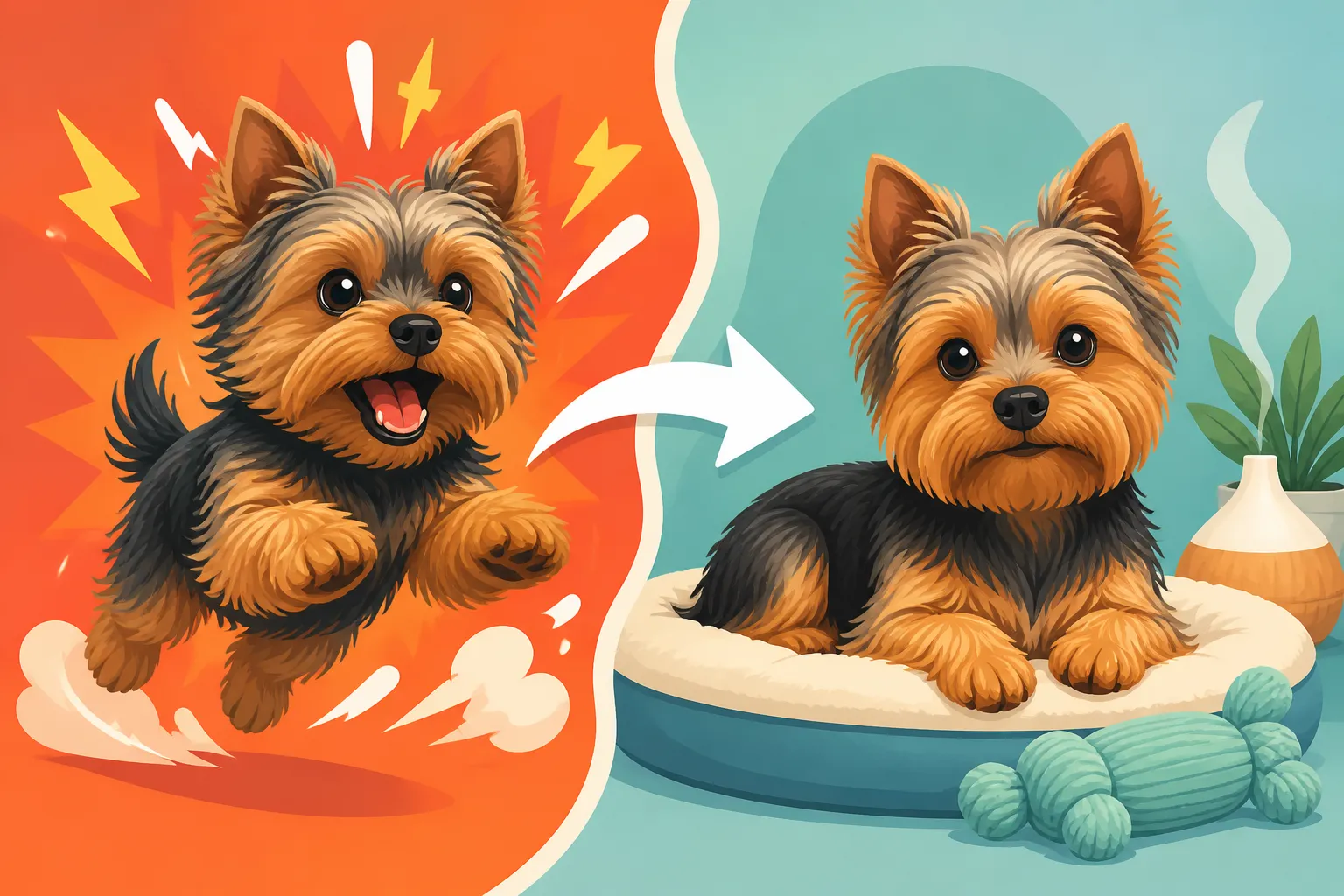
How to Calm a Hyper Yorkie
It can be incredibly frustrating and, let's be honest, a little exhausting when your adorable little Yorkshire Terrier acts like a furry, uncontainable tornado. One moment they're curled up sweetly, and the next they're bouncing off the walls, nipping at your heels, or barking at every leaf that blows by. It leaves many of us wondering if our tiny companions will ever settle down. This guide is here to help you understand the root causes of that boundless Yorkie energy and provide practical, empathetic strategies to bring a sense of calm and predictability to your home.
Understanding Yorkie Hyperactivity
Yorkshire Terriers are renowned for their spirited personalities, often displaying a "big dog in a small body" attitude. This inherent zest for life can sometimes be misinterpreted as hyperactivity, especially by new owners. However, there's a fine line between a typically energetic Yorkie and one whose energy levels are genuinely excessive or problematic. Understanding this distinction is the first step toward finding solutions.
Common Causes of Excessive Energy
Several factors can contribute to a Yorkie's seemingly boundless energy. It’s rarely just one thing, but often a combination that creates that "hyper" feeling. For starters, their small size and terrier lineage mean they were historically bred to be active hunters, chasing rodents with unwavering determination. That instinct doesn't just disappear. If these inherent drives aren't channeled properly, they can manifest as restless, over-the-top behavior around the house. They have keen senses and can become overstimulated by sounds, sights, and smells that a larger, more placid dog might simply ignore.
Another significant contributor is a lack of sufficient physical and mental exercise. Many people assume small dogs don't need much exercise, but that's a common misconception. A Yorkie stuck indoors all day without engaging activities can easily become bored and restless, leading to zoomies, barking, and destructive chewing. Imagine if you had a ton of energy but nowhere to put it – you'd probably bounce off the walls too! Diet also plays a role; low-quality foods with excessive fillers or artificial ingredients can sometimes contribute to energy spikes, much like sugary snacks affect children. Lastly, anxiety and stress can also present as hyperactivity. A Yorkie feeling insecure, experiencing separation anxiety, or reacting to changes in their environment might seem hyper, but they’re actually expressing distress. You might notice them pacing, panting, or excessively licking in addition to their frantic energy.
Recognizing True Hyperactivity versus Normal Puppy Play
It’s crucial to differentiate between normal puppy exuberance or typical Yorkie spiritedness and actual hyperactivity. A Yorkie puppy, just like any young dog, will have bursts of intense energy followed by deep naps. They'll play, wrestle, chase toys, and explore their world with gusto. This is completely normal and healthy development. As they mature, these energy bursts should become more manageable and predictable. Even adult Yorkies will have moments of spirited play, especially when they're excited to see you or engage in a favorite game. This is part of their charming Yorkshire Terrier Temperament and Personality.
True hyperactivity, on the other hand, often presents as a constant state of agitation. These dogs might struggle to settle down even after exercise, exhibit repetitive behaviors, or seem perpetually on edge. They might have difficulty focusing, even during training sessions. You might notice an inability to relax, even in quiet environments, or a tendency to react disproportionately to minor stimuli. If your Yorkie's energetic behaviors are disruptive, difficult to control, and don't seem to abate with age or appropriate exercise, it's worth taking a closer look. They might pant excessively, pace, or tremble even when not cold or afraid. This kind of persistent, unmanageable energy can signal an underlying issue that needs attention beyond just more play.
Establishing a Calming Routine
One of the most powerful tools you have to calm a hyper Yorkie is the implementation of a consistent and predictable routine. Dogs, especially intelligent and sensitive breeds like Yorkies, thrive on knowing what to expect. A haphazard schedule can create anxiety and uncertainty, which often manifests as frantic energy or misbehavior. Think of it as providing a stable framework within which your Yorkie can feel secure and relax.
The Power of Predictable Schedules
Imagine not knowing when your next meal is coming, when you’ll get to go outside, or when you’ll get to sleep. It would be stressful, right? Our Yorkies feel the same way. A predictable schedule for feeding, potty breaks, walks, playtime, and rest periods reduces their cognitive load and helps them feel more secure. When they know that a walk happens at 7 AM and 5 PM, or that dinner is always at 6 PM, they don't have to spend mental energy worrying or anticipating. This structure helps regulate their internal clock and manage their energy levels throughout the day.
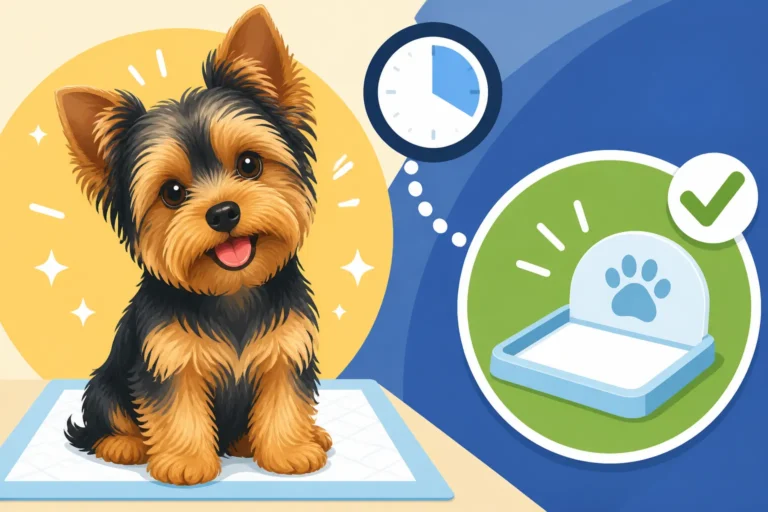
Start by mapping out a typical day. Aim for consistent meal times – perhaps two to three small meals a day, which is beneficial for their tiny digestive systems and helps prevent Yorkshire Terrier Hypoglycemia: Signs and Care. Schedule potty breaks immediately after waking up, after meals, and before bed, as well as several times throughout the day. Even if your Yorkie uses pee pads, a routine still helps. Dedicated play and training sessions should also be built in, ensuring their physical and mental needs are met. The key isn't rigidity to the minute, but consistency in the order of events and general timing. For instance, even if your morning walk is sometimes at 7:00 AM and sometimes at 7:15 AM, the fact that it happens right after breakfast and before your work day starts is what matters most.
Creating a Peaceful Home Environment
Beyond scheduling, the physical environment of your home plays a huge role in your Yorkie's calmness. A chaotic, noisy, or overly stimulating home can contribute to a hyper state. Yorkies are small, but they absorb a lot from their surroundings. If your home is constantly bustling with loud noises, frequent visitors, or other pets creating commotion, your Yorkie might struggle to find a peaceful moment to decompress.
Consider ways to reduce unnecessary stressors. This might mean designating certain times of the day for quiet activities, like reading or soft music, rather than constant TV noise. If you have children, teach them how to interact calmly and respectfully with your Yorkie, understanding that small dogs need their space. Providing a sanctuary for your Yorkie, a place they can retreat to, is invaluable. This could be a crate covered with a blanket, a cozy bed in a low-traffic area, or even a pen with their favorite toys. Brands like MidWest Homes for Pets offer excellent, secure crates that can serve as this safe haven. This designated "safe space" isn't for punishment; it's a personal retreat where they know they won't be bothered and can truly relax. Using calming pheromone diffusers, available on platforms like Amazon, might also help some sensitive Yorkies feel more at ease in their environment.
Setting Up a Safe, Quiet Space
A dedicated, safe, and quiet space is absolutely essential for helping a hyper Yorkie learn to self-regulate and relax. It’s their personal den, a place where they can unwind without constant stimulation. This isn't just a random dog bed thrown in a corner; it's a carefully chosen spot designed to promote tranquility.
A crate is often the best option for this. When introduced positively, a crate becomes a comforting nest rather than a prison. Make it inviting with soft bedding, a favorite blanket, and a safe chew toy. Covering the crate with a light blanket can further enhance the den-like feel, blocking out visual distractions and muffling sounds. Place this crate or designated bed in a quiet part of your home, away from high-traffic areas, loud televisions, or rambunctious children. Even if your Yorkie isn't fully Yorkshire Terrier Crate Training Guide, simply having a space where they can go to escape the hustle and bustle is beneficial. Encourage them to use it for naps and quiet time, perhaps by offering a special chew treat only available in their quiet zone. This teaches them to associate the space with positive, calm experiences, reinforcing the idea that this spot is for relaxation.
Exercise and Mental Stimulation
While it might seem counterintuitive to "exercise" a hyper dog, appropriate physical activity and, critically, mental engagement are cornerstone strategies for calming a Yorkie. Pent-up energy, both physical and mental, is a primary driver of hyper behavior. Without an outlet, that energy explodes in undesirable ways.
Appropriate Physical Activity for Yorkies
For a small breed like the Yorkshire Terrier, "exercise" doesn't necessarily mean miles of running. In fact, over-exercising a Yorkie can be detrimental and lead to injury or exhaustion. Instead, focus on consistent, moderate activity tailored to their size and stamina. Two to three short walks a day, lasting 15-20 minutes each, are usually sufficient. These walks aren't just for potty breaks; they're opportunities for your Yorkie to explore the world, sniff new smells, and stretch their legs. The sensory input from a walk provides mental stimulation as well. Remember that Yorkies can be prone to conditions like Yorkshire Terrier Patellar Luxation: Signs and Care or Yorkshire Terrier Tracheal Collapse: Signs and Care, so always use a harness instead of a collar to protect their delicate neck and trachea.
Beyond walks, short, supervised play sessions are excellent. Think of games like fetch in the living room or chasing a favorite squeaky toy. A secure, fenced yard can be a great place for them to zoom around freely, but always under supervision. It's about quality over quantity; consistent, engaging activity rather than infrequent, intense bursts. Observe your Yorkie for signs of fatigue – excessive panting, lagging behind, or suddenly stopping. Knowing when to stop is just as important as starting. A tired Yorkie is a good Yorkie, but an exhausted one might be prone to injury or stress. This aligns with proper Yorkshire Terrier Exercise Needs for the breed.
Engaging Their Minds with Puzzle Toys and Games
Often, a hyper Yorkie isn't just physically under-exercised, but mentally under-stimulated. Their intelligent minds need challenges to stay happy and calm. Without mental puzzles, they can become bored, and boredom frequently leads to destructive or frantic behaviors. Think of it this way: a dog who is thinking and problem-solving has less energy to expend on bouncing off the walls.
Puzzle toys are fantastic for this. You can find a wide variety on Amazon, from treat-dispensing balls to complex feeders where your Yorkie has to figure out how to get the kibble out. Brands like Kong and Outward Hound offer durable options that can keep your Yorkie engaged for a good chunk of time. Start with easier puzzles and gradually increase the difficulty as your Yorkie masters them. You can also incorporate scent games, hiding treats around the house for them to sniff out, which taps into their natural terrier instincts. Even simple training sessions, teaching new tricks or refining existing commands, provide excellent mental exercise. Ten to fifteen minutes of focused training can be as tiring as a good walk for a Yorkie! This kind of mental engagement channels their energy into constructive activities and helps them develop focus and self-control. Consider a "snuffle mat" for meal times, which turns eating into a scent work game, slowing down their eating and engaging their brain.
The Importance of Controlled Play
While play is vital for a Yorkie's well-being, how you play matters just as much. Uncontrolled, overly excitable play can actually contribute to hyperactivity rather than alleviate it. If every play session ramps your Yorkie up into a frenzy, they're learning that high-arousal behavior is rewarded. Instead, aim for controlled, structured play that has clear beginnings and endings.
For example, instead of letting a game of fetch go on until your Yorkie is panting uncontrollably and still demanding more, introduce a "finished" cue. After a few throws, say "all done," put the toy away, and ask your Yorkie to perform a calm behavior like "sit" or "down" before offering a small treat. This teaches them that play isn't limitless and that settling down is part of the game. Avoid using laser pointers, as these can create a frustrating, unfulfillable prey drive that often leads to obsessive or anxious behaviors. Instead, opt for toys they can actually catch and "kill." Incorporate short breaks during play where your Yorkie practices settling. If they get too wound up, calmly end the session and try again later. This teaches impulse control, a critical skill for calming a hyper Yorkie. This is especially helpful during the Yorkie Puppy Biting Phase Explained where controlled play can redirect their nipping.
Training for Calmness
Training isn't just about teaching "sit" and "stay"; it's about building a language of communication with your Yorkie and helping them understand what behaviors are desirable. For a hyper Yorkie, this means specifically training for calmness and self-control. It's a journey, not a destination, and consistency is your best friend.
Teaching Basic Obedience Commands
Basic obedience commands are the foundation of any well-behaved dog, and they are particularly crucial for calming a hyper Yorkie. Commands like "sit," "stay," "down," and "come" provide you with tools to redirect their energy and focus their attention. For instance, if your Yorkie is getting overly excited at the doorbell, a firm "sit" or "place" command can help them settle before you answer. The "leave it" command is invaluable for discouraging unwanted behaviors like nipping at furniture or picking up things they shouldn't.
Enroll in a basic obedience class, or utilize online training programs. The BAXTER & Bella Online Puppy School, for example, offers comprehensive modules that cover foundational commands using positive reinforcement. This not only teaches your Yorkie valuable skills but also strengthens your bond and establishes you as a calm, confident leader, which helps reduce their anxiety. Practice these commands in short, frequent sessions throughout the day, in various environments, and gradually increase distractions. This helps your Yorkie generalize their learning and remain calm and responsive no matter what's happening around them.
Utilizing Positive Reinforcement Techniques
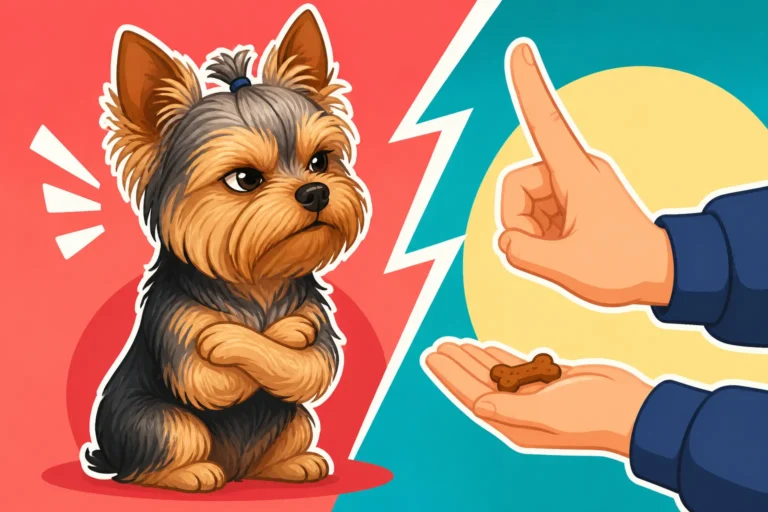
Positive reinforcement is the absolute best way to train a Yorkie, especially when you're aiming for calmness. It means rewarding desired behaviors with something your Yorkie loves – whether it's a high-value treat, verbal praise, or a favorite toy. The key is to catch your Yorkie being calm and reward it! If your Yorkie is lying quietly on their bed, go over and gently praise them or offer a small, pea-sized treat. This teaches them that "calm" behavior earns good things.
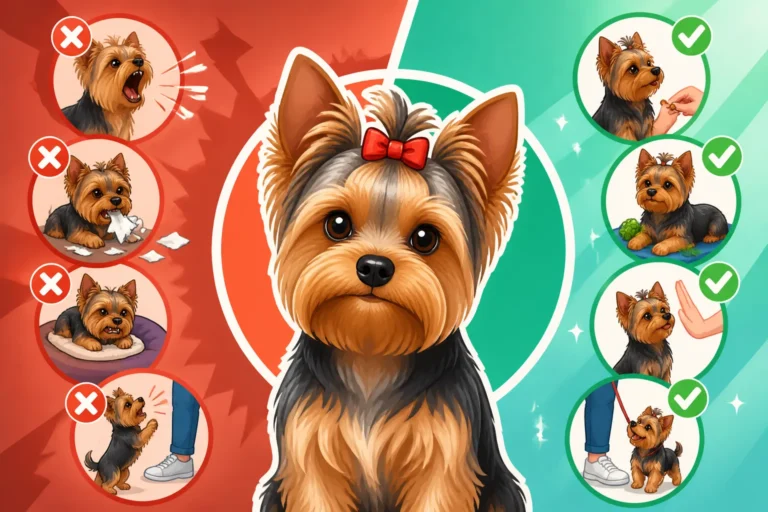
Avoid punishment, yelling, or harsh corrections, as these can actually increase anxiety and stress, making hyperactivity worse. A stressed Yorkie is often a more frantic Yorkie. Instead, focus on what you want your Yorkie to do. If they jump, ignore the jumping (turn your back) and only give attention when all four paws are on the floor. If they bark excessively, wait for a moment of silence, then reward that quiet moment. This approach helps your Yorkie understand through positive association, building their confidence and willingness to cooperate. Don't forget to use the Best Treats for Training a Yorkies to make these sessions extra motivating.
Implementing Relaxation Protocols
Beyond basic commands, specific relaxation protocols can be incredibly effective for teaching a hyper Yorkie to settle down on cue. One popular method is Karen Overall's Relaxation Protocol, which involves systematically exposing your dog to various distractions while rewarding them for staying in a "down" or "stay" position. You can find free recordings and instructions for this online. The goal is to gradually desensitize them to environmental stimuli while reinforcing a calm state.
Another technique is teaching a "place" command. Designate a mat or bed as their "place" and teach them to go there and lie down. Start by luring them to the mat with a treat, saying "place," and rewarding them when they settle. Gradually increase the duration they stay on the mat, and introduce mild distractions. This gives your Yorkie a designated "off switch" – a command that means "go here and relax." Practice this regularly, especially during times when your Yorkie might typically get excited, like when guests arrive or during meal prep. Over time, your Yorkie will learn that going to their place means good things happen, and it helps them develop crucial self-control. This also helps with Yorkshire Terrier Separation Anxiety Solutions if their "place" is a secure den.
Addressing Specific Triggers
Yorkies, despite their small stature, can have big reactions to certain triggers. Addressing these specific points of excitement or anxiety is crucial for managing overall hyperactivity. Identifying what sets your Yorkie off is the first step toward developing targeted strategies to help them cope more calmly.
Managing Excessive Barking
Excessive barking is one of the most common complaints of Yorkie owners, and it can definitely make a dog seem hyper. Yorkies bark for many reasons: alert barking (doorbell, strangers passing by), demand barking (for attention, food), boredom, or anxiety. To calm a hyper Yorkie that barks excessively, you need to first identify the reason for the barking.
If it's alert barking, teach your Yorkie an alternative behavior. When the doorbell rings, instead of letting them charge and bark, have them go to their "place" and reward them there. You can practice this by having someone ring the doorbell while you direct your Yorkie. If it’s demand barking, ignore it completely. This is tough, but any attention – even negative attention like yelling – can reinforce the behavior. Only reward quiet behavior. If they demand bark for a toy, put the toy away until they're quiet. If it's boredom, increase mental and physical exercise. If it's anxiety, consider consulting with a vet or behaviorist. Consistency is key here. Everyone in the household needs to be on the same page. You can read more specific tips in our guide on How to Stop Yorkie Excessive Barking.
Discouraging Nipping and Jumping
Those tiny Yorkie nips can still hurt, and jumping up can be startling, especially for small children or elderly individuals. These behaviors are often signs of over-excitement, a lack of impulse control, or a misguided attempt to gain attention. To discourage nipping and jumping, consistency and clear boundaries are essential.
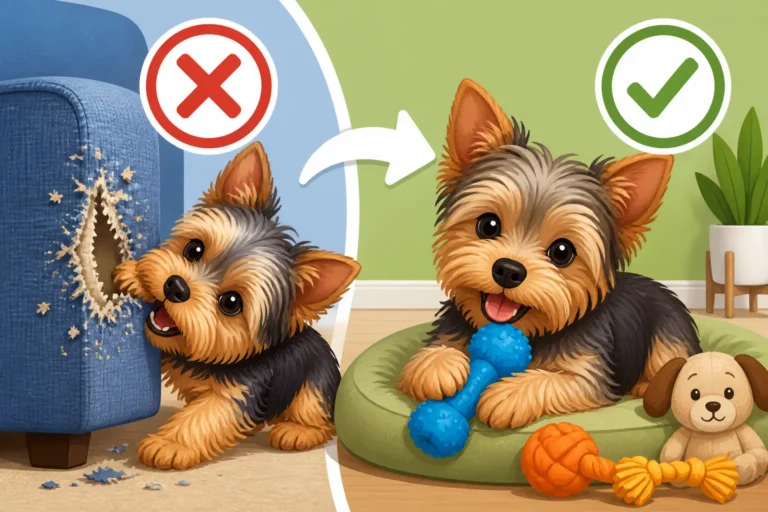
For nipping, especially in puppies, redirect their attention immediately to an appropriate chew toy. If they nip at your hands, let out a high-pitched "ouch!" or "yip!" and immediately remove your hand, turning away. This mimics how another puppy would react and signals that play has stopped. Resume play only when they are calm. For adult Yorkies, nipping often stems from over-stimulation or a lack of bite inhibition training as a puppy. You might need to teach them "soft mouth" by gently playing tug and stopping if they bite too hard. For jumping, the rule is simple: ignore the jump, reward the four-on-the-floor. When your Yorkie jumps for attention, turn your back, cross your arms, and completely disengage. As soon as all four paws are on the ground, even for a second, turn back, praise softly, and offer a treat. Practice this with guests too; ask them to ignore jumping and only pet the dog when it’s calm. This teaches your Yorkie that calm greetings get rewards.
Dealing with Leash Reactivity and Over-Excitement
Some Yorkies become overly excited or even reactive on walks, pulling frantically, barking at other dogs or people, or generally being a handful. This "leash reactivity" is often a combination of over-stimulation and sometimes anxiety. It certainly contributes to the feeling of having a "hyper" dog.
The key to managing leash reactivity is often a technique called "desensitization and counter-conditioning." This means gradually exposing your Yorkie to their triggers (e.g., other dogs) at a distance where they can remain calm, and then rewarding that calm behavior. Start far away – so far that your Yorkie barely notices the trigger. As soon as they see the trigger without reacting, immediately give them a high-value treat and praise. The goal is to change their emotional response from "OMG, bark bark!" to "Oh, an other dog! That means treats!" Slowly, very slowly, decrease the distance over many sessions. If your Yorkie reacts, you've gone too close, too fast. Turn around and increase the distance again. Using a well-fitted harness like those from Ruffwear or Kurgo, available on Amazon, can also give you better control without putting pressure on their delicate neck. Remember, the goal isn't to punish the reaction but to prevent it and reward calmness. Practicing commands like How to Teach a Yorkie to Come and How to Teach a Yorkie to Heel in controlled environments can also help build their focus outdoors.
Advanced Calming Techniques and Resources
Sometimes, despite your best efforts, your Yorkie's hyperactivity persists or even seems to worsen. This can be incredibly disheartening, but it's important to remember that you're not alone. There are advanced techniques and professional resources available to help you and your furry friend find a path to a more serene existence. These options can provide targeted solutions and expert guidance for complex behavioral challenges.
Exploring Calming Products and Supplements
For some Yorkies, particularly those prone to anxiety that manifests as hyperactivity, certain calming products and supplements can offer a helping hand. It's always best to discuss these options with your veterinarian first, as they can rule out any underlying medical conditions and recommend appropriate, safe choices.
Many owners find success with pheromone diffusers or collars, like those offered by Adaptil, which release synthetic pheromones mimicking those produced by a mother dog to calm her puppies. These can help create a more relaxed environment, especially in stressful situations or new surroundings. Calming treats and supplements containing ingredients like L-theanine, chamomile, or CBD are also popular. For instance, some well-regarded brands offer chews formulated with natural calming agents. These are not sedatives but rather work to support a state of calm. You can find a wide selection of these products on Amazon. Remember that results vary from dog to dog, and it might take some trial and error to find what works best for your individual Yorkie. Always introduce new supplements gradually and monitor your dog for any adverse reactions.
| Calming Strategy | Description | Key Benefit | When to Consider It |
|---|---|---|---|
| Routine & Structure | Consistent daily schedule for meals, potty, walks, and rest. | Reduces anxiety, builds predictability. | Always; foundational for all dogs. |
| Mental Stimulation | Puzzle toys, scent games, short training sessions. | Burns mental energy, prevents boredom. | Daily, especially if physical exercise is limited. |
| Controlled Exercise | Multiple short walks, structured playtime with "off" switch. | Channels physical energy, prevents over-arousal. | Daily, ensuring not to over-exert. |
| Relaxation Protocols | Training "place" command, systematic desensitization. | Teaches self-control and settling on cue. | For persistent excitability, specific triggers. |
| Pheromone Products | Diffusers or collars releasing calming synthetic pheromones. | Creates a serene environment. | General anxiety, new environments, stressful events. |
| Calming Supplements | Treats or chews with L-theanine, chamomile, CBD (vet-approved). | Supports natural relaxation, reduces tension. | Moderate anxiety, specific stressful situations. |
When Hyperactivity Might Signal a Deeper Issue
While many hyper behaviors can be managed with consistent training and routine, it’s important to recognize when excessive energy might be a symptom of a deeper, underlying issue. Persistent, unmanageable hyperactivity, especially if it appears suddenly or is accompanied by other unusual symptoms, warrants a trip to the vet. For instance, if your Yorkie is shaking excessively even when not cold or stressed, this could be a sign of something like Yorkie Hypoglycemia: Emergency Signs or another neurological issue.
Medical conditions such as thyroid imbalances, pain from orthopedic issues like Yorkie Knee Problems Explained, or even certain neurological disorders can manifest as hyperactivity or restlessness. It's also possible that your Yorkie is experiencing chronic pain that they can't articulate, leading to agitation. Behavioral issues like severe separation anxiety or compulsive disorders can also present as relentless energy and inability to settle. If you notice any accompanying symptoms like changes in appetite, increased thirst, sudden aggression, or signs of discomfort, don't hesitate to seek veterinary advice. Early diagnosis can make a huge difference in your Yorkie's quality of life. Our guide on Signs Your Yorkshire Terrier Is Sick can offer further insights into what to look for.
Working with a Certified Professional Dog Trainer or Behaviorist
If you've implemented all the advice, committed to a routine, and your Yorkie is still acting hyper, it might be time to bring in the big guns: a certified professional dog trainer or a veterinary behaviorist. These experts have specialized knowledge and can offer personalized guidance tailored to your Yorkie's unique situation. They can observe your Yorkie's behavior in person, identify subtle triggers you might have missed, and develop a comprehensive training plan.
A certified professional dog trainer (CPDT-KA) can help you refine your training techniques, teach advanced obedience, and provide hands-on coaching for specific behavioral challenges like leash reactivity or persistent jumping. If the hyperactivity stems from deep-seated anxiety or a compulsive disorder, a veterinary behaviorist (DACVB) is the appropriate specialist. They are veterinarians with additional training in animal behavior and can diagnose and treat complex behavioral conditions, sometimes including medication if deemed necessary. Resources like the Association of Professional Dog Trainers (APDT) or the American College of Veterinary Behaviorists (ACVB) can help you find qualified professionals in your area. Investing in expert help is not a sign of failure; it’s a commitment to your Yorkie's well-being and a step toward a calmer, happier life for both of you. Many online resources, including comprehensive programs like those offered by BAXTER & Bella, can also provide structured guidance if in-person training isn't feasible right away.
Final Thoughts on Calming Your Yorkie
Dealing with a hyper Yorkie can feel like a never-ending cycle of energy and frustration, but please know that it's a common challenge many small dog owners face. Remember that your Yorkie's behavior is rarely an act of defiance; it's usually a manifestation of unmet needs, anxiety, or simply not knowing what else to do with all that zest for life. The journey to a calmer Yorkie is one of patience, consistency, and understanding.
By establishing a predictable routine, providing appropriate physical and mental stimulation, consistently applying positive reinforcement training, and addressing specific triggers, you can make a profound difference. Sometimes, a tiny shift in your approach or a new tool, like a puzzle toy from Amazon, can create a ripple effect of positive change. And don't ever hesitate to seek professional help if you feel overwhelmed or suspect an underlying issue. Your dedication to understanding and guiding your spirited companion will ultimately lead to a more peaceful, enjoyable life for both of you. The bond you share with your Yorkie is precious, and working through these challenges together will only strengthen it.
Disclaimer
Please remember that the information provided in this article is for general educational purposes only and should not be considered a substitute for professional veterinary advice. Always consult with a qualified veterinarian or certified professional dog trainer for any concerns regarding your Yorkie's health or behavior.