How to Teach a Yorkie to Roll Over
Teaching your adorable little Yorkshire Terrier new tricks can feel like a daunting task, especially when you're aiming for something as intricate as "roll over." It's easy to get frustrated when your tiny companion seems more interested in zooming around or napping than following your cues. But don't despair! This comprehensive guide will walk you through a step-by-step process, offering practical advice and troubleshooting tips to help your Yorkie master the impressive "roll over" command, strengthening your bond in the process.
Why Teach Your Yorkie to Roll Over
Beyond just showing off for friends and family, teaching your Yorkshire Terrier tricks like "roll over" offers a wealth of benefits for both of you. It's not just about the cute factor; it's a fantastic way to engage their intelligent minds and build a deeper connection.
Boosting Mental Stimulation and Confidence
Yorkies are incredibly smart little dogs, and like all intelligent breeds, they thrive on mental challenges. Teaching a new trick provides crucial mental exercise, which can be just as tiring and satisfying as physical play. When your Yorkie successfully learns a new command, especially one that requires a sequence of actions, it significantly boosts their confidence. You'll notice them walking a little taller, eager for the next challenge. This kind of positive reinforcement and mental engagement can also help with other aspects of their behavior, making them more attentive and responsive in general. It also helps prevent boredom, which can lead to unwanted behaviors like excessive barking or chewing.
Strengthening Your Bond Through Positive Reinforcement
Training is one of the most powerful tools for building a strong, trusting relationship with your Yorkshire Terrier. When you engage in positive reinforcement training, using treats, praise, and gentle encouragement, your Yorkie learns to associate you with positive experiences. They see you not just as the provider of food and walks, but as a fun, engaging leader who makes learning enjoyable. Each successful "roll over" isn't just a trick; it's a moment of shared achievement that deepens your connection. Imagine the joy of seeing your Yorkie eagerly participate, their little tail wagging, knowing they're doing something right and earning your happy approval. This bond is invaluable, and tricks like "roll over" are stepping stones to a lifetime of mutual understanding and affection.
Essential Preparations and Supplies
Before you even think about starting the "roll over" training, it’s crucial to set yourself and your Yorkie up for success. This isn't just about having the right gear; it’s about establishing the right foundation.
Foundational Commands and Training Environment
First things first, your Yorkie should have a solid grasp of some basic commands. "Sit" and "down" are absolutely paramount, as "roll over" builds directly on these. If your Yorkie is still struggling with "How to Teach a Yorkie to Down" or "How to Teach a Yorkie to Stay", spend some more time on those first. Having these basic commands down ensures your Yorkie understands the concept of following cues and is ready for more complex sequences. Think of it as building blocks – you can't put on the roof without solid walls.
Next, consider your training environment. For a small breed like a Yorkie, a quiet, distraction-free space is key. This could be a calm corner of your living room, away from the hustle and bustle of family activity, or perhaps a bedroom. Avoid areas with loud noises, other pets, or tempting toys lying around. The goal is to minimize anything that could pull your Yorkie's attention away from you and the task at hand. Remember, their attention spans can be short, so make it as easy as possible for them to focus.
Choosing the Right Treats and Tools
The success of trick training often hinges on motivation, and for most Yorkies, that means high-value treats! These aren't just their everyday kibble; we're talking about something extra special and irresistible. Think small pieces of cooked chicken, cheese, or specialized training treats like Zuke's Mini Naturals or Wellness Soft Puppy Bites. You want something tiny enough to be gobbled quickly without distracting them too much, but delicious enough to capture their full attention. Many owners find a great selection of high-value treats suitable for small dogs on Amazon.
Beyond treats, a clicker can be an incredibly effective training tool for Yorkies. A clicker marks the exact moment your dog performs the desired action, making it crystal clear to them what they did right. If you haven't introduced clicker training before, spend a few sessions simply clicking and then immediately giving a treat, so your Yorkie associates the click with something good. This makes it a powerful communication tool. If clicker training feels too complex right now, a verbal marker like "yes!" delivered enthusiastically at the precise moment will also work.
Finally, consider a comfortable mat or blanket for your Yorkie to lie on. This gives them a designated "workstation" and helps them feel more settled and secure during the training process. This is particularly helpful when they are learning to lie down and eventually roll onto their side. For more general advice on treats, check out our guide on "Best Treats for Yorkshire Terriers".
Step-by-Step Guide to Teaching Roll Over
Now that we've laid the groundwork, it's time to dive into the actual training. Remember, patience is your best friend here, and breaking the trick down into tiny, achievable steps is crucial for a small, sensitive breed like a Yorkie.
Starting with the Down Position and Luring
The "roll over" command begins with your Yorkie in a comfortable "down" position. Ask your Yorkie to "down" and once they are, reward them with a treat. This reinforces the starting position. Make sure they are settled and calm before proceeding.
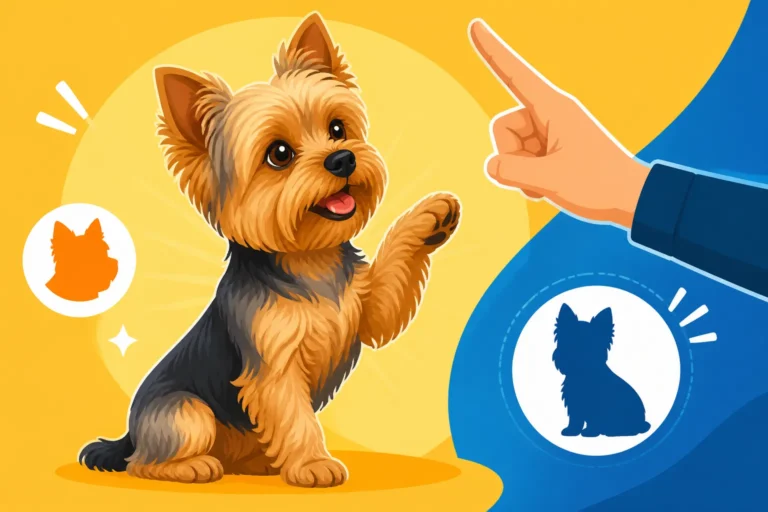
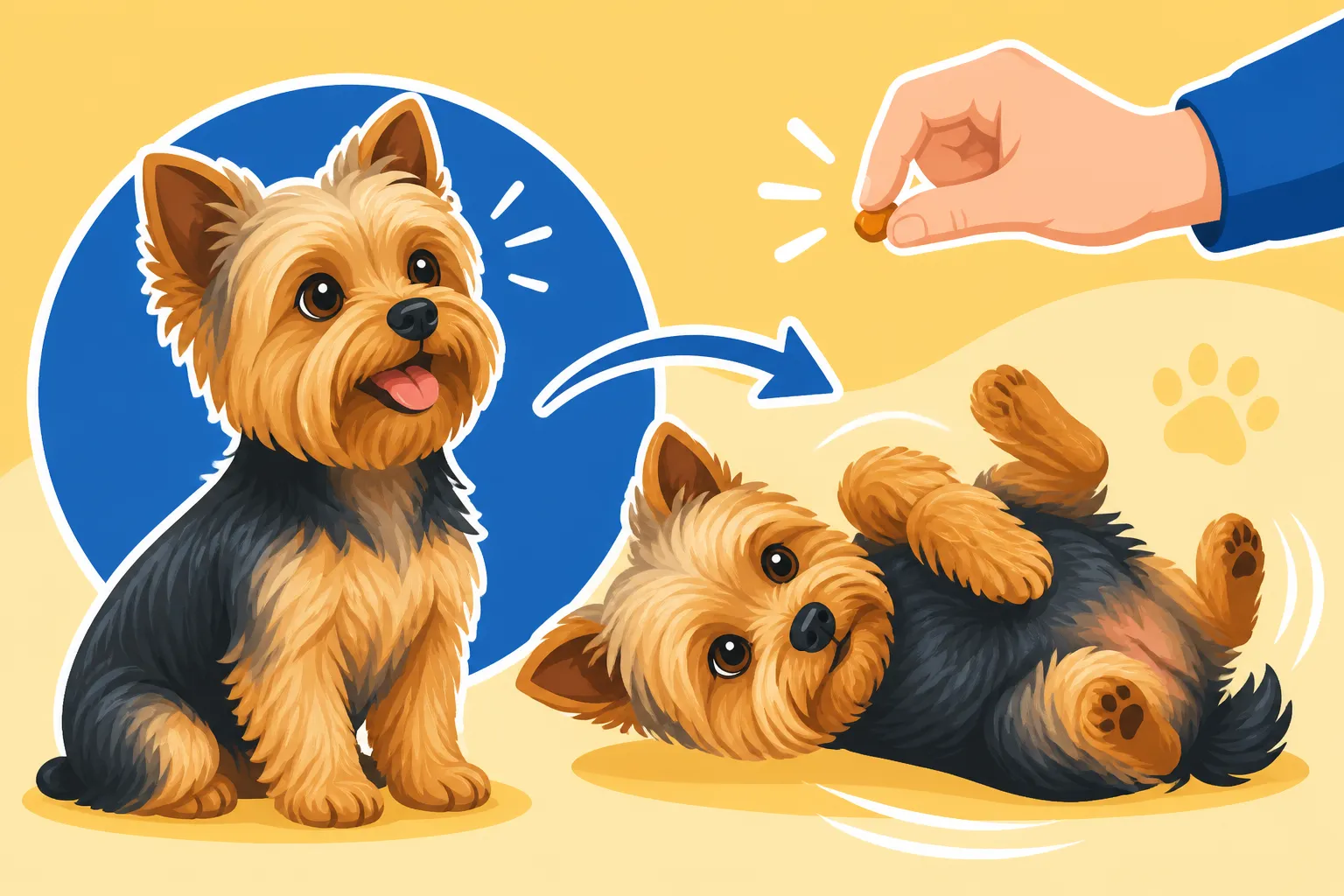
Now, for the luring magic. Take a high-value treat and hold it close to your Yorkie's nose. Slowly move the treat in an arc, from their nose towards their shoulder, then gently curve it towards their spine on one side. The idea is to get their head to turn and follow the treat, encouraging their body to naturally shift onto one side. As soon as their shoulder or hip touches the ground and they are lying on their side, immediately mark the behavior with your clicker or verbal "yes!" and give them the treat. Practice this several times, always luring them onto the same side initially to avoid confusion. Many trainers, including those at BAXTER & Bella, emphasize the importance of smooth, clear luring.
Guiding Your Yorkie to Their Side
Once your Yorkie is consistently going onto their side with the lure, it's time to refine the movement. From the "down" position, lure them onto their side as before. Instead of just rewarding them for being on their side, try to extend the lure slightly further, encouraging them to roll a little more. You want their head to continue turning, gently pulling their body over.
The key here is subtle movements with the treat. If you move it too fast, they might pop up. Too slow, and they might lose interest. Find that sweet spot. As soon as you see even a slight shift that indicates they are starting to roll past just lying on their side, mark and reward. This is about shaping the behavior, rewarding approximations of the full roll. It's perfectly normal for them to only roll partway over at first. Celebrate those small victories! This step might take a few sessions, so don't rush it.
Completing the Full Roll Over
This is where it all comes together! From the "down" position, lure your Yorkie onto their side. Now, continue the arc of the treat, moving it past their spine and over their back, towards the opposite shoulder. Your goal is for their nose to follow the treat all the way around, causing their body to naturally complete the roll.
As soon as they complete the full 360-degree roll and are back on their belly or standing, immediately click/say "yes!" and offer a jackpot of treats and enthusiastic praise. This "jackpot" reward tells them they've hit the big time – they've done the full trick! If they struggle, go back to luring to their side and build up from there. Sometimes, holding the treat slightly above their head after they are on their side can help encourage the final push over. Break it down: first get them on their side, then a little more, then the full roll. Consistency and breaking it down are essential.
Adding the Verbal Cue and Fading the Lure
Once your Yorkie is consistently rolling over with the treat lure, it's time to introduce the verbal command. Just as they start the rolling motion, say "Roll Over!" (or "Spin!" or whatever verbal cue you choose). Then, continue with the lure and reward. Repeat this many times. The verbal cue should always precede the action.
After several successful repetitions with both the verbal cue and the lure, start to fade the lure. Instead of holding the treat directly at their nose, make the hand motion smaller and less obvious, using an empty hand gesture while giving the verbal cue. If they roll over, immediately produce the treat from your other hand and reward them. Gradually reduce the size and prominence of your hand gesture until you are only using the verbal command and a subtle hand signal, or just the verbal command alone. This process can take time, so be patient and don't expect it to happen overnight. Remember, the goal is for them to respond to your voice, not just the sight of a treat.
Here’s a quick overview of the steps:
| Step | Action | Key Tip |
|---|---|---|
| 1. Start in Down Position | Ask your Yorkie to lie down. Reward. | Ensure they are calm and settled. |
| 2. Lure to Side | Hold a treat to nose, arc it to shoulder/spine. Reward when on side. | Use a high-value treat; move slowly. |
| 3. Guide to Partial Roll | Extend the lure slightly past the spine, encouraging more rotation. Reward small movements. | Reward approximations; don't expect a full roll immediately. |
| 4. Complete Full Roll | Continue the treat arc over their back, guiding their nose to complete the 360-degree roll. Reward. | Use a "jackpot" reward for the full trick. |
| 5. Add Verbal Cue | Say "Roll Over!" just before the rolling motion, then lure and reward. | Verbal cue precedes the action. |
| 6. Fade the Lure | Gradually reduce the prominence of the hand lure, relying more on the verbal cue. Reward success. | Be patient; use an empty hand gesture initially, then phase it out. |
Common Challenges and Troubleshooting
Even with the best intentions and methods, teaching a trick isn't always a straight line. Your Yorkie might encounter some roadblocks, but understanding common issues can help you navigate them with grace.
Dealing with Stubbornness or Disinterest
Yorkies, despite their small size, can have big personalities and a stubborn streak! If your Yorkie seems uninterested or outright refuses to follow your lure, it's usually one of two things: either your treats aren't motivating enough, or you're asking for too much too soon.
Firstly, re-evaluate your treats. Are they truly high-value? Sometimes, what works one day might not be exciting enough the next. Experiment with different options: tiny pieces of hot dog, boiled chicken, or a dollop of peanut butter on your finger. You can explore more ideas in our "How to Feed a Picky Yorkie" guide. If they're still not engaged, your sessions might be too long. Keep training sessions short and sweet, no more than 5-10 minutes, especially when introducing something new. End on a positive note, even if it's just a simple "sit" that they perform perfectly. This leaves them wanting more, rather than feeling overwhelmed.
Another aspect to consider is their energy level. A tired Yorkie might be too sleepy to engage, while an overly energetic one might be too distracted. Try training after a short walk or a brief play session when they've burned off some initial energy but aren't exhausted.
Overcoming Fear or Reluctance to Lie Down
Some Yorkies, especially those who might be a bit shy or sensitive, can be reluctant to lie down or roll over, possibly seeing it as a vulnerable position. If your Yorkie shows signs of fear, such as a tucked tail, flattened ears, or attempts to back away, never force them. This will only create negative associations with training.
Instead, slow down dramatically. Spend extra time reinforcing the "down" command in various comfortable spots. Make lying down the most wonderful thing in the world, with plenty of treats and gentle praise. You might need to make the lure even more gradual, perhaps just rewarding for shifting their weight onto their hip first, then their full side. Use a soft blanket or mat to make the surface more inviting. If they're comfortable with being gently touched, you can also combine the lure with a very light touch on their shoulder or hip to encourage the initial shift, but only if they don't react negatively. Building confidence slowly is key for sensitive Yorkies. Our guide on "Yorkshire Terrier Temperament and Personality" delves deeper into their unique traits.
Managing Distractions During Training
Distractions are the arch-nemesis of dog training, especially for small, alert breeds like Yorkies who are quick to notice everything. We've already discussed choosing a quiet environment, but sometimes distractions pop up unexpectedly.
If your Yorkie gets distracted, don't get angry or frustrated. Simply redirect their attention gently. A common technique is to make a kissy sound or say their name brightly to re-engage them. If they look at you, immediately reward that focus with a small treat, then try the "roll over" command again. If the distraction is too strong (e.g., a doorbell rings, another pet walks by), it's okay to take a short break or move to an even quieter location. It's better to have a few successful, short training sessions than long, frustrating ones filled with distractions.
Remember to keep your energy positive and upbeat. Yorkies are highly attuned to our emotions, and if you're stressed, they'll pick up on it. Make training a fun game, and your Yorkie will be much more eager to play along. For a general overview of teaching basic commands, check out "Yorkshire Terrier Obedience Training Basics".
Integrating "Roll Over" into Daily Life
Once your Yorkie has mastered the "roll over" on command, it's time to make it a reliable trick they can perform anywhere. This means practicing in different locations and contexts, and maintaining that joyful association with the command.
Practicing in Various Locations
Initially, you trained your Yorkie in a quiet, distraction-free environment. Now, it's crucial to generalize the behavior. Start practicing in slightly more stimulating environments, such as a different room in your house, the backyard, or even a friend's calm home. The key is to introduce new environments gradually, always starting with minimal distractions and slowly increasing them.
For example, try practicing in the living room while family members are quietly reading, then eventually while they're having a conversation. Take it outdoors to a quiet part of your garden. Each time your Yorkie successfully performs "roll over" in a new setting, it solidifies their understanding that the command means the same thing, no matter where they are. This builds reliability and ensures they aren't just performing the trick out of habit in one specific spot. Remember to always bring those high-value treats with you!
Maintaining and Reinforcing the Trick
Just like any skill, if you don't use it, you lose it! To keep "roll over" sharp, incorporate it into your daily interactions with your Yorkie. Ask for the trick a few times a week, perhaps during playtime, before a meal, or during a cuddle session. Don't always make it about training; sometimes, just ask for it randomly and reward them with praise and a quick pet.
Vary your rewards too. While treats are excellent for initial learning and proofing, you can also use their favorite toy, a belly rub, or enthusiastic verbal praise as rewards. This helps prevent your Yorkie from only performing the trick when they see a treat. Consistent, positive reinforcement ensures that "roll over" remains a fun and rewarding trick for your Yorkie throughout their life. It's a fantastic way to keep their minds active and reinforce their good behavior. Many resources, including those from BAXTER & Bella, offer ongoing training tips to keep tricks fresh and engaging.
Expanding Your Yorkie's Trick Repertoire
Once "roll over" is firmly established, you might find yourself bitten by the trick-training bug! Your Yorkie's newfound confidence and understanding of how to learn will make it easier to teach them even more impressive feats. Consider moving on to commands like "How to Teach a Yorkie to Play Dead" which builds on the "roll over" foundation, or perhaps "How to Teach a Yorkie to Fetch".
Teaching multiple tricks not only keeps your Yorkie mentally stimulated but also strengthens your communication. Each new trick adds another layer to your shared language and reinforces their understanding that learning with you is a positive and rewarding experience. There's a whole world of tricks out there, from simple "spin" to more complex obstacle courses, that can keep your Yorkie engaged and happy. Who knows, your little Yorkie might just become the star of the show at your next family gathering!
Disclaimer
This article is for general informational purposes only and does not constitute professional advice. Laws, prices and regulations vary by location and change over time. Consult a qualified professional for guidance on your specific situation.