How to Stop a Yorkie from Jumping
It's incredibly frustrating when your sweet, spirited Yorkshire Terrier transforms into a tiny pogo stick every time a visitor arrives, or when you simply walk through the door. This jumping behavior, while often rooted in excitement or a bid for attention, can be annoying, messy, and even a bit dangerous, especially for elderly guests or small children. This comprehensive guide is here to help you understand why your Yorkie jumps and, more importantly, equip you with the practical, empathetic training methods to teach them to greet people politely, with all four paws firmly on the floor.
Understanding Why Your Yorkie Jumps
Before we can even begin to tackle the "how to stop," we really need to get into the "why." Our little Yorkies, with their big personalities, aren't jumping just to annoy us. There's always a reason behind their actions, and understanding that root cause is the first step toward effective and lasting change. It’s all about communicating with them in a way they understand, and they’re often just trying to communicate with us!
Excitement and Greetings
One of the most common reasons a Yorkie launches into the air is pure, unadulterated excitement. Imagine your world is mostly at ground level, and suddenly, a giant (that's you!) comes home, bringing all the smells, sounds, and love. For a tiny Yorkie, jumping up is their way of trying to get closer to your face, to connect, to say, "I missed you so much!" or "You're finally here, let's party!" This is especially true after a long day when they've been alone.
When you walk in, their little brains are flooded with happy chemicals. They associate your return with positive things like cuddles, playtime, or perhaps even a treat. So, they jump up, hoping to initiate that interaction immediately. Similarly, when guests arrive, it's often a novel experience filled with new smells and potential playmates, leading to an excited, bouncy greeting. It’s not malice; it’s just their overwhelming joy boiling over.
Attention-Seeking Behavior
Yorkies are incredibly intelligent and quickly learn what actions get them what they want. If jumping up consistently results in any form of attention – even if it's negative attention like pushing them down, saying "no," or looking directly at them – they've learned it's a successful strategy. They might prefer positive attention, of course, but for many dogs, any attention is better than none.
Think about it: you come home, they jump, you say, "Down, Fido, no jumping!" and gently push them away. In their minds, they got your eye contact, your voice, and your touch. Mission accomplished! They don't differentiate between "good" and "bad" attention in the same way we do. They just know that jumping equals interaction. This is why consistency in our reactions is so incredibly important, which we'll delve into shortly.
Lack of Boundaries or Training
Sometimes, jumping is simply a reflection of a lack of clear boundaries or consistent training. If a Yorkie wasn't taught from a young age that jumping is unacceptable, or if the rules have been inconsistent (sometimes it's okay, sometimes it's not), they can become confused. They might not understand what is expected of them in different situations or with different people. Puppies are particularly prone to this if not properly guided.
Consider a scenario where one family member allows jumping and even encourages it with cuddles, while another scolds the dog. This creates a really mixed message for your Yorkie, making it much harder for them to learn. Without a unified front and a clear understanding of what "four paws on the floor" means, they'll continue to try what has worked, or what they think might work, in the past. This isn't about them being "stubborn" or "bad"; it's about us not effectively communicating the rules of our human world.
The Core Principles of Training to Stop Jumping
Training a Yorkie to stop jumping isn't about punishment; it's about redirection and clear communication. These core principles form the bedrock of any successful training program and are especially vital when dealing with an energetic, attention-loving breed like the Yorkshire Terrier. They need to understand what you do want them to do, not just what you don't want.
Consistency is Key
I cannot stress this enough: consistency is the absolute cornerstone of effective training. Every single person who interacts with your Yorkie needs to be on the same page. If you allow your Yorkie to jump on you when you're in old clothes but scold them when you're dressed for work, they won't understand the difference. If your spouse or children encourage jumping, while you discourage it, your Yorkie will just learn that jumping works sometimes, and they'll keep trying.
Establish a clear rule: no jumping on anyone, ever. Communicate this rule to every family member, houseguest, and even the dog walker. Imagine you're building a new path in your backyard. If everyone always uses the new path, the old, undesirable path will quickly become overgrown. But if some people use the old path, it remains an option, making it harder for the new path to become the default. The same applies to your Yorkie's behavior. Consistent application of the rules, without exception, will help your Yorkie understand what is expected much faster. This also applies to other behaviors, like if you're working on How to Stop a Yorkie from Barking.
Positive Reinforcement: What It Is and How to Use It
Positive reinforcement is all about rewarding the behaviors you want to see, rather than punishing the behaviors you don't. When your Yorkie keeps all four paws on the floor, even for a brief moment, that's your cue to praise and reward them. This could be with a small, high-value treat (something they absolutely love), a gentle scratch behind the ears, or a calm, happy "Good dog!"
The timing of your reward is crucial. It needs to happen within 1-3 seconds of the desired behavior. If you wait too long, your Yorkie might not connect the reward with keeping their paws down. For example, if your Yorkie is excited, and you wait until they've settled completely to reward, they might think they're being rewarded for settling, not for not jumping. The goal is to catch them in the act of being polite. This powerful method is fundamental for all aspects of How to Train a Yorkshire Terrier.
Ignoring the Undesired Behavior
This might feel counterintuitive, especially when your Yorkie is launching at you, but ignoring the jumping is incredibly powerful. As we discussed, Yorkies often jump for attention. If jumping consistently yields no attention – no eye contact, no pushing, no talking – it becomes a very unrewarding behavior. It's like trying to get money from a vending machine that's always empty; eventually, you'll stop putting coins in.
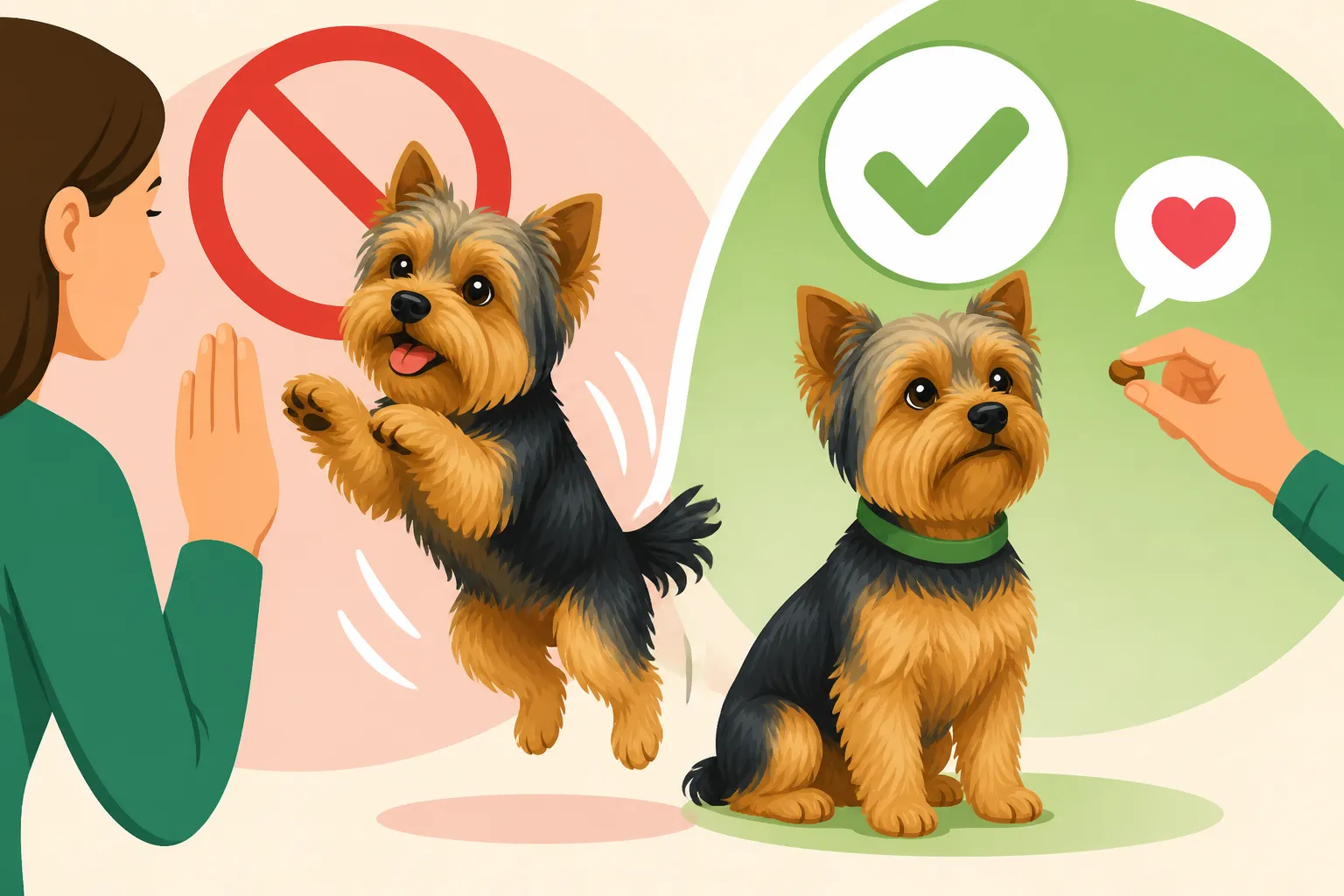
The technique involves turning your back, crossing your arms, and completely ignoring your Yorkie the moment they jump up. Don't say a word, don't make eye contact, don't push them away. Just become a "tree." The instant all four paws are back on the floor, turn back around and calmly offer praise or a treat. If they jump again, turn your back again. This cycle needs to be repeated patiently. It teaches them that jumping literally makes you disappear, while polite behavior brings you back.
Step-by-Step Training Methods for Jumping
Now that we've covered the fundamental principles, let's dive into the practical, step-by-step methods you can use to teach your Yorkie better greeting manners. These techniques focus on preempting the jumping behavior and rewarding appropriate alternatives.
The "Four Paws on the Floor" Rule
This is the golden rule, and it's something you'll want to consistently reinforce throughout the day, not just when visitors arrive. The idea is to teach your Yorkie that attention, treats, and affection are only given when all four paws are firmly planted on the ground.
Start by working on this when you’re just interacting with your Yorkie casually. If they approach you and jump, immediately turn your back. Wait for even a split second when their paws are down, then turn, praise, and give a tiny treat. As they get better, gradually increase the duration they need to keep their paws down before getting the reward. You can even combine this with basic obedience commands. For instance, if you're teaching your Yorkie How to Teach a Yorkie to Sit, you can ask them to sit before you give them attention or a treat. This reinforces the idea that polite, calm behavior gets them what they want. You want to make "four paws on the floor" a reflex.
Teaching an Alternate Behavior
Instead of just telling your Yorkie what not to do, teach them what to do instead. A common and highly effective alternate behavior is teaching them to sit or lie down when greeting. This gives them a clear, positive action to perform that is incompatible with jumping.
Here’s how you can implement this:
- Practice in a Calm Environment: Start when there are no distractions. Hold a treat near your Yorkie's nose and lure them into a sit. As soon as their rear touches the ground, say "Sit!" (or "Down!"), give the treat, and praise them enthusiastically. Repeat this many times.
- Introduce Distractions Gradually: Once they reliably sit in a calm environment, slowly introduce distractions. Have a family member enter the room quietly. Before your Yorkie can jump, ask for a "Sit!" Reward heavily if they comply.
- Practice with Real-Life Scenarios: As they progress, practice with more realistic scenarios, like when someone comes through the front door. The goal is for them to automatically offer a sit when someone approaches, knowing it will be rewarded. This is a fantastic way to modify many Yorkshire Terrier Behavior Problems and Solutions.
Managing Excitement at the Door
The doorway is often ground zero for jumping. Your Yorkie associates the sound of the doorbell or a knock with extreme excitement. We need to break this association and teach them a calmer routine.
- Doorbell/Knock Desensitization: Enlist a family member or friend to help. Have them stand outside and ring the doorbell or knock once. The moment it happens, before your Yorkie can get too excited, ask them to sit or lie down away from the door. Reward them for staying calm. If they react wildly, ignore them until they settle, then try again. Repeat this many, many times, gradually increasing the intensity (more rings, louder knocks). The goal is for the sound to become neutral, signaling "go to your spot" rather than "get ready to jump!"
- Controlled Entry: When someone actually enters, have your Yorkie on a leash (even inside) or behind a gate if their jumping is particularly enthusiastic. This prevents them from practicing the unwanted behavior. Ask for a sit or down. Once the guest is inside and your Yorkie is calm, they can slowly approach for a controlled, calm greeting. You can use a specific spot, like a dog bed or a mat, for them to go to, similar to crate training concepts found in a Yorkshire Terrier Crate Training Guide.
- Guest Protocol: Brief your guests ahead of time. Ask them to ignore your Yorkie completely if they jump. No eye contact, no talking, no petting. Only when your Yorkie has all four paws on the floor should the guest offer a calm greeting or gentle pet. This reinforces the consistent message.
Addressing Jumping on Guests and Strangers
Once your Yorkie understands the "four paws on the floor" rule with you and family members, extending it to guests and strangers is the next logical step. This often requires a bit more management and involves educating those around you.
- Leash Management: When you anticipate guests, keep your Yorkie on a leash. A lightweight indoor leash that you can hold can give you control without being overly restrictive. As guests enter, you can gently guide your Yorkie into a sit and keep them from jumping. Reward heavily for calm behavior. Products available on platforms like Amazon, such as a comfortable, lightweight harness and leash set, can be incredibly useful for this.
- Controlled Greetings: Don't allow free-for-all greetings. Have your guest stand calmly. Ask your Yorkie to sit. If they maintain the sit, the guest can lean down (rather than encouraging jumping by reaching down) and offer a calm, brief pet. If your Yorkie jumps, the guest immediately stands up straight and ignores them. This teaches your Yorkie that calm equals attention, and jumping makes the attention disappear.
- Positive Association with Calmness: Encourage guests to offer a small, high-value treat only when your Yorkie is sitting or standing calmly. This creates a positive association with polite greetings. This is where those training treats come in handy, so make sure your guests know the rules and are prepared to reward the desired behavior.
Jumping Scenario Desired Behavior Training Technique to the vibrant energy of New York City to the relaxed lifestyle of California, the cost of owning a Yorkie can vary significantly. Let's talk about the specific financial considerations.
These price ranges are estimates and can fluctuate based on a multitude of factors, including the breeder's reputation, the puppy's lineage (whether it comes from champion lines), the current demand, and the health guarantees provided. For example, a puppy from a highly respected, health-testing breeder with an excellent track record, like those associated with the Yorkshire Terrier Club of America, might command a higher price than one from a smaller, local breeder. Location also plays a big role, with prices in major metropolitan areas often being higher due to increased overhead for breeders and higher cost of living.
Initial Costs and Puppy Price Variances
The initial cost of bringing a Yorkshire Terrier puppy home can range widely, generally falling between $1,500 and $3,500 for a pet-quality puppy from a reputable breeder. Show-quality puppies, with impeccable lineage and conformation to breed standards, can command upwards of $5,000 or even more. However, this is just the tip of the iceberg.
Several factors influence this initial price:
- Breeder Reputation and Health Clearances: Reputable breeders invest heavily in the health and well-being of their breeding dogs, conducting extensive genetic testing for common Yorkie ailments such as Yorkshire Terrier Patellar Luxation: Signs and Care or Yorkshire Terrier Portosystemic Shunt: Signs and Care. They also provide initial vaccinations, deworming, and often a health guarantee, all of which contribute to the puppy's price.
- Location: As mentioned earlier, costs can fluctuate based on geography. A Yorkie puppy price in Texas might differ from a Yorkshire Terrier price in California. Breeders in areas with higher living expenses often have to charge more to cover their costs.
- Lineage and Pedigree: Puppies from champion bloodlines or those with a strong show potential will naturally be more expensive. These breeders spend years perfecting their lines and ensuring superior genetics.
- Size and "Teacup" Status: While "Teacup Yorkies" are not an official breed standard, extremely small Yorkies (often under 4 pounds full grown) are sometimes marketed at a premium. Be cautious with these, as their tiny size can come with increased health risks and fragility. Learn more about Teacup Yorkie Price Explained to understand the nuances.
- Coat Color and Rarity: While the standard AKC colors are blue and tan, some breeders might offer "rare" colors like chocolate or parti-color. These often come with a higher price tag, though they are not recognized by the official breed standard and might indicate different breeding practices.
Supplies and Setup Costs
Beyond the puppy itself, you'll need to prepare your home for your new arrival. The initial shopping spree for supplies can easily add another $300 to $800 to your first-year expenses. This includes essential items to get your Yorkie settled and comfortable.
Here’s a breakdown of what you might need:
- Crate: A secure, appropriately sized crate is vital for potty training and providing a safe den. A 24-inch crate is typically suitable for a standard Yorkie, giving them enough room to stand and turn around without being too large. You can find excellent options on Amazon.
- Bedding: Cozy beds and blankets are a must for comfort in their crate and around the house. Look for washable options.
- Food and Water Bowls: Stainless steel or ceramic bowls are durable and easy to clean.
- Food: High-quality puppy food specifically formulated for small breeds is essential for their growth and development. Expect to spend $20-$40 initially for a good bag, which will last a while for a small Yorkie. Read up on the Best Dog Food for Yorkshire Terriers for informed choices.
- Collar/Harness and Leash: Given their delicate tracheas, a harness is highly recommended over a collar for walks. A good quality, comfortable harness can prevent issues like Yorkshire Terrier Collapsing Trachea: Signs and Care.
- Toys: A variety of safe, size-appropriate toys for chewing, fetching, and mental stimulation. Yorkies love to play!
- Grooming Supplies: Brushes, combs, puppy shampoo, nail clippers, and ear cleaner are all necessary for home grooming. Even if you plan on professional grooming, these basics are essential for daily care. Learn more in our Yorkshire Terrier Grooming Guide.
- Potty Training Supplies: Puppy pads, enzymatic cleaner for accidents, and possibly an outdoor potty system.
- Carrier: A small, secure carrier is necessary for vet visits and safe travel.
You might also consider initial training classes, especially for puppies. Puppy socialization and basic obedience classes can range from $150-$300 for a multi-week course. An online program like BAXTER & Bella offers a comprehensive lifetime membership for virtual training, which can be a great investment for continuous support, especially if you're tackling something like Yorkshire Terrier Puppy Training Schedule.
Veterinary Care and Health Budget
The health of your Yorkie is paramount, and budgeting for veterinary care is crucial. The first year is typically the most expensive due to initial vaccinations, deworming, and spay/neuter surgery. Expect to allocate between $500 and $1,000 for initial vet expenses, not including unforeseen emergencies.
Here’s what these costs generally cover:
- Initial Vet Visit: A check-up shortly after bringing your puppy home to establish care and ensure they are healthy.
- Vaccinations: A series of core vaccinations (distemper, parvovirus, adenovirus, parainfluenza) and rabies. Your vet will outline the appropriate Yorkie Vaccination Schedule.
- Deworming: Multiple rounds of deworming are standard for puppies.
- Flea, Tick, and Heartworm Prevention: Ongoing monthly or quarterly medications are vital for preventing these parasites.
- Spay/Neuter Surgery: This is typically performed around 6 months of age and can cost anywhere from $200 to $600, depending on your location and the clinic.
- Microchipping: Highly recommended for identification if your Yorkie ever gets lost, typically around $30-$70.
- Health Screenings: Some breeders might have already done some, but further genetic screening could be recommended by your vet, especially if there's a family history of conditions like Yorkshire Terrier Genetic Conditions.
It's also wise to set aside an emergency fund or consider pet insurance. Yorkies, being a small breed, are prone to certain health issues, and emergency vet visits can quickly run into thousands of dollars. Having a plan for Yorkshire Terrier Vet Costs and Health Budget is essential for responsible ownership.
Ongoing Monthly and Annual Expenses
Once your Yorkie is past the puppy stage, the recurring costs become more predictable, but they are still significant. On average, you can expect to spend $50 to $150 per month on your Yorkie, translating to $600 to $1,800 annually.
These ongoing costs include:
- Food: A high-quality adult small-breed kibble will cost around $20-$40 per month. Some owners opt for fresh food delivery services, which can be considerably more.
- Treats: Training treats, dental chews, and general rewards add up.
- Grooming: Even if you do some grooming at home, professional grooming is often necessary every 4-8 weeks to prevent matting and maintain their coat. A professional groom for a Yorkie can range from $50 to $90, depending on your location and the groomer's services. This easily becomes a significant portion of your Yorkie Grooming Costs Explained.
- Preventative Medications: Monthly flea, tick, and heartworm prevention typically costs $20-$50 per month.
- Annual Vet Check-ups and Boosters: Routine visits and updated vaccinations usually cost around $100-$200 per year. Dental cleanings are often recommended annually, and these can be quite expensive, ranging from $300 to $800 or more, especially if extractions are needed. Addressing Yorkie Dental Disease Prevention early can save money in the long run.
- Toys and Accessories: Replacing worn-out toys, buying new outfits (especially important for small Yorkies in cold weather), and other accessories.
- Pet Insurance (Optional but Recommended): Premiums for pet insurance can range from $30 to $60 per month, depending on the plan, your Yorkie's age, and your location.
- Miscellaneous: This category can include dog walking services, daycare, boarding when you travel, or unexpected vet visits. If you work long hours, budgeting for Yorkie Dog Walker Costs or daycare can be important for their well-being.
Hidden Costs and Unexpected Expenses
While we try to budget meticulously, some costs are often overlooked or come as a surprise. These "hidden costs" can significantly impact your overall budget for owning a Yorkie.
Emergency Medical Care
This is perhaps the biggest hidden cost. Despite our best efforts to keep them healthy, accidents and illnesses happen. Yorkies are prone to certain conditions, and unexpected vet bills can quickly soar into the thousands. For example, a sudden case of severe pancreatitis, a broken bone from a fall, or an emergency surgery for an ingested foreign object could cost $1,000 to $5,000 or more.
Having an emergency fund specifically for your Yorkie, or investing in pet insurance, is not just a recommendation; it's a financial lifeline. Without it, you might be faced with difficult decisions during a stressful time. Familiarizing yourself with Yorkie Emergency Symptoms to Never Ignore can help you act quickly when needed, but the financial aspect still needs to be addressed.
Training and Behavior Modification
While basic puppy classes are often considered, many owners find themselves needing further help with specific behavior issues. Whether it's persistent barking, separation anxiety, or house-training challenges, professional trainers or behaviorists can be invaluable. A private session can cost $100-$250 per hour, and a multi-session package could be $500-$1,500.
Programs like BAXTER & Bella, an online puppy school, offer a one-time fee for lifetime access to extensive resources, live online classes, and personalized coaching. This can be a much more cost-effective solution for ongoing training support, especially if you foresee needing help with various aspects of Yorkie Behavior Problems and Solutions.
Travel and Boarding
If you love to travel, remember your Yorkie’s needs. Air travel with a small dog can involve airline pet fees (often $125-$250 per flight). If your Yorkie stays home, boarding kennels typically charge $30-$60 per night, and a pet sitter can cost even more. For extended trips, these costs can quickly accumulate.
You'll also need specialized travel gear, such as an airline-approved carrier, a car seat, or a seatbelt harness. These items, while one-time purchases, add to the initial setup cost.
Time Investment
This isn't a monetary cost, but it's arguably the most valuable investment you'll make. Owning a Yorkie requires significant time for training, daily exercise, grooming, play, and simply being present. Your time is a precious resource, and a Yorkie will demand a good portion of it.
If your schedule is already packed, you might find yourself spending more on services like dog walkers or daycare to ensure your Yorkie gets enough stimulation and companionship. This can easily add hundreds of dollars to your monthly budget. Being realistic about the Yorkshire Terrier Daily Care Routine is vital.
Is a Yorkshire Terrier Worth the Cost?
After breaking down all these potential expenses, you might be asking yourself, "Is a Yorkshire Terrier worth the cost?" As a veteran lifestyle blogger who lives and breathes Yorkie life, my answer is an resounding YES, but with a crucial caveat: only if you are prepared for the financial and time commitment involved.
Yorkshire Terriers are truly special dogs. They are loyal, intelligent, full of personality, and bring immense joy and companionship to their families. They are more than just pets; they become integral members of the family, offering unconditional love and endless entertainment. The emotional returns far outweigh the financial outlay for those who are truly ready.
However, it's vital to go into Yorkie ownership with eyes wide open to the full financial picture. Don't just budget for the initial puppy price; consider the lifetime costs, from food and grooming to preventative care and potential emergencies. Doing your homework now, as you are by reading this guide, will ensure you can provide the best possible life for your furry companion without undue financial stress. Understanding the full Cost of Owning a Yorkshire Terrier Per Month and how to effectively manage it is the key to a happy, healthy relationship with your precious Yorkie.
Disclaimer
The information provided in this article is for general informational purposes only and is not a substitute for professional veterinary advice. Always consult with a qualified veterinarian for any health concerns or before making any decisions about your pet's health or treatment.