Positive Reinforcement Training for Yorkies
It’s a common frustration for many Yorkshire Terrier parents: you love your tiny companion fiercely, but sometimes their boundless energy and stubborn streak make you wonder if training is an uphill battle. You’ve tried various methods, perhaps even getting discouraged when your sweet Yorkie seems to ignore every command or reverts to old habits. This guide will delve into the power of positive reinforcement training, offering a gentle yet highly effective approach that builds a stronger bond with your Yorkie and fosters lasting good behavior.
What is Positive Reinforcement and Why It Works for Yorkies?
When we talk about positive reinforcement, we're talking about adding something desirable to increase the likelihood of a behavior happening again. It's not about bribery or spoiling; it's about clear communication, motivation, and creating an environment where your Yorkie wants to do what you ask because good things happen when they do. This approach is especially well-suited for a breed like the Yorkshire Terrier, known for their intelligence, sensitivity, and strong desire for attention.
Understanding the Yorkie Temperament
Yorkies are incredibly smart, often described as having a "big dog" personality in a small package. They are keen observers, quick learners, and deeply loyal to their families. However, they can also be notoriously independent and, yes, a little stubborn. Their intelligence means they pick up on things quickly, but their independent streak means they need a good reason to comply. Traditional, punitive training methods—like yelling or physical corrections—can easily damage their sensitive spirits, making them fearful, anxious, or even more defiant. A harsh tone might make a larger, more stoic breed flinch and comply, but for a Yorkie, it's more likely to shut them down or make them distrustful. They thrive on praise, affection, and tangible rewards, making positive reinforcement a natural fit.
Imagine little Chloe, a Yorkie who absolutely adores her squeaky ball. If Chloe sits quietly when guests arrive, and you immediately reward her with a toss of that beloved ball, she quickly learns that sitting calmly leads to fun. This is much more effective than scolding her when she jumps and barks, which might only confuse her or make her associate guests with negative interactions.
Moving Beyond Outdated Training Methods
Many people grew up with or were taught older, more dominance-based training methods, which often involved punishment or trying to assert oneself as the "alpha." For a tiny, sensitive dog like a Yorkie, these methods are not only counterproductive but can be genuinely harmful. A Yorkie's natural response to fear or intimidation is often not compliance, but rather fear-biting, increased anxiety, or a complete shutdown. They might become reluctant to engage in training sessions, or worse, develop a fear of their owner.
Positive reinforcement, on the other hand, builds confidence. It teaches your Yorkie what to do rather than simply punishing what not to do. Think about it from their perspective: if you're only ever told "no" or "bad dog" without being shown the correct alternative, how are you supposed to learn? This is especially true for complex behaviors like Yorkshire Terrier Potty Training Guide or addressing How to Stop a Yorkie from Barking. Positive reinforcement provides clarity and motivation, turning training into a fun game rather than a stressful chore for both of you. It's about empowering your Yorkie to make good choices because they understand the positive outcomes.
The Core Principles of Positive Reinforcement
At its heart, positive reinforcement is straightforward, but its effectiveness lies in understanding and consistently applying a few key principles. These aren't just fancy terms; they're the building blocks for successful communication with your Yorkie.
Identifying High-Value Rewards
Not all rewards are created equal, especially in the eyes of a discerning Yorkie. What one dog finds utterly irresistible, another might turn their nose up at. Identifying your Yorkie's "high-value rewards" is crucial. These are the treats, toys, or forms of praise that motivate them above all else. For some Yorkies, it might be a tiny piece of cooked chicken or cheese. For others, it’s a quick game of tug with their favorite toy. Some might even be highly motivated by an enthusiastic "Good dog!" paired with a belly rub.
Experiment to find what truly excites your Yorkie. Make a mental note (or even a physical list!) of their top 3-5 motivators. These high-value rewards should be reserved for training sessions, especially when teaching new or difficult behaviors. If your Yorkie gets these treats all the time, they lose their special appeal. For example, if you're trying to teach your Yorkie to How to Teach a Yorkie to Come, a small bit of hot dog might be just the incentive they need, while their regular kibble might not cut it in a distracting environment.
Timing and Consistency Are Key
This might be the single most important aspect of positive reinforcement. For your Yorkie to understand why they're being rewarded, the reward must be delivered within 1-3 seconds of the desired behavior. Any longer, and they might associate the reward with whatever they were doing after the correct action. If your Yorkie sits, and you wait five seconds to give them a treat, they might think they're being rewarded for looking at you expectantly, or even for sniffing the floor, rather than for the sit itself.
Consistency means that every time your Yorkie performs the desired behavior, they receive a reward. It doesn't have to be a high-value treat every single time, especially once the behavior is learned, but some form of positive feedback should be consistent. This also applies to your commands. Always use the same word for a command (e.g., "sit," not sometimes "sit," sometimes "sit down," sometimes "park your bum"). Everyone in the household needs to be on the same page, too. If one family member rewards jumping up for attention and another ignores it, your Yorkie will be confused. This consistent application helps your Yorkie generalize what they've learned and understand that the rules apply no matter who is giving the command. When you're working on Yorkie Puppy Training Schedule, remember that every member of the family plays a role in establishing these consistent rules.
Shaping Desired Behaviors
Sometimes, your Yorkie won't just perform a perfect "down" on the first try. That's where shaping comes in. Shaping involves rewarding successive approximations of a desired behavior. You reward small steps in the right direction, gradually raising your criteria until your Yorkie performs the full behavior.
Let's say you want to teach your Yorkie to lie down.
- You might first reward them for looking at the floor.
- Then, you only reward when they lower their head slightly.
- Next, you wait until their chest touches the floor.
- Finally, you only reward when they are fully lying down.
This method breaks down complex behaviors into manageable steps, preventing frustration for both of you. It’s particularly useful for behaviors that aren't natural for your dog or for those that require a sequence of actions. For example, teaching your Yorkie to go to their bed and stay there when the doorbell rings can be shaped over time, rewarding each step from moving towards the bed to eventually settling down and remaining there calmly. Patience and observation are key here!
Essential Tools and Setup for Success
Having the right tools and creating a conducive environment can make all the difference in your positive reinforcement training journey. It’s not just about the treats; it’s about equipping yourself and your Yorkie for success.
Choosing the Right Treats and Toys
As we discussed, high-value rewards are crucial. For treats, think small, soft, and easy-to-chew morsels that your Yorkie can gobble down quickly without distraction. This ensures quick delivery and keeps their focus on the next command. Many dog owners find that small pieces of real meat (like boiled chicken or turkey) or cheese are irresistible. Commercially available training treats from brands like Zuke's Mini Naturals or Wellness Soft Puppy Bites (found easily on Amazon) are also excellent options. Avoid large, crunchy biscuits that take too long to chew.
Beyond food, don't underestimate the power of toys. A favorite squeaky toy, a soft plushie, or a small rope toy can be a fantastic reward, especially for Yorkies who are less food-motivated. A quick game of tug or fetch can be just as reinforcing as a treat. Remember to rotate toys to keep them novel and exciting. For some Yorkies, even just a favorite blankie or a specific scratching post can be a powerful reinforcer, particularly when working on Yorkshire Terrier Crate Training Guide. The goal is to find what your Yorkie values most.
Clicker Training Essentials
A clicker is a small device that makes a distinct, consistent sound. It acts as a "marker" signal, precisely telling your Yorkie the exact moment they performed the desired behavior. Because the sound is always the same, it's much clearer than your voice, which can vary in tone and emotion.
To introduce the clicker, you first "charge" it. This means creating a positive association:
- Click.
- Immediately give a treat.
- Repeat this 10-20 times in a short session.
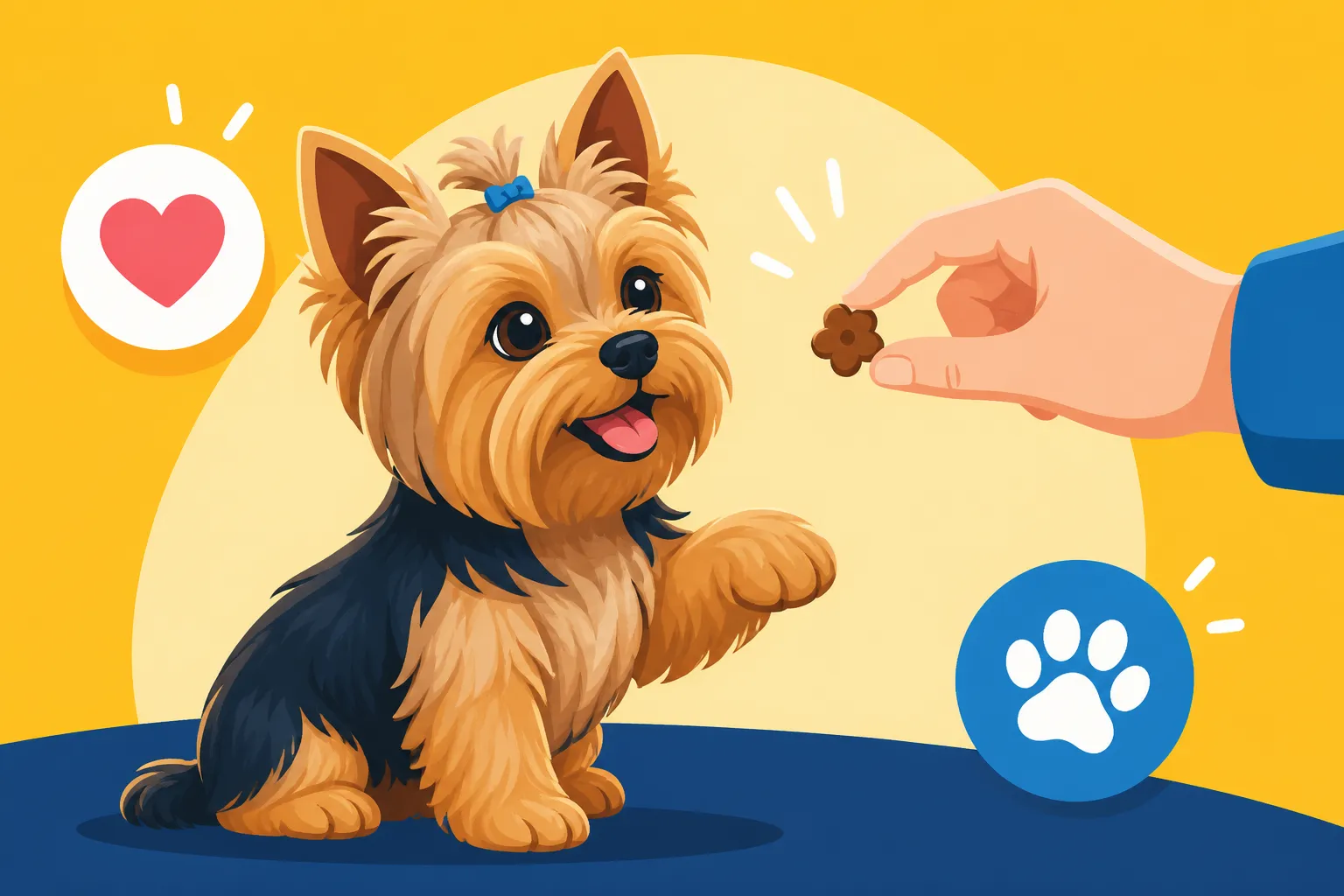
Your Yorkie will quickly learn that "click" means "a treat is coming!" Once charged, the clicker becomes a powerful communication tool. When your Yorkie performs the desired action (e.g., their bum touches the floor for a "sit"), you click at that precise moment, then immediately follow with a treat. The click marks the behavior, and the treat rewards it. This precision dramatically speeds up learning, especially for shaping complex behaviors or training at a distance. Many online training programs, such as those offered by BAXTER & Bella, incorporate clicker training as a fundamental component, guiding you through its effective use.
Creating a Positive Training Environment
Your training environment plays a huge role in your Yorkie's ability to learn. Start in a quiet, distraction-free space, like a calm room in your home. This helps your Yorkie focus solely on you and the task at hand. As they become more proficient, you can gradually introduce distractions (e.g., moving to a room with more activity, then a quiet backyard, then a park). This process is called generalization, and it teaches your Yorkie that commands apply everywhere, not just in your living room.
Ensure you are in a calm, patient, and positive mindset. Your Yorkie can pick up on your emotions. If you're stressed or frustrated, they'll likely become stressed or frustrated too. Keep sessions short (5-10 minutes, especially for puppies) and end on a positive note, even if it means asking for an easy command they know well. This keeps training fun and prevents burnout for both of you. Make sure your Yorkie is comfortable and safe; avoid slippery floors, and ensure they have access to water. For puppies, a designated Puppy Yorkshire Terrier Health Checklist area for training can be very helpful.
| Training Tool/Method | Description | Best Use for Yorkies | Benefits |
|---|---|---|---|
| High-Value Treats | Small, soft, palatable food rewards (e.g., boiled chicken, cheese, commercial training treats). | Early learning, proofing behaviors, high-distraction environments. | High motivation, quick consumption, clear reward signal. |
| Clicker | A small device producing a distinct, consistent sound. | Marking precise moments of desired behavior, shaping complex behaviors. | Precision, clarity, speeds up learning, no emotional tone. |
| Favorite Toys | Squeaky toys, small fetch balls, tug toys. | Non-food motivated Yorkies, rewarding play-based behaviors, mental stimulation. | Builds bond, provides exercise, highly motivating for some. |
| Verbal Praise | Enthusiastic "Good dog!", "Yes!", "Bravo!" with a happy tone. | Maintenance, fading out food rewards, building confidence. | Always available, reinforces bond, dogs love approval. |
| Leash & Harness | A well-fitting harness (better for Yorkies' delicate tracheas) and a lightweight leash. | Walks, preventing pulling, managing distractions, safety. | Control, safety, protects delicate necks, essential for outdoor training. |
Applying Positive Reinforcement to Common Yorkie Behaviors
Now that we've covered the basics, let's look at how positive reinforcement can be specifically applied to some of the most common training challenges and goals for Yorkies. Remember, consistency across all behaviors is key to a well-behaved companion.
Potty Training with Positive Reinforcement
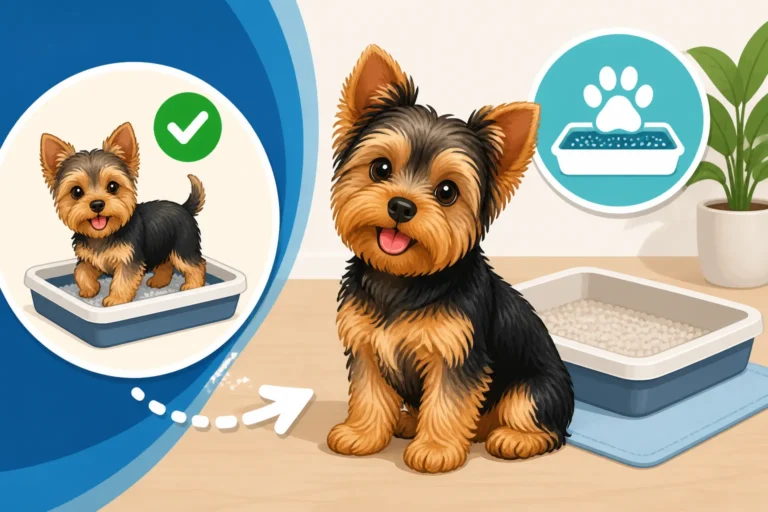
Potty training a Yorkie can feel like a marathon, not a sprint, and it's a major source of frustration for many owners. The key is to heavily reward correct potty behavior and prevent accidents indoors. Start by establishing a consistent schedule: first thing in the morning, after meals, after waking from naps, before bed, and regularly throughout the day (every 2-3 hours for puppies).
Take your Yorkie to their designated potty spot outside (or to their pee pad). Wait patiently. The instant they finish peeing or pooping, mark the behavior with an enthusiastic "Good potty!" and immediately offer a high-value treat. Don't wait until you're back inside. The reward needs to happen right there, right then, so they associate the act of eliminating in the right spot with something wonderful. If they don't go, bring them back inside and try again in 15-20 minutes, keeping them on a leash or closely supervised to prevent accidents. Accidents will happen, especially with puppies. When they do, simply clean it up without scolding or punishment. Your Yorkie won't understand why they're being punished for something that happened five minutes ago. Focus on preventing future accidents by increasing supervision and outdoor potty breaks. For more in-depth advice, explore our Yorkshire Terrier Potty Training Guide.
Mastering Basic Commands
Basic commands like sit, stay, come, and down are the foundation of good manners and safety. With positive reinforcement, teaching these becomes a fun, interactive game.
- Sit: Hold a treat near your Yorkie's nose and slowly move it back over their head. As their nose follows the treat, their bottom will naturally lower into a sit. The moment their bum touches the floor, click (if using a clicker) and say "Sit!" while giving the treat. Repeat many times.
- Stay: Once your Yorkie can sit reliably, tell them "Stay," take one step back, count to one, then step back to them, click/praise, and treat. Gradually increase distance and duration. If they break, simply reset them in the sit position and try again, reducing the difficulty.
- Come: This is a crucial safety command. Start in a quiet area. Get down on their level, say "Come!" in a happy voice, and open your arms. When they come to you, praise enthusiastically and give a high-value treat. Practice often, making "come" always associated with good things. Never use "come" to do something unpleasant (like giving medicine or ending a fun play session) as this can poison the command.
- Down: Similar to sit, hold a treat and move it from their nose down to the floor and slightly away from them. As they follow, they'll naturally lie down. Mark with a click/praise and treat the moment they lie down.
Remember to keep training sessions short and positive, ending before your Yorkie gets bored or frustrated. Aim for several short sessions a day rather than one long one. For more ideas on how to teach specific actions, check out How to Teach a Yorkie Basic Commands.
Addressing Nuisance Barking
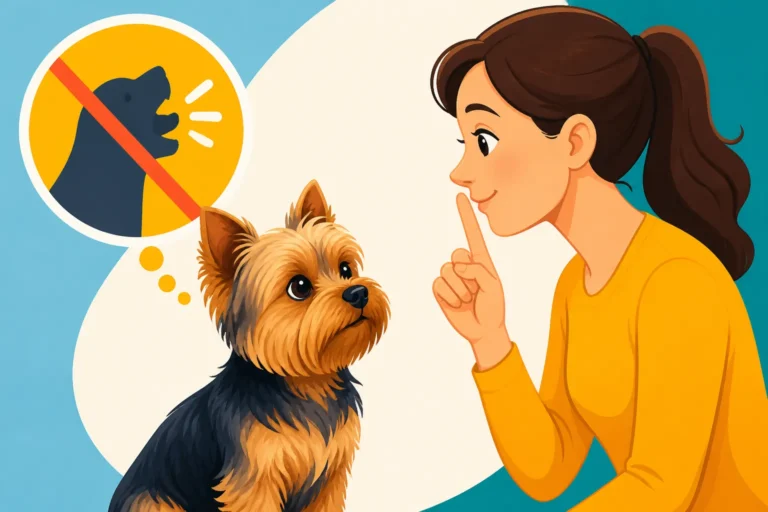
Yorkies are known for their vocal nature, and How to Stop a Yorkie from Barking can be one of the most challenging behaviors to manage. Positive reinforcement focuses on teaching an alternative, desirable behavior, or rewarding quietness.
- Identify the trigger: Does your Yorkie bark at the doorbell, passing strangers, other dogs, or when left alone?
- Reward quiet: If your Yorkie barks at the doorbell, instead of scolding, try this: when the doorbell rings (or you simulate it), before they start barking, quickly give them a treat. If they start to bark, wait for a brief moment of quiet, then immediately reward the silence. The idea is to associate the trigger (doorbell) with a positive outcome (treat) and being quiet.
- "Quiet" command: Teach a "speak" command first (reward barking on cue). Once they can "speak," give the command, let them bark once or twice, then hold a treat to their nose. The instant they stop barking to sniff the treat, say "Quiet!" and give the treat. Gradually increase the duration of quietness before rewarding.
Consistency is paramount. Everyone in the household needs to respond the same way. If one person tells them "no" and another rewards them for quiet, your Yorkie will be confused. For barking at other dogs or strangers, use counter-conditioning: pair the presence of the trigger (at a distance where your Yorkie isn't reacting) with high-value treats. Over time, your Yorkie learns to associate the trigger with good things, reducing the need to bark.
Troubleshooting and Common Challenges
Even with the best intentions, positive reinforcement training isn't always a straight line to success. There will be bumps, plateaus, and moments where you feel like you're speaking entirely different languages. That's perfectly normal, especially with a clever and sometimes headstrong breed like the Yorkshire Terrier.
When Your Yorkie Isn't Motivated
You've got your delicious treats, your clicker, and your best happy voice, but your Yorkie just isn't interested. This can be incredibly frustrating. One of the first things to check is the value of your rewards. Are you using something truly irresistible, or just their everyday kibble? For some Yorkies, chicken breast or a tiny bit of peanut butter (xylitol-free, please!) might be the only thing that gets their attention, especially when learning something new or working in a distracting environment. If your Yorkie is consistently ignoring their usual high-value treats, it’s time to find a new ultimate reward.
Another factor could be the environment itself. If there's too much going on – other pets, loud noises, exciting smells – your Yorkie might be overstimulated and unable to focus. Try moving to a quieter room, or even just turning off the TV. Lastly, consider the length of your training sessions. Yorkies, particularly puppies, have short attention spans. If sessions are too long, they'll lose interest and get bored. Keep them brief, 5-10 minutes tops, and always end on a positive note. If your Yorkie is simply not feeling it, try again later. Never force them to train when they're not engaged, as this can create negative associations with training. If you feel like your Yorkie Not Listening: What to Do, it might be a motivation issue.
Dealing with Regression
Just when you think your Yorkie has mastered a command, they suddenly "forget" it. This is known as regression, and it's a normal part of the learning process for all dogs, especially active and intelligent breeds. It's not a sign that you're a bad trainer or that your Yorkie is being spiteful; it often means they need more practice, or the context has changed.
Regression often occurs when:
- Distractions increase: Your Yorkie might "sit" perfectly in the living room, but completely forget the command at the park. This means you need to practice in increasingly distracting environments, slowly building up their ability to focus.
- The reward schedule changes too quickly: If you've gone from rewarding every single correct response to rewarding only occasionally, your Yorkie might feel the motivation has dropped. Go back to rewarding every time for a bit, then slowly transition to an intermittent schedule once the behavior is solid.
- Life changes: A new pet, a move, or even a change in your routine can cause temporary setbacks. Be patient, understand they might be feeling stressed, and go back to basics with extra positive reinforcement.
When regression happens, don't get frustrated. Simply go back a few steps in your training plan. Practice in a less distracting environment, make your rewards higher value, and be more consistent with your timing. Think of it as reviewing a lesson rather than starting over.
Overcoming Stubbornness
Ah, the infamous Yorkie stubbornness! It’s a common trait that can leave owners feeling bewildered. Your Yorkie knows "sit" but decides to stare at you defiantly instead. This isn't usually true stubbornness in the human sense; it's often a sign that your Yorkie:
- Doesn't understand what you want in that particular context.
- Doesn't see enough value in the reward for the effort requested.
- Is distracted or tired.
- Has learned that being "stubborn" sometimes gets them what they want (e.g., you eventually give up and they get to do what they wanted in the first place).
To overcome this:
- Increase reward value: Use their absolute favorite treats or toys.
- Break down the behavior: If they're struggling with "down," go back to shaping small steps.
- Don't repeat commands endlessly: Say the command once. If they don't respond, guide them into the position (luring with a treat) and reward. Don't repeat "sit, sit, sit." You want them to respond to the first command.
- Make it fun: Keep sessions short, light, and engaging. A bored Yorkie is a "stubborn" Yorkie.
- Be more interesting than the distraction: If they're ignoring you for a squirrel, you need to offer something even better. This is where your high-value rewards truly shine.
Sometimes, what looks like stubbornness is simply a lack of understanding or motivation on the Yorkie's part. It’s up to us, as their humans, to find new ways to communicate and make the desired behavior irresistible. If you're finding particular behaviors tough, it might be worth looking into resources like How to Train a Stubborn Yorkie or an online course like those offered by BAXTER & Bella to get structured guidance.
Maintaining Consistency and Continuing Education
Training isn't a one-and-done event; it's an ongoing conversation throughout your Yorkie's life. Like us, dogs learn best when there's consistency, regular practice, and new challenges to keep their minds engaged.
Integrating Training into Daily Life
The most effective training happens not just during dedicated sessions, but continuously throughout your day. Every interaction is a training opportunity. For instance, instead of just putting your Yorkie's food bowl down, ask for a "sit" or "down" first. This isn't about being bossy; it’s about reinforcing good manners and reminding your Yorkie that polite behavior leads to good things.
Here are some ways to integrate training:
- Doorway manners: Ask for a "sit" and "wait" before going through any door.
- Mealtime requests: Require a "sit" or "stay" before putting down their food bowl.
- Greeting guests: Instead of letting them jump, ask for a "sit" and reward them for calm greetings. This is critical for How to Socialize a Yorkie Puppy and ensuring they are polite with new people.
- Leash manners: Reward loose-leash walking constantly during walks.
- Quiet cues: If they're about to bark at the mail carrier, quickly redirect with a "look at me" command and reward.
The more you weave these positive interactions into your daily routine, the more natural and automatic your Yorkie's good behavior will become. This also helps generalize commands so your Yorkie understands they apply everywhere, not just when you have a treat pouch on.
Advanced Training and Mental Stimulation
Once your Yorkie has a solid grasp of basic commands, don't stop there! Yorkies are intelligent dogs who thrive on mental stimulation. Boredom can lead to destructive behaviors or excessive barking. Look for opportunities to teach more advanced tricks or engage them in dog sports.
Consider:
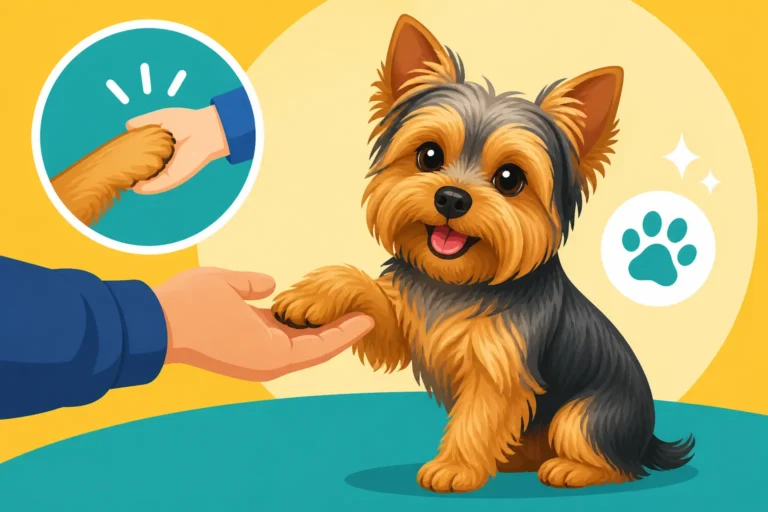
- Trick training: Teaching "shake a paw," "roll over," or "play dead" is fun and builds confidence. There are many online resources and books for How to Teach a Yorkie Tricks.
- Puzzle toys: Interactive puzzle toys, many available on Amazon, require your Yorkie to figure out how to get treats, providing excellent mental exercise.
- Agility or K9 Nose Work: Many small breeds excel at these sports. Agility provides physical and mental challenge, while Nose Work taps into their natural scenting abilities, building focus and confidence.
- Enrichment activities: Even simple games like "find the treat" (hiding treats around the house for your Yorkie to sniff out) can be incredibly engaging.
Continuous learning prevents boredom and keeps your Yorkie's mind sharp. It deepens your bond and ensures they remain a happy, well-adjusted companion.
The Lifelong Journey of a Well-Behaved Yorkie
Owning a Yorkshire Terrier is a commitment for their entire lifespan, which can often be well over a decade. This means your approach to their training and well-being needs to be just as long-term. As your Yorkie ages, their needs and abilities might change. An older Yorkie might not be able to jump as high or hold a "stay" for as long, but they can still benefit immensely from gentle positive reinforcement to keep their minds active and reinforce good habits. Yorkshire Terrier Senior Care Guide emphasizes the importance of continued mental engagement.
The foundation you build with positive reinforcement training will serve you and your Yorkie for years to come. It’s a method that fosters trust, mutual respect, and a deep understanding between you and your furry friend. By staying consistent, patient, and always seeking to understand your Yorkie’s perspective, you’ll cultivate a happy, confident, and incredibly well-behaved companion who enriches your life in countless ways. Remember, every Yorkie is an individual, and the journey is just as rewarding as the destination.
Disclaimer
Please note that the information provided in this guide is for general educational purposes only and should not be considered a substitute for professional veterinary advice or professional dog training consultation. Always consult with a qualified veterinarian or certified professional dog trainer for any specific concerns regarding your Yorkshire Terrier's health or behavior.