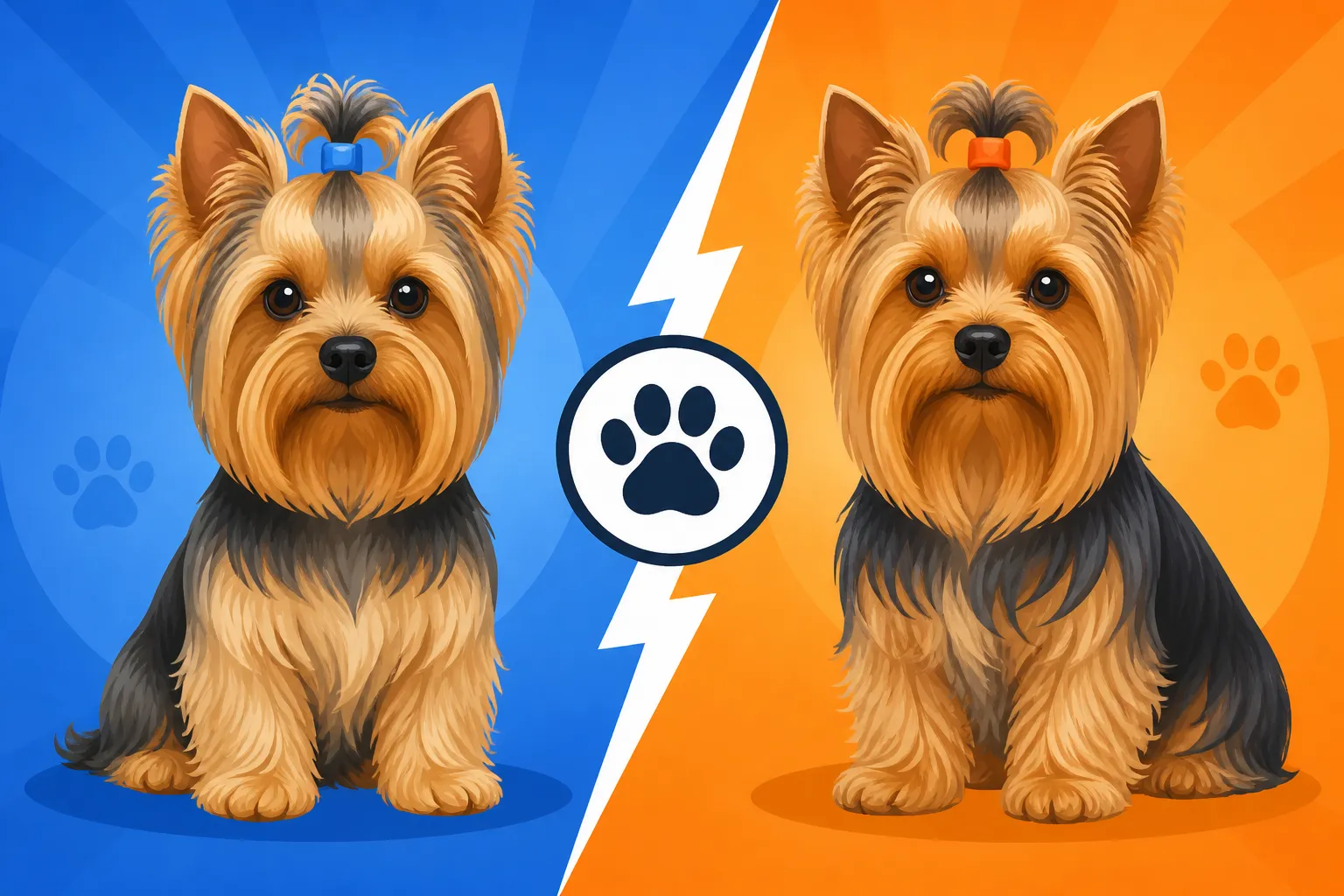
Standard Yorkie vs Standard Yorkie: Differences
It's incredibly common to hear people talk about "standard Yorkies," "teacup Yorkies," "mini Yorkies," or even "toy Yorkies," as if these are all distinct types within the breed. This can lead to a lot of confusion and frustration, especially when you're trying to understand what you're actually getting when you bring one of these precious little dogs into your home. This guide is here to clear up those misconceptions and help you understand that when it comes to the Yorkshire Terrier, there's only one official breed standard.
Debunking the Myth: There's Only One Standard Yorkshire Terrier
Let's get right to it: despite what you might hear from some sources, there isn't a "Standard Yorkie" versus another type of "Standard Yorkie." There's just the Yorkshire Terrier, defined by a very specific breed standard established by major kennel clubs like the American Kennel Club (AKC) and the Kennel Club (UK). Any other terms you encounter, such as "teacup," "mini," or "toy," are purely marketing terms. They're often used to describe dogs that are either at the smaller end of the acceptable weight range, or, unfortunately, dogs that are significantly undersized, which can come with a host of health problems.
The Official Stance from Kennel Clubs
When we talk about an "official" Yorkshire Terrier, we are referring to a dog that meets the criteria set forth by recognized kennel clubs. For instance, the AKC breed standard for the Yorkshire Terrier clearly outlines the ideal size, weight, coat, and temperament. There's no separate category for "mini" or "teacup" in their official documentation. This standard is meticulously crafted to ensure the health, integrity, and predictable characteristics of the breed. It acts as a blueprint for breeders who are striving to produce healthy, well-adjusted dogs that truly represent what a Yorkshire Terrier should be. Anything outside these guidelines is considered a deviation, not a different "type" of Yorkie.
Imagine walking into a dog show; you won't hear a judge distinguishing between a "standard" Yorkie and a "teacup" Yorkie. They are all judged against the single, unified breed standard. Dogs that fall significantly outside the weight or size parameters would be disqualified or heavily penalized, regardless of how cute they might be. This strict adherence to a single standard is crucial for maintaining the breed's health and preserving its unique qualities for future generations.
Why Marketing Terms Create Confusion
The proliferation of terms like "teacup Yorkie" is largely driven by market demand for smaller, more "portable" pets. While these terms sound adorable and imply a special, more exclusive version of the breed, they are inherently misleading. These labels are not recognized by any reputable canine registry. What a breeder might call a "teacup" is simply a very small Yorkshire Terrier, often one that weighs less than the AKC's suggested maximum of seven pounds. Sometimes, these dogs are the runts of the litter, or they may have been intentionally bred from smaller-than-average parents, sometimes at the expense of their health.
This can be incredibly confusing for prospective owners who are simply looking for a healthy pet. You might encounter a breeder advertising "Teacup Yorkies" for double the price of a "Standard Yorkie," making you believe you're getting something superior or rarer. In reality, you're often paying a premium for a dog that might be more fragile and prone to certain health issues, such as Yorkie Hypoglycemia: Emergency Signs, due to its diminutive size. It's a common frustration for people who genuinely want to understand the breed, only to be met with a myriad of unofficial descriptors.
The True Hallmarks of a Standard Yorkshire Terrier
So, if there's only one "standard," what does it actually entail? When you're looking at a true Yorkshire Terrier, you're looking for a dog that embodies a specific set of characteristics that have been carefully cultivated over generations. These aren't just aesthetic preferences; they're tied to the breed's history, health, and function as a lively, intelligent companion. Understanding these hallmarks is key to appreciating the breed for what it truly is. For a more comprehensive look, you can always refer to our Yorkshire Terrier Breed Guide: Everything to Know.
Defined Size and Weight Parameters
Perhaps the most significant and often misunderstood aspect of the Yorkshire Terrier breed standard is its size and weight. The AKC standard explicitly states that a Yorkshire Terrier should not exceed seven pounds. There is no minimum weight specified, but the common understanding among ethical breeders is that a healthy Yorkie typically weighs between four and seven pounds. A dog weighing less than four pounds might be considered a "teacup" by some, but it's important to understand that this often means the dog is more delicate and potentially predisposed to specific health concerns.
Think of it this way: seven pounds is the maximum. So, a Yorkie weighing six pounds is just as "standard" as one weighing four pounds. Both fall within the healthy, accepted range. It's the extremely small individuals that deviate from the healthy norm, not necessarily the ideal. These dogs can be more susceptible to injuries, have difficulty regulating their body temperature, and often require specialized care. If you're wondering How Big Do Yorkshire Terriers Get, the answer is usually within that 4-7 pound range for a healthy adult.
Coat Color and Texture: The Signature Silky Look
One of the most defining features of a Yorkshire Terrier is its glorious coat. The standard calls for a long, silky coat that hangs straight down on either side, with a distinct part running down the middle of the back. The texture is crucial – it should be fine, straight, and glossy, almost like human hair, not woolly or cottony. This silky texture is what makes them appear so elegant and is also what contributes to their reputation as being "hypoallergenic" (though no dog is truly 100% hypoallergenic, their hair-like coat produces less dander).
In terms of color, the standard specifies a "steel blue" and "tan" combination. The blue should be a dark, steely blue, not silvery blue, and it should extend from the back of the head to the root of the tail. The tan markings should be a rich, golden tan, darker at the roots than at the tips, and present on the head, chest, and legs. It's fascinating to watch their coat develop, as puppies are typically born black and tan, and the blue and tan coloration gradually emerges as they mature. This process of Yorkshire Terrier Coat Color Changes is a natural and beautiful part of their development. Any deviations from these specific color requirements, such as solid black, chocolate, or merle, are considered non-standard and often indicate that the dog is not a purebred Yorkshire Terrier or has been bred outside of ethical guidelines.
Distinctive Physical Features and Proportions
Beyond size and coat, the Yorkshire Terrier breed standard also details specific physical features and proportions that contribute to their overall appearance and agility. Their head should be small and rather flat on top, not round. The muzzle should not be too long, and their dark, sparkling eyes should be medium-sized, never protruding. Their small, V-shaped ears should be carried erect, set not too far apart, and often cropped in countries where it's still permitted (though natural, uncropped ears are increasingly popular and accepted).
Their body should be compact and well-proportioned, giving the impression of an alert, confident dog. The back should be level, and the tail is typically docked to a medium length and carried slightly higher than the level of the back. While tails are sometimes left natural now, the traditional docked tail is part of the historical breed standard. All these features combine to create the distinctive, plucky appearance that Yorkie lovers adore. Any significant departure from these features could indicate either a mixed breed or a Yorkie that doesn't meet the rigorous standards for conformation.
Natural Variations vs. Non-Standard Traits
Even within the strict guidelines of the breed standard, there's always a spectrum of natural variation among individuals. Just like humans, no two Yorkies are absolutely identical. However, it's crucial to distinguish between these natural, acceptable variations and traits that fall outside the standard, which might indicate poor breeding practices or even health issues. Understanding this distinction can help you appreciate the nuances of the breed while also being an informed pet owner.
Subtle Differences in Size and Build Within the Standard
As mentioned, the AKC standard allows for a weight up to seven pounds. This means a Yorkie weighing four pounds and a Yorkie weighing six-and-a-half pounds are both perfectly "standard." You might notice one appears slightly more delicate or petite, while the other seems a bit sturdier. These are natural variations within the acceptable range and don't make one "more standard" than the other. Their bone structure might vary subtly too, with some having finer bones and others a slightly more robust build, as long as it remains elegant and compact.
Similarly, while the head shape is generally consistent, there can be slight differences in the length of the muzzle or the set of the ears that still fall within the standard's allowances. These are not "differences between standard Yorkies" in the sense of different types, but rather the normal individual variations you see in any living population, all adhering to the same genetic blueprint. It's about recognizing the inherent diversity within uniformity. When looking for dog beds or crates, remember to choose products that accommodate even the smallest Yorkie, ensuring comfort and safety from retailers like Chewy.
Understanding Acceptable Coat Color Variations
While the ideal coat color is steel blue and tan, some minor variations in shade might occur. For example, the tan might be a slightly lighter gold on one Yorkie compared to another, or the blue might have a hint more black in it, especially in younger dogs. These subtle differences are often within the acceptable spectrum. However, a Yorkie with a predominantly black back, a silver-blue coat, or a very pale tan would be considered a deviation from the ideal.
What are not acceptable variations are colors like solid black, solid chocolate, merle, or parti-colors (patches of white with other colors) if registered as a purebred Yorkshire Terrier. While some breeders market these as "rare" or "designer" Yorkies, these colors indicate either mixed ancestry or the presence of genes that are not part of the recognized Yorkshire Terrier standard. For someone specifically seeking a purebred Yorkie, these colors are red flags. It's why understanding the official Yorkshire Terrier Breed Standard Explained is so vital.
Health Implications of Deviating from the Standard
When a dog falls significantly outside the breed standard, particularly in terms of being extremely undersized, it can come with serious health implications. "Teacup" Yorkies, those bred to be exceptionally small (often under 4 pounds), are often more delicate and prone to issues like Yorkshire Terrier Hypoglycemia: Signs and Care, which is dangerously low blood sugar. Their bones are more fragile, making them susceptible to fractures, and they can have more severe dental problems due to overcrowding in their tiny mouths, which can lead to Yorkshire Terrier Dental Disease: Signs and Care.
Furthermore, intentionally breeding for extreme characteristics can sometimes lead to an increased risk of Common Yorkshire Terrier Genetic Conditions such as patellar luxation or portosystemic shunt. Ethical breeders prioritize health and temperament above all else, working within the established standard to produce robust, long-lived companions. Deviating from these standards, especially by focusing solely on size for market appeal, can put the dog's well-being at significant risk and often leads to higher veterinary costs down the line. It's a sad reality that pushing for extreme physical traits often comes at a cost to the dog's health and How Long Do Yorkshire Terriers Live.
Navigating the Yorkie World: What to Look For
Bringing a Yorkshire Terrier into your home is an exciting journey, and knowing what to look for can make all the difference in finding a healthy, happy companion. Understanding that there's one breed standard is your first and best defense against misleading marketing and potentially unhealthy breeding practices. This knowledge empowers you to make informed decisions and choose a Yorkie that will thrive as a beloved member of your family.
Finding a Reputable Breeder
This is perhaps the most critical step when looking for a Yorkshire Terrier. A reputable breeder will always prioritize the health, temperament, and adherence to the breed standard in their dogs. They will never advertise "teacup" or "mini" Yorkies as distinct types; instead, they will present their puppies as Yorkshire Terriers, perhaps noting if a particular puppy is on the smaller side of the standard weight range. They will be transparent about their breeding practices, health screenings for the parent dogs, and any potential health guarantees.
Look for breeders who are affiliated with the AKC or other recognized kennel clubs and who can provide pedigrees for their dogs. They should be eager to answer your questions, allow you to visit their premises to meet the puppies and their parents, and have a clear understanding of Yorkshire Terrier Puppy Health Guide. A good breeder will also screen you to ensure their puppies are going to good homes. Avoid breeders who only communicate online, offer to ship puppies without an in-person meeting, or pressure you into a quick sale. Websites like Chewy also provide resources for new pet owners, but always vet the source of your puppy thoroughly. For detailed guidance, check out our guide on How to Find a Reputable Yorkie Breeder.
Understanding Health Guarantees
An ethical breeder will typically offer a health guarantee for their puppies, usually covering genetic conditions for a certain period, often a year or two. This guarantee reflects their confidence in the health of their breeding lines and their commitment to the welfare of their dogs. They should provide documentation of the puppy's vaccinations, deworming schedule, and a vet check-up. This is an important part of your Yorkie Puppy Buying Checklist.
Always read the health guarantee carefully and ask questions if anything is unclear. While no guarantee can completely prevent future health issues, it shows that the breeder stands behind their puppies and is willing to take responsibility if a significant genetic problem arises. Remember, a healthy puppy is worth the investment, and a breeder who prioritizes health will give you peace of mind and potentially save you from significant Yorkshire Terrier Vet Costs and Health Budget down the road. In the long run, investing in a dog from an ethical breeder who adheres to the single breed standard is the best way to ensure you welcome a healthy, vibrant Yorkshire Terrier into your life, one that truly embodies the spirit of the breed.
Comparing What "Standard Yorkie" Really Means
To sum up, when you hear "Standard Yorkie vs. Standard Yorkie," it's not about choosing between different recognized types. It's about understanding that there's one ideal, and then acknowledging the natural variations that occur within that ideal, as well as the deviations that fall outside of it. The chart below helps to illustrate this concept.
| Feature | Official Breed Standard | "Teacup/Mini" (Marketing Term) |
|---|---|---|
| Weight (Adult) | Not to exceed 7 lbs (typically 4-7 lbs) | Often under 4 lbs (not recognized by kennel clubs) |
| Size | Compact, well-proportioned, lively | Extremely small, delicate, often fragile |
| Coat Color | Steel blue and tan | Steel blue and tan (or sometimes non-standard colors like parti, merle) |
| Temperament | Intelligent, energetic, confident, companionable | Can be more prone to anxiety, nervousness due to fragility |
| Health Profile | Generally robust, but prone to breed-specific conditions | Increased risk of hypoglycemia, fractures, dental issues, organ problems |
| Breeding Goal | To meet AKC/KC standard for health, temperament, conformation | To achieve extreme small size for market appeal, often overlooking health |
| Reputable Breeder | Adheres to standard, health screening, clear guarantees | May use misleading terms, prioritize size over health, questionable practices |
Understanding these distinctions is crucial for anyone looking to bring a Yorkshire Terrier into their life. Focus on finding a healthy dog from a responsible breeder, and you'll enjoy all the wonderful traits this incredible breed has to offer.
Disclaimer
The information provided in this article is for general informational purposes only and does not constitute professional veterinary advice. Always consult with a qualified veterinarian or animal health professional for any concerns about your pet's health, diet, or treatment.