Yorkshire Terrier Breed Standard Explained
Ever found yourself staring at a Yorkie, admiring their distinct look, but secretly wondering what makes a 'perfect' Yorkshire Terrier according to the experts? It can be incredibly confusing to sift through all the nuances of what exactly defines this beloved breed, especially if you’re considering showing your dog or just want to truly understand their unique characteristics. This guide will meticulously break down the official Yorkshire Terrier breed standard, helping you understand every detail from head to tail.
Understanding the Yorkshire Terrier Breed Standard
When we talk about a "breed standard," we're not just talking about what a Yorkie generally looks like. We're delving into a precise blueprint established by organizations like the American Kennel Club (AKC). This standard serves as the ideal description of the breed, detailing everything from physical traits to temperament, and it’s the benchmark judges use in dog shows. For owners, it's a fantastic tool to appreciate the heritage and unique qualities of their beloved companions, and it also offers insights into why certain traits are valued and how they contribute to the dog's overall health and function. It’s truly about preserving the integrity of the breed for future generations.
Why Breed Standards Matter
For many, the idea of a breed standard might seem a little intimidating, or even overly rigid. But think of it this way: without a clear standard, breeds could easily drift, losing the very characteristics that define them. For the Yorkshire Terrier, this means maintaining that distinctive long, silky coat, the confident carriage, and the spirited personality we all adore. It guides responsible breeders in their efforts to produce healthy, well-tempered dogs that consistently embody the breed's ideal traits. It’s also crucial for identifying potential Yorkshire Terrier Health Problems to Know as deviations from the standard can sometimes be linked to health issues.
Beyond the show ring, the breed standard is a historical document, preserving the original intent and purpose of the breed. It ensures that the Yorkshire Terrier of today still reflects the tenacious, brave little dog developed in 19th-century Yorkshire, England. It’s not about creating "perfect" dogs in a superficial sense, but rather maintaining the health, structure, and temperament that makes a Yorkie, well, a Yorkie!
General Appearance and Temperament
The first impression of a Yorkshire Terrier, according to the standard, should be that of a long-coated toy terrier. This means a compact, well-proportioned body, exuding an air of importance. They should carry themselves with a confident, self-assured manner, despite their diminutive size. This "air of importance" is truly indicative of their terrier heritage; they might be small, but they certainly don't know it!
Their temperament is equally as important as their physical form. The standard describes them as intelligent, spirited, and eager to please. This delightful combination makes them engaging companions, though their terrier nature also means they can be quite tenacious and bold. If you've ever owned a Yorkie, you know this independent spirit well – they're not afraid to take on the world, often with a fearless bark. You can learn more about their typical behaviors in our guide on the Yorkshire Terrier Temperament and Personality.
The Distinguished Head and Expressive Features
A Yorkie’s head is one of its most defining characteristics, playing a huge role in that overall "look of importance" we just talked about. It should be rather small and flat on top, not domed like some other toy breeds. The skull should not be too prominent or round. This specific head shape contributes to their refined appearance, setting them apart.
The muzzle is another critical feature. It should not be too long, but also not too short. A medium length helps create balance with the rest of the head. When you look at a well-bred Yorkie, the muzzle should flow smoothly into the skull, without any abrupt stops or dips. This attention to proportion is key to achieving the desired expression.
Eyes, Ears, and Nose
The eyes of a Yorkshire Terrier are often described as having an intelligent, keen expression. They should be medium in size, dark in color, and sparkling with alertness. Importantly, they should not be too prominent or bulging, nor should they be too sunken. A direct, inquisitive gaze is what the standard aims for, reflecting their smart and curious nature. Tear staining, while common in many small breeds, is usually not part of the ideal appearance but something many owners deal with, often finding solutions like specialized wipes or food from retailers like Chewy.
The ears are small, V-shaped, and carried erect, not drooping. They should be set not too far apart on the head. In breeds where the ears are traditionally cropped, this is done to achieve the erect posture. However, many Yorkies today are left with natural, uncropped ears, which, if carried correctly, are still acceptable. The nose should always be black, regardless of the coat color. This provides a striking contrast and completes the distinguished facial features.
Dental Health and Jaw Structure
While not always immediately visible, the dental and jaw structure is a crucial part of the breed standard, particularly for overall health and function. Yorkies should have a regular scissor bite, meaning the upper teeth slightly overlap the lower teeth. Any deviation, such as an undershot or overshot jaw, is considered a fault. Good dental health is paramount for these tiny dogs, as they are prone to Yorkshire Terrier Dental Disease: Signs and Care.
The teeth themselves should be strong and sound, appropriate for their size. A Yorkie's small mouth can sometimes lead to overcrowding, which is why regular vet check-ups and proper dental care are so important. Breeders pay close attention to this as part of ensuring healthy puppies, as poor jaw structure can lead to problems with eating and digestion down the line. Maintaining healthy teeth, through regular brushing or dental chews, is a major part of Yorkshire Terrier Daily Care Routine.
The Iconic Coat and Body Structure
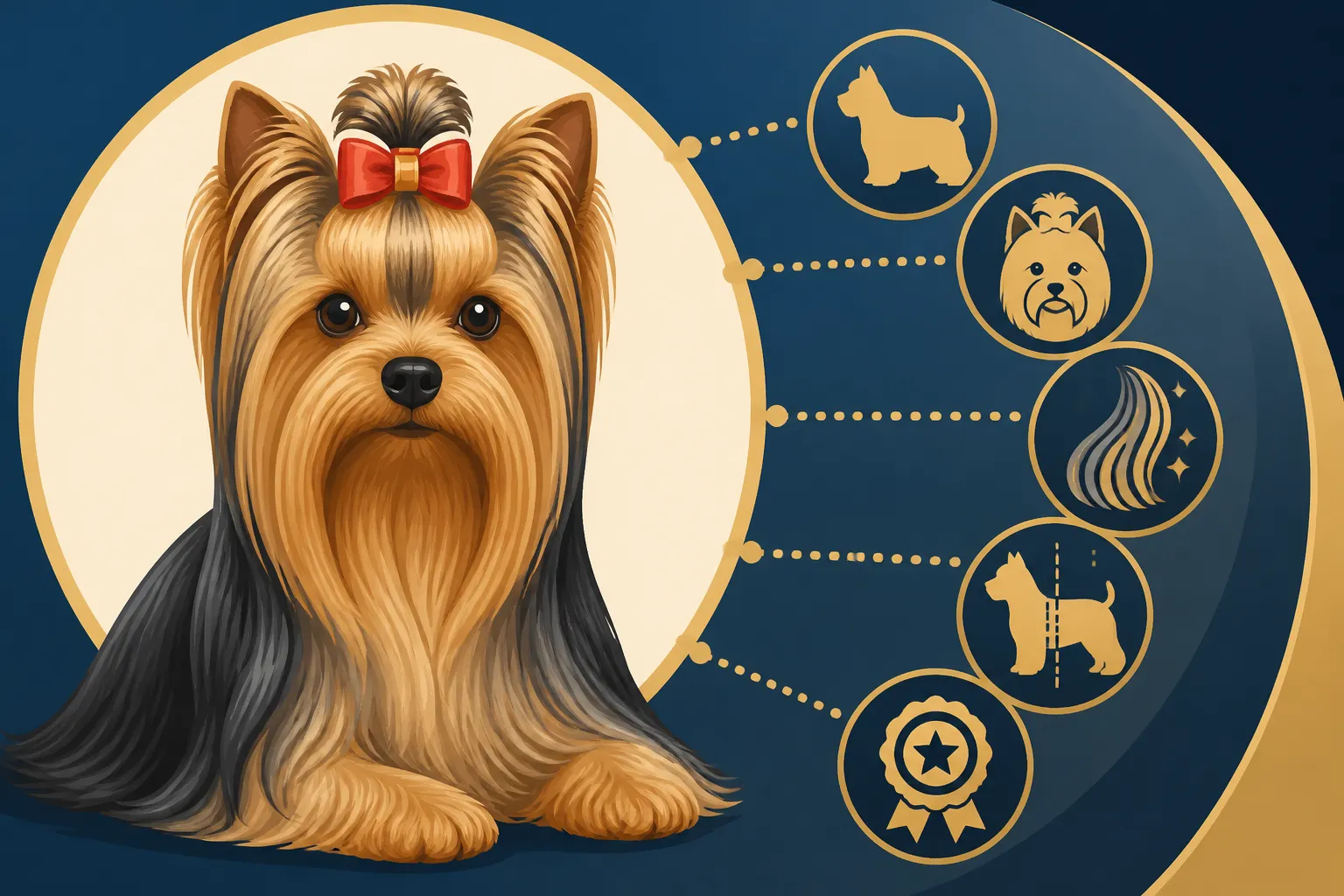
No feature defines a Yorkshire Terrier more than its magnificent coat. It’s one of the reasons they are so instantly recognizable and adored! The standard demands a coat that is long, perfectly straight (without any wave), fine, silky, and glossy. It should resemble human hair in texture, not woolly or cottony. This fine, silky texture is also what makes them a popular choice for people with allergies, as they are considered a low-shedding breed.
The desired length is quite impressive; it should fall evenly on each side of the body, parting down the middle of the back from the nose to the end of the tail. This takes diligent Yorkshire Terrier Grooming Guide and care to maintain, often involving special shampoos and conditioners.
Coat Colors and Markings
The color of a Yorkshire Terrier's coat is incredibly specific. Puppies are born black and tan, and as they mature, their coat transitions to the signature steel blue and tan. The "steel blue" should be a dark, rich, steely blue, not a silver-blue or a bluish-black. It should extend from the back of the head to the root of the tail. There should be no black hairs intermingled with the blue on the body. This is a very precise detail that distinguishes a true-to-standard Yorkie.
The tan markings are equally important. They should be rich, deep tan, not faded or light. These tan areas appear on the head, chest, and legs. On the head, the tan should be deeper at the sides, gradually lightening toward the muzzle. On the legs, the tan should not extend above the elbows or stifle. Any other colors or markings, such as a black and gold body or white patches, are considered disqualifying faults in the show ring, though they might occur in pet-quality Yorkies and are loved just the same by their families. You can explore more about Yorkshire Terrier Coat Care and Haircuts for various styles.
Body Proportions and Structure
Beneath that luxurious coat lies a compact and well-made body. The standard calls for a body that is well-proportioned, appearing strong and sturdy despite the dog's small stature. The back should be level, neither roached nor swayed. This level topline contributes to the overall elegant silhouette and efficient movement.
The ribs should be moderately sprung, meaning they curve out gently from the spine and then flatten slightly to form the chest. This provides adequate room for the lungs and heart. The chest itself should reach to the elbows. A well-constructed body is not just about aesthetics; it's fundamental to the dog's overall health and ability to move freely without strain. When looking at a Yorkie, imagine what they look like without their long coat—a sturdy, balanced little animal.
Legs, Feet, and Tail Carriage
The legs of a Yorkshire Terrier are described as perfectly straight when viewed from the front, with fine bone structure. This "fine bone" is typical of toy breeds, but it doesn't mean they are fragile. Rather, it implies a delicate yet sturdy framework. They should have ample muscle, allowing for smooth, efficient movement. The hind legs, when viewed from behind, should also be straight, with moderate angulation at the stifles (knees). Poor leg structure can sometimes lead to issues like Yorkshire Terrier Patellar Luxation: Signs and Care, a common concern in the breed.
The feet are small, round, with black toenails. The pads should be firm. These "cat-like" feet are typical of many terrier breeds and are designed for agility and quick movement. It’s important to keep their nails trimmed regularly, perhaps with clippers you might find on Chewy, to prevent discomfort and maintain proper foot health.
Tail Placement and Carriage
The tail of a Yorkshire Terrier is usually docked, traditionally cut to a medium length, and carried slightly higher than the level of the back. However, in many countries, tail docking is now banned or heavily restricted, so natural tails are becoming more common. When undocked, the tail should be carried in a lively, curved manner, balancing the dog's overall appearance.
Regardless of whether it's docked or natural, the tail should be set relatively high on the rump. A low-set tail would detract from the breed's confident and proud carriage. The way a Yorkie carries its tail really emphasizes its lively and self-important demeanor, adding to their overall charm and expression.
Coat Quality on Legs and Feet
The coat on the legs and feet, just like the body, should be a rich, deep tan. This tan should not extend above the elbow on the forelegs or the stifle on the hind legs. On the feet, the tan should be solid, without any blue hairs intermingled. This clear delineation between the blue body and tan legs is a critical part of the breed standard's color description.
The quality of the coat on the legs and feet should also mirror that of the body: long, straight, fine, and silky. This means consistent brushing and care are needed to prevent matting, especially around the paws where dirt and debris can accumulate easily. For those interested in showing, maintaining this coat quality is a huge commitment.
Movement, Size, and Weight Standards
A Yorkshire Terrier's movement is just as important as its static appearance. The standard describes it as free, energetic, and graceful. When a Yorkie moves, it should do so with purpose and fluidity, carrying its head high and its tail erect (or in a lively curve if undocked). The topline should remain level as they move, indicating good structural integrity.
Their gait should be straight, without paddling or weaving. From the front, the legs should move forward in a straight line, and from the rear, the hocks should also track straight, neither too close together nor too wide apart. This sound, efficient movement is a hallmark of a well-constructed dog and speaks volumes about their physical health and conformation. A Yorkie that moves well demonstrates its athleticism and natural confidence.
Ideal Size and Weight
The size and weight of a Yorkshire Terrier are very strictly defined, as they are a toy breed. The ideal weight is not to exceed seven pounds. This small stature is a key characteristic of the breed and differentiates them from larger terrier types. While there might be talk of "teacup" or "mini" Yorkies, these are not recognized variations within the official breed standard; the standard simply states "not to exceed seven pounds." Understanding the general Yorkshire Terrier Size, Weight, and Appearance helps ensure you're getting a dog that truly fits the breed profile.
The height is proportional to the weight, typically ranging from 7 to 8 inches at the shoulder. This compact size contributes to their "toy terrier" designation and makes them suitable for apartment living, though they still require regular exercise. You can explore How Long Do Teacup Yorkies Live if you're curious about smaller variations often advertised.
Importance of Overall Balance
Beyond individual components, the breed standard emphasizes overall balance. Every part of the Yorkie should be in harmony with the others, contributing to a cohesive and appealing picture. This means that a slightly larger Yorkie that is perfectly balanced and proportioned might be preferred over a smaller one with significant structural faults. Balance speaks to the artistry of the breed and the breeder’s skill in producing dogs that are structurally sound and aesthetically pleasing.
It's about achieving that refined elegance combined with a sturdy, confident presence. The goal is a dog that looks ready to take on the world, despite its delicate appearance. This balance is what makes a Yorkie so captivating and why understanding these nuances helps you appreciate the breed on a deeper level.
Disqualifying Faults and Common Misconceptions
When judging Yorkshire Terriers, certain deviations from the standard are considered "disqualifying faults," meaning the dog cannot be awarded points in conformation shows. These faults are typically severe departures from the breed ideal. For instance, any color other than the prescribed steel blue and tan, or the presence of any white markings, would be a disqualification. If a Yorkie has a completely different coat texture, like a wiry or cottony coat, that would also be a serious fault.
Other disqualifications include major structural problems, such as a severely undershot or overshot jaw that dramatically alters the bite. While these traits might not make a dog any less lovable as a pet, they are important for maintaining the breed's genetic integrity and preventing the propagation of undesirable traits that could impact health or function over time.
Understanding Major and Minor Faults
Beyond disqualifying faults, judges also assess major and minor faults. A major fault might significantly detract from the dog's appearance or soundness but doesn't warrant disqualification. Examples could include ears that are not perfectly erect, a slightly roached back, or tan markings that extend too high on the legs. These are still significant enough to impact a dog's placement in the show ring.
Minor faults are slight deviations that have a less impact on the overall impression, such as a slightly faded tan color on the head or a coat that is not quite as straight as desired. Understanding these distinctions helps illuminate the precise nature of breed standards and the high level of scrutiny involved in judging. For the average pet owner, these distinctions might not be a concern, but for those passionate about the breed, they offer fascinating insights into the pursuit of perfection.
Table: Key Yorkshire Terrier Breed Standard Elements
To help summarize some of the crucial elements we've discussed, here's a quick reference table. This can be a useful way to visually compare the ideal traits.
| Feature | Breed Standard Description | Common Pet Variations (Not Standard) |
|---|---|---|
| Weight | Not to exceed 7 pounds | "Teacup" Yorkies (under 4 lbs), larger Yorkies (over 7 lbs) |
| Coat Color | Dark steel blue (body), rich tan (head, chest, legs) | Black & gold, silver & tan, faded tan, white markings (Parti Yorkie) |
| Coat Texture | Long, perfectly straight, fine, silky, glossy | Wavy, cottony, woolly, coarse |
| Ears | Small, V-shaped, carried erect (natural or docked) | Dropped, semi-erect |
| Bite | Scissor bite (upper teeth overlap lower) | Undershot, overshot, level bite |
| Head | Small, flat on top, moderate muzzle length | Domed, apple-headed, overly long/short muzzle |
| Tail | Docked to medium length, carried slightly above topline | Natural length, low set, curled too tightly |
| Temperament | Intelligent, spirited, confident, eager to please | Overly timid, excessively aggressive, stubborn |
This table highlights just how specific the standard is, providing clear guidelines for what constitutes a true-to-type Yorkshire Terrier.
Living Up to the Standard: Health and Care
While the breed standard mostly focuses on physical appearance and temperament, implicitly, it also touches upon health. A well-bred Yorkie, conforming to the standard, is typically a healthy Yorkie. Responsible breeders adhere to the standard not just for looks but to ensure sound structure and good genetic health. For instance, proper jaw structure (scissor bite) is vital for dental health, preventing issues that can lead to pain and discomfort. Similarly, sound leg structure helps prevent common orthopedic problems like luxating patellas.
Ensuring your Yorkie lives a long, healthy life also involves proper care. This includes a high-quality diet, regular exercise, and consistent veterinary care. Finding the Best Dog Food for Yorkshire Terriers is key to their overall well-being. Look for brands that focus on small breeds and provide balanced nutrition, often found at places like Chewy.
The Role of Responsible Breeding
Responsible breeders are the custodians of the breed standard. They carefully select breeding pairs that embody the standard's traits, always prioritizing health, temperament, and genetic soundness. They perform health screenings for Common Yorkshire Terrier Genetic Conditions such as patellar luxation and liver shunts, ensuring that they are not passing on hereditary diseases.
Their dedication goes beyond physical appearance; they also aim to produce Yorkies with the characteristic intelligent and spirited temperament. If you're considering getting a Yorkie, choosing a reputable breeder who understands and prioritizes the breed standard is paramount. This ensures you're bringing home a puppy that not only looks like a Yorkie but also has the inherent health and temperament traits that make them such wonderful companions. A good breeder will be transparent about their practices and eager to share information about their dogs' lineage and health clearances.
Daily Care and Grooming
Maintaining a Yorkie's stunning coat to meet the standard's description is a daily commitment. Their long, silky hair needs regular brushing, often daily, to prevent mats and tangles. A high-quality slicker brush or a pin brush (available on Chewy and other pet supply sites) is essential for this task. Regular baths, using appropriate shampoos and conditioners for their fine hair, are also necessary to keep their coat clean and gleaming.
Beyond grooming, a Yorkie's overall How to Keep a Yorkshire Terrier Healthy involves daily walks, mental stimulation, and proper dental care. Even if your Yorkie isn't destined for the show ring, providing this level of care helps them feel their best and shine with that characteristic Yorkie confidence.
Disclaimer: This article is intended for informational purposes only and does not constitute veterinary advice. Always consult with a qualified veterinarian for any health concerns or before making any decisions about your pet's health or treatment.