Yorkshire Terrier Colors Explained
It's absolutely fascinating how much confusion and curiosity surround Yorkshire Terrier coat colors. Many new Yorkie parents, and even seasoned ones, can get a bit lost in the nuances of "blue and tan" versus "blue and gold," or wonder about those unique "Parti" or "chocolate" variations they sometimes see. This guide is here to unravel all those mysteries, explain the genetics behind your Yorkie's beautiful coat, and help you understand what's standard, what's not, and why it all matters.
The Standard Yorkshire Terrier Colors
When we talk about the official, recognized Yorkshire Terrier colors, we're referring to the standards set by kennel clubs like the American Kennel Club (AKC). These standards describe the ideal appearance of the breed, and for Yorkies, the colors are quite specific, often leading to a gorgeous transformation from puppyhood to adulthood.
Blue and Tan
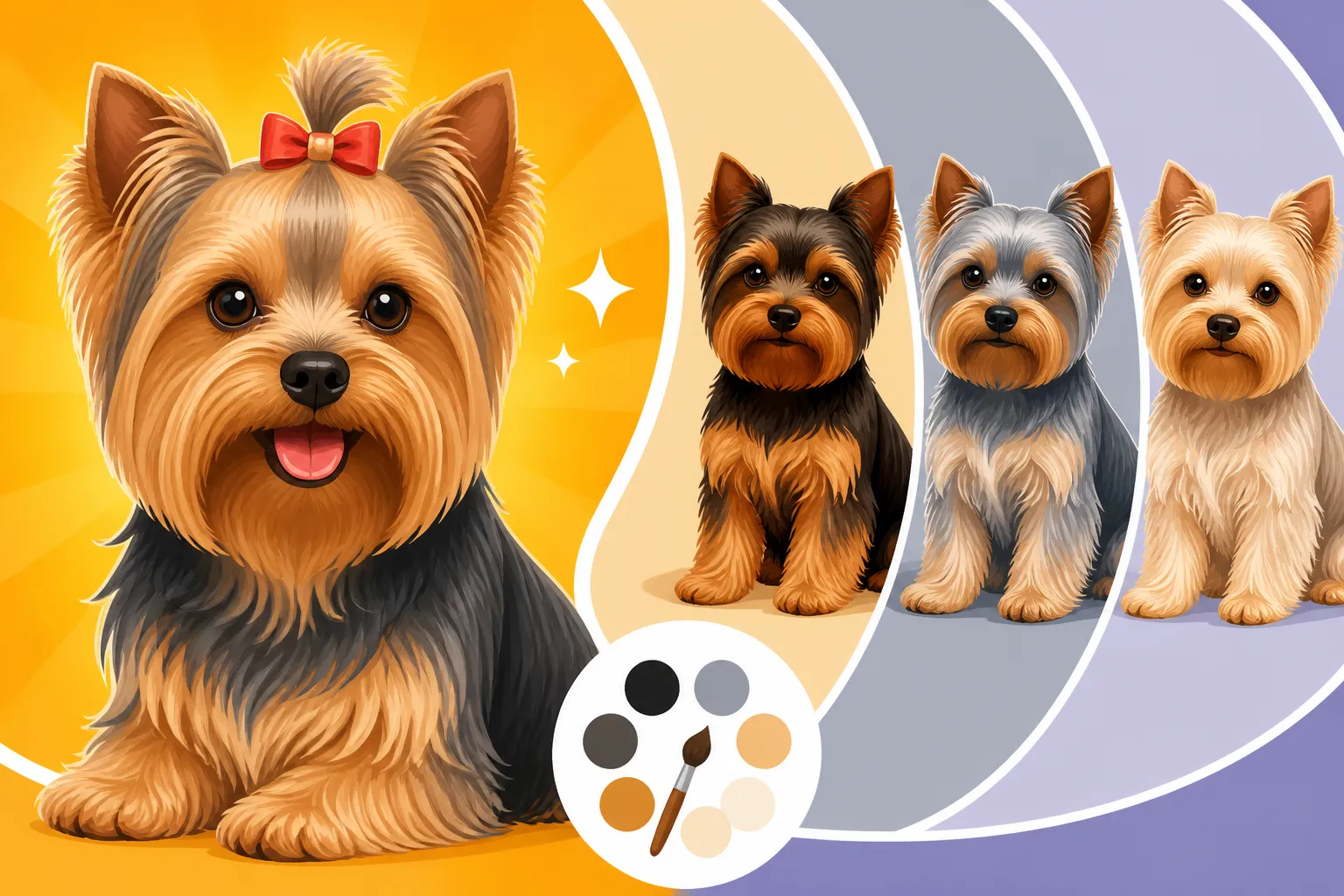
The classic, most recognized Yorkshire Terrier color combination is "blue and tan." Now, when we say "blue," don't picture a sky-blue dog! In the canine world, "blue" refers to a dark steel blue, sometimes appearing as a rich, almost black-grey, rather than a true vibrant blue. This steel blue color typically covers the body from the back of the neck to the tail. It's often described as a clear, dark steel-blue, not mingled with fawn, bronze, or black hairs. The "tan" refers to the rich, golden tan markings that appear on the head, chest, and legs.
It's a misconception that Yorkies are born with this adult blue and tan coloration. Most Yorkshire Terrier puppies are born black and tan. Over the first year or two of their lives, their coat undergoes a remarkable "clearing" process. The black hair on their body gradually lightens to that distinctive steel blue. The tan markings, however, remain, sometimes intensifying in richness. This process is part of what makes Yorkie coats so unique and contributes to their distinctive appearance. Observing a puppy transform from a dark little ball of fluff to a sophisticated blue and tan adult is truly one of the joys of owning this breed.
Blue and Gold
Closely related to blue and tan, "blue and gold" is another standard coloration for Yorkshire Terriers, often used interchangeably by many, but there are subtle distinctions. Just like with blue and tan, the "blue" here refers to the same dark, steel-blue on the body. The primary difference lies in the tan markings, which are referred to as "gold." These "gold" markings are often a deeper, richer, more vibrant golden-tan hue compared to the softer tan seen in some blue and tan Yorkies. You'll find these golden areas on the head, chest, and legs, often extending to the ear tips and along the underbelly.
The distinction between blue and tan and blue and gold can be incredibly subtle, often depending on the individual dog's specific genes, diet, and even the lighting when you're looking at them. Some breeders and enthusiasts use "gold" to specifically denote a very rich, almost copper-toned tan. For show dogs, the richness and distribution of these tan/gold markings are carefully evaluated against the breed standard. Regardless of the exact shade name, the key is the clear contrast between the dark steel-blue body and the warm, vibrant gold/tan points. This elegant combination is a hallmark of the breed and adds to their sophisticated charm. Just like their blue and tan counterparts, a blue and gold Yorkie will typically start life with a darker, often black and tan, puppy coat before maturing into their full, glorious colors. If you're looking for even more details on their overall look, our guide on Yorkshire Terrier Size, Weight, and Appearance offers a comprehensive overview.
Understanding Yorkie Coat Color Development
One of the most captivating aspects of owning a Yorkshire Terrier is watching their coat change and develop. It’s not uncommon for a new puppy parent to be surprised when their little black and tan furball starts to lighten and transform over time. This process is entirely normal and a defining characteristic of the breed.
Puppy Coat Changes
Most Yorkshire Terrier puppies are born with a deep black and tan coat. At this stage, the black is usually very dark, sometimes appearing almost solid over their bodies, with the tan markings clearly visible on their brows, muzzles, and legs. This striking contrast often leads new owners to wonder if their Yorkie will stay this color. However, this is just their adorable baby coat! The real magic begins as they mature.
Around 6 months of age, and sometimes not fully completing until they are 2-3 years old, their black coat will begin a process called "clearing" or "silvering." This means the black hairs on their body will gradually lighten, often starting from the head and spreading down their backs, eventually turning into that distinctive steel-blue color. The tan markings, particularly on the head, also tend to lighten and enrich into a golden hue. This change is gradual, and you might notice patches of transitioning color at different stages, giving your Yorkie a multi-toned appearance for a while. It's a journey of transformation that truly showcases the unique genetics of the breed. For a deeper dive into early life, check out our Yorkshire Terrier Puppy Health Guide.
The Genetics Behind Yorkie Colors
The fascinating transformation of a Yorkie's coat from black and tan to blue and gold/tan is due to specific genetic factors, primarily involving the "graying" gene (G locus). This gene is responsible for progressively diluting the intensity of black pigment as the dog ages.
Yorkies carry a gene that causes progressive graying, meaning that black pigment fades to a steel blue over time. This gene doesn't affect the tan or gold pigment, which is why those areas remain vibrant. Another gene, the "agouti" gene (A locus), determines the pattern of pigment distribution, ensuring the classic tan points appear on the black/blue body. Without getting too technical, it's a combination of these genes that dictates the eventual beautiful blue and tan or blue and gold coat. Ethical breeders focus on these genetic lines to ensure they are producing puppies that will mature into the breed standard colors. Understanding these genetic predispositions is key to appreciating the breed’s unique coloration. When looking for a puppy, finding a reputable breeder who understands these genetic nuances is crucial, as highlighted in our guide on How to Find a Reputable Yorkie Breeder.
Non-Standard Yorkshire Terrier Colors
While the classic blue and tan/gold are what you'll typically see in the show ring, the world of Yorkshire Terriers and their close relatives holds some fascinating non-standard colors. These variations, though not recognized by the AKC for the Yorkshire Terrier breed standard, are cherished by many owners and breeders for their unique beauty.
Parti Yorkies
Perhaps the most well-known "non-standard" coloration is the Parti Yorkie. A Parti Yorkshire Terrier traditionally has a coat that is tri-colored: white, black, and tan/gold. The white typically appears as a significant portion of the body, often with black patches and tan markings on the face and sometimes elsewhere. These dogs are genetically purebred Yorkshire Terriers, but they carry a recessive gene for piebald spotting (saddle marking), which results in the white patches.
For a long time, Parti Yorkies were seen as a fault in the breed standard and often culled or simply not registered. However, their unique appearance gained popularity, and many breeders began to specifically breed for this trait. Today, while the AKC does not accept Parti Yorkies under the Yorkshire Terrier breed standard for conformation shows, the lineage can be fully registered. It’s important to note that the Biewer Terrier, a separate breed developed from the Yorkshire Terrier in Germany, does have a similar tri-color pattern (white, black, and tan/gold) as its recognized standard. So, if you see a beautiful tri-colored dog that looks like a Yorkie, it might be a Parti Yorkie or a Biewer Terrier. It's crucial for prospective owners to understand the difference and what breed standard their dog adheres to.
Golden and Chocolate Yorkies
Beyond the Parti coloration, there are also Golden and Chocolate Yorkshire Terriers. These colors are much rarer and are also considered non-standard for the traditional Yorkshire Terrier breed.
- Golden Yorkies: These Yorkies typically have an all-over golden or blonde coat, without the characteristic blue/black body. The intensity of the gold can vary from a pale cream to a rich, deep gold. This coloration is due to the presence of recessive genes that prevent the development of black pigment and often lighten the tan areas considerably. They lack the "blue" gene that causes the dark steel body color.
- Chocolate Yorkies: As the name suggests, Chocolate Yorkies have a rich, warm brown or chocolate body color instead of the blue/black. Their tan/gold markings would still be present. This coloration is caused by a different recessive gene (b/b locus) that dilutes black pigment to brown.
These unique colorations are not recognized by major kennel clubs for the Yorkshire Terrier breed standard. This doesn't mean they aren't purebred; it simply means their color pattern falls outside the established appearance for show purposes. They are often highly sought after by individuals looking for a unique companion. It's essential to understand that these colors do not signify any particular health issues unique to the color, nor do they confer special qualities beyond aesthetics. Just like any other Yorkie, their health and well-being should be the primary concern, a topic explored further in Yorkshire Terrier Health Problems to Know.
Black and Tan Yorkshire Terriers
It's common to hear people talk about "black and tan" Yorkshire Terriers, and this often leads to confusion. As we discussed earlier, nearly all Yorkshire Terrier puppies are born black and tan. This is their puppy coat, and it’s a perfectly normal stage in their development. The black is usually quite dark, sometimes appearing almost jet black, with clear tan points on their face, chest, and legs.
However, a truly adult Yorkshire Terrier, according to the AKC breed standard, should not remain black and tan on its body. The black portions are expected to "clear" or "silver" into the characteristic steel-blue as the dog matures, typically by 1 to 2 years of age, sometimes even later. If an adult Yorkie retains a solid black body, it means they lack the progressive graying gene that defines the breed's standard coloration. While they might be purebred Yorkshire Terriers genetically, their color would be considered a deviation from the established breed standard for show purposes. This doesn't make them any less lovable as companions, but it's an important distinction for those interested in breed standards or showing their dogs. Understanding these developmental stages is key to appreciating the true beauty and unique evolution of the Yorkie coat.
| Color Type | Body Color | Points/Markings | AKC Standard (Yorkie) | Common Misconception | Notes |
|---|---|---|---|---|---|
| Standard | Dark Steel Blue | Rich Tan/Gold | Yes | Born with this color | Develops from black as a puppy (clearing) |
| Non-Standard | White, Black, Tan/Gold | N/A (tri-color pattern) | No | Not a purebred Yorkie | Genetically purebred, but carries piebald gene. Biewer Terrier is a separate breed with this color. |
| Non-Standard | All Gold/Blonde | N/A (uniform color) | No | Just a faded standard Yorkie | Recessive genes prevent black pigment; distinct from faded blue/tan. |
| Non-Standard | Chocolate/Brown | Tan/Gold | No | Unhealthy or mixed breed | Recessive genes dilute black to brown; healthy variations. |
| Puppy Stage | Black | Tan | N/A (transitional) | Will stay black and tan | Expected to lighten to blue as they mature. |
Debunking Common Yorkie Color Myths
With so much fascination around Yorkie colors, it's inevitable that some myths and misconceptions pop up. As a long-time Yorkie enthusiast, I've heard them all! Let's clear up some of the most common misunderstandings.
"Teacup" Yorkie Colors
You might occasionally hear someone mention "Teacup Yorkie colors," as if their tiny size somehow dictates a unique set of hues. This is a common misconception. First and foremost, "Teacup" isn't a recognized breed size or variety by any major kennel club. It's largely a marketing term used to describe exceptionally small Yorkshire Terriers, often those at the very low end of or even below the standard weight range of 4-7 pounds.
The truth is, a "Teacup" Yorkie's coat colors adhere to the exact same genetic rules and standards as any other Yorkshire Terrier. Whether they are standard-sized or exceptionally small, their coat will typically be blue and tan or blue and gold as adults, evolving from a black and tan puppy coat. Any claims of "Teacup-specific" colors like pure white, lavender, or solid red are usually indicators of misidentification, a mixed breed, or simply a marketing gimmick. The focus for any Yorkie, regardless of size, should always be on health and temperament, not on exaggerated or unproven color claims. You can learn more about the implications of size in our article on How Long Do Teacup Yorkies Live.
Color and Temperament
Another pervasive myth is that a Yorkie's coat color dictates its temperament or personality. For example, some might claim that a "Parti" Yorkie is calmer, or a "Golden" Yorkie is more playful. This is simply not true. There is no scientific basis or anecdotal evidence to suggest that the color of a Yorkshire Terrier's coat has any bearing on its personality, intelligence, or behavior.
A Yorkie's temperament and personality are shaped by a combination of genetics (their parents' temperaments, early socialization, and training), not by the color of their fur. A well-bred Yorkie from a reputable breeder, regardless of its coat color, should exhibit the characteristic traits of the breed: intelligent, confident, feisty, affectionate, and sometimes a little stubborn. Any variations in personality are due to individual differences, training, and environment, not whether they have a blue, black, or parti coat. Focus on getting to know the individual dog and its lineage rather than relying on outdated myths about color influencing character. If you're curious about what makes them tick, exploring Yorkshire Terrier Temperament and Personality can offer valuable insights.
Rare Colors Versus Healthy Breeding
The rise in popularity of "rare" Yorkie colors like chocolate or golden has unfortunately led to some less-than-ethical breeding practices. While these colors are genetically possible within the purebred Yorkshire Terrier lineage (due to recessive genes), advertising them as "rare" and charging exorbitant prices can sometimes be a red flag. The focus in responsible breeding should always be on health, temperament, and adherence to the breed standard, not on producing unique colors purely for profit.
True reputable breeders prioritize genetic health testing, proper socialization, and ensuring their puppies go to loving homes. They will be transparent about their dogs' lineage and any potential health predispositions. Chasing after a "rare color" can sometimes mean inadvertently supporting breeders who might compromise on health or other critical factors just to achieve a specific look. Always ask questions about health clearances, parentage, and the breeder's overall philosophy. A beautiful coat is wonderful, but a healthy, happy Yorkie is paramount. It’s important to research thoroughly and understand what makes a breeder truly ethical, as discussed in Yorkie Puppy Buying Checklist.
The Importance of Coat Care and How It Affects Color Perception
Beyond genetics, how you care for your Yorkshire Terrier's coat plays a massive role in how its colors appear. A well-maintained coat will look vibrant and healthy, while a neglected one can appear dull, matted, and its true colors obscured. It's not just about aesthetics; good coat care is integral to your Yorkie's overall well-being.
Grooming for Color Vibrancy
Regular grooming is essential for maintaining the health and vibrancy of your Yorkie's coat. Their long, silky hair, which is more akin to human hair than typical dog fur, requires consistent attention. Without it, tangles and mats can form, trapping dirt and oils, which makes the coat appear dull and can even cause skin irritation.
Brushing should be a daily ritual, or at least every other day, especially if your Yorkie has a longer coat. This helps distribute natural oils, remove loose hairs, and prevent matting. Using a good quality pin brush or a metal comb can make a huge difference. When brushing, always be gentle, especially around sensitive areas. Regular bathing, typically every 2-3 weeks, using a high-quality shampoo and conditioner specifically formulated for silky coats, will keep the fur clean and shiny. After bathing, thoroughly drying and brushing out the coat will prevent mats and allow its natural sheen and colors to truly pop. You'll be amazed at how much richer the blues and golds look when the coat is clean, well-conditioned, and free of tangles. For a complete guide to keeping your Yorkie looking their best, check out our Yorkshire Terrier Grooming Guide.
Environmental Factors
It's not just genetics and grooming; external environmental factors can also significantly impact how your Yorkie's coat colors present themselves. Just like human hair can change with exposure, so can your Yorkie's beautiful locks.
One major factor is sun exposure. Prolonged time in direct sunlight can lighten or "bleach" your Yorkie's tan and gold markings, sometimes making them appear faded or streaky. While a little sunshine is good for everyone, excessive exposure, especially in summer, can affect the richness of their coat. Similarly, certain diets can play a role. A diet rich in essential fatty acids (like Omega-3 and Omega-6), vitamins, and minerals supports healthy skin and a lustrous coat. A poor diet, lacking crucial nutrients, can lead to a dry, brittle coat that lacks shine and depth, making the colors appear less vibrant. Choosing a high-quality dog food, potentially with supplements like fish oil, can contribute to a healthy, glossy coat. Brands like Chewy offer a wide selection of premium dog foods and supplements that can support optimal coat health and color. Even exposure to certain chemicals, like those in some lawn treatments or harsh shampoos, can potentially alter or strip the natural oils and pigments in the fur. Being mindful of these everyday elements can help preserve your Yorkie's gorgeous, true-to-color coat. Our detailed guide on Best Dog Food for Yorkshire Terriers can help you make informed choices.
Age and Health Influences on Coat Color
As a Yorkshire Terrier ages, you might notice subtle shifts in their coat color, much like humans experience graying hair. This is a natural part of the aging process and is usually most noticeable as a further lightening or silvering of the blue areas, and sometimes a softening of the gold tones. This simply adds to their distinguished charm!
However, more significant or sudden changes in coat color, texture, or luster can sometimes be an indicator of underlying health issues. For example, a dull, brittle, or excessively shedding coat might suggest nutritional deficiencies, skin allergies, or even hormonal imbalances like hypothyroidism. Certain skin conditions or parasites can also affect the appearance of the coat, making it look unhealthy or discolored. If you notice a drastic or unexplained change in your Yorkie's coat color or quality, especially if accompanied by other symptoms like itching, hair loss, or lethargy, it’s always best to consult your veterinarian. They can help rule out any medical causes and ensure your furry friend is getting the care they need. Maintaining a regular grooming routine, as outlined in Yorkshire Terrier Coat Care and Haircuts, helps you stay attuned to these changes. Regular vet check-ups are also crucial to monitor their overall health, as discussed in When to Take Your Your Yorkie to the Vet.
Disclaimer
The information provided in this article is for general informational purposes only and is not a substitute for professional veterinary advice. Always consult with a qualified veterinarian or animal healthcare provider for any questions regarding your Yorkshire Terrier's health, medical conditions, or treatment options. Breed standards and health information can vary, and individual dogs may have unique needs.