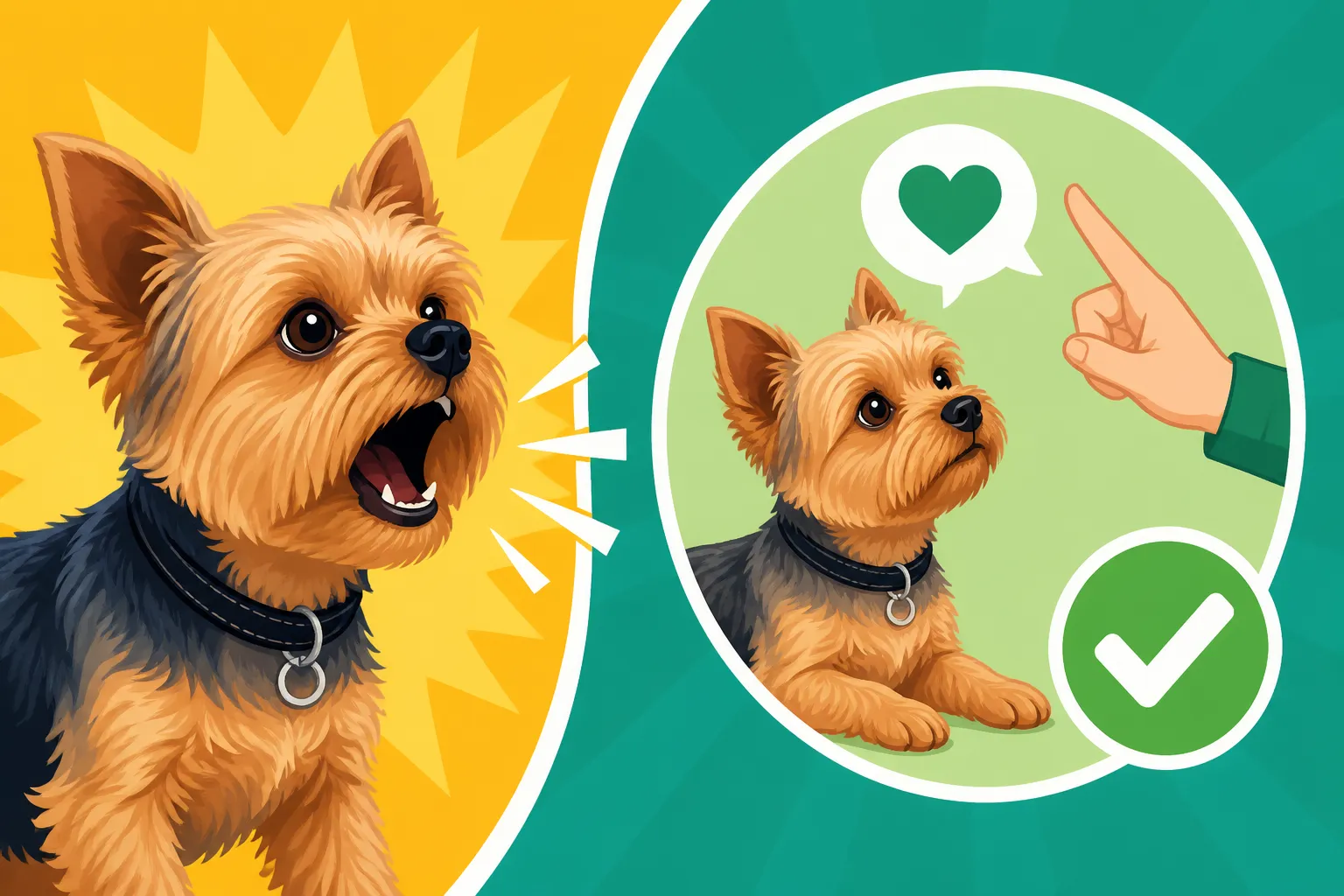
How to Fix a Yorkie Barking At Other Dogs
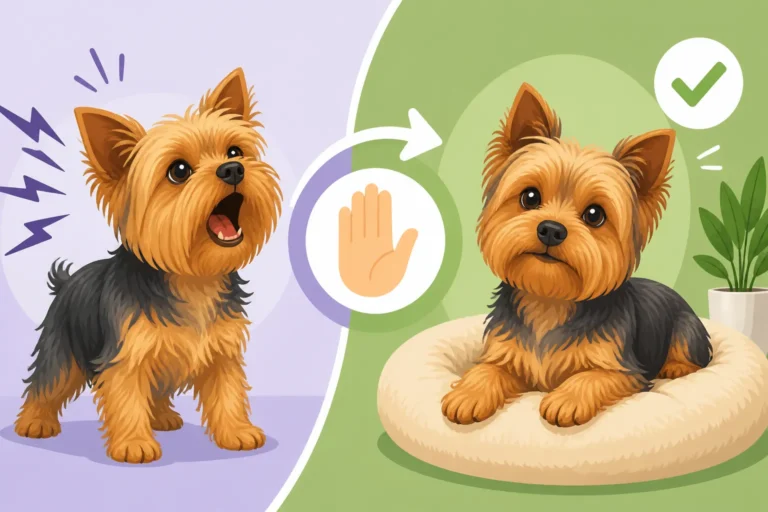
It's incredibly frustrating, and often embarrassing, when your adorable Yorkshire Terrier transforms into a barking dynamo the moment another dog appears. You're just trying to enjoy a peaceful stroll in the park or a quiet coffee on a patio, and suddenly, your little companion is letting the whole world know their feelings about their canine counterpart. This guide is here to walk you through understanding why your Yorkie barks at other dogs and, more importantly, equip you with practical, empathetic strategies to address and eventually fix this challenging behavior.
Understanding Why Your Yorkie Barks at Other Dogs
Before we can even begin to tackle the barking, we need to get to the bottom of why it's happening. Just like us, dogs don't just act out for no reason. There's always an underlying emotion or motivation driving their behavior. For our small but mighty Yorkshire Terriers, their big personalities often come with big reactions, especially when it comes to other dogs. It’s not simply about being "naughty" or "stubborn"; there's usually a deep-seated reason.
The Root Causes: Fear, Frustration, and Excitement
Many people assume a barking dog is an aggressive dog, but that's rarely the full story, particularly with Yorkies. Their barking at other dogs can stem from a complex mix of emotions.
One common cause is fear. Think about it from your Yorkie's perspective: the world is a giant place, and a larger dog, even a friendly one, can seem incredibly imposing. If your Yorkie had a negative experience with another dog as a puppy, or wasn't properly socialized, they might be genuinely scared. This fear can manifest as defensive barking, a "stay away" warning delivered at full volume. They might be trying to make themselves seem bigger or more intimidating to ward off what they perceive as a threat. We all want our little companions to feel safe, and sometimes, their barking is a desperate plea for that safety. Addressing this often means working on How to Build Confidence in a Timid Yorkie.
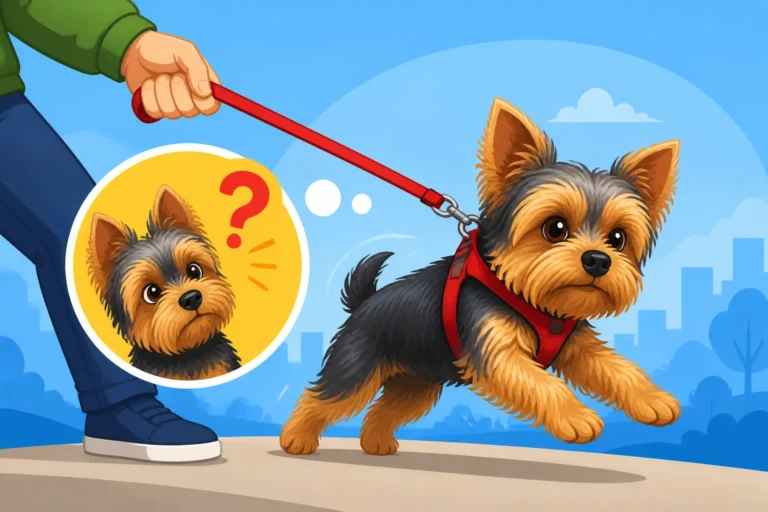
Another significant factor is frustration, often referred to as "leash reactivity." This happens when your Yorkie wants to get to the other dog – either to play, investigate, or even just say hello – but the leash prevents them. This barrier creates immense frustration, which boils over into barking. Imagine being pulled back just as you're about to greet someone interesting. You'd probably get a little huffy too! Yorkies are intelligent and often very social, so being held back can be genuinely upsetting for them. This isn't always aggression; it’s more akin to a toddler throwing a tantrum because they can't have a toy.
Then there's pure, unadulterated excitement. Some Yorkies bark because they are overjoyed to see another dog and simply haven't learned how to channel that enthusiasm appropriately. They might be thinking, "Friend! Playtime! Let's go!" and the barking is their way of expressing intense anticipation. While this seems harmless, it can still be disruptive and unsettling for the other dog and their owner. It’s also important to consider that sometimes, this excitement can quickly tip over into frustration if they can’t get to the other dog, bringing us back to the previous point. Understanding Yorkshire Terrier Temperament and Personality can help you recognize these underlying traits.
Recognizing Body Language and Triggers
To effectively help your Yorkie, becoming a detective of their body language is crucial. The way they bark isn't always the same, and the subtle cues they give before or during the barking can tell you a lot about the emotion driving it.
- Fearful barking: You might notice a tucked tail, lowered body, ears pinned back, lip licking, yawning (stress signals), or even trying to hide behind your legs. The barking might be sharp, high-pitched, and frantic. They might also try to back away or cower. Recognizing these cues helps you understand their distress.
- Frustration barking: This often involves a stiff body, ears forward, tail held high or wagging stiffly, and a direct stare. The barking might be more insistent, repetitive, and often combined with lunging or pulling on the leash. Your Yorkie might seem intensely focused on the other dog.
- Excitement barking: This is usually accompanied by a loose, wiggly body, a high, happy tail wag, ears relaxed, and an open, smiling mouth. The barking will sound less aggressive and more playful, often with bouncy movements. However, even happy barking can be overwhelming for some dogs.
Also, pay attention to the triggers. Is it only large dogs? Only dogs off-leash? Does it happen at a specific park or on a particular street? Is it worse when your Yorkie is tired or hasn't had enough Yorkshire Terrier Exercise Needs? Knowing these specifics will help you predict and manage situations. For example, if your Yorkie always barks at the Golden Retriever across the street, you can prepare yourself, or even choose a different route for a while, to prevent the behavior from becoming ingrained. This understanding is the first step in creating a plan to address Yorkshire Terrier Behavior Problems and Solutions.
Practical Strategies to Manage and Reduce Barking
Now that we've dug into the "why," let's talk about the "how." Fixing this behavior isn't an overnight process. It takes patience, consistency, and a willingness to understand and adapt to your Yorkie's needs. We're aiming for management in the short term and lasting change for the long term.
Management Techniques for Immediate Relief
While you're working on long-term training, management is your best friend. These strategies help you avoid or minimize situations where your Yorkie practices the barking behavior, which can make it stronger. Every time your Yorkie barks at another dog, they're essentially rehearsing the unwanted behavior, making it more likely to happen again.
- Increase Distance: This is the golden rule. The moment you spot another dog, increase the distance between your Yorkie and that dog. Cross the street, turn around, or step behind a bush. Find a distance where your Yorkie notices the other dog but doesn't react. This "threshold" is critical. If your Yorkie is already barking, you're too close. For some Yorkies, this might mean spotting a dog two blocks away and changing course.
- Change Routine: If you know certain times or places are packed with dogs, adjust your walking schedule. Opt for quieter routes or less busy times of day. A peaceful walk where your Yorkie doesn't have to constantly be on guard or frustrated is far more beneficial than a stressful one. This might mean getting up a little earlier or going out a little later.
- Use Visual Barriers: If you're in a situation where you can't increase distance, use a visual barrier. Step behind a parked car, a large tree, or even your own body to block your Yorkie's view of the other dog. Out of sight, often out of mind, at least temporarily. This gives you a moment to regroup and redirect.
- Engage with High-Value Treats: When you do encounter another dog at a manageable distance, immediately start feeding your Yorkie high-value treats (like small pieces of cooked chicken, cheese, or Zuke's Mini Naturals, readily available on Amazon). The goal is to change their emotional response from negative (fear, frustration) or over-the-top (excitement) to positive association with other dogs. The other dog equals yummy food!
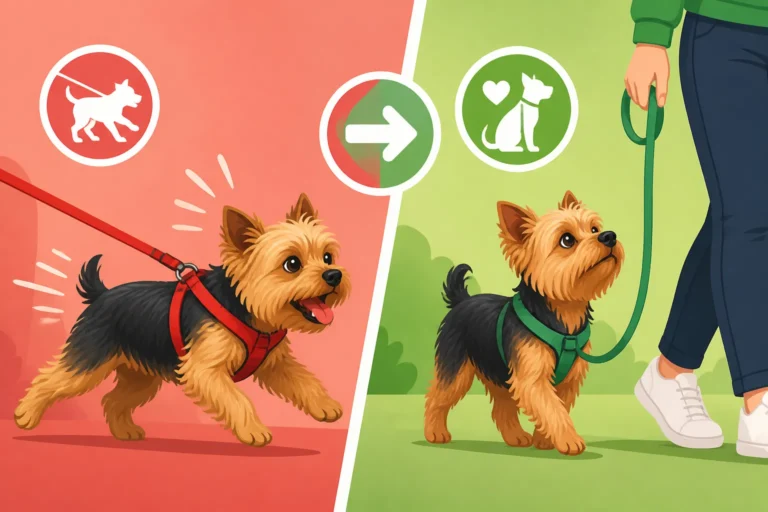
- Harness vs. Collar: For many Yorkies, a comfortable, well-fitting harness is preferable to a collar, especially if they pull or lunge. A harness distributes pressure across their chest rather than their delicate neck and trachea. This can be especially important for Yorkies who are prone to conditions like Yorkshire Terrier Tracheal Collapse: Signs and Care. A front-clip harness can also give you more control and gently redirect them without causing discomfort.
Training Methods for Long-Term Change
Management helps you in the moment, but training is what creates lasting behavioral change. These methods focus on teaching your Yorkie alternative, more appropriate responses.
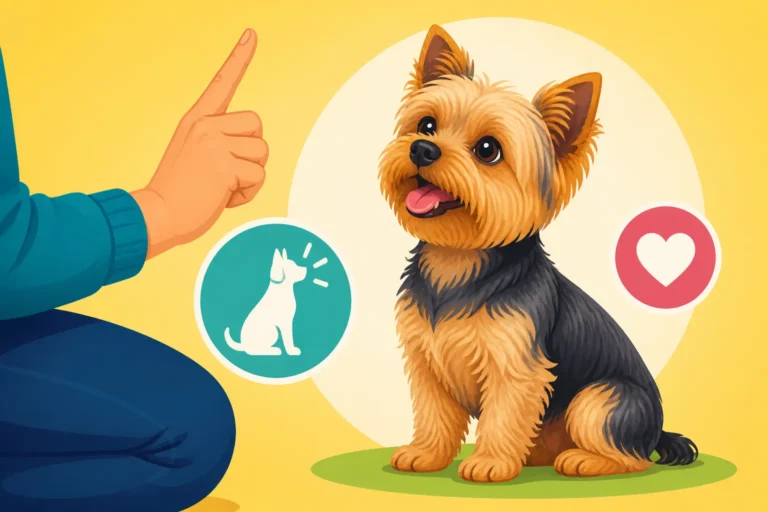
- "Look at That" (LAT) Game: This is a fantastic way to change your Yorkie's emotional response. The moment your Yorkie notices another dog (before they bark!), say "yes!" or click, and immediately give them a treat. The goal is to reward them for simply looking at the other dog and then looking back at you for a reward. You want them to associate the sight of another dog with something positive, like getting a treat from you, rather than feeling the need to bark. Start at a significant distance where they can see the dog without reacting. Over time, you can gradually decrease the distance.
- "Find It" Game: When you see another dog approaching, scatter a handful of high-value treats on the ground for your Yorkie to sniff out. This engages their nose, which is a calming and distracting activity, shifting their focus from the oncoming dog to the ground. This also creates a positive association with other dogs appearing – yay, treats just rained down!
- Teach a Strong "Watch Me" Command: A reliable "watch me" or "focus" command is invaluable. Practice this in calm environments first, rewarding generously when your Yorkie makes eye contact. Once perfected, you can use it to redirect your Yorkie's attention away from an approaching dog before they have a chance to bark. The moment they see the other dog, ask for "watch me," and reward for compliance. This is about establishing a strong connection between you and your Yorkie, even in distracting environments.
- "Leave It" Command: This command teaches your Yorkie to disengage from something they are focused on. Practice "leave it" with low-value items first, then gradually increase the distraction. This can be incredibly useful when another dog appears, allowing you to tell your Yorkie to ignore them. For a comprehensive guide, check out How to Teach a Yorkie to Leave It.
- Desensitization and Counter-Conditioning (DS/CC): This is the core principle behind many of these techniques.
- Desensitization means gradually exposing your Yorkie to the trigger (other dogs) at a very low intensity, so they don't react. Start far away, then slowly, over many sessions and days, reduce the distance.
- Counter-conditioning means changing your Yorkie's emotional response from negative to positive. Every time they see another dog, something good happens (treats, praise).
For example, set up a situation where your Yorkie can see another dog (perhaps a friend's dog) from a distance through a window, or at the very edge of a park. The moment they see the other dog without reacting, immediately give them a stream of high-value treats. As the other dog moves out of sight, the treats stop. You want them to think, "Oh, a dog! That means treats are coming!" This process takes time, sometimes weeks or months, but it's incredibly effective in changing their underlying feelings.
Consistency and Patience Are Key
I can't stress this enough: consistency is paramount. Every family member needs to be on the same page, using the same commands, and responding to barking in the same way. If one person allows the barking and another tries to stop it, your Yorkie will become confused and progress will stall. It’s better to go slower and be consistent than to rush and be inconsistent.
Patience is also crucial. Your Yorkie didn't learn to bark at other dogs overnight, and they won't unlearn it overnight either. There will be good days and bad days. Don't get discouraged by setbacks. Every little step forward is a victory. Remember that you are helping your Yorkie feel more comfortable and confident in the world, and that's a huge gift.
Essential Tools and Resources for Training Success
Having the right tools and knowing where to turn for extra help can make all the difference in your training journey. You don't have to tackle this alone, and there are some wonderful resources out there.
Recommended Training Aids
A few simple items can significantly enhance your training efforts and make walks less stressful for both of you.
- High-Value Treats and Treat Pouch: As mentioned, high-value treats are non-negotiable. Think small, soft, and smelly. Cooked chicken, hot dogs, or liver treats work wonders. A convenient treat pouch, easily found on Amazon, keeps them handy so you can reward your Yorkie instantly. Timing is everything in dog training!
- Front-Clip Harness: A good quality, comfortable front-clip harness like the Blue-9 Balance Harness or the Easy Walk Harness can provide better control than a traditional back-clip harness or a collar. When your Yorkie pulls, the leash redirects them sideways, making it harder to lunge forward and easier for you to guide them. It also minimizes pressure on their delicate trachea.
- Long Leash: While not for every situation, a longer leash (10-15 feet) can be useful in safe, open spaces to practice recall or to allow your Yorkie a bit more freedom while still being safely tethered. This can help with How to Teach a Yorkie to Come in distracting environments, gradually increasing their exposure to other dogs from a distance. However, always use with caution, especially in busy areas.
- Sound Machine/White Noise: If your Yorkie is reactive to sounds of other dogs outside your home, a white noise machine or even a fan can help muffle external noises and reduce their triggers indoors.
Recommended Training Aids for Reactive Yorkies
| Training Aid | Purpose | Benefit for Reactive Yorkies | Where to Find (Examples) |
|---|---|---|---|
| High-Value Treats | Reward desired behavior, create positive associations | Changes emotional response to other dogs (counter-conditioning) | Pet stores, Amazon |
| Treat Pouch | Keeps treats readily accessible | Ensures timely rewards, critical for effective training | Pet stores, Amazon |
| Front-Clip Harness | Provides better control, redirects pulling/lunging | Reduces pulling on leash, less strain on neck/trachea | Pet stores, Amazon |
| Long Leash (10-15ft) | Allows more freedom in safe spaces for practice | Helps practice recall and distance training safely | Pet stores, Amazon |
| Sound Machine | Muffles external noises, reduces auditory triggers | Helps reduce indoor reactivity to sounds of other dogs | Electronics stores, Amazon |
The Value of Professional Guidance
Sometimes, despite your best efforts, you might feel stuck. That's perfectly normal, and it's where professional help truly shines.
- Certified Professional Dog Trainer (CPDT-KA): A good trainer can observe your Yorkie's specific behaviors and body language, accurately diagnose the root cause, and create a customized training plan. They can provide hands-on guidance, demonstrate techniques, and help you troubleshoot challenges in real-time. Look for trainers who use positive reinforcement methods; force-based methods can exacerbate fear or reactivity in sensitive breeds like Yorkies.
- Behavioral Consultations: For more severe cases of reactivity, a veterinary behaviorist (a DVM with specialized training in animal behavior) can be incredibly helpful. They can rule out any underlying medical conditions contributing to the behavior and, if necessary, prescribe medication to help reduce anxiety, making your Yorkie more receptive to training. This isn't a quick fix, but it can be a vital component of a comprehensive treatment plan.
- Online Training Platforms: If in-person training isn't feasible, reputable online programs can offer structured guidance. Platforms like BAXTER & Bella provide comprehensive courses that cover everything from basic obedience to more complex behavioral issues, often with live Q&A sessions and community support. These resources can be a great starting point for understanding positive reinforcement techniques and applying them systematically.
- Small Group Classes for Reactive Dogs: Some training facilities offer specialized classes specifically for reactive dogs. These classes are typically held in a controlled environment with other dogs who also have reactivity issues, allowing you to practice techniques in a safe, managed setting under the guidance of a professional. This can also be a controlled way to start How to Socialize a Yorkie Puppy or an adult Yorkie who struggles with social interactions.
Maintaining Progress and Preventing Relapses
Training a reactive Yorkie is often a marathon, not a sprint. Even after you’ve made significant progress, it’s important to stay vigilant and continue reinforcing good behavior. Relapses can happen, especially if you get complacent, but with the right mindset, you can navigate them.
Consistency and Patience Are Key
This bears repeating because it's the foundation of all successful behavior modification. Think of it like this: if you stop going to the gym, your fitness level will eventually decline. The same applies to your Yorkie's training.
- Daily Practice: Integrate short, positive training sessions into your daily routine. Even five minutes of practicing "watch me" or "leave it" in a mildly distracting environment can help keep those skills sharp. The more you reinforce the desired behavior, the stronger it becomes.
- Be a Detective, Not a Punisher: When a relapse occurs – perhaps your Yorkie barks at another dog unexpectedly – resist the urge to get angry or frustrated. Instead, calmly assess the situation. What was different this time? Was the other dog closer? Was your Yorkie tired? Did you miss an early warning sign? Use it as a learning opportunity to adjust your approach for next time. Punishment can increase fear and actually worsen reactivity, making your Yorkie more likely to bark or display other defensive behaviors.
- Celebrate Small Wins: It’s easy to focus on the moments your Yorkie barks, but remember to acknowledge and celebrate every single time they don't bark, or when they choose to look at you instead of lunging. These small victories build momentum and keep you motivated. A quiet walk past another dog, even at a distance, is a huge success!
Socialization Done Right
For reactive Yorkies, "socialization" doesn't necessarily mean letting them run wild in a dog park. It means creating positive, controlled interactions or observations that help them feel safe and comfortable around other dogs.
- Controlled Exposure: Continue with your desensitization and counter-conditioning efforts. Arrange "set-ups" with a calm, friendly dog (a friend's dog is ideal) at a distance your Yorkie can handle without reacting. Gradually decrease the distance over multiple sessions, always rewarding your Yorkie for calm behavior.
- Parallel Walks: Walking your Yorkie parallel to another calm dog, at a comfortable distance, can be a great way to normalize the presence of other dogs without the pressure of direct interaction. This allows them to simply exist in the same space, creating a positive, neutral experience.
- Avoid Overwhelm: Dog parks, crowded pet stores, or busy walking trails might be too overwhelming for a reactive Yorkie. These environments can push them over their threshold, reinforcing the barking behavior. Focus on quality, controlled interactions over quantity. Until your Yorkie is consistently comfortable, it’s better to err on the side of caution.
- Continue Positive Associations: Even after significant progress, always be ready with treats when you encounter other dogs. This ongoing positive reinforcement ensures your Yorkie continues to associate other dogs with good things, maintaining their newfound calm. Consider making sure your Yorkie is never Yorkie Not Eating: When to Worry during these training moments, as a hungry dog is less likely to focus.
Remember, helping your Yorkie overcome barking at other dogs is about building trust and communication. You are teaching them that you are their reliable guide, and that other dogs don't need to be a source of fear, frustration, or unbridled chaos. With dedication and the right approach, you can help your Yorkie become a much calmer and happier companion, making those walks enjoyable for everyone involved.
Disclaimer
The information provided in this article is for general informational purposes only and is not a substitute for professional veterinary or behavioral advice. Always consult with a qualified veterinarian or certified professional dog trainer for any concerns about your Yorkie's health or behavior.