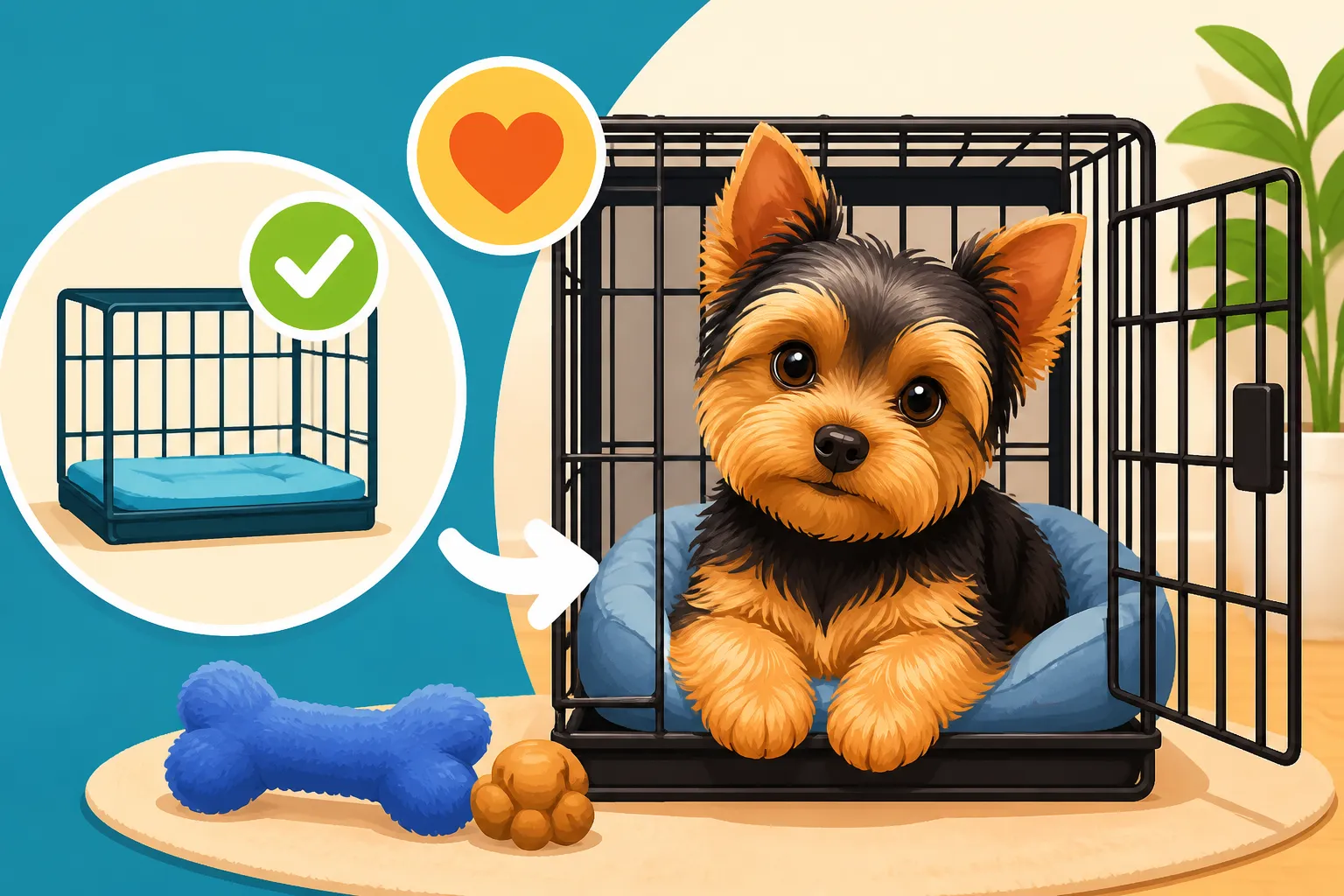
How to Crate Train a Yorkie for the First Time
Bringing a new Yorkshire Terrier into your home is an exciting adventure, but let's be honest, the idea of crate training, especially for a tiny little Yorkie, can feel a bit daunting. Many new paw-parents worry it might be cruel or that their small, sensitive companion will feel abandoned. But the truth is, a crate can become your Yorkie's safest, most comforting den. This comprehensive guide will walk you through creating a positive, stress-free crate training experience, turning that wire box into your beloved companion's favorite personal space.
Understanding Why Crate Training Benefits Your Yorkie
It's completely normal to feel a pang of guilt when you think about putting your adorable Yorkie in a crate. After all, they’re so small and seem to crave constant attention! But what often gets overlooked is that a properly introduced crate isn't a cage; it's a secure, cozy space that taps into a dog's natural instincts. Far from being a punishment, it provides a safe haven, aids in crucial training, and can even prevent some common behavioral issues down the line.
The Yorkie's Natural Den Instinct
Believe it or not, dogs are den animals at heart. In the wild, canids seek out small, enclosed spaces like caves or burrows to feel safe, rest, and raise their young. This isn't about being locked up; it's about having a private, secure retreat where they can truly relax without feeling vulnerable. For a tiny creature like a Yorkshire Terrier, the world can sometimes feel overwhelmingly large and noisy. A crate, when introduced correctly, becomes their personal sanctuary – a place where they can escape the hustle and bustle, take a nap, or just chew on a favorite toy in peace. It's a place where they feel protected from perceived threats, be it a loud vacuum cleaner or a curious toddler. You'll often find that once they've accepted it, your Yorkie will happily choose to curl up in their crate on their own initiative.
Crates for Potty Training and Safety
One of the most immediate and significant benefits of crate training a Yorkie is how it streamlines potty training. Dogs, by their very nature, are reluctant to soil their sleeping area. This innate cleanliness is your biggest ally. When your Yorkie is in their appropriately sized crate, they’re far less likely to have an accident. This dramatically reduces the opportunities for them to have accidents around your house, which is key to establishing good habits. You can learn more about this in our full Yorkshire Terrier Potty Training Guide.
Beyond potty training, a crate offers an unparalleled level of safety. Consider a scenario where you have guests over, or you're doing chores that involve potentially hazardous materials. A crate ensures your Yorkie is safe from accidental trampling, ingesting something dangerous, or escaping through an open door. It's also an invaluable tool for managing dogs who might be prone to destructive chewing when left unsupervised. Instead of coming home to chewed furniture or electrical cords (a very real danger for curious pups), you know your Yorkie has been safe and sound in their den. This safety extends to travel, too; a well-crate-trained Yorkie is much calmer and safer when traveling in a car or even on an airplane.
Choosing the Right Crate and Setting Up a Cozy Den
Before you even think about introducing your Yorkie to their new private pad, you need to make sure you have the right equipment. The "right" crate isn't just any box; it's a thoughtfully selected and prepared space that will invite rather than intimidate. This initial setup is crucial for setting the tone for a positive training experience.
Selecting the Perfect Crate Size and Type
The size of the crate is perhaps the most critical factor. Many people make the mistake of getting a crate that’s too big, especially for a small breed like a Yorkie. If the crate is too spacious, your Yorkie might decide one end is for sleeping and the other is for "potty business," defeating the purpose of potty training. Conversely, a crate that’s too small will be uncomfortable and feel like a punishment, not a den.
The ideal crate size allows your Yorkie to stand up, turn around, and lie down comfortably. For a puppy, a divider panel is an excellent feature, allowing you to expand the crate as they grow. You can find many crates with dividers on platforms like Amazon. Typically, a 18-inch to 24-inch crate is suitable for most adult Yorkshire Terriers, but always measure your individual dog. For more detailed guidance, check out our Yorkie Crate Size Guide.
When it comes to type, you have a few options:
- Wire Crates: These are popular because they offer excellent ventilation and visibility, allowing your Yorkie to see what's going on around them. They're usually collapsible for easy storage and travel.
- Plastic Crates (Airline Approved): These provide more of a "den-like" feel, as they are enclosed on most sides. They’re often preferred for travel due to their sturdiness and airline compliance.
- Soft-Sided Crates: These are lightweight and highly portable, great for temporary use or for bringing along to a friend's house. However, they're not suitable for chewers or dogs who haven't been successfully crate-trained, as they can be easily damaged.
For your first crate, a wire or plastic crate is often the most practical and durable choice, especially if you're dealing with a puppy who might chew.
Creating an Inviting and Safe Crate Environment
Once you have the right crate, the next step is to make it irresistible. Think of it as decorating a tiny, luxurious bedroom for your Yorkie.
- Soft Bedding: Line the crate with something soft and comfortable. This could be a plush dog bed, a cozy blanket, or even an old, clean t-shirt of yours that carries your scent (which can be very comforting). Just ensure whatever you choose is safe and not easily shredded or ingested.
- Safe Toys: Include a couple of safe, durable chew toys or puzzle toys. These provide mental stimulation and help associate the crate with positive, enjoyable activities. Avoid toys with small, detachable parts that could be swallowed. For ideas, check out some of the Best Toys for Yorkshire Terriers.
- Water Access: For short crate stays (a few hours), water might not be strictly necessary, but for longer periods, or if your Yorkie is prone to dehydration, consider a crate-attachable water bowl. These secure to the side of the crate and prevent spills.
- Location, Location, Location: Where you place the crate matters significantly. Initially, position it in a high-traffic area of your home, like the living room or your bedroom. This helps your Yorkie feel part of the family and prevents feelings of isolation, which can lead to negative associations. Avoid placing it in direct sunlight, near drafts, or in an area with extreme temperatures. Once your Yorkie is comfortable, you can gradually move the crate to a more permanent, quieter spot if desired, but always ensure they still feel connected to the family.
The Step-by-Step Crate Training Process for First-Timers
Crate training isn't a race; it's a marathon built on patience, positive reinforcement, and small, consistent steps. Rushing the process will only create negative associations and make future training much harder. Remember, the goal is for your Yorkie to love their crate, not merely tolerate it.
Making the Crate a Happy Place
The very first step is to introduce the crate as a fantastic, treat-dispensing, toy-filled wonderland.
- Initial Introduction (Door Open): Place the crate in your chosen location with the door securely open and tied back so it doesn't accidentally swing shut and startle your Yorkie. Scatter some high-value treats (think tiny pieces of cooked chicken or cheese) and a favorite toy just inside the entrance, and then progressively deeper inside. Let your Yorkie explore at their own pace. Never force them in.
- Positive Association: Whenever your Yorkie voluntarily goes near or into the crate, offer praise and another treat. Don't close the door yet. The key here is to build positive memories.
- Feeding Meals in the Crate: Start feeding your Yorkie's meals just inside the crate with the door wide open. If they're hesitant, place the food bowl right outside the entrance and gradually move it further in over several days. Once they're comfortable eating all their meals inside, you can gently close the door for a few seconds while they're eating, opening it immediately after they finish. This associates the crate with a highly rewarding activity. Consistency here is key, as highlighted in our Yorkshire Terrier Feeding Guide by Age.
- Enrichment: Leave tasty, long-lasting chew toys like a Kong filled with peanut butter or plain yogurt (frozen for extra challenge) inside the crate for them to discover. This helps them learn that being in the crate is a self-rewarding experience. This is where a structured program like BAXTER & Bella can really come in handy, guiding you through these initial steps with tailored advice and support.
Gradual Door Closing and Short Stays
Once your Yorkie is happy to enter the crate for treats or meals with the door open, it’s time to start introducing short periods with the door closed.
- Short Closures: Lure your Yorkie into the crate with a treat or a chew toy. As they settle, gently close the door. Count to five, then immediately open the door and praise them. Don't make a big fuss; a calm, cheerful "good boy/girl!" is enough. Repeat this several times a day, gradually increasing the duration of the door closure.
- Leaving the Room: When your Yorkie is comfortable with the door closed for a minute or two, try stepping out of sight for a few seconds. Walk into another room, then immediately return and open the crate door. Again, praise calm behavior. Slowly extend the time you're out of sight.
- "Crate" Command: Start associating a verbal cue like "Crate!" or "Kennel!" when you guide them into the crate with a treat. This helps build a routine and makes it easier for them to understand what you want.
- Practice Short Stays: Once your Yorkie can tolerate being in the crate with you out of sight for 10-15 minutes, you can start practicing longer, but still short, stays. Make sure they’ve had a potty break beforehand. Give them a special chew toy they only get in the crate. Leave for 30 minutes, then an hour. Always return before they start whining or becoming anxious if possible. The goal is to avoid letting them get distressed. If they start to whine, wait for a brief pause in the whining before opening the door, otherwise, you'll teach them that whining gets them out.
Overnight and Longer Crate Stays
Nighttime can be a particularly anxious time for a small puppy or a newly adopted Yorkie.
- Nighttime Setup: For the first few nights, place the crate right next to your bed. Being able to see and hear you provides immense comfort and reassurance. If your Yorkie is a puppy, they might still need potty breaks during the night. Set an alarm to take them out every 3-4 hours initially. Take them directly outside, do not engage in play, let them do their business, then immediately back into the crate.
- Establishing a Routine: Always take your Yorkie out for a potty break right before bedtime, and immediately upon waking up in the morning. This routine helps prevent accidents and reinforces good habits. For a Yorkie Puppy Training Schedule, crate time is an integral part.
- Gradual Independence: Once your Yorkie is sleeping soundly through the night in the crate next to your bed, you can, if you wish, gradually move the crate further away, eventually to its permanent spot. Some owners prefer to keep the crate in their bedroom indefinitely, and that's perfectly fine too.
- Daytime Stays: For longer periods during the day, such as when you're at work, ensure your Yorkie has plenty of exercise and a potty break right before going into the crate. Provide a mentally stimulating chew toy. If you'll be gone for more than 4-5 hours, especially with a puppy, consider hiring a dog walker or arranging for someone to let your Yorkie out for a potty break and some playtime. You can find many practical solutions for how to achieve this in our article on How to Leave a Yorkie Home Alone. Remember, a crate should never be used for excessively long periods, as it can cause stress and inhibit proper development.
| Crate Training Step | Duration/Frequency | Key Action | Goal |
|---|---|---|---|
| Initial Introduction | Several times daily | Scatter treats, open door, no pressure | Crate equals positive discovery |
| Feeding in Crate | All meals | Door open, gradually close briefly | Crate equals food and comfort |
| Short Closures | 5-10 times daily | Close door for seconds, then minutes | Yorkie tolerates door closed calmly |
| Leaving Sight | 3-5 times daily | Leave room for short periods, return | Yorkie comfortable being alone for short spells |
| Extended Daytime Stays | Gradual increase | Potty break, chew toy, 30 min to 4 hours (max) | Yorkie rests calmly during absence |
| Overnight Stays | Every night | Crate near bed, potty breaks for puppies | Yorkie sleeps through the night in their den |
Troubleshooting Common Yorkie Crate Training Challenges
Even with the best intentions and a solid plan, you might encounter a few bumps in the road. Yorkies, being intelligent and sometimes opinionated little dogs, can present unique challenges. It’s important to address these issues with patience and understanding, rather than frustration.
Dealing with Whining, Barking, and Potty Accidents
This is perhaps the most common challenge, especially with puppies. It’s crucial to understand why your Yorkie is vocalizing or having accidents.
-
Whining/Barking:
- "I need to potty": A puppy, or even an adult Yorkie, might whine or bark if they genuinely need to relieve themselves. This often sounds more urgent, frantic, or consistent. If you suspect this, especially if it's been a while since their last break, take them out immediately. If they potty, great! Praise them quietly and put them back in the crate.
- "I want attention/I want out": This is where it gets tricky. If you respond to every whine or bark by letting them out or giving them attention, you're teaching them that being vocal gets them what they want. In this case, you must ignore the whining/barking. It might be hard, and it might get worse before it gets better (the "extinction burst"), but consistency is key. Wait for a brief moment of silence before opening the crate door. This teaches them that calm behavior is rewarded. Our article, Why Is My Yorkie Whining, delves deeper into this behavior.
- Underlying Anxiety: If the barking or whining is constant, intense, and accompanied by other signs of distress (pacing, drooling, destructive behavior when let out), it could be a sign of separation anxiety. In such cases, you’ll need a more comprehensive approach, which you can explore in our Yorkshire Terrier Separation Anxiety Solutions guide.
-
Potty Accidents in the Crate:
- Crate is too big: This is the most common reason. If your Yorkie can potty in one corner and sleep in another, the crate is too large. Use a divider to reduce the space.
- Too long in the crate: Even an adult Yorkie can't hold it indefinitely. Puppies need very frequent potty breaks (every 2-4 hours, depending on age). Ensure you're not leaving your Yorkie in the crate for longer than they can reasonably hold their bladder.
- Not enough potty breaks before crating: Always ensure your Yorkie has completely emptied their bladder and bowels immediately before being crated.
- Cleaning: Thoroughly clean any accidents with an enzymatic cleaner (like Nature's Miracle or Rocco & Roxie Supply Co. Stain & Odor Eliminator). This neutralizes odors, preventing your Yorkie from being drawn back to the same spot to mark it again.
Overcoming Fear or Reluctance to Crate
Some Yorkies, especially if they've had a negative past experience or are naturally more timid, might be genuinely fearful of the crate.
- Go Back to Basics: If your Yorkie is showing strong reluctance or fear, you've likely moved too quickly. Revert to the very first step: open door, treats scattered inside, no pressure. Spend more time at this stage, focusing purely on positive associations.
- High-Value Rewards: Use the absolute best treats they can imagine – tiny pieces of hot dog, cheese, or cooked meat. These are powerful motivators.
- Play Games: Make the crate part of fun games. Toss toys into the crate and let them retrieve them. Don't close the door, just make it a fun "target."
- Never Use as Punishment: This is a golden rule of crate training. The crate should never be associated with anything negative. If you use it for time-outs or discipline, your Yorkie will learn to fear and resent it, undoing all your hard work. It must remain their safe space.
- Build Positive Associations Elsewhere: If the crate itself is too scary, work on building confidence in other areas first. Once your Yorkie is generally more trusting and secure, you can reintroduce the crate training steps slowly.
- Consider a Different Crate Type: If you started with a wire crate and your Yorkie seems overwhelmed by the openness, try a plastic, more den-like crate. Conversely, if a plastic crate feels too confined, a wire one might offer more visibility and ease their anxiety.
Remember, crate training takes time, consistency, and a whole lot of love. Every Yorkie is an individual, and some will pick it up faster than others. Be patient, stay positive, and you'll soon find that your Yorkie sees their crate as a cherished, cozy retreat.
Disclaimer
The information provided in this article is for general informational purposes only and is not a substitute for professional veterinary advice. Always consult with a qualified veterinarian or professional dog trainer for any health concerns or before making any decisions related to your pet's care and training.