Clicker Training a Yorkie
Let's be honest, getting a tiny, spirited Yorkshire Terrier to cooperate with training can feel like trying to herd a glitter-bomb-wielding squirrel. Many Yorkie parents wrestle with common frustrations, whether it's persistent barking, tricky potty training, or just getting their little dynamo to pay attention. This comprehensive guide is here to shed light on clicker training, a positive and highly effective method that can transform your Yorkie's behavior and deepen your bond, turning those training challenges into joyful successes.
Understanding the Yorkie Temperament and Why It Matters for Training
Before we dive into the "how-to" of clicker training, it's really important to understand the unique little personality packed into every Yorkshire Terrier. These aren't just small dogs; they're big dogs in tiny packages, with all the accompanying intelligence, sass, and sometimes, stubbornness, that can make training an adventure. Acknowledging their natural inclinations will help you approach training with the right mindset and expectations, setting both of you up for success.
The Spirited Nature of Yorkshire Terriers
Yorkies are renowned for their bold, confident, and sometimes feisty dispositions. They were originally bred to be ratters in textile mills, which means they have an innate prey drive, a sharp intellect, and a surprising amount of tenacity. This intelligence can be a double-edged sword: they learn quickly, but they can also learn bad habits just as fast if not guided properly. Their desire for attention, coupled with a strong-willed streak, means they thrive on engagement and positive reinforcement, often becoming bored or defiant if training is monotonous or harsh.
Think about it this way: your Yorkie isn't trying to be difficult; they're simply expressing their natural instincts. They love being the center of attention and can be quite clever at getting what they want. If a particular behavior, like barking at the mail carrier, consistently gets a reaction from you, even negative attention, they might perceive it as a reward and repeat it. Understanding this strong drive for interaction and approval is key to channeling their energy into productive training sessions, rather than battling against their inherent spiritedness.
Common Yorkie Training Challenges
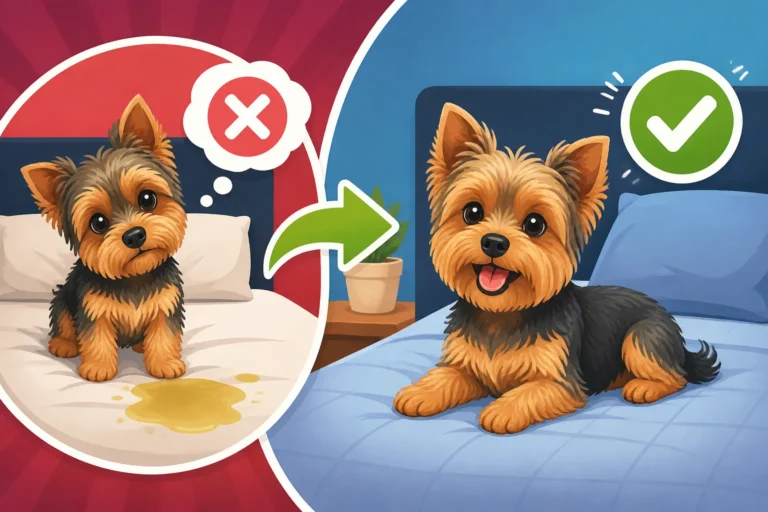
Given their spirited nature, Yorkies often present a few common hurdles for their human companions. Potty training, for instance, can be notoriously challenging for these tiny pups, partly due to their small bladders and partly because they can be quite particular about where they eliminate. You might find yourself constantly cleaning up accidents, feeling like you're taking one step forward and two steps back. For more on this, you might want to read our guide on Yorkshire Terrier Potty Training Guide.
Another frequent complaint is excessive barking. Yorkies are naturally vocal and often see themselves as formidable guardians of their home and family. A knock at the door, a squirrel outside the window, or even just a sudden sound can trigger a cascade of yaps and barks. While their enthusiasm is endearing, constant barking can be disruptive. Beyond that, many Yorkies exhibit what's often termed "small dog syndrome," where they might act aggressively or fearfully towards larger dogs or strangers, feeling the need to compensate for their size. This is where a consistent approach to training, focusing on positive reinforcement rather than punitive measures, becomes not just helpful, but absolutely essential to building a confident, well-adjusted companion. It truly shows why understanding Yorkshire Terrier Behavior Problems and Solutions is crucial for any Yorkie owner.
What Exactly is Clicker Training for Dogs?
If you've heard the term "clicker training" tossed around, but aren't entirely sure what it entails, don't worry. It's not some magic bullet, but it's an incredibly powerful and humane method that leverages how dogs naturally learn. At its heart, clicker training is about clear communication and positive reinforcement, creating a language between you and your Yorkie that's easy for them to understand.
The Science Behind the Click
Clicker training is rooted deeply in the principles of learning theory, specifically classical and operant conditioning. The "click" itself isn't what trains your dog; rather, it's a precisely timed, consistent marker signal. Imagine it as a camera shutter capturing the exact moment your dog performs the desired action.
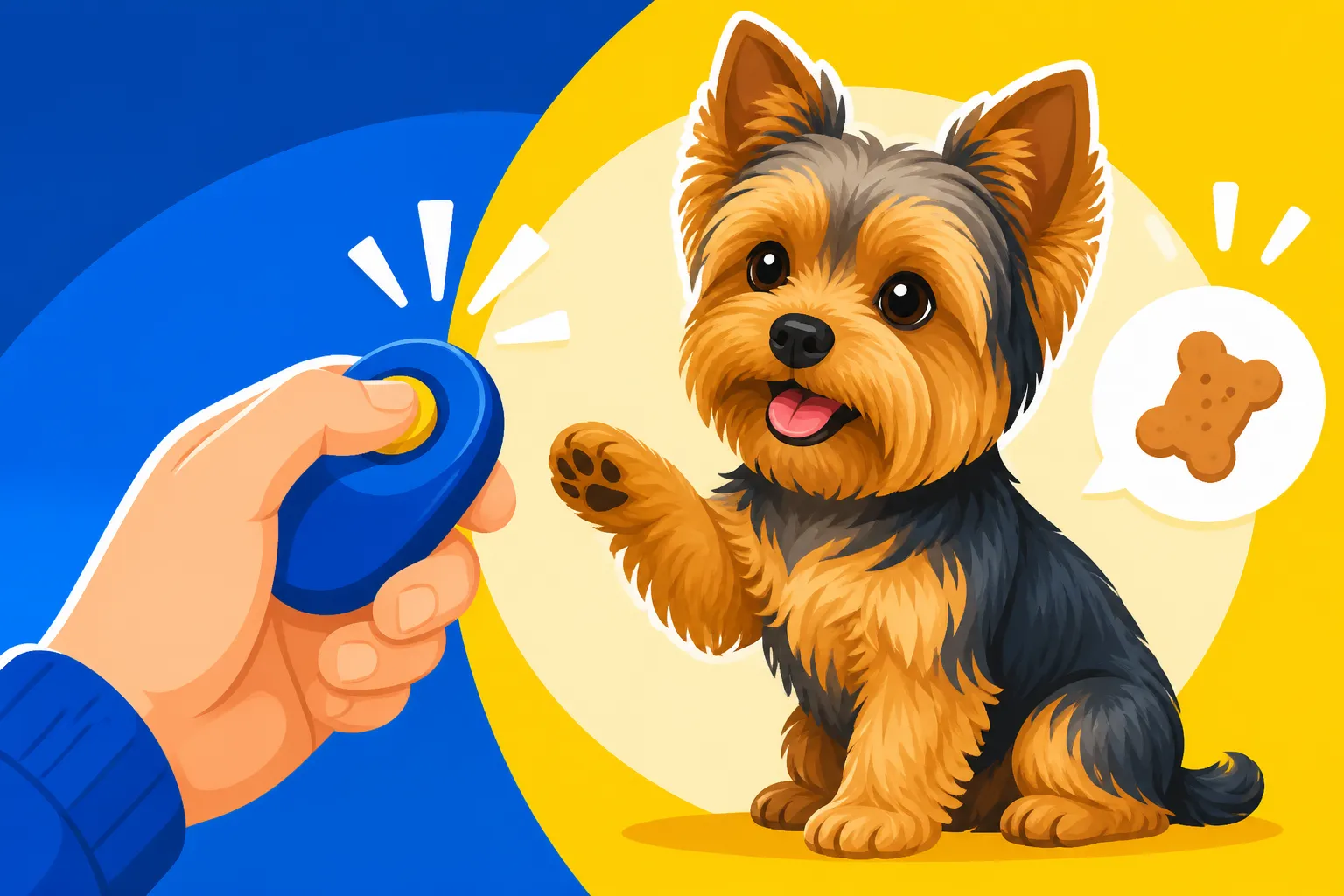
Here's how it works: you first "load" the clicker, meaning you create a strong, positive association between the sound of the click and a reward. When your Yorkie hears the click, they learn that they've done something right, and a treat is coming immediately after. This precise timing is crucial. Dogs live in the moment, and a delay of even a few seconds can mean they associate the reward with something else they just did – perhaps scratching an ear or looking away – rather than the intended behavior. This immediate feedback helps your Yorkie understand exactly what action earned them that reward, making learning incredibly efficient and clear. It’s a powerful tool that makes it easier for them to grasp what you're asking, making training for even complex tasks more approachable.
Essential Clicker Training Equipment
The beauty of clicker training is its simplicity and minimal equipment needs. You really only need two main things, both readily available:
- A Clicker: This small device makes a distinct, consistent sound. There are many types of clickers out there, from box clickers to button clickers, and even some that attach to your wrist. The specific type isn't as important as its consistent sound. You can easily find various options on platforms like Amazon, often bundled with training guides or treat pouches.
- High-Value Treats: These are small, soft, and incredibly enticing morsels that your Yorkie absolutely loves. Think tiny pieces of cooked chicken, cheese, or specialized training treats. They should be easy for your Yorkie to swallow quickly, so they don't get distracted by chewing. The higher the value of the treat, the more motivated your Yorkie will be to work for it. Some great examples are Zukes Mini Naturals or Wellness Soft Puppy Bites. Make sure they are tiny – pea-sized or smaller – so you don't overfeed your little dog during a session. Our guide to Best Treats for Training a Yorkie can give you even more ideas.
Beyond these two essentials, a quiet, distraction-free space to start your training sessions is highly beneficial. For puppies, having a comfortable, designated training area can make a huge difference, as outlined in our Yorkshire Terrier Puppy Training Schedule article. As your Yorkie progresses, you can gradually introduce more distractions to help them generalize their learned behaviors.
Getting Started with Clicker Training Your Yorkie
The initial steps of clicker training are fundamental. It’s all about creating that strong, positive association and then gently guiding your Yorkie to understand what actions earn them that wonderful click and treat. Patience and consistency are your best friends here.
Loading the Clicker: Making the Connection
Before you can teach any commands, your Yorkie needs to understand what the clicker means. This process is called "loading the clicker." It’s straightforward but crucial:
- Find a Quiet Space: Choose a room where there are minimal distractions. You want your Yorkie’s full attention, even if only for a few minutes at a time.
- Get Your Supplies Ready: Hold your clicker in one hand and a handful of those high-value treats in the other.
- Click and Treat: Simply click the clicker, and immediately (within one second!) follow it with a treat. Don't ask for any specific behavior yet. The goal is purely to associate the sound with something good.
- Repeat: Do this 10-20 times in short sessions, a few times a day. You might notice your Yorkie's ears perk up at the click, or their eyes light up in anticipation of the treat. This is a sign they're making the connection.
- Test the Association: After a few sessions, try clicking when your Yorkie isn't looking directly at you. If they immediately turn their head towards you, expecting a treat, you've successfully loaded the clicker! They now understand that the click means "good job, something yummy is coming."
Remember, the click is always followed by a treat in this initial phase. Never click without giving a treat during loading, as this can dilute the positive association you're trying to build.
First Commands: Sit, Stay, and Come
Once your Yorkie understands the click, you can start using it to teach basic commands. These are building blocks for more complex behaviors and are vital for your dog's safety and your peace of mind.
Teaching "Sit"
This is often one of the easiest commands to teach with a clicker:
- Lure: Hold a high-value treat near your Yorkie's nose. Slowly move the treat upwards and slightly back over their head, towards their tail. As their nose follows the treat, their rear end will naturally lower into a sit position.
- Click and Treat: The instant their bottom touches the ground, click! and then give them the treat.
- Repeat: Practice this 5-10 times in short bursts. As your Yorkie starts to understand, you'll see them anticipate the sit.
- Add the Verbal Cue: Once they're reliably sitting with the lure, start saying "Sit" just as you move the treat. Eventually, you can fade out the lure, and your Yorkie will sit on verbal cue alone.
- Practice: Keep sessions short, fun, and end on a positive note. For a more in-depth look at this, check out our guide on How to Teach a Yorkie to Sit.
Teaching "Stay"
"Stay" is a fantastic command for safety and self-control, especially for a curious Yorkie.
- Start with a Sit: Ask your Yorkie to sit.
- Take One Step Back: Once they are sitting, say "Stay" and take one small step backward.
- Click and Treat: If they remain in the sit position, click! and immediately return to them to give the treat. Do not make them come to you for the treat initially.
- Gradually Increase Distance and Duration: Slowly increase the distance you step away and the amount of time you ask them to stay. If they break the stay, calmly reset them in the original position and try again, making it easier this time.
- Release Cue: Introduce a release word like "Okay!" or "Free!" followed by a treat and praise, signaling they can move. This helps them understand when the command is over. Our article on How to Teach a Yorkie to Stay provides further detail.
Teaching "Come"
A reliable "Come" (or recall) can be a lifesaver for your Yorkie:
- Start Close: In a quiet area, crouch down a few feet from your Yorkie.
- Call and Reward: Say your Yorkie's name, then "Come!" The moment they start moving towards you, click! As they reach you, give them a jackpot of treats and praise.
- Make it Fun: Make coming to you the most rewarding thing ever! Act excited and offer high-value rewards.
- Practice in Different Environments: Gradually introduce distractions and practice in different areas, always starting easy and building up.
- Never Punish Recall: If your Yorkie doesn't come, don't scold them. You want them to associate "Come!" with safety and rewards, not punishment. For more extensive tips, see How to Teach a Yorkie to Come.
Advancing Your Yorkie's Clicker Training
Once your Yorkie has mastered the basics, the real fun begins! Clicker training is an incredibly versatile tool that allows you to teach a vast array of behaviors, from fun tricks to practical skills. It encourages your Yorkie to think and participate actively in the learning process.
Shaping Complex Behaviors
"Shaping" is a core concept in clicker training that involves breaking down a desired behavior into tiny, achievable steps and clicking and treating for each successful approximation. It's like building a complex Lego model one brick at a time. This method is especially powerful for teaching things that can't be easily lured, or for Yorkies who are keen thinkers.
Let's consider teaching your Yorkie to "fetch" a specific toy and bring it back to you. This is a multi-step behavior:
- Looking at the toy: Click and treat when your Yorkie simply looks at the toy.
- Moving towards the toy: Click and treat when they take a step towards it.
- Nosing the toy: Click and treat when they touch it with their nose.
- Mouthing the toy: Click and treat when they pick it up.
- Holding the toy: Increase the duration they hold it before you click and treat.
- Bringing it a step towards you: Click and treat for moving it in your direction.
- Dropping it in your hand: Finally, click and treat for the full behavior.
Each small step is rewarded, building their confidence and understanding. You're not waiting for perfection; you're rewarding progress. This process makes even seemingly impossible tricks approachable for your clever little Yorkie. It’s also incredibly mentally stimulating, which is fantastic for these intelligent dogs.
Fading the Clicker and Introducing Verbal Cues
The clicker is a powerful teaching tool, but it's not meant to be used forever. Eventually, you want your Yorkie to respond to verbal cues or hand signals without needing the click every single time. This is called "fading" the clicker.
The fading process typically happens naturally as your Yorkie becomes more proficient. Once your Yorkie reliably performs a behavior on cue (e.g., they sit every time you say "Sit" and give the hand signal), you can start to phase out the clicker:
- Introduce the Cue First: Always give the verbal cue (e.g., "Sit") before your Yorkie performs the action.
- Reward the Action: As your Yorkie performs the action, initially you'll still click and treat.
- Vary the Click: Start to skip the click for some correct responses, especially for behaviors they know well. Continue to treat, though. The treat is still a reinforcement, just without the immediate marker of the click.
- Maintain the Treat: Continue to treat good behavior, even without the click. Over time, you can also start to vary your treats – sometimes a high-value treat, sometimes a piece of kibble, sometimes just enthusiastic praise and a quick scratch behind the ears. This teaches them that rewards can come in many forms and keeps them motivated.
- Practice in Different Scenarios: Practice the command with just the verbal cue in various locations and with different levels of distraction. This helps your Yorkie generalize the behavior, understanding that "Sit" means sit, no matter where they are. This builds on the foundation laid out in sections like Yorkshire Terrier Obedience Training Basics.
Remember, the goal is not to eliminate treats entirely, but to make them unpredictable and to incorporate other forms of reinforcement. Your praise and affection should always be a part of their reward system.
Common Clicker Training Pitfalls and How to Avoid Them
While clicker training is highly effective, it's not foolproof. There are common mistakes new trainers make that can hinder progress or confuse your Yorkie. Being aware of these pitfalls will help you navigate your training journey more smoothly and keep both you and your furry friend happy and motivated.
Timing is Everything: Precision with the Click
The single most crucial aspect of clicker training is timing. The click marks the exact moment your Yorkie performs the desired action. Even a split-second delay can confuse your dog. Imagine if you were rewarded for touching a button, but the "ding!" came just as you were pulling your hand away – you wouldn't know if you were being rewarded for touching it or for moving your hand.
- The Problem: Clicking too late means your Yorkie might associate the click with the action after the correct behavior, or even with getting up from a "sit" rather than the "sit" itself. Clicking too early means they might not have fully completed the behavior.
- The Fix: Practice your timing. Hold the clicker in your dominant hand, ready to press. As soon as you see the desired behavior, click instantly. It should feel almost reflexive. If you're struggling, practice by yourself first. Toss a ball and click the moment it hits the ground. This helps train your timing. You can even record yourself training to review and refine your clicks. Remember, the click is a marker, like a photograph; it captures the perfect moment.
Over-Reliance on Treats and Lack of Generalization
While treats are essential motivators, especially in the beginning, you don't want your Yorkie to only perform behaviors when a treat is visible. You also want them to perform those behaviors in different environments, not just in your quiet living room.
- The Problem: If your Yorkie only works for food you’re holding, or only in one specific spot, they haven't truly learned the command; they've learned to follow the treat or associate the command with that single environment. This can lead to frustration when they "don't listen" in new places or when you don't have food on hand.
- The Fix:
- Vary Rewards: Once your Yorkie is consistently performing a behavior, start varying the rewards. Sometimes a treat, sometimes enthusiastic verbal praise ("Good boy/girl!"), a favorite toy, or a quick game of tug. This teaches them that good behavior leads to many different good things, not just food.
- Fade Visible Treats: As they become proficient, stop holding the treat in your hand. Give the cue, then click and treat from your pocket or treat pouch. This helps them respond to the cue itself, not the sight of the food.
- Generalize: Practice in different locations: the backyard, a friend's house, a park (once safe and appropriate). Start with low-distraction environments and gradually increase the challenge. Always go back to basics in a new place if needed, making it easier until they understand the command applies everywhere. For instance, after mastering "sit" at home, practice it at the park. If they struggle, go back to a less distracting area or shorten the session. This principle applies to all training, including more specific issues like How to Stop a Yorkie from Pulling On Leash. Consider a structured program like BAXTER & Bella, which offers comprehensive online dog training that emphasizes these positive reinforcement and generalization techniques, helping you apply clicker training principles effectively in various real-world scenarios.
Benefits of Clicker Training for Yorkshire Terriers
Clicker training isn't just another way to teach commands; it's a philosophy that fosters a deeper, more positive relationship between you and your Yorkie. Especially for a sensitive yet spirited breed like the Yorkshire Terrier, the benefits extend far beyond simply learning "sit" or "stay."
Strengthening the Bond and Building Confidence
One of the most profound advantages of clicker training is how it transforms your relationship with your Yorkie. It’s a purely positive method, meaning there’s no punishment, no intimidation, and no harsh corrections. This builds immense trust and strengthens the bond you share. Your Yorkie learns that training sessions are fun, rewarding, and a chance to earn praise and treats from their favorite human.
Think about it from your Yorkie's perspective: you're communicating in a clear, consistent language that tells them exactly when they've done something right. This clarity reduces confusion and frustration, leading to a dog who is eager to learn and participate. For a small breed that can sometimes feel overwhelmed in a big world, this positive reinforcement builds incredible confidence. They learn that trying new things and offering behaviors is a good way to earn rewards, making them more resilient, adaptable, and self-assured. It turns training into a cooperative game rather than a chore, making the experience enjoyable for both ends of the leash. This positive approach is truly key to How to Keep a Yorkshire Terrier Healthy mentally and emotionally.
Solving Specific Yorkie Behavior Problems with the Clicker
Many common behavioral challenges in Yorkies can be effectively addressed and even prevented using clicker training principles. Because it focuses on rewarding desired behaviors, it naturally helps redirect unwanted ones.
-
Excessive Barking: Instead of scolding your Yorkie for barking, use the clicker to reward quiet behavior. For example, if your Yorkie barks at the doorbell, you can practice by ringing the doorbell softly. The moment your Yorkie doesn't bark, or barks once and then is quiet, click! and treat. You're teaching them that being calm and quiet in the face of triggers earns them a reward. Over time, you can extend the duration of quietness before the click. This is a far more effective method than simply yelling "No!" which often just adds to their excitement or confusion. Our article How to Stop a Yorkie from Barking offers more strategies on this.
-
Nipping or Biting: Yorkie puppies, like all puppies, go through a nipping phase. An adult Yorkie might nip if overstimulated, fearful, or seeking attention. With the clicker, you can teach "soft mouth" or redirect nipping behavior. If your Yorkie nips, immediately stop interaction (ignore them for a few seconds). When they offer a calm mouth or lick instead of a nip, click! and reward heavily. You're teaching them that gentle interactions earn positive attention, while nipping makes the fun stop. This method is explored further in How to Handle a Yorkie That Bites When Picked Up and How to Stop a Yorkie from Nipping.
-
Separation Anxiety: While complex, clicker training can play a role in managing milder cases of separation anxiety by building positive associations with alone time. Start by clicking and treating for calm behavior when you simply move towards the door, then for being calm when you open the door, then when you step outside for a second and return. You are gradually desensitizing them and associating your departures with positive experiences, reducing the anxiety often seen in Yorkshire Terrier Separation Anxiety Solutions.
The table below provides a concise comparison between clicker training and more traditional, older training methods, highlighting why clicker training is often preferred for sensitive and intelligent breeds like Yorkies.
| Feature | Clicker Training | Traditional Training (Older Methods) |
|---|---|---|
| Communication | Clear, precise marker (click) for exact behavior. | Often relies on verbal cues, leash corrections, or punishment. |
| Reinforcement | Primarily positive (treats, praise, play). | Can involve a mix of positive and aversive (punishment, force) methods. |
| Dog's Motivation | Eager to learn, offers behaviors, builds confidence. | May learn to avoid punishment, can create stress or fear. |
| Bond Building | Strengthens trust, fosters a cooperative relationship. | Can strain the bond, lead to resentment or anxiety. |
| Error Handling | Ignores unwanted behavior, redirects, re-trains. | Corrects or punishes unwanted behavior. |
| Learning Speed | Often faster and more reliable due to clarity. | Can be slower, less consistent due to ambiguity. |
| Problem Solving | Encourages dog to think and problem-solve. | Dog primarily reacts to trainer's commands. |
As you can see, clicker training offers a more humane, effective, and enjoyable path for both you and your beloved Yorkshire Terrier.
Disclaimer
The information provided in this article is for general informational purposes only and is not a substitute for professional veterinary advice, diagnosis, or treatment. Always seek the advice of your veterinarian or other qualified animal health provider with any questions you may have regarding a medical condition or treatment for your Yorkshire Terrier.