How to Stop a Yorkie from Pulling On Leash
It’s incredibly frustrating, and let’s be honest, sometimes a little embarrassing, when your adorable, pint-sized Yorkshire Terrier transforms into a tiny pulling machine the moment their paws hit the pavement. That seemingly endless tug-of-war on every walk isn't just annoying; it can be downright dangerous for a small breed with a delicate trachea. This comprehensive guide is here to walk you through the practical, empathetic steps to transform those dreaded walks into enjoyable, loose-leash strolls you both look forward to.
Understanding Why Your Yorkie Pulls
Before we dive into solutions, it's really helpful to understand why your Yorkie might be pulling on the leash. They’re not doing it to spite you, I promise! Often, it stems from a combination of natural instincts, lack of proper guidance, or even underlying emotional states. Pinpointing the root cause can make your training efforts much more targeted and effective.
The Terrier Instinct
Let's face it, Yorkies are terriers at heart, and that means they come with a strong-willed, adventurous, and often curious personality packed into their small frames. Terriers were originally bred to hunt vermin, and that instinctual drive to explore, chase, and investigate every new scent or movement doesn’t just vanish when they become pampered house pets. When your Yorkie pulls, they're often simply trying to get to that interesting smell, that squirrel they spotted, or just generally trying to lead the expedition because, in their mind, they're the fearless leader. This innate drive can be powerful, making loose-leash walking feel like an uphill battle, especially if they weren't taught otherwise from a young age.
Lack of Early Training
Many Yorkie owners, myself included at one point, might assume that because their dog is small, they don’t need the same rigorous leash training as a larger breed. This couldn't be further from the truth! In fact, their small size often makes them more susceptible to developing bad habits like pulling if not addressed early. If your Yorkie wasn't introduced to a leash and harness in a positive way during their puppyhood, or if consistent loose-leash walking wasn't a part of their Yorkshire Terrier Puppy Training Schedule, they simply haven't learned the "rules" of walking politely beside you. They see the leash as a means to pull forward, not a tool for connection and communication, leading to a habit that becomes harder to break over time.
Over-Excitement or Fear
Sometimes, pulling isn't just about being in charge or exploring; it can be a manifestation of strong emotions. An over-excited Yorkie, perhaps seeing another dog or smelling something incredibly interesting, might pull frantically to get to their object of interest. Think of it as pure, unadulterated joy or curiosity overwhelming their ability to stay calm. On the flip side, a fearful or anxious Yorkie might pull desperately to try and get away from something that scares them – a loud truck, an unfamiliar person, or even just the general hustle and bustle of a busy street. Understanding if their pulling comes from a place of intense excitement or fear can help you tailor your approach, perhaps by choosing quieter walking routes initially or working on desensitization.
Essential Gear for Leash Training Success
Before you even step out the door for your next walk, having the right equipment can make a monumental difference in your success. For small breeds like Yorkies, the choice of harness and leash isn't just about comfort; it's about safety and effectiveness in training. Using the wrong gear can actually exacerbate pulling or, worse, cause injury.
The Right Harness Makes All the Difference
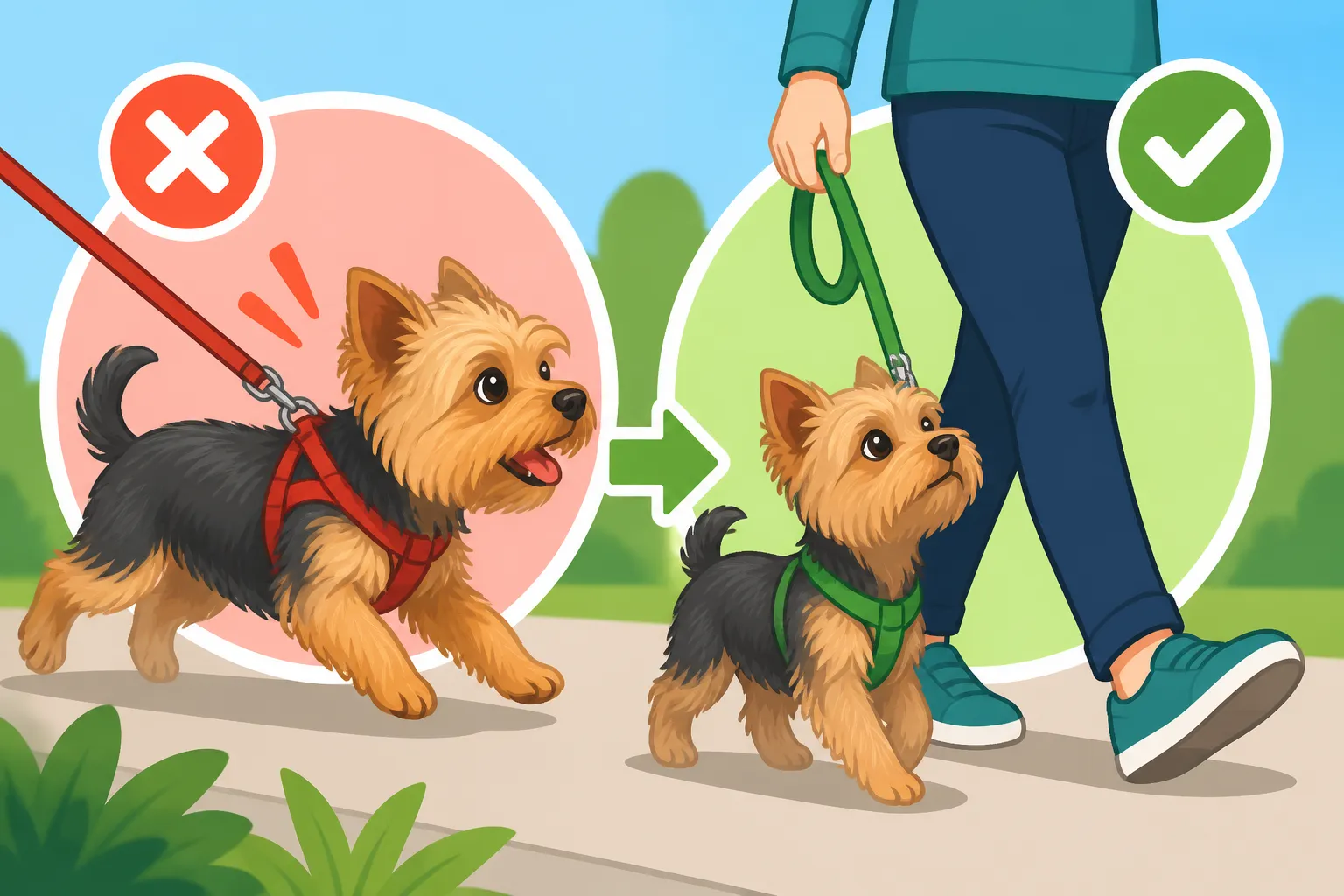
For Yorkies, I cannot stress enough how important a well-fitting harness is – and specifically, the right type of harness. A standard collar, while common, puts direct pressure on your Yorkie's delicate throat and neck when they pull. This can lead to serious issues like a Yorkshire Terrier Collapsing Trachea: Signs and Care or other breathing difficulties. Instead, look for a harness that:
- Distributes Pressure: A good harness will distribute any pressure across their chest and shoulders, rather than their neck.
- Fits Snugly but Comfortably: It should be snug enough that they can't slip out, but loose enough that it doesn't chafe or restrict movement. You should be able to fit two fingers underneath the straps.
- Offers a Front-Clip Option: This is the game-changer for pullers. A front-clip harness, where the leash attaches at your dog's chest, redirects their forward momentum back towards you when they pull. Instead of letting them pull straight ahead like a sled dog, they get gently turned to the side, making it much harder and less rewarding to pull. Brands like Ruffwear, Blue-9 Balance, or even simpler options you can find on Amazon often offer excellent front-clip designs perfect for smaller breeds.
Avoid harnesses that only clip on the back for a dedicated puller, as these can actually encourage pulling by allowing them to lean into the harness and use their full body weight. For a deeper dive into options, check out our guide on the Best Harness for a Yorkshire Terrier.
Choosing the Best Leash
When it comes to leashes, simplicity and appropriate length are your best friends.
- Standard 4-6 Foot Leash: A traditional nylon or leather leash, ideally 4-6 feet in length, offers you the most control and communication. This length allows your Yorkie enough room to explore safely while keeping them close enough for you to reinforce good behavior.
- Avoid Retractable Leashes: While they might seem convenient, retractable leashes are often a hindrance to loose-leash training. They teach your dog that pulling is necessary to gain distance, as the leash tension is constant. They also offer less control in sudden situations and can be dangerous if the leash snags or the thin cord breaks. Stick to a fixed-length leash for training purposes.
- Comfortable Grip: Choose a leash with a comfortable handle for you. You’ll be holding it a lot, so something that doesn't dig into your hand when your Yorkie inevitably tests the boundaries is crucial.
Step-by-Step Training Techniques to Prevent Pulling
Now that you’re geared up, let’s get down to the actual training. Remember, consistency and patience are paramount. Your Yorkie isn't going to unlearn a lifetime of pulling overnight, but with dedication, you will see progress. These techniques are rooted in positive reinforcement, making the experience enjoyable for both of you.
The "Stop-and-Go" Method
This is one of the most effective and straightforward techniques for teaching loose-leash walking. The premise is simple: pulling gets you nowhere, a loose leash gets you everywhere.
- Start in a Low-Distraction Area: Begin in your yard or a quiet park with minimal distractions. This allows your Yorkie to focus solely on you.
- Begin Walking: With your Yorkie on their harness and leash, start walking. Hold the leash comfortably, but don’t let it be taut.
- Stop When They Pull: The instant your Yorkie puts tension on the leash, stop dead in your tracks. Don't say anything, don't yank the leash back – just become a tree.
- Wait for Slack: Wait for your Yorkie to look back at you, or for the leash to go slack, even for a second. This might involve them turning around, sniffing the ground, or simply pausing.
- Reward and Resume: The moment the leash goes slack, immediately say "Yes!" or "Good!" and give them a high-value treat. Then, instantly resume walking.
- Repeat, Repeat, Repeat: Every single time they pull, you stop. Every single time the leash goes slack, you praise and treat, then walk. Your Yorkie will quickly learn that the only way to keep moving forward (which is their goal) is to keep the leash loose.
This method teaches your Yorkie direct consequences in a gentle way. It’s all about making the choice to pull unrewarding and a loose leash highly rewarding. For more on positive reinforcement, you might find our guide on Positive Reinforcement Training for Yorkies helpful.
Lure and Reward Training
This technique is excellent for actively shaping your Yorkie’s position beside you and rewarding them for staying there. It pairs well with the "Stop-and-Go" method.
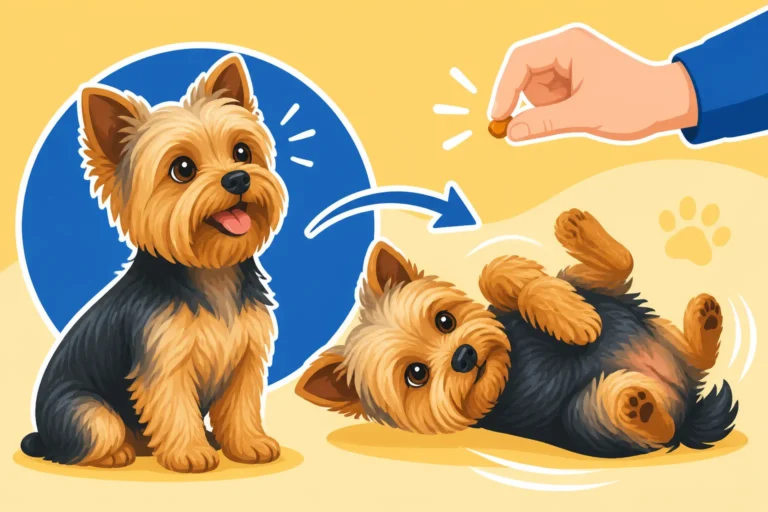
- High-Value Treats are Key: Find treats your Yorkie absolutely adores – small, soft, and easy to swallow quickly. Cheese, cooked chicken, or special training treats work wonders.
- Lure to Position: Hold a treat near your Yorkie's nose, guiding them into the desired "heel" position beside your leg. As they walk calmly beside you for a few steps with a loose leash, praise and give them the treat.
- Introduce a Verbal Cue: Once they’re consistently walking nicely beside you for a few steps, start adding a verbal cue like "Heel" or "Let's Go" just before you start walking.
- Gradually Increase Duration and Distance: Begin with just a few steps of loose-leash walking, rewarding frequently. Slowly increase the number of steps they take nicely before getting a treat.
- Fade the Lure: Over time, you’ll use the treat as a lure less and less, eventually relying on the verbal cue and occasional treats as a reward for sustained loose-leash walking.
This method is fantastic for teaching your Yorkie what you want them to do, not just what you don't want. Think about enrolling in a structured online course, like those offered by BAXTER & Bella, which often incorporate these positive reinforcement techniques into their comprehensive programs.
Practicing Loose-Leash Walking in Low-Distraction Areas
Rome wasn't built in a day, and perfect loose-leash walking won't happen instantly in a bustling city park. Just like humans learning a new skill, Yorkies need to master the basics in a controlled environment before graduating to more challenging scenarios.
- Start Indoors: Begin your training sessions inside your home or a fenced backyard. This is where your Yorkie is most comfortable and least distracted, allowing them to focus entirely on you and the new training cues. Practice walking calmly from one end of the room to the other, incorporating your "Stop-and-Go" and "Lure and Reward" techniques. This foundational work helps them understand the concept of a loose leash.
- Move to Quiet Outdoor Spaces: Once your Yorkie is reliably walking on a loose leash indoors, transition to a very quiet outdoor area. This could be a calm street during off-peak hours, a cul-de-sac, or a rarely-used section of a park. The goal is to introduce some new sights and sounds, but not so many that your Yorkie becomes overwhelmed and reverts to pulling.
- Gradually Increase Distractions: As they master walking calmly in these quieter outdoor settings, slowly introduce more distractions. This might mean walking closer to a park when other dogs are present (but not directly interacting), or choosing a slightly busier sidewalk. The key word here is "gradually." If your Yorkie starts pulling again, it means you've increased the difficulty too quickly. Simply go back to a less distracting environment and build up again. Remember, the goal is always to set them up for success. Our guide on How to Socialize a Yorkie Puppy can offer further insights into managing their reactions to new stimuli.
Addressing Common Challenges and Troubleshooting
Even with the best intentions and techniques, training a Yorkie to stop pulling can present its unique hurdles. It’s important to acknowledge these challenges and have strategies in place to overcome them, rather than getting discouraged.
Consistency is Key
This might be the most challenging aspect of any dog training, but it’s absolutely critical for loose-leash walking. Every single person who walks your Yorkie needs to be on the same page and use the same methods.
- Family Buy-in: If one family member consistently lets your Yorkie pull, it undermines all the hard work everyone else is putting in. Have a family meeting, demonstrate the techniques, and ensure everyone understands the importance of sticking to the "Stop-and-Go" or "Lure and Reward" rules.
- Every Walk is a Training Opportunity: Even if it's just a quick trip to the mailbox, make it a training session. Don’t fall into the trap of thinking, "I'm just quickly going out, it's okay if they pull this time." Each time they pull and are allowed to continue, you're reinforcing the unwanted behavior.
- Patience and Persistence: There will be days when it feels like you're taking one step forward and two steps back. Your Yorkie might have a burst of energy, or a particularly exciting scent might temporarily override their training. Don't get disheartened. Stick to your methods, be patient, and celebrate the small victories. Consistent daily practice, even if it's just 5-10 minutes, will yield results over time. Understanding Yorkie Training Mistakes to Avoid can help you stay on track.
When to Seek Professional Help
Sometimes, despite your best efforts, you might find yourself hitting a wall. This is completely normal and no reason to feel discouraged. Professional dog trainers or behaviorists have a wealth of experience and can offer personalized guidance.
- Stubborn Habits: If your Yorkie has a deeply ingrained pulling habit that you just can't seem to break, a professional can provide fresh eyes and advanced techniques. They can help identify specific triggers or underlying issues that you might be missing.
- Fear or Reactivity: If your Yorkie's pulling is strongly linked to fear, anxiety, or aggression towards other dogs or people, a certified professional dog behaviorist can be invaluable. These behaviors often require more nuanced interventions than basic obedience training.
- Lack of Time or Experience: If you're new to dog training, or if your schedule simply doesn't allow for the consistent, dedicated training time required, a professional trainer can help jumpstart the process or even work with your Yorkie themselves. Group classes or private sessions, such as those that might be recommended by resources like BAXTER & Bella, can provide structure and support. Many trainers even offer virtual consultations now, which can be convenient for busy owners. Don't hesitate to invest in professional help; it can save you a lot of frustration and create a stronger bond with your furry friend.
| Training Method | Primary Goal | Key Benefit | Best For | Considerations |
|---|---|---|---|---|
| Stop-and-Go | Teach "pulling gets you nowhere" | Simple, clear consequence for pulling | All Yorkies, especially strong pullers | Requires consistency, can make walks longer initially |
| Lure and Reward | Teach "walk nicely by my side" | Actively shapes desired behavior | Puppies, Yorkies learning specific positions | Requires high-value treats, must fade lure over time |
| Red Light, Green Light (Similar to Stop-and-Go) | Movement only on a loose leash | Reinforces loose leash as condition for progress | All Yorkies, helps build focus | Can be frustrating if Yorkie doesn't quickly grasp connection |
| Change Direction | Disrupt pulling momentum, regain focus | Keeps Yorkie guessing, prevents predictable pulling | Yorkies who anticipate pulling direction | Requires owner to be attentive and ready to change direction frequently |
Remember, teaching your Yorkie How to Teach a Yorkie to Walk on a Leash is a journey, not a destination. It’s about building a positive relationship and clear communication. With the right tools, consistent effort, and a little bit of patience, those chaotic walks can truly become the enjoyable adventures they were meant to be. This foundational training also contributes to their overall Yorkshire Terrier Exercise Needs, ensuring they get physical and mental stimulation safely.
Disclaimer
This article is for general informational purposes only and does not constitute professional advice. Laws, prices and regulations vary by location and change over time. Consult a qualified professional for guidance on your specific situation.