Biewer Yorkie vs Standard Yorkie: Differences
It’s a common scenario: you’re absolutely smitten with the idea of bringing a Yorkshire Terrier into your life, but then you start seeing terms like "Biewer Yorkie" alongside "Standard Yorkie," and suddenly, it feels like you've stumbled into a whole new world of tiny, adorable confusion. Many prospective owners find themselves scratching their heads, wondering if these are just fancy names for the same dog or if there are actual, significant differences. This guide is here to untangle that knot, providing clarity on the distinctions between Biewer Yorkies and their Standard Yorkshire Terrier cousins, so you can make an informed decision with confidence.
A Brief History and Recognition
Understanding the origins of both breeds is crucial to grasping why they are distinct, despite their shared ancestry. It's not just about a different coat color; it’s a tale rooted in unique breeding paths and separate breed recognition.
The Origins of the Standard Yorkshire Terrier
The Standard Yorkshire Terrier, as most of us know and love them, originated in the mid-19th century in Yorkshire, England. These little dogs were bred by working-class weavers and miners, primarily to catch rats and other vermin in textile mills and coal mines. Their small size and tenacious spirit made them excellent hunters. Over time, their distinctive silky, long blue and tan coat, along with their vivacious personalities, captured the hearts of Victorian society, transitioning them from working dogs to fashionable companions. The breed was officially recognized by the Kennel Club in England in 1886 and later by the American Kennel Club (AKC) in 1904.
Their lineage is thought to include a mix of several terrier breeds, such as the Paisley Terrier, Clydesdale Terrier, and possibly the Skye Terrier and Dandie Dinmont Terrier, all contributing to the genetic tapestry that eventually formed the beloved Yorkie we recognize today. This rich history highlights their dual nature: a brave, intelligent vermin hunter wrapped in a delicate, elegant package. If you're interested in learning more about the breed's overall characteristics, take a look at our comprehensive guide on the Yorkshire Terrier Breed Guide: Everything to Know which dives deep into their background.
The Emergence of the Biewer Terrier
The Biewer Terrier, on the other hand, has a much more recent and distinct origin story, beginning in Germany in 1984. Werner and Gertrud Biewer, renowned breeders of Yorkshire Terriers, noticed a puppy in one of their litters with unusual white markings – a tri-color coat instead of the traditional blue and tan. This puppy, named Schneeflöckchen von Friedheck, was the result of a recessive piebald gene present in their Yorkshire Terrier lines. The Biewers were fascinated by this unique coloration and decided to selectively breed these tri-colored Yorkies, eventually establishing them as a separate breed.
Initially, they were called "Biewer Yorkshire Terriers à la Pom Pon," distinguishing them from the standard. Over the years, the breed gained popularity, especially for their striking appearance. It wasn't until 2014 that the Biewer Terrier received full breed recognition from the AKC, placing it in the Toy Group. This formal recognition marked its independence from the Yorkshire Terrier, solidifying its status as a distinct breed with its own unique standard. This separation acknowledges that while they share common ancestors, their distinct appearance and genetic markers warrant their own category.
Key Differences in Appearance and Coat
While both breeds share a delicate, refined appearance, the most obvious distinctions lie in their coats – specifically, their color and patterns. These differences are a primary reason for the confusion and separate breed standards.
Coat Color and Pattern Variations
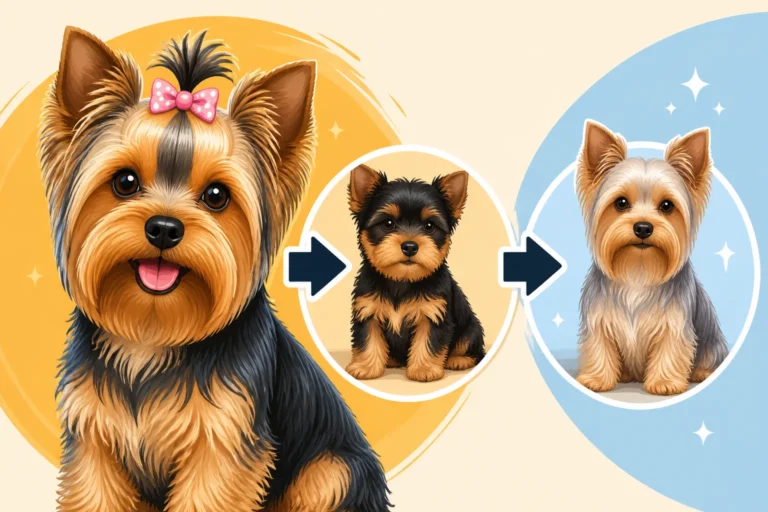
The hallmark of the Standard Yorkshire Terrier is its characteristic coat color: a rich, steel blue on the body and tail, and a clear, bright tan on the head and legs. This blue should be a dark, steely shade, not silver-blue, and the tan should be a vibrant gold, often lighter at the ends and darker at the roots. Crucially, the standard dictates that there should be no black in the blue body coat and no intermingling of tan hairs in the blue. Puppies are often born black and tan, with the blue developing over their first year or two, a process known as "clearing." This color change can be quite dramatic, and it's something many new Yorkie owners track with great interest. The American Kennel Club's breed standard is very specific about this coloration.
The Biewer Terrier, however, stands out immediately due to its striking tri-color coat, which is a combination of white, black/blue, and tan/gold. The most common pattern features a white body with symmetrical patches of blue or black and tan markings on the head. Unlike the Yorkie, white is not just acceptable but is a defining characteristic of the Biewer. The distribution of these colors is also important; ideally, the head colors will be equally distributed with blue/black, white, and gold/tan. The body is typically white with large patches of blue/black. This vibrant, piebald pattern is what truly sets the Biewer apart visually from its traditional blue and tan ancestor. If you're considering a Biewer, you'll find a beautiful array of these unique color combinations.
Size, Build, and Facial Features
When it comes to size and build, the differences between the two breeds are minimal, if any, because they share a very similar foundational genetic structure. Both are toy breeds, typically weighing between 4 to 7 pounds (1.8 to 3.2 kg) and standing about 7 to 8 inches (18 to 20 cm) tall at the shoulder. They are known for their compact, well-proportioned bodies. Both breeds possess an elegant, confident carriage, despite their small stature. You can explore more about Yorkshire Terrier Size, Weight, and Appearance to get a clearer picture of these small but mighty dogs.
Their facial features are also remarkably similar. Both the Standard Yorkie and the Biewer Terrier have bright, intelligent dark eyes, a small black nose, and V-shaped erect ears (when cropped, though natural ears are becoming more common and accepted, particularly in Europe, and they can be half-prick or full drop). The expression is keen and alert, reflecting their terrier heritage. The only subtle difference might be a slight variation in head shape that some keen observers note, but this is often more attributable to individual variation within any breed rather than a consistent breed-specific trait. It is their coat color, not their bone structure or general silhouette, that truly distinguishes one from the other.
Temperament and Health Considerations
Beyond appearance, understanding the temperament and potential health predispositions is crucial for any potential pet parent. While their shared lineage means many similarities, distinct breeding paths can sometimes lead to slight differences.
Personality Traits and Behaviors
In terms of temperament, Biewer Terriers and Standard Yorkshire Terriers are remarkably similar. Both breeds are known for their spirited, intelligent, and confident personalities. They are often described as "big dogs in little bodies" due to their fearless and sometimes bossy nature. They are loyal and affectionate with their families, often forming strong bonds and enjoying being at the center of attention. Many Yorkie owners will tell you their dog follows them from room to room, eager to participate in whatever activity is happening. You can delve deeper into these personality traits in our article on Yorkshire Terrier Temperament and Personality.
However, some Biewer enthusiasts claim that Biewer Terriers tend to be a touch more laid-back and playful than their Standard Yorkie counterparts, perhaps a result of their more recent breeding focus on companionship rather than vermin control. This isn't a universally agreed-upon distinction, and much of a dog's personality is shaped by early socialization, training, and individual genetics. Both breeds are highly intelligent and can be quite stubborn, making consistency in training absolutely vital. They thrive on attention and can be prone to separation anxiety if left alone for extended periods. Providing ample mental stimulation with interactive toys from retailers like Chewy can help keep their active minds engaged.
Common Health Concerns and Genetic Predispositions
Because of their shared genetic foundation, both Standard Yorkshire Terriers and Biewer Terriers are prone to many of the same health issues that commonly affect small breeds. These include conditions like patellar luxation (slipping kneecaps), tracheal collapse (a weakening of the windpipe), portosystemic shunt (a liver shunt), Legg-Calve-Perthes disease (a hip joint disorder), and dental disease. Dental problems are particularly prevalent in small breeds due to their crowded mouths, so regular Yorkshire Terrier Dental Care Guide is paramount. Additionally, hypoglycemia (low blood sugar) can be a concern, especially in puppies and very tiny adults. For a comprehensive overview, refer to our guide on Yorkshire Terrier Health Problems to Know and Common Yorkshire Terrier Genetic Conditions.
While both breeds share these vulnerabilities, some anecdotal reports suggest Biewers might have a slightly lower incidence of certain specific genetic conditions, but robust scientific studies directly comparing the two breeds for all conditions are limited. What's most important for any owner, regardless of whether you have a Biewer or a Standard Yorkie, is to source your puppy from a reputable breeder who performs extensive genetic health testing on their breeding stock. This proactive approach helps mitigate the risk of inheriting these predispositions. Regular veterinary check-ups and a healthy diet, perhaps even specialized small breed formulas found at Chewy, are also critical to keeping both types of Yorkies thriving.
Understanding Breed Standards and Registration
The most significant difference from a formal perspective is how these breeds are recognized and judged by major kennel clubs, which directly impacts breeding practices and showing.
Official Kennel Club Recognition
This is where the distinction truly becomes official. The Standard Yorkshire Terrier has been recognized by the American Kennel Club (AKC) for over a century, belonging to the Toy Group. Its breed standard outlines precise requirements for appearance, temperament, and movement, including the specific blue and tan coat coloration. Dogs that deviate significantly from this standard, such as those with white markings or other non-standard colors, cannot be registered as AKC Yorkshire Terriers and therefore cannot compete in AKC conformation events. This strict adherence to the standard ensures the preservation of the breed's historical characteristics.
The Biewer Terrier, despite its Yorkshire Terrier origins, achieved full recognition as a distinct breed by the AKC in 2014, also joining the Toy Group. This means it has its own separate breed standard, which specifically accepts the tri-color (white, black/blue, and tan/gold) coat. It also means that a Biewer Terrier cannot be registered as a Yorkshire Terrier, and vice versa, even though they look quite similar. This separate recognition is a testament to the dedicated efforts of breeders and enthusiasts to establish the Biewer as a unique and legitimate breed, not merely a color variant of the Yorkie. This is the core difference that the article Biewer Terrier vs Yorkshire Terrier explores in more detail.
What This Means for Breeders and Owners
For breeders, this distinction is paramount. A reputable breeder of Standard Yorkshire Terriers will focus solely on producing puppies that conform to the AKC Yorkie standard, which means maintaining the traditional blue and tan coat. They will carefully select breeding pairs to ensure good health, temperament, and adherence to these physical traits. Similarly, ethical Biewer Terrier breeders will focus on their breed's unique standard, aiming for the distinctive tri-color pattern while prioritizing health and temperament. Both types of breeders should conduct health screenings for common breed-specific issues, a topic explored in How to Find a Reputable Yorkie Breeder.
For prospective owners, understanding this difference impacts everything from price to available puppies. A "Biewer Yorkie" is not just a standard Yorkie with different colors; it is a Biewer Terrier, a distinct breed. Therefore, when looking for a puppy, you need to decide which breed you genuinely want. The cost of a Biewer Terrier puppy can sometimes be comparable to, or even higher than, a Standard Yorkshire Terrier, reflecting their newer status and sometimes smaller breeding pools. Factors influencing cost are covered in our guide, How Much Does a Yorkshire Terrier Cost. When you purchase a Biewer, you're getting a dog recognized as its own unique entity, complete with its own history and distinct set of characteristics, even if many overlap with its ancestral breed.
Here's a quick comparison of the key differences:
| Feature | Standard Yorkshire Terrier | Biewer Terrier |
|---|---|---|
| Origin | Yorkshire, England (Mid-19th Century) | Germany (1984) |
| Primary Colors | Blue and Tan (puppies often black and tan) | Tri-color: White, Black/Blue, and Tan/Gold |
| White Markings | Not permitted by AKC standard | Essential and defining characteristic |
| AKC Recognition | Yes, since 1904 (Toy Group) | Yes, since 2014 (Toy Group) |
| Ancestry | Various terriers (Paisley, Clydesdale, etc.) | Descended from Standard Yorkshire Terriers (recessive gene) |
| Breed Standard | Strict adherence to blue and tan; no white | Specific standard for tri-color coat |
Ultimately, both the Biewer Terrier and the Standard Yorkshire Terrier make wonderful companions, brimming with personality and charm. The choice between them often comes down to personal preference for coat coloration and a desire to support either the traditional lineage or the newer, recognized offshoot. Regardless of your choice, be prepared for an intelligent, affectionate, and spirited furry friend!
Disclaimer
Please note that the information provided in this article is for general informational purposes only and does not constitute professional veterinary advice. Always consult with a qualified veterinarian for any health concerns or before making any decisions about your pet's health or treatment.