Yorkshire Terrier Progressive Retinal Atrophy: Signs and Care
It's incredibly disheartening and often terrifying when you notice changes in your beloved Yorkshire Terrier's vision, especially if they seem to be bumping into things or struggling in dimly lit rooms. As a Yorkie parent, seeing your tiny companion lose their keen sight can bring a wave of worry and helplessness. This comprehensive guide is here to walk you through understanding Progressive Retinal Atrophy (PRA) in Yorkshire Terriers, helping you recognize its signs, navigate diagnosis, and provide the best possible care to support your furry friend through this challenging condition.
Understanding Progressive Retinal Atrophy in Yorkshire Terriers
Progressive Retinal Atrophy (PRA) isn't just one single disease; it's actually an umbrella term for a group of inherited degenerative eye conditions that affect the retina. For us Yorkie lovers, it’s a condition that can slowly, but surely, steal away our dog’s eyesight, leaving them fully blind over time. It’s a genetic hand-me-down, meaning it’s passed down through generations, and unfortunately, it's a condition that Yorkshire Terriers, among other breeds, are predisposed to.
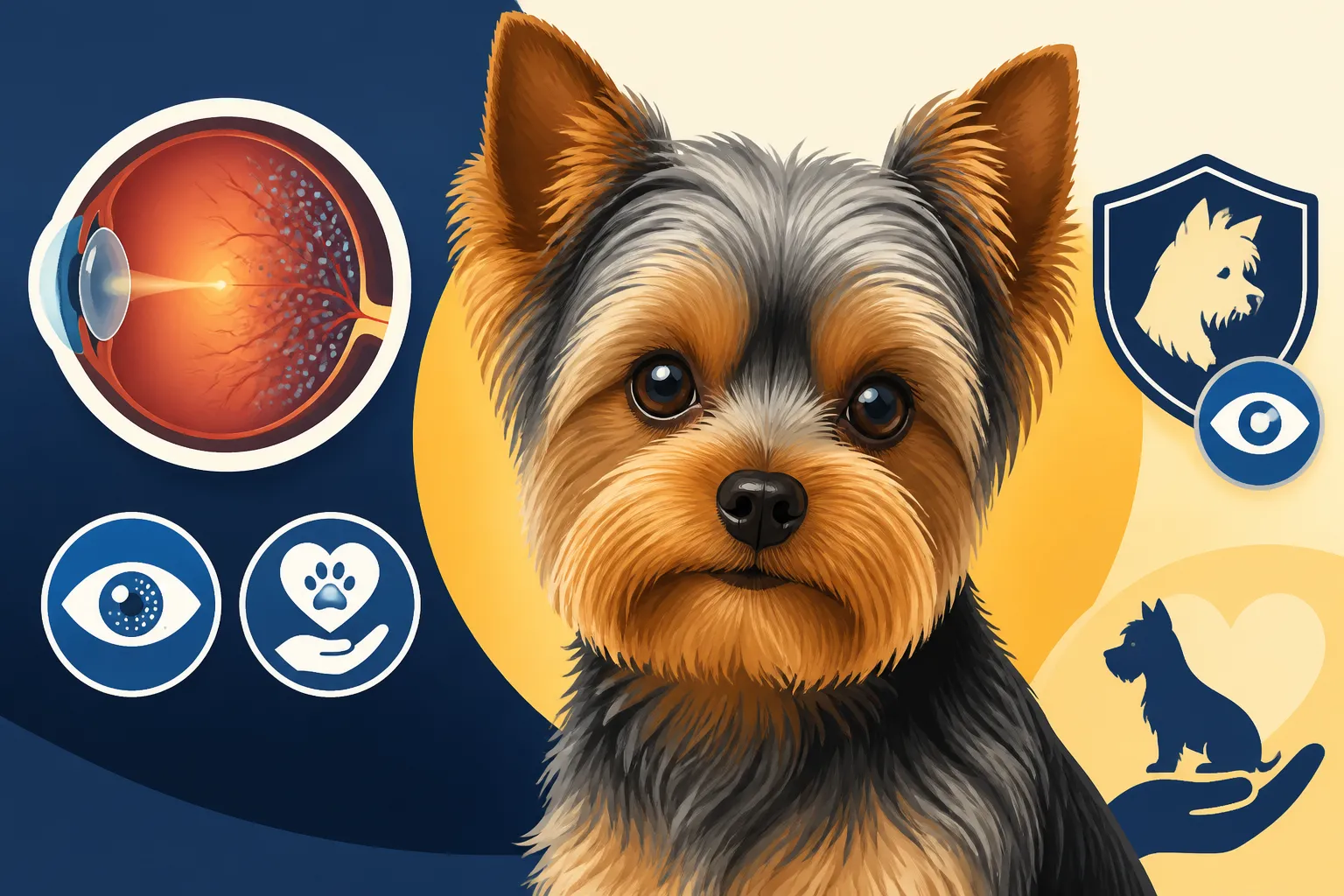
At its core, PRA involves the gradual deterioration of the photoreceptor cells located in the retina—the rods and cones. Think of these cells as the camera film in your dog's eye, responsible for capturing light and sending those images to the brain. Rods handle vision in dim light and detect motion, while cones are all about bright light and color perception. In PRA, these cells slowly stop working and eventually die off, which means your Yorkie’s "camera film" gradually loses its ability to process images.
What is Progressive Retinal Atrophy?
To get a little more specific, Progressive Retinal Atrophy typically leads to a loss of vision that begins with night blindness and progresses to total blindness, sometimes over months or even years. It's not a sudden event, but a slow, creeping decline that can be easy to miss in its very early stages, especially for a small, adaptable dog like a Yorkie who relies so much on their sense of smell and hearing. The genetic mutations responsible for PRA cause these essential retinal cells to either develop abnormally (dysplasia) or degenerate over time (degeneration). For many Yorkies, it tends to be the latter, a slow degeneration.
This gradual nature is often a double-edged sword. On one hand, it gives us time to adapt and help our dogs adjust. On the other, it can make early detection tricky, as our clever Yorkies often compensate remarkably well, masking their diminishing sight until the condition is quite advanced. This is why knowing the subtle signs is so crucial for any Yorkshire Terrier owner.
Types of PRA Affecting Yorkies
While PRA can manifest in different forms across various breeds, Yorkshire Terriers typically experience a late-onset form of progressive rod-cone degeneration. This means that the rod cells, which are primarily responsible for night vision, are usually affected first. This explains why one of the earliest signs you might notice is your Yorkie struggling to see in low-light conditions. As the disease progresses, the cone cells, responsible for daytime and color vision, also begin to degenerate, leading to complete blindness.
It's important to remember that because PRA is a genetic condition, there isn't a single "cure." Our focus as pet parents and veterinary professionals shifts to early detection and management to ensure the best possible quality of life for our affected Yorkies. Understanding the specific genetic makeup that predisposes Yorkshire Terriers to this condition is an ongoing area of research, but what we do know is that responsible breeding practices, which we’ll delve into later, are paramount in reducing its prevalence. It's just one of the many Common Yorkshire Terrier Genetic Conditions that breeders should be aware of.
Recognizing the Early Signs of PRA in Your Yorkie
Detecting PRA can be challenging because our little Yorkies are masters of adaptation. They learn to compensate for their vision loss by relying more heavily on their other super senses, like smell and hearing. However, by being vigilant and knowing what to look for, you can often pick up on the subtle cues that indicate something might be amiss with their eyesight. Early detection, while not curing the condition, allows you to better prepare and make your home safer and more comfortable for your dog.
Subtle Changes in Vision
The very first sign of PRA that many Yorkie owners notice is nyctalopia, or night blindness. Your dog might start to seem hesitant or disoriented in dimly lit environments, like your backyard after sunset or a darkened hallway. They might bump into furniture they usually navigate with ease, or become more reluctant to go out for their last potty break when it's dark. This is because the rod cells, responsible for night vision, are often the first to degenerate.
As the condition progresses, you might observe that your Yorkie's pupils appear more dilated than usual, especially in normal lighting. This isn't a direct sign of vision loss itself, but rather your dog's eyes trying to let in as much light as possible to compensate for the failing retina. If you shine a light into their eyes, you might also notice an increased "eyeshine" or tapetal reflection, which is a bit like seeing a cat’s eyes glow in the dark. This happens because the thinning retina exposes the reflective layer behind it more clearly. Keep a close eye on any of these changes, as they are early Signs Your Yorkshire Terrier Is Sick.
Behavioral Indicators of Vision Loss
Beyond the physical changes, your Yorkie's behavior can offer significant clues. A dog with progressive vision loss might become more clingy or anxious, especially in new environments or when their routine is disrupted. They may startle more easily if approached unexpectedly, as they can no longer see you coming. You might also notice them being less willing to jump off furniture or navigate stairs, demonstrating a newfound caution.
For instance, if your typically adventurous Yorkie suddenly hesitates before stepping off the curb during a walk or seems uncertain in a familiar room after you've rearranged a single piece of furniture, it's a red flag. They might rely more on you, staying closer to your legs, or constantly sniffing the ground to map their surroundings. Their playful chasing of toys might decrease, or they might struggle to find a dropped treat, even if it's right under their nose. These behavioral shifts are their way of telling you they’re struggling, even if they can’t use words.
Physical Signs to Look For
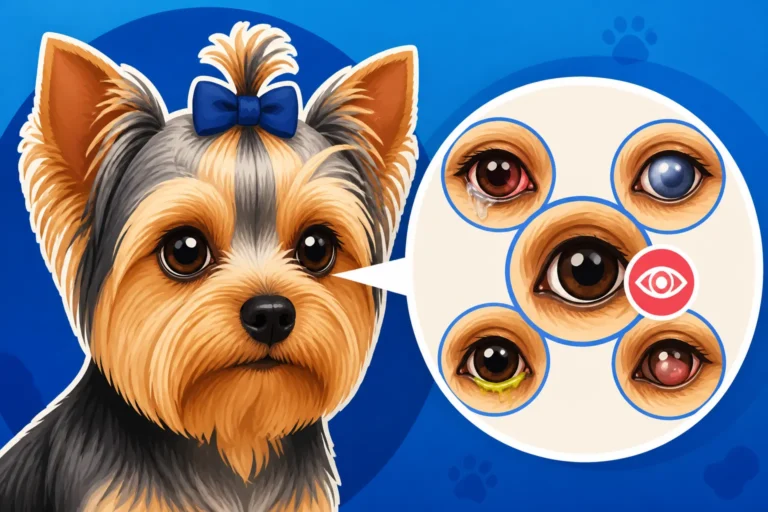
While night blindness and behavioral changes are often the earliest indicators, other physical signs can become apparent as PRA advances. You might notice that your Yorkie's eyes start to look a bit cloudy or opaque. This isn't always PRA itself, but sometimes secondary cataracts can develop as a complication of the retinal degeneration. The cataracts might further obscure vision, making it even harder for your dog to see.
The appearance of the tapetum lucidum, which is the reflective layer behind the retina, can also become more prominent. In a healthy eye, it’s not always obvious, but as the retina thins from PRA, this reflective layer becomes more visible, giving the eyes an almost metallic or greenish-yellow sheen when light hits them. Regular, gentle examination of your Yorkie’s eyes at home, perhaps during their Yorkshire Terrier Grooming Guide routine, can help you catch these subtle but important changes. If you have any concerns about your Yorkie's eyes, it's always best to consult with your veterinarian. You can also learn more about other potential issues in Yorkie Eye Problems Explained.
| Symptom Category | Early Stage PRA Indicators | Late Stage PRA Indicators |
|---|---|---|
| Vision | Night blindness (nyctalopia), difficulty in low light, hesitation in dim areas. | Total blindness (day and night), bumping into objects even in familiar, well-lit spaces, disorientation. |
| Eye Appearance | Pupils slightly more dilated, increased "eyeshine" in dim light, sometimes subtle cloudiness. | Pupils significantly dilated (often fixed), pronounced tapetal reflection, potential secondary cataracts, glassy appearance. |
| Behavior | Hesitation to move in darkness, increased caution, mild anxiety, reluctance to jump off furniture. | Increased clinginess, easily startled, disoriented in new or familiar environments, bumping into walls, reduced play. |
| Interaction | Might still track objects in bright light, responds well to verbal cues. | Relies heavily on smell/hearing, may not track movement, seeks physical contact for reassurance, reduced confidence. |
Diagnosing Progressive Retinal Atrophy
When you suspect your Yorkie might be experiencing vision problems, getting a professional diagnosis is the crucial next step. It can be unnerving to take your little one to the vet for something so fundamental as their sight, but remember that veterinarians are equipped with the tools and knowledge to differentiate between various eye conditions and provide the clearest picture of what’s happening.
Initial Veterinary Examination
Your journey to a diagnosis will typically begin with a thorough examination by your primary veterinarian. They will start with a general physical check-up to assess your Yorkie's overall health, followed by a detailed neurological assessment. This helps rule out any other underlying conditions that might mimic vision impairment, such as neurological disorders affecting the brain’s ability to process visual information. During this time, they’ll ask you a lot of questions about when you first noticed changes, how your Yorkie is behaving, and any other symptoms you’ve observed. Be as detailed as possible – your observations are incredibly valuable.
Next, your vet will perform a basic ophthalmic exam. This includes checking your Yorkie’s pupillary light reflexes (how their pupils constrict in response to light), which can give initial clues about retinal function. They might also use an ophthalmoscope to look at the back of the eye, examining the retina and optic nerve. In early PRA, these changes might be subtle or even undetectable with a standard exam, but it’s a vital first step to narrow down possibilities. If there’s any suspicion of PRA or other serious eye conditions, your vet will likely recommend a referral to a veterinary ophthalmologist. Knowing When to Take Your Yorkie to the Vet for these issues is important.
Specialized Ophthalmic Tests
To get a definitive diagnosis of PRA, specialized tests are usually required, performed by a veterinary ophthalmologist. The most conclusive diagnostic tool is an Electroretinography (ERG). This non-invasive test measures the electrical responses of the photoreceptor cells in the retina to flashes of light. It essentially tells us how well those rods and cones are functioning. If the ERG shows significantly reduced or absent electrical activity, it confirms the degeneration of the retina consistent with PRA. The procedure is typically performed under light sedation to ensure your Yorkie remains still and comfortable.
In addition to ERG, genetic testing is becoming increasingly important, especially for breeding dogs. While not all forms of PRA have an identified genetic marker, research has made significant strides, and tests are available for some specific genetic mutations linked to PRA in various breeds. For Yorkies, specific genetic tests can help identify if a dog carries the gene responsible for a particular type of PRA, even before symptoms appear. This is incredibly valuable information for breeders aiming to prevent passing on the condition. Genetic testing involves a simple cheek swab, which is then sent to a specialized lab. This helps responsible breeders make informed decisions to How to Keep a Yorkshire Terrier Healthy by reducing the incidence of inherited diseases.
Managing PRA and Supporting Your Yorkie
The news that your Yorkie has Progressive Retinal Atrophy can be devastating, and it’s completely natural to feel overwhelmed. It’s important to understand upfront that currently, there is no cure or treatment that can reverse the degeneration of the retina caused by PRA. However, this doesn’t mean we are helpless. Far from it! Our focus shifts from trying to cure the condition to actively managing its progression and, most importantly, providing exceptional supportive care to ensure our beloved companions maintain the highest possible quality of life as their vision declines.
No Cure but Plenty of Support
Accepting that PRA is an irreversible condition is the first step in moving forward with proactive care. While it can be heartbreaking, understanding this allows us to pour our energy into making our Yorkie's life as comfortable, safe, and happy as possible. Dogs are incredibly resilient and adaptable, and many Yorkies with PRA continue to lead full, joyful lives with the right support from their devoted families.
Supportive care means focusing on adaptations within the home, refining communication methods, and ensuring their emotional well-being is prioritized. It’s about creating a predictable environment where they feel secure and confident, even without their full sight. Think of it as guiding them through a new chapter of their lives, rather than mourning what’s lost. Your presence, patience, and love become even more vital, helping them navigate their world primarily through their remarkable senses of smell, hearing, and touch.
Medications and Supplements
Since PRA is a degenerative genetic condition, there are no specific medications that can halt or reverse the process. However, some veterinary ophthalmologists might suggest certain antioxidant supplements. These typically include vitamins C and E, lutein, and omega-3 fatty acids, which are believed by some to potentially slow down the rate of retinal degeneration or support overall eye health, although scientific evidence for their efficacy in treating PRA is limited. Always consult with your veterinarian or a veterinary ophthalmologist before introducing any supplements to your Yorkie's diet, as dosages and suitability can vary greatly depending on your dog's specific needs and health status.
It's also worth noting that in some cases, secondary conditions can develop as a result of PRA, such as cataracts. While these cataracts aren't the primary issue, they can further impair vision. If your Yorkie develops cataracts, your vet might discuss options for managing them, potentially even surgical removal in some instances, though this would only address the cataract, not the underlying PRA. The main goal here is to manage symptoms and any co-existing issues to improve comfort, not to cure the PRA itself.
Financial Considerations and Pet Insurance
Dealing with a chronic condition like PRA inevitably brings up financial considerations. Diagnostic tests, specialist consultations with veterinary ophthalmologists, ongoing supportive care, and any potential treatments for secondary conditions can add up. Initial ERG testing can be several hundred dollars, and repeated specialist visits to monitor progress, especially if you're trying various supplements or dealing with secondary issues, also contribute to the overall cost.
This is where having a Yorkshire Terrier Vet Costs and Health Budget in place, or better yet, pet insurance, can make a significant difference. Pet insurance plans, like those from Healthy Paws, can be a real lifesaver when it comes to managing unexpected or long-term health issues like PRA. Many policies cover a percentage of diagnostic tests, specialist consultations, and prescribed medications, which can substantially ease the financial burden. It’s always best to look into pet insurance early, ideally before any conditions arise, as pre-existing conditions are typically not covered. Consider exploring various providers and plans, as the right coverage can allow you to make decisions based on your Yorkie's well-being rather than financial stress. More information can be found in our guide on Pet Insurance for Yorkshire Terriers.
Living with a Yorkie Who Has PRA
Adjusting to life with a Yorkie who has PRA is a journey that requires patience, empathy, and a proactive approach. It's about adapting your home and routine to meet their changing needs, ensuring they can still live a joyful and fulfilling life, even with impaired vision or full blindness. Remember, your Yorkie still wants to be an active, loved member of the family!
Creating a Safe and Familiar Environment
The single most important thing you can do for a visually impaired Yorkie is to maintain a consistent home environment. Once your Yorkie starts losing their sight, try to keep furniture and their food/water bowls in the same, predictable spots. This allows them to create a mental map of their surroundings, reducing anxiety and preventing accidents. If you must move something, guide them around the new setup several times until they are comfortable.
For areas that pose a risk, such as staircases or rooms with sharp corners, utilize baby gates or other barriers to create safe zones. Consider placing soft rugs or runners on hard flooring to give them better traction and tactile cues. Also, ensure there are no tripping hazards on the floor like loose wires, small toys, or clutter. Many owners will use different textures of mats or rugs to signal important locations, such as a rougher mat by the back door for potty breaks, or a soft, plush one where their bed is. Creating a designated "safe spot" for them, perhaps a comfortable bed in a quiet corner, will provide them with a retreat where they always feel secure.
Enrichment and Mental Stimulation
Just because your Yorkie can't see as well doesn't mean they don't need mental and physical stimulation. In fact, it becomes even more crucial! Focus on engaging their other powerful senses. Scent work is fantastic: hide treats around the house for them to sniff out, or use puzzle toys that dispense food. Brands like Nina Ottosson make great puzzle toys that encourage sniffing and problem-solving. These activities build confidence and prevent boredom.
Auditory cues are also invaluable. Use consistent verbal commands, and perhaps attach a small bell to your shoes or other pets so your Yorkie can hear where you are. Continue with regular walks in familiar, safe outdoor spaces. Keep them on a leash, of course, and stick to routes you know well to avoid startling them or encountering unexpected obstacles. Talk to them reassuringly throughout the walk, describing your surroundings. For instance, "We're turning right now," or "Big tree coming up!" This helps them anticipate and feel more secure. For more ideas on keeping your Yorkie active, check out our guide on Yorkshire Terrier Exercise Needs.
Communication and Training Adaptations
Adapting your communication style will be key. Always speak to your Yorkie before approaching them to avoid startling them. Use clear, consistent verbal commands, and consider adding tactile signals if you haven't already. For example, a gentle tap on their shoulder could mean "stop," or a stroke down their back could mean "come." Reward them generously with praise and treats for responding to these new cues.
When guiding them, don’t push or pull. Instead, let them follow your scent or touch your leg lightly to orient themselves. Encourage exploration within their safe, mapped-out home environment. Keep your tone of voice calm and reassuring. Remember, their world has changed, and they are relying on you more than ever for guidance and confidence. Continuing to teach them new tricks or reinforce old ones, even with adaptations, can keep their minds sharp. If you’re introducing them to new people or pets, do so slowly and calmly, always describing the situation to your Yorkie with your voice, so they know what to expect.
Prevention and Genetic Testing
While it's difficult to prevent PRA in an individual Yorkie once the genetic predisposition is present, we can significantly reduce the incidence of this heartbreaking disease through responsible breeding practices. This is where education and proactive measures truly make a difference for the future health of the breed.
Responsible Breeding Practices
For breeders, the primary tool for preventing PRA is comprehensive genetic testing. Reputable breeders should have their breeding dogs screened for known genetic markers associated with PRA in Yorkshire Terriers. This involves taking a DNA sample (usually a cheek swab) and sending it to a specialized laboratory. Dogs identified as carriers or affected should not be used for breeding. Some labs even offer comprehensive breed panels that test for multiple genetic conditions common in Yorkies, which is an excellent way to ensure the health of future generations.
In addition to genetic testing, breeders should also participate in regular eye examinations performed by a board-certified veterinary ophthalmologist. These examinations, often part of the Orthopedic Foundation for Animals (OFA) Eye Certification program, can identify observable signs of various eye diseases, including some forms of PRA, even before symptoms are clinically evident to the owner. It’s a multi-pronged approach to ensure that puppies being brought into the world have the best possible start. These practices are central to understanding Yorkshire Terrier Genetic Conditions.
Choosing a Reputable Breeder
As a prospective Yorkie owner, you have a vital role in preventing PRA by choosing a reputable breeder. Don't be afraid to ask tough questions! A responsible breeder will be transparent about the health of their breeding stock and will gladly provide proof of genetic testing and OFA Eye Certifications for both parent dogs. They should be able to explain what these tests mean and how they mitigate risks. Be wary of breeders who offer "teacup" or "mini" Yorkies without proper health clearances, or those who seem to prioritize appearance over health.
Look for a breeder who is passionate about the health and welfare of their dogs, who can tell you about the lineage of their puppies, and who encourages you to meet the puppy's parents. A good breeder will also offer a health guarantee, giving you peace of mind that they stand behind the health of their puppies. Choosing a breeder who actively screens for inherited diseases like PRA is one of the best ways to ensure you bring home a healthy companion and contribute to the betterment of the Yorkshire Terrier breed. Our guide on Yorkshire Terrier Puppy Health Guide offers more details on what to look for.
The Future of PRA Research
While currently there is no cure for PRA, the good news is that veterinary science is continually advancing. Researchers are tirelessly working to identify new genetic markers for different forms of PRA, develop more effective screening tools, and explore potential therapeutic interventions, including gene therapy. Although these advanced treatments are not yet widely available for canine PRA, ongoing studies offer hope for future breakthroughs that could one day slow or even prevent the progression of this devastating disease.
Supporting organizations that fund canine health research, such as the AKC Canine Health Foundation or the Morris Animal Foundation, can help accelerate these efforts. For now, the most powerful tools we have are responsible breeding, early detection, and dedicated, compassionate care that allows our Yorkies to thrive regardless of their visual challenges. It’s about being informed, proactive, and committed to their well-being throughout their entire How Long Do Yorkshire Terriers Live journey.
Disclaimer
The information provided in this article is for educational purposes only and is not a substitute for professional veterinary advice. Always consult with a qualified veterinarian or veterinary ophthalmologist for any health concerns or before making any decisions related to your Yorkshire Terrier's care.