How to Stop a Yorkie from Jumping On People
It’s a tale as old as time for many Yorkshire Terrier parents: that moment you walk through the door, or a friend visits, and your adorable, tiny companion suddenly transforms into a spring-loaded missile, launching themselves at anyone within jumping distance. While their excitement is endearing, this persistent jumping on people can quickly become a real hassle, leaving scratches, knocking over small children, or simply being an unwelcome greeting. This comprehensive guide is here to help you understand why your Yorkie jumps and, more importantly, equip you with practical, compassionate strategies to stop this behavior, ensuring calm and polite greetings for everyone.
Understanding Why Your Yorkie Jumps
It’s completely natural to feel a bit flustered when your pint-sized pal repeatedly leaps onto you or your guests. Their enthusiasm is boundless, but their methods can be a bit much. Before we can effectively change this behavior, it's really helpful to step into your Yorkie's paws and understand the motivations behind their airborne antics. It's almost never out of malice; instead, it usually stems from some pretty common canine instincts and learned responses.
Excitement and Attention Seeking
This is, without a doubt, the number one reason most Yorkies become champion jumpers. Imagine it from their perspective: you, their favorite giant human, just walked through the door after an eternity (which, to a dog, might be five minutes!). Their little hearts are bursting with joy, and what's the most direct way to get close to your face, sniff out your day, and demand some love? You guessed it – an enthusiastic leap!
When your Yorkie jumps, and you respond by saying "hello," petting them, or even gently pushing them down, you're inadvertently reinforcing the behavior. To your Yorkie, any attention, positive or negative, is better than none. They quickly learn that "jumping = interaction," and since interaction with you is their favorite thing, they'll keep doing it. This feedback loop is incredibly powerful. Even if you say "no" or "off," if you're looking at them or touching them, you're still giving them that coveted attention. They're just trying to engage with you at what they perceive as your eye level.
This also applies to other scenarios. Perhaps your Yorkie jumps on you while you’re trying to read, cook dinner, or relax on the couch. They might be initiating play, signaling that they need to go outside, or simply demanding cuddles. If your immediate reaction, even a sigh or a gentle push, breaks your concentration and focuses on them, they’ve successfully achieved their goal: your attention. It’s a very clever, albeit annoying, strategy they’ve developed.
Lack of Proper Training
Many of us, myself included, can sometimes give smaller dogs a pass on certain behaviors we wouldn't tolerate in a larger breed. A jumping Great Dane is an obvious problem, but a jumping Yorkie? "Oh, they're just excited!" we might think. This often leads to a lack of clear training that sets your Yorkie up for success.
If your Yorkie has never been explicitly taught an alternative, polite way to greet people, they will naturally revert to what feels intuitive and what has historically garnered results (jumping). Dogs thrive on clear, consistent communication and boundaries. If the rules around jumping change – sometimes it's allowed, sometimes it's not – your Yorkie becomes confused. This inconsistency is a major hurdle in effective How to Train a Yorkshire Terrier efforts.
Furthermore, if your Yorkie doesn't know basic obedience commands like "sit," "stay," or a simple "off," they lack the tools to perform a more appropriate greeting. When overwhelmed with excitement, they don't have a learned, alternative action to fall back on. It's not a reflection of their intelligence; Yorkies are notoriously smart. It's simply a gap in their education that we, as their human companions, need to fill by teaching them polite manners.
Breed Predisposition and Small Dog Syndrome
While we never want to excuse unwanted behavior, understanding the inherent traits of the Yorkshire Terrier can offer some insight into their jumping habits. Yorkies are terriers, and that means they come with a big personality packed into a small frame. They are typically confident, tenacious, and incredibly attached to their humans. This strong will, combined with their desire for closeness, can often manifest as exuberant, even demanding, jumping.
The concept often called "Small Dog Syndrome" also plays a role. Because they are so tiny, owners sometimes overlook or even encourage behaviors that would be immediately corrected in a larger dog. We might pick them up when they jump, which, to them, feels like a reward for jumping up. This unintentional enablement reinforces the idea that jumping is an acceptable way to interact. Their small stature also means they often have to jump to get closer to your eye level, which is a natural point of engagement for dogs.
Ultimately, Yorkies are companion dogs who crave interaction and proximity to their people. Jumping is their instinctual, albeit unrefined, way of trying to achieve that closeness. It's up to us to gently guide them toward more appropriate methods of seeking attention and greeting, transforming these Yorkshire Terrier Behavior Problems and Solutions into positive interactions.
Effective Training Strategies to Stop Jumping
The good news is that stopping your Yorkie from jumping is incredibly doable! It requires patience, consistency, and a shift in how you react to their jumps. Our goal isn't just to stop the jumping, but to teach them a more polite, acceptable alternative behavior. It’s all about communicating clearly what you do want them to do.
The "No Jump" or "Off" Command
Teaching your Yorkie a specific command like "off" or "no jump" is a fundamental step. This command, delivered consistently, helps your Yorkie understand that certain actions lead to desired outcomes, while others do not. The power lies in your timing and unwavering commitment.
Step-by-Step Training for "Off":
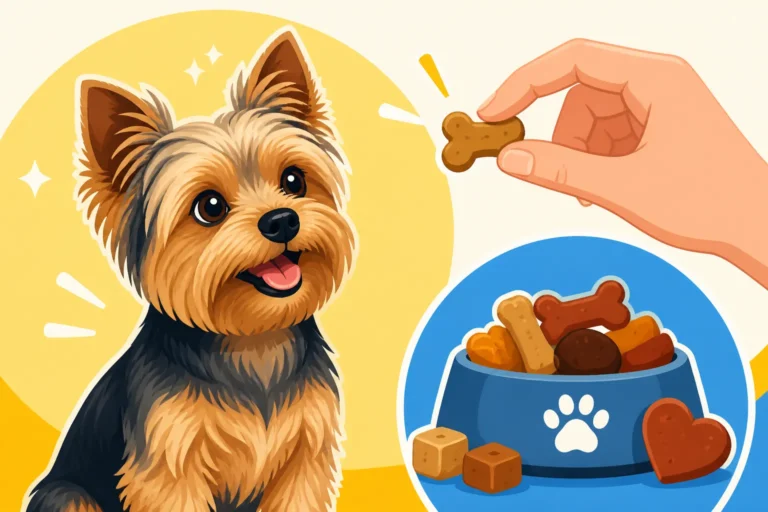
- Prepare for Success: Always have high-value treats readily available. These should be small, soft, and extra tasty – something your Yorkie doesn't get all the time. Think tiny pieces of boiled chicken, cheese, or specialized training treats like those from Pet Botanics or Wellness Soft Puppy Bites. Keep them in an easily accessible pouch or pocket.
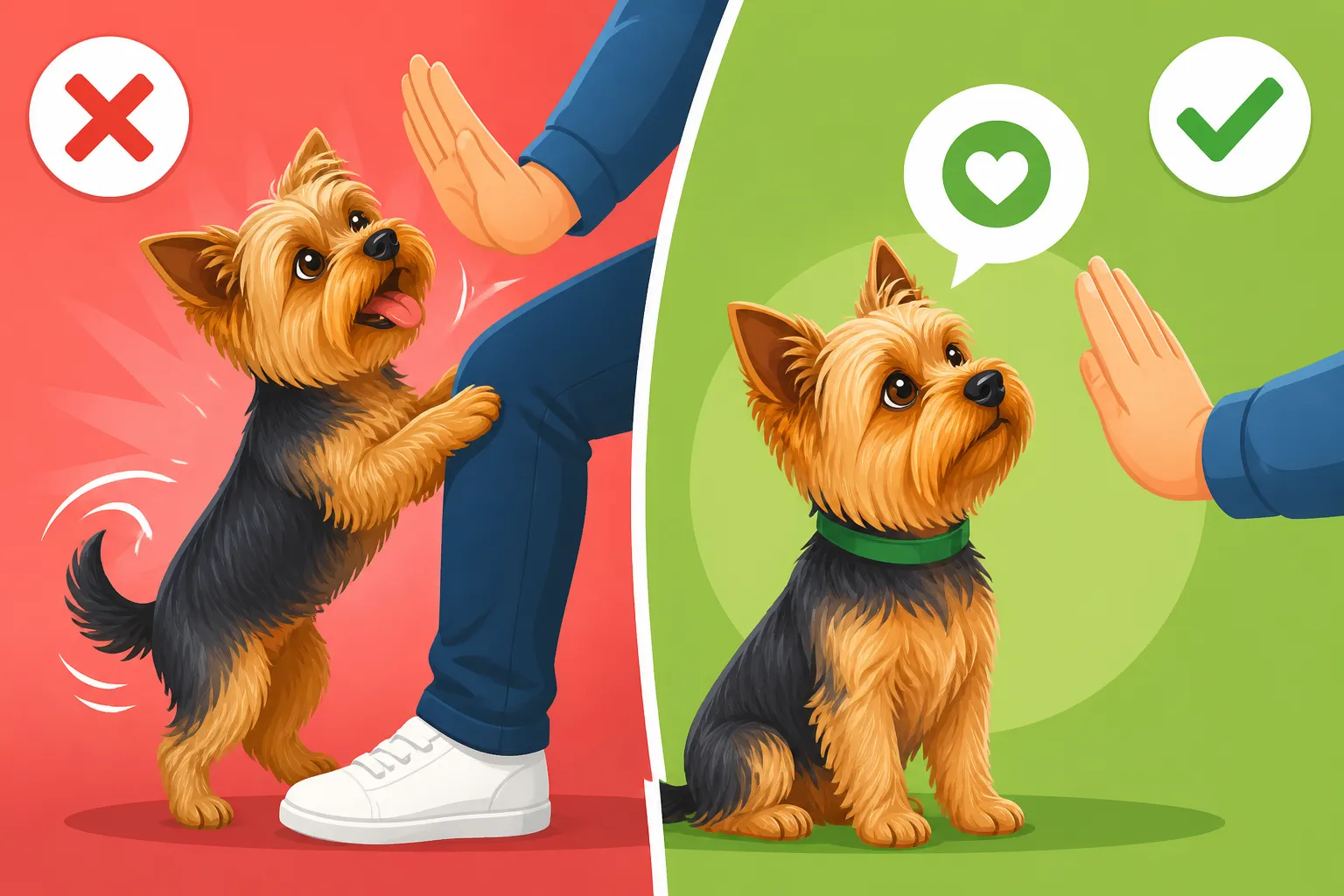
- Ignore the Jump: The absolute first rule is to become a "tree" when your Yorkie jumps. The moment they launch themselves at you, turn your back completely, cross your arms, and look away. Do not make eye contact, say anything, or push them off. Your body language should communicate, "Jumping makes me disappear and offers no reward." If they continue to jump on your back, calmly walk into another room, close the door behind you, wait for 10-15 seconds, and then reappear. This teaches them that jumping causes you to leave.
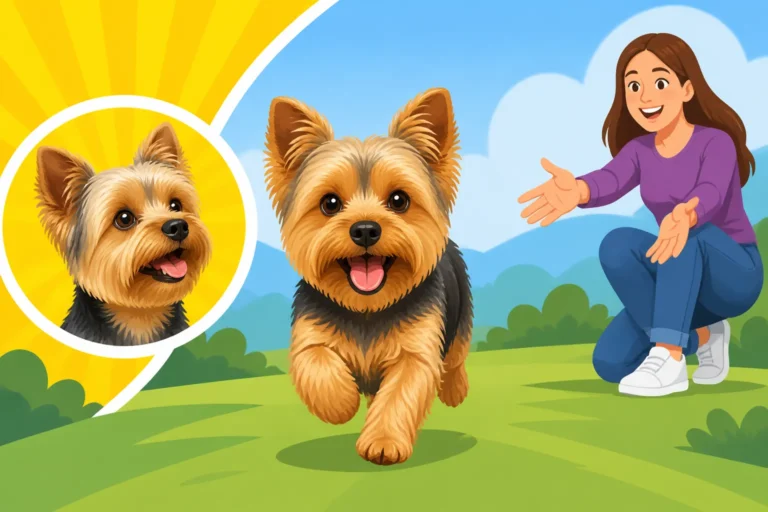
- Reward Four Paws on the Floor: This is the critical moment. The instant your Yorkie's front paws (or all four, if they settle completely) touch the ground, quickly turn back around, praise them calmly with a happy verbal cue like "Good!" or "Yes!", and immediately give them one of those high-value treats. The speed of your reward is crucial; it helps your Yorkie connect the calm, four-paws-on-the-floor behavior with the treat.
- Introduce the Verbal Cue: Once your Yorkie starts to grasp that keeping all paws on the floor leads to good things, you can begin to add the "Off" command. Just as they are about to jump, or if they've just barely put a paw on you, say "Off" in a firm but neutral tone. Immediately turn your back. The second their paws are on the floor, turn, praise, and treat.
- Practice, Practice, Practice: Integrate this training into your daily routine, especially during those high-excitement moments like coming home or greeting family members. Every single person who interacts with your Yorkie must follow these steps precisely. Inconsistency will only confuse your little one and make the training process longer and more frustrating for everyone involved. Regular, short training sessions where you deliberately practice greetings can reinforce this. This command is a cornerstone of Yorkshire Terrier Obedience Training Basics.
Redirecting Undesirable Behavior
Simply telling your Yorkie "no" or "off" isn't enough; you need to provide them with a clear, acceptable alternative. Redirection is about guiding their excited energy toward a behavior that is welcome, giving them a way to get the attention they crave without jumping.
Strategies for Offering an Alternative:
- Teach a Polite "Sit" or "Down": This is incredibly powerful. Before you enter a room where your Yorkie is, or when you anticipate a greeting, ask them to "Sit" or "Down." Reward them generously for complying. A dog sitting politely cannot jump! Start practicing these commands in calm environments, then gradually introduce distractions. You can find excellent step-by-step guides on How to Teach a Yorkie to Sit and How to Teach a Yorkie to Stay which will lay the groundwork for this redirection.
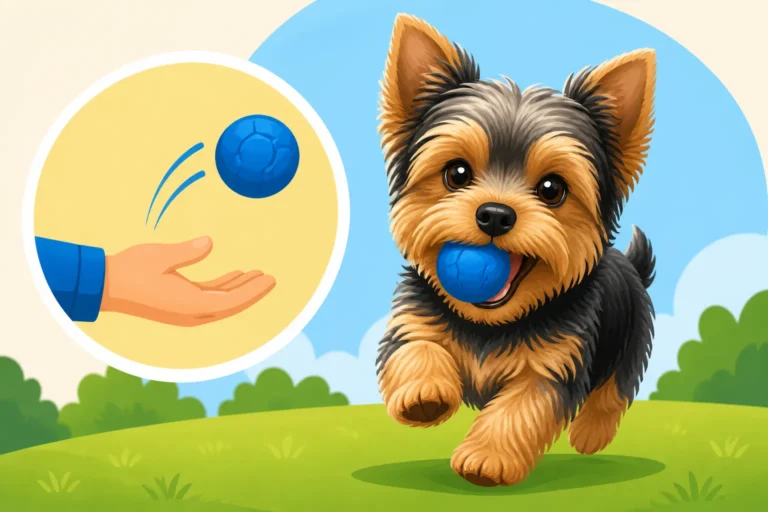
- Engage with a Toy: For Yorkies who jump out of sheer playfulness and excitement, a toy can be your best friend. The moment you see them winding up for a jump, or as you approach for a greeting, immediately present a favorite squeaky toy, a small rope toy, or a ball. Say "get your toy!" and engage them in a quick game of fetch or tug. This redirects their energy and focus onto the toy, satisfying their need for interaction in an appropriate way. Brands like KONG offer various interactive toys that can hold their attention.
- Utilize a "Place" Command: This advanced form of redirection involves teaching your Yorkie to go to a specific spot (like their bed or a mat) and stay there until released. This is particularly useful for managing greetings at the door. Start by training them to go to their "place" in a calm environment, rewarding heavily for staying. Then, gradually introduce distractions, working up to having them go to their "place" when the doorbell rings or guests arrive. This gives them a "job" during exciting moments.
The core idea behind redirection is to intercept the jumping before it becomes full-blown and to give your Yorkie a clear, positive alternative. Always use Positive Reinforcement Training for Yorkies when they choose the correct, polite behavior. This makes training a fun and rewarding experience for both of you.
Consistent Management and Environment Control
While active training is essential, sometimes you need immediate solutions to prevent jumping, especially when company is over or you're just navigating your home. Management strategies are about arranging the environment to prevent the jumping from happening in the first place, thereby stopping the behavior from being practiced and reinforced.
Practical Management Techniques:
- Leash Control for Greetings: When you know guests are coming over, or even when you're just returning home, having your Yorkie on a leash can be incredibly helpful. It gives you direct, gentle control. As guests arrive, keep your Yorkie a short distance away. If they start to get excited and jump, gently guide them away from the person using the leash, or prompt them to sit. Only allow them to approach and receive calm greetings when all four paws are on the floor. This provides a clear boundary and teaches them that polite behavior earns them interaction. This is also a great tool when working on How to Socialize a Yorkshire Terrier.
- Utilize Gates and Barriers: For Yorkies who are particularly persistent jumpers, especially with new visitors, physical barriers can be a lifesaver. Setting up a baby gate or a pet barrier can create a temporary "greeting zone" where your Yorkie can still see and hear the excitement but is physically prevented from launching themselves at people. Once they calm down behind the barrier, you can then allow a supervised, calm interaction. This prevents the reinforcement of jumping while you're still in the active training phase.
- Manage Your Own Responses (The Hardest Part!): This bears repeating because it's so crucial. Your consistent reaction is the most powerful management tool. Every single time your Yorkie jumps, you must ignore them. No verbal reprimands, no pushing, no eye contact. Be as boring and unresponsive as possible. The instant they have all four paws on the floor and are calm, then you can offer calm praise, a gentle pet, or a treat. It might feel unnatural or even rude to your dog at first, but it's the clearest way to communicate that jumping yields no reward, while calmness brings everything they want.
- Enlist Family and Friends: This is where things can get tricky. All members of the household, and even frequent visitors, need to be on the same page. Explain the training plan to them: "Please ignore [Yorkie's Name] if they jump. Wait for all four paws to be on the floor before you say hello or pet them." Inconsistency from even one person can undermine weeks of training, leading to Yorkie Training Mistakes to Avoid.
Consistency, patience, and preventing the opportunity to jump are the cornerstones of successful management.
Addressing Specific Jumping Scenarios
Jumping doesn't always look the same; it can vary depending on the situation. By understanding these different contexts, you can fine-tune your approach for better results.
Jumping When Guests Arrive
This is often the most challenging scenario for Yorkie owners. Your little one, bursting with excitement, can quickly overwhelm visitors, especially those who aren't used to enthusiastic canine greetings.
To set your Yorkie (and your guests) up for success, proactive management is key. First, ensure your Yorkie has had some exercise to burn off excess energy before your guests arrive. A brisk walk or a vigorous play session can make them more amenable to calm behavior. Next, consider putting them on a leash or behind a baby gate before the doorbell even rings. Crucially, educate your guests: "Please, for the training, ignore [Yorkie's Name] completely until all four paws are on the floor. Don't look at them or talk to them if they jump."
As guests enter, keep your Yorkie on leash or behind the barrier. If they jump or lunge, gently guide them away or keep them behind the gate. Only when they are calm – sitting, standing, or lying down with all paws on the floor – should the guest offer a calm "hello" and a small treat. If your Yorkie then gets overexcited and starts to jump again, the interaction immediately stops. This teaches your Yorkie that a calm, polite greeting is the only way to get positive attention from new people. Remember, some Yorkie Emergency Symptoms to Never Ignore could be mistaken for hyperactivity, so always observe their overall well-being.
Jumping for Attention from Family Members
This is the daily reality for many Yorkie owners: jumping when you come home, when you wake up, or even when you just move from one room to another. Your Yorkie is trying to solicit attention, and if jumping has worked in the past, they'll continue to employ this tactic.
The core principle here is unwavering: ignore the jump, reward the calm. When you walk through the door, greet your family first, put your things down, and completely ignore your jumping Yorkie. Avoid eye contact, talking, or touching. If necessary, turn your back or walk into another room until they settle down. The moment all four paws are on the floor and they are calm, then calmly greet them, praise them, and offer a gentle pat or a treat. You must consistently establish that a calm greeting is the only way to get your attention.
It's also beneficial to proactively give your Yorkie attention when they are already behaving calmly. If they're lying quietly on their bed, go over and give them a gentle scratch behind the ears. If they’re sitting patiently, toss them a favorite toy. This helps them understand that quiet, polite behavior leads to affection and interaction, reinforcing the desired behavior and avoiding many of the common Yorkie Training Mistakes to Avoid.
Jumping During Playtime
Some Yorkies get so utterly wrapped up in the excitement of play that they start jumping on you, nipping, or becoming overly mouthy. This is often their way of expressing exuberance and trying to engage more intensely, but it can still be uncomfortable or even lead to accidental scratches.
If your Yorkie starts jumping during a play session, the game must immediately stop. Stand up, turn your back, and put the toy away. The fun is over the instant the jumping starts. Wait for about a minute or two, or until your Yorkie has calmed down and all four paws are on the floor. Only then can you pick up the toy and resume play.
This teaches them a very clear cause-and-effect: polite play continues the fun, while jumping makes the fun disappear. Be absolutely consistent with this. Every single time they jump during play, play stops. They will quickly connect their actions to the consequence. You might also want to introduce toys that encourage independent play or mental stimulation, such as puzzle feeders or chew toys, which can channel some of that high energy in a more constructive way. For general strategies to manage high energy, you might find tips in How to Calm a Hyper Yorkie.
Tools and Resources to Aid Your Training
While your consistency and actions are the most powerful training tools, there are various aids and external resources that can greatly support your efforts in teaching your Yorkie polite manners and curbing their jumping habit. Think of them as helping hands on your training journey.
Appropriate Training Aids
Having the right equipment can make a significant difference in both your ability to control your Yorkie and their comfort during training.
- Harness vs. Collar: For a small breed like a Yorkie, a harness is almost always a better choice than a collar, especially when dealing with jumping or leash pulling. A harness distributes pressure across their chest and shoulders, protecting their delicate trachea and neck from injury – a crucial consideration given how prone Yorkies can be to conditions such as Yorkshire Terrier Tracheal Collapse: Signs and Care. When your Yorkie wears a harness, you have much better leverage to gently guide them away from people or off of them without causing discomfort or potential harm. Look for a well-fitting, comfortable Y-front harness, perhaps even a no-pull design, available from various brands on Amazon like PetSafe or Blue-9.
- High-Value Treats: We’ve mentioned them before, but their importance can't be overstated. Invest in a variety of small, soft, and highly palatable treats that your Yorkie absolutely adores. These shouldn't be their everyday kibble; they need to be special, super-rewarding incentives. Think tiny pieces of cheese, cooked chicken, or commercially available soft training treats. Always keep a treat pouch handy during training sessions and anticipated greeting scenarios to ensure your timing is spot on. For more ideas on what treats to use, refer to Best Treats for Training a Yorkie.
- Long-Lasting Chews or Puzzle Toys: If your Yorkie's jumping stems from an excess of energy or simply needing something to do, having a designated, engaging distraction can be invaluable. A long-lasting chew (ensure it's size-appropriate and safe, like a dental chew or a durable KONG toy stuffed with peanut butter) or a puzzle toy can keep them occupied when guests arrive or during times when you need them to settle down. This provides an acceptable outlet for their energy and redirects their focus away from jumping. You can find a wide array of these products from brands like Nina Ottosson or KONG, often available on Amazon.
Remember, these aids are there to support your training efforts; they don't replace the consistent effort and clear communication you provide. They are tools to make the process easier and more effective for both of you.
Professional Help and Online Programs
Sometimes, despite our best intentions and consistent efforts, a jumping habit can be deeply ingrained, or we might just need a little extra guidance. This is when leaning on professional expertise can be incredibly beneficial.
- Certified Professional Dog Trainer (CPDT): If you find yourself hitting a wall, or if the jumping is accompanied by other concerning behaviors, don't hesitate to seek out a certified professional dog trainer in your local area. They can observe your Yorkie's specific behaviors in your home environment, identify triggers you might be missing, and provide personalized coaching. A good trainer will utilize positive, force-free methods and can offer hands-on demonstrations, helping you refine your timing and technique. They often run group classes too, which can be great for building up your Yorkie’s confidence and exposing them to controlled new situations.
- Online Training Courses: For those who prefer to learn at their own pace, have busy schedules, or live in areas without readily available trainers, online training platforms can be an excellent resource. Programs like BAXTER & Bella offer comprehensive online puppy and dog training programs, often including live Q&A sessions, extensive video tutorials, and personalized support. These courses can teach you a broad range of obedience commands and behavioral management techniques that directly contribute to a well-behaved dog, thereby reducing the likelihood of unwanted behaviors like jumping.
- Veterinary Behaviorist: In rare instances, particularly if the jumping is frantic, excessive, or seems linked to underlying anxiety, fear, or aggression, a consultation with a veterinary behaviorist might be warranted. These are veterinarians with specialized training in animal behavior. They can assess your Yorkie for any medical or psychological factors contributing to the behavior and recommend a holistic treatment plan, which could include medication in conjunction with behavior modification techniques. This is usually reserved for more complex cases where standard training hasn't yielded results.
Utilizing these resources means you're not navigating your Yorkie's training journey alone. Expert eyes and tailored advice can often provide the breakthrough you need to achieve a calmer, more polite companion.
| Technique | Description | Pros | Cons | Best For |
|---|---|---|---|---|
| Ignore & Reward Calm | Turning away/walking off when jumping; rewarding immediately when all four paws are on the ground. | Highly effective; teaches self-control; no punishment involved. | Requires absolute consistency from everyone; can be frustrating for owners initially; guests must cooperate. | All jumping scenarios, especially attention-seeking. |
| "Off" Command | Verbally telling dog "Off" when jumping, then redirecting to calm behavior (e.g., sit) and rewarding. | Provides a clear verbal cue; empowers owners to direct behavior. | Requires consistent follow-through; command can be ineffective if not paired with action. | Teaching a specific command for polite behavior. |
| Redirection with Toys | Diverting excited energy to a favorite toy before jumping occurs or as it starts. | Channels energy positively; reinforces good play habits. | Might not work for all dogs or all situations (e.g., fear-based jumping). | Playtime excitement, high-energy greetings. |
| Leash Management | Keeping Yorkie on leash during greetings to prevent jumping; releasing once calm. | Provides immediate control; prevents reinforcement of jumping. | Requires an active handler; dog still needs to learn not to jump when off leash. | Controlled greetings, high-distraction environments. |
| "Place" Command | Teaching Yorkie to go to a designated spot (bed/mat) when guests arrive or during exciting moments. | Gives dog a "job"; keeps them out of the direct line of excitement. | Requires prior "place" training; dog might still be excited at their "place." | Managing greetings, preventing jumping at the door. |
Disclaimer
This guide offers general information and recommendations for addressing jumping behavior in Yorkshire Terriers. Always consult with a qualified veterinarian or certified professional dog trainer for personalized advice, especially if your Yorkie's jumping is accompanied by aggression, fear, or other concerning behaviors. The information provided herein is not a substitute for professional veterinary or behavioral consultation.