Why Does My Yorkie Bark at Everything
It’s a scenario many Yorkie parents know all too well: you’re trying to enjoy a quiet moment, and suddenly, your tiny terror erupts into a furious barking frenzy at seemingly nothing, or maybe at the rustle of a leaf outside, a distant siren, or the neighbor walking by. This incessant barking isn't just annoying; it can be incredibly frustrating, leaving you wondering why your precious Yorkshire Terrier seems to bark at everything. You’re not alone in this struggle, and understanding the root causes of this vocal behavior is the first step toward finding peace and helping your beloved companion. This guide will delve deep into why Yorkies develop this habit and, most importantly, provide actionable, empathetic solutions to manage and reduce excessive barking.
Understanding the Yorkie's Instinct to Bark
Before we jump into solutions, it's really important to understand that barking isn't just a random act for a Yorkie; it's often deeply rooted in their breed's history and innate characteristics. These small dogs pack a surprising amount of terrier spirit into their tiny frames, which directly influences their vocal tendencies. Sometimes, it feels like they truly believe they're much larger than they are, a notion that contributes to their spirited communication.
A Terrier's Nature: Small Dog, Big Voice
Yorkshire Terriers are, first and foremost, terriers. The word "terrier" itself comes from the Latin word "terra," meaning earth, referring to their historical role of hunting small prey that lived in burrows. These dogs were bred for tenacity, fearlessness, and a keen sense of awareness – qualities that often manifest as a strong inclination to bark. They have a natural instinct to alert their human companions to anything they perceive as unusual, whether it's a genuine threat or just a plastic bag blowing down the street.
This intrinsic "alert system" means that their brains are wired to notice subtle changes in their environment. While this can be charming when they alert you to a package delivery, it can quickly become overwhelming when they bark at every squirrel, pedestrian, or even the faint sound of a car door closing two blocks away. It’s not that they’re trying to be naughty; it’s often just their breed instincts kicking in, telling them to investigate and vocalize.
Historical Role and Innate Alertness
Originally, Yorkshire Terriers were bred in 19th-century England to catch rats in textile mills and mines. This job required them to be brave, quick, and incredibly alert. A loud, sharp bark was an essential tool for communicating the presence of vermin to their handlers, or even for scaring off unwelcome intruders. Imagine a tiny dog navigating a noisy, bustling mill; a soft whimper simply wouldn't cut it. Their survival and effectiveness depended on their ability to make themselves heard.
Fast forward to today, and while most Yorkies aren't chasing rats in factories, that hardwired vigilance remains. They are vigilant sentinels in miniature. Every unfamiliar sound, every shadow, every person walking past their window becomes a potential "intruder" or "pest" they feel compelled to announce. This explains why your Yorkie might bark at the delivery person, even if they've seen them a hundred times, or why they might suddenly erupt at a seemingly silent house – they heard something you didn't. Understanding this deep-seated instinct helps us approach their barking not as a flaw, but as a misdirected natural behavior we need to gently guide.
Common Triggers for Your Yorkie's Barking Symphony
It might seem like your Yorkie barks at nothing, but in reality, there's almost always a trigger, even if it's imperceptible to us. These triggers can range from external environmental factors to internal emotional states. Identifying these specific triggers is a crucial step in learning How to Stop a Yorkie from Barking.
Environmental Stimuli: Sights and Sounds
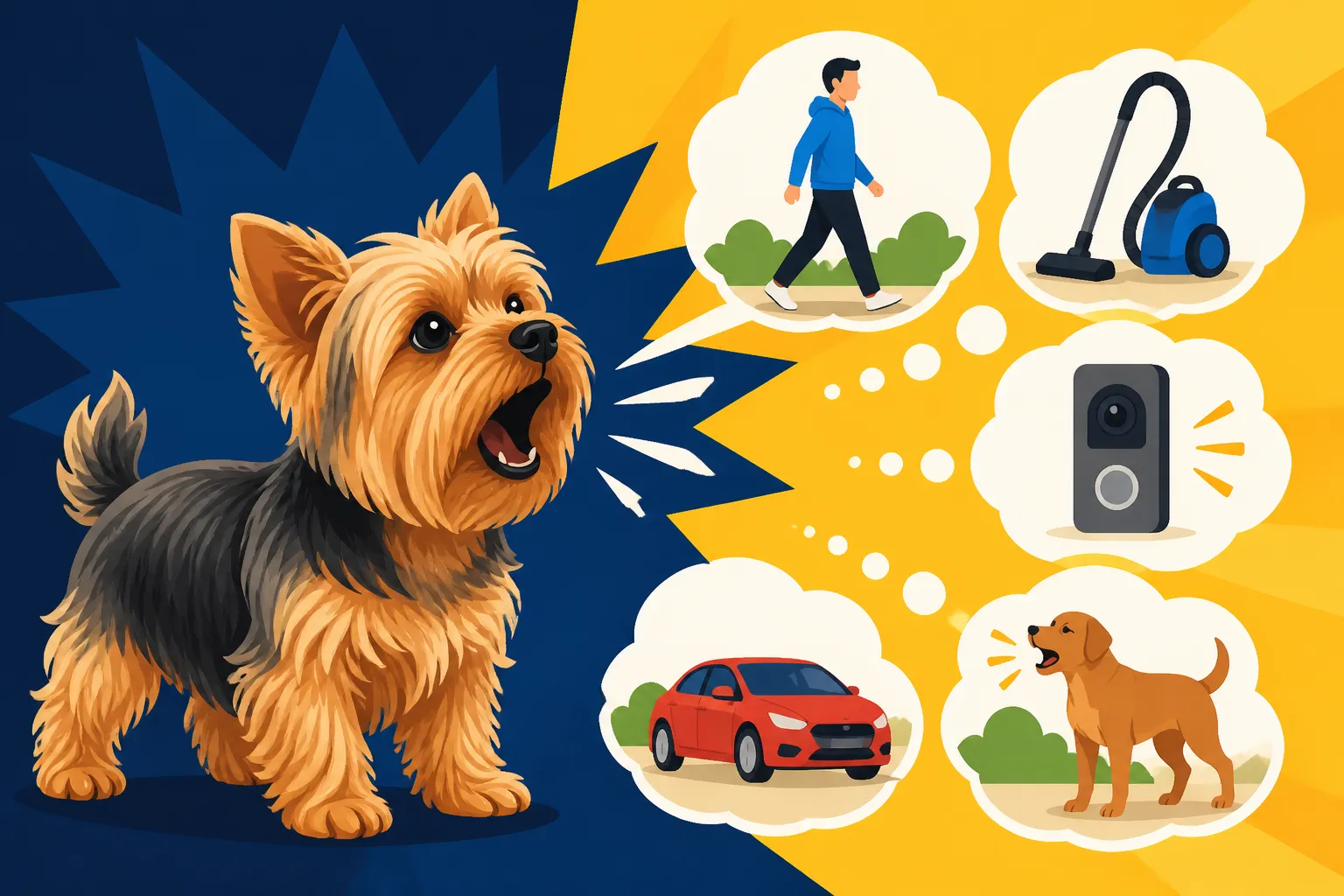
Our homes are full of sights and sounds that can easily set off a Yorkie's alert system. Think about it: a Yorkie’s world is low to the ground, and their senses are incredibly sharp. A car driving by, a distant siren, children playing down the street, or even the wind rustling leaves against the window can all be perceived as significant events by your vigilant little friend. They often feel it’s their duty to let you know about everything happening in their perceived territory.
These auditory and visual cues are constantly bombarding them, especially if they have access to windows with a good view or live in a busy area. They might bark at the postman, a neighbor’s dog, or simply the sound of someone walking on the sidewalk. This type of barking is often territorial or alarm-based, and it can be particularly frustrating because the triggers are so frequent and often unavoidable. For example, if you live near a school, dismissal time might turn into an hourly barking concert.
Social Triggers: People, Pups, and Prowlers
Yorkies are highly social creatures, but their interactions with people and other animals can be a significant source of barking. If your Yorkie isn't properly socialized, or if they've had negative experiences, they might bark out of fear or over-excitement when encountering new faces or other dogs. This is especially true for Why Does My Yorkie Keep Barking At Strangers. They might perceive a new person as a threat to their family or territory, even if that person is just a friend coming to visit.
Conversely, some Yorkies bark out of sheer exuberance when they see someone they know and love. It's their way of expressing joy and demanding attention, which, while endearing at first, can become quite loud. Introducing a Yorkie to new experiences and ensuring proper How to Socialize a Yorkie Puppy is crucial for developing a confident, well-adjusted adult dog less prone to fear-based or over-excitement barking. Without it, every new encounter can be a barking trigger.
Internal States: Fear, Frustration, and Excitement
Beyond external triggers, a Yorkie's internal emotional state plays a massive role in their barking habits. Fear is a common underlying cause; a Yorkie might feel vulnerable due to their small size and bark to ward off perceived threats. This could be anything from a large dog walking past to a new appliance making an unfamiliar noise. Frustration also fuels barking, especially if they see something they want but can't reach, like a squirrel on the other side of a window.
Excitement is another huge factor. Some Yorkies become overly stimulated by play, greetings, or even just anticipating a walk, leading to bursts of enthusiastic barking. Think of it as their way of saying, "Hurry up! Let's go!" or "Play with me now!" Additionally, a bored or underexercised Yorkie, even with their relatively low Yorkshire Terrier Energy Level, can resort to barking as a way to burn off pent-up energy or to simply get attention because they have nothing better to do. This brings us to the deeper behavioral roots of this common issue.
Unpacking the Behavioral Roots of Excessive Vocalization
When a Yorkie barks at everything, it’s not always just their terrier nature; often, specific behavioral patterns have developed that reinforce the barking. These learned behaviors are critical to understand because they provide direct pathways to intervention. Addressing these roots requires patience, consistency, and a deep understanding of canine psychology.
Demand Barking: When Barking Gets Results
One of the most common reasons a Yorkie barks excessively is that they've learned it's an effective way to get what they want. This is known as demand barking. If your Yorkie barks at you and then you immediately give them attention, food, toys, or access to something, you've inadvertently taught them that barking is a successful communication tool. They might bark for attention, to go outside, for a treat, or even to instigate playtime.
Consider a scenario where your Yorkie nudges their toy towards you, you don't respond, and then they start barking. If you then pick up the toy to play, you've just reinforced the barking. Breaking this cycle requires a shift in your response. The key is to never reward barking. Instead, wait for a moment of quiet, even if it's just a second, before giving them what they want. This teaches them that calm behavior, not demand barking, is what earns rewards.
Boredom and Underexercised Energy
Even though Yorkies are small, they are intelligent and energetic dogs that require mental and physical stimulation. A bored Yorkie is a creative Yorkie, and that creativity often manifests as problem behaviors, including excessive barking. If your Yorkie isn't getting enough exercise, playtime, or mental challenges, they might start barking at everything as a way to self-entertain or to signal their frustration. They're essentially saying, "I'm bored! Do something with me!"
This isn't just about physical walks. Mental enrichment is equally important. Puzzle toys, training sessions, and even just novel experiences can help tire out their minds. For example, a good 15-minute training session teaching new tricks or practicing commands can be as exhausting as a much longer walk. If your Yorkie is barking excessively, evaluate their daily routine. Are they getting enough physical activity? Are they being mentally challenged? A tired Yorkie is often a quiet Yorkie.
Territorial Instincts and "Small Dog Syndrome"
Yorkies, despite their size, can be very territorial. They consider their home, yard, and even your lap to be their domain, and they will bark to defend it from perceived intruders. This territorial barking is often directed at people walking by, other dogs, or even unfamiliar sounds that suggest someone is approaching their territory. It's their way of saying, "This is my house, and I'm on guard!"
This territoriality can sometimes combine with what's often referred to as "small dog syndrome." This isn't a clinical diagnosis, but rather a behavioral pattern where smaller dogs act more aggressively or vocally than larger dogs, often due to a lack of proper training, socialization, or a feeling of vulnerability. They might feel the need to compensate for their size by being extra assertive and vocal. It's a common issue with small breeds that, sadly, owners sometimes inadvertently encourage by not setting boundaries or providing consistent training because "they're just so small." However, consistent Yorkshire Terrier Behavior Problems and Solutions can help.
Anxiety and Insecurity
Underneath a lot of excessive barking, especially the kind that seems to be "at everything," there can be an underlying current of anxiety or insecurity. A Yorkie might bark because they are genuinely fearful of certain sights, sounds, or situations. This could manifest as barking at visitors, thunderstorms, or even when left alone, as a sign of separation anxiety. For a deeper dive into this, check out our guide on Yorkie Separation Anxiety: Signs and Fixes.
Dogs, like people, can develop anxieties based on past experiences or simply their individual temperament. A rescue Yorkie, for instance, might bark due to past trauma or an insecure attachment. Puppy mill dogs often exhibit high levels of anxiety. This type of barking isn't about being disobedient; it's a distress signal. Recognizing this allows you to approach the problem with empathy, focusing on building their confidence and sense of security rather than just punishing the barking. Tools like calming chews or a secure crate can sometimes help create a sense of safety.
Effective Strategies to Manage and Reduce Barking
Once you understand why your Yorkie is barking, you can start implementing effective strategies to manage and reduce the behavior. This isn't about silencing your dog completely, but rather teaching them when it's appropriate to bark and when it's not. It’s a marathon, not a sprint, so prepare for consistency and patience.
Identifying and Minimizing Triggers
The first practical step is to become a detective and identify the specific triggers that set off your Yorkie's barking. Keep a journal for a few days, noting down: when they bark, what they bark at, and what happened right before. Is it the doorbell? The neighbor's cat? Certain sounds outside? Understanding these patterns is gold.
Once you know the triggers, you can work to minimize them. For visual triggers, try blocking their view. If your Yorkie barks incessantly at passersby from the window, consider using frosted window film, curtains, or strategically placed furniture to obscure their line of sight. For auditory triggers, consider white noise machines or turning on the radio/TV to mask outside sounds. For example, if your Yorkie constantly barks when the mail carrier approaches, try turning on a vacuum cleaner or loud music around that time to muffle the sound. This isn't a long-term fix, but it can reduce the frequency of the behavior while you work on other training methods.
Implementing Consistent Training Techniques
Training is paramount when it comes to managing barking. This isn't about scolding; it's about teaching your Yorkie what you do want them to do instead of barking. Positive reinforcement methods are highly effective for Yorkies, as they are intelligent and eager to please, especially for a tasty treat. The How to Train a Yorkshire Terrier guide can offer a broader perspective, but for barking, specific commands are key.
One of the most important commands to teach is "Quiet." Start by letting your Yorkie bark a few times at a trigger (like someone at the door). Then, show them a treat near their nose to get their attention and make them stop barking. As soon as they are quiet for even a second, say "Quiet!" and immediately give the treat. Gradually increase the duration of quiet time before rewarding. Another powerful technique is teaching "Place" or "Go to Bed" where they learn to go to a designated spot when a trigger appears. Using an online program like BAXTER & Bella can provide structured guidance and support for teaching these vital commands and addressing stubborn habits. They offer comprehensive, step-by-step instructions that many Yorkie owners find incredibly helpful.
Enrichment and Exercise: The Boredom Buster
As discussed, a bored Yorkie is a noisy Yorkie. Providing adequate physical exercise and mental enrichment can dramatically reduce barking rooted in boredom or pent-up energy. Remember, even a small dog needs to move and think! Short, frequent walks are often better than one long one for Yorkies. A good 20-30 minute walk twice a day, broken up with some indoor playtime, can make a huge difference.
Beyond physical activity, mental stimulation is vital. Invest in puzzle toys that dispense treats, engaging chew toys, or even snuffle mats that make them work for their food. Rotating toys regularly keeps them novel and interesting. Interactive games like "find the treat" or teaching new tricks not only provide mental exercise but also strengthen your bond. Even practicing existing commands for a few minutes each day keeps their brains engaged. You can find a wide variety of these enrichment items on Amazon, from KONG puzzle toys to interactive feeders, that can keep your Yorkie's mind busy and less inclined to bark out of sheer boredom.
Advanced Training and Professional Support
Sometimes, even with consistent effort, a Yorkie's barking habits can be deeply ingrained or stem from complex issues like severe anxiety. In these cases, it might be time to look into more advanced training techniques or consider professional intervention.
Desensitization and Counter-Conditioning
For Yorkies who bark out of fear or over-excitement at specific triggers, desensitization and counter-conditioning are powerful tools. Desensitization involves gradually exposing your Yorkie to the trigger at a low intensity, so they become less reactive over time. For instance, if they bark at the sound of the doorbell, you might start by playing a recording of the doorbell sound at a very low volume, rewarding calm behavior. Gradually, you increase the volume as your dog remains calm.
Counter-conditioning pairs the trigger with something positive. If your Yorkie barks at strangers, you could have a friend stand far away, just within your dog's sight, and toss high-value treats to your Yorkie every time the stranger appears. The goal is to change your Yorkie’s emotional response from "stranger = danger/bark" to "stranger = yummy treats." Over time, the association shifts, and the barking lessens. This requires incredible patience and consistency, ensuring you never push your dog beyond their comfort zone, which could make the fear worse. Our guide on How to Desensitize a Yorkie to Noises offers more specific steps for auditory triggers.
When to Consult a Professional Trainer or Vet
While many barking issues can be resolved with consistent home training, some situations warrant professional help. If your Yorkie's barking is severe, accompanied by other concerning behaviors (like aggression, destructive chewing, or excessive panting), or if you’ve tried everything and aren't seeing improvement, it's time to reach out. A certified professional dog trainer or a veterinary behaviorist can provide a tailored behavior modification plan.
They can identify subtle nuances in your Yorkie's behavior, rule out underlying medical conditions (which can sometimes contribute to behavioral changes), and guide you through complex training protocols. For example, if your Yorkie is consistently barking and anxious at night, leading to Why Does My Yorkie Keep Barking At Night, a professional can assess if it's medical, anxiety-related, or simply a learned habit. They might recommend specific tools, training classes, or even medication in severe cases of anxiety. Remember, seeking help is a sign of a responsible pet parent, not a failure.
Building a Peaceful Home Environment
Creating an environment that supports calm behavior is just as important as direct training. Your home should be a sanctuary for your Yorkie, minimizing stressors and providing consistent cues for appropriate behavior.
Creating a Calm Sanctuary
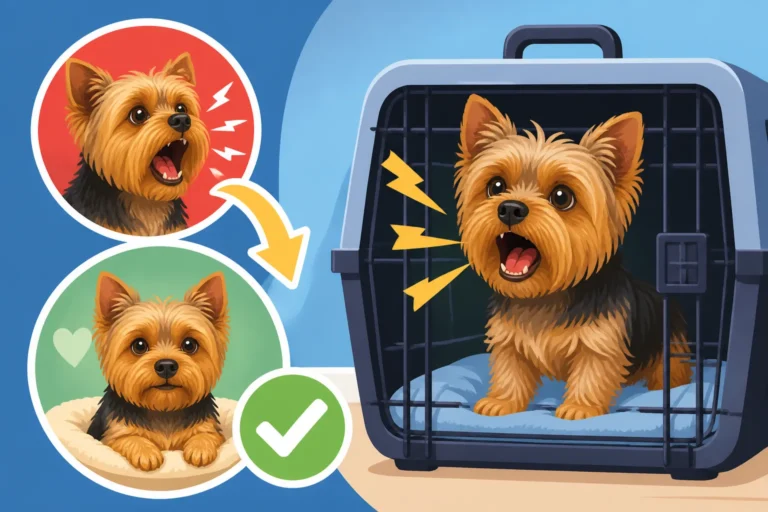
A peaceful home environment is crucial for a Yorkie prone to excessive barking. This means minimizing unnecessary stimulation and providing a designated safe space where they can retreat and relax. Consider a comfortable crate or a cozy dog bed in a quiet corner of the house. This area should be their sanctuary, not a place for punishment. Make it inviting with soft blankets and a favorite chew toy.
Using calming aids can also be beneficial. Pheromone diffusers, calming chews, or even certain types of calming music designed for dogs can help reduce anxiety levels, especially for those sensitive to noise or prone to Why Yorkies Shake and Tremble. Regularly scheduled quiet times, where all family members engage in low-key activities, can also help model calm behavior for your Yorkie. The goal is to show them that home is a safe, predictable, and quiet place, not a battleground for constant alerts.
Consistency is Key: The Whole Family Approach
Perhaps the most critical element in managing any behavioral issue with a dog is consistency, and barking is no exception. Every person in the household must be on the same page regarding rules, commands, and responses to barking. If one family member rewards barking for attention while another ignores it, your Yorkie will become confused and the behavior will likely persist. They learn what works, and if it works sometimes, they’ll keep trying!
Before you start any new training protocol, gather everyone involved in your Yorkie's care and discuss the plan. Ensure everyone knows the "Quiet" command, how to properly reward calm behavior, and how to ignore demand barking. This unified front helps your Yorkie understand expectations much faster and reduces frustration for everyone. Consistent training, as outlined in our general Yorkshire Terrier Obedience Training Basics guide, is not just about teaching commands; it's about establishing clear communication and boundaries that foster a well-behaved, confident companion.
Disclaimer
This article is for general informational purposes only and does not constitute professional advice. Laws, prices and regulations vary by location and change over time. Consult a qualified professional for guidance on your specific situation.