How to Potty Train a Yorkie Puppy
It’s incredibly disheartening when you bring home that adorable, fluffy Yorkshire Terrier puppy, full of dreams of cuddles and perfectly behaved potty breaks, only to find yourself constantly cleaning up little puddles and messes. Many Yorkie owners quickly realize that potty training these intelligent but sometimes stubborn little pups can be a real marathon, not a sprint, leaving you feeling frustrated and wondering if you're doing something wrong. This comprehensive guide is here to walk you through the realistic steps and empathetic strategies needed to successfully potty train your Yorkie puppy, turning those frustrating accidents into a distant memory.
Understanding the Yorkie Potty Training Challenge
Let’s be honest, potty training a Yorkshire Terrier puppy isn't always a walk in the park. These tiny bundles of joy come with a unique set of characteristics that can make the process feel like an uphill battle. It’s not just you; many Yorkie parents face similar hurdles. Understanding these inherent traits is the first step toward developing a training plan that actually works for your little companion.
Small Bladders and Fast Metabolisms
One of the most fundamental reasons Yorkie puppies struggle with holding it in is simply their size. Imagine trying to hold your bladder when it’s the size of a thimble! Yorkies, especially as young puppies, have incredibly small bladders, meaning they fill up very quickly. This isn't a sign of defiance; it's pure physiology.
Their fast metabolisms also play a significant role. What goes in often comes out relatively quickly, sometimes within minutes of eating or drinking. This means that a Yorkie puppy needs frequent potty breaks – far more often than larger breed puppies. If you miss that crucial window, an accident is almost inevitable. It’s easy to get sidetracked with daily life, but those few extra minutes can make all the difference between a successful outdoor trip and a cleanup job on your new rug. You might find yourself taking your puppy out every 30 minutes to an hour when they are very young, especially after waking up, playing, or eating. This constant vigilance can be exhausting, but it's vital during the early stages.
Stubbornness and Scent Marking
Yorkshire Terriers are known for their big personalities packed into tiny bodies. They are often described as feisty, independent, and sometimes, yes, a little bit stubborn. This strong will can definitely spill over into potty training. If they’ve decided they prefer to go indoors, or if they’ve had accidents in a particular spot, that scent can draw them back repeatedly. Dogs are naturally inclined to go where they smell previous eliminations, making thoroughly cleaning up accidents absolutely critical.
Another common behavior, particularly in intact males but also seen in females, is scent marking. This isn't about emptying their bladder entirely, but rather leaving small amounts of urine to mark territory. This behavior can be incredibly frustrating indoors, as they might lift a leg on furniture or walls. While often linked to hormones, it can also be a learned behavior or a response to anxiety or perceived competition. Understanding that your Yorkie's "stubbornness" might actually be instinctual behavior can help you approach the problem with more patience and targeted strategies rather than just frustration. If you're struggling with this, you might consider reading our guide on Why Is My Yorkie So Hard to Potty Train for more insights.
Setting Up for Potty Training Success
Before you even start taking your puppy outside, a solid foundation needs to be laid indoors. Think of it as preparing the environment and establishing the ground rules before the game even begins. Many potty training struggles stem from a lack of clear structure and preparation, so taking the time now will save you a lot of headaches later.
Essential Supplies and Designated Areas
Having the right tools and designated spots is non-negotiable for successful potty training. First off, a good quality crate is paramount. It should be just large enough for your Yorkie puppy to stand up, turn around, and lie down comfortably, but not so big that they can relieve themselves in one corner and sleep in another. Remember, dogs instinctively avoid soiling their sleeping area. Many crates come with dividers, allowing you to adjust the size as your puppy grows. You can find excellent options for various sizes and features on platforms like Amazon.
Beyond the crate, consider puppy pads if you plan to use them, especially in the early days or if you live in an apartment. Choose a specific, easily accessible spot for the pad. For outdoor training, a sturdy, comfortable harness and leash are essential. Yorkies have delicate tracheas, so a harness is always preferable to a collar to prevent injury, especially if they pull. You’ll also need high-value treats for rewards and an enzymatic cleaner designed to eliminate pet odors. Regular household cleaners might mask the smell for humans, but a dog's keen sense of smell will still detect it, potentially drawing them back to the "accident" spot. This enzymatic cleaner is critical for preventing repeat accidents in the same indoor locations. A handy guide on a Puppy Yorkshire Terrier Health Checklist might also provide useful information on general puppy care.
Establishing a Consistent Routine
Consistency is the absolute backbone of potty training, especially with a Yorkie. Puppies thrive on predictability, and a consistent routine helps them understand when and where they are expected to go to the bathroom. This means taking your puppy out at the same times every single day, without fail.
Your routine should include potty breaks:
- Immediately upon waking up in the morning.
- After every nap.
- After every meal or drink.
- After periods of play or excitement.
- Before bedtime.
- Every 30-60 minutes in between, especially for very young puppies.
Creating a detailed schedule and sticking to it religiously will help your puppy learn to anticipate when it's time to go outside. For instance, if you feed your puppy at 7 AM, 12 PM, and 5 PM, plan for a potty break within 5-15 minutes after each meal. Even on rainy days or when you're busy, maintaining this schedule is crucial. Any deviation can confuse your puppy and lead to setbacks. Establishing a routine for your Yorkie is part of a larger Yorkshire Terrier Puppy Training Schedule that encompasses all aspects of their early development.
The Core Potty Training Methods
Once your environment is set up and you're ready for consistency, it's time to dive into the specific training methods. There isn't a one-size-fits-all approach, and what works best for one Yorkie might not work for another. Often, a combination of strategies yields the best results.
Crate Training Techniques
Crate training is, hands down, one of the most effective tools for potty training any dog, including tiny Yorkies. As we mentioned, dogs are clean animals by nature and will instinctively avoid soiling their den. A properly sized crate leverages this natural instinct. The goal isn't to use the crate as punishment, but as a safe, comfortable den where your puppy learns to hold their bladder.
When using a crate for potty training, here’s how to approach it:
- Introduce the Crate Positively: Make the crate a happy place with soft bedding, favorite toys, and treats. Never force your puppy into the crate.
- Short Stays, Frequent Breaks: For a young Yorkie puppy (8-12 weeks), they typically can't hold their bladder for more than 1-2 hours during the day. As they get older, this time increases. Always take your puppy directly from the crate to their designated outdoor potty spot.
- No Potty = Back to Crate: If your puppy doesn't go potty outside within a few minutes, bring them back inside and put them back in the crate for 10-15 minutes. Then, try again. This teaches them that outdoor time is for business, not just play.
- Supervised Freedom: Only allow your puppy unsupervised freedom in the house after they have successfully pottied outside. If you can't actively supervise (e.g., they're tethered to you, or in a playpen), they should be in their crate.
For more in-depth guidance, our article on How to Crate Train a Yorkie can provide a step-by-step breakdown. Remember, a crate isn't just for potty training; it also helps prevent destructive chewing and provides a safe space for your Yorkie when you can't keep a watchful eye. BAXTER & Bella offers online puppy training programs that integrate crate training into a holistic approach, which can be very helpful for new puppy parents.
Pee Pad Training vs Outdoor Training
This is a big decision for many Yorkie owners, particularly those living in apartments or facing inclement weather. Both methods have their pros and cons.
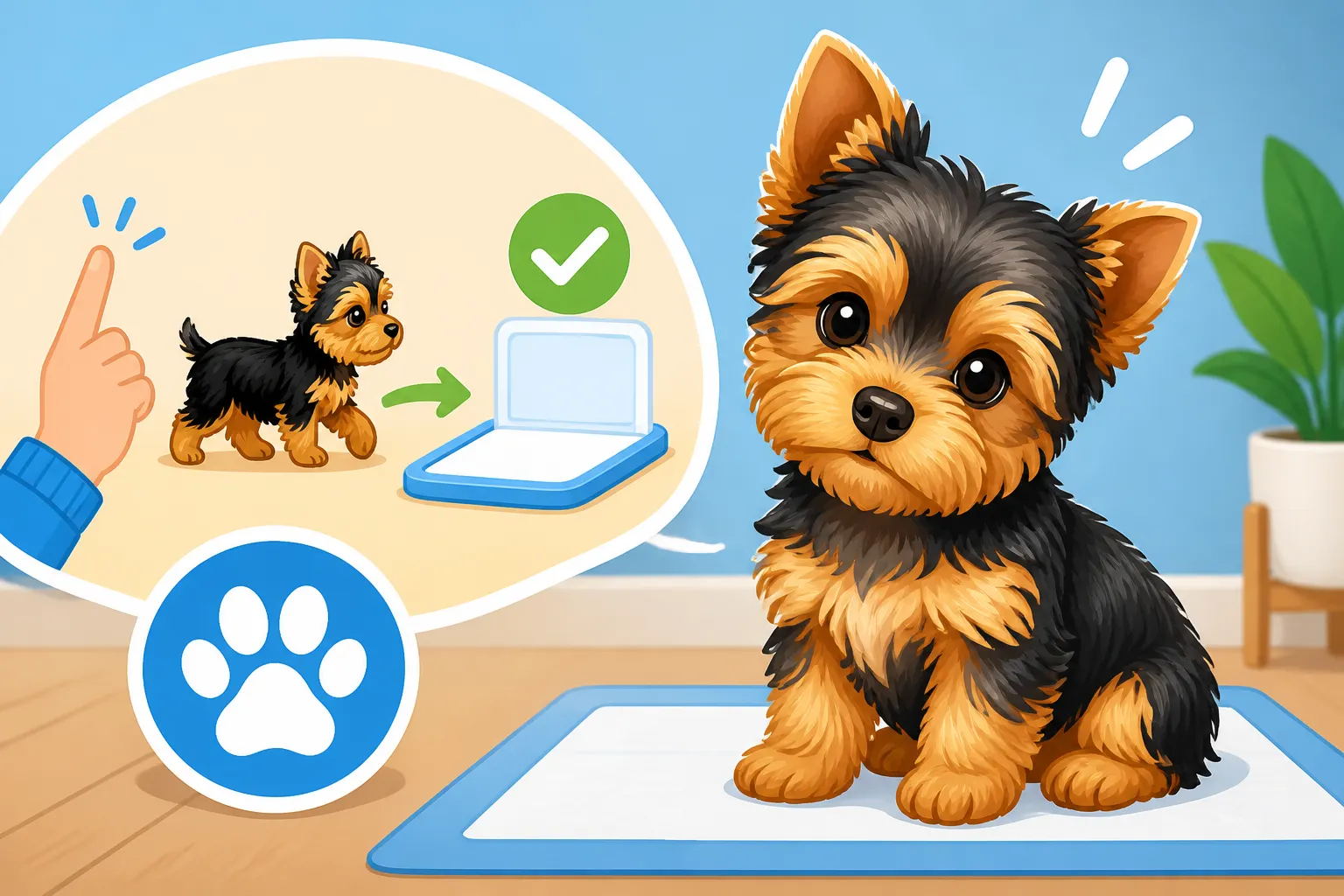
Pee Pad Training: This involves teaching your puppy to relieve themselves on absorbent pads placed indoors.
- Pros: Convenient for apartment dwellers, provides an indoor option during bad weather or when you can't get outside immediately, and can be a good stepping stone for very young puppies who can't hold it long.
- Cons: Can be confusing if you eventually want your dog to go solely outdoors (it teaches them it's okay to go inside), can prolong the overall potty training process, and some dogs might develop a preference for soft indoor surfaces, making outdoor training harder later.
- How to do it: Place pads in a consistent, easily accessible spot. Guide your puppy to the pad after waking, eating, and playing. Reward heavily when they go on the pad. Slowly move the pad closer to the door, and eventually outside if transitioning.
Outdoor Training: This involves teaching your puppy to relieve themselves exclusively outside.
- Pros: Promotes better hygiene indoors, encourages more outdoor exercise, and establishes a clear distinction between indoor and outdoor spaces.
- Cons: Requires more effort and frequent trips outside, can be challenging in harsh weather, and might not be feasible for all living situations (e.g., high-rise apartments with no easy outdoor access).
- How to do it: Take your puppy out frequently to a designated potty spot. Use a consistent phrase ("Go potty!"). Reward immediately and enthusiastically with a high-value treat and praise the moment they finish their business.
Many people start with pee pads and then transition to outdoor training. This transition, however, can sometimes be difficult and lead to Yorkie Potty Training Regression. Our detailed comparison, Pee Pad vs Outdoor Training for Yorkies, offers more insights to help you make the best choice for your family and lifestyle.
Bell Training for Communication
Bell training is a fantastic method that teaches your Yorkie puppy to communicate their need to go outside by ringing a bell. It empowers them to tell you when it’s potty time, rather than you having to constantly guess or anticipate. This can significantly reduce accidents and build a stronger bond between you and your pup.
Here's how to implement bell training:
- Hang the Bells: Purchase a set of potty bells (you can find many options on Amazon) and hang them on the doorknob of the door you use to take your puppy outside. Hang them low enough for your Yorkie to easily nudge with their nose or paw.
- Associate Bells with Going Out: Every single time you take your puppy out for a potty break, gently take their paw or nose and tap the bells, then immediately open the door and go outside. Do this consistently, even if you think they don't need to go.
- Reward Success: When your puppy rings the bell on their own and then potties outside, shower them with praise and high-value treats.
- Be Patient: It can take some time for your Yorkie to connect the dots, but with consistency, they will understand that ringing the bells leads to outdoor potty time.
This method gives your Yorkie an active role in their potty routine, fostering independence and reducing anxiety that can sometimes come with holding it in. You’ll be amazed at how quickly some Yorkies pick up on this! It’s a wonderful way to reinforce the command How to Teach a Yorkie to Go Potty by providing a clear signal.
Mastering the Potty Training Schedule
As mentioned earlier, a consistent schedule is paramount. But what exactly does that schedule look like for a tiny Yorkie puppy? It's often more demanding than new owners anticipate, but understanding the general guidelines can help you manage expectations and plan your days.
Puppy Potty Breaks by Age
The frequency of potty breaks is directly related to your Yorkie puppy’s age and bladder control. The general rule of thumb is that a puppy can hold their bladder for roughly one hour per month of age, plus one. So, an 8-week-old (2-month-old) puppy might be able to hold it for about 2-3 hours during the day. However, for a tiny Yorkie, it's often best to err on the side of caution and take them out even more frequently.
Here’s a general guideline, but always observe your individual puppy as every dog is different:
- 8-12 Weeks Old: Every 30-60 minutes during waking hours, immediately after waking, after eating/drinking, and before and after play. This is when they have the least control and need the most frequent breaks.
- 12-16 Weeks Old: Every 1-2 hours. You might start to see slight improvements in their ability to hold it, but consistency is still key.
- 16-20 Weeks Old: Every 2-3 hours. By this age, many puppies are starting to get the hang of it, especially if you’ve been diligent.
- 6 Months and Older: Every 3-4 hours, though ideally, adult dogs should have opportunities more frequently than this for comfort and health.
It's crucial to understand that these are minimums. If your puppy is actively playing, just drank a lot of water, or seems restless, take them out, even if it hasn't been "long enough" according to the schedule. Always take them to the same designated spot, use a consistent cue word, and praise lavishly when they succeed. Our guide on How to Set a Yorkie Potty Schedule offers even more detailed examples to help you plan.
Nighttime Potty Training Strategies
Nighttime potty training can feel like the final frontier for many Yorkie owners. The thought of interrupted sleep, or worse, waking up to a mess, is daunting. However, with the right strategy, your Yorkie puppy can learn to sleep through the night without accidents.
- Restrict Water Before Bed: About 2-3 hours before bedtime, limit your puppy's water intake. Make sure they have access to water throughout the day, but cutting it off closer to bedtime can help them last longer overnight.
- Last Potty Break: Take your puppy out for a final, thorough potty break right before you put them in their crate for the night. Make sure they fully empty their bladder and bowels.
- Crate Management: Your Yorkie should sleep in their crate right next to your bed. This allows you to hear if they stir, whine, or make any sounds indicating they need to go out. The closer they are, the quicker you can respond.
- Middle-of-the-Night Breaks: For very young puppies (8-12 weeks), you might need to set an alarm for a middle-of-the-night potty break, perhaps once or twice. Keep these trips calm, quiet, and all business – no play or extra stimulation. Take them out, wait for them to go, praise quietly, and immediately put them back in the crate.
- Gradual Extension: As your puppy gets older and shows signs of holding it longer, you can gradually extend the time between night potty breaks.
Remember, patience is key. It’s normal for puppies to need a few weeks or even months to reliably make it through the entire night. But with a consistent approach, your Yorkie will get there. Dive deeper into specific tips with our article on Nighttime Potty Training for Yorkie Puppies.
Troubleshooting Common Potty Training Problems
Even with the best intentions and the most consistent routine, setbacks happen. It’s important not to get discouraged. Potty training isn't a linear process, and understanding why issues arise can help you adjust your approach effectively.
Accidents Inside: What Went Wrong?
When your Yorkie puppy has an accident inside, it’s rarely out of malice. Instead, it’s usually a communication breakdown or a sign that something in the training process needs adjusting. Before you get frustrated, take a deep breath and consider these common reasons:
- Too Much Freedom, Too Soon: The most frequent mistake is giving a puppy too much unsupervised access to the house. If you can’t actively watch your Yorkie (and we mean actively – like within arm's reach), they should be in their crate or a contained playpen. Accidents often happen when you’re distracted or not monitoring them closely.
- Missed Potty Cues: Puppies often give subtle signs before they need to go: sniffing around, circling, suddenly stopping play, or heading towards a secluded corner. If you’re not attuned to these cues, you might miss the window to take them outside.
- Inconsistent Schedule: Any deviation from the established potty schedule can confuse your puppy. Even one missed trip or a later-than-usual outing can lead to an accident.
- Incomplete Cleanup: If previous accidents haven't been thoroughly cleaned with an enzymatic cleaner, the lingering scent will tell your Yorkie that this spot is an acceptable place to relieve themselves.
- Stress or Health Issues: Sometimes, accidents can be a sign of stress, anxiety, or an underlying health problem like a urinary tract infection (UTI) or even conditions like Yorkshire Terrier Hypoglycemia: Signs and Care which can disrupt normal routines. If accidents are sudden, frequent, or accompanied by other symptoms, a vet visit is always warranted. Our guide on Common Yorkie Puppy Illnesses can help you identify other potential health concerns.
Dealing with Potty Training Regression
Just when you think you’ve got it all figured out, your Yorkie puppy might suddenly start having accidents indoors again, seemingly out of nowhere. This is known as potty training regression, and it’s a normal, albeit frustrating, part of puppy development.
Possible causes for regression include:
- Adolescence: Around 6-12 months, puppies enter adolescence. This is a period of "testing boundaries" where they might challenge rules they previously understood.
- Changes in Routine: Any significant change—a new family member, a move, a different schedule—can cause stress and lead to accidents.
- Medical Issues: Again, always rule out health problems first. A bladder infection or other ailment could be the culprit.
- Inconsistent Reinforcement: Perhaps you've become less diligent with praise and treats for outdoor potty breaks, making them less motivating.
When regression occurs, the best approach is to go back to basics. Treat your Yorkie like a brand-new puppy again: increase the frequency of potty breaks, intensify supervision, and reinforce successful outdoor eliminations with enthusiasm. Don't punish regression; calmly clean up the mess and recommit to the training plan. For more detailed strategies, refer to our specific article on Yorkie Potty Training Regression.
When to Seek Professional Help
There are times when despite your best efforts, potty training challenges persist. If you've diligently followed all the advice, maintained a consistent routine, and ruled out medical issues, but your Yorkie puppy is still having frequent accidents or displaying concerning behaviors, it might be time to call in a professional.
Consider seeking help from:
- Your Veterinarian: As mentioned, persistent accidents could be a sign of an underlying medical condition. Your vet can perform tests to rule out UTIs, bladder stones, or other health problems.
- Certified Professional Dog Trainer (CPDT): A professional trainer specializes in canine behavior and can offer personalized guidance. They can observe your Yorkie, identify specific triggers or issues you might be missing, and develop a tailored training plan. They can also provide hands-on demonstrations and support.
- Veterinary Behaviorist: For more complex or deeply ingrained behavioral issues, a veterinary behaviorist (a DVM with specialized training in animal behavior) can be invaluable. They can diagnose behavioral conditions and prescribe medications if necessary, working in conjunction with training.
Don’t view seeking professional help as a failure. It’s an investment in your Yorkie’s well-being and your peace of mind, ensuring both of you can enjoy a happy, accident-free life together. Online programs like those offered by BAXTER & Bella can also provide excellent foundational support and access to trainers who can answer specific questions.
Positive Reinforcement and Patience
At the heart of all successful puppy training, especially with a sensitive and smart breed like the Yorkie, lies positive reinforcement and an abundance of patience. These aren't just buzzwords; they are the most powerful tools in your training arsenal.
Rewarding Good Behavior
Positive reinforcement means adding something desirable to increase the likelihood of a behavior being repeated. For potty training, this translates to immediately rewarding your Yorkie puppy the moment they finish eliminating in the correct spot. The timing is absolutely critical – the reward needs to happen within 1-3 seconds of the behavior to make the connection clear.
Here’s how to do it effectively:
- High-Value Treats: Use small, delicious, and easy-to-eat treats that your Yorkie absolutely loves. Think tiny pieces of cooked chicken, cheese, or specialized training treats.
- Enthusiastic Praise: Coupled with treats, shower your puppy with verbal praise ("Good potty!," "Yes!"), happy tones, and even a quick, gentle petting session. Make it a celebration!
- No Reward for Indoor Accidents: Never reward or praise an indoor accident. Simply clean it up calmly.
- Consistency in Rewards: Don’t stop rewarding once your puppy seems to "get it." Continue with consistent, though perhaps less frequent, rewards to maintain the learned behavior.
This method builds a positive association with going potty outdoors, making it a desirable and rewarding experience for your Yorkie. It’s much more effective and humane than punishment-based methods, which can lead to fear, anxiety, and hiding accidents rather than preventing them. For a deeper dive into these techniques, explore our article on Positive Reinforcement Training for Yorkies.
Avoiding Punishment and Frustration
It's easy to get frustrated when your little Yorkie has an accident indoors, especially after you've put in so much effort. However, punishing your puppy after an accident, whether it's yelling, rubbing their nose in it, or physical reprimands, is counterproductive and harmful.
Here’s why punishment doesn't work and what to do instead:
- Fear, Not Understanding: Puppies don't connect punishment for an accident with the act of having gone potty indoors. They connect it with you. This can make them fearful of you, causing them to hide their accidents or be reluctant to go potty in your presence, even outdoors.
- Damaged Trust: Punishment erodes the trust between you and your puppy, which is the foundation of any good relationship.
- Increased Anxiety: A fearful or anxious puppy is more prone to accidents, creating a vicious cycle.
If you find an accident, simply clean it up calmly with your enzymatic cleaner. Don't scold. It means you missed a cue or a scheduled break. The key is prevention through supervision and consistency, not correction after the fact. Focus your energy on preventing future accidents by taking your puppy out more often, supervising them closely, and reinforcing successes. Remember, your Yorkie isn't trying to be naughty; they're learning. Your patience and understanding are their greatest assets.
| Potty Training Method | Description | Pros | Cons |
|---|---|---|---|
| Crate Training | Using a small den to leverage a dog's natural instinct not to soil its bed. | Highly effective; fosters bladder control; provides a safe space. | Requires proper sizing and positive introduction; not for extended periods. |
| Pee Pad Training | Teaching the puppy to relieve itself on absorbent pads indoors. | Convenient for apartments/bad weather; good for very young pups. | Can confuse outdoor training; may encourage indoor elimination habits; requires continuous pad use. |
| Outdoor Training | Teaching the puppy to relieve itself exclusively in a designated outdoor spot. | Promotes clear indoor/outdoor distinction; encourages exercise. | Requires frequent outdoor trips regardless of weather; might be less feasible for some living situations. |
| Bell Training | Teaching the puppy to ring a bell to signal the need to go outside. | Empowers communication; reduces guessing; can be combined with other methods. | Requires initial training and consistency; bells can be noisy; puppy might ring for attention. |
Potty training a Yorkie puppy requires a significant investment of time, patience, and consistency, but it is absolutely achievable. By understanding their unique needs, setting up a proper environment, employing effective training methods, and maintaining a positive attitude, you'll soon have a reliably potty-trained companion.
Disclaimer
Always consult with a professional veterinarian for any health concerns or before making significant changes to your pet's diet or routine. The information provided in this guide is for educational purposes only and should not be considered a substitute for professional veterinary advice.