Yorkie Dental Disease: Costs and Prevention
Your Yorkie’s breath has turned sharp, there is brown buildup on the back teeth, and the vet just handed you an estimate for a cleaning with possible extractions that made your stomach drop. Dental disease is one of the most common and expensive problems in this tiny breed. This guide breaks down what treatment really costs and the daily habits that keep those bills small.
Why Yorkies Are So Prone to Dental Disease
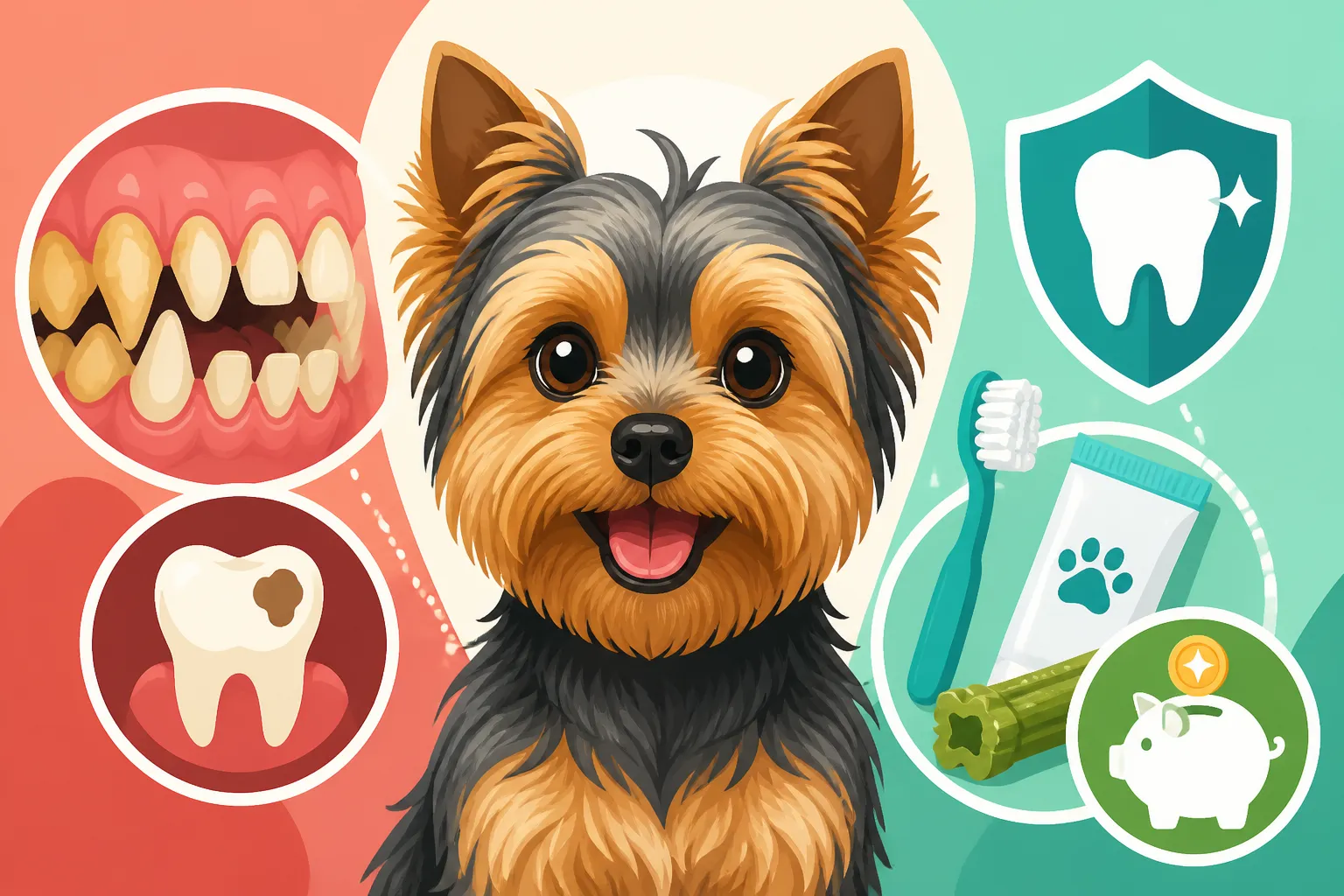
If you have ever looked inside a Yorkie’s mouth, you already know part of the answer. A full set of 42 adult teeth is packed into a jaw that is only a few inches long. Teeth sit crowded and overlapped, which creates tight pockets where food and bacteria collect and where a toothbrush has a hard time reaching.
Many Yorkies also hold on to their baby teeth. Retained puppy canines sitting right next to the adult teeth are extremely common in the breed, and those double rows trap plaque from the very start. Add a fondness for soft food and treats, and you have a mouth that builds tartar fast.
How the Disease Progresses
Periodontal disease moves through recognizable stages, and the cost of treatment climbs with each one:
- Plaque, a soft and sticky film, forms on the teeth within hours of eating.
- Within days, plaque that is not brushed away hardens into tartar along the gumline.
- Bacteria under the tartar inflame the gums, causing redness, bleeding and bad breath. This is gingivitis, and it is still reversible.
- Inflammation spreads below the gumline, destroying the ligament and bone that hold the teeth in place. This is periodontitis, and the damage is permanent.
- Teeth loosen, roots become infected, and extractions become necessary.
In a small breed, advanced bone loss in the lower jaw can even weaken the jaw enough to fracture. Bacteria from infected gums may also affect the heart, liver and kidneys over time, which is why vets treat dental health as whole-body health. If you want a deeper look at the warning signs, Yorkshire Terrier Dental Disease: Signs and Care covers them stage by stage.
Signs to Watch for at Home
Most owners notice dental trouble through smell first. Persistent bad breath is not normal, and Yorkie Bad Breath: Causes and Fixes explains how to tell dental odor from other causes. Other signs include red or bleeding gums, yellow or brown buildup, chewing on one side, dropping food, pawing at the face, reluctance to eat dry kibble, and swelling below the eye, which can signal a tooth root abscess.
What Yorkie Dental Treatment Costs
Dental care costs vary widely by region, clinic and how advanced the disease is. The ranges below are typical for general practice clinics in the United States; specialty dental hospitals usually charge more.
| Service | Typical Cost Range | When It Is Needed |
|---|---|---|
| Dental exam during a wellness visit | $50 to $90 | At least once a year |
| Pre-anesthetic bloodwork | $100 to $250 | Before any procedure under anesthesia |
| Cleaning under anesthesia, no extractions | $300 to $800 | Early disease or preventive cleaning |
| Full-mouth dental X-rays | $150 to $300 | Recommended with every cleaning |
| Simple extraction, per tooth | $50 to $150 | Loose or damaged small teeth |
| Surgical extraction, per tooth | $150 to $400 | Canines or multi-rooted teeth |
| Cleaning with several extractions | $800 to $2,500 | Moderate to advanced periodontitis |
| Pain medication and antibiotics | $30 to $100 | After extractions |
The biggest jump in cost comes when disease reaches the point where teeth must be removed. A preventive cleaning for a young Yorkie with mild tartar might land near the low end of the range. A ten-year-old Yorkie with years of untreated buildup can easily need many extractions in one visit, pushing the bill into four figures. Yorkie Dental Cleaning Cost goes into more detail on what drives estimates up or down.
Why Anesthesia Is Part of the Price
Some groomers and pet stores offer anesthesia-free cleanings for a lower price. They scrape visible tartar off the crowns, but they cannot clean below the gumline where disease actually does its damage, and they cannot take X-rays. Most veterinary dental organizations advise against them. A proper cleaning under anesthesia with monitoring is safer and far more thorough, and it is the only way to find problems hidden beneath the gums.
How Pet Insurance Fits In
Pet insurance can soften the blow of a large dental bill, but coverage for dental care varies widely between companies. Some plans cover dental illness and extractions but exclude routine cleanings; others exclude dental disease that was present before the policy began. Healthy Paws, for example, is a popular choice among small breed owners, and like any insurer its policy terms describe exactly which dental treatments are covered and which are excluded.
Before you rely on insurance for dental costs, read the policy wording on preexisting conditions and dental illness, and confirm the details on the insurer’s own site. Enrolling a Yorkie while they are young, before any tartar or gum disease shows up in their records, generally gives you the best chance of coverage later. If you are still comparing options, Pet Insurance for Yorkshire Terriers explains what to look for. Owners who choose Healthy Paws or any other provider should still plan for routine dental costs that insurance may not pay.
How to Prevent Dental Disease at Home
Prevention costs a fraction of treatment, and nothing beats daily brushing. A soft finger brush or small-headed toothbrush and an enzymatic toothpaste made for dogs cost very little and last for months. Never use human toothpaste, which can contain xylitol, a sweetener that is toxic to dogs.
Building a Brushing Routine
- Start by letting your Yorkie lick a little dog toothpaste off your finger so they associate it with something pleasant.
- Gently lift the lip and rub your finger along the outer surface of the teeth for a few seconds.
- Over several days, introduce the finger brush or toothbrush and work up to brushing all the outer surfaces.
- Focus on the back molars and the canines, where tartar builds fastest.
- Brush daily if you can; every other day is the minimum that makes a real difference.
- Finish with praise or a small reward, so brushing becomes part of the daily routine instead of a fight.
How to Brush a Yorkie’s Teeth walks through the technique with tips for wriggly dogs.
Chews, Diet and Professional Care
Brushing does most of the work, but other tools help. Dental chews sized for toy breeds can reduce plaque, and Best Dental Chews for Yorkies covers options that are safe for small mouths. Avoid hard items like antlers, bones and hard nylon chews, which can fracture small teeth. Water additives and dental wipes help a little, though neither replaces brushing.
Diet plays a part too. Dry food has a slight cleaning effect compared with soft food, and feeding sensible portions of treats limits the sticky residue that feeds bacteria. If your Yorkie already has sore or missing teeth, How to Feed a Yorkie with Dental Issues explains how to adjust meals.
Finally, plan on regular professional checkups. Your vet will look at the teeth at each wellness visit and recommend cleanings based on what they see. Many Yorkies benefit from a professional cleaning every year starting around age two or three, and How Often Yorkies Need Dental Cleaning explains how vets set that schedule. Retained puppy teeth are often removed during the spay or neuter surgery, which saves a second round of anesthesia.
A Simple Prevention Budget
| Prevention Item | Approximate Cost |
|---|---|
| Finger brush or toothbrush | $5 to $10 |
| Enzymatic dog toothpaste | $8 to $15 per tube |
| Toy-breed dental chews | $15 to $40 per month |
| Annual dental exam at wellness visit | $50 to $90 |
| Preventive cleaning every year or two | $300 to $800 |
Compared with a single advanced dental surgery, a year of prevention costs very little. Keeping a separate savings fund for dental care, whether or not you carry a policy from Healthy Paws or another insurer, makes sure the decision to treat your Yorkie never comes down to the size of the bill.
Disclaimer
This article is for general informational purposes only and does not constitute professional advice. Laws, prices and regulations vary by location and change over time. Consult a qualified professional for guidance on your specific situation.