How to Walk a Yorkie Safely
Walking a Yorkshire Terrier can sometimes feel like a high-stakes adventure. These tiny bundles of joy, despite their small stature, often possess the heart of a lion, but their delicate bodies require extra consideration. Many Yorkie parents worry about everything from tracheal collapse to getting stepped on, making walks a source of anxiety rather than enjoyment. This comprehensive guide is here to alleviate those worries, breaking down exactly how to ensure every outing with your beloved Yorkie is safe, comfortable, and fun for both of you.
Equipping Your Yorkie for Safe and Happy Walks
The right gear isn't just about fashion; it's about crucial safety and comfort for your small companion. Skimping on appropriate equipment can lead to unnecessary risks, discomfort, and even injury for your delicate Yorkie.
The Importance of the Right Harness
One of the biggest mistakes many small dog owners make is using a collar for walks. For a Yorkshire Terrier, with their tiny necks and predisposition to certain respiratory issues, a collar can be incredibly dangerous. Their trachea is quite delicate, and constant pulling or even a sudden jerk on a collar can lead to a condition known as Yorkshire Terrier Collapsing Trachea: Signs and Care. This is a serious concern, and preventing it starts with the right walking gear.
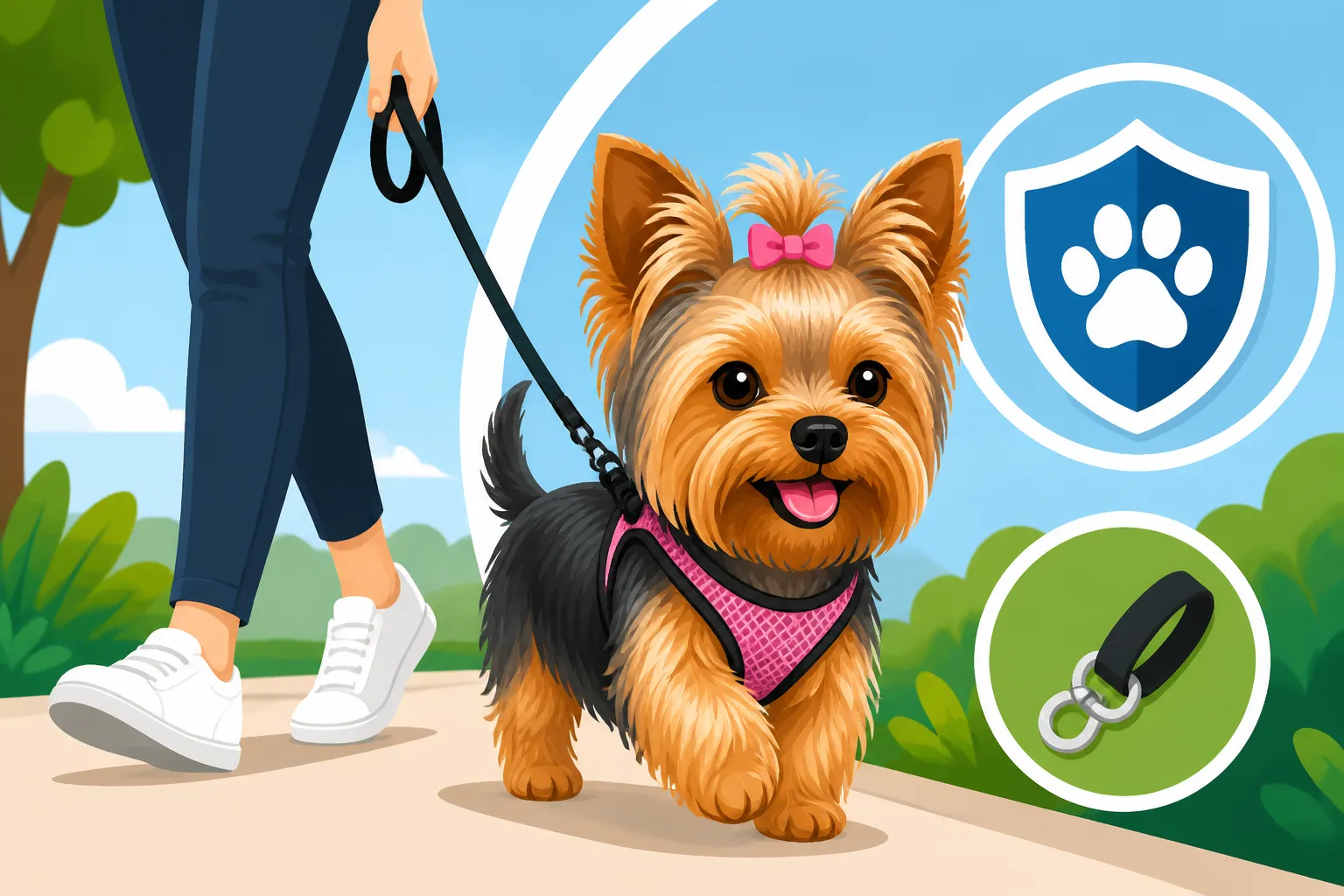
A properly fitted harness distributes pressure across your Yorkie’s chest and shoulders, rather than concentrating it on their neck. When choosing a harness, look for options that are "Y-shaped" in the front, meaning they don't go straight across the throat. Vest-style harnesses are also excellent as they offer broad support. Brands like Ruffwear or Kurgo offer harnesses in extra-small sizes that are well-regarded for durability and fit, often available on platforms like Amazon or Chewy. Always measure your Yorkie carefully according to the manufacturer's guide, paying attention to both chest girth and neck circumference, to ensure a snug but comfortable fit that they can't slip out of.
Leash Selection and Usage
Once you have a great harness, the leash is your direct connection to your Yorkie. For a small dog, a lightweight, standard leash is generally best. A 4 to 6-foot nylon or leather leash provides enough slack for exploration while keeping your Yorkie close enough for control in busy environments.
Retractable leashes might seem appealing, offering your Yorkie more freedom, but they come with significant risks, especially for small dogs. They can easily snap back, cause rope burns, or allow your Yorkie to dart into dangerous situations too quickly for you to react. Imagine your tiny Yorkie running to the end of a retractable leash and encountering an unexpected larger dog or a busy street – the potential for harm is substantial. Stick to a fixed-length leash for maximum safety and control. Ensure the clasp is sturdy but lightweight enough not to weigh down your small pup.
Essential Accessories for Peace of Mind
Beyond the harness and leash, a few other items can dramatically increase safety during your walks.
- ID Tags and Microchips: This is non-negotiable. Your Yorkie should always wear an ID tag with your current phone number, even if microchipped. If they somehow slip away, an immediate identification can be the difference between a quick reunion and a heartbreaking search. A microchip, registered with up-to-date information, provides a permanent form of identification.
- Reflective Gear or Lights: If you ever walk your Yorkie in low-light conditions, reflective vests or clip-on LED lights are lifesavers. They make your small dog far more visible to drivers, cyclists, and even other pedestrians or dog walkers, greatly reducing the risk of accidents. You can find many options on Chewy that are specifically designed for small breeds.
- Poop Bags: Always, always carry poop bags. It's not just about common courtesy; it's a legal and ethical responsibility. Leaving waste behind can spread parasites and harm the environment.
- Portable Water Bottle and Bowl: Yorkies can overheat quickly, especially on warmer days. A small, portable water bottle with an attached bowl ensures they stay hydrated, preventing heatstroke and discomfort.
- Carrier or Sling: For longer walks, crowded areas, or when your Yorkie gets tired, a dog carrier or sling is invaluable. It allows them to rest, protects them from being stepped on, and keeps them safe from unexpected interactions with larger dogs or overenthusiastic children. Think of it as their safe haven when the big world gets a bit too much.
Preparing Your Yorkie for Outdoor Adventures
Just like humans, Yorkies need a little prep work before they become seasoned adventurers. This isn't just about physical readiness but mental and emotional preparation too.
Gradual Introduction to Gear and Environment
Don't just snap on a harness and drag your Yorkie out the door. Introduce new gear slowly and positively. Let them sniff the harness, offer treats, and praise them. Start by putting the harness on for short periods inside the house, associating it with good things like playtime or mealtime. Once they're comfortable, attach the leash and let them drag it around indoors (under supervision, of course) before attempting any walks.
When it comes to the environment, think small steps. Start with very short walks right outside your home, in a quiet area. Gradually increase the duration and expose them to new sights and sounds, always watching their body language for signs of stress or fear. A confident, well-socialized Yorkie is a safer Yorkie, and understanding How to Socialize a Yorkie Puppy is a crucial step in preparing them for the world.
Health Considerations Before You Go
Before embarking on regular walks, a vet check-up is always a good idea, especially for puppies or older Yorkies. Your vet can confirm your Yorkie is physically ready for regular exercise and discuss any specific concerns, such as Yorkshire Terrier Patellar Luxation: Signs and Care or other joint issues common in the breed.
Consider your Yorkie's vaccination status, especially if they are a puppy. They shouldn't be walking in public areas until their vaccination series is complete. Consult your vet for the appropriate Yorkie Vaccination Schedule to ensure they are protected from common diseases. Regular deworming and flea/tick prevention are also essential, as walks expose them to these pests.
Lastly, make sure your Yorkie has eaten a good meal a couple of hours before a long walk. High-quality dog food, perhaps like offerings from Ollie, can provide sustained energy. However, avoid feeding them immediately before a walk, as this can cause stomach upset.
Mastering Walking Techniques for Tiny Paws
Walking a Yorkie isn't quite the same as walking a Golden Retriever. Their size, energy levels, and vulnerabilities mean you need a different approach.
Loose-Leash Walking and Pace Management
The goal is always loose-leash walking, where the leash is relaxed and not taut. This signifies your Yorkie is walking calmly beside you without pulling. Use positive reinforcement: when your Yorkie walks nicely, reward them with praise and small, high-value treats. If they pull, simply stop walking. The moment the leash slackens, resume walking. Consistency is key here.
Your Yorkie's pace will naturally be faster and shorter than yours. Allow them time to sniff and explore. Don't rush them along; remember, walks are their primary way of interacting with and experiencing the world. However, if your Yorkie is consistently pulling hard, you might want to look into specific guidance on How to Teach a Yorkie to Walk on a Leash to refine their technique and prevent frustration for both of you.
Constant Vigilance and Safe Handling
As a Yorkie owner, you are their protector in a world that isn't always built for small dogs. This means constant vigilance.
- Watch for Hazards: Keep an eye out for sharp objects, discarded food, toxic plants, or even gaps in fences where your tiny pup could slip through.
- Other Dogs and People: Be proactive. If you see a large, off-leash dog approaching, or a boisterous child, scoop your Yorkie up immediately. It's not being overprotective; it's being responsible. A carrier or sling is invaluable for these moments.
- Weather and Pavement: Always check the pavement temperature. If it's too hot for your bare hand, it's too hot for your Yorkie's paws. Similarly, in winter, ice and salt can be dangerous. Consider paw protectors or booties from places like Amazon to shield their sensitive paw pads.
- Picking Up Safely: If you need to pick up your Yorkie, always support their chest and hindquarters. Never pick them up by their front legs or under their armpits alone, as this can injure their delicate joints and spine.
Environmental Safety and Weather Wisdom
The great outdoors holds many wonders, but also many potential dangers for a small Yorkie. Being prepared for different environments and weather conditions is paramount.
Navigating Hot and Cold Weather
Yorkies are sensitive to extreme temperatures. In hot weather, their small size and single coat (which is more like human hair) mean they can overheat quickly. Avoid walking during the hottest parts of the day (usually midday to late afternoon). Stick to early mornings or late evenings. Look for signs of overheating: excessive panting, lethargy, or bright red gums. Remember to bring plenty of water and seek shade often. Knowing How to Care for a Yorkie in Summer can truly make a difference.
When the temperature drops, Yorkies can get cold just as easily. They don't have a thick undercoat to protect them. In colder climates, a warm dog sweater or coat is essential. If it's raining or snowing, consider a waterproof jacket. Avoid prolonged exposure to cold, wet conditions, and check for ice or harsh chemicals on sidewalks. For detailed tips, refer to our guide on How to Keep a Yorkie Warm in Winter.
Avoiding Common Outdoor Hazards
Beyond temperature, there are numerous other environmental factors to consider.
- Pesticides and Chemicals: Be mindful of lawns or public spaces that may have been treated with pesticides, herbicides, or de-icing salts. These substances can be toxic if ingested or absorbed through paw pads. If you suspect exposure, wipe your Yorkie’s paws thoroughly.
- Parasites: Ticks, fleas, and mosquitos are not just annoying; they can transmit diseases. Stick to a vet-recommended preventative schedule. After walks in grassy or wooded areas, always perform a quick "tick check" on your Yorkie.
- Wild Animals: Even in urban areas, small wildlife like squirrels, rabbits, or even stray cats can trigger your Yorkie's prey drive. While they might be tempted to chase, it can lead them into dangerous situations, traffic, or encounters with aggressive animals. Keep them on a short leash and be ready to redirect their attention.
- Unfamiliar Territories: When visiting new places, like a friend's house or a dog park, be extra cautious. Assess the environment for safety before letting your Yorkie explore. Dog parks can be particularly risky for small breeds due to the size disparity and varying temperaments of other dogs. If you do visit a dog park, choose one with a dedicated small dog area, and always supervise closely.
Overcoming Common Walking Challenges
Even with the best preparation, you might encounter some common challenges during your Yorkie's walks. Patience and consistent training are your best allies.
Addressing Leash Pulling and Escapism
Yorkies, despite their size, can be surprisingly strong and determined pullers, especially if they catch a scent or see something exciting. As mentioned, the "stop-and-go" method works well: stop walking the instant the leash goes taut, and only resume when there's slack. This teaches them that pulling gets them nowhere. For persistent pullers, a front-clip harness can also be very effective, gently redirecting their momentum back towards you when they pull.
Escaping a harness is another major concern for small breeds. If your Yorkie is a master escape artist, it might be due to an ill-fitting harness or simply their cleverness. A "double-secured" approach, using both a harness and a collar (with the leash clipped to the harness, but a secondary clip or a carabiner connecting the harness to the collar for backup) can offer peace of mind. Investing in a high-quality, escape-proof harness from reputable brands like Kurgo or Hurtta might also be necessary.
Managing Barking and Reactivity on Walks
Yorkies are known for their vocal nature, and walks can present many triggers for barking – other dogs, strangers, loud noises, or even bicycles. The key is to manage their environment and teach them alternative behaviors.
If your Yorkie barks at everything, start by identifying the triggers. Is it every dog? Only big dogs? Men with hats? Once you know, you can work on desensitization and counter-conditioning. When a trigger appears at a distance where your Yorkie notices it but doesn't react, immediately reward them with a super high-value treat. The goal is to change their emotional response from "bark!" to "treat time!". Gradually decrease the distance as they become more comfortable. This is a process that requires a lot of patience and consistency.
Sometimes, their reactivity comes from fear or anxiety. If your Yorkie is showing signs of fear (tail tucked, hiding behind you, trembling), gently remove them from the stressful situation. Pushing a fearful dog into a situation they can't handle will only make things worse. Knowing Why Yorkies Shake and Tremble can help you discern between excitement and fear-based reactions.
Dealing with Fear and Overwhelm
The world can be a big, scary place for a tiny Yorkie. Loud trucks, bustling crowds, or even a sudden gust of wind can be overwhelming. If your Yorkie shows signs of being scared – trying to hide, trembling, refusal to move, or trying to bolt – don't force them.
Take a break. Find a quiet spot, offer comfort, and give them a chance to decompress. Sometimes, a short walk is better than a long, stressful one. Building their confidence through positive experiences is crucial. If fear is a consistent issue, consider consulting with a professional positive reinforcement dog trainer who specializes in small breeds. They can help you develop a tailored plan to help your Yorkie feel more secure and confident in different environments.
| Gear Type | Best For Yorkies | Pros | Cons |
|---|---|---|---|
| Harness (Y-shape/Vest) | All Yorkies, especially those prone to tracheal issues | Distributes pressure, prevents neck strain, less escape risk with proper fit | Can be tricky to fit initially, some Yorkies may resist wearing it at first |
| Standard Leash (4-6 ft) | All Yorkies | Offers good control, lightweight, clear communication, prevents overextension | Less freedom for exploration than retractable (but safer), requires handler vigilance |
| Retractable Leash | Not recommended | Allows more freedom (but at a cost) | High risk of injury (tracheal, rope burn), less control, allows Yorkie to dart into danger, harder to recall |
| ID Tags & Microchip | All Yorkies (mandatory) | Essential for identification if lost, quick reunion potential, permanent ID | Requires up-to-date contact info, tags can fall off (hence microchip backup) |
| Paw Protectors/Booties | Extreme weather (hot pavement, snow, salt) | Protects paws from temperature extremes, rough surfaces, chemicals | Some Yorkies may resist wearing them, can be difficult to find a perfect fit for tiny paws |
| Portable Water Bottle | All Yorkies (especially in warm weather) | Ensures hydration, prevents overheating | Adds weight to your bag |
| Small Carrier/Sling | For crowded areas, long walks, tired pups | Provides safety from being stepped on, refuge from large dogs, allows rest | Can be bulky to carry when not in use |
At the end of the day, walking your Yorkie should be an enjoyable bonding experience. By understanding their unique needs and vulnerabilities, equipping them with the right gear, and approaching walks with patience and positive reinforcement, you can ensure many safe and happy adventures together. For more insights into keeping your tiny friend in top shape, check out our guide on Yorkshire Terrier Exercise Needs or learn about How to Keep a Yorkshire Terrier Healthy.
Disclaimer
As a friendly reminder, the information provided in this guide is for educational purposes only and should not replace professional veterinary advice. Always consult with your veterinarian for any health concerns or before making any significant changes to your Yorkie's care routine.