Best Puppy Feeding Schedule for Yorkies
Bringing home a tiny Yorkshire Terrier puppy is an absolute joy, but it can also come with a fair bit of anxiety, especially when it comes to their feeding schedule. These little bundles of fluff are so delicate, and you might find yourself constantly wondering if you’re feeding them enough, too much, or at the right times. It’s a common worry among Yorkie parents, and for good reason—their unique metabolism means a consistent, appropriate feeding regimen isn't just helpful, it's absolutely crucial for their health and development. This comprehensive guide will walk you through everything you need to know to establish the best puppy feeding schedule for your Yorkie, ensuring they grow into happy, healthy adults.
Understanding Your Yorkie Puppy's Unique Nutritional Needs
Yorkshire Terrier puppies aren't just small versions of adult dogs; their bodies are little powerhouses of growth and development, demanding a very specific approach to nutrition. Ignoring these unique needs can lead to serious health issues, which is the last thing any loving pet parent wants.
Why Puppies Are Different From Adults
The most significant difference lies in their metabolism and energy expenditure. Puppies, especially those as energetic and fast-growing as Yorkies, burn through calories at an incredible rate. Their tiny stomachs also mean they can't consume large quantities of food at once, yet their rapidly developing bones, muscles, and organs require a constant supply of nutrients. This creates a delicate balance: frequent, small meals are essential to keep their energy levels stable and their bodies fueled for growth.
Think of it this way: an adult Yorkie might be able to go 8-10 hours between meals without issue, but a young puppy simply can't. Their glucose stores are much smaller, and they haven't yet developed the same ability to regulate their blood sugar. This higher metabolic rate, combined with their small size, is what makes them so vulnerable to fluctuations in blood sugar.
The Dangers of Hypoglycemia in Yorkie Puppies
This brings us to a critical concern for all Yorkie puppy owners: hypoglycemia, or low blood sugar. It's a scary word, and unfortunately, it’s a very real threat for young, small-breed puppies if their feeding schedule isn't managed properly. Because their bodies are so small and their energy demands are so high, Yorkie puppies can quickly deplete their glucose reserves if they go too long without food or if they expend too much energy without replenishment.
When a puppy's blood sugar drops too low, it can lead to a cascade of concerning symptoms. You might notice your puppy becoming lethargic, weak, disoriented, or even trembling excessively. In severe cases, they can collapse, have seizures, or fall into a coma. It's truly terrifying to witness. Providing frequent, nutritious meals is your primary defense against this condition. If you want to know more about the warning signs, our guide on Yorkie Hypoglycemia: Emergency Signs is a must-read. Learning How to Prevent Hypoglycemia in Yorkie Puppies is also crucial for their well-being. By understanding these risks, you're better equipped to maintain a steady blood sugar level for your little one through a consistent feeding routine.
Crafting the Ideal Feeding Schedule for Your Yorkie Puppy
Establishing a consistent and appropriate feeding schedule is paramount for your Yorkie puppy's health and development. It's not a one-size-fits-all approach; their needs will change as they grow from a tiny infant to a bustling adolescent.
The First Few Weeks: 8 to 12 Weeks Old
This is arguably the most critical period for establishing a feeding routine. At this young age, Yorkie puppies are incredibly vulnerable to hypoglycemia due to their undeveloped systems and rapid growth. Therefore, frequent small meals are non-negotiable.
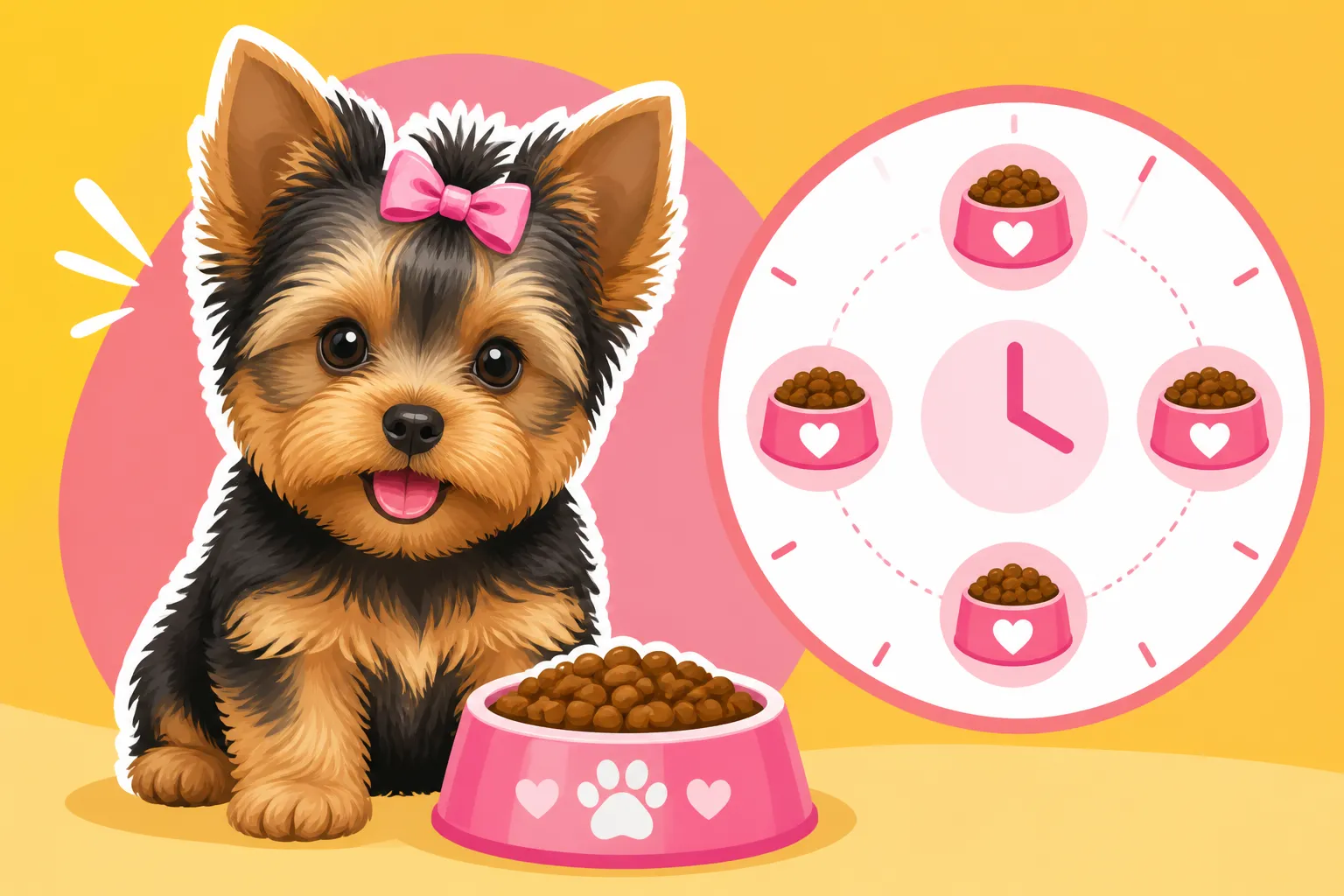
Most breeders and veterinarians recommend feeding an 8 to 12-week-old Yorkie puppy four to five small meals a day. This might sound like a lot, but remember their tiny stomachs can only hold so much. Spreading out their daily caloric intake across multiple feedings ensures a steady supply of glucose and nutrients, preventing those dangerous blood sugar dips. For example, if your puppy's total daily recommended intake is half a cup, you'd divide that into four or five even portions, perhaps about 1/8 to 1/10 of a cup per meal. A typical schedule might look like this: breakfast around 7 AM, a mid-morning meal around 10 AM, lunch around 1 PM, an afternoon meal around 4 PM, and dinner around 7 PM. Always make sure to provide fresh water alongside every meal. It's a lot of commitment, but seeing your little one thrive makes it all worthwhile. For a broader overview of their early care, you might find our Yorkshire Terrier Puppy Health Guide helpful.
Navigating Growth Spurts: 3 to 6 Months Old
As your Yorkie puppy grows and approaches the 3 to 6-month mark, their metabolism starts to stabilize slightly, and their stomachs are a little larger, allowing them to handle slightly more food per sitting. While they're still growing rapidly and require ample nutrition, you can gradually begin to reduce the frequency of meals.
During this stage, most Yorkie puppies can transition to three meals a day. This typically means breakfast, lunch, and dinner. For instance, you could offer meals at 7 AM, 1 PM, and 7 PM. This reduction in frequency still provides adequate nutrition while allowing their digestive system to mature. It also starts preparing them for an adult feeding schedule. Continue to monitor their energy levels and body condition closely. If you notice any signs of lethargy or weakness between meals, it might indicate that they still need that fourth meal, or that the portion sizes need slight adjustment. Always consult your vet if you're unsure. This stage is a good time to evaluate How Much to Feed a Yorkshire Terrier as they continue to grow.
Approaching Adulthood: 6 to 12 Months Old
By the time your Yorkie puppy reaches 6 to 12 months of age, they are generally considered to be approaching adolescence and their growth rate will begin to slow significantly. Many Yorkies reach their full adult size around 8-12 months. This is when you can typically transition them to an adult feeding schedule.
For most Yorkies in this age range, two meals a day is appropriate—one in the morning and one in the evening. This is the standard for most adult dogs and works well for Yorkies once their blood sugar regulation is more stable. This schedule might be a breakfast at 8 AM and dinner at 6 PM, or whatever suits your family's routine. It's important to remember that some smaller or more active Yorkies might still benefit from three smaller meals, especially if they are prone to hypoglycemia or if their veterinarian recommends it. Pay close attention to their weight and overall health. If they seem to be gaining too much weight on two meals, you might need to adjust portion sizes, not necessarily meal frequency. Our detailed Yorkshire Terrier Feeding Guide by Age offers more specific insights into these transitions.
Here's a quick reference table for a typical Yorkie puppy feeding schedule:
| Age Range | Recommended Meal Frequency | Example Schedule | Key Considerations |
|---|---|---|---|
| 8 to 12 Weeks Old | 4-5 small meals per day | 7 AM, 10 AM, 1 PM, 4 PM, 7 PM | Crucial for preventing hypoglycemia; rapid growth phase. |
| 3 to 6 Months Old | 3 meals per day | 7 AM, 1 PM, 7 PM | Growth spurts continue; stomach capacity increases; monitor energy levels. |
| 6 to 12 Months Old | 2-3 meals per day | 8 AM, 6 PM (or 7 AM, 1 PM, 7 PM for smaller Yorkies) | Approaching adulthood; slower growth; monitor weight and activity levels. Consult vet for final decision on 2 vs 3 meals. |
Choosing the Right Food and Portions for Your Yorkie Puppy
Beyond the schedule, what you put in their bowl is just as important. Yorkies, especially as puppies, have specific dietary needs that a high-quality food can address.
Selecting High-Quality Puppy Food
Choosing the right food for your Yorkie puppy can feel overwhelming with so many options out there. However, it's one of the most impactful decisions you'll make for their long-term health. The best puppy foods are specifically formulated to meet the intense nutritional demands of growing puppies, providing the correct balance of protein, fats, vitamins, and minerals.
When looking for a puppy food, prioritize formulas designed for "small breeds" or "toy breeds," as these often have smaller kibble sizes that are easier for tiny mouths to chew. Look for real meat (like chicken, beef, or lamb) as the first ingredient, and ensure it contains DHA for brain and eye development, and calcium and phosphorus for strong bones. Avoid foods with excessive fillers, artificial colors, and preservatives. Brands like Royal Canin, Hill's Science Diet, and Purina Pro Plan are often recommended by veterinarians for their research-backed formulations. You can find a vast selection of these and other reputable brands on online retailers like Chewy or Amazon, making it convenient to compare options and read reviews. For those interested in fresh food, services like Ollie offer pre-portioned, human-grade meals tailored to your puppy's specific needs, which can be an excellent option for some Yorkies, though often at a higher cost. For an even deeper dive, check out our guide on Best Puppy Food for Yorkies.
Determining Proper Portion Sizes
Once you've chosen a high-quality food, determining the correct portion size is the next critical step. This isn't just about avoiding overfeeding or underfeeding; it's about providing precisely what your rapidly growing puppy needs to thrive without putting a strain on their tiny digestive system.
The first place to look is always the feeding guide on the back of your chosen puppy food bag or container. These guides provide a starting point based on your puppy's current weight and age. However, these are just guidelines! Every puppy is an individual, and factors like their activity level, metabolism, and even the weather can influence their caloric needs. A very active Yorkie puppy zooming around the house and garden will need more fuel than a calmer one. It's crucial to weigh your puppy regularly to ensure they're on track and adjust portions as needed. If you’re unsure about what a healthy weight looks like at different stages, our article on Yorkie Weight: Healthy Range by Age can provide some valuable benchmarks. Never guess; use a kitchen scale for accuracy, especially with such small portions.
Monitoring Weight and Adjusting
Regularly monitoring your Yorkie puppy's weight and overall body condition is essential for fine-tuning their feeding schedule and portion sizes. This isn't about obsessing over every gram, but rather about ensuring healthy, consistent growth.
A weekly weigh-in at home using a digital kitchen scale for young puppies, or a pet scale as they get a bit bigger, can give you valuable insights. You're looking for a steady upward trend in weight, not sudden drops or dramatic spikes. Beyond the scale, learn to assess their body condition by feel. You should be able to easily feel their ribs without seeing them prominently. Their waist should be visible when viewed from above, and there should be an abdominal tuck when viewed from the side. If you can't feel their ribs easily, or if they look round, they might be getting too much food. Conversely, if their ribs are very prominent, or if they seem overly bony, they might need more. Your veterinarian is your best resource for assessing healthy growth and making specific recommendations for portion adjustments. They can help you create a personalized plan, especially important if you notice any Common Yorkie Puppy Illnesses that might affect their appetite or digestion.
Common Feeding Challenges and Troubleshooting
Even with the best intentions and the perfect schedule, feeding a Yorkie puppy isn't always smooth sailing. These tiny dogs can present unique challenges that require patience and understanding.
Dealing with Picky Eaters
It's a common lament among Yorkie parents: "My Yorkie is such a picky eater!" Indeed, some Yorkshire Terriers can be notoriously finicky, turning their nose up at perfectly good food. This can be particularly stressful with a puppy, given the risks of hypoglycemia if they don't eat enough.
First, rule out any underlying health issues. A sudden loss of appetite or complete refusal to eat always warrants a vet visit, as it could be a sign of illness. If they're healthy but just being picky, consistency is key. Offer their meal for 15-20 minutes, then pick it up, even if they haven't eaten much. Do not offer treats or other food until the next scheduled meal. This teaches them that their mealtime is when they eat their food, and there won't be a "better" option coming along soon. You can also try adding a tiny bit of warm water to their kibble to soften it and release aromas, or a very small amount of a plain, dog-safe topper like boiled chicken breast or pureed pumpkin. Just be careful not to create a new picky eating habit by always adding toppers. Sometimes, simply rotating between a couple of high-quality puppy food brands (chosen with vet guidance) can also keep things interesting. If you're struggling, our guide on How to Help a Picky Yorkie Eat offers more detailed strategies.
Preventing Overeating and Obesity
While hypoglycemia is a concern for young puppies, as they grow, the risk shifts towards overeating and potential obesity, especially if treats and table scraps become too prevalent. Yorkies are small, and even a few extra pounds can put a significant strain on their tiny joints and overall health.
Preventing obesity starts with accurate portion control and limiting treats. Treats should make up no more than 10% of their daily caloric intake. Choose small, low-calorie training treats, or even use pieces of their regular kibble for training rewards. Resist the urge to constantly offer human food, no matter how much those big, expressive eyes plead. Many human foods are too rich, too fatty, or even toxic for dogs. Establishing a clear feeding routine, as outlined above, helps prevent "free-feeding" where food is left out all day, which often leads to overconsumption. Regular, appropriate exercise, even for a small dog like a Yorkie, is also vital for maintaining a healthy weight.
Transitioning Foods Safely
There will come a time when you need to change your Yorkie puppy's food, whether it's transitioning from puppy food to adult food, switching brands, or addressing a specific dietary need like allergies. Doing this abruptly can lead to digestive upset, including vomiting or diarrhea, which can be particularly dangerous for a small puppy.
The golden rule for food transitions is to do it slowly, over a period of about 7-10 days. Start by mixing a small amount (about 25%) of the new food with 75% of their old food. Feed this mixture for 2-3 days. If your puppy shows no signs of digestive upset, increase the new food to 50% and decrease the old food to 50% for another 2-3 days. Continue gradually increasing the new food while decreasing the old, until your puppy is solely on the new food. Monitor their stool consistency and appetite throughout this process. If you notice any issues, slow down the transition or consult your vet. This gradual approach allows your puppy's digestive system to adjust to the new ingredients without becoming overwhelmed. Remember, their small size makes them more sensitive to dietary changes, so patience is key.
Disclaimer
The information provided in this guide is intended for general educational purposes only and should not be considered a substitute for professional veterinary advice. Always consult with your veterinarian regarding any health concerns or before making any changes to your Yorkshire Terrier's diet, feeding schedule, or care routine.