Best Clothes for a Yorkshire Terrier
It’s a common sight: a tiny Yorkshire Terrier shivering on a brisk autumn walk or looking utterly miserable when a sudden drizzle starts. As proud Yorkie parents, we often face the dilemma of wanting our little companions to be comfortable and safe, yet sometimes we wonder if putting clothes on them is purely for our amusement or if it actually serves a practical purpose. The truth is, for many Yorkshire Terriers, a well-chosen wardrobe can be more than just a fashion statement; it's a vital part of their care. This guide will help you understand when and why your Yorkie might benefit from clothing, what types to consider, and how to ensure a perfect fit for their delicate frames.
Why Your Yorkshire Terrier Might Need Clothes Beyond Just Fashion
Let’s be honest, those tiny sweaters and adorable raincoats are incredibly cute, but for a Yorkshire Terrier, clothing often serves a crucial functional purpose that goes beyond aesthetics. Their small size and unique coat make them more susceptible to environmental factors than many larger, double-coated breeds.
Protection from the Elements
One of the primary reasons to dress your Yorkie is for protection against various weather conditions. Unlike many dogs with thick undercoats, Yorkshire Terriers typically have a single layer of fine, silky hair that's more akin to human hair than traditional fur. This means they don't have the natural insulation that other breeds possess.
When the temperatures drop, especially during those chilly morning walks or late-night potty breaks, a Yorkie can get cold very quickly. Imagine stepping outside in just a light t-shirt when it’s 40 degrees Fahrenheit; that’s how your Yorkie might feel. A good sweater or coat acts as an insulating layer, helping to retain their body heat and prevent shivering, which can lead to discomfort and even more serious issues like hypothermia if prolonged. Think about how you bundle up; your Yorkie often needs the same consideration. For detailed guidance on keeping them cozy, check out our article on How to Keep a Yorkie Warm in Winter.
Beyond the cold, clothes can also offer protection from rain, snow, and even harsh sunlight. A lightweight raincoat can keep their delicate coat from getting soaked, which is not only uncomfortable but can lead to a chill. Similarly, in sunny climates, a thin, breathable shirt can help shield their skin from sunburn, particularly if they have a thinner patch of hair or lighter pigmentation. While we love to see them romp and play, sometimes the elements just call for a little extra barrier.
Health and Comfort Considerations
Clothing can play a surprisingly significant role in your Yorkie's overall health and well-being. Their diminutive size makes them prone to certain health vulnerabilities that appropriate attire can help mitigate.
For instance, due to their small body mass, Yorkies can struggle with regulating their body temperature. This makes them prone to both getting too cold and, in extreme cases, overheating. While a cozy sweater combats the cold, a cooling vest or light, breathable shirt can offer some relief in warmer weather, especially if you're out for a stroll on a hot day. Our guide on How to Care for a Yorkie in Summer offers more tips on keeping them comfortable during the warmer months.
Some Yorkies also suffer from anxiety, whether it’s separation anxiety, fear of thunderstorms, or general nervousness. Compression garments, often called "thunder shirts," are designed to apply gentle, constant pressure, much like a comforting hug. Many dog owners report a noticeable calming effect on their anxious pups when wearing these. It’s not a magic bullet, but it can be a valuable tool in managing stress, helping to reduce instances of excessive shaking or trembling which can be indicative of distress, as discussed in Why Do Yorkies Shake and Tremble.
Lastly, clothing can offer a protective barrier for their skin. If your Yorkie has a skin irritation, allergies, or is recovering from surgery, a soft, breathable bodysuit or shirt can prevent them from licking or scratching the affected area, allowing it to heal properly. This can also reduce the need for an Elizabethan collar, which many dogs find uncomfortable and restrictive. Regular check-ups and being aware of Yorkshire Terrier Health Problems to Know can help you identify when such protection might be needed.
Visibility and Safety
When you’re out and about with your Yorkie, especially during dawn, dusk, or at night, their small stature can make them difficult to spot for drivers or even other pedestrians. This is where high-visibility clothing becomes a non-negotiable safety item, not just a fashion statement.
Reflective vests, harnesses, or coats can significantly increase your Yorkie's visibility. These garments typically feature bright, fluorescent colors like neon yellow or orange, combined with reflective strips that catch and bounce back light from headlights or streetlamps. This dramatically reduces the risk of accidents during walks or playtime in low-light conditions. Even if your street is well-lit, a moving small dog can be hard to see, and adding a reflective element provides an extra layer of peace of mind.
Consider adding a reflective vest over their regular winter coat or choosing a coat that already incorporates reflective elements. This simple step can make a world of difference in preventing unfortunate incidents. When selecting outdoor gear, ensure any attached harnesses or leashes are also reflective for maximum safety, especially if you're also looking into options like the Best Harness for a Yorkshire Terrier.
Types of Clothes for Yorkshire Terriers and What to Look For
Navigating the world of dog clothes can be overwhelming, with countless options available. For your Yorkshire Terrier, choosing the right type of clothing means balancing function, comfort, and, yes, a little bit of style. Each category serves a distinct purpose, and understanding these differences will help you build a practical wardrobe for your furry friend.
Essential Everyday Wear: Sweaters, Hoodies, and T-Shirts
These items form the backbone of a Yorkie's practical wardrobe, offering comfort and light protection for daily life, both indoors and out.
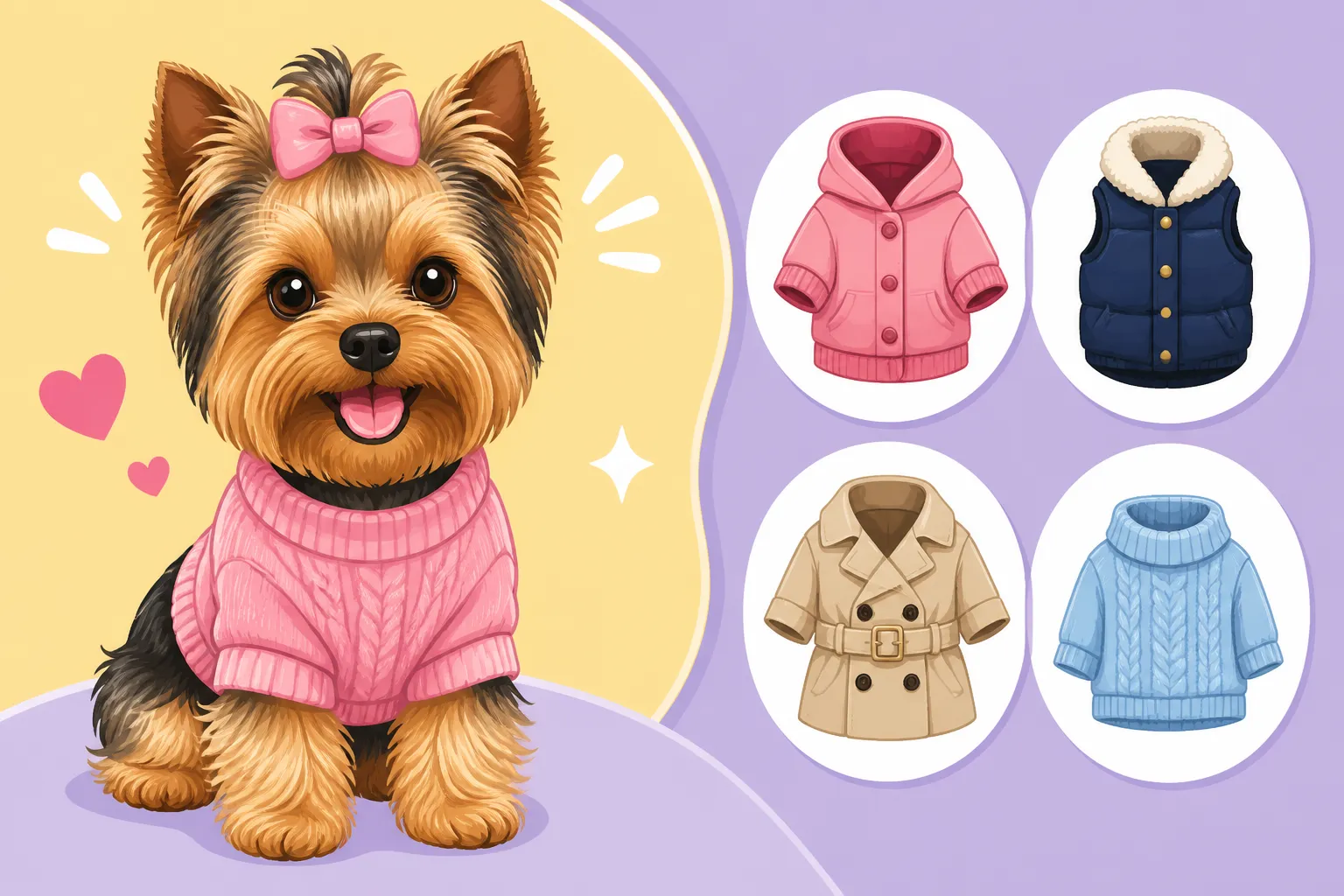
- Sweaters: Perfect for cooler indoor temperatures or mild outdoor excursions. Look for soft materials like fleece, wool blends, or cotton. The key is warmth without bulk. A well-fitting sweater should cover their torso without restricting movement. It should be easy to put on and take off, preferably with a high neck for extra warmth.
- Hoodies: Similar to sweaters but with the added bonus of a hood. While the hood might not always stay up, it offers a cute aesthetic and an extra layer around the neck and head. Ensure the hood isn't too large or heavy, as it could impede their vision or cause discomfort. Fleece or soft cotton are common materials.
- T-Shirts: Ideal for warmer weather or as an indoor garment. They offer a light layer that can protect delicate skin from the sun, provide a barrier against minor allergens, or simply keep their fine hair from shedding quite as much on furniture. Look for breathable cotton or performance fabrics that wick away moisture. T-shirts can also be a good choice for dogs with skin sensitivities, as they prevent direct contact with irritants.
When selecting everyday wear, always prioritize comfort. The fabric should be soft against their skin, and the fit should allow for a full range of motion. Avoid anything with excessive embellishments, loose buttons, or sequins that could be chewed off and swallowed, posing a choking hazard. For quality and variety, many pet parents find great options on platforms like Chewy, which offers a wide selection of everyday dog apparel.
Outdoor and Protective Gear: Coats, Raincoats, and Booties
When the weather turns nasty, or you're planning more adventurous outings, specialized outdoor gear becomes essential for your Yorkie's safety and comfort.
- Winter Coats: These are a must-have for colder climates. Look for coats with a water-resistant or waterproof outer shell, a warm lining (fleece or faux fur are popular), and a design that covers a good portion of their back and belly. Features like adjustable straps, leashes/harness openings, and reflective elements are highly desirable. Some winter coats even come with built-in harness attachment points, making walks easier. The thicker the coat, the more insulated your Yorkie will be, critical for those freezing temperatures.
- Raincoats: Lightweight and waterproof, raincoats are designed to keep your Yorkie dry during showers. They typically feature a hood and provide full coverage for the back and sides. Many are unlined, making them suitable for warmer rainy days. Look for durable, yet flexible, materials like nylon or polyester, and ensure they are easy to clean. Getting soaked to the skin is not only unpleasant but can lead to a chill, so a good raincoat is invaluable for maintaining your Yorkie's comfort during wet weather.
- Booties (Paw Protection): Often overlooked, booties are incredibly important for paw health, especially for small dogs like Yorkies. They protect delicate paw pads from extreme temperatures (hot pavement in summer, icy sidewalks in winter), sharp objects, salt, and harsh chemicals. They can also provide extra traction on slippery surfaces. Look for booties that are durable, waterproof, have a non-slip sole, and, crucially, stay on! Many Yorkie owners find it a challenge to find booties that fit properly and don't slip off, so trying different brands and styles is often necessary. While they might take some getting used to, the protection they offer is well worth the effort, especially when considering ways to Protect a Yorkie's Joints.
Special Occasion Attire and Accessories
While less about necessity and more about fun, special occasion attire and accessories can add a charming touch to your Yorkie's look for parties, holidays, or photo ops.
- Costumes: From tiny superheroes to dapper gentlemen or elegant ladies, costumes are a hit for Halloween, themed parties, or just for a laugh. When choosing a costume, remember safety first. Ensure it doesn't restrict movement, vision, or breathing. Avoid small, detachable parts that could be swallowed. Prioritize lightweight, non-irritating materials.
- Bandanas and Bows: These are simple, adorable accessories that add personality without the bulk of full clothing. Bandanas come in countless patterns and can be a fun way to celebrate holidays or just add a pop of color. Bows, especially for Yorkies with longer hair, can keep their topknot tidy and out of their eyes. Just make sure bows are securely attached and not too tight.
- Formal Wear: Think tiny tuxedos, dresses, or bow ties for weddings or special events. Again, focus on comfort and a non-restrictive fit. These items are usually worn for short periods, so the material doesn't have to be as durable as everyday wear, but it should still be soft and not cause irritation.
Even for purely decorative items, your Yorkie's comfort should be paramount. If they seem stressed or uncomfortable, it’s best to remove the item. After all, the goal is for them to enjoy the attention, not endure it.
Sizing and Fit: Ensuring Comfort and Safety
This is perhaps the most critical aspect of buying clothes for your Yorkshire Terrier. Their small, delicate frames, coupled with their long, often silky hair, make proper sizing absolutely essential. An ill-fitting garment can range from mildly annoying to a serious safety hazard.
Taking Accurate Measurements
Don't just guess your Yorkie's size based on their weight or a "small" label. Different brands have different sizing charts, and a precise fit requires precise measurements. You’ll need a soft tape measure (the kind used for sewing works best) and perhaps a helper to keep your Yorkie still.
Here are the key measurements you'll need:
- Neck Girth: Measure around the widest part of your Yorkie’s neck, where their collar would naturally sit. Leave enough room for two fingers to comfortably fit underneath the tape measure. This ensures the neckline isn't too tight, which could restrict breathing or cause discomfort.
- Chest Girth (or Girth): This is the most crucial measurement. Measure around the widest part of your Yorkie's rib cage, typically right behind their front legs. Again, leave enough space for two fingers to ensure a snug but not restrictive fit. This measurement is vital because it determines how well a shirt or coat will fit around their body without being too tight or too loose, which could lead to chafing or getting tangled.
- Back Length: Measure from the base of your Yorkie's neck (where the collar sits) to the base of their tail. This determines how much of their back will be covered. Some garments are designed to be shorter or longer, but this measurement gives you a good starting point to compare with product descriptions.
Always compare these measurements to the specific brand's sizing chart. If your Yorkie is between sizes, it's often better to size up, especially for coats, to ensure comfort, unless the garment is explicitly designed to be very stretchy. Remember, a Yorkshire Terrier Puppy Care Guide emphasizes that puppies grow quickly, so you might need to size up more frequently for younger dogs.
Common Sizing Challenges for Yorkies
Yorkshire Terriers present some unique challenges when it comes to clothing fit. Their distinct build can make finding the perfect garment a bit of a treasure hunt.
- Delicate Build: Yorkies are small and fine-boned. Clothes that are too stiff or heavy can overwhelm them or restrict their delicate movements. You need materials that are soft, pliable, and lightweight enough for them to move freely.
- Long Hair: Many Yorkies have long, silky coats. This hair can easily get caught in zippers, Velcro, or tight seams, causing discomfort or pulling. Look for designs that minimize contact with these fasteners against their skin and hair.
- Deep Chests: Some Yorkies have a relatively deep chest compared to their back length. This can make it challenging to find garments that fit well around the chest without being too long in the back or too tight across the front. Always prioritize chest comfort.
- Tiny Legs: Their slender legs can make pant-style clothing or certain booties difficult to fit, often resulting in slippage.
Because of these challenges, it’s not uncommon to try a few different brands or styles before finding what works best for your individual Yorkie. Pay attention to reviews from other small dog owners, and don’t be afraid to return items that don’t provide a safe and comfortable fit. Pet stores often allow you to try on clothes, or at least hold them up to your Yorkie, which can be a huge help.
What to Avoid When Choosing Clothes
Just as important as knowing what to look for is understanding what to steer clear of to ensure your Yorkie's safety and well-being.
- Too Tight: Clothes that are too tight can restrict movement, chafe their skin, cause hair loss, or even impede circulation. Imagine wearing a shirt that's two sizes too small – it's uncomfortable and potentially harmful. This is especially critical around the neck and chest.
- Too Loose: On the flip side, overly loose clothing can be just as problematic. It can get snagged on objects, trip your Yorkie, or even allow a paw to slip through an armhole, leading to entanglement or injury. Loose items also won't provide adequate warmth or protection.
- Restrictive Materials: Avoid stiff, scratchy, or non-breathable fabrics that can irritate their delicate skin or cause them to overheat. Heavy, bulky materials can also make them feel weighed down and unwilling to move.
- Choking Hazards: Be wary of clothing with small, easily detachable embellishments like buttons, beads, or loose drawstrings. Yorkies are naturally curious and might chew on these, leading to choking or ingestion, which could result in an expensive emergency vet visit. Keeping an eye on potential hazards is part of the broader Yorkshire Terrier Daily Care Routine. In case of an unexpected incident, having pet insurance from providers like Healthy Paws can offer significant financial relief.
When in doubt, err on the side of caution. Your Yorkie’s comfort and safety should always take precedence over fashion.
Practical Tips for Dressing Your Yorkie
Even with the perfect outfit, introducing clothes to your Yorkie, or even just managing them, requires a gentle approach and some practical know-how. Remember, some Yorkies take to clothing like a seasoned runway model, while others need a little more convincing.
Introducing Clothes Gradually
For many dogs, especially those who aren't used to wearing clothes, the first few attempts can be a bit awkward or even met with resistance. The key is patience and positive reinforcement.
- Start Slow: Don’t just put a full coat on them and expect them to prance around. Begin with something simple and lightweight, like a soft t-shirt or a bandana. Let them sniff it and get used to its presence.
- Positive Associations: Before even putting the item on, show it to them, let them sniff it, and offer a high-value treat. Repeat this a few times.
- Short Wear Times: For the first few times, put the garment on for only a minute or two, then immediately take it off and reward them lavishly with praise, treats, and playtime. Gradually increase the wear time over several sessions.
- Distraction is Your Friend: Distract them with their favorite toy or a game while they're wearing the new item. This helps them associate the clothing with positive activities.
- Never Force It: If your Yorkie is truly distressed or showing signs of extreme discomfort, take the item off. Forcing them will only create a negative association and make future attempts harder. It's important for their overall well-being and temperament.
It might take a few days or even weeks for your Yorkie to fully accept wearing clothes, but with a consistent, positive approach, most will come to tolerate and even enjoy the warmth or attention that comes with their stylish new threads. Integrating this into your overall Yorkshire Terrier Puppy Training Schedule can be beneficial for young pups.
Care and Maintenance of Yorkie Clothing
Just like your own wardrobe, your Yorkie's clothes need proper care to last longer, remain hygienic, and continue to serve their purpose effectively.
- Read Labels: Always check the care instructions on the garment's label. Most dog clothes are machine washable, but some delicate items might require hand washing or specific water temperatures.
- Gentle Cycle and Mild Detergent: To protect fabrics and retain shape, wash dog clothes on a gentle cycle with a mild, pet-safe detergent. Avoid harsh chemicals or strong fragrances that could irritate your Yorkie’s skin.
- Air Dry When Possible: Tumble drying can shrink or damage certain fabrics, especially those with elastic or waterproof coatings. Air drying flat or on a hanger is often the best option to preserve the garment's integrity.
- Inspect Regularly: Before and after washing, inspect the clothing for any signs of wear and tear: loose threads, torn seams, stretched elastic, or damaged fasteners (zippers, Velcro, buttons). Worn-out items can become less effective or even pose a safety risk. For example, a frayed sweater might get tangled in their fur, or a loose button could be swallowed. Regularly brushing your Yorkie, as outlined in How to Groom a Yorkshire Terrier at Home, can also help ensure their coat is free of snags from clothing.
- Storage: Store clean, dry dog clothes in a designated area, just like you would your own. This prevents them from getting dirty, misplaced, or chewed on by curious pups.
Proper care ensures that your investment in your Yorkie's wardrobe continues to provide comfort, protection, and style for a long time.
When Clothes Aren't the Answer
While clothes are incredibly beneficial for many Yorkies, it's also important to recognize when they might not be the best solution, or even when they could be counterproductive.
- Overheating Risk: In very warm weather, or during vigorous exercise, adding clothing can lead to overheating. A Yorkie working hard during their Yorkshire Terrier Exercise Needs generates body heat, and a heavy coat or sweater can trap that heat, leading to discomfort, lethargy, or even heatstroke. Always monitor your Yorkie for signs of overheating like excessive panting, drooling, or weakness.
- Restricted Movement: If a piece of clothing genuinely restricts your Yorkie's natural movement – making it hard to walk, run, jump, or go to the bathroom – then it's not the right fit, regardless of how cute it is. Their freedom of movement and comfort should always come first.
- Skin Irritation: Some Yorkies have very sensitive skin and might react to certain fabrics, dyes, or even the friction caused by clothing. If you notice redness, itching, or irritation, remove the clothing immediately and consider a different material or simply going without.
- Unnecessary Burden: For Yorkies living in consistently warm climates, who spend most of their time indoors, or simply have a naturally robust constitution, heavy clothing might just be an unnecessary burden. A healthy Yorkie in a comfortable indoor environment might only need clothes for specific outdoor adventures or brief trips.
It's about finding the balance between protection, comfort, and allowing your Yorkie to be a happy, unencumbered dog. Observe your pet's cues, and you'll quickly learn what they tolerate and what truly makes a difference in their daily life.
Comparing Yorkshire Terrier Clothing Options
To help you make informed decisions, here's a table summarizing common clothing types for Yorkshire Terriers, their primary purposes, and key features to look for.
| Clothing Type | Primary Purpose | Key Features to Look For | Best Season/Situation |
|---|---|---|---|
| Sweaters/Hoodies | Warmth, comfort, light protection | Soft, breathable fabric (fleece, cotton), good chest coverage, easy on/off, no loose parts | Cool weather, indoors, mild outdoor walks |
| Winter Coats | Extreme warmth, protection from cold/wet | Waterproof/resistant outer, warm lining, reflective elements, adjustable fit, harness opening | Cold, snowy, icy weather |
| Raincoats | Keep dry in rain | Waterproof material, lightweight, hood, full body coverage, easy to clean | Rainy days, light showers |
| T-Shirts/Light Shirts | Sun protection, skin barrier, light comfort | Breathable fabric (cotton), non-restrictive fit, UV protection (optional) | Warm weather, indoors, mild sun exposure |
| Booties | Paw protection | Durable, waterproof, non-slip sole, secure fasteners (velcro), good fit | Extreme temperatures (hot/cold), rough terrain, salt/chemicals |
| Thundershirts/Anxiety Vests | Calming anxiety | Gentle, constant pressure, breathable fabric, secure fit, not too tight | During thunderstorms, fireworks, travel, separation anxiety |
| Reflective Vests | Visibility, safety | Bright colors, reflective strips, lightweight, easy to wear over other clothes | Low light conditions, night walks |
Remember, the best clothing choice always depends on your individual Yorkie’s needs, climate, and activities.
Disclaimer
The information provided in this article is for general informational purposes only and is not a substitute for professional veterinary advice. Always consult with a qualified veterinarian for any health concerns or before making any decisions about your pet's care, diet, or treatment.