How to Stop Yorkie Demand Barking
It's incredibly frustrating when your adorable Yorkshire Terrier, who you love so much, constantly barks at you, seemingly for no good reason. You might be trying to watch TV, enjoy a quiet coffee, or simply exist, only for your little companion to unleash a barrage of barks demanding attention, a treat, or playtime. This incessant "demand barking" can quickly turn your peaceful home into a noisy battleground, leaving you feeling frazzled and wondering if you're doing something wrong. This comprehensive guide is here to help you understand why your Yorkie engages in this behavior and, more importantly, equip you with practical, empathetic strategies to finally put a stop to it.
Understanding Why Your Yorkie Demands Barks
Before we can address demand barking, it's crucial to understand why your Yorkie might be doing it in the first place. These intelligent little dogs are masters of communication, and sometimes, their loudest form of expression is a bark to get what they want. It’s not about being malicious; it’s usually about being effective from their perspective.
The Root Causes of Demand Barking
Demand barking doesn't just happen out of the blue; it's almost always a learned behavior that has been reinforced over time. Your Yorkie isn't trying to annoy you; they've simply discovered that barking gets results.
One of the primary reasons is attention-seeking. Yorkies thrive on interaction and being part of the family. If they feel ignored, even for a moment, a sharp bark might be their go-to method to bring your focus back to them. Think about it: every time they bark, and you look at them, talk to them, or even tell them to be quiet, you're giving them attention – precisely what they wanted. This positive reinforcement, even if it's negative attention, tells them, "Barking works!"
Boredom is another huge culprit. Yorkshire Terriers, despite their small size, are energetic and smart. If they're not getting enough mental and physical stimulation, they'll find ways to entertain themselves, and often that involves demanding your attention. A bored Yorkie might bark to instigate play, ask for a walk, or simply because they have nothing else to do. Imagine being stuck in a house all day with nothing to do but stare at the walls; you'd probably start making some noise too!
Sometimes, anxiety can manifest as demand barking. A Yorkie who is feeling insecure, particularly about being left alone, might bark to try and keep you close. This is distinct from pure separation anxiety, but it can share some roots. If their barks usually result in you returning to them, even if you just stepped into another room, it can quickly become a habit. For deeper insights into managing worry, check out our guide on Yorkshire Terrier Separation Anxiety Solutions.
Lastly, it's a learned behavior that's been reinforced. Maybe when your Yorkie was a puppy, you thought it was cute when they barked for a treat, and you tossed them one. Or perhaps when they barked at the door to go outside, you immediately let them out. These small, seemingly innocuous instances teach your Yorkie that barking is an effective tool for communication and getting their needs met. Over time, these small acts of reinforcement create a deeply ingrained habit that can be tough to break.
Differentiating Demand Barking from Other Barks
It's easy to lump all barking together, but identifying the type of bark is key to addressing it. Demand barking usually has a specific tone and context.
An alarm bark is typically sharp, sudden, and often accompanied by a posture that indicates alertness towards something outside – a stranger at the door, another dog walking by, or even a leaf blowing past the window. Your Yorkie might run to the window or door, body stiff, ears forward. This isn't demand barking; it's your dog doing their job as a tiny watchdog.
Play barking is usually higher-pitched, more excited, and often comes with playful body language like a wagging tail, play bows, or zoomies. They might bark at a toy or another dog, inviting interaction. This is normal and healthy canine communication, not demand barking. For ideas on enriching play, our article on Best Toys for Yorkshire Terriers can offer some great suggestions.
Demand barking, on the other hand, often sounds insistent, repetitive, and is directed squarely at you. It usually happens when you are not directly interacting with them but they want you to. It's often accompanied by behaviors like pawing, nudging, or staring intensely. They're telling you, "Hey! I'm here! Do something for me!" Knowing the difference helps you respond appropriately, rather than inadvertently reinforcing the wrong behavior.
Practical Strategies to Curb Demand Barking
Now that we understand the "why," let's dive into the "how." Stopping demand barking requires consistency, patience, and a bit of tough love – but it's entirely doable!
Ignoring the Behavior Extinction Burst
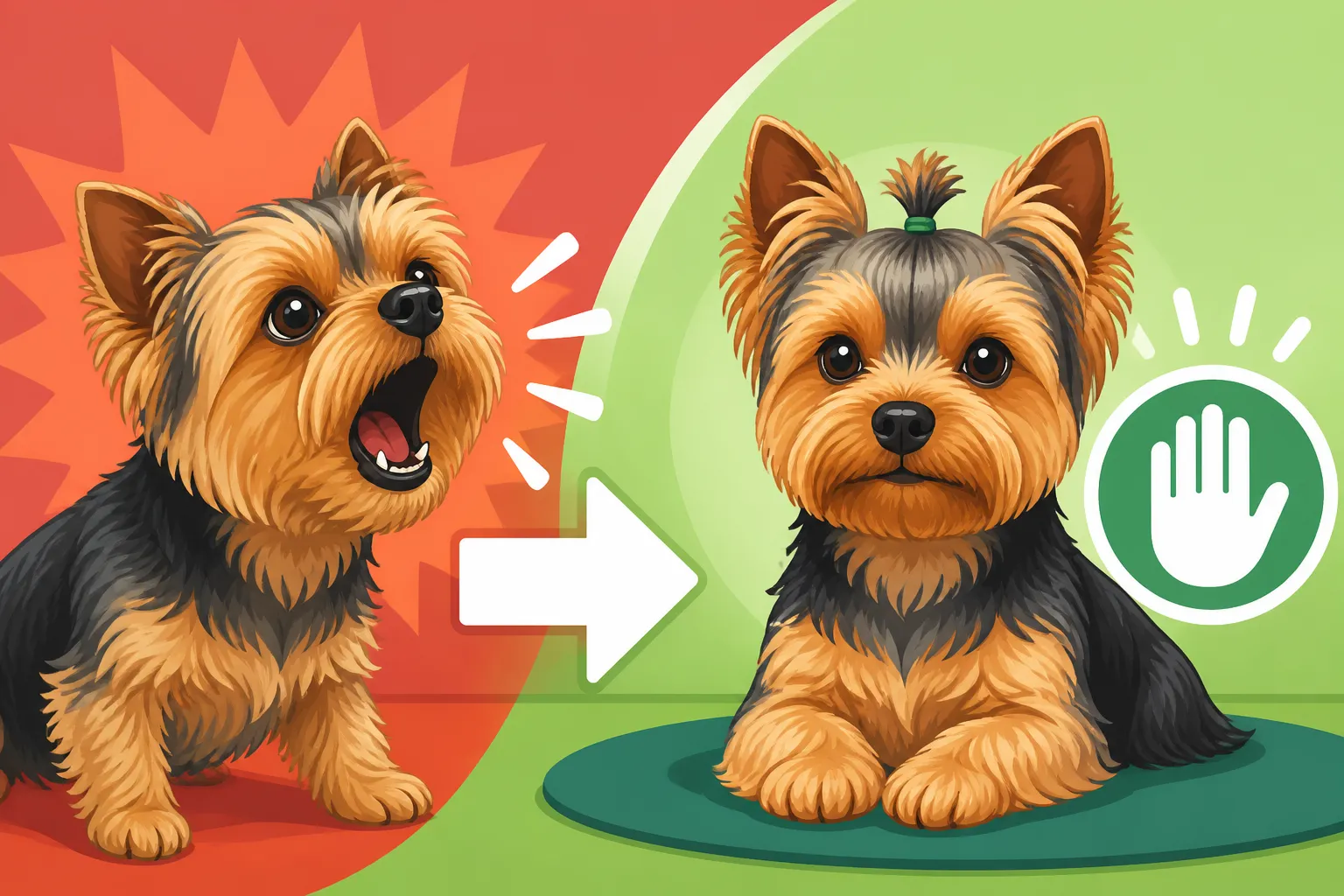
This is arguably the most crucial step, and often the hardest for us loving Yorkie parents. The principle here is simple: if barking gets no reward, it will eventually stop. When your Yorkie demand barks, you must completely ignore them. This means no eye contact, no talking, no touching, and no giving in to their demands.
Let's imagine your Yorkie, Pip, starts barking incessantly while you're trying to read. Your natural instinct might be to tell Pip "Quiet!" or "No bark!" But remember, even negative attention is still attention. Instead, turn your back, walk out of the room, or completely disengage. Only when Pip is quiet for at least a few seconds – and I mean truly quiet, not just taking a breath between barks – can you then re-engage. If you cave even once during the barking, you’ve taught them that if they just bark longer or louder, they’ll eventually get what they want.
Be prepared for what's called an "extinction burst." This is a period where the barking will likely get worse before it gets better. Your Yorkie is thinking, "My usual tactics aren't working! I must try harder!" They'll bark louder, longer, and with more intensity. This is a sign that your strategy is working, and it’s critical that you hold firm during this phase. If you give in during an extinction burst, you'll actually strengthen the barking behavior, teaching them that extreme barking is the key to success. It’s tough, but it’s vital for success.
Redirection and Positive Reinforcement
Ignoring the unwanted behavior is just one side of the coin. The other is actively teaching and rewarding desired behaviors. Instead of barking, what do you want your Yorkie to do?
Teach your Yorkie an alternative, incompatible behavior. For example, when they start to bark for attention, don't react. Once they pause, even for a split second, immediately praise them and offer a quiet activity, like a puzzle toy filled with a favorite treat. A Kong filled with peanut butter or a LickiMat can keep them occupied and quiet for a while. You're essentially teaching them, "Quiet gets you good things, barking gets you nothing."
You can also proactively reward quietness. If your Yorkie is lying calmly near you, occasionally drop a treat or offer a gentle pat on the head before they even think about barking for it. This reinforces the idea that being quiet and calm is a rewarding state. The BAXTER & Bella online puppy school emphasizes positive reinforcement techniques, which can be invaluable for teaching alternative behaviors and building a strong, positive relationship with your Yorkie. These comprehensive training programs guide you through setting up scenarios for success and rewarding the right choices.
When you do engage with your Yorkie, make sure it’s on your terms, not theirs. If they demand bark for play, ignore it until they are quiet. Then, when they're calm, initiate a play session. This teaches them that good things come when they are polite, not demanding. For more general guidance on training your tiny companion, consider looking into Are Yorkshire Terriers Easy to Train.
Consistent Training and Schedule
Consistency is the absolute bedrock of any successful training program, especially when dealing with deeply ingrained habits like demand barking. Every single person in the household must be on the same page and respond to demand barking in the exact same way. If one person ignores it and another gives in, your Yorkie will quickly learn who the "sucker" is and their barking will persist.
Establish a predictable daily routine that includes designated times for play, walks, training, and quiet downtime. A structured day helps reduce anxiety and boredom, two major drivers of demand barking. If your Yorkie knows they'll get a walk and playtime around specific times, they're less likely to feel the need to demand bark for it unexpectedly. Our guide on Yorkshire Terrier Daily Care Routine can help you set up a good schedule.
Short, frequent training sessions (5-10 minutes, several times a day) are much more effective than one long, infrequent session. During these sessions, practice commands like "sit," "stay," and "quiet." Reward heavily for calm behavior and silence. Incorporate mental stimulation through puzzle toys or hide-and-seek games with treats. These activities tire out their clever little brains and make them less prone to boredom barking. You can find a vast array of stimulating puzzle toys and durable chew toys on sites like Amazon, which can be a lifesaver for keeping your Yorkie mentally engaged when you can't actively play.
Common Pitfalls and Troubleshooting
Even with the best intentions, training can hit a snag. Understanding common mistakes and knowing how to troubleshoot them can make all the difference.
Accidental Reinforcement
This is probably the biggest reason demand barking persists. We, as loving pet parents, often unknowingly reward the very behavior we want to stop. Every time you:
- Look at your Yorkie when they bark.
- Say "No!" or "Quiet!" when they bark.
- Push them away or physically interact with them when they bark.
- Give them a treat, pick them up, or start playing after they've barked, even if there was a brief pause.
- Let them out of their crate or kennel right after they've barked.
You are reinforcing the idea that barking works. It's a tough habit for humans to break because our instincts tell us to respond. But for demand barking, a non-response is the most powerful response. The key is to be extremely mindful of your reactions and ensure no one in the family is accidentally slipping up and reinforcing the barking. Our article on Yorkie Training Mistakes to Avoid can provide more details on these subtle but impactful errors.
Dealing with Multiple Barks
What if your Yorkie barks for different things? The approach remains the same: identify the trigger and consistently ignore the demand bark, while redirecting and rewarding quiet, calm behavior.
| Type of Barking | Common Contexts | Appropriate Human Response |
|---|---|---|
| Demand Barking | Wanting food, attention, play, to go out | Ignore completely until quiet, then reward alternative. |
| Alarm Barking | Stranger at door, unexpected noise, squirrel | Acknowledge, investigate, then redirect/settle. Not ignore. |
| Play Barking | During play with toys or other dogs | Engage in play, encourage healthy interaction. |
| Frustration Barking | Unable to reach something, tangled leash | Help resolve the frustration, then reward quiet. |
| Anxiety Barking | Separation, loud noises (fireworks) | Provide comfort (if safe), desensitize, seek professional help. |
As you can see from the table, not all barking should be ignored. For true demand barking, the "ignore and reward quiet" strategy is paramount. If you suspect some barking is due to anxiety, such as during thunderstorms or fireworks, a different approach focused on comfort and counter-conditioning is needed. Our guide on How to Calm a Yorkie During Fireworks has specific advice for that.
When to Seek Professional Help
If demand barking becomes overwhelming, is accompanied by other concerning behaviors (like aggression, destructive chewing, or excessive fear), or if you simply feel stuck and frustrated, it’s absolutely okay and highly recommended to seek professional help.
A certified professional dog trainer or a veterinary behaviorist can provide an individualized assessment of your Yorkie’s behavior, help identify underlying causes you might have missed, and develop a tailored training plan. They can also offer hands-on guidance and support, which can be incredibly valuable. Don't feel like a failure if you need to call in the cavalry; sometimes an outside perspective and expert advice are exactly what's needed to break through a stubborn behavior pattern. This is where comprehensive online training platforms or in-person trainers, like those found through services such as BAXTER & Bella, can truly shine, offering structured courses and personalized support.
Tools and Resources to Help Your Yorkie
While the core of stopping demand barking lies in consistent behavioral training, there are some tools and resources that can aid your efforts.
Training Aids
While I’m generally cautious about tools that promise quick fixes, some aids can be helpful when used correctly and in conjunction with a solid training plan.
Muzzle Training for Desensitization: A muzzle isn't just for aggressive dogs; a basket muzzle can be a fantastic tool for desensitization and counter-conditioning in specific scenarios, especially if your Yorkie barks excessively in public or at the vet. The goal isn't to silence them, but to create a positive association with wearing the muzzle, allowing you to manage barking in situations where ignoring isn't possible, like a busy waiting room. Never use a muzzle as punishment. Always introduce it gradually and positively.
Anti-Bark Devices (Use with Caution): Devices like citronella spray collars or ultrasonic sound emitters are controversial, and I recommend extreme caution. While they can interrupt barking, they don't teach your dog what to do instead. They can also cause fear, anxiety, or confusion if not used correctly, potentially damaging your bond with your Yorkie. If you even consider one, consult a professional trainer first. My preference is always positive reinforcement, as discussed in Positive Reinforcement Training for Yorkies.
Ultimately, the best "training aid" is a well-fed, well-exercised, and mentally stimulated Yorkie. Ensuring they have appropriate chew toys, puzzle feeders, and plenty of opportunities for walks and playtime will significantly reduce boredom-driven demand barking. Platforms like Amazon offer a vast selection of these enrichment tools, from treat-dispensing toys to snuffle mats, all easily accessible to help keep your Yorkie happy and quiet.
Professional Trainers and Online Courses
As mentioned earlier, if you’re struggling, don’t hesitate to reach out for professional guidance. A qualified trainer can observe your Yorkie’s specific behavior and help you tailor a plan. They can teach you techniques for ignoring effectively, redirecting, and reinforcing calm behavior.
Online courses, such as those offered by BAXTER & Bella, provide a structured, self-paced approach to training that many busy pet parents find invaluable. These programs often include video tutorials, live Q&A sessions, and personalized support, covering everything from puppy basics to addressing specific behavioral challenges like barking. The advantage is that you can learn and practice in the comfort of your own home, making it easier to integrate training into your daily life and ensure consistency across the household. Think of it as having a personal trainer for your Yorkie, guiding you step-by-step through the process of building a well-behaved companion.
Stopping demand barking is a journey, not a sprint. There will be good days and challenging days. But with patience, consistency, and the right strategies, you can teach your beloved Yorkshire Terrier that quiet, polite behavior is far more rewarding than a demanding bark. Your peace of mind, and your Yorkie's understanding of appropriate communication, are worth every effort.
Disclaimer
Please remember that I am a lifestyle blogger and not a veterinarian or professional dog trainer. The information provided in this article is for general informational purposes only and does not constitute professional advice. Always consult with a qualified veterinarian or certified professional dog trainer for any health concerns or specific behavioral issues your Yorkshire Terrier may have.