How to Stop a Yorkie Barking When Left Alone
It’s incredibly frustrating when you leave your beloved Yorkshire Terrier alone, only to return home to complaints from neighbors about incessant barking. That shrill, persistent yapping isn't just annoying; it often signals a deeper issue your tiny companion is struggling with, from profound separation anxiety to simple boredom. This comprehensive guide will delve into the various reasons behind your Yorkie's vocal protests and provide actionable, empathetic strategies to bring peace back to your home and your dog's solo time.
Deciphering Why Your Yorkie Barks When You're Away
Before you can tackle the barking, you first have to understand why your Yorkie is doing it. It's rarely out of spite; it's almost always a form of communication, a desperate plea or a response to an underlying need or emotion. These little dogs are deeply attached to their humans, and being left alone can trigger a range of strong feelings.
The Cry of Separation Anxiety
One of the most common and heartbreaking reasons a Yorkshire Terrier might bark when left alone is genuine separation anxiety. These dogs often form extremely strong bonds with their primary caregivers, and even short periods of solitude can feel like abandonment. It’s not just barking; this condition manifests in a suite of distress signals. Your Yorkie might start pacing, panting excessively, or even try to chew through doors or window sills. Many owners report coming home to house-soiling accidents, even from fully potty-trained dogs.
Imagine your Yorkie, a creature wired for companionship, suddenly finding itself in an empty house. For them, it can be a terrifying experience, akin to a child being left alone without warning. The barking is an attempt to call you back, a desperate sound to signal their fear and loneliness. Ignoring it or punishing it without addressing the underlying anxiety will only worsen their distress. If you suspect your furry friend is suffering, you'll want to explore solutions detailed in our guide on Yorkshire Terrier Separation Anxiety Solutions.
Boredom and Lack of Mental Stimulation
While separation anxiety is a significant concern, sometimes the answer is much simpler: your Yorkie is just plain bored. Yorkshire Terriers are intelligent, spirited dogs, and if they don't have enough to do, they'll invent their own entertainment. Unfortunately, that often means barking at every leaf that blows by the window, every person walking on the sidewalk, or simply at the quiet emptiness of the house itself.
Think about it from their perspective. They're left in a familiar environment, but without their favorite human to interact with. If there are no stimulating toys, no interesting smells, or nothing to engage their sharp little minds, barking becomes the easiest way to fill the void. This isn't malicious; it's a dog trying to cope with an under-stimulated environment. A well-exercised, mentally tired Yorkie is far less likely to resort to excessive barking.
Territorial Instincts and Environmental Triggers
Yorkies, despite their small stature, possess the heart of a big dog, and that often comes with a strong territorial instinct. They were originally bred to hunt rats, a job that required alertness and a good set of pipes to announce discoveries. This inherent watchfulness means they can be incredibly sensitive to their environment. When you're not home to reassure them, or to check out what the "threat" is, they feel it's their sole duty to alert the entire neighborhood.
A delivery truck, a squirrel on the fence, a neighbor's dog barking down the street, or even just the sound of someone walking past your door can be enough to trigger a barking spree. They perceive these external stimuli as intrusions and feel compelled to "protect" their territory. Without you there to manage these triggers, their barking can quickly escalate and become persistent. Understanding these triggers is a crucial step in our broader discussion of Yorkshire Terrier Behavior Problems and Solutions.
Implementing Management and Environmental Solutions
Once you have an idea of why your Yorkie might be barking, you can start implementing practical strategies to manage the behavior. These aren't quick fixes but rather a combination of environmental adjustments and consistent routines that provide comfort and reduce the impetus to bark.
Creating a Safe and Soothing Sanctuary
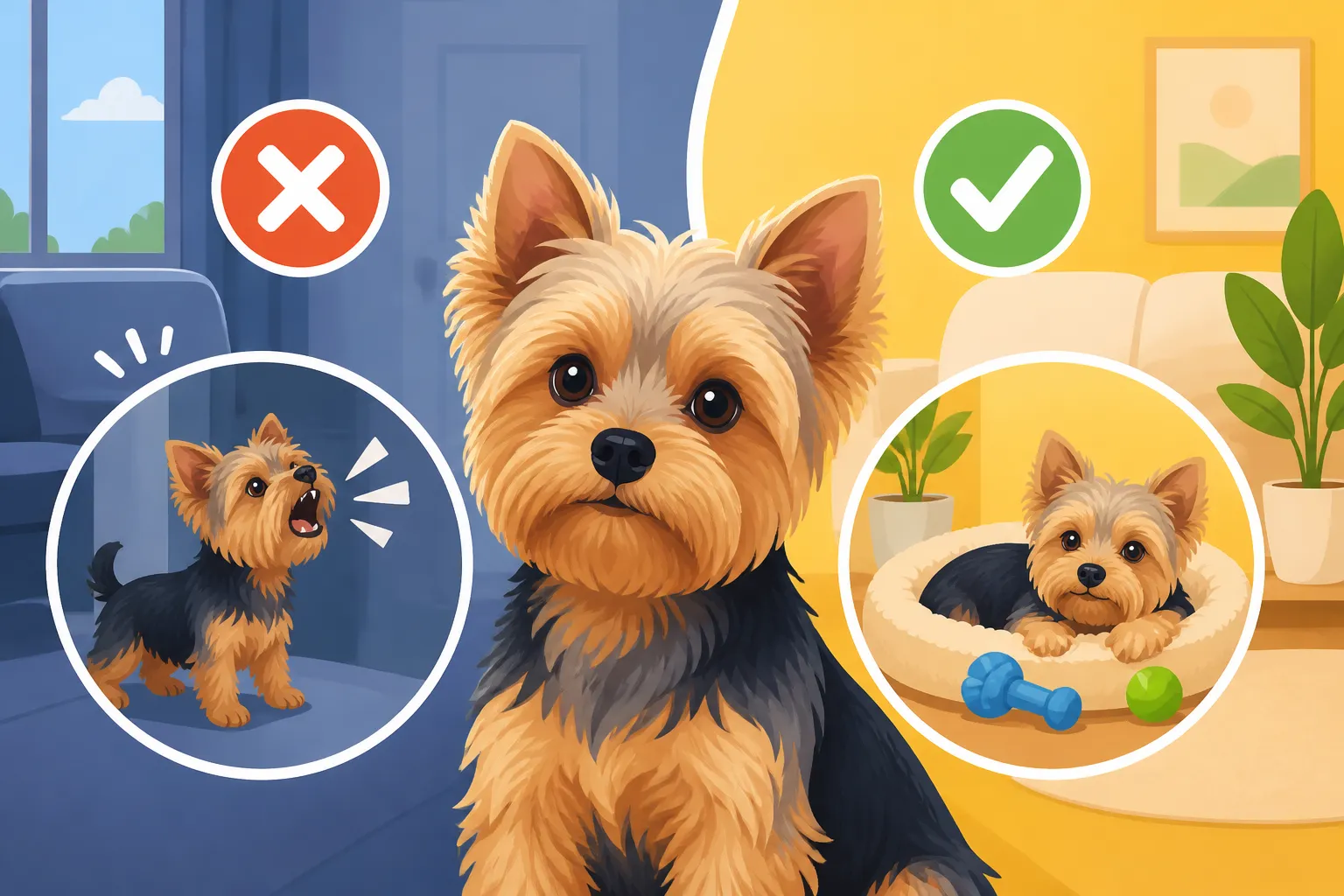
One of the best things you can do for a Yorkie prone to barking when alone is to create a den-like space where they feel secure and calm. A comfortable crate, for example, can become their safe haven. It's important that this isn't seen as a punishment but as their personal retreat. You might want to refer to our guide on Best Crate for a Yorkshire Terrier for tips on choosing the right one. Line it with a soft bed, a favorite blanket, and perhaps a piece of your clothing that carries your scent.
Consider adding elements that promote calm. A white noise machine or a classical music playlist designed for dogs can mask external sounds that might trigger barking. Many pet parents find success with calming pheromone diffusers, which release synthetic versions of the natural calming pheromones produced by mother dogs. Products like Adaptil offer these diffusers, readily available on platforms like Amazon. The goal is to make their alone-time space as stress-free and pleasant as possible.
Enriching Their Solo Time
Boredom is a significant barking trigger, so providing engaging activities for your Yorkie when you're gone is paramount. This means more than just leaving out a squeaky toy. Interactive puzzle feeders, like Kongs stuffed with peanut butter or specialized treat-dispensing toys, can keep their minds and mouths busy for extended periods. The mental effort required to get the treats out is a fantastic way to tire them out and distract them from barking.
Rotating toys regularly also keeps things fresh. Don't leave all toys out all the time. Instead, have a selection that you swap out, making "new" toys available each time you leave. This novelty can sustain their interest longer. Our guide on Best Toys for Yorkshire Terriers offers some great ideas that are perfectly suited for their size and intelligence. Even simple things like a robust chew toy made for strong chewers can provide a healthy outlet for their energy and prevent them from resorting to undesirable behaviors.
Managing External Stimuli
If your Yorkie is barking at everything outside, you need to manage what they can see and hear. Simple solutions can make a big difference. Closing curtains or blinds can block visual triggers, preventing them from seeing passersby, other dogs, or squirrels. For windows where you still want light but need to block visibility, consider using privacy film, also easily found on Amazon.
As mentioned earlier, ambient noise can help. Turning on a radio, TV, or a white noise machine can muffle outdoor sounds that might otherwise prompt a vocal response. Experiment with different types of sound to see what your Yorkie responds to best – some prefer classical music, others a talk radio station. The key is to create an environment where external triggers are minimized, allowing your Yorkie to relax rather than feeling constantly on alert. This preventative approach is often overlooked but can be incredibly effective when you are figuring out How to Leave a Yorkie Home Alone.
Gradual Training and Desensitization Techniques
Beyond managing the environment, structured training is vital to address the root causes of barking when alone. This involves teaching your Yorkie that being alone isn't scary and that quiet behavior is rewarding. Consistency and patience are key here.
The Art of Gradual Departures
For Yorkies with separation anxiety, the sight of you grabbing your keys or putting on your coat can trigger immediate distress. This is where gradual desensitization comes in. Start by practicing your departure routine without actually leaving. Pick up your keys, walk to the door, open it, then close it and sit back down. Do this multiple times a day, slowly increasing the duration you spend outside the door (a few seconds, then a minute, then five minutes, and so on). The goal is to make these "cues" of departure meaningless.
Initially, your Yorkie might still react, but as they learn that these actions don't always lead to your prolonged absence, their anxiety will lessen. Only proceed to the next step when they remain calm at the current duration. If they start barking or showing signs of distress, you've gone too fast, and you need to dial it back. This process requires a lot of patience and consistency, but it's incredibly effective in rebuilding their confidence.
Counter-Conditioning Positive Associations
Pairing your departure with something positive can also help change your Yorkie's emotional response to being left alone. Before you leave, provide a high-value, long-lasting treat or a favorite interactive toy (like the stuffed Kong mentioned earlier). This creates a positive association with your departure, shifting their focus from anxiety to anticipation of a special treat.
Make sure this "special treat" is only given when you're leaving and is taken away shortly after you return, so it remains novel and exciting. This strategy helps create the mindset that "Mommy/Daddy leaving means I get this awesome thing!" rather than "Mommy/Daddy leaving means I'm abandoned!" Over time, this counter-conditioning can significantly reduce their distress and, consequently, their barking. For more specific guidance on this type of training, programs like BAXTER & Bella's online puppy school offer structured modules that cover positive reinforcement techniques for various behaviors.
Reinforcing Quiet Behavior
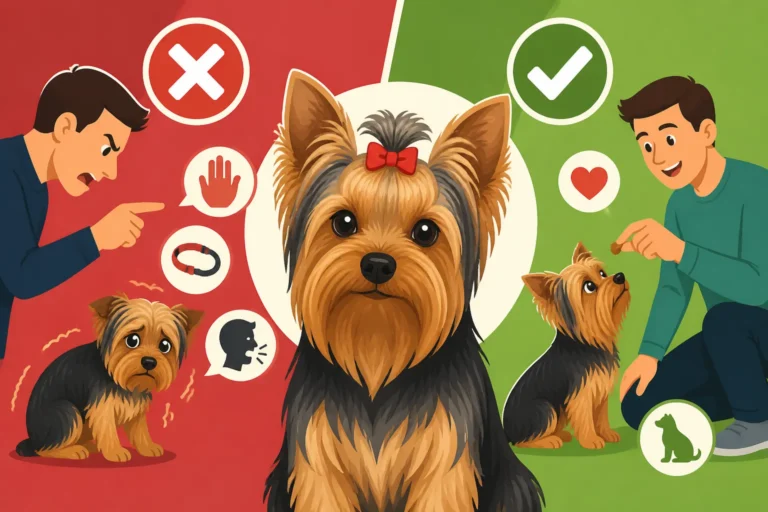
It's crucial to reward quiet behavior, not just silence. This might sound subtle, but it's an important distinction. If your Yorkie barks, wait for a brief pause (even a second) before returning or rewarding. This teaches them that silence, not barking, gets your attention and a reward. If you immediately rush back or scold them when they bark, you're inadvertently reinforcing the barking itself.
You can also actively train a "quiet" command. When your Yorkie barks (e.g., at the doorbell), let them bark a few times, then hold a treat to their nose. The moment they stop barking to sniff the treat, say "Quiet" and reward them. Repeat this, gradually increasing the duration of quiet time before the reward. This technique, when practiced consistently, can be a game-changer for How to Stop Yorkie Excessive Barking in all situations, including when you're out of sight. Remember, you're teaching them an alternative, desirable behavior rather than just punishing the unwanted one.
When Professional Intervention Becomes Necessary
Sometimes, despite your best efforts, the barking doesn't improve, or it even worsens. This is a clear sign that you might need to enlist the help of professionals. It's not a failure on your part; some behavioral issues are complex and require specialized knowledge and intervention.
Recognizing Severe Separation Anxiety
If your Yorkie's barking is accompanied by other severe symptoms like destructive chewing (especially around exits), self-mutilation (licking or chewing paws raw), frantic pacing, persistent drooling, or repeated house-soiling, you're likely dealing with severe separation anxiety. These aren't just minor inconveniences; they are clear indicators of significant emotional distress and can even pose a risk to your dog's safety and well-being.
Ignoring these severe signs can lead to a decline in your Yorkie's overall quality of life and potentially even physical injury. If you notice any of these extreme behaviors, don't delay. It's time to act quickly. Our article on Yorkie Emergency Symptoms to Never Ignore can help you identify when immediate action is needed.
Consulting with Experts
Your first step should be a visit to your veterinarian. They can rule out any underlying medical conditions that might be contributing to the behavior. For example, pain, cognitive dysfunction in older dogs, or even certain metabolic imbalances could manifest as anxiety or distress. Your vet can also discuss potential pharmaceutical interventions, such as anti-anxiety medications, if the behavior is severe and debilitating.
After a vet check, consider consulting a certified professional dog trainer or a veterinary behaviorist. These experts have extensive experience with behavioral issues and can provide tailored strategies specific to your Yorkie's needs. A good behaviorist will conduct a thorough assessment, observe your dog's behavior, and develop a comprehensive plan that might include a combination of counter-conditioning, desensitization, management, and even medication. Websites like the Certification Council for Professional Dog Trainers (CCPDT) or the American College of Veterinary Behaviorists (ACVB) can help you find qualified professionals in your area. For general training and foundational obedience, online programs like BAXTER & Bella can also be a good starting point before hands-on professional help. Knowing How to Choose a Vet for a Yorkie is crucial for this initial step.
Here's a quick summary table of common barking causes and potential solutions:
| Cause of Barking When Alone | Signs & Symptoms (Beyond Barking) | Recommended Solutions |
|---|---|---|
| Separation Anxiety | Destructive chewing, house-soiling, pacing, panting, excessive drooling, self-harm (licking paws) | Gradual departures, counter-conditioning, calming aids (pheromones, supplements), vet consultation (medication), professional dog trainer/behaviorist. See: Yorkie Separation Anxiety: Signs and Fixes |
| Boredom/Lack of Stimulation | Destructive chewing (non-exit specific), general restlessness, hyperactivity when you return | Provide engaging toys (puzzle feeders, chews), rotate toys, increase mental/physical exercise before departure. See: Best Toys for Yorkshire Terriers |
| Territorial/Environmental Triggers | Barking at specific sounds/sights (delivery trucks, neighbors), pacing by windows/doors | Block visual access (curtains, privacy film), use white noise/music to mask sounds, establish a safe, quiet space. |
| Attention-Seeking | Barking stops when you return, starts when you leave, no other signs of distress | Ignore mild barking upon return, reward silence, teach "quiet" command, ensure needs are met before leaving. |
Tackling a Yorkie's barking when left alone is a journey that requires patience, understanding, and consistent effort. By identifying the root cause and implementing appropriate strategies, you can help your small companion feel more secure and content, transforming their alone time into a peaceful experience for everyone.
Disclaimer
This article provides general information and recommendations regarding Yorkshire Terrier health and behavior. It is not a substitute for professional veterinary advice. Always consult with a qualified veterinarian or certified professional dog trainer for any concerns about your pet's health or behavior.