How Long Does It Take to Potty Train a Yorkie
The frustration of trying to potty train a tiny Yorkshire Terrier is real – one day they're nailing it, the next it feels like square one. It's easy to get discouraged when you see other dog owners seemingly breeze through this stage, leaving you wondering if your little Yorkie will ever truly "get it." This comprehensive guide is here to shed light on the realistic timeline for potty training your Yorkie, explore the many factors that influence their progress, and arm you with practical strategies to navigate this often challenging, but ultimately rewarding, journey.
The Realistic Timeline for Potty Training Your Yorkie
Let's be honest, you're here because you want a number, a definitive answer. But the truth about potty training a Yorkshire Terrier, or any dog for that matter, is that there isn't a single, magic number that applies to every pup. It's a journey, not a destination with a fixed arrival time. What you can expect is a range, and understanding that range, along with the reasons behind it, is key to managing your own expectations and staying patient.
Why There's No One-Size-Fits-All Answer
Think of it like teaching a child to read; some pick it up incredibly fast, while others need more time and different approaches. Yorkies are no different. They are intelligent, yes, but they can also be notoriously stubborn and, frankly, they have tiny bladders. This combination means that what works for one Yorkie might not work for another, and the speed of learning will vary widely. A puppy coming from a breeder who started early with good habits will likely progress faster than a rescue Yorkie who has developed bad habits or never had proper guidance. Environmental factors also play a huge role; a home with consistent routines and vigilant supervision will yield quicker results than one where the training is hit-or-miss. We also have an article on How long does it take to potty train a Yorkie puppy? which can offer more specific advice for younger pups.
Average Expectations for Yorkie Potty Training
Generally speaking, you can expect the primary potty training phase for a Yorkie puppy to take anywhere from 2 to 4 months of consistent effort. This means getting them to reliably go outside (or on a designated potty pad) the vast majority of the time, with very few accidents. However, true "bulletproof" potty training, where accidents are almost non-existent even with minor schedule disruptions, can take 6 to 12 months or even longer for some particularly persistent little guys.
For very young puppies, say 8 to 12 weeks old, you're essentially starting from scratch. They have minimal bladder control and no understanding of where they're supposed to relieve themselves. At this stage, frequent trips outside—every hour or two—are non-negotiable. As they mature, their bladder control improves, and the periods between potty breaks can extend.
Here’s a rough breakdown of what to expect:
| Age of Yorkie | Average Potty Training Duration | Key Challenges |
|---|---|---|
| 8-12 Weeks | 3-4 months (initial phase) | Very limited bladder control, no prior conditioning, frequent accidents. |
| 3-6 Months | 2-3 months (with good foundation) | Improving bladder control, prone to excitement peeing, potential for regression. |
| 6-12 Months | 1-2 months (if starting late) | Established habits (good or bad), potential for marking behavior, requires more consistency to re-train. |
| Adult (1+ Year) | 1-3 months (for re-training) | Overcoming deeply ingrained habits, potentially more stubborn, requires patience and consistency. |
Even after they seem fully trained, it’s not uncommon for Yorkies to have a "regression" phase, especially during adolescence or if there's a significant change in their routine or environment. Don't panic if this happens! It's usually a temporary setback that can be overcome with renewed consistency. Our guide on Yorkie Potty Training Regression can help you navigate those moments.
Key Factors Influencing Your Yorkie's Potty Training Journey
Understanding why some Yorkies take longer than others isn't about placing blame, but about identifying potential areas where you can adjust your approach. Many factors are at play, and recognizing them can help you tailor your training plan for maximum effectiveness.
Age and Previous Experiences
A young Yorkie puppy is a blank slate, but even then, their early environment matters. A puppy raised in a clean environment, where they were consistently taken outside by their breeder, will likely have a head start. They've already begun to associate going potty with being outdoors, or at least away from their sleeping area. Conversely, a puppy from a less ideal situation, like a pet store or a puppy mill, might have been forced to live in their own waste, blurring the lines of what is "clean" to them. This can make the process significantly longer, as you're not just teaching a new behavior but un-teaching old, undesirable ones. Similarly, an adult Yorkie adopted from a shelter might have a history of accidents or lack of consistent training, making your job a bit more challenging but certainly not impossible. Patience is paramount in these situations.
Consistency and Training Methods
This is perhaps the single most important factor. Yorkies thrive on routine and clear expectations. If you're inconsistent – sometimes letting them out every hour, sometimes every three hours, sometimes using pee pads, sometimes rushing them outside – your Yorkie will become confused. Dogs don't generalize concepts easily; they learn through repetition and association. A consistent schedule for potty breaks, feeding, and play helps them understand the rhythm of their day and when they can expect to go outside.
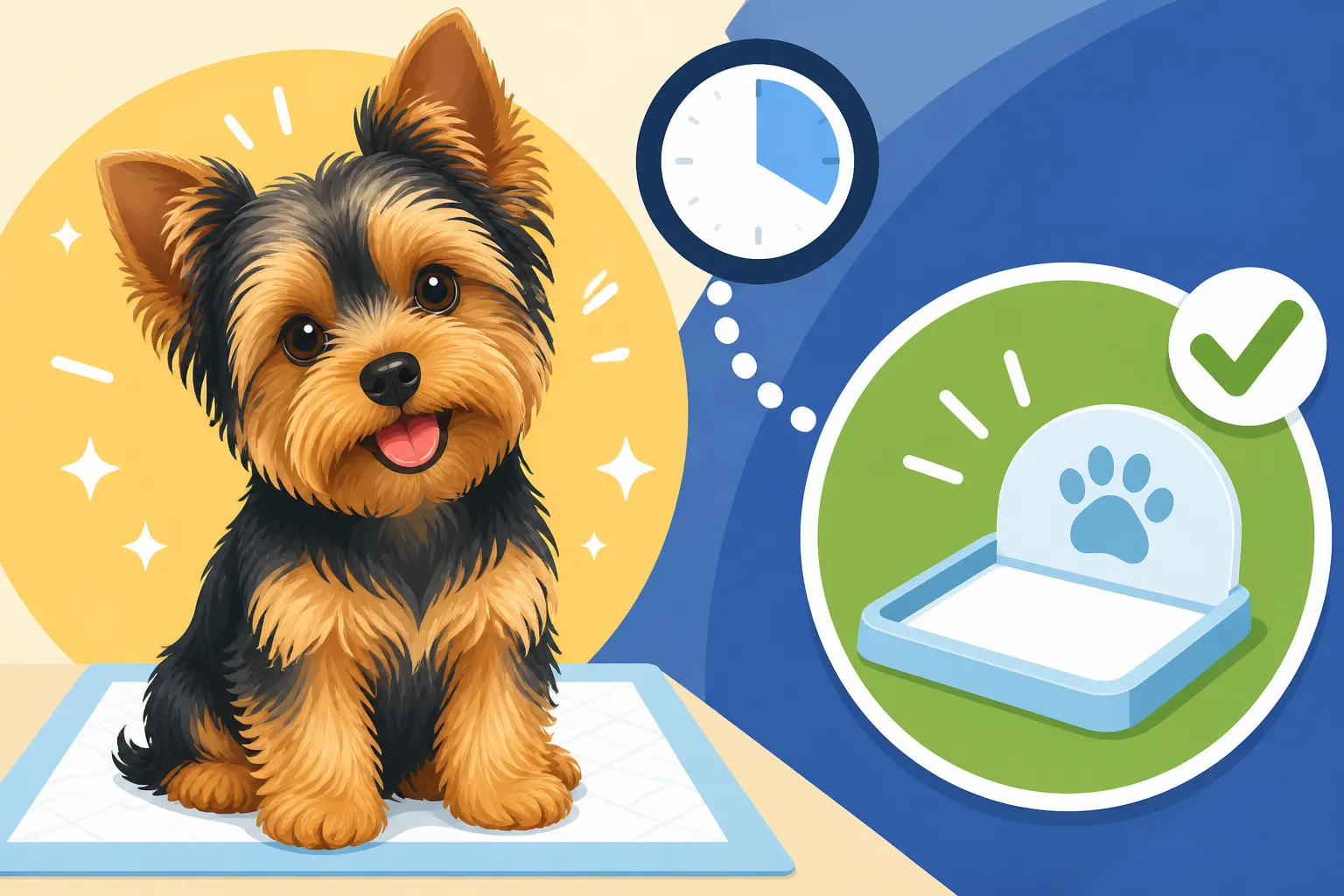
Choosing a consistent training method also makes a huge difference. Are you going solely for outdoor potty training, or are you incorporating pee pads? Both can work, but mixing signals or not being clear can slow things down. For example, if you're using pee pads, placing them in multiple locations might seem helpful, but it can actually teach your Yorkie that it's okay to go potty anywhere inside the house, as long as it's on a pad. Sticking to one designated potty area, whether inside or out, is crucial. If you're struggling to decide, our article on Pee Pad vs Outdoor Training for Yorkies offers a deeper dive into the pros and cons of each method.
Your Yorkie's Individual Personality
Just like people, every Yorkie has a distinct personality. Some are eager-to-please and quick learners, while others are a bit more independent or, dare I say, stubborn. Some Yorkies are naturally very clean and dislike soiling their living space, which can be a huge advantage. Others might be more particular about the weather; a dainty Yorkie might refuse to go out in the rain or cold, leading to indoor accidents. Their confidence level also plays a role; a shy Yorkie might be hesitant to explore a new outdoor area or be easily distracted, making it harder for them to focus on the task at hand. Understanding your individual Yorkie's quirks can help you anticipate challenges and adjust your approach accordingly. For instance, if your Yorkie is finicky about wet grass, investing in a dog umbrella or a designated covered potty area might be a worthwhile solution.
Practical Strategies to Accelerate Potty Training Success
Potty training doesn't have to be a battle. By implementing smart, consistent strategies, you can guide your Yorkie toward success more efficiently and reduce frustration for both of you. It's about setting them up to win!
Establishing a Solid Schedule and Routine
This is the bedrock of successful potty training. Yorkies need predictability. Establish a clear, consistent schedule for everything: feeding, playtime, naps, and most importantly, potty breaks.
- First thing in the morning: As soon as your Yorkie wakes up, carry them straight outside or to their designated potty spot.
- After eating/drinking: Within 5-15 minutes of finishing a meal or a big drink of water, take them out. Digestion often stimulates the urge to go.
- After naps: Wake up, go potty. It's a simple rule.
- After playtime: Excitement and activity can often lead to a need to go.
- Before bedtime: One last trip out before settling down for the night.
- Every 1-2 hours for puppies: For very young Yorkies, you'll need to take them out much more frequently, even if they haven't just done one of the above activities. As they get older and gain better bladder control, you can gradually extend these intervals.
Always take your Yorkie to the exact same spot each time, if possible. The scent from previous visits will encourage them to go there again. Stay with them until they relieve themselves. Don't just open the door and let them out alone; that's an invitation for them to sniff around, get distracted, and then come back inside to have an accident. Our guide on How to Set a Yorkie Potty Schedule can give you more detailed examples.
Effective Use of Crate Training
Crate training is an invaluable tool for potty training, especially with a Yorkie. Dogs naturally don't want to soil their sleeping area. A properly sized crate, just large enough for your Yorkie to stand up, turn around, and lie down comfortably, leverages this instinct. It shouldn't be so big that they can relieve themselves in one corner and sleep in another.
- Crate as a den: Introduce the crate as a safe, comfortable den, not a punishment. Make it cozy with soft bedding and perhaps a safe chew toy.
- Limited time: Never leave a young puppy in a crate for longer than they can reasonably hold their bladder. For puppies, a general rule is one hour per month of age, plus one (e.g., a 3-month-old puppy can hold it for about 4 hours, but this is a maximum, not a target).
- Straight out of the crate: Every single time your Yorkie comes out of their crate, take them immediately to their potty spot. Don't let them wander around the house first. This helps reinforce the idea that the house is not a bathroom.
- Supervision outside the crate: When your Yorkie is out of their crate, they should be either actively playing with you, on a leash attached to you, or in a puppy-proofed, confined area. This "umbilical cord" method ensures you can monitor them constantly for signs they need to go (sniffing, circling, squatting) and whisk them outside.
Many owners find great success with crate training, and there are excellent resources like the BAXTER & Bella online puppy school that provide structured guidance on how to implement it effectively. We also have a dedicated article on How to Crate Train a Yorkie for more in-depth advice.
Positive Reinforcement and Rewards
Yorkies, like all dogs, respond best to positive reinforcement. This means rewarding the behaviors you want to see, rather than punishing the ones you don't. When your Yorkie goes potty in the correct spot:
- Immediate praise: As soon as they finish, offer enthusiastic verbal praise ("Good potty, Fido!").
- High-value treats: Follow up with a small, delicious treat. Something they only get for successful potty breaks makes it extra special and reinforces the desired action. Zuke's Mini Naturals or similarly small, palatable treats work well for tiny Yorkies.
- Excitement: Make a little celebration! A happy dance, extra petting, or a quick game of fetch can all be part of their reward.
Avoid punishment for accidents. If you find an accident inside, clean it up thoroughly with an enzymatic cleaner (like Nature's Miracle or Rocco & Roxie, often found on Amazon) to eliminate the odor that might attract them back to the same spot. Rubbing their nose in it or scolding them after the fact is completely ineffective; they won't understand why they're being punished, only that you're angry, which can lead to fear or sneaky peeing. The key is to catch them in the act and interrupt them gently (a clap or "ah-ah!") then immediately take them outside to finish. If they finish outside, reward heavily.
Overcoming Common Potty Training Challenges
Even with the best intentions and consistent effort, you're bound to hit a few bumps in the road. Don't worry, these challenges are normal, and most can be overcome with patience and a slight adjustment to your strategy.
Dealing with Accidents and Setbacks
Accidents happen. It's almost guaranteed, especially with a breed known for its smaller bladder and occasional stubborn streak. The critical thing is how you react and learn from them.
- Don't punish: As mentioned, never punish your Yorkie for an accident. If you catch them in the act, a quick, firm "No!" or clap of the hands to interrupt them, then immediately scoop them up and take them outside. If they finish outside, reward them lavishly. If you don't catch them, simply clean it up with an enzymatic cleaner to remove all traces of odor. Yorkies often return to spots where they can still smell urine.
- Analyze the situation: Every accident is a learning opportunity for you. Ask yourself: When was the last time they were outside? Were they supervised? Did they just eat or wake up from a nap? Did I miss their signals? Often, an accident is a sign that you missed a cue or that your schedule needs to be tightened up. Perhaps your Yorkie is having trouble holding it for as long as you thought, or they're not signalling clearly.
- Increase frequency: If accidents are frequent, increase the frequency of your potty breaks. Go back to basics for a few days, taking them out every 30-60 minutes, and slowly extend the time as they have more success.
- Consider a tether: The "umbilical cord" method, where your Yorkie is tethered to you by a leash whenever they're not in their crate, can dramatically reduce accidents. This ensures constant supervision and allows you to catch any pre-potty signals. This technique is often highlighted in comprehensive training programs like BAXTER & Bella.
Remember, consistency is your best friend when dealing with setbacks. Your Yorkie isn't having accidents to spite you; they're simply not fully understanding the rules yet, or their bladder control isn't quite there. Our guide on How to Stop a Yorkie from Peeing Inside offers more specific tips for preventing indoor accidents.
Addressing Marking Behavior
Marking is a distinct challenge from simple accidents, and it's particularly common in intact (unneutered) male Yorkies, but can also occur in females and even neutered males. Marking is often about scent communication and claiming territory, rather than needing to fully empty their bladder. They'll lift a leg (or squat for females) and release a small amount of urine on vertical surfaces.
- Spay/Neuter: The most effective way to reduce or eliminate marking behavior is often to spay or neuter your Yorkie, ideally before the behavior becomes deeply ingrained.
- Supervision is key: When inside, strict supervision is essential. Keep your Yorkie on a leash with you, or in their crate, to prevent them from marking. If you see them sniffing or lifting a leg, immediately interrupt and take them outside to their designated potty spot.
- Clean thoroughly: Just like with accidents, use an enzymatic cleaner on any marked spots to remove the scent, preventing your Yorkie from wanting to "re-mark" that area.
- Address anxiety: Sometimes marking can be a response to anxiety or stress in their environment. Are there new pets? New people? Loud noises? Identifying and addressing the source of anxiety can sometimes help.
- Management tools: Consider using a belly band for male Yorkies when indoors, especially during periods of re-training or if you have multiple dogs. These wraps, available on Amazon, can catch any marking attempts, saving your furniture and reminding you to take them out more frequently.
Marking can be incredibly frustrating, but with a consistent approach, it can be managed and often resolved. For more on this, you might find our article How to Stop a Yorkie from Marking helpful.
When to Seek Professional Help
Sometimes, despite your best efforts, potty training can feel like an uphill battle. If you've been consistent, followed all the advice, and your Yorkie is still having frequent accidents or you're simply feeling overwhelmed, it might be time to call in a professional.
- Veterinarian check-up: First, rule out any underlying medical issues. A urinary tract infection (UTI), bladder stones, kidney problems, or even diabetes can cause a Yorkie to have frequent accidents, even if they were previously well-trained. A quick visit to your vet can identify or rule out these health concerns. Our guide on When to Take Your Yorkie to the Vet can help you identify other symptoms.
- Certified professional dog trainer: If health issues are ruled out, a certified professional dog trainer or a behaviorist can be a huge asset. They can observe your Yorkie's behavior, assess your training methods, and identify subtle cues or inconsistencies you might be missing. They can provide personalized advice and hands-on guidance tailored to your specific situation and your Yorkie's individual personality. Programs like those offered by BAXTER & Bella, while online, can still provide a wealth of structured information and even one-on-one coaching for more complex issues.
- Don't give up: Potty training challenges can be incredibly disheartening, but remember, nearly every dog can be successfully potty trained. It just takes the right approach, consistency, and sometimes, a little extra help from an expert. Don't let the frustration lead to giving up on your little companion.
The journey of potty training a Yorkie is a test of patience, consistency, and understanding. It might take longer than you initially hoped, but the bond you build through this process, and the joy of a fully house-trained companion, is immeasurable.
Disclaimer
The information provided in this article is for general informational purposes only and is not a substitute for professional veterinary advice. Always consult with a qualified veterinarian or professional dog trainer for any health or behavior concerns regarding your Yorkshire Terrier.