Yorkie Aggression: Causes and Solutions
It's incredibly disheartening and frankly, a bit scary, when your sweet little Yorkshire Terrier, a breed known for its charm and spunk, suddenly starts showing signs of aggression. You might find yourself wondering, "Where did my cuddly companion go?" or "Why is my Yorkie snarling at strangers or even me?" This behavior isn't just a nuisance; it can be genuinely distressing for both you and your dog, making everyday interactions stressful and sometimes even dangerous. This comprehensive guide is here to help you understand the common causes behind Yorkie aggression and, more importantly, provide practical, empathetic solutions to help you and your furry friend navigate these challenging waters toward a more peaceful life together.
Decoding Aggressive Behavior in Yorkshire Terriers
When we talk about aggression in any dog breed, especially a small one like a Yorkshire Terrier, it’s crucial to understand that it's rarely about malice. Instead, it's almost always a form of communication—a desperate plea or a reactive defense mechanism when they feel threatened, scared, or in pain. Because Yorkies are small, many people mistakenly believe their aggression is less serious, but a bite from even a tiny dog can be painful and traumatic. Addressing this behavior early and with the right approach is paramount, not only for the safety of those around your Yorkie but also for your dog's own well-being.
Understanding the Yorkie Temperament
Yorkies, despite their small stature, carry the heart of a big dog. They were originally bred to hunt rats in textile mills, which means they possess a strong prey drive, a confident attitude, and often, a fierce sense of loyalty to their human family. This combination can sometimes manifest as what's colloquially known as "small dog syndrome," where a tiny dog overcompensates for its size with an exaggerated display of dominance or defensiveness. They might see themselves as the protector of the household, barking at every perceived threat, or becoming territorial over their space and belongings.
These inherent breed characteristics, while charming in many ways, can also be a double-edged sword when not properly managed through early socialization and consistent training. A Yorkie’s natural boldness, combined with a lack of understanding from their human companions about canine body language and communication, can quickly escalate into aggressive displays. It's not that they are inherently mean; it's that they are communicating their discomfort or perceived need to defend themselves or their resources in the most effective way they know how.
The Spectrum of Aggressive Behaviors
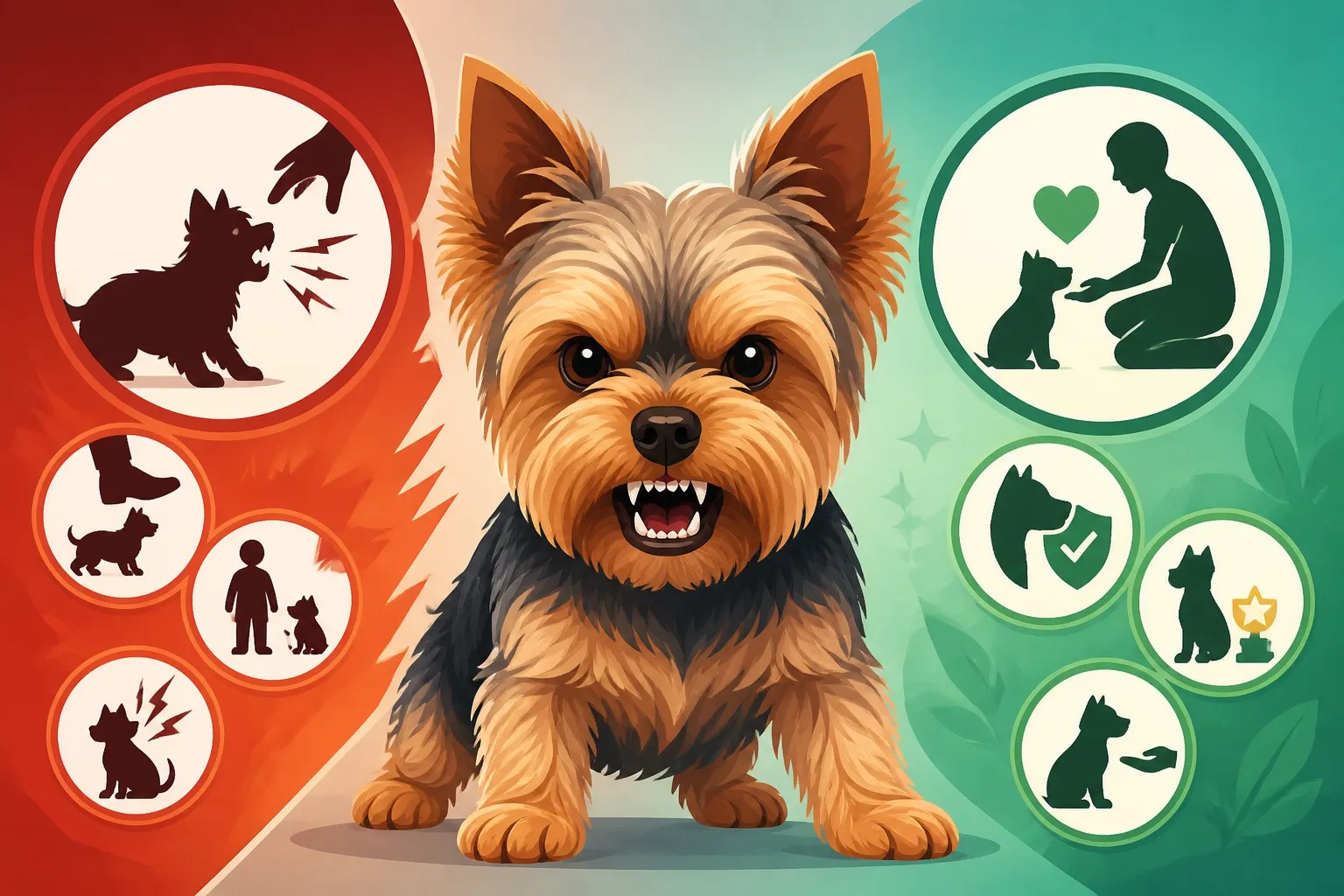
Aggression isn't a single behavior; it's a spectrum, ranging from subtle warnings to outright attacks. For your Yorkie, this might start with seemingly minor actions that you might overlook or even find amusing, like a quick growl when you try to take their toy. However, these are early warning signs that should be taken seriously. The progression often looks like this: stiffening of the body, growling, snarling, snapping, lunging, and finally, biting. Each step is a more intense warning signal, indicating that your Yorkie feels increasingly threatened or pushed beyond their comfort zone.
Ignoring these early signs, or worse, punishing your Yorkie for growling, can suppress the warnings without addressing the underlying fear or discomfort. This can lead to a dog who bites without warning, as they've learned that their subtle cues are either ignored or lead to negative consequences. It's vital to recognize and respect these signals, using them as an opportunity to understand what's triggering your Yorkie and how to modify the situation or their reaction to it.
Unpacking the Different Faces of Yorkie Aggression
Aggression isn't a one-size-fits-all problem; it presents itself in various forms, each stemming from different triggers and motivations. Identifying the specific type of aggression your Yorkie is exhibiting is the first crucial step toward finding an effective solution. Knowing what kind of aggression you're dealing with helps you understand why it's happening, allowing for targeted intervention rather than a blanket approach.
Fear Aggression
Fear aggression is arguably one of the most common types seen in Yorkshire Terriers. Because they are so small, the world can seem like a very big, scary place, full of towering humans, large dogs, and unexpected noises. A Yorkie exhibiting fear aggression will often try to make themselves smaller, tuck their tail, or lean away from the perceived threat before escalating to growling, barking, or biting if they feel cornered or unable to escape. They're essentially saying, "Please go away! I'm scared!"
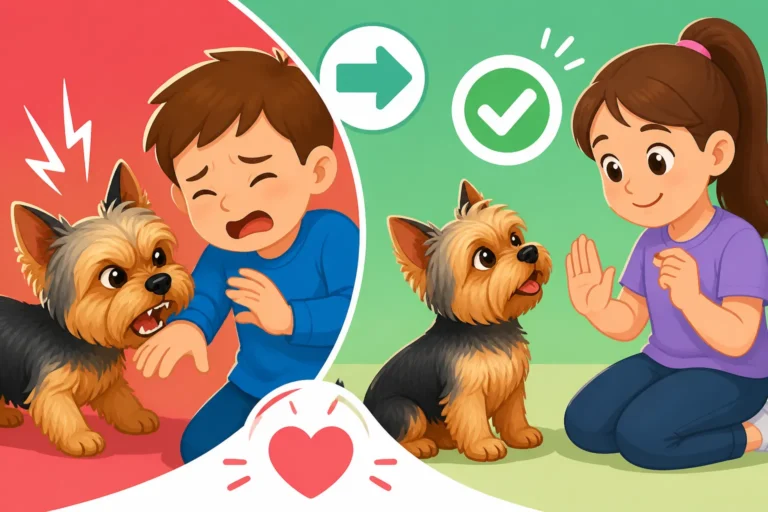
This type of aggression often manifests towards strangers, children, or larger dogs. For instance, a Yorkie might become aggressive if a child rushes towards them, or if a new, boisterous dog enters their space without a proper introduction. If your Yorkie is growling and snapping when new people approach them, especially when they're in their bed or crate, it's a strong indicator of fear. Addressing this requires building confidence and creating positive associations, which can be done through gradual exposure and positive reinforcement. A great starting point is learning How to Socialize a Yorkie with People from a young age.
Resource Guarding Aggression
Resource guarding is when a Yorkie becomes aggressive to protect something they value—be it their food, toys, a favorite sleeping spot, or even a particular person. They perceive these items or individuals as high-value "resources" that must be defended from anyone who approaches. This can be frustrating and even dangerous for owners, especially if it involves guarding food or a family member.
Imagine trying to retrieve a dropped treat, and your Yorkie snaps at your hand, or growls fiercely if another pet comes too close to their food bowl. These are classic signs of resource guarding. This behavior is instinctual, but it needs to be managed through specific training techniques that teach your Yorkie that approaching them when they have a resource leads to more good things, not losing what they have. Strategies often involve trading, desensitization, and counter-conditioning.
Territorial and Protective Aggression
Given their history as "ratters" and their inherent protective nature, many Yorkies display territorial aggression. This is typically directed at strangers or other animals entering their perceived territory, which can be your home, yard, or even your car. They might bark incessantly at the mail carrier, lunge at other dogs passing by your fence, or growl at visitors who come through the front door. They believe it's their job to warn off intruders and protect their family.
While a certain degree of territoriality is natural, excessive or aggressive displays can become problematic. This type of aggression is often accompanied by intense barking, which you can learn to manage by reading How to Stop Yorkie Excessive Barking. Managing territorial aggression involves setting clear boundaries, consistent training, and sometimes limiting your Yorkie's visual access to triggers. For instance, putting up opaque window film can prevent them from seeing every passerby.
Pain-Induced Aggression
Sometimes, aggression isn't behavioral at all; it's a symptom of an underlying medical issue. A Yorkie in pain might lash out unexpectedly, especially when touched in a sensitive area. This is a purely defensive reaction, as they're trying to prevent further discomfort. Because Yorkies are small and sometimes stoic, it can be hard to tell if they're in pain. If your Yorkie's aggression is sudden, unexplained, or seems out of character, a trip to the vet should be your first step.
Common health issues that can cause pain-induced aggression in Yorkies include dental problems, arthritis, back pain, or even conditions like patellar luxation, a common Yorkshire Terrier Patellar Luxation: Signs and Care ailment. Even ear infections or skin irritations can make them snappy. If the vet finds no medical cause, then you can delve into behavioral solutions. However, always rule out pain first. If you're wondering How to Tell If a Yorkie Is in Pain, look for limping, reluctance to move, sensitivity to touch, changes in appetite, or excessive licking of a specific area.
Pinpointing the Root Causes of Your Yorkie's Aggression
Understanding the type of aggression is a great start, but to truly address the issue, we need to dig deeper into the why. What specific circumstances or underlying factors are contributing to your Yorkie's aggressive outbursts? Identifying these root causes is like solving a puzzle; once you have all the pieces, you can put together an effective strategy.
Lack of Early Socialization
One of the most significant contributors to fear-based aggression, and even some territorial aggression, is a lack of proper socialization during puppyhood. The critical socialization window for puppies is roughly between 3 and 16 weeks of age. During this time, puppies are highly impressionable and form their opinions about the world. If a Yorkie puppy isn't exposed to a wide variety of sights, sounds, smells, people, and other friendly dogs in a positive and controlled manner, they can grow up to be fearful and reactive.
Imagine a Yorkie puppy raised in isolation, suddenly thrust into a bustling dog park. They've never learned that children are generally safe, or that other dogs want to play. Their instinct will be to protect themselves, leading to growling or snapping. Even if you adopted an older Yorkie who missed out on this crucial period, it's never too late to try to socialize them carefully and positively. You can always work on How to Socialize a Yorkie with Dogs at the Park, but it will require more patience and a more structured approach.
Insufficient Training and Boundaries
Yorkies are intelligent and can be a bit stubborn, and without consistent training and clear boundaries, they can quickly assume they're in charge. This isn't about dominance in a traditional sense, but more about a lack of understanding of appropriate behavior and who makes the rules. If a Yorkie learns that growling or snapping gets them what they want (e.g., being left alone, getting a treat, keeping their toy), they'll continue to use that strategy.
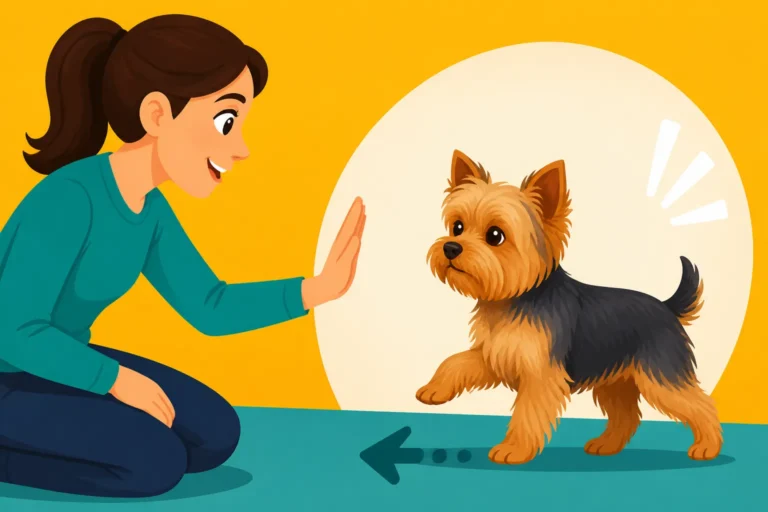
Simple obedience training, even just the basics like "sit," "stay," and "come," establishes a communication channel and builds a foundation of respect. Without it, a Yorkie might not understand what's expected of them, leading to frustration and reactive behaviors. A comprehensive program like BAXTER & Bella can provide structure and guidance for new and experienced owners alike, helping to instill good manners and confidence. This training should always use positive reinforcement methods.
Previous Negative Experiences or Trauma
Just like people, dogs can carry the weight of past negative experiences. A rescue Yorkie, for instance, might have been abused, neglected, or had traumatic encounters with certain types of people (e.g., men with beards, children, other dogs). These past traumas can leave lasting scars, making them fearful and defensive in similar situations, even if those situations are now safe.
A Yorkie who was once attacked by a larger dog might become aggressively reactive to all large dogs, for example. Understanding a rescue dog's history, if available, can provide valuable clues. Even if you don't know their past, observing what specific triggers cause their aggression can help you piece together the puzzle. Patience, gentle handling, and desensitization are key to helping these dogs overcome their fears.
Genetic Predisposition
While environmental factors and training play a huge role, genetics can also contribute to a dog's temperament and propensity for certain behaviors, including aggression. Responsible breeders strive to breed for good temperament, but sometimes certain traits can still emerge. This doesn't mean your Yorkie is destined to be aggressive, but it might mean they have a lower threshold for stress or a stronger reactive instinct.
It's vital to research and choose a reputable breeder if you're getting a puppy, as they screen for health and temperament. A good breeder will be transparent about their dogs' lineage and temperament and will have started early socialization. You can learn more about how to find ethical sources in articles like How to Find a Reputable Yorkie Breeder. If you have a Yorkie with a strong genetic predisposition, it simply means you'll need to be even more diligent and consistent with training and management.
Implementing Effective Training and Management Strategies
Once you've identified the type and likely causes of your Yorkie's aggression, it's time to put a plan into action. This isn't a quick fix; it requires patience, consistency, and a deep commitment to understanding and retraining your furry friend. Remember, the goal isn't to punish aggression but to change the underlying emotional response and teach alternative behaviors.
Positive Reinforcement and Counter-Conditioning
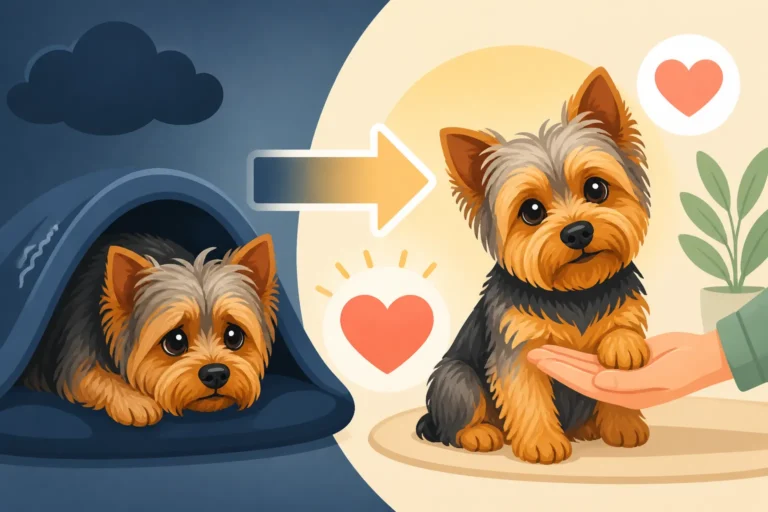
The cornerstone of addressing aggression is positive reinforcement. This means rewarding desired behaviors and creating positive associations with previously feared or guarded items/situations. If your Yorkie is fear-aggressive towards strangers, for example, every time a stranger appears (at a safe distance), give your Yorkie a high-value treat. The goal is to change their internal narrative from "stranger = danger" to "stranger = yummy treats!" This process is called counter-conditioning.
For resource guarding, teach your Yorkie that human approach means good things. Practice trading: offer a high-value treat in exchange for a guarded item, then immediately return the item. Over time, they'll learn that your presence around their resources is a positive experience. You can find many affordable training aids and high-value treats on Amazon to help with this process. Consistency is key here; everyone in the household needs to be on board with the same approach. For more general advice on dealing with difficult behaviors, consider reading about Yorkshire Terrier Behavior Problems and Solutions.
Desensitization and Controlled Exposure
Desensitization involves gradually exposing your Yorkie to their triggers at a level they can tolerate, slowly increasing the intensity over time. This must be done carefully to avoid overwhelming your dog and making the aggression worse. If your Yorkie barks aggressively at other dogs on walks, start by observing other dogs from a very far distance where your Yorkie is calm. Reward their calm behavior. Slowly, over days or weeks, decrease the distance, always ensuring your Yorkie remains below their "threshold" of reactivity.
This technique is powerful for fear and territorial aggression. For a dog that's reactive to the doorbell, for instance, start by playing a recording of the doorbell sound at a very low volume, rewarding your Yorkie for not reacting. Gradually increase the volume. The idea is to incrementally build their tolerance and replace reactive responses with calm ones. Never force your Yorkie into a situation they're not ready for; this will only make them more fearful.
Management Techniques and Safety Measures
While training is crucial for long-term change, management strategies are essential for immediate safety and preventing further aggressive incidents. This means controlling the environment to avoid triggers. If your Yorkie resource guards their food, feed them in a separate room where they won't feel threatened. If they are aggressive towards visitors, crate them in a quiet room with a stimulating toy (like a Kong filled with peanut butter) or use a baby gate to keep them separate until they are ready for controlled introductions.
For walks, if your Yorkie is leash-reactive, consider using a well-fitting harness rather than a collar, as harnesses distribute pressure better and reduce the risk of injury if they lunge. A reputable brand like Puppia offers harnesses suitable for small breeds like Yorkies. A muzzle can also be a temporary, humane tool during training or in high-risk situations, but it should be introduced positively and never used as a punishment. Always supervise your Yorkie and be proactive in managing situations that could lead to aggression.
| Type of Aggression | Common Triggers | Management Strategies | Training Focus |
|---|---|---|---|
| Fear Aggression | Strangers, loud noises, new environments, children, other dogs | Avoidance, safe spaces, short leashes, muzzle (if needed) | Counter-conditioning, desensitization, confidence building |
| Resource Guarding | Food bowls, favorite toys, beds, specific people | Separate feeding, "trade-up" game, management of high-value items | Positive reinforcement for sharing, "leave it" command |
| Territorial/Protective | Visitors, mail carrier, dogs passing by, knocking | Limit access to windows/doors, leash management, controlled greetings | Impulse control, "place" command, basic obedience |
| Pain-Induced | Being touched in sensitive areas, movement | Immediate vet visit, careful handling, pain management | N/A (medical issue first) |
Knowing When to Call in the Professionals
It’s completely normal to feel overwhelmed when dealing with a Yorkie who displays aggressive behavior. Sometimes, despite your best efforts with at-home training and management, the aggression persists, escalates, or becomes too dangerous to handle on your own. This is not a sign of failure on your part, but rather an indication that it’s time to bring in the big guns: professional help. A qualified expert can provide an objective assessment, specialized techniques, and crucial support tailored to your specific situation.
Consulting Your Veterinarian
As we discussed, pain or underlying medical conditions can be a significant driver of sudden or uncharacteristic aggression. Therefore, your very first step when your Yorkie starts exhibiting aggression should always be a comprehensive vet check-up. Explain all the behaviors you've observed, no matter how minor. Your vet will perform a thorough physical examination, and possibly blood work or other diagnostics, to rule out any health issues that might be causing discomfort or impacting neurological function.
Conditions like Yorkshire Terrier Dental Disease: Signs and Care, hypothyroidism, or even cognitive dysfunction in older Yorkies can manifest as irritability and aggression. If your vet identifies a medical cause, treating that issue might resolve the aggression completely. Even if no physical ailment is found, your vet can be an excellent resource for referring you to a certified professional dog trainer or a veterinary behaviorist who specializes in canine behavior. Ignoring this crucial step could mean missing the real problem entirely.
Working with a Certified Professional Dog Trainer
For many common forms of aggression, especially those rooted in fear, lack of socialization, or resource guarding, a certified professional dog trainer can be incredibly effective. Look for trainers who emphasize positive reinforcement, force-free methods, and have experience with aggression in small breeds. A good trainer will observe your Yorkie's behavior, identify triggers, and help you implement a tailored training plan. They can teach you the correct techniques for counter-conditioning, desensitization, and impulse control, and guide you through tricky situations.
A trainer might recommend private one-on-one sessions, which are often best for aggressive dogs as they minimize stress and distractions. They can also offer specific tools and strategies, like recommending certain types of leashes, muzzles, or enrichment toys that can be purchased from places like Amazon to aid in your training. Remember, a trainer works with you to empower you to train your dog; they don't just "fix" your dog for you. Programs like the BAXTER & Bella online puppy school even offer resources for older dogs and behavior issues, providing a wealth of video tutorials and live help.
Seeking a Veterinary Behaviorist
For severe cases of aggression, or when conventional training methods aren't yielding results, a veterinary behaviorist is the most appropriate professional. These individuals are veterinarians who have gone on to specialize in animal behavior, much like a psychiatrist for humans. They understand both the medical and behavioral aspects of aggression and can prescribe medication if necessary, alongside a behavior modification plan. Medication is never a standalone solution but can be a valuable tool to help reduce anxiety or reactivity, allowing your Yorkie to be more receptive to training.
A veterinary behaviorist will conduct a very detailed behavioral history, often asking you to complete extensive questionnaires about your Yorkie's daily routine, triggers, and past incidents. They will then formulate a comprehensive treatment plan that addresses both the emotional state and the learned behaviors. This level of expertise is invaluable for cases where the aggression is complex, dangerous, or has a strong neurological or genetic component. Don't hesitate to seek their expertise if you feel out of your depth or if your Yorkie's aggression is posing a significant risk.
Fostering a Peaceful Environment After Aggressive Incidents
Dealing with Yorkie aggression is a journey, not a destination. Even after successful training and management, vigilance and consistency are always required. The goal is not just to stop the aggression but to create a happy, confident, and peaceful life for your Yorkie and everyone in your home. This involves ongoing effort and a commitment to maintaining the progress you've made.
Maintaining Consistency and Routines
Dogs thrive on routine and predictability, and this is especially true for a Yorkie with a history of aggression. Consistent rules, feeding schedules, potty breaks, and training sessions help reduce anxiety and build confidence. Everyone in the household must be on the same page regarding commands, boundaries, and how to interact with your Yorkie. Inconsistency can confuse your dog and may inadvertently reinforce old, undesirable behaviors.
Imagine one family member allowing your Yorkie to guard a toy, while another tries to take it away. This mixed messaging can be incredibly confusing and stressful for your Yorkie, potentially triggering a relapse in aggressive behavior. Regular, positive training sessions, even short ones, help reinforce good habits and strengthen your bond. Remember that Positive Reinforcement Training for Yorkies is a lifelong commitment that brings immense rewards.
Continued Socialization and Positive Experiences
Even after addressing initial aggression, continued, positive socialization is vital. This doesn't mean throwing your Yorkie into a dog park if they're still reactive. Instead, it means controlled, positive exposure to new people, places, and friendly dogs. This might involve structured playdates with a known, calm dog, or controlled greetings with trusted friends and family members, always pairing the experience with high-value treats and praise.
The aim is to continually build positive associations and reinforce that the world isn't such a scary place. For example, if your Yorkie previously struggled with walks, ensure that subsequent walks are filled with pleasant experiences and rewards, rather than stressful encounters. This ongoing positive conditioning helps prevent regression and ensures your Yorkie continues to feel safe and secure.
Recognizing and Preventing Relapses
Aggression can sometimes be a deeply ingrained behavior, and even with the best efforts, relapses can occur, especially during times of stress, illness, or changes in routine. It's crucial to remain observant and recognize the early warning signs that your Yorkie might be feeling stressed or uncomfortable. These might include lip licking, yawning, averting eyes, freezing, or subtle growls. Catching these early cues allows you to intervene before a full-blown aggressive display.
Prevention is always better than cure. Continue to manage known triggers, ensure your Yorkie has a safe retreat when overwhelmed, and never stop reinforcing positive behaviors. If a relapse does occur, don't get discouraged. Revisit your training plan, perhaps with the help of your professional trainer, and remember that setbacks are a normal part of the process. Your commitment and understanding will be the greatest tools in helping your Yorkie live a calm and happy life.
Disclaimer
This article is for general informational purposes only and does not constitute professional advice. Laws, prices and regulations vary by location and change over time. Consult a qualified professional for guidance on your specific situation.