Why Do Yorkies Follow You Everywhere
If you're a Yorkshire Terrier parent, you've probably noticed that your pint-sized companion often acts like your personal shadow, following you from room to room, even to the bathroom! This endearing—and sometimes exasperating—behavior is incredibly common among Yorkies, leaving many owners wondering, "Why does my Yorkie follow me everywhere?" This comprehensive guide will delve into the fascinating reasons behind this strong attachment, from their breed history to their psychological needs, and offer practical advice for fostering a balanced relationship.
Understanding the Yorkie's Innate Companionship Drive
Yorkshire Terriers are renowned for their vibrant personalities and deep devotion to their human families. This intense bond often manifests as an almost constant desire to be in your presence, a trait that’s deeply rooted in their history and the characteristics of toy breeds. It’s not just a quirk; it’s often a fundamental aspect of their being.
A Legacy of Loyalty: Terrier Instincts
To truly understand why your Yorkie shadows your every move, we need to glance back at their origins. Yorkshire Terriers, despite their dainty appearance today, were originally bred in 19th-century England to be working dogs, specifically ratters in textile mills and mines. They were small enough to navigate tight spaces and brave enough to confront vermin. This working background instilled in them a sharp intelligence, a keen sense of alertness, and a strong drive to be purposeful and involved.
While they may no longer be hunting rats, that innate desire for a "job" and a strong connection to their human "pack leader" remains. They are highly observant and thrive on interaction. When they follow you, they're often not just being clingy; they're actively monitoring their environment and seeking cues from you, their most trusted source of information and security. They want to be part of whatever you're doing, no matter how mundane. This is a testament to the deep-seated loyalty that is a hallmark of the Yorkshire Terrier Temperament and Personality Their world is often centered around their human companion, and being near you is their way of participating in that world.
The "Velcro Dog" Phenomenon in Toy Breeds
Yorkies are a prime example of what pet owners affectionately call "Velcro dogs." This term refers to breeds that stick exceptionally close to their owners, seemingly attached at the hip. While many dogs enjoy human company, toy breeds like the Yorkshire Terrier often take it to an extreme. This phenomenon is partly due to their breeding as companion animals. Unlike larger working breeds designed for more independent tasks, toy breeds were developed specifically to be lapdogs and close companions.
Over generations, breeders selected for traits that enhanced their appeal as household pets: small size, affectionate nature, and a strong desire for human contact. When you consider the small stature of a Yorkie, their world can feel much larger and potentially more intimidating. Being close to you provides a sense of safety and security that they might not feel otherwise. They rely on you for protection, comfort, and entertainment. This isn't a sign of weakness; it's a profound demonstration of their trust and dependence on you. Think about it from their perspective: you are their protector, their food provider, their playmate, and their entire social circle. Of course, they want to be where you are!
The Role of Attachment and Security
Beyond their historical roots, a Yorkie's shadowing behavior is largely driven by their emotional needs for attachment and security. They form incredibly strong bonds with their primary caregivers, and this bond dictates much of their behavior and emotional well-being.
Building a Strong Bond: Your Yorkie's World Revolves Around You
Yorkies are highly social creatures who thrive on interaction and affection. When you bring a Yorkie into your home, you quickly become the center of their universe. This profound attachment isn't just sweet; it's a biological imperative for a species that, in the wild, would rely on its pack for survival. In a domestic setting, you are their pack.
Every interaction you have with your Yorkie, from feeding them to a gentle pat on the head, reinforces this bond. They learn that positive experiences are associated with your presence. When they follow you, they are essentially seeking out these reinforcing interactions, whether it's a kind word, a playful glance, or even just the comfort of your nearby scent. This is particularly true for Yorkies who have been consistently cuddled and given a lot of attention from a young age. They’ve learned that being close to you brings good things. Building a strong foundation of positive reinforcement from the start, as outlined in any good Yorkshire Terrier Puppy Training Schedule helps solidify this bond in a healthy way.
Seeking Reassurance and Comfort
Imagine you're in an unfamiliar place or facing a situation that makes you a little nervous. What do you instinctively do? You might look for a familiar face, a friendly voice, or someone you trust to offer reassurance. Your Yorkie does the exact same thing, but you are that 'someone.' Their small size makes them more vulnerable to perceived threats in their environment, from a strange noise outside to a new piece of furniture.
Following you provides them with an immediate sense of comfort and safety. Your mere presence acts as a powerful security blanket. They feel protected when you are near, knowing you'll look out for them. If your Yorkie is prone to anxiety or easily startled, they might cling even more. This isn't manipulative behavior; it's an honest expression of their need for emotional support. For example, during a thunderstorm or when guests are over, you might notice your Yorkie's "shadow" intensify as they press closer to you for comfort. Understanding these cues is key to their well-being and can help you offer the appropriate reassurance they need.
Addressing Underlying Behavioral Factors
While natural attachment is a primary reason, sometimes excessive shadowing can point to deeper behavioral issues, particularly separation anxiety. It's important to distinguish between a "Velcro dog" trait and a dog struggling with over-attachment.
Managing Separation Anxiety and Over-Attachment
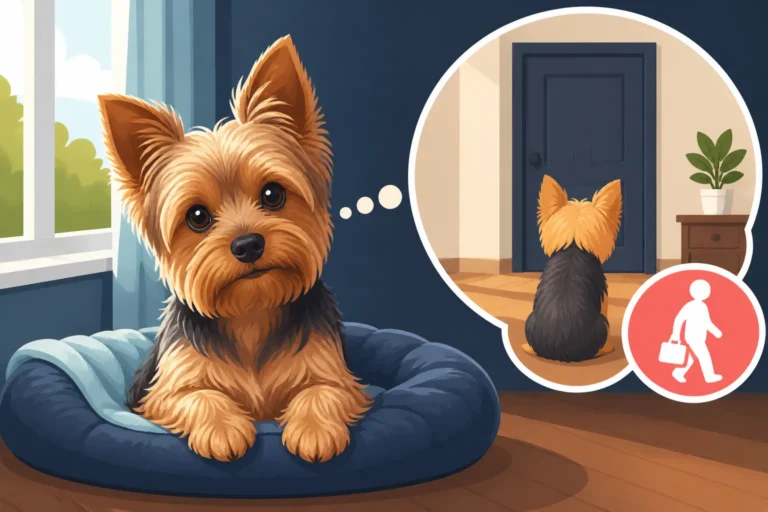
One of the most common underlying reasons for a Yorkie following you everywhere, especially when coupled with other behaviors, is separation anxiety. This isn't just about missing you; it's a genuine panic response when they're left alone or perceive that you might leave. A Yorkie with separation anxiety might not just follow you; they might also whine, bark excessively, pace, or even try to block your exit when you prepare to leave the house. They might also exhibit destructive chewing or inappropriate urination when left alone. This level of distress goes beyond typical companionship.
If you suspect your Yorkie is struggling with this, it's crucial to address it head-on. Gradual desensitization, where you slowly increase the time you spend out of their sight, can be very effective. Start with just a few seconds, then minutes, always returning before they become distressed. Provide engaging puzzle toys or a Kong filled with peanut butter (like those readily available at pet supply stores such as Chewy) to distract them when you step away. Creating a comfortable, safe space, such as a cozy crate (refer to our guide on Yorkie Crate Size Guide or a designated bed, can also help them feel more secure. Remember, patience is vital, and sometimes professional help from a vet or a certified dog behaviorist is necessary to manage severe cases of Yorkshire Terrier Separation Anxiety Solutions.
The Influence of Training and Routine
The way you interact with and train your Yorkie also plays a significant role in their shadowing behavior. A consistent routine and clear boundaries, or lack thereof, can either foster healthy independence or inadvertently encourage over-attachment. For instance, if your Yorkie receives immediate attention or a treat every single time they follow you and nudge your leg, they learn that shadowing leads to positive outcomes. This isn't necessarily bad, but it can reinforce the behavior to an extreme.
Conversely, a lack of consistent training can also lead to issues. Yorkies are intelligent and can pick up on routines quickly. If they don't have a clear understanding of what's expected of them, or if their daily life lacks structure, they might stick to you as their only consistent point of reference. Establishing a predictable daily Yorkshire Terrier Daily Care Routine including feeding times, play, and potty breaks, can provide a sense of security that reduces the need for constant vigilance. Additionally, training commands like "stay" or "go to your bed" can help teach them that it's okay to be in a different room from you, even for short periods. This is part of the broader process of How to Train a Yorkshire Terrier for a well-adjusted life.
Practical Tips for a Balanced Relationship
While a Yorkie's devotion is heartwarming, a healthy balance benefits both you and your furry friend. Encouraging a little independence can actually boost their confidence and reduce potential anxiety.
Encouraging Independence in Your Shadow Dog
It might feel counterintuitive, but helping your Yorkie become a bit more independent doesn't mean you love them less. In fact, it's a gift that can improve their overall well-being and reduce the chances of developing severe separation anxiety. One effective strategy is to create "alone time" that isn't punitive. This could mean leaving them with a stimulating toy in a designated safe space, like their crate or playpen, while you're still home but in another room. Slowly increase the duration of these short separations.
Interactive toys, especially those that dispense treats (many excellent options are available from retailers like Chewy), can be incredibly helpful for this. They keep your Yorkie mentally engaged and associate alone time with positive experiences. You can also practice ignoring their demands for attention sometimes, especially when they're following you excessively. Wait for them to settle down before initiating interaction. This teaches them that attention isn't always instant and that being calm and independent can also be rewarding. Encouraging independent play with their toys, rather than always being the center of their play, is also a good step.
Here's a quick comparison of behaviors and potential causes:
| Behavior | Common Causes (Normal) | Potential Issues (Needs Attention) | Solutions/Tips |
|---|---|---|---|
| Following from room to room | Strong bond, seeking closeness, curiosity | Mild over-attachment, boredom | Provide engaging toys, practice short 'stays', ignore mild shadowing sometimes. |
| Sitting on/near your feet | Comfort, security, affection | Anxiety, need for constant reassurance | Offer a comfy bed nearby, reward calm independent behavior. |
| Whining/Barking when you move | Seeking attention, excitement | Early signs of separation anxiety, demand barking | Teach "quiet" command, ignore whining, reward silence. Address separation anxiety if other signs appear. |
| Blocking exits/Panicking | Fear of being left alone | Moderate to severe separation anxiety | Professional trainer/vet consultation, systematic desensitization, secure safe space, calming aids. |
| Destructive behavior when alone | Boredom, lack of exercise | Moderate to severe separation anxiety | More exercise, mentally stimulating toys (e.g., from Chewy), professional help. |
| Excessive licking | Affection | Anxiety, boredom, discomfort | Redirect with toys, ensure adequate exercise, vet check if skin issues suspected. |
Creating Designated Safe Spaces
A designated safe space is paramount for a Yorkie's sense of security and can be a fantastic tool for fostering independence. This isn't about punishment; it's about providing a sanctuary. A crate, when introduced properly and made comfortable, can become your Yorkie's personal den, a place where they feel secure and can relax away from the constant need to monitor your movements. Fill it with soft bedding, a favorite blanket, and a few safe, durable toys. You can even offer a long-lasting treat when they go into their crate voluntarily.
This safe haven should be a place where they can retreat, even when you're home. By encouraging them to spend quiet time there, you teach them that it's okay to be separated from you for periods, and that their space is a positive, calm place to be. This is especially helpful if your Yorkie suffers from Yorkie Separation Anxiety: Signs and Fixes when you leave the house. Knowing they have a secure retreat can significantly reduce stress. You can also place their bed in a quiet corner of a room, separate from your direct activity, encouraging them to settle there independently. This simple step, combined with mental stimulation games for Yorkies, helps create a well-rounded and confident companion.
Disclaimer
This article is intended for informational purposes only and does not constitute veterinary advice. If you have concerns about your Yorkshire Terrier's health or behavior, please consult with a qualified veterinarian or a certified professional dog trainer.