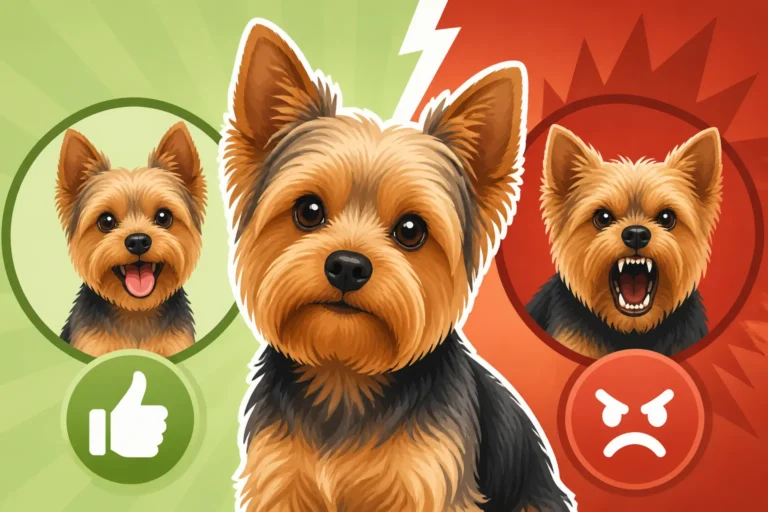
Yorkshire Terrier Intelligence Ranking
It’s a common misconception that smaller dogs aren't as smart as their larger counterparts, or that their spirited personalities simply mean they’re “stubborn.” If you're a Yorkshire Terrier parent, you’ve probably witnessed moments of dazzling cleverness interspersed with bouts of selective hearing, leaving you wondering where your little genius truly falls on the intelligence spectrum. This guide is dedicated to pulling back the curtain on the multifaceted intelligence of the Yorkshire Terrier, exploring their unique blend of instinctive brilliance, trainability, and remarkable adaptability, so you can truly appreciate the sharp mind behind those expressive eyes.
Understanding Canine Intelligence Beyond Simple Rankings
When we talk about "intelligence" in dogs, it's easy to immediately jump to those famous lists that rank breeds from "smartest" to "least smart." But the truth is, canine intelligence is far more complex than a single number or position on a leaderboard. It’s not just about how quickly a dog learns to sit or stay; it encompasses a whole range of cognitive abilities that allow them to thrive in our world. For a breed like the Yorkshire Terrier, whose charm often overshadows their mental prowess, understanding these different facets is key to unlocking their full potential and truly appreciating their unique brand of smarts.
The Three Types of Dog Intelligence
Dr. Stanley Coren, a renowned canine psychologist, popularized a model that breaks down dog intelligence into three main categories. While his rankings are often quoted, delving into these individual types gives us a much richer picture, especially for a breed as nuanced as the Yorkie.
First, there's Instinctive Intelligence. This refers to the tasks a dog was originally bred to do, their inherent talents and drives. Think of a Border Collie herding sheep or a Retriever fetching game. For our little Yorkies, their instinctive intelligence harks back to their origins as feisty ratters in the mills and mines of Yorkshire, England. They were bred to be tenacious, brave, and incredibly resourceful in hunting vermin, often in challenging environments. This means they possess an innate drive to investigate, chase, and problem-solve, even if the "vermin" in your modern home is just a dust bunny under the couch or a rogue sock that needs "catching." Their keen senses and determination are direct results of this deeply ingrained, instinctive intelligence.
Next up is Adaptive Intelligence. This is all about learning from experience and solving problems on their own. It’s the street smarts of the canine world. This type of intelligence allows a dog to figure out how to open a cabinet door, navigate a new park, or even manipulate their human to get an extra treat. Yorkies, with their keen observational skills and ability to quickly understand cause and effect, often excel here. They’re masters at reading body language, anticipating routines, and finding creative solutions to get what they want. If your Yorkie has ever figured out how to get to a forbidden spot or learned the precise time you get up for work, you’re witnessing their adaptive intelligence in action.
Finally, we have Working and Obedience Intelligence. This is the one most people think of when they talk about dog smarts – how quickly a dog learns human commands and performs them reliably. This is what Dr. Coren’s famous rankings primarily measure. Breeds high on this list are often eager to please and easily motivated by rewards. Yorkies can certainly shine in this area, but their independent spirit and strong terrier personality mean they might not always be as robotically obedient as, say, a German Shepherd. They can learn quickly, but sometimes they’ll weigh whether obeying is worth the effort or if they can charm their way into a better deal! Understanding this distinction helps manage expectations and makes training a more rewarding experience for both you and your clever companion.
Why Traditional Rankings Can Be Misleading for Yorkies
Dr. Stanley Coren's influential book, The Intelligence of Dogs, placed Yorkshire Terriers at a respectable, but not top-tier, 34th out of 138 breeds for Working and Obedience Intelligence. While this is certainly not "unintelligent," many Yorkie parents might feel this ranking doesn't quite capture the full scope of their dog's cleverness. The primary reason for this perceived discrepancy lies in what these rankings prioritize.
Coren's methodology largely focused on a dog's ability to learn and respond to new commands with minimal repetitions, and to obey those commands on the first try a high percentage of the time. This naturally favors breeds that are highly biddable and possess a strong desire to work for their human in a structured way. Herding dogs, for instance, are often at the top because their survival depended on understanding and executing complex commands from a shepherd.
Yorkshire Terriers, on the other hand, while perfectly capable of learning, often come with a strong sense of self and an independent streak that is characteristic of the terrier group. They are intelligent, but sometimes they are intelligent enough to decide if a command is worth their immediate attention, or if there's a more interesting squirrel outside! This isn't a lack of ability; it's often a matter of motivation, personality, and their historical role. Their original job didn't require strict obedience to human commands in the same way a herding dog's did; it required independent thought, courage, and self-reliance to hunt vermin. So, while they might learn a new trick in fewer repetitions than some breeds, their willingness to perform it flawlessly every single time might be influenced by whether they feel like it, or if a better incentive is available.
Furthermore, traditional rankings sometimes overlook the crucial components of instinctive and adaptive intelligence where Yorkies truly excel. A Yorkie figuring out how to bypass a baby gate or charming a treat out of a reluctant guest showcases a different kind of smarts – one that involves observation, problem-solving, and social manipulation – which isn't always factored into obedience-focused tests. It's like comparing a brilliant mathematician to a shrewd businessperson; both are intelligent, but in different domains. Thus, while Coren's rankings provide a useful baseline for one aspect of canine intelligence, they don't tell the whole story for our clever, charismatic Yorkshire Terriers.
The Yorkshire Terrier's Instinctive Intelligence
The heart of a Yorkshire Terrier's intelligence, the very spark that makes them who they are, is deeply rooted in their instinctive intelligence. Forget the fluffy bows and dainty teacups for a moment and picture their ancestors, bravely navigating dimly lit textile mills, their primary mission: vermin control. This history has imbued them with a set of natural abilities that continue to shape their behavior and mental processes today. It’s this primal instinct that often surprises new Yorkie owners, revealing a tenacious, problem-solving mind beneath the silky coat.
Tracing Their Terrier Roots
To truly appreciate a Yorkie’s instinctive intelligence, we have to travel back in time to 19th-century industrial Yorkshire, England. These weren't pampered lapdogs; they were working-class heroes. Their job was to hunt rats and other small pests in the woolen mills and coal mines, protecting valuable goods and helping to keep the environment safe and sanitary. This demanding role required a specific set of traits: courage, determination, acute senses, and quick thinking. They had to be small enough to pursue prey into tight spaces but bold enough to confront it.
This heritage is why your Yorkie, despite their diminutive size, can possess such a formidable personality. They aren’t afraid to stand their ground, even against much larger dogs or perceived threats. That persistent bark at the doorbell? It’s a carryover from their watch-dog ancestors, alerting the "pack" to intruders. Their relentless digging in the garden? A strong throwback to searching for hidden prey. This deep-seated instinct means they are often highly alert, inquisitive, and possess an inherent drive to explore and investigate their surroundings. Understanding these roots helps us not just tolerate, but truly appreciate, these ingrained behaviors as a testament to their enduring, purposeful intelligence. It’s not just "being a dog"; it’s being a terrier.
Problem-Solving and Resourcefulness
Stemming directly from their ratter lineage, Yorkshire Terriers are naturally gifted problem-solvers and remarkably resourceful creatures. They weren't just brute force hunters; they had to outsmart their prey, navigate complex environments, and adapt quickly. This translates into many of the behaviors we see in modern Yorkies.
For instance, if you hide a treat or a favorite toy, a Yorkie won't just give up. They’ll use their keen sense of smell, their sharp hearing, and their persistent nature to sniff it out, paw at covers, or push aside obstacles until they succeed. This isn't just about scent; it's about a cognitive understanding of "object permanence" and an unwavering determination to achieve a goal. Many Yorkie owners report their dogs figuring out how to get to things seemingly out of reach, whether it's by stacking pillows, nudging a stool, or simply persistent whining until a human assists. You might find a wide selection of puzzle toys and interactive feeders on sites like Chewy that are absolutely perfect for engaging this aspect of their intelligence, tapping into their natural desire to work for their rewards.
Their resourcefulness also manifests in their ability to adapt to new situations. Introduce them to a new room, and they’ll systematically explore every nook and cranny, mapping it out in their minds. If they want attention, they won't just sit and wait; they'll develop a repertoire of charming tactics, from nudging your hand to sitting strategically in your line of sight, often learning exactly which actions yield the desired response. This adaptive problem-solving is a hallmark of their intelligence and a constant source of amusement for their owners. Their minds are always working, always assessing, and always looking for the most efficient path to success – usually, success in getting cuddles, treats, or playtime!
Working and Obedience Intelligence in Yorkshire Terriers
When many people think of a "smart" dog, they envision a perfectly obedient canine performing a complex array of commands on cue. While Yorkshire Terriers might not always win gold medals in competitive obedience in the same way a Border Collie or a Poodle might, it's crucial to understand their capacity for working and obedience intelligence. Their sometimes-sassy demeanor can be mistaken for a lack of smarts, but in reality, it often reflects a clever, independent mind that simply needs the right approach and motivation. These little dogs are perfectly capable of learning a wide range of commands and behaviors, proving their mental agility.
Trainability and Learning Capabilities
Despite any preconceived notions, Yorkshire Terriers are highly intelligent and possess excellent learning capabilities. They can learn commands quickly, often surprising owners with how fast they pick up new tricks and routines. The key, however, lies in understanding their motivation and working with their terrier spirit, rather than trying to crush it. They aren't typically "biddable" in the classic sense; they want to know what's in it for them. If you make learning fun, engaging, and rewarding, you'll find an eager student ready to impress.
Yorkies respond exceptionally well to positive reinforcement methods. Treats, praise, and enthusiastic play are far more effective than harsh corrections. They thrive on consistency and clear communication. If you're wondering How to Train a Yorkshire Terrier, remember that short, frequent training sessions are best for their attention span. Trying to force a long, repetitive session will likely result in a bored or "stubborn" Yorkie. For instance, teaching them basic commands like "sit," "stay," or "come" can be achieved relatively quickly with a high-value treat as a reward. They are also adept at learning more complex tasks and can even excel in dog sports like agility or rally obedience, which require both mental focus and physical coordination. Their sharp minds allow them to grasp patterns and sequences, making these activities highly stimulating for them.
The perception of a Yorkie being "stubborn" often arises when an owner struggles to find the right motivator or when the Yorkie decides that the current reward isn't worth the effort. It's not a lack of intelligence, but rather a display of their independent problem-solving: "Can I get what I want without doing what you want?" This is actually a sign of a clever mind at work! With patience, understanding, and the right incentives, Yorkies prove themselves to be very trainable companions, capable of learning a great deal.
Challenges and Rewards in Training
Every dog breed comes with its unique training challenges, and Yorkshire Terriers are no exception. Their intelligence often plays a double-edged role here. While they are smart enough to learn quickly, they are also smart enough to exploit any inconsistencies or weaknesses in your training approach. One of the most common frustrations owners face is Yorkshire Terrier Potty Training Guide. Because of their small bladder and independent nature, achieving reliable housebreaking can sometimes feel like an uphill battle. They might understand where they're supposed to go, but if it's raining or they're just not in the mood, their intelligence might lead them to find a more convenient spot inside. Consistency, frequent potty breaks, and lavish praise for outdoor success are paramount.
Another challenge can be managing their vocalizations. Yorkies are often prone to excessive barking, whether it's at the doorbell, at passersby, or just to get your attention. This isn't necessarily a sign of low intelligence; rather, it’s a manifestation of their strong terrier instinct to alert and protect their territory, combined with their cleverness in realizing that barking often gets a reaction. Learning How to Stop a Yorkie from Barking effectively involves understanding the trigger and teaching an alternative, quiet behavior.
Despite these hurdles, the rewards of training a Yorkie are immense. Their intelligence means they love to engage with their humans, and successful training strengthens that bond. Watching your Yorkie master a new trick, gracefully navigate an agility course, or politely greet a guest brings a profound sense of accomplishment. Furthermore, mental stimulation through training is crucial for their overall well-being. A bored Yorkie is often a destructive or anxious Yorkie. Engaging their minds with new commands, puzzle toys, or even just regular reinforcement of basic manners, helps keep them happy, healthy, and less prone to common Yorkshire Terrier Behavior Problems and Solutions. The bond forged through consistent, positive training with a Yorkie is a testament to their deep capacity for learning and their desire to please the humans they adore – on their own terms, of course!
Adaptive Intelligence and the Yorkie's Social Savvy
Beyond their ingrained instincts and ability to learn commands, Yorkshire Terriers truly shine in their adaptive intelligence. This is their ability to navigate the complexities of daily life, understand social cues, and adjust their behavior to new situations. It’s what makes them such delightful and often surprisingly sophisticated companions, able to fit into a wide array of human lifestyles and even influence their environment.
Navigating Human Environments
Yorkies are masters of adaptation. Their small size makes them incredibly portable, but it's their quick minds that allow them to truly thrive in diverse human environments. Whether you live in a bustling city apartment, a quiet suburban home, or travel frequently, a Yorkie's adaptive intelligence helps them adjust. They quickly learn the rhythms of your household: the sound of your alarm clock, the particular jingle of your keys meaning "walkies," or the subtle shift in your posture indicating it's cuddle time. This acute observational ability allows them to anticipate events and behave accordingly.
Consider a Yorkie who travels with their owner. They might learn the routine of getting into a carrier, understanding that the car ride leads to an exciting new destination, or adapting to the sights and sounds of a hotel room. This isn’t just habit; it’s a constant process of learning and adjusting based on past experiences and environmental cues. They excel at deciphering human routines and figuring out how to make those routines work in their favor. If you consistently put your keys on a specific hook before a walk, your clever Yorkie will likely be at the door, leash-ready, the moment they hear the jingle. This remarkable capacity for understanding and integrating into human life is a clear indicator of their highly developed adaptive intelligence. They’re not just living in your home; they’re actively participating and subtly orchestrating much of what goes on!
Emotional Intelligence and Bonding
One of the most heartwarming aspects of a Yorkshire Terrier's intelligence is their profound emotional intelligence and their incredible capacity for forming deep, nuanced bonds. They are experts at reading human emotions, often seeming to know exactly when you need a comforting presence or a silly distraction. If you’re feeling down, your Yorkie might snuggle closer, offer gentle licks, or bring you a favorite toy, as if to say, "Don't worry, I'm here." This isn't just random behavior; it's a learned response based on observing your reactions and understanding the subtle cues of your mood.
Yorkies often develop a strong, almost uncanny, sense of empathy. They are highly attuned to changes in your voice, facial expressions, and even your energy levels. This makes them incredibly responsive companions, capable of offering genuine comfort and companionship. This emotional depth also contributes to their sometimes-mischievous nature. They are smart enough to learn what makes you laugh, what earns them an extra treat, or what gets them out of trouble. They can use their big, expressive eyes to melt your resolve or employ a theatrical sigh to convey their "suffering." This isn't manipulation in a malicious sense, but rather a clever application of their understanding of social dynamics and emotional responses.
Their strong desire for connection also underpins why issues like Yorkshire Terrier Separation Anxiety Solutions can be particularly challenging. Their deep bond and emotional attunement make being alone a genuine hardship. Their intelligence in sensing and reacting to human emotions makes them more than just pets; they become integral, emotionally resonant members of the family, constantly learning, adapting, and responding to the complex world of human feelings.
Maximizing Your Yorkshire Terrier's Intellectual Potential
As intelligent as Yorkshire Terriers are naturally, their mental capabilities, like any dog’s, can flourish or stagnate depending on the environment and stimulation they receive. Providing a rich, engaging life for your Yorkie isn't just about their happiness; it's about nurturing their sharp minds and preventing boredom, which can often lead to unwanted behaviors. Investing in their mental well-being is just as crucial as their physical health, contributing significantly to How to Keep a Yorkshire Terrier Healthy overall.
Mental Stimulation and Enrichment
A mentally stimulated Yorkie is a happy Yorkie, and there are countless ways to keep their clever brains engaged. Just like humans, dogs need variety and challenges to stay sharp. One of the best ways to provide this is through interactive toys and puzzles. Instead of just giving them a standard chew toy, consider puzzle feeders that require them to think and work to get their kibble or treats. These types of toys tap into their natural problem-solving skills and their desire to earn a reward. Brands often carried by popular pet retailers like Chewy offer a fantastic array of such toys, from treat-dispensing balls to complex feeders that require multiple steps to solve.
Beyond toys, structured playtime can also be incredibly stimulating. Games like hide-and-seek (with you or a toy), scent work (hiding treats around the house for them to find), or even teaching them the names of their toys can provide significant mental workouts. Agility training, even in a casual backyard setting, combines physical exercise with complex problem-solving, as they learn to navigate obstacles. Even short, supervised walks in new environments, allowing them to sniff and explore new scents, are great for mental enrichment. Remember, a walk isn't just about physical exercise; it's a sensory exploration that provides a wealth of information for their curious minds.
It’s also important to rotate toys and activities to keep things fresh. A toy that was ignored for weeks might suddenly become fascinating again after a break. Regularly introducing new challenges and learning opportunities will ensure your Yorkie’s keen mind stays engaged and satisfied, preventing boredom-induced behaviors like excessive barking or destructive chewing.
Consistent Training and Continued Learning
Training isn't just for puppies; it's a lifelong journey for both you and your Yorkshire Terrier. Consistent training, even just a few minutes a day, reinforces commands, strengthens your bond, and provides invaluable mental exercise. Their intelligence means they are always learning, whether you're intentionally teaching them or not. Therefore, being consistent in your expectations and reactions is crucial to ensure they learn the right lessons.
Even if your Yorkie has mastered basic commands, don't stop there! Teach them new tricks – "roll over," "play dead," or even more complex sequences. These activities challenge their minds and build their confidence. Consider enrolling in advanced obedience classes or trying out dog sports. These structured environments offer new challenges and opportunities for socialization, which is vital for a breed that can sometimes have "small dog syndrome." Learning a new skill is just as rewarding for them as it is for us.
For adult or even senior Yorkies, continued learning is equally important to keep their cognitive functions sharp. Short, fun review sessions of old tricks or introducing a simple new command can help maintain their mental agility as they age. This isn't about rigid discipline; it's about engaging their sharp minds in positive, reinforcing ways. Remember that their "stubbornness" is often a clever way of testing boundaries or seeking a better deal, so firm but gentle consistency, paired with irresistible rewards, is always the most effective approach. By committing to consistent training and providing ongoing learning opportunities, you'll ensure your Yorkshire Terrier remains a mentally agile, well-behaved, and incredibly rewarding companion for many years to come.
Debunking Myths About Yorkie Intelligence
Unfortunately, for all their intelligence and charm, Yorkshire Terriers sometimes fall victim to unfair stereotypes, particularly regarding their mental capabilities. It’s easy for their small stature or spirited personality to overshadow the truly clever minds they possess. Let's tackle a couple of these pervasive myths head-on, giving the Yorkie the intellectual credit they so richly deserve.
Small Dog, Small Brain? Not So Fast!
One of the most persistent myths in the canine world is the idea that small dogs have "small brains" and are inherently less intelligent than larger breeds. This couldn't be further from the truth. Brain size, in and of itself, is not a direct measure of intelligence across different species or even within the same species if we're not careful with the comparison. A smaller dog has a smaller body, so naturally, its brain will be smaller in absolute terms. What matters more is the brain-to-body size ratio, the complexity of the brain's structure, and how effectively that brain processes information.
Yorkshire Terriers, despite being tiny, boast incredibly active and capable brains. Their lineage as working terriers meant they had to be intelligent to survive and perform their duties. They needed quick reflexes, sharp problem-solving skills, and the ability to learn and adapt rapidly in often dangerous environments. Their observational skills are top-notch, allowing them to quickly assess situations and react. They are often incredibly astute at reading human emotions and intentions, a sign of high cognitive processing, not less. To assume a Yorkie is less intelligent due to their size is akin to saying a hummingbird is less clever than an eagle; they simply operate in different domains and require different forms of intelligence to thrive. Many small breeds, including Yorkies, often demonstrate remarkable cunning, resourcefulness, and emotional intelligence that rivals or even surpasses that of some larger, traditionally "smarter" breeds.
Stubborn vs. Smart: A Reframe
Perhaps the most common frustration, and subsequent mislabeling, that Yorkie owners face is calling their dog "stubborn." While it might feel like stubbornness when your Yorkie gives you the side-eye instead of coming when called, it’s often a testament to their intelligence rather than a lack thereof. Let’s reframe "stubborn" as "independent thinker" or "clever strategist."
A truly unintelligent dog wouldn't have the cognitive capacity to decide not to obey a command. They wouldn't weigh the pros and cons of fetching a toy versus continuing their nap. A Yorkie's "stubbornness" usually means they've assessed the situation, considered their options, and made a choice that benefits them more than immediately pleasing you. Maybe the treat isn't high-value enough, maybe they're engrossed in a fascinating smell, or maybe they're testing boundaries to see what they can get away with. This sophisticated decision-making process is actually a sign of a sharp mind.
Think about their terrier heritage again: they weren't bred to blindly obey. They were bred to hunt independently, making quick decisions without human intervention. That innate self-reliance translates into a dog who thinks for themselves. Instead of viewing it as a flaw, consider it a challenge to be met with even greater wit and positive reinforcement. If your Yorkie seems "stubborn" about Yorkshire Terrier Crate Training Guide, it's likely because they've decided the crate isn't as appealing as being with you, and they're using their intelligence to try and change the situation. The goal isn't to break their spirit or eliminate their independent thinking, but to channel it, making "doing what you ask" the most rewarding and logical choice for them. When you understand that their "stubbornness" is often just intelligence at play, you can approach training with a renewed sense of respect and a more effective strategy.
Final Thoughts on Your Yorkie's Brilliant Mind
The Yorkshire Terrier is far more than just a pretty face or a fashionable companion. Beneath that silky coat lies a genuinely brilliant and multifaceted mind, brimming with instinctive cunning, impressive adaptability, and a remarkable capacity for learning and emotional connection. While traditional intelligence rankings might not always capture their full spectrum of smarts, a closer look reveals a dog whose intelligence is perfectly suited to their heritage and their role as a beloved, albeit sometimes mischievous, family member.
From their historical prowess as tenacious ratters to their modern-day ability to charmingly manipulate us with a single glance, Yorkies constantly prove their mental agility. They are problem-solvers, keen observers, and deeply empathetic creatures who integrate seamlessly into our lives, often understanding more than we give them credit for.
So, the next time your Yorkie gives you that knowing look, or perhaps "selectively" ignores a command, remember that you’re not dealing with a simple pet. You’re sharing your life with a truly intelligent, clever, and endlessly captivating companion whose brain is just as mighty as their tiny bark. Embrace their smarts, challenge their minds, and appreciate the unique brilliance that makes a Yorkshire Terrier so utterly unforgettable.
Disclaimer
This article is intended for informational purposes only and does not constitute professional veterinary advice. Always consult with a qualified veterinarian for any health concerns or before making any decisions about your pet's health or treatment.