Signs a Yorkie Is Dehydrated
It's absolutely heartbreaking to see our tiny Yorkshire Terriers not feeling their best, and sometimes, it can be tough to pinpoint exactly what's wrong. One silent but serious threat to their well-being is dehydration, which can sneak up quickly in such small dogs. This comprehensive guide is here to help you recognize the subtle and not-so-subtle signs that your beloved Yorkie might be dehydrated, understand why it happens, and most importantly, what steps you need to take to help them feel better and prevent it from happening again.
Understanding Why Yorkies Are Prone to Dehydration
Yorkshire Terriers, with their petite stature and high energy, are more susceptible to dehydration than larger breeds. Their small bodies have less fluid reserve, meaning even a minor fluid loss can quickly escalate into a serious health concern. It’s not just about how much they drink; their metabolism, activity, and even the weather play a huge role.
Their Small Size and Metabolism
Think about it: a human can go hours without water, and while we might feel parched, it's rarely life-threatening in the short term. For a Yorkie, their compact size means their physiological processes happen on a much smaller scale, and their fluid balance is far more delicate. They have a higher metabolic rate compared to many larger dogs, which means they can burn through energy and fluids more quickly. This is especially true for young puppies, whose tiny systems are still developing. Dehydration in a Yorkie puppy can be particularly dangerous and rapid. If you have a Yorkshire Terrier Puppy Health Guide, you'll know that their delicate systems need constant monitoring. Even a brief period without access to fresh water, or if they're experiencing an upset stomach, can quickly lead to their little bodies struggling to maintain proper hydration. This isn't just a minor inconvenience; it can lead to more serious conditions like hypoglycemia, which is why it's so important to know Yorkie Low Blood Sugar: What to Do.
When a Yorkie’s body starts to lose more fluids than it's taking in, their vital organs can't function optimally. Electrolytes, which are essential for nerve and muscle function, become imbalanced, and circulation can suffer. It’s a cascading effect that, in severe cases, can be fatal. This is why paying close attention to their daily water intake and overall health is paramount. You might assume your Yorkie is just being a bit sluggish, but it could be the early stages of their body crying out for more moisture.
Activity Levels and Environment
Yorkies, despite their small size, are incredibly active and spirited dogs. They love to play, run, and explore, which means they can expend a lot of energy and sweat (though dogs primarily cool themselves through panting, which also expends moisture). A long walk on a warm day, an intense play session at the park, or even just being left in a warm room can increase their fluid needs dramatically. The environment plays a huge role; a hot, humid day means more panting, which means more water loss.
Imagine a sunny afternoon where you're enjoying a stroll with your Yorkie. While you might feel a bit warm, your Yorkie, closer to the hot pavement and covered in fur, is experiencing a much higher heat index. Their panting intensifies, and with each rapid breath, they're losing precious moisture. If they don't have immediate and constant access to fresh, cool water, they can quickly become dehydrated. Even indoor environments can contribute; if your home is warm and dry, or if your Yorkie is spending time outdoors in the sun without shade, they're at a higher risk. It's not just the temperature, either; low humidity can also contribute to faster evaporation of moisture from their respiratory tract. Ensuring they have a constant supply of fresh water and monitoring their activity levels, especially during warmer months, is a critical part of How to Keep a Yorkshire Terrier Healthy.
Key Physical Signs of Dehydration in Yorkies
Spotting dehydration in a Yorkie often requires a keen eye and a bit of hands-on checking. Since they can't tell you how they're feeling, it's up to us to recognize the subtle physical cues their bodies provide. These signs are usually quite reliable and can give you a clear indication of whether your furry friend needs urgent attention.
Checking Gum Color and Moisture
One of the most immediate and reliable indicators of a Yorkie's hydration level is the condition of their gums. Healthy Yorkie gums should be a vibrant, bubblegum pink and feel slick and moist to the touch, much like the inside of your own cheek. This moistness comes from saliva, which is primarily water. When a dog is dehydrated, their body tries to conserve fluid, reducing saliva production.
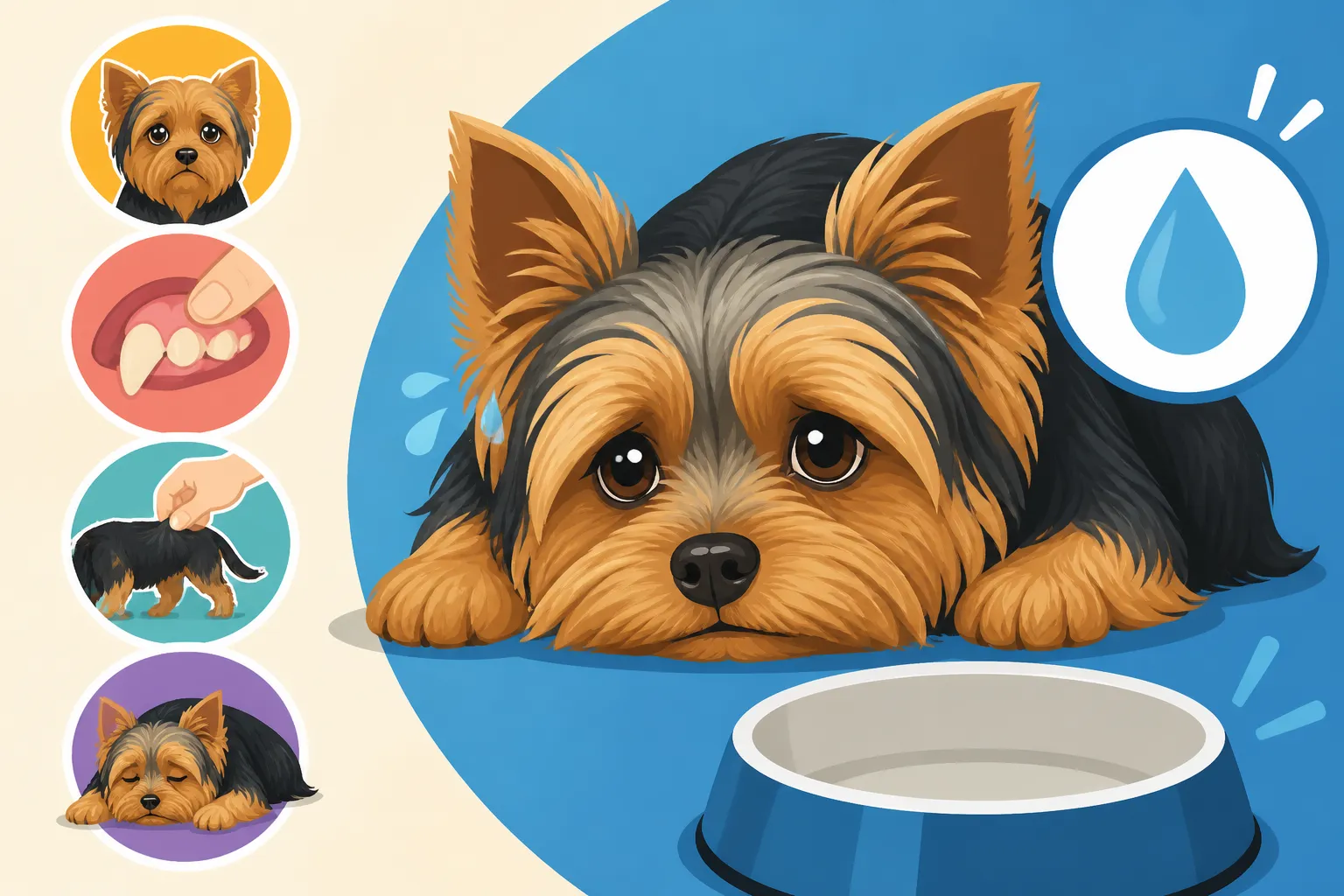
To check your Yorkie's gums, gently lift their upper lip. Observe the color – if they appear pale, tacky, or even dry to the touch, this is a strong indicator of dehydration. You might even notice the color is a duller pink or, in more severe cases, almost white. A simple test is the Capillary Refill Time (CRT). Gently press your finger against their gum line until the spot turns white. Then, release and count how long it takes for the pink color to return. In a well-hydrated dog, the pink color should return almost immediately, usually within 1-2 seconds. If it takes longer than 2 seconds, your Yorkie is likely dehydrated and needs attention. This quick check can be a lifesaver and is a fundamental part of understanding Signs Your Yorkshire Terrier Is Sick. If you're also concerned about their oral hygiene, keeping up with Yorkshire Terrier Dental Care Guide can help you recognize normal vs. abnormal gum appearance.
Skin Elasticity Test
Another common and effective way to assess dehydration is the skin elasticity test, often called the "skin turgor" test. This involves gently lifting the skin on your Yorkie's back or between their shoulder blades. Healthy, well-hydrated skin is elastic and will snap back into place almost instantly when released.
To perform this test, gently grasp a small fold of skin on their upper back, lift it slightly away from their body, and then release it. In a hydrated Yorkie, that skin fold will quickly flatten back down. If, however, the skin is slow to return to its normal position, or worse, it "tents" and remains in a raised position for several seconds, it's a clear sign of moderate to severe dehydration. The longer it takes for the skin to recede, the more dehydrated your Yorkie likely is. This test gives you a visual and tactile confirmation of their fluid levels. Remember, older Yorkies or those with underlying skin conditions might have naturally less elastic skin, so it’s always best to combine this test with other indicators for an accurate assessment.
Eye Appearance
Your Yorkie's eyes can also offer clues about their hydration status. In a well-hydrated dog, the eyes should appear bright, clear, and full. The area around them should look plump and moist.
However, when a Yorkie becomes dehydrated, their eyes might appear sunken into their sockets. This is because the fluid loss affects the tissue surrounding the eyeballs. You might also notice that their eyes look duller, less bright, or even a bit glazed over. Sometimes, there might be a visible increase in the prominence of the third eyelid, or the conjunctiva might appear redder or drier than usual. While not as definitive as the gum or skin elasticity tests, sunken or dull eyes, especially when combined with other signs, should certainly raise a red flag. It’s one of those subtle changes that, once you learn to recognize it, becomes a key part of your regular health check. If you're ever worried about their vision or eye health, learning about Yorkie Eye Problems Explained can be really beneficial.
Behavioral Red Flags Indicating Dehydration
Beyond the physical signs, your Yorkie's behavior can also be a strong indicator that they're not getting enough fluids. These behavioral changes might be subtle at first, but as dehydration progresses, they become more pronounced and concerning. Being attuned to your Yorkie's usual demeanor is crucial for spotting these changes early.
Lethargy and Weakness
A healthy Yorkie is usually a bundle of energy – playful, curious, and always ready for an adventure, whether it's a romp in the yard or a chase after their favorite toy. When a Yorkie is dehydrated, one of the first and most noticeable changes you'll observe is a significant decrease in their energy levels. They might become unusually lethargic, seeming tired even after a good rest. They may show less interest in playtime, walks, or even interacting with you.
This isn't just a matter of feeling sleepy; it's a sign that their body is struggling due to insufficient fluid volume. Dehydration leads to reduced blood volume, which means less oxygen and nutrients are being delivered to their muscles and organs. Consequently, your Yorkie might appear weak, move more slowly, or seem unsteady on their feet. They might spend more time lying down, be reluctant to get up, or seem generally listless. If your normally spirited Yorkie is suddenly acting like a couch potato, especially if it's accompanied by any physical signs of dehydration, it's a strong indicator that something is amiss. This kind of sudden change in energy level is always a Yorkie Emergency Symptoms to Never Ignore.
Changes in Urination and Thirst
It might seem counterintuitive, but a dehydrated Yorkie might actually show less frequent urination or produce very concentrated, dark yellow urine. Their body is trying desperately to conserve any remaining fluid, so it will reabsorb as much water as possible from the kidneys, leading to minimal urine output. Sometimes, they might even strain to urinate, or you might notice they haven't peed for a much longer period than usual.
On the flip side, some dehydrated Yorkies might exhibit excessive thirst, constantly seeking out water. This is their body’s natural response to try and correct the fluid imbalance. However, if they're drinking a lot but still showing other signs of dehydration, it could indicate that they're not absorbing the water effectively, or they're losing fluids at a faster rate than they can drink them (perhaps due to vomiting or diarrhea). It's a delicate balance, and any noticeable change in their normal drinking and urination habits should prompt investigation. Keeping track of How Much Water Should a Yorkie Drink normally can help you spot these shifts.
Loss of Appetite and Vomiting
Dehydration can severely impact a Yorkie's digestive system, leading to a loss of appetite and, in some cases, vomiting or diarrhea. When the body is dehydrated, the digestive tract doesn't receive enough blood flow, slowing down digestion and causing discomfort. This can make them reluctant to eat their regular food or treats.
If your Yorkie, who normally gets excited about mealtime, suddenly turns their nose up at their food, it's a cause for concern. Additionally, vomiting or diarrhea can be both a symptom and a cause of dehydration. If your Yorkie is actively losing fluids through vomiting or diarrhea, their hydration levels can plummet rapidly, creating a vicious cycle. What started as a simple upset stomach can quickly become a serious dehydration emergency. If they're showing these symptoms, it's crucial to offer small amounts of water frequently and monitor them closely. Sometimes, they might even regurgitate water if they drink too much too quickly on an empty stomach, which further exacerbates the problem. Consider offering hydrating foods like those from brands such as Ollie, which offers fresh, moisture-rich dog food, or consulting your vet about rehydration solutions available from places like Chewy.
What to Do If You Suspect Your Yorkie is Dehydrated
Discovering your Yorkie is dehydrated can be scary, but knowing the right steps to take immediately can make all the difference. Your response needs to be calm, measured, and often, very quick.
Gentle Rehydration at Home
If you suspect mild dehydration and your Yorkie is still alert and responsive, you can often begin gentle rehydration at home. The goal is to slowly introduce fluids to prevent further stress on their system. Don't let them gulp down a huge bowl of water all at once, as this can lead to vomiting, undoing your efforts.
Start by offering small amounts of fresh, cool water frequently. A good strategy is to offer a tablespoon or two every 10-15 minutes. You can also try adding a tiny bit of low-sodium chicken broth to their water to make it more appealing and provide some electrolytes. Another excellent option is plain, unflavored Pedialyte (ensure it's the unflavored version with no added sugars or artificial sweeteners) mixed 50/50 with water. You can offer this in a bowl or, if your Yorkie is reluctant, use a syringe (without the needle) to administer small amounts directly into their mouth, aiming for the cheek pouch, not straight down the throat, to prevent choking. Ice chips can also be a good way to slowly deliver fluid while soothing their mouth. For very picky eaters, sometimes a bit of wet food, which has a higher moisture content, can help. Brands like Chewy often carry various hydrating wet foods or even electrolyte supplements designed for dogs that can be helpful. Remember, patience is key here; slow and steady rehydration is much safer and more effective. You can also look into Best Dog Food for Yorkshire Terriers that has higher moisture content for daily feeding.
When to Seek Veterinary Care
While home rehydration can work for mild cases, it's absolutely crucial to know when to escalate the situation and seek professional veterinary care. Dehydration can worsen rapidly in Yorkies, and severe dehydration is a medical emergency that requires immediate intervention.
You should contact your vet immediately if:
- Your Yorkie is extremely lethargic, unresponsive, or collapses.
- They are continuously vomiting or have severe diarrhea, as this prevents fluid retention and causes rapid fluid loss.
- Their gums are very pale, white, or extremely dry and tacky, or their capillary refill time is very slow (more than 3 seconds).
- Their eyes are significantly sunken.
- They refuse to drink any water or rehydration solution.
- You notice any other concerning Yorkie Emergency Symptoms to Never Ignore.
The vet will be able to accurately assess the level of dehydration through physical examination and possibly blood tests. They can administer subcutaneous (under the skin) or intravenous (IV) fluids, which are much more efficient at rehydrating a severely dehydrated dog. They can also address any underlying causes of dehydration, such as heatstroke, illness, or severe gastrointestinal issues. Don't hesitate or delay; when in doubt, it’s always better to err on the side of caution and get professional help. Understanding When to Take Your Yorkie to the Vet is a critical part of being a responsible Yorkie parent.
Understanding Normal Hydration and Prevention
Preventing dehydration is always better than treating it. Knowing what a normally hydrated Yorkie looks and acts like, and establishing good habits, can keep your furry friend healthy and happy.
Daily Water Needs and Monitoring
For a Yorkie, their daily water intake is roughly one ounce of water per pound of body weight. So, a 7-pound Yorkie would need about 7 ounces of water per day. This is a general guideline, and their needs can increase significantly with activity, hot weather, or illness. It's a good idea to keep track of how much water your Yorkie drinks daily.
A simple way to do this is to use a specific bowl for their water and refill it to the same level each day, noting how much they consume. This helps you establish a baseline for your individual dog. Providing multiple water bowls around the house can encourage more frequent sips. Make sure these bowls are always clean and filled with fresh water. Consider using ceramic or stainless steel bowls, easily found on platforms like Amazon, as they are easier to keep clean and don't harbor bacteria like some plastic bowls. If you’re often out and about, a portable water bottle or collapsible bowl is a must-have. Don’t forget to offer water breaks during walks and play sessions. Remember, staying vigilant about their intake is key to preventing problems before they start. Our guide on Yorkshire Terrier Feeding Guide by Age also touches on the importance of hydration alongside nutrition.
Hydrating Food Options
Beyond just water, the food your Yorkie eats can also contribute significantly to their hydration levels. Dry kibble, while convenient, has a very low moisture content (typically around 10%). Incorporating wet food or moisture-rich toppers can give your Yorkie a hydration boost with every meal.
Many brands offer high-quality wet dog foods that are packed with moisture. Look for options that list meat or broth as the primary ingredients. You can also add a splash of unsalted chicken or beef broth to their dry kibble, or even some plain, pureed pumpkin (unsweetened, not pumpkin pie filling) which is both hydrating and good for digestion. Fresh foods, like those offered by Ollie, are also naturally rich in moisture, providing an excellent way to keep your Yorkie hydrated through their diet. Always ensure any human food additions are safe for dogs. Vegetables like cucumber or watermelon (seedless, in moderation) can be offered as hydrating treats on occasion. These options not only provide extra fluids but can also make mealtime more appealing, especially for picky eaters.
Dehydration Signs at a Glance
Here’s a quick reference table to help you identify the signs of dehydration in your Yorkie, from mild to severe, and what action to consider.
| Sign Category | Normal Yorkie | Mild Dehydration | Moderate Dehydration | Severe Dehydration |
|---|---|---|---|---|
| Gums | Pink, moist, slick | Slightly tacky | Dry, pale pink/white | White, very dry, sticky |
| Capillary Refill | < 2 seconds | 2-3 seconds | 3-4 seconds | > 4 seconds, barely refills |
| Skin Elasticity | Snaps back instantly | Slow return (1-2 sec) | Tents for several seconds | Stays tented |
| Eyes | Bright, clear, full | Slightly dull | Sunken, dull | Very sunken, glazed |
| Energy Level | Playful, active | Slightly less energetic | Lethargic, weak | Collapsed, unresponsive |
| Urination | Regular, light yellow | Less frequent, darker urine | Very little/no urine, dark | No urine output |
| Thirst | Regular drinking | Increased drinking | May refuse water or drink excessively | No interest in water |
| Appetite | Enthusiastic | Reduced interest | Loss of appetite | Refusal to eat |
| Action | Maintain care | Offer small, frequent sips, broth | Contact vet immediately | Emergency Vet Care! |
Disclaimer
The information provided in this article is for educational and informational purposes only and does not constitute veterinary advice. Always consult with a qualified veterinarian for any health concerns or before making any decisions about your pet's medical care.