Best Dental Care Routine for Yorkies
It’s a common frustration many Yorkie parents face: you lean in for a sweet snuggle, and instead of fresh puppy breath, you’re met with an odor that could clear a room. Dental problems are incredibly prevalent in our tiny Yorkshire Terriers, often leading to serious health issues if ignored. This comprehensive guide will walk you through establishing the best dental care routine for your Yorkie, covering everything from daily brushing techniques to professional cleanings, ensuring their pearly whites stay healthy and their breath stays sweet.
Why Dental Health is Critically Important for Your Yorkie
It's easy to overlook dental care, especially when our Yorkies are so small and seemingly fine. But here's the honest truth: their tiny mouths are a breeding ground for problems. Unlike larger breeds, Yorkies have a higher predisposition to dental disease, and those little teeth pack a punch when it comes to potential pain and systemic health issues. Ignoring their oral health isn't just about bad breath; it's about safeguarding their overall well-being and preventing painful, expensive complications down the line.
Understanding Yorkie Oral Anatomy and Predisposition
Our beloved Yorkshire Terriers have relatively large teeth packed into a very small jaw. This anatomical quirk often leads to overcrowding, where teeth sit too close together, making it incredibly difficult for food particles and bacteria to be naturally dislodged. These tight spaces become perfect hiding spots for plaque, which quickly hardens into tartar. Think about trying to clean a crowded bookshelf – it's just harder to get into all those nooks and crannies. This is why Yorkies are unfortunately more susceptible to conditions like periodontal disease, starting at a surprisingly young age. Many Yorkie parents report noticing issues even before their dog turns three.
When plaque and tartar build up, they irritate the gums, leading to gingivitis (inflamed gums). If left unchecked, this progresses to periodontal disease, where the supporting structures of the teeth, including bone, are destroyed. This can result in painful tooth loss, abscesses, and even jaw fractures in severe cases. This is definitely one of those Common Yorkshire Terrier Genetic Conditions that we need to be vigilant about.
The Serious Impact of Poor Dental Hygiene
The repercussions of poor dental health extend far beyond the mouth. The bacteria thriving in your Yorkie's gums don't stay put; they can enter the bloodstream and travel to vital organs like the heart, kidneys, and liver, causing serious secondary infections and diseases. This connection between oral health and systemic health is a well-established fact in veterinary medicine. You might find your Yorkie facing other Yorkshire Terrier Health Problems to Know stemming directly from dental neglect.
For example, a Yorkie suffering from severe dental disease might become lethargic, lose their appetite due to pain, or even develop kidney issues that significantly impact their How Long Do Yorkshire Terriers Live lifespan. It’s not just about comfort; it’s about their life expectancy and quality of life. This is why a proactive approach to dental care is not just recommended, it's absolutely essential.
Essential Components of a Daily Dental Care Routine
Now that we understand the stakes, let's talk about what you can actively do every day to keep your Yorkie's teeth and gums healthy. A consistent routine is your best defense against dental disease. It might seem like a lot at first, but with patience and positive reinforcement, it can become a bonding experience for you and your furry friend.
Mastering Daily Tooth Brushing Techniques
This is the gold standard for canine dental care, just as it is for humans. Brushing your Yorkie’s teeth daily, or at least every other day, is the most effective way to remove plaque before it hardens into tartar. But let's be real, convincing a tiny Yorkie to let you brush their teeth can feel like wrestling an alligator. The trick is to start early and make it a positive experience.
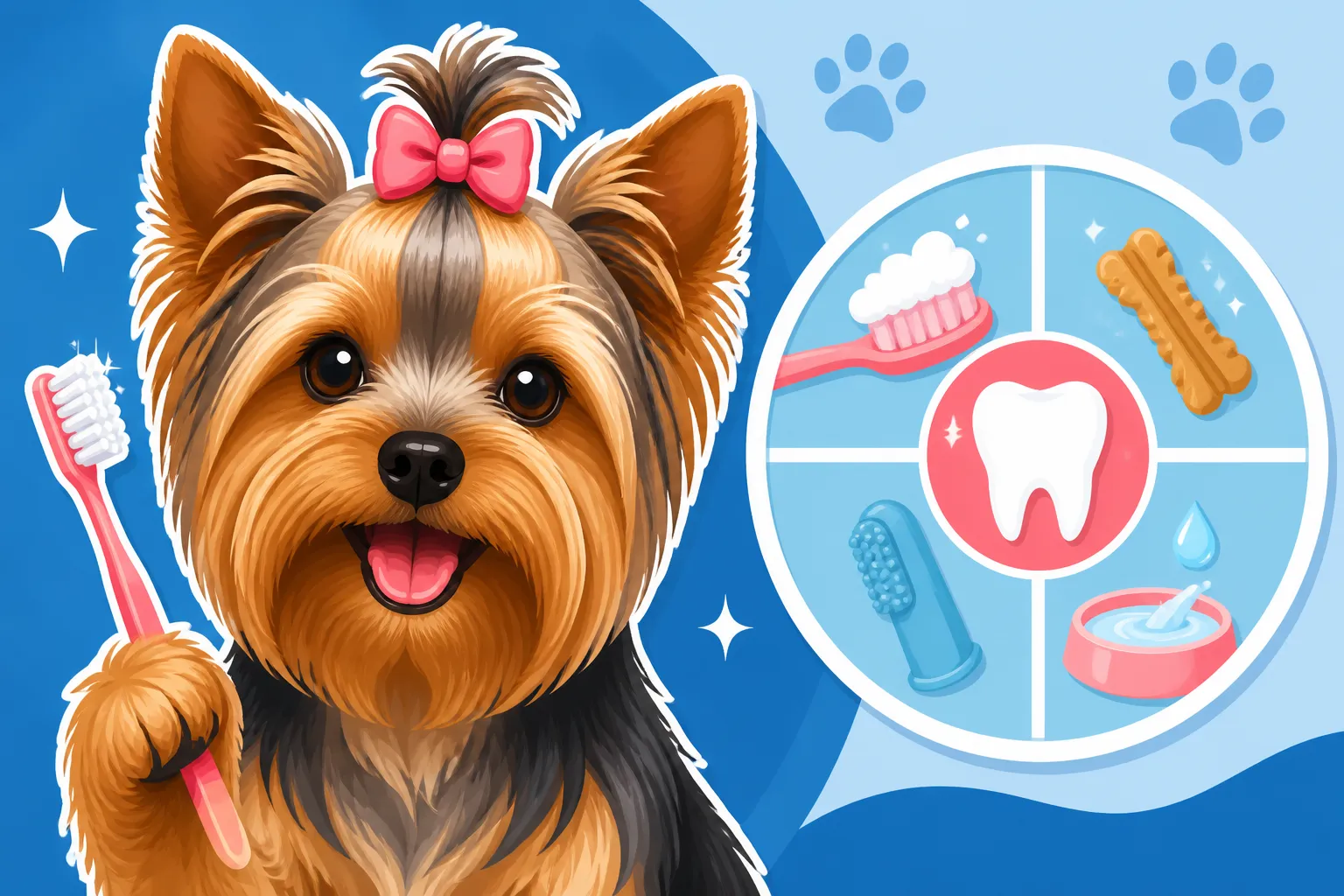
First, you need the right tools. Skip human toothpaste; it contains xylitol and fluoride, which are toxic to dogs. Look for enzymatic dog toothpaste, often flavored with poultry or peanut butter to make it more appealing. For the brush, a finger brush or a small, soft-bristled toothbrush designed for pets works best. Many pet stores and online retailers like Chewy offer excellent options specifically for small breeds.
Start by letting your Yorkie lick a small amount of toothpaste off your finger. Once they're comfortable with that, gently introduce the brush. Focus on the outside surfaces of their teeth, especially the back molars, as these are most prone to plaque buildup. Use gentle, circular motions, aiming for about 30 seconds per side. Don’t get discouraged if you only manage a few teeth at first; consistency is key. Gradually increase the duration as your Yorkie becomes more accustomed to it. For more detailed guidance, check out our post on How to Brush a Yorkie's Teeth.
Incorporating Dental Chews and Treats
While brushing is king, dental chews can be a fantastic supplement to your routine. They work by mechanically scraping plaque off the teeth as your Yorkie chews. However, not all dental chews are created equal. Look for products that are veterinary oral health council (VOHC) approved, as these have been scientifically proven to reduce plaque and tartar. Brands like Greenies, Virbac C.E.T. VeggieDENT Chews, and Purina Pro Plan Veterinary Diets Dental Chews are often recommended by vets.
When choosing a dental chew, consider your Yorkie’s size and chewing style. Too hard, and it could risk a broken tooth; too soft, and it won't be effective. Always supervise your Yorkie when they're enjoying a dental chew to prevent choking or gulping large pieces. These can be a great way to help prevent Yorkie Dental Disease Prevention between brushings. You can often find a wide variety of these reputable dental chews on Amazon.
Utilizing Water Additives and Oral Rinses
For those days when brushing is a battle, or as an extra layer of protection, dental water additives and oral rinses can be helpful. Water additives are typically tasteless and odorless solutions that you add to your Yorkie's drinking water daily. They contain ingredients that help reduce bacteria in the mouth and prevent plaque formation. Oral rinses work similarly but are applied directly to the gums or teeth using a swab or sprayer.
These products are not a replacement for brushing or professional cleanings, but they can significantly contribute to overall oral hygiene. Again, look for VOHC-approved options for the best efficacy. They provide a passive way to improve your Yorkie's oral environment and help mitigate bad breath, which is often a key indicator of developing dental issues.
Professional Dental Care and When It's Needed
Even with the best at-home care, professional dental cleanings are often a necessary part of a comprehensive dental routine for Yorkies. Just like we go to the dentist for deeper cleanings and check-ups, our Yorkies benefit from similar professional attention.
Routine Veterinary Check-ups
Your regular veterinary visits are not just for vaccinations and general health; they're also crucial for dental health assessments. During annual check-ups, your vet will perform an oral examination. They'll look for signs of plaque and tartar buildup, gingivitis, broken teeth, or any other abnormalities that might indicate developing dental disease. This is when your vet might recommend a professional cleaning.
It’s important to remember that a conscious oral exam has its limitations. Your vet can only see the visible surfaces of the teeth and gums. A thorough assessment, especially beneath the gum line where a lot of disease lurks, requires sedation. Regular check-ups are your first line of defense in catching problems early, before they become severe. If you notice your Yorkie's breath is particularly foul, or they're reluctant to eat hard food, it might be time to ask your vet about Yorkie Bad Breath: When to Worry.
The Importance of Anesthetic Dental Cleanings
When your vet recommends a professional dental cleaning, it will almost always involve general anesthesia. While the idea of your tiny Yorkie going under anesthesia can be daunting, it's a necessary safety measure that allows the vet to perform a thorough and pain-free cleaning. During an anesthetic dental cleaning, your vet will:
- Perform a comprehensive oral exam: This includes probing around each tooth and taking full-mouth dental X-rays to assess the health of the tooth roots and jawbone – things impossible to see with the naked eye.
- Scale and polish: Using ultrasonic and hand scalers, they will meticulously remove plaque and tartar from above and below the gum line. Each tooth surface will then be polished to smooth out any microscopic scratches where bacteria could adhere.
- Address other issues: Any severely diseased or fractured teeth might need extraction. Pockets under the gum line might be treated.
The frequency of these cleanings varies depending on your Yorkie's individual needs, but many small breeds benefit from a professional cleaning every one to three years. Our guide on How Often Yorkies Need Dental Cleaning offers more insight into determining the right schedule. It's an investment, yes, but it’s an investment in their health, comfort, and longevity.
Troubleshooting Common Yorkie Dental Issues
Even with a consistent routine, issues can crop up. Knowing what to look for and when to seek help can make all the difference in your Yorkie's comfort and long-term health.
Recognizing Signs of Dental Disease
Our Yorkies can’t tell us when their teeth hurt, so it’s up to us to be diligent observers. Beyond that infamous "Yorkie bad breath," there are several other red flags to watch for:
- Red, swollen, or bleeding gums: These are classic signs of gingivitis.
- Visible tartar buildup: Yellow or brown crust on the teeth, especially near the gum line.
- Changes in eating habits: Reluctance to eat hard kibble, chewing on one side of the mouth, dropping food, or decreased appetite. Sometimes, they might seem generally lethargic and just not themselves.
- Pawing at the mouth or excessive drooling: These can indicate pain or discomfort.
- Loose or missing teeth: A clear sign of advanced periodontal disease.
- Facial swelling: This could point to a dental abscess.
Any of these signs warrant a call to your veterinarian. Early intervention can prevent minor issues from becoming major health crises. We’ve put together a detailed post on Yorkie Dental Disease: Signs and Care to help you identify these symptoms.
When to Seek Immediate Veterinary Attention
While some dental issues can wait for a regular vet appointment, certain signs demand immediate attention. If you notice any of the following, don't delay in contacting your vet or an emergency animal clinic:
- Sudden, severe facial swelling: Especially under the eye or jaw, as this could be an abscess that needs urgent drainage and antibiotics.
- Profuse bleeding from the mouth: This could indicate trauma or a severe lesion.
- Extreme lethargy or refusal to eat for more than 24 hours: While not always dental, if accompanied by other dental symptoms, it could mean significant pain.
- Difficulty breathing or excessive pawing at the face/mouth coupled with distress: This could indicate a severe infection or a foreign object lodged in the mouth.
Prompt action in these situations can alleviate pain, prevent the spread of infection, and potentially save your Yorkie's life. Understanding Yorkie Emergency Symptoms to Never Ignore is crucial for all pet parents.
Comparative Table of Dental Care Methods
Here's a quick overview to help you visualize the different dental care methods and their roles in your Yorkie's routine.
| Method | Frequency | Primary Benefit | Pros | Cons |
|---|---|---|---|---|
| Daily Tooth Brushing | Daily/Every other day | Most effective plaque removal | Directly removes plaque; promotes gum health; active owner involvement | Requires training/cooperation; can be time-consuming; need specialized products |
| Dental Chews/Treats | Daily | Mechanical plaque/tartar reduction | Enjoyable for dogs; passive cleaning; can freshen breath | Not a substitute for brushing; must be VOHC-approved; can be caloric; potential choking hazard if not supervised |
| Water Additives/Rinses | Daily | Reduces oral bacteria; prevents plaque formation | Very easy to administer; passive cleaning | Less effective than brushing; not all products are proven; doesn't remove existing tartar |
| Professional Cleanings | 1-3 years | Thorough plaque/tartar removal; subgingival cleaning; diagnostics | Addresses hidden issues; removes hardened tartar; comprehensive exam | Requires anesthesia; higher cost; some owners are hesitant about anesthesia risks |
| Vet Oral Exams | Annually | Early detection of issues | Non-invasive; part of routine check-up; vet advice | Limited scope (only visible surfaces); doesn't clean teeth; can miss subgingival disease |
Final Thoughts on Your Yorkie's Dental Journey
Embarking on a consistent dental care routine for your Yorkshire Terrier is one of the most loving and responsible things you can do as a pet parent. It’s not just about aesthetics or banishing bad breath; it’s about preventing pain, warding off serious illnesses, and ensuring your little companion lives the longest, happiest, and healthiest life possible. Be patient, be persistent, and don't hesitate to lean on your veterinarian for guidance. With a little effort and dedication, you can keep your Yorkie’s smile sparkling and their tail wagging for years to come. Remember, a healthy mouth truly means a healthier Yorkie!
Disclaimer
This article is intended for informational purposes only and does not constitute medical advice. Always consult with a qualified veterinarian for any health concerns or before making any decisions about your pet's health or treatment plan.