How to Groom a Yorkie’s Ears
Yorkshire Terriers are renowned for their beautiful, flowing coats, but often, their delicate ears get overlooked in the grooming routine. If you've ever felt overwhelmed by the thought of tackling those tiny, fuzzy ears, you're not alone. Neglecting ear care can lead to painful infections and discomfort for your beloved companion. This comprehensive guide will walk you through everything you need to know about how to groom a Yorkie's ears, ensuring they stay healthy, clean, and happy.
Why Ear Grooming is Crucial for Your Yorkie's Health
It's easy to get caught up in brushing that gorgeous silky coat or making sure their little paws are clean, but overlooking ear hygiene is a common pitfall for many Yorkie parents. Their ears are more than just cute little accessories; they're delicate organs that need specific care to prevent common, yet painful, issues. Think of ear grooming not as an optional chore, but as a vital part of your Yorkie’s overall well-being.
Preventing Infections and Mites
Yorkies often have floppy or semi-erect ears that are prone to trapping moisture, dirt, and microscopic debris. This creates a perfect breeding ground for troublesome bacteria and yeast, which, when left unchecked, can quickly blossom into nasty ear infections. Imagine a warm, humid, dark cave – that's often what a neglected Yorkie ear can become, an ideal environment for these invaders. Regular cleaning helps flush out wax buildup and keeps these unwelcome guests at bay. Without proper ventilation and cleaning, the conditions are ripe for these issues to take hold.
Furthermore, ear mites, though less common with meticulous hygiene, absolutely love a neglected ear canal. These minuscule pests can cause intense itching, persistent head shaking, and a characteristic dark, crusty discharge that resembles coffee grounds. This makes your poor Yorkie utterly miserable, leading to frantic scratching that can further injure the delicate ear tissue. Proactive and consistent grooming is genuinely your first and most effective line of defense against both infections and parasites.
Many Yorkie owners, myself included, have learned this lesson the hard way. I vividly recall a time when my little Pippa developed a persistent, uncomfortable ear infection simply because I was so focused on keeping her luxurious coat tangle-free that I unintentionally overlooked her tiny ears for a few weeks. The subsequent vet bill, the daily medication routine, and most importantly, her obvious discomfort, served as a powerful reminder. A few minutes of consistent, gentle ear care could have prevented all of it. It’s not just about aesthetics; it’s an absolutely vital component of understanding Yorkshire Terrier Health Problems to Know.
Maintaining Airflow and Cleanliness
Proper ear grooming isn't just about cleaning out the visible gunk; it's fundamentally about maintaining healthy airflow within and around the ear canal. The natural 'drop' or semi-erect set of many Yorkie ears, combined with their constantly growing hair, can easily create a warm, moist, and enclosed environment. This lack of adequate air circulation is one of the primary reasons why bacterial and fungal infections can flourish so easily in these breeds. By carefully trimming the hair around the ear opening and, for some Yorkies, gently plucking excess hair from the inner ear canal, you allow air to circulate freely, which keeps the inner ear drier and significantly less hospitable to pathogens.
Imagine trying to breathe in a stuffy, humid room all the time; that's akin to what your Yorkie's ear can feel like without proper ventilation. When the ear is kept clean and open, it naturally becomes much more resistant to overgrowth of yeast or bacteria. This seemingly simple act of improving ventilation can drastically reduce the frequency of ear problems and contribute significantly to their overall sense of well-being and comfort. It also makes it much easier for you to visually inspect the ear and spot any developing issues before they become serious.
Beyond the critical aspect of preventing infections, a clean and well-maintained ear is simply much more comfortable for your dog. Excessive wax buildup, matted hair around the ear flap, or even tiny bits of debris can be incredibly irritating. This discomfort often leads to constant scratching, vigorous head shaking, or rubbing their ears against furniture or the floor, which can further injure the delicate skin and ear structures. A comfortable Yorkie is, without a doubt, a happy Yorkie, and regular, proactive ear maintenance plays a substantial role in achieving that comfort.
Early Detection of Health Issues
Your regular ear grooming sessions provide an absolutely invaluable opportunity for a crucial hands-on health check. As you gently handle your Yorkie's ears, you'll inevitably become intimately familiar with what a healthy ear looks and smells like for your individual dog. This familiarity is the key to quickly recognizing when something is amiss. During these routine checks, you might notice subtle changes in the ear's color, a slight increase in discharge that wasn't there last week, or a faint, unusual odor – all potential early warning signs of an impending problem.
Catching these issues early can save your Yorkie a great deal of discomfort and, quite frankly, can often save you significant veterinary costs down the line. A mild irritation or a very early-stage infection might be resolved with a simple, veterinarian-prescribed ear wash or topical medication. However, a full-blown, advanced infection can require more aggressive (and expensive) treatments, including multiple rounds of medication, repeated vet visits for re-checks, and in some severe cases, even sedation for a thorough deep cleaning. Early detection means that treatments are typically simpler, less invasive, and far more effective for your furry friend. This proactive approach is especially important for breeds like Yorkies who can sometimes be prone to various Common Yorkshire Terrier Genetic Conditions.
During these essential checks, you're not just looking for signs of infection. You might also spot small cuts, minor scrapes, or even pesky ticks that have managed to attach themselves to the ear flap or just inside the opening. Your Yorkie’s ears are quite vulnerable to minor injuries during enthusiastic playtime, romps in the yard, or adventures outdoors. Incorporating thorough ear checks into your regular Yorkshire Terrier Grooming Guide allows you to address these small issues immediately before they have the chance to escalate into something much more serious or painful.
Gathering Your Yorkie Ear Grooming Toolkit
Before you dive into the actual grooming process, setting yourself up with the right tools is paramount. Having everything you need within arm's reach will make the process smoother, less stressful for both you and your Yorkie, and most importantly, much safer. Skimping on quality or using inappropriate tools can lead to frustration or even injury, so invest wisely in your kit.
Essential Grooming Tools
To properly and safely groom your Yorkie's ears, you'll need a few key items. First and foremost, a good quality ear cleaning solution specifically formulated for dogs is an absolute must-have. Never, ever use products intended for humans, like rubbing alcohol or hydrogen peroxide, as these can be incredibly irritating and potentially damaging to their delicate ear canals and sensitive skin. Brands like Virbac Epi-Otic, Zymox, or PetMD are widely recommended by veterinarians and can be easily found at reputable pet supply retailers like Chewy or readily available through online platforms such as Amazon. You'll also need an ample supply of soft cotton balls or clean gauze pads – it’s crucial to avoid using cotton swabs (Q-tips) deep inside the ear, as they can inadvertently push debris and wax further into the canal, potentially causing blockages or damage.
Next up on your essential list is a pair of blunt-nosed grooming scissors. These are absolutely crucial for safely trimming the hair around the ear opening without risking accidental injury to the delicate ear structures. Look for scissors with distinctly rounded tips to minimize any chance of accidental pokes or cuts, especially when you're dealing with a Yorkie who might decide to wiggle unexpectedly. For very short trims around the outer ear flap, small, quiet clippers – similar to those designed for trimming paw pads or the face – can also be used if your Yorkie is already comfortable with them. However, for precise work in sensitive areas, blunt-nosed scissors often offer better control and greater precision.
Finally, if you plan to tackle the task of plucking hair from the inner ear canal (and this is a big "if," which we'll discuss further), you'll need a good pair of ear hemostats or forceps. These tools look a bit like long tweezers but feature a locking mechanism and often a ridged tip for a better, more secure grip on fine hairs. Again, ensure they are scrupulously clean and have a blunt, smooth tip. While plucking isn't always necessary for every single Yorkie, for those with very dense, thick hair growing deep within their ear canals, it can significantly improve airflow and prevent painful matting deep inside the ear. Just remember, this specific step demands an incredibly gentle touch, a steady hand, and some practice.
Optional Comfort and Safety Items
Beyond the absolute essentials, there are a few additional items that can genuinely make the ear grooming process much smoother, safer, and more pleasant for both you and your beloved Yorkie. A headlamp or simply setting up your grooming station in a brightly lit area is a true game-changer when you're working with such small, often dark, ear canals. Being able to clearly see exactly what you're doing dramatically reduces the risk of accidental slips or injuries. If your Yorkie is particularly squirmy or easily distracted, a grooming loop (the kind professionals use to keep dogs gently restrained on a table) or even simply enlisting a second pair of hands can be invaluable for keeping them still and preventing sudden, unexpected movements that could lead to an accident.
For your Yorkie's comfort and to make the experience a positive one, always have some high-value treats on hand. Positive reinforcement is undeniably the key to making ear grooming a less stressful and even enjoyable experience over time. Small, soft, and extremely palatable treats that can be eaten quickly – like those offered by brands such as Ollie or your Yorkie's absolute favorite tiny morsels – are perfect for rewarding good behavior throughout each step of the process. A non-slip mat placed on your grooming surface (whether it's a table or the floor) can also provide much better footing for your dog, making them feel significantly more secure and less anxious about slipping.
And please, don't forget to have a soft towel or two readily available. These can be incredibly useful for gently wrapping your Yorkie if they're feeling particularly restless or anxious, or simply for wiping away any excess cleaning solution that might drip. Having absolutely everything organized and within easy reach before you even begin will help the entire process flow smoothly, minimizing stress and frustration for both you and your furry companion. A calm, prepared environment and a patient, positive mindset from you are almost as important as the physical tools themselves in ensuring a successful and stress-free grooming session.
| Tool Category | Specific Item | Purpose | Where to Find (Examples) |
|---|---|---|---|
| Cleaning Supplies | Dog Ear Cleaning Solution | Dissolves wax, cleans ear canal, fights bacteria/yeast | Chewy, PetSmart, Amazon |
| Cotton Balls/Gauze Pads | Applying solution, wiping ears (avoid Q-tips) | Pharmacy, Grocery Store | |
| Trimming Tools | Blunt-Nosed Scissors | Safely trimming hair around ear opening | Amazon, Petco, Groomers' Supply |
| Small Clippers (optional) | For a very short trim around the ear flap | Amazon, Local Pet Store | |
| Plucking Tools | Ear Hemostats/Forceps | Gently plucking excess hair from inner ear canal | Veterinary Supply, Online Pet Stores |
| Comfort & Safety | High-Value Treats | Positive reinforcement for good behavior | Ollie, Pet Food Stores, Amazon |
| Headlamp (optional) | Improves visibility in the ear canal | Hardware Store, Amazon | |
| Non-Slip Mat | Provides stable footing for your Yorkie | Pet Stores, Home Goods |
Step-by-Step Guide to Grooming Your Yorkie's Ears
Now that you're armed with the right tools and a clear understanding of why ear grooming is so important, let's walk through the process step-by-step. Remember, patience and a gentle touch are your best friends here. Don't feel pressured to complete everything in one session if your Yorkie is getting stressed.
Preparing Your Yorkie and the Workspace
Before you even think about picking up those scissors or opening the ear solution, it's absolutely vital to create a calm and positive environment. Choose a time when your Yorkie is naturally relaxed, perhaps after a short, enjoyable walk or a gentle play session when their energy levels are a bit lower. Avoid attempting ear grooming when they're overly energetic, anxious, or clearly not in the mood. Set up your designated grooming area in a well-lit space – natural daylight is fantastic, but a good lamp or even a headlamp for yourself will make a huge difference. Ideally, work on a non-slip surface, like a sturdy table covered with a bath mat or a dedicated grooming mat. Have all your carefully selected tools laid out neatly and within easy, immediate reach. This preparation prevents you from fumbling around or having to leave your Yorkie unattended, which can quickly make them nervous and more prone to wiggling.
Start by simply and gently handling your Yorkie's ears, even if you’re just petting them lightly. Offer consistent praise in a soothing voice and follow up with a small, delicious treat. The overarching goal here is to make any form of ear touching a consistently pleasant and rewarding experience. If your Yorkie shows resistance or discomfort, do not force the issue. Instead, try much shorter sessions, gradually building up their tolerance and trust over time. Remember, patience is genuinely your most valuable tool in this entire process. A calm, reassuring owner usually translates to a much calmer, more cooperative dog. If you’re introducing this to a young pup, starting this positive association early is absolutely crucial for their long-term cooperation, as detailed in our comprehensive Yorkshire Terrier Puppy Health Guide.
Consider playing some calming background music or ensuring the house is quiet and free from jarring noises to minimize any potential distractions or anxieties. If your Yorkie is particularly anxious or prone to wiggling, a snug-fitting harness or even a light, comfortable blanket wrap (like a gentle "puppy burrito," not too tight!) can provide a reassuring sense of security and subtly limit their range of motion without causing actual distress. Never, ever rush the process; allocate plenty of time so neither of you feels pressured or hurried. A stressful or negative experience today can unfortunately make future grooming sessions significantly harder and more daunting for both of you.
Cleaning the Outer Ear and Pinna
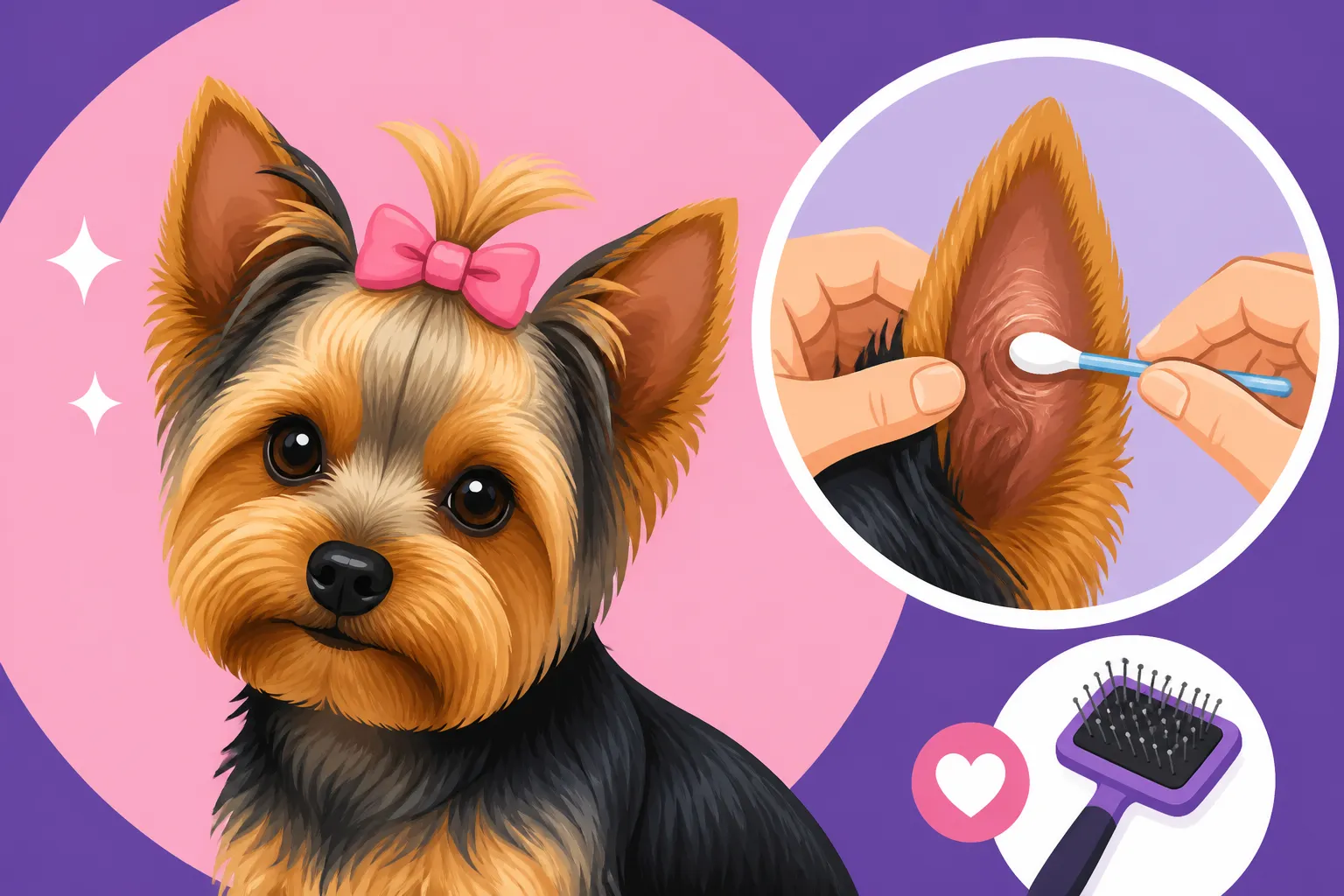
Once your Yorkie is settled and reasonably calm, you can proceed with the initial cleaning. Gently fold back the ear flap (also known as the pinna) to fully expose its inner surface. Take a soft cotton ball or a clean gauze pad and dampen it with your vet-approved, dog-specific ear cleaning solution – ensure it’s not soaking wet, but just moist enough to effectively clean without dripping excessively. Carefully and gently wipe the visible parts of the ear. This includes the inside of the ear flap itself, and any accessible folds or crevices of skin that you can easily see and reach without inserting anything into the ear canal. Focus on removing any accumulated dirt, loose wax, or surface debris.
It is absolutely paramount to be gentle! The skin inside a Yorkie's ear is incredibly thin and delicate, making it very sensitive. Avoid any vigorous scrubbing or harsh rubbing motions, as this can cause irritation or even minor abrasions. Always use a fresh, clean cotton ball or gauze pad for each ear to prevent any potential transfer of bacteria, yeast, or mites from one ear to the other, even if you suspect one ear is perfectly healthy. At this stage, your primary aim is to clean the superficial, easily accessible areas, not to delve deep into the ear canal itself. Think of this step as tidying up the entrance hall before you consider going further into the inner sanctum.
After you’ve thoroughly wiped the visible areas, allow the ear to air dry completely, or if you prefer, you can very gently dab the areas with a fresh, clean, dry cotton ball or soft tissue. It’s crucial to avoid leaving any residual moisture behind, as dampness can counteract your efforts to prevent infections by creating a favorable environment for pathogens. This step is usually quite straightforward and serves as an excellent warm-up for your Yorkie, helping them adjust to the sensation before you move on to any potentially more intrusive or detailed steps.
Trimming Hair Around the Ear Canal
Now, we move on to the trimming, which is a critical step for improving airflow. Using your blunt-nosed grooming scissors, very carefully trim any excess hair that is visibly growing around the ear opening. The goal here is to effectively create a clear, unobstructed path for air to circulate freely. You want to ensure that no hair is long enough to fall into the ear canal itself or to create a dense mat that blocks the opening. To do this safely, gently hold the ear flap steady with one hand and, with the other, carefully trim only the visible hair, always cutting parallel to the ear skin. Make sure the scissor tips are consistently pointed away from the delicate ear canal to prevent any accidental pokes or cuts.
For some Yorkies, particularly those with exceptionally fast-growing or thick hair on their ears, you might also need to lightly trim the hair on the outer surface of the ear flap itself. If this hair gets too long and heavy, it can actually weigh down the ear, reducing its natural ability to stand erect (if applicable) and, crucially, impeding airflow. A light, airy ear is significantly less prone to developing moisture-related problems. Always be conservative and cautious; take only small snips at a time. Remember the golden rule of trimming: you can always trim more hair off, but you absolutely cannot put it back on.
This trimming step is paramount for dramatically improving ventilation and for making all future ear cleaning and inspections much easier and more effective. It plays a key role in preventing moisture and microscopic debris from becoming trapped within the ear’s delicate folds and ensures that any ear cleaning solutions you use can properly reach the areas they need to. It’s important to remember that the primary goal here is functionality and hygiene, rather than achieving a show-ring-perfect haircut. If you ever feel unsure about your technique, or if your Yorkie is being particularly wiggly or uncooperative, it is always a safer and wiser choice to do less trimming or to consult with a professional groomer for assistance.
Plucking Hair from the Inner Ear with Caution
This particular step is perhaps the most controversial aspect of Yorkie ear grooming and, importantly, it is not always necessary for every single Yorkie. Many experienced veterinarians and professional groomers agree that if a Yorkie has minimal hair growing in the inner ear canal and already exhibits good natural airflow, then plucking is generally unnecessary and can even potentially cause irritation or discomfort. However, for those individual Yorkies that have very dense, thick hair growing inside their ear canal, plucking can indeed be highly beneficial for preventing deep blockages, improving crucial airflow, and reducing the likelihood of infections. If, after careful consideration, you decide that plucking is necessary for your Yorkie, it is imperative that you proceed with extreme caution and a very gentle touch.
If you choose to pluck, use your clean and sterilized ear hemostats. Take only a tiny pinch of hair at a time, holding it firmly but gently. With a swift, firm, yet controlled motion, pull the hair out in the natural direction of hair growth. Never attempt to pull large clumps of hair simultaneously, as this can be incredibly painful for your dog and can cause significant irritation, inflammation, or even bleeding. Work slowly and methodically, pausing frequently to offer warm praise to your Yorkie and reward them with their favorite high-value treats. If your Yorkie shows any significant signs of pain, distress, yelping, or clear discomfort, stop immediately without hesitation. Some experienced owners find that applying a small amount of ear powder (specifically designed for plucking) before they begin can help provide a better, more secure grip on the fine hairs.
After you have finished plucking (if you chose to do so), gently wipe the inner ear with a fresh cotton ball dampened with your dog-specific ear cleaning solution. This helps to soothe any potential irritation, cleans away any loose or stray hairs, and provides a final cleanse. Monitor the ear closely for the next 24-48 hours for any signs of redness, swelling, or increased sensitivity. If you are at all uncomfortable with the idea of plucking, if your Yorkie is particularly sensitive, or if they are prone to frequent ear infections, it is always, always best to leave this delicate task to a professional groomer or your trusted veterinarian. They possess the necessary experience, specialized tools, and expertise to perform this safely and efficiently, and they can provide expert advice on whether plucking is truly necessary for your individual dog's ear health.
Final Touches and Rewards
Once you’ve meticulously finished the cleaning and trimming (and potential plucking) of your Yorkie’s ears, take a moment for a thorough final inspection. Gently examine both ears for any lingering debris, persistent redness, or any new signs of irritation that might have occurred during the process. Ensure that the ear is completely dry, especially if you’ve used a liquid cleaning solution. A gentle head shake from your Yorkie, which they'll very likely do on their own anyway, can often help dislodge any residual solution, so be ready with a soft towel to catch any drips.
The most critical final step, however, is a generous and heartfelt reward! Lavish your Yorkie with enthusiastic praise, gentle cuddles, and an abundance of their absolute favorite high-value treats. Make this moment a true celebration of their cooperation and patience, regardless of how challenging the session might have been. This consistent positive reinforcement is absolutely essential. It helps to firmly establish and reinforce the idea that ear grooming is not a scary, unpleasant, or painful event, but rather a process that ultimately ends with wonderful, positive associations and rewards. This deeply embedded positive connection will significantly help build trust and make all future grooming sessions much less stressful and far more cooperative for everyone involved.
Regularity is undoubtedly the key to maintaining consistently healthy and clean ears for your Yorkie. Depending on your individual Yorkie’s specific needs – factors such as how fast their ear hair grows, how much natural wax they produce, and whether they are predisposed to ear infections – you might need to check and clean their ears weekly, bi-weekly, or on a monthly basis. Establishing and strictly adhering to a consistent schedule for ear maintenance is a fundamental component of How to Keep a Yorkshire Terrier Healthy and happy throughout their life.
Troubleshooting Common Yorkie Ear Grooming Challenges
Even the most dedicated Yorkie parents will encounter a snag or two when it comes to ear grooming. It's a delicate task, and these tiny dogs can be quite opinionated! Knowing how to handle common issues, from a wiggly pup to signs of infection, can save you a lot of stress and prevent serious problems.
Dealing with a Wiggly Yorkie
It’s a scenario familiar to countless pet parents: you’ve got your ear cleaning solution ready, your blunt-nosed scissors in hand, your intentions are purely good, and your Yorkie decides that this is the perfect moment to execute an elaborate interpretive dance routine. Dealing with a persistently wiggly Yorkie during ear grooming can be incredibly frustrating, physically challenging, and, quite frankly, potentially dangerous, especially when you are attempting to use sharp tools near delicate areas. The first and most crucial step is to understand that their wiggling typically stems from underlying fear, genuine discomfort, a lack of trust, or simply not comprehending what it is you are trying to do. Yelling, scolding, or attempting to physically force them into submission will only serve to escalate their anxiety and fear, making all future grooming sessions significantly more difficult and traumatic.
Instead, adopt a strategy of breaking the grooming process into much shorter, more manageable sessions. Even just one or two minutes of gentle ear handling, followed immediately by lavish praise and a highly desirable treat, can gradually build up their tolerance and trust over time. If at all possible, enlist the help of a second person; one individual can gently hold, reassure, and distract your Yorkie with a steady stream of treats or a beloved toy, while the other person carefully performs the actual grooming tasks. A secure grooming loop, like those used by professional groomers, or even wrapping your Yorkie snugly but comfortably in a soft towel (think of it as a gentle "puppy burrito," ensuring it's not too tight to cause distress!) can effectively limit their movement without causing undue stress or discomfort. Distraction toys, such as a KONG filled with frozen peanut butter or cream cheese, can also be an absolute lifesaver for keeping their attention diverted.
Consistent positive reinforcement is absolutely paramount throughout this process. Every single time your Yorkie tolerates a gentle touch, allows you to briefly hold their ear, permits a sniff of the cleaning solution, or allows a quick, tiny trim without excessive fuss, reward them immediately and generously. Utilize very high-value treats – those special snacks they only get during these specific, often less-liked, grooming activities. Consistency, unwavering patience, and a positive attitude on your part will undeniably pay off over time, gradually transforming a once wiggly, resistant terror into a much more cooperative and accepting companion. Remember, you’re not just performing a physical grooming task; you’re actively teaching them to trust you with the most sensitive and vulnerable parts of their little body. Establishing a positive Yorkie Puppy Training Schedule that includes handling early on can make a world of difference.
Recognizing Signs of Ear Discomfort or Infection
Even with the most meticulous and diligent preventative care, Yorkies, like all dogs, can still unfortunately develop ear issues. Knowing precisely what signs to look for is absolutely vital for ensuring prompt diagnosis and effective treatment. Common indicators of ear discomfort or a developing infection include persistent and excessive scratching at one or both ears, frequent and vigorous head shaking, rubbing their ears frantically against furniture, carpets, or the floor, and an abnormal tilting of their head to one side. Beyond behavioral changes, you might also notice a distinct change in the ear's physical appearance, such as pronounced redness, noticeable swelling, or the presence of an unusual or increased amount of discharge.
Pay very close attention to any changes in smell. A healthy Yorkie ear should typically have a very mild, almost neutral odor that you barely notice. If you detect a strong, distinctive yeasty smell (often described as bread-like), a foul, pungent odor, or any other unpleasant smell, it is a very clear and undeniable indicator of a potential infection that warrants immediate attention. The type of discharge can also offer clues: dark brown, waxy, or crumbly discharge often suggests a yeast infection or, less commonly, ear mites, while yellow or green pus is typically a strong sign of a bacterial infection. It is crucial to resist the urge to self-diagnose or attempt to treat these issues at home with over-the-counter remedies not specifically prescribed by a veterinarian; doing so can often mask the symptoms, delay proper treatment, and potentially worsen the condition or create resistance to future medications. Addressing Yorkshire Terrier Ear Infections: Prevention quickly is key.
Any significant pain response from your Yorkie when you gently touch their ears, or if one ear appears noticeably more swollen, red, or painful than the other, warrants an immediate visit to your veterinarian. Ignoring these symptoms can lead to chronic, recurring infections, potential hearing loss, or even more serious underlying health complications. Your vet has the expertise and diagnostic tools to accurately determine the cause and prescribe the most appropriate and effective course of treatment for your furry friend.
When to Seek Professional Help
While consistent at-home ear grooming is an essential part of responsible pet ownership, there are definite circumstances when you should absolutely defer to the expertise of a professional. If you notice any distinct and concerning signs of a severe ear infection – such as a strong, foul odor, significant or discolored discharge, visible pain, pronounced swelling, or if your Yorkie is holding their head awkwardly – your very first call should always be to your veterinarian. They are equipped to properly diagnose the specific type of infection (bacterial, yeast, or parasitic) and prescribe the appropriate, targeted medication, whether it's antibiotics, antifungals, anti-inflammatory drops, or a combination thereof. Attempting to treat a deep-seated infection at home with inappropriate over-the-counter solutions can often mask critical symptoms, delay proper diagnosis, and ultimately prolong your Yorkie's discomfort.
Furthermore, if your Yorkie is exhibiting extreme resistance to ear handling, showing signs of aggression (like growling or biting), or becoming highly stressed and anxious whenever you attempt to groom their ears, it might be time to bring in a professional groomer or a veterinary technician. These professionals have specialized training, experience, and sometimes even specific tools or techniques to safely and effectively handle uncooperative or fearful dogs. Often, a few professional grooming sessions can help to "reset" the experience, making it a less traumatic event and potentially making it easier for you to continue regular maintenance at home afterward.
Moreover, if you are genuinely unsure about the correct technique for intricate trimming around the ear canal or, especially, the delicate process of plucking ear hair, a professional groomer can provide invaluable guidance. They can demonstrate the proper, safe method step-by-step or simply perform the task for you, ensuring it's done correctly and without causing harm. Many professional grooming salons include ear cleaning and hair removal as a standard part of their regular grooming packages. It is always, without exception, better to seek expert help and guidance than to accidentally injure your beloved companion due to lack of experience or confidence. Knowing When to Take Your Yorkie to the Vet for ear issues is not just a suggestion; it's a vital part of providing the best possible care for your cherished Yorkie. For severe or acute symptoms, always consider Yorkie Emergency Symptoms to Never Ignore.
Disclaimer
The information provided in this guide is for general informational purposes only and does not constitute veterinary advice. Always consult with a qualified veterinarian for any health concerns or before making any decisions related to your pet's medical care.