How to Trim a Yorkie’s Nails
Trimming your Yorkie's nails can sometimes feel like a high-stakes wrestling match, leaving both you and your tiny companion stressed and anxious. Many Yorkie parents dread this essential grooming task, worried about cutting too far back, causing pain, or just dealing with a squirming, unhappy pup. But letting nails get too long can lead to serious health issues and discomfort for your beloved little dog. This comprehensive guide is here to walk you through everything you need to know, from understanding nail anatomy to mastering trimming techniques, helping you make nail care a safe, calm, and even positive experience for your Yorkshire Terrier.
Understanding Your Yorkie's Nails: Anatomy and Importance
Before you even think about picking up clippers, it's really important to understand the basics of your Yorkie's nails. They aren't just simple extensions; they're complex structures that play a vital role in your dog's balance, comfort, and overall paw health. Many people shy away from nail trimming because they’re worried about hurting their dog, and that fear usually comes from not knowing enough about what exactly you’re cutting. Let’s demystify it.
The Quick and the Nail Bed
The most crucial thing to understand about your Yorkie's nails is the "quick." This is the pink, fleshy part inside each nail that contains blood vessels and nerve endings. Imagine it like our own nail beds, but it extends further down the nail. When you accidentally cut into the quick, it’s painful for your dog and can cause bleeding, which is why so many owners are hesitant. In Yorkies with clear or white nails, you can often see the quick as a pinkish line within the translucent nail. However, many Yorkies have dark nails, making the quick much harder to spot, which adds another layer of anxiety for us pet parents.
The nail itself is made of keratin, much like our own fingernails. It grows continuously, and the quick grows along with it. If nails are left untrimmed, the quick will gradually extend further down the nail, making it even harder to trim them back without hitting it. This is a common frustrating cycle: nails get too long, the quick grows, you can't trim them short enough, and the problem just gets worse. Consistency is key to keeping the quick receded and the nails at a healthy length.
Why Regular Trimming is Crucial
You might think long nails are just a cosmetic issue, but for a tiny breed like a Yorkshire Terrier, they can lead to a cascade of painful and potentially serious problems. When your Yorkie's nails become too long, they hit the ground before the paw pads do. This forces the toes upwards, putting unnatural pressure on the paw joints and even affecting the alignment of the entire leg and spine. It’s like us walking around with shoes that are too small, constantly pushing our toes up and causing discomfort. Over time, this can lead to arthritis, lameness, and chronic pain.
Beyond structural issues, long nails can snag on carpets, furniture, or outdoor terrain, potentially tearing the nail or even ripping it from the quick, which is incredibly painful and often requires a vet visit. They can also grow so long they curl under and dig into the paw pad, causing open sores, infections, and intense discomfort. A Yorkie's paws are delicate, and keeping their nails in check is a fundamental part of their Yorkshire Terrier Daily Care Routine. Neglecting nail care can genuinely impact your dog's quality of life, making even simple walks uncomfortable or painful.
Signs Your Yorkie's Nails Are Too Long
It's actually pretty easy to tell if your Yorkie's nails are too long, even if you’re not an expert groomer. The most obvious sign is when you hear them clicking on hard floors as your dog walks. That persistent clicking sound means the nails are touching the ground, which they shouldn’t be doing when your dog is standing or walking normally. Ideally, your Yorkie's nails should be short enough that they don't make contact with the floor when they stand naturally.
Another indicator is if you can see the nails extending significantly beyond the paw pads. They should ideally be flush with the paw pad or just slightly past it. If you notice your Yorkie constantly licking or chewing at their paws, limping, or showing reluctance to walk or play, overly long nails could be a contributing factor. They might also have a splayed appearance to their toes, or even calluses developing on the paw pads from the pressure. Keeping an eye on these subtle signs can help you prevent discomfort and intervene before the problem becomes severe, ensuring your Yorkie’s paws stay healthy and happy.
Gathering Your Tools: Essential Supplies for Safe Trimming
Having the right tools is half the battle when it comes to successful Yorkie nail trimming. Don't just grab any old pair of scissors; choosing instruments specifically designed for dog nails, especially small breeds, makes the process much safer and less intimidating for both you and your furry friend. Investing in quality supplies will pay dividends in reduced stress and better outcomes.
Choosing the Right Nail Clippers
There are a few types of nail clippers available, and for a small dog like a Yorkie, it's important to pick ones that are appropriately sized and comfortable for you to handle.
- Scissor-Style Clippers: These look and function much like a pair of scissors, with sharp blades that cut through the nail. Many professional groomers prefer them for their precision and ease of use, especially on smaller nails. Brands like Safari or Millers Forge offer excellent scissor-style clippers that are perfectly sized for Yorkies. They give you good control and visibility over the nail you're cutting.
- Guillotine-Style Clippers: These clippers have a small hole you insert the nail into, and a blade slides across to make the cut. While effective, they can sometimes crush the nail if not sharp enough, and they might offer less visibility than scissor-style clippers for tiny Yorkie nails. However, some owners find them easier for quick, precise cuts once they get the hang of it.
- Grinders (Dremel-style tools): These battery-operated tools use a rotating abrasive drum to grind down the nail. Grinders are a fantastic alternative for Yorkies who are terrified of clippers, or for owners who are nervous about cutting the quick. They allow for very gradual removal of nail material, giving you more control and a smoother finish. Brands like Dremel Pet Grooming Tool or the Casfuy Dog Nail Grinder are popular choices. The main drawback is the noise and vibration, which some dogs don't like, so desensitization is key if you go this route. Remember, regular grinding can also help to naturally recede the quick over time, making future maintenance easier.
Ultimately, the "best" clippers are the ones you feel most confident and comfortable using. You can find a good selection of all these types on online retailers like Amazon or specialized pet stores like Chewy.
Styptic Powder: Your Essential Safety Net
Even the most experienced groomer can accidentally nick the quick from time to time, especially with a wiggly Yorkie. That’s why styptic powder is an absolute must-have for your grooming kit. Think of it as your emergency first aid for dog nails. This special powder contains agents that quickly constrict blood vessels and stop bleeding. Brands like Kwik Stop or Miracle Care are widely available.
Having styptic powder readily available can turn a potentially stressful and messy accident into a minor inconvenience. If you do cut the quick, simply apply a pinch of the powder directly to the bleeding nail and apply gentle pressure for a few seconds. The bleeding should stop almost immediately. Without it, even a small cut can bleed for a surprisingly long time, causing anxiety for both you and your Yorkie. It’s better to have it and not need it, than to need it and not have it! You can often find this product next to the nail clippers at any pet supply store or on Chewy.
Treats and Rewards: The Motivation Factor
Positive reinforcement is crucial for making nail trimming a positive experience, especially for a breed that can be as opinionated as a Yorkie. High-value treats are your secret weapon here. These aren’t just any treats; they should be something your Yorkie absolutely loves and only gets during nail trimming sessions. This helps build a strong positive association with the activity.
Think soft, chewy treats that can be eaten quickly, or even something spreadable like peanut butter (xylitol-free, of course!) on a lick mat to distract them. The goal is to make them associate the clippers and the process with delicious rewards. Offer treats before, during (if they’re cooperative), and immediately after each nail is trimmed. This helps to reframe the entire experience from something scary to something that brings tasty rewards. Quality training treats from brands like Ollie can be highly motivating.
Preparing Your Yorkie for a Stress-Free Experience
Many Yorkies aren't naturally thrilled about having their paws handled, let alone their nails trimmed. This isn't because they're being "naughty" but often because they've had negative experiences or simply aren't used to it. The key to successful nail trimming, especially for a small, sensitive dog, is preparation and patience. You want to make this a calm, positive routine, not a battle.
Desensitization and Positive Reinforcement
If your Yorkie is already anxious about nail trims, you need to start with desensitization. This means gradually introducing them to the tools and process in a non-threatening way, paired with positive rewards. Start by simply letting them see the clippers or grinder. Place them on the floor and let your Yorkie sniff them, then immediately give a treat. Repeat this several times over a few days. The goal is to create a positive association: clippers appear, treats happen.
Next, move to touching their paws without the clippers. Gently hold a paw, give a treat. Gently touch a nail, give a treat. Slowly build up to touching each individual toe and nail. Once they're comfortable with paw handling, introduce the clippers again. Touch the clippers to their nail without cutting, then immediately treat. This teaches them that the clippers touching their paw isn't scary. This entire process can take days or even weeks, but it's vital for building trust and reducing anxiety. Patience here will save you a lot of stress down the line. This foundational training is also helpful for other grooming tasks, as covered in our guide on How to Train a Yorkshire Terrier.
Creating a Calm Environment
The atmosphere you create around nail trimming can significantly impact your Yorkie's cooperation. Choose a quiet time when there are minimal distractions. Turn off the TV, silence your phone, and make sure other pets aren't around to add to the commotion. A calm human caregiver projects calm energy, which your Yorkie will pick up on. If you’re tense, they will be too.
Consider your positioning. Sitting on the floor with your Yorkie nestled comfortably in your lap or beside you can be less intimidating than holding them on a table. Some people find success wrapping their Yorkie gently in a towel or blanket, leaving only one paw exposed, which can provide a sense of security and limit wiggling. Soft, soothing praise throughout the process can also help. Make it a peaceful bonding moment, not a stressful chore. If your Yorkie is particularly anxious, playing some calming classical music or using a dog-specific pheromone diffuser might also help to create a more relaxed environment.
Handling and Paw Conditioning
Beyond just desensitization, regular paw handling is crucial for Yorkies. Their paws are sensitive, and if they're not used to being touched, nail trims will always be a struggle. Start practicing gentle paw massages and examinations daily, outside of nail trimming sessions. Stroke their legs, gently pick up their paws, examine between their paw pads, and touch their nails.
Pair these sessions with praise and treats. The more accustomed your Yorkie becomes to having their paws manipulated, the less novel and scary it will be when it’s time for a trim. This regular handling also allows you to check for any injuries, dry pads, or other issues. Building this positive association with paw handling makes all other grooming tasks, including a full Yorkshire Terrier Grooming Guide, much easier and more enjoyable for everyone involved. Consistent, gentle conditioning ensures your Yorkie sees paw contact as a normal, even pleasant, part of their routine.
Step-by-Step Guide to Trimming Your Yorkie's Nails
Now that you're prepared with the right tools and your Yorkie is desensitized, it's time for the actual trimming. Approach this with confidence and patience. Remember, you can always trim a little less, but you can't put it back on! Focus on small, controlled cuts.
Locating the Quick in Different Nail Colors
Finding the quick is the most critical step, and it can be tricky, especially with dark nails.
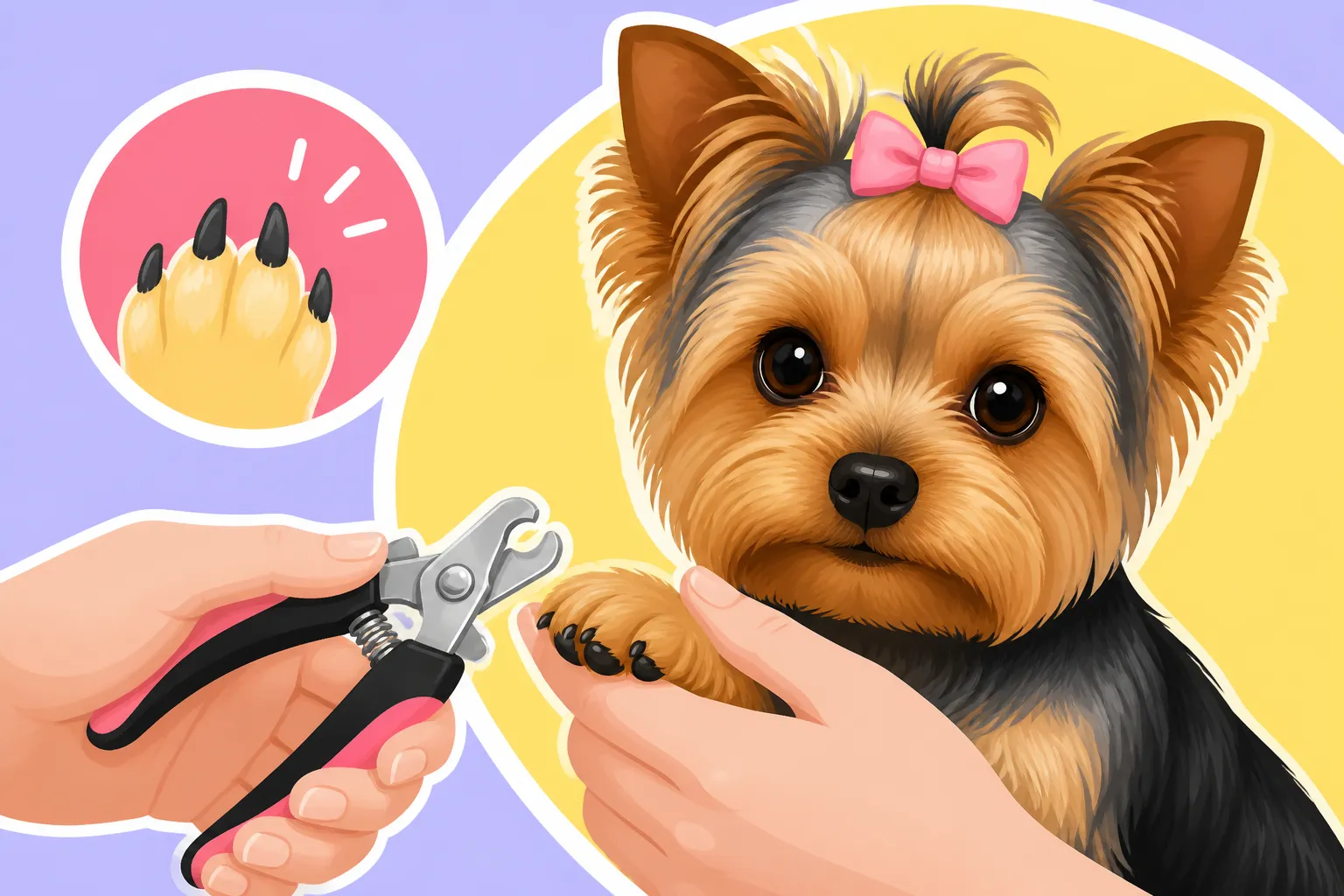
- For Clear/White Nails: This is the easiest scenario. The quick will appear as a pinkish tube or line running through the center of the translucent nail. You want to trim only the white, non-vascularized tip, staying a millimeter or two away from the end of the quick. Hold a flashlight to the nail from behind if needed to illuminate the quick more clearly.
- For Dark Nails: This is where many owners get nervous. Since you can't see the quick directly, you'll need to rely on visual cues. The key is to look at the underside of the nail. As you trim thin slivers off the tip, you'll notice the cut surface of the nail. Initially, it will look white or gray. As you get closer to the quick, a small, dark circle will appear in the center of the cut surface, surrounded by the outer keratin. This dark circle is the beginning of the quick. Stop cutting when you see this, or just before it. If you continue, you'll hit the quick.
If you are unsure, it's always better to take off tiny amounts more frequently than to risk a deep cut. You'll be surprised how quickly you develop an eye for it with practice.
The Trimming Technique: Angle and Amount
Once you've located your target, the technique for cutting is straightforward:
- Positioning: Hold your Yorkie securely but gently. You might need a second person to help hold them or distract them with treats, especially when you're first starting. Hold the paw firmly, isolating the toe you're working on. Ensure their hair is brushed back from the nail to give you a clear view.
- Angle: The natural angle of a dog's nail is to slope downwards. You want to mimic this angle with your clippers. Aim to cut at a 45-degree angle, following the natural curve of the nail. For guillotine clippers, ensure the blade faces you, and for scissor-style, ensure the flat edge of the blade is against the bottom of the nail.
- Amount: Take small, deliberate cuts. Don't try to take off a large chunk at once, especially if you're working with dark nails or are nervous. It's better to make several tiny snips than one large, risky cut. You should be aiming to remove the hooked tip of the nail, bringing it back to just before the quick, so it’s roughly level with the paw pad. After each cut, praise your Yorkie and offer a treat. Work through each nail methodically. Don't forget the dewclaws (if your Yorkie has them), which are located higher up on the inside of the leg; these nails don't wear down naturally and can easily grow into the paw pad if neglected.
What to Do If You Cut the Quick
Even with the best intentions and careful technique, hitting the quick can happen. Don’t panic! Your Yorkie will likely yelp, pull their paw away, and there will be some blood. Your reaction is key to not making the experience worse for them.
- Stay Calm: Take a deep breath. Your dog will pick up on your anxiety. Reassure them with a calm voice.
- Apply Styptic Powder: Immediately grab your pre-positioned styptic powder. Take a pinch of the powder and firmly press it onto the bleeding nail tip. Hold it there for about 10-15 seconds. The bleeding should slow down or stop entirely. If you don't have styptic powder, cornstarch or flour can work in a pinch, though less effectively.
- Offer Reassurance and Treats: Once the bleeding stops, comfort your Yorkie. Offer high-value treats and praise to help them associate the end of the incident with something positive. You might want to stop the trimming session there for the day and try again another time, focusing on rebuilding their trust.
- Monitor: Keep an eye on the nail for the next hour or so to ensure the bleeding doesn't resume. In very rare cases, if bleeding is heavy or doesn't stop after several minutes of applying pressure and powder, contact your vet immediately. This is one of those times when knowing When to Take Your Yorkie to the Vet is crucial. A minor quicking incident can be upsetting, but it shouldn't deter you from future nail care. Consistency is important for your Yorkie's long-term comfort.
| Clipper Type | Pros | Cons | Best For |
|---|---|---|---|
| Scissor-Style | Precise control, good visibility, sharp cut | Requires steady hand, blades need to be sharp | Owners comfortable with scissors, dark-nailed Yorkies |
| Guillotine-Style | Quick and efficient for cooperative dogs | Can crush nails if dull, less visibility for precise cuts, not ideal for very thick nails | Experienced owners, quick trims on cooperative Yorkies |
| Nail Grinder | Prevents quicking, smooth finish, can recede quick over time, less scary | Noise and vibration can deter some dogs, takes longer, dust created | Anxious Yorkies, owners nervous about clipping, maintaining short nails |
Maintaining Nail Health Between Trims
Trimming isn't a one-and-done event; it's an ongoing commitment to your Yorkie's health and comfort. Establishing a consistent routine and exploring all available options will ensure their nails stay in optimal condition, preventing the discomfort and potential health problems associated with overgrown claws.
Frequency of Nail Trimming
The ideal frequency for trimming your Yorkie's nails varies depending on their activity level and individual nail growth rate. Generally, most Yorkies need their nails trimmed every 2 to 4 weeks. If your Yorkie spends a lot of time walking on hard surfaces like pavement, their nails might naturally wear down a bit more, extending the time between trims. However, indoor Yorkies or those mostly walked on grass will likely need more frequent attention.
The best way to determine the right schedule is to regularly check their nails. Listen for clicking on hard floors, and visually inspect how far they extend past the paw pads. Remember, the more consistently you trim, even if it's just tiny tips, the more the quick will recede, making future trims easier and safer. Don't wait until they're noticeably long and causing issues; preventative, routine care is always best for a How to Keep a Yorkshire Terrier Healthy.
Alternative Nail Care Methods
While traditional clippers are common, they aren't the only way to manage your Yorkie's nails. Nail grinders, as mentioned earlier, offer a fantastic alternative, especially for dogs fearful of the clipping sensation or for owners who are nervous about cutting the quick. Grinders file the nail down gradually, which not only prevents accidental quicking but also creates a smoother, less sharp edge that won't scratch you or snag on fabrics as easily.
The grinding process can also help to push the quick back over time, allowing you to achieve shorter nail lengths safely. The downside is the noise and vibration, which some sensitive Yorkies might initially dislike. If you opt for grinding, start with very short sessions, just touching the grinder to one nail tip for a second, then immediately rewarding. Gradually increase the duration as your Yorkie becomes more comfortable. This process mirrors the desensitization you'd use for clippers.
Professional Grooming vs. At-Home Care
Deciding whether to trim your Yorkie's nails at home or to enlist the help of a professional groomer or vet technician is a common dilemma. Both options have their merits.
At-Home Care:
- Pros: Cost-effective, convenient, allows for more frequent trims (which helps keep the quick receded), and can be a bonding experience if approached positively. You have full control over the process and can go at your Yorkie's pace. It’s a vital part of How to Groom a Yorkshire Terrier at Home.
- Cons: Requires practice and confidence, risk of quicking, some Yorkies may be uncooperative, and it might be challenging to achieve a perfectly even trim without experience.
Professional Grooming/Vet Care:
- Pros: Experienced professionals can trim quickly and efficiently, often getting nails shorter than you might comfortably do at home. They have specialized tools and knowledge, and they can handle challenging dogs. If you're completely new to this, or your Yorkie is extremely anxious, a professional can be a lifesaver. This can be part of the Cost of Yorkie Professional Grooming.
- Cons: Can be more expensive over time, requires scheduled appointments, and some Yorkies might still be stressed in a new environment with strangers.
Many owners opt for a hybrid approach: regular at-home trims for maintenance, with occasional professional grooming appointments for a full trim, bath, and other services like How to Clean a Yorkie's Ears. This ensures your Yorkie's nails are always in good shape without placing undue pressure on either you or your dog. The most important thing is that nail care happens regularly, no matter who is doing the trimming.
Disclaimer
The information provided in this article is for general informational purposes only and is not a substitute for professional veterinary advice. Always consult with a qualified veterinarian or professional groomer for any health concerns or before making any decisions about your pet's care.