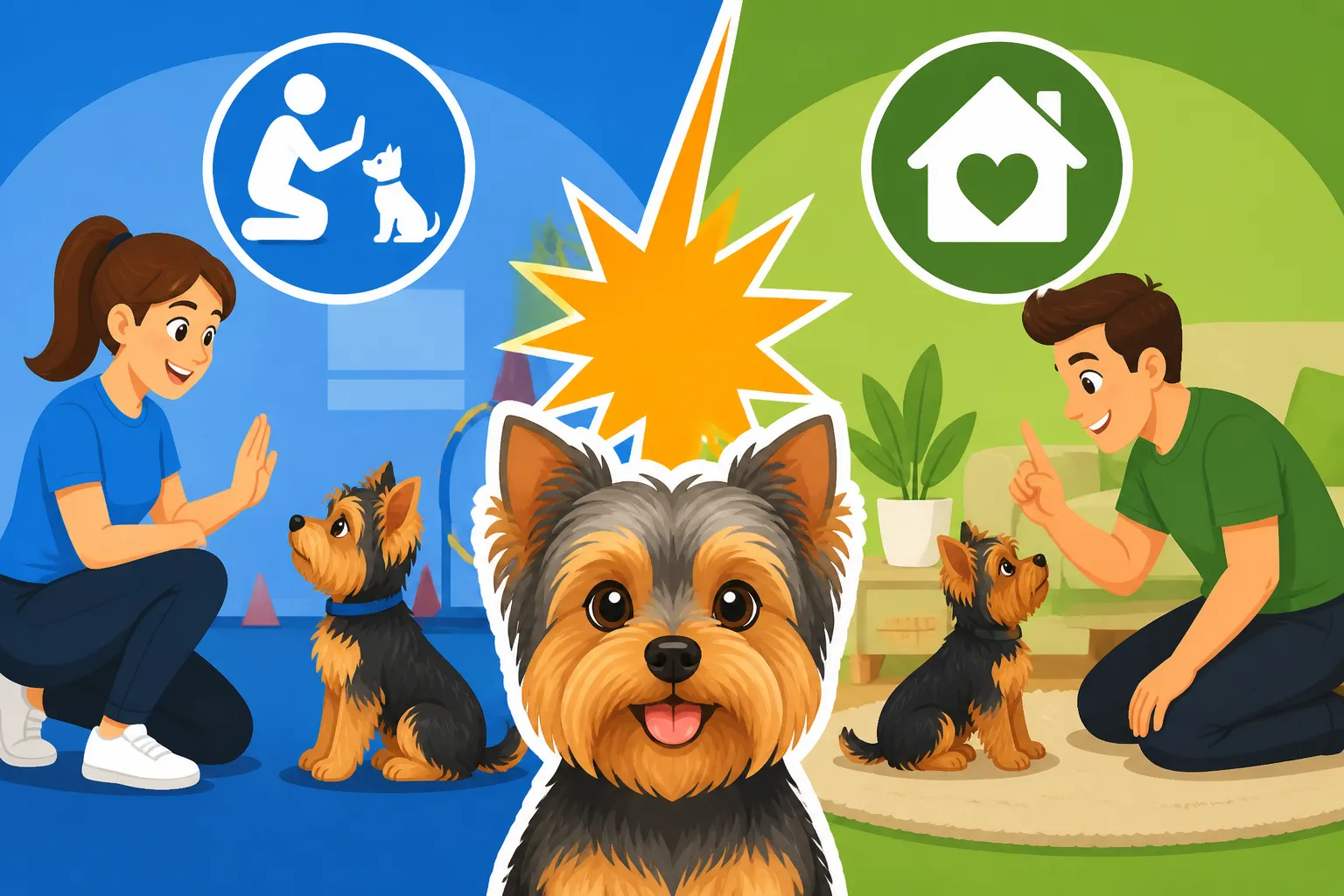
Yorkie Obedience Class vs Home Training
Bringing a Yorkshire Terrier into your life is an absolute joy, but let's be honest, it also comes with its fair share of head-scratching moments, especially when it comes to training. You might find yourself wondering if you should enroll your little furball in an obedience class or if you can tackle the journey from the comfort of your own living room. It's a valid dilemma for many Yorkie parents, and this guide is here to walk you through the ins and outs of both options, helping you figure out the best path for your unique companion and lifestyle.
The Lure of Professional Obedience Classes for Your Yorkie
When you imagine a well-behaved Yorkie, sitting patiently, walking politely on a leash, and greeting guests without a full-on bark-fest, it's often the image of a dog who has benefited from some structured learning. Obedience classes offer a particular kind of environment that can be incredibly beneficial for these spirited little dogs.
Benefits of Structured Group Learning
One of the biggest advantages of an obedience class for your Yorkie is the built-in opportunity for socialization. Yorkies can sometimes develop "small dog syndrome" or become overly protective, so exposing them to various sights, sounds, people, and other dogs in a controlled, positive setting is crucial. In a group class, your Yorkie learns to focus on you even with distractions, which is a life skill that's tough to replicate at home. They'll encounter dogs of different sizes and temperaments, learning appropriate greetings and manners under the watchful eye of a professional. This early exposure is key to helping them become well-adjusted, confident companions rather than anxious or reactive pups.
Beyond socialization, you benefit from the expert guidance of a certified trainer. These professionals have years of experience and a deep understanding of dog behavior and learning theory. They can observe your Yorkie's body language and your interactions, identifying subtle cues or habits you might not even notice. For instance, if you're struggling with Yorkie Not Listening: What to Do, a trainer can quickly pinpoint why your commands aren't sticking and offer immediate, personalized corrections and techniques. They provide a structured curriculum, breaking down complex behaviors into manageable steps, ensuring consistency in your training approach. This structured environment, often with minimal initial distractions, allows both you and your Yorkie to build a strong foundation before tackling real-world scenarios.
When a Class Might Be the Best Fit
Obedience classes are particularly well-suited for several situations. If you're a first-time dog owner, especially of a spirited breed like a Yorkie, a class can be an invaluable resource. You'll not only learn how to train your dog but also gain fundamental knowledge about dog behavior, care, and responsible ownership. It’s like having a dedicated mentor guide you through the initial exciting, yet often overwhelming, phases of puppyhood. A class can provide the foundational knowledge you need, covering everything from basic commands to understanding why your Yorkie might be exhibiting certain behaviors.
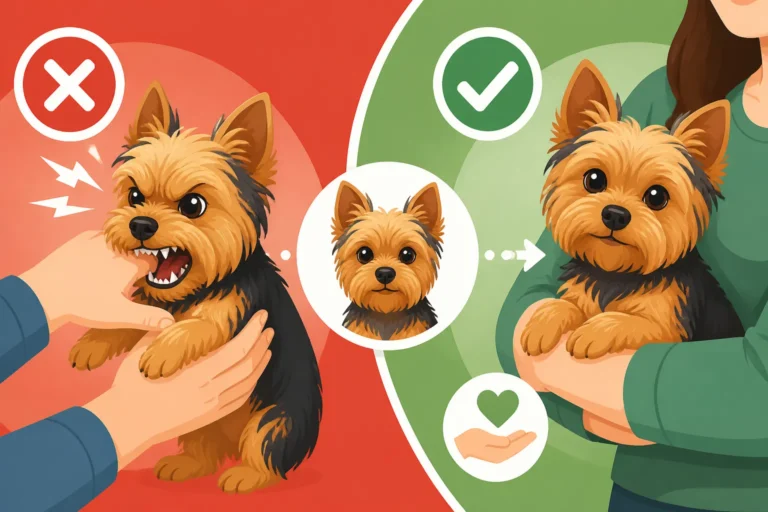
Furthermore, if your Yorkie has specific behavioral issues that you're struggling to address on your own, a class can provide a safe space for intervention. Issues like excessive barking at other dogs, leash reactivity, or even just general over-excitement can be overwhelming for owners. A good trainer can offer direct strategies and help you implement them in a real-time, supportive environment. For instance, if your Yorkie barks incessantly when meeting new dogs, a class focusing on polite greetings can be transformative. Lastly, if you thrive on external motivation and a set schedule, the commitment of weekly classes can keep you on track. It creates accountability and ensures that training remains a priority, rather than something that gets pushed aside when life gets busy. This structured approach is also very helpful for those looking to socialize a new puppy, ensuring they get crucial exposure during their critical developmental window. For more on early training, you might want to look into a Yorkshire Terrier Puppy Training Schedule.
Choosing the Right Class and Trainer
Selecting the right obedience class and trainer for your Yorkie is paramount to a successful experience. You wouldn't trust just anyone with your beloved pet, right? Start by looking for trainers who are certified by reputable organizations, such as the Certification Council for Professional Dog Trainers (CCPDT) or the Karen Pryor Academy. These certifications indicate that the trainer has met rigorous standards of knowledge and experience. It's also incredibly beneficial to find a trainer with experience working with small breeds like Yorkies. Their understanding of a Yorkie's unique temperament, potential health concerns, and delicate physical structure can make a huge difference in their training approach.
Always prioritize trainers who use positive reinforcement methods. This means rewarding desired behaviors with treats, praise, or toys, rather than using punishment or harsh corrections. Positive reinforcement builds trust and a strong bond between you and your Yorkie, making learning a fun and rewarding experience for everyone involved. Ask about class size – a smaller class often means more individualized attention for you and your dog. Before committing, consider observing a class without your dog to get a feel for the trainer's style and the class dynamics. Speak with other Yorkie parents who have attended local classes. Your veterinarian might also have recommendations for reputable trainers in your area. For instance, in a city like Austin, Texas, you'll find various positive reinforcement-based schools like Austin Dog Training Club or Starmark Animal Behavior Center that cater to all sizes, but it's important to confirm their approach for small breeds.
Embracing Home Training: The DIY Approach with Your Yorkie
While obedience classes offer a structured pathway, many Yorkie parents prefer, or need, to take a more hands-on, at-home approach to training. This path can be incredibly rewarding and deeply strengthens the bond you share with your pint-sized companion.
Advantages of One-on-One Home Training
Choosing to train your Yorkie at home offers unparalleled flexibility. You set the schedule, choosing times that work best for both you and your dog, without worrying about fitting into a class's fixed timings or commuting. This is especially helpful if your daily routine is unpredictable or if you have a Yorkie puppy who needs frequent, short training sessions throughout the day. The convenience factor alone is a huge draw for many busy owners.
Perhaps the biggest advantage is the ability to tailor the training entirely to your Yorkie's individual personality and learning style. Some Yorkies are quick learners, others are a bit more stubborn, and some might be easily overwhelmed in new environments. Training at home allows you to go at your dog's pace, focusing on specific challenges they might face, such as How to Stop a Yorkie from Barking At Night or Why Does My Yorkie Keep Peeing Inside. If your Yorkie is naturally shy or anxious, the comfort and familiarity of their home environment can significantly reduce stress and make them more receptive to learning. This one-on-one attention can lead to a deeper understanding of your dog's unique quirks and a stronger, more trusting relationship. It's a chance to build a truly customized learning journey.
Essential Tools and Resources for Home Training
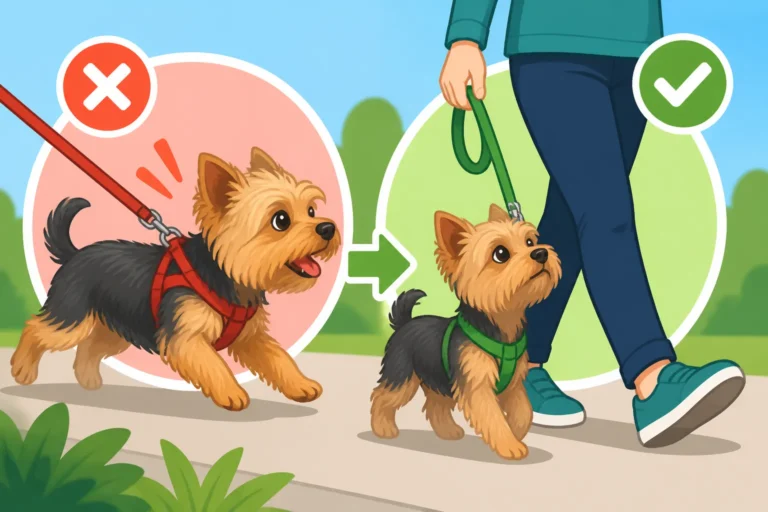
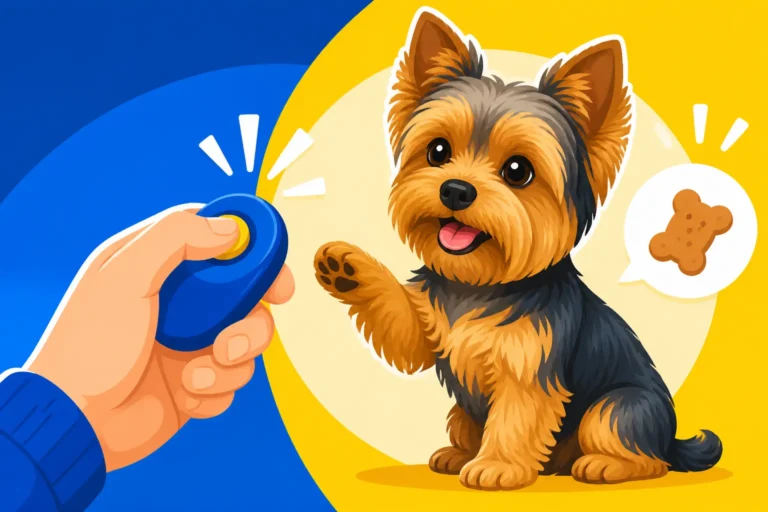
Even when training at home, having the right tools and resources can make all the difference. High-value training treats are a must-have – think small, soft, and super tasty bits of cooked chicken or cheese. A clicker can also be incredibly effective for precision training, helping your Yorkie understand exactly which behavior they're being rewarded for. If you're curious about this method, consider reading up on Clicker Training a Yorkie. A comfortable, properly fitted harness (rather than just a collar, which can put pressure on their delicate tracheas) is essential for leash training, and you can find a great selection of these on Amazon.
Beyond physical tools, the internet is a treasure trove of knowledge. Online courses have become incredibly popular and effective. Platforms like BAXTER & Bella offer comprehensive online puppy and dog training programs that guide you step-by-step through various commands and behavioral solutions. They often include video tutorials, printable guides, and even direct access to trainers for personalized advice. Books on positive reinforcement, dog psychology, and specific breed training can also be invaluable. YouTube channels dedicated to dog training offer free tutorials on everything from How to Teach a Yorkie to Sit to How to Teach a Yorkie to Heel. Remember, the key is consistency. Set aside short, regular training sessions each day, even just 5-10 minutes, to reinforce good habits and introduce new concepts.
Overcoming Common Home Training Hurdles
While home training offers many benefits, it also presents its own set of challenges. One of the most significant hurdles is the potential for a lack of accountability. Without a scheduled class or a trainer present, it's easy to let training slide, especially on busy days. It requires a high degree of self-discipline and commitment to stay consistent. Another common issue is the difficulty in identifying and correcting mistakes without a professional eye. You might inadvertently be reinforcing an undesirable behavior or using a technique that isn't effective for your specific Yorkie. This is where online programs like BAXTER & Bella that offer trainer support can bridge the gap, giving you access to expert feedback from home.
Distractions at home can also be a problem. While a familiar environment can be calming, it also means your Yorkie is surrounded by their usual toys, family members, or tempting smells from the kitchen. It's important to create a dedicated, distraction-free training space initially and gradually introduce distractions as your Yorkie progresses. Perhaps the most crucial hurdle is knowing when to seek professional help. If you're struggling with severe behavioral issues like Yorkie Aggression: Causes and Solutions, intense separation anxiety, or house-training regressions that you can't seem to fix, it's always best to consult with a professional dog trainer or a veterinary behaviorist. They can provide specialized guidance and ensure your Yorkie gets the help they need.
Deciding What's Right for Your Yorkie and Your Lifestyle
Ultimately, the choice between obedience classes and home training isn't about one being inherently better than the other. It's about finding the approach that best suits your Yorkie's personality, your family's lifestyle, and your budget.
Cost and Time Commitment Comparison
When considering training options, both your wallet and your calendar play a big role. Professional obedience classes typically involve an upfront fee. Depending on your location and the reputation of the training facility, a basic puppy or beginner obedience class can range from $150 to $300 for a 6-8 week course. Private in-home training sessions with a professional can be significantly more expensive, often ranging from $75 to $200 per hour session. Don't forget to factor in travel time to and from the class, which adds to your time commitment.
Home training, on the other hand, often appears more budget-friendly on the surface. You'll likely invest in some essential supplies like treats, a clicker, and a harness (which you can easily find on Amazon). If you opt for an online training program, like the comprehensive offerings from BAXTER & Bella, there's typically a one-time fee or a subscription cost, which can be comparable to or less than a single in-person class. However, the "cost" of home training is primarily in your personal time investment. You'll need to dedicate consistent time each day to research, practice, and implement the training techniques. It's an investment of your personal energy and discipline.
Here's a quick comparison to help you weigh your options:
| Feature | Obedience Class (Group) | Home Training (DIY/Online) |
|---|---|---|
| Cost | Moderate upfront fee ($150-$300 for a course) | Low initial cost for supplies, potentially moderate for online programs |
| Time | Fixed schedule (e.g., 1 hour/week + homework), travel time | Flexible schedule, consistent daily time investment |
| Socialization | Excellent for controlled exposure to other dogs/people | Requires proactive effort to seek out socialization opportunities |
| Expert Support | Direct, in-person feedback from a professional trainer | Access to online support, self-guided learning |
| Environment | Structured, new environment, controlled distractions | Familiar home environment, may have home distractions |
| Customization | General curriculum, some individual tips | Highly customizable to your Yorkie's specific needs |
| Accountability | Built-in due to scheduled classes | Relies on self-discipline and personal motivation |
Assessing Your Yorkie's Personality and Needs
Your Yorkie's unique personality should heavily influence your training decision. Is your Yorkie a bold, outgoing little adventurer who thrives on meeting new people and dogs? Then a group obedience class could be a fantastic way to channel that enthusiasm and further refine their social skills. The exposure to various stimuli in a class environment could be incredibly stimulating and beneficial for such a pup.
However, if your Yorkie is more on the timid or sensitive side, easily overwhelmed by new situations or prone to anxiety, throwing them into a bustling group class right away might be counterproductive. For a shy or nervous Yorkie, starting with one-on-one home training could build their confidence in a safe space before gradually introducing them to controlled social situations. Similarly, if your Yorkie has a very specific behavioral challenge, like Yorkie Separation Anxiety: Signs and Fixes or persistent nipping, specialized private sessions (either in-person or virtually through a platform like BAXTER & Bella) might be more effective than a general group class. Consider their Yorkshire Terrier Temperament and Personality carefully. A calm, gentle approach is often best for these sensitive souls.
Hybrid Approaches for Optimal Results
It's important to remember that you don't have to choose just one path. Many successful Yorkie parents find that a hybrid approach yields the best results. You might start with a strong foundation of home training, utilizing online resources or books, to teach basic commands and build a solid bond in a low-stress environment. Once your Yorkie has mastered the fundamentals and gained some confidence, then you could enroll them in a beginner obedience class. This allows them to practice their known commands with distractions and get that crucial socialization experience without being overwhelmed by a completely new learning process.
Another popular hybrid strategy is to combine an online training program with occasional private sessions. For example, you could follow a comprehensive program like the one from BAXTER & Bella for daily training, and then hire a local certified trainer for one or two private sessions to address specific stubborn behaviors or get personalized feedback on your technique. This offers the best of both worlds: the flexibility and cost-effectiveness of home training, plus the invaluable eye of a professional when you need it most. Regardless of which route you take, consistency, patience, and positive reinforcement are the pillars of successful Yorkie training. Your dedication will be the most important tool in helping your Yorkie become the well-mannered, happy companion you've always dreamed of.
Disclaimer
The information provided in this article is for general informational purposes only and is not a substitute for professional veterinary advice. Always consult with a qualified veterinarian or certified professional dog trainer for any concerns regarding your Yorkshire Terrier's health, behavior, or training needs.