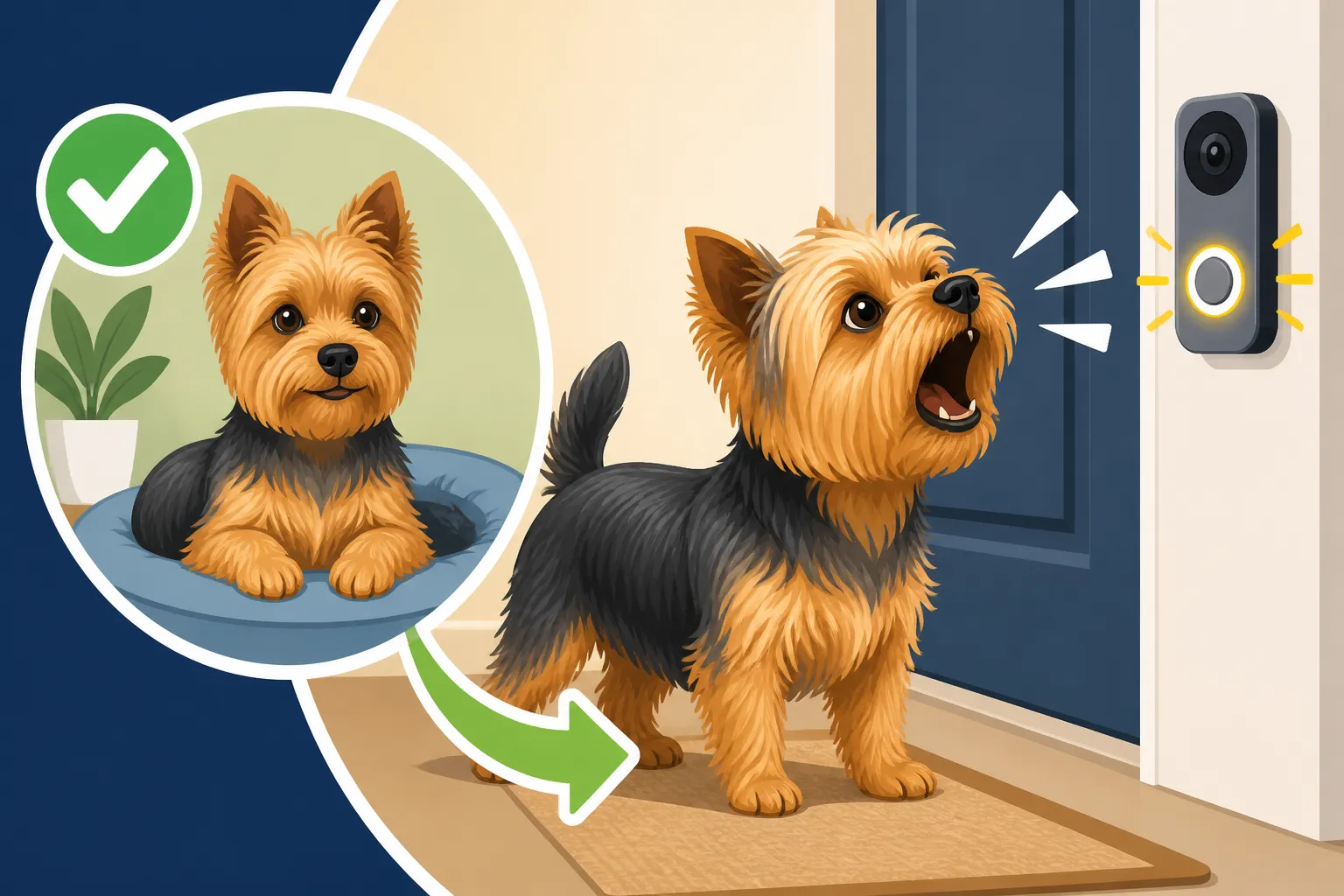
How to Stop a Yorkie from Barking at the Doorbell
The shrill, sudden chime of the doorbell, often followed by your adorable Yorkshire Terrier erupting into a furious, high-pitched barking frenzy, can be one of the most frustrating aspects of owning these spirited little dogs. It’s not just annoying; it can be embarrassing when guests arrive, disrupt quiet moments, and frankly, make you dread any unexpected visitor. This comprehensive guide is designed to help you understand why your Yorkie reacts this way and, more importantly, provide you with actionable, empathetic strategies to teach them a calmer, more appropriate response to the dreaded doorbell.
Understanding Why Your Yorkie Barks at the Doorbell
Before we can even think about changing a behavior, we need to dig deep into the root causes. It’s never as simple as "my dog is just being naughty." There's always a reason, especially with intelligent and sensitive breeds like Yorkshire Terriers. When that doorbell rings, a whole cascade of instincts and learned behaviors is triggered, and for a Yorkie, it's often a very intense experience.
The Territorial Instinct
Yorkies, despite their diminutive size, have the heart of a lion and a strong territorial streak. They were originally bred to be ratters, and that keen awareness of their surroundings and a drive to protect their "den" is deeply ingrained. To your Yorkie, the doorbell isn't just a sound; it's an alarm signalling a potential intruder approaching their territory. They see it as their sworn duty to alert you and, if possible, scare off the perceived threat. This isn't aggression, per se, but rather an instinctual guard dog mentality.
Think about it from their perspective: a loud noise, then a presence at their door. Their natural response is to sound the alarm. For many Yorkies, this isn't just a gentle woof; it's a full-on, sustained vocal protest. It’s their way of saying, "Hey! Someone's here, and I'm letting them know this is my house!" This instinct can be particularly strong if your Yorkie doesn't get a lot of exposure to new people or experiences, reinforcing their belief that every visitor is a potential threat to be barked away.
Excitement and Attention-Seeking
Sometimes, the doorbell isn't a threat; it's a precursor to excitement! For some Yorkies, the doorbell means new people, possibly new smells, and definitely new attention. If every time the doorbell rings and your Yorkie barks, they get a reaction from you – whether it's scolding, picking them up, or even just looking at them – they've learned that barking gets your attention. Even negative attention is attention, and for a dog craving interaction, that can be a powerful motivator.
Consider a scenario where the mail carrier comes, your Yorkie barks furiously, and you rush to the door, perhaps to calm them or to retrieve the mail. In your Yorkie's mind, they "successfully" barked the "intruder" away, and you even came to reinforce their good work. This creates a positive feedback loop: doorbell, bark, human reacts, "threat" leaves, success! This can be a tough cycle to break because the behavior is deeply ingrained as both effective and rewarding. It's not malicious; it's simply a dog learning how to get what they want or what they perceive as their job.
Lack of Socialization or Fear
For other Yorkies, the doorbell, and the subsequent arrival of a stranger, can be genuinely frightening. If your Yorkie wasn't properly socialized as a puppy, or if they've had negative experiences with strangers, that doorbell can trigger anxiety or fear. Their barking isn't an act of bravery or territorialism, but rather an attempt to make the scary thing go away. A fearful bark often sounds more high-pitched, desperate, or continuous than a purely territorial bark.
A lack of exposure to different sights, sounds, and people during their critical puppy development stages can lead to a dog who finds new situations overwhelming. For these sensitive souls, the doorbell means an unpredictable, potentially scary event is about to unfold. They might also exhibit other signs of fear, such as tucking their tail, hiding, or even submissive urination, alongside the barking. Understanding if fear is the underlying cause is crucial, as the training approach will need to be particularly gentle and focused on building confidence. This is where understanding Yorkshire Terrier Behavior Problems and Solutions can really help you identify the specific drivers behind your Yorkie's reactions.
Foundational Training Techniques to Curb Doorbell Barking
Once you understand the 'why,' you can start to implement effective training strategies. The key here is consistency, patience, and positive reinforcement. Remember, you're not trying to punish your Yorkie for barking, but rather to teach them a new, more appropriate way to respond. Think of it as teaching them a different job when the doorbell rings, rather than taking away their only coping mechanism.
Desensitization and Counter-Conditioning
This is a powerful technique for addressing fear and over-excitement. Desensitization means gradually exposing your Yorkie to the doorbell sound at a level where they don't react, and then slowly increasing the intensity. Counter-conditioning means changing their emotional response to the doorbell from negative (fear, excitement) to positive (calm, happy).
Start by recording your doorbell sound on your phone. Play it back at a very low volume – so low that your Yorkie barely notices it, or certainly doesn't bark. The moment they hear it, immediately reward them with a high-value treat (think small pieces of cooked chicken, cheese, or their favorite Best Treats for Training a Yorkie). Repeat this many times. The goal is for your Yorkie to associate the sound of the doorbell with something wonderful happening. Slowly, very slowly, increase the volume over days or even weeks, always pairing the sound with a reward before they have a chance to bark. If they bark, the volume is too high, and you need to dial it back. This teaches them that the doorbell means good things, not scary things or things to bark at.
Teaching an Alternative Behavior
Instead of barking, what do you want your Yorkie to do? The best approach is to teach them a mutually exclusive behavior that they cannot do while barking. A common choice is to go to a designated "place" – like their bed or a mat – and lie down. This gives them a clear, calm alternative.
Start by practicing the "place" command independently of the doorbell. Lure your Yorkie onto their mat or bed with a treat, say "Place," and reward them when they settle. Practice this many times a day until they can reliably go to their place and stay there for increasing durations. Once they’ve mastered "place," you can start combining it with the doorbell sound. Play the doorbell at a low volume, and immediately cue them to "Place." When they go to their spot and settle, reward them heavily. If they start to bark, you've moved too fast. This technique is often incorporated into broader How to Train a Yorkshire Terrier programs.
Management Strategies and Tools
While you're working on training, management is crucial to prevent the barking behavior from being reinforced. Every time your Yorkie barks at the doorbell and gets to do so, the behavior becomes stronger.
- Doorbell Replacement: Consider temporarily replacing your traditional doorbell with a smart doorbell that has a silent mode, or simply unplugging it. Ask visitors to text you when they arrive. This removes the trigger while you train. Some smart doorbells, like those found on Amazon, even allow you to customize the chime or just send a notification to your phone.
- Physical Barriers: Use baby gates or a crate to keep your Yorkie in a separate, sound-dampened room when you anticipate visitors. This physically prevents them from rushing to the door. Make sure their "safe space" is comfortable and includes toys or chew items to keep them occupied. If you’re considering crate training, our guide on How to Crate Train a Yorkie offers great tips.
- Noise Masking: Play calming music or white noise to help mask the sound of the doorbell or approaching footsteps. This can reduce the intensity of the trigger for sensitive Yorkies.
- On-Leash Management: When you know someone is coming and you need to answer the door, have your Yorkie on a leash. This gives you more control and allows you to guide them to their "place" or away from the door effectively, preventing them from charging. A good quality harness, like those recommended for Yorkies, provides gentle control without putting pressure on their delicate neck.
| Strategy Type | Description | Best For | Example Tool/Action |
|---|---|---|---|
| Desensitization | Gradually exposing your Yorkie to the trigger (doorbell sound) at low intensity. | Fearful or over-reactive Yorkies. | Playing recorded doorbell sounds, slowly increasing volume. |
| Counter-Conditioning | Pairing the trigger with something positive (treats, praise). | Changing emotional response to the doorbell. | Giving high-value treats every time doorbell is heard. |
| Alternative Behavior | Teaching a different, incompatible action instead of barking. | Redirecting energy and providing a clear role. | "Go to place" command with a dog bed. |
| Management | Preventing the unwanted behavior from occurring or being reinforced. | Immediate relief during training, preventing setbacks. | Silent doorbell, baby gates, distracting toys. |
Step-by-Step Training Plan for Doorbell Manners
Now that you have the foundational techniques down, let’s put it all together into a structured plan. Remember, consistency is your most important tool here. Every member of the household needs to be on the same page.
Phase 1: Controlled Exposure
This phase focuses on practicing the desensitization and counter-conditioning without any real-world pressure. It’s all about creating positive associations with the doorbell sound in a low-stress environment.
First, set up your practice space. This could be your living room, or wherever your Yorkie usually hangs out. Have a bowl of incredibly high-value treats ready – something your Yorkie absolutely loves and only gets during special training sessions. Get your phone ready with the recorded doorbell sound, or have a friend standing by the actual doorbell, ready to press it on command. Start by having your friend press the doorbell very softly – almost imperceptibly, or play your recording at the lowest possible volume. The instant your Yorkie hears it (and ideally before they even think about barking), say "Yes!" or use a clicker, and immediately give them a treat. Repeat this about 10-15 times. If your Yorkie barks at any point, the sound is too loud. You must reduce the volume back to a level where they don't bark. The goal is to build a strong, positive association where "doorbell sound equals yummy treat." Do short sessions, 2-3 times a day.
Once your Yorkie consistently hears the low-volume doorbell and looks at you expectantly for a treat, you can gradually increase the volume. Emphasize gradual. We're talking about tiny increments over several days or even weeks. Continue to reward them every single time they hear the doorbell and don't bark, always aiming to deliver the treat before any barking begins. This slow, steady progress helps rewire their brain to see the doorbell as a signal for good things, rather than a cue for alarm.
Phase 2: Introducing the "Quiet" Command
Once your Yorkie is showing less reactivity to the doorbell sound in a controlled setting, you can start layering in an obedience command like "Quiet" or "Place." This gives them a clear, positive alternative behavior. Our guide on How to Teach a Yorkie to Quiet can be a great resource here.
Continue with your controlled doorbell sound practice, but now, before your Yorkie has a chance to bark at a slightly louder sound, cue them to their "place" (their bed or mat) with a treat lure. When they go to their place, immediately reward them. Practice this until they reliably go to their place when they hear the doorbell sound, before they bark. If they do bark, don't scold them. Simply reset, make the doorbell sound softer, and try again, luring them to their place quicker. This is about teaching them a new default behavior.
For some Yorkies, barking might be too ingrained to prevent initially. If your Yorkie does bark, let them bark a couple of times, then calmly say "Quiet." The moment they stop barking for even a second, immediately reward them. Don't wait for total silence, just a pause. Gradually increase the duration of silence you require before giving the treat. This teaches them that silence, not barking, gets them rewarded. You can also use this "Quiet" command more broadly, as explored in How to Reduce Yorkie Barking with Training. Online training platforms like BAXTER & Bella offer structured programs that can guide you through these steps with video tutorials and expert support, which can be invaluable for consistent application.
Phase 3: Real-World Application and Consistency
This is where the rubber meets the road. You’ve practiced, you’ve taught a new behavior, now it’s time to apply it to real-life situations. This phase requires constant vigilance and the cooperation of anyone who comes to your home.
Start with staged arrivals. Ask a friend or family member to come to your door. Before they ring the doorbell, get your Yorkie on a leash (a harness is best for preventing injury to their delicate trachea, which is prone to issues like Yorkshire Terrier Collapsing Trachea: Signs and Care) and ready with high-value treats. As your friend rings the bell (start with a soft ring), immediately cue your Yorkie to "Place" and reward them heavily when they comply and remain quiet. If they bark, calmly redirect them, or have your friend step away and try again with a softer ring. Once they are quiet and in their place, have your friend enter, but ignore your Yorkie initially. Once your Yorkie is calm, then your friend can give them a calm greeting. This teaches your Yorkie that the doorbell and guest arrival lead to calm behavior and eventual positive interaction.
The most critical aspect of this phase is consistency. Every single person who interacts with your Yorkie around the doorbell must follow the same rules. If one person allows the barking or gives attention while barking, you’ll undo all your hard work. Consider putting a sign on your door for delivery drivers: "Please knock instead of ringing!" or "Text when you arrive." This is a long-term commitment. Don't expect perfection overnight. With dedication, your Yorkie will eventually learn to associate the doorbell with calm, rewarding behavior rather than frantic barking.
Common Pitfalls and Troubleshooting
Training a Yorkie, especially when it comes to ingrained behaviors like barking, can be challenging. It's easy to get frustrated, but understanding common pitfalls can help you navigate them more effectively. Remember, your Yorkie isn't trying to be difficult; they're just doing what they've learned works or what their instincts tell them to do.
Inconsistency and Frustration
One of the biggest obstacles trainers face is inconsistency. It’s natural to feel frustrated when your Yorkie seems to regress, barking loudly after a period of improvement. This often happens because the training isn't being applied uniformly. If sometimes you react by yelling or chasing them, and other times you try to implement the training, your Yorkie gets mixed signals. They learn that sometimes barking works to get your attention or scare off the "intruder," so they keep trying.
To combat this, ensure every household member understands and follows the training plan precisely. Use the same commands, the same rewards, and the same reaction (or non-reaction) to barking. For instance, if your partner accidentally coos at your Yorkie while they're barking at the mail carrier, that's a small setback. It reinforces the idea that barking gets attention. Keep training sessions short and positive to prevent your frustration from escalating. If you feel yourself getting annoyed, take a break. A calm trainer is a more effective trainer. Remember that Yorkie Training Mistakes to Avoid often boil down to a lack of consistency.
Dealing with Stubborn Yorkies
Yorkies are known for their strong personalities and can sometimes be perceived as stubborn. If your Yorkie isn't responding as quickly as you'd like, it doesn't mean they're untrainable; it just means you might need to adjust your approach or be even more patient. Some Yorkies might be highly motivated by food, others by a favorite toy or praise. Experiment with different high-value rewards to find what truly excites your dog.
If your Yorkie is particularly persistent with barking, you might need to lean more heavily on the management strategies. For example, if they absolutely cannot be silent when the doorbell rings, ensure they are crated in another room with a puzzle toy before guests arrive. This prevents them from practicing the unwanted behavior, which is crucial for breaking the habit. You can then gradually reintroduce the doorbell training once their default reaction has been reset in calmer environments. For those deeply entrenched behaviors, professional help might be warranted, which we’ll discuss next.
When to Seek Professional Help
While many doorbell barking issues can be resolved with consistent home training, there are times when seeking professional help is the best course of action. If your Yorkie's barking is accompanied by other concerning behaviors, such as aggression towards visitors, extreme fear (shaking, hiding, urinating), or if the barking is so constant and intense that it’s causing significant stress for you and your dog, a certified professional dog trainer or a veterinary behaviorist can provide invaluable assistance.
A professional can observe your Yorkie's behavior in person, identify subtle cues you might be missing, and tailor a training plan specifically for your dog's unique personality and underlying motivations. They can also rule out any medical reasons for excessive barking, as sometimes pain or hearing issues can contribute to behavioral changes. For severe cases, a veterinary behaviorist might even recommend medication to help manage anxiety while you implement behavior modification. Don't view seeking professional help as a failure; view it as an investment in your Yorkie's well-being and your peace of mind. Our guide on When to Take Your Yorkie to the Vet can also help you identify other signs that professional intervention might be needed.
Disclaimer
This article provides general information and recommendations for addressing doorbell barking in Yorkshire Terriers. Every dog is an individual, and results may vary. It is always recommended to consult with a professional veterinarian or certified dog trainer for personalized advice regarding your pet's health and behavior, especially if you observe any signs of distress, aggression, or other concerning symptoms.