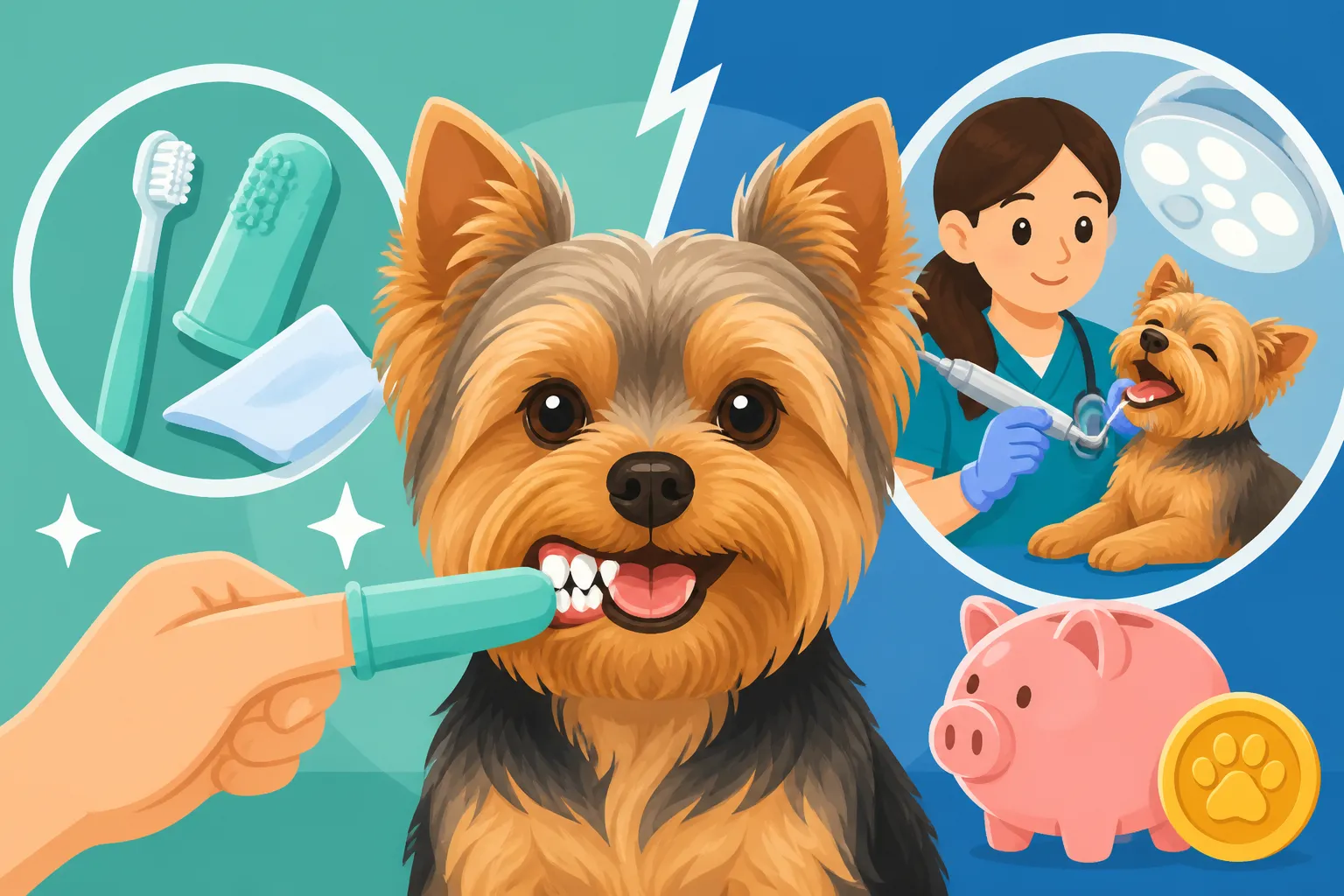
Yorkie Teeth Cleaning: DIY vs Vet Cost
One of the most common and often overlooked health challenges for Yorkshire Terrier owners is dental disease. It's a silent threat that can lead to pain, infection, and even more serious systemic health problems if not addressed. As a Yorkie parent, you've probably wondered about the best way to keep those tiny teeth sparkling – and more importantly, healthy. This guide will walk you through the ins and outs of Yorkie teeth cleaning, exploring both the cost-effective DIY methods you can implement at home and the essential professional care your veterinarian provides, helping you understand the financial and practical aspects of each.
The Realities of Yorkshire Terrier Dental Health
It’s easy to dismiss a little bad breath, but for Yorkies, dental issues are often far more serious than a simple case of "dog breath." Their small mouths and genetics make them particularly susceptible to dental problems, often starting at a surprisingly young age.
Why Yorkies Are Prone to Dental Issues
Yorkshire Terriers, like many small breed dogs, have an inherent predisposition to dental disease. Their mouths are simply not built for the number and size of teeth they possess. Imagine fitting a full set of adult human teeth into a toddler's mouth – that’s pretty much what’s happening with a Yorkie. This leads to overcrowding, where teeth are tightly packed, crooked, or even rotated. When teeth are crammed together, food particles and bacteria have more nooks and crannies to hide in, making it incredibly difficult for even diligent brushing to reach every surface. This perfect storm creates an ideal environment for plaque to accumulate rapidly, hardening into tartar.
Beyond the crowding, Yorkies also tend to have persistent deciduous (baby) teeth. Sometimes, their baby teeth don't fall out when the adult teeth emerge, creating a double row of teeth. This traps more food and debris, accelerating plaque and tartar buildup. If left unaddressed, this accumulation leads to gingivitis (inflammation of the gums) and eventually periodontal disease, which damages the supporting structures of the teeth. This can be quite painful for your little companion and even impact their overall health. For a deeper dive into common health issues, you might find our guide on Yorkshire Terrier Health Problems to Know insightful.
Signs Your Yorkie Needs Dental Attention
Recognizing the signs of dental trouble early is absolutely crucial for your Yorkie's well-being. It's not always obvious, as dogs are masters at hiding pain, especially when it comes to their mouths. However, if you know what to look for, you can catch problems before they become severe.
The most common and noticeable sign is persistent bad breath. While no dog has minty-fresh breath, a truly foul, pungent odor often indicates a bacterial infection in the mouth. Another strong indicator is visible tartar buildup on the teeth, which appears as a brown or yellowish crust, particularly on the molars and canines. Red, swollen, or bleeding gums (gingivitis) are also clear signs of inflammation. You might notice your Yorkie's gums receding, exposing the tooth roots, or even small bumps or abscesses near the gum line.
Behavioral changes can also signal dental pain. Your Yorkie might start showing a reluctance to eat hard kibble or chews, preferring softer foods. They might chew on one side of their mouth, drop food, or even rub their face with their paws or against furniture. Some Yorkies become less playful or more withdrawn due to discomfort. You might also notice excessive drooling, sometimes with blood, or a discolored discharge. If you see any of these signs, it's a good indication that your Yorkie needs professional dental attention. Don't wait until the problem is severe; early intervention can save your dog from significant pain and prevent more costly and complicated treatments down the road.
DIY Dental Care for Your Yorkie: What You Can Do at Home
While professional cleanings are essential, the bulk of your Yorkie's dental health maintenance happens right at home. Daily, proactive DIY care can significantly reduce the frequency and severity of needing expensive vet procedures, and it's a wonderful way to bond with your tiny companion.
Daily Brushing Techniques and Tools
Brushing your Yorkie's teeth daily is, without a doubt, the single most effective way to prevent plaque and tartar buildup. It might sound daunting, especially with a wiggly Yorkie, but with patience and the right approach, it becomes a routine they can tolerate, or even enjoy!
First, choose the right tools. You'll need a dog-specific toothbrush – these often come as finger brushes or small brushes with angled heads designed to fit into tiny mouths. Never use human toothpaste, as it contains ingredients like xylitol that are toxic to dogs. Instead, opt for an enzymatic dog toothpaste in a flavor your Yorkie loves, like poultry or beef. Brands like Virbac C.E.T. Enzymatic Toothpaste are often recommended by vets. You can find a great selection of these on sites like Chewy.
Start slowly. Introduce the toothpaste by letting your Yorkie lick a tiny bit off your finger. Once they're comfortable with that, put a small amount on the toothbrush and gently rub it on their outer teeth and gums for a few seconds. Don't try to get the inside surfaces immediately; most dental disease occurs on the outer surfaces. Aim for short, positive sessions, gradually increasing the duration each day. Lift their lip to expose the teeth and gums, then use a gentle circular motion, paying extra attention to the back teeth where tartar tends to accumulate fastest. Always follow up with praise and a small, healthy treat. Consistency is key here. It’s better to do a quick 30-second brush daily than a thorough 5-minute brush once a week. This consistent effort is a cornerstone of how to prevent dental disease in Yorkies.
Dental Chews, Water Additives, and Wipes
While brushing is king, other at-home dental care products can provide additional support, especially on days when a full brush isn't feasible, or to help reach areas brushing might miss.
Dental chews are a popular option. Look for chews that are specifically designed to reduce plaque and tartar, often with a V.O.H.C. (Veterinary Oral Health Council) seal of approval. These products have been scientifically proven to be effective. Examples include Greenies, Dentalife, or Tartar Shield dental chews. The abrasive action as your Yorkie chews helps scrape off plaque from the tooth surface. However, always monitor your Yorkie with dental chews to ensure they chew them properly and don't try to swallow large pieces whole, which can be a choking hazard. Also, remember that dental chews are often calorie-dense, so adjust their daily food intake accordingly. You can find a variety of the best dental chews for Yorkies on pet supply sites.
Dental water additives are another convenient option. These are typically liquid solutions you add to your Yorkie's drinking water, and they contain ingredients that help inhibit bacterial growth and reduce plaque formation. While they aren't a substitute for brushing, they can offer a continuous low-level dental benefit. Popular brands include TropiClean Fresh Breath or HealthyMouth.
Finally, dental wipes can be useful for quickly cleaning the outer surfaces of teeth and gums, especially for Yorkies who are resistant to a toothbrush. While less effective than brushing, they can remove superficial plaque and freshen breath. Remember, these supplementary products work best when used in conjunction with regular brushing, not as a complete replacement.
Estimated DIY Costs
The good news about DIY dental care is that it’s generally quite affordable, especially compared to professional cleanings. The initial outlay for tools is minimal, and the recurring costs are manageable.
Here's a breakdown of what you might expect to spend:
- Dog Toothbrush: A set of dog toothbrushes (which often includes finger brushes) typically costs between $5-$15. You might replace these every 3-6 months.
- Enzymatic Dog Toothpaste: A tube of enzymatic dog toothpaste can range from $8-$20 and usually lasts a few months with daily use.
- Dental Chews: Depending on the brand and size, a bag of VOHC-approved dental chews for small dogs might cost $10-$30 per month.
- Dental Water Additive: A bottle of water additive costs $10-$25 and can last anywhere from 1-3 months, depending on the size of the bottle and your dog's water intake.
- Dental Wipes: A container of dental wipes is usually $7-$15 and will last a month or more.
So, for an initial setup, you might spend $20-$40. Monthly recurring costs for brushing supplies and one supplemental product (like chews or an additive) would likely fall in the range of $20-$50. This is a small investment for the significant benefits it provides in preventing pain, infection, and much higher vet bills down the line. It's a key part of how to keep a Yorkshire Terrier healthy.
Professional Veterinary Dental Cleaning: When and Why
Despite your best efforts with at-home care, most Yorkies will eventually need a professional dental cleaning. It’s not a sign of failure; it’s simply a reality of their breed and a crucial component of their overall health regimen.
The Comprehensive Vet Procedure Explained
A professional dental cleaning at your veterinarian's office is far more extensive than anything you can do at home. It's a comprehensive medical procedure performed under general anesthesia, ensuring your Yorkie's safety, comfort, and the thoroughness of the cleaning.
The process typically begins with pre-anesthetic blood work to ensure your Yorkie is healthy enough to undergo anesthesia. Once under anesthesia, your vet will perform a thorough oral exam, charting any issues like broken teeth, gum recession, or missing teeth. This is often followed by full-mouth dental X-rays, which are absolutely critical because much of dental disease happens below the gum line, where it's invisible to the naked eye. X-rays reveal bone loss, abscesses, unerupted teeth, and other hidden problems.
After the examination and X-rays, the vet or veterinary technician will use specialized ultrasonic scalers, similar to what human dentists use, to remove plaque and tartar from above and below the gum line. This is followed by hand scaling to ensure every surface is clean. The teeth are then polished to smooth out any microscopic etches created by scaling, making it harder for new plaque to adhere. If any teeth are severely diseased, fractured, or infected, extractions might be necessary. This is always done with pain management in mind, and your vet will provide appropriate medication. After the procedure, your Yorkie will be monitored closely during recovery, and you'll receive post-operative care instructions, which may include antibiotics or pain medication. This meticulous process ensures not just clean teeth, but a truly healthy mouth.
Understanding the Costs Involved
The cost of a professional dental cleaning can be a significant concern for many pet owners, and it's understandable why. It's not a simple brush-and-go procedure. The price varies widely depending on your geographic location, the specific veterinary clinic, and the severity of your Yorkie's dental disease.
Generally, you can expect a routine professional dental cleaning for a Yorkie without extractions to cost anywhere from $400 to $1,000. This baseline cost typically includes:
- Pre-anesthetic blood work: $80-$200
- Anesthesia and monitoring: $150-$400 (includes IV fluids, monitoring equipment, and technician's time)
- Scaling and polishing: $100-$300
- Dental X-rays: $50-$150 (often charged per film or as a full-mouth series)
However, the cost can escalate significantly if extractions are needed. A single extraction can add $50-$200, and if multiple teeth require removal, or if they are complex extractions (like a fractured molar), the bill can easily reach $1,500 to $3,000 or more. Additional costs might include antibiotics, pain medication, or even specialized procedures if your Yorkie has advanced periodontal disease.
It's wise to get an estimate from your vet beforehand. Many pet insurance providers, like Healthy Paws, offer plans that cover a portion of unexpected veterinary care, including dental procedures for illnesses or accidents, though routine cleanings are often not covered or require a separate wellness rider. Planning for these costs as part of your overall ]Yorkshire Terrier Vet Costs and Health Budget] is crucial.
The Value of Veterinary Expertise
While the cost of professional dental cleaning can be intimidating, the value it provides is immeasurable. There are aspects of dental health that simply cannot be addressed at home, no matter how diligent you are.
Veterinarians and their trained staff possess the expertise to accurately diagnose underlying dental conditions that you might not even know exist. Their use of dental X-rays is a game-changer, revealing hidden problems like root abscesses, bone loss, or impacted teeth that are causing significant pain but show no outward signs. They can perform deep scaling below the gum line, an area critical for preventing and treating periodontal disease, which is impossible to do safely and effectively on an awake animal.
Furthermore, vets are equipped to perform safe anesthesia, continuously monitoring vital signs to minimize risks. If extractions or other surgical interventions are needed, they have the training and tools to perform them correctly, ensuring your Yorkie’s comfort and recovery. Ignoring severe dental disease dueoves can lead to chronic pain, difficulty eating, and even systemic infections that affect organs like the heart, kidneys, and liver. Think of professional dental care as an investment in your Yorkie's long-term health, comfort, and quality of life. Knowing ]When to Take Your Yorkie to the Vet] for dental concerns is a vital part of responsible pet ownership.
Comparing DIY and Professional Dental Care
Navigating your Yorkie's dental health can feel like a balancing act between what you can do at home and what requires professional intervention. Both DIY and vet dental care have their place, and understanding their individual strengths and weaknesses is key to creating a comprehensive plan.
Pros and Cons of Each Approach
Let's break down the advantages and disadvantages of DIY dental care versus professional veterinary cleaning to help you make informed decisions for your furry friend.
| Feature | DIY Dental Care (At Home) | Professional Veterinary Cleaning (At Vet) |
|---|---|---|
| Primary Goal | Preventative maintenance; remove new plaque; freshen breath. | Deep cleaning; remove tartar; diagnose/treat disease; extractions. |
| Effectiveness | Highly effective for preventing plaque buildup; less effective for existing tartar/disease. | Most effective for removing established tartar, addressing periodontal disease, and solving complex issues. |
| Cost | Low ($20-$50/month for supplies). | High ($400-$1000+ per cleaning; much more with extractions). |
| Frequency | Daily brushing, regular use of chews/additives. | Typically every 1-3 years, or as recommended by vet. |
| Anesthesia | Not required. | Essential for safety, thoroughness, and pain management. |
| Tools | Dog toothbrush, toothpaste, dental chews, wipes, additives. | Ultrasonic scalers, hand scalers, polisher, dental X-ray machine, anesthesia monitoring equipment. |
| Skill/Expertise | Requires patience and consistent technique from owner. | Requires veterinary training and specialized equipment. |
| Risk | Minimal, if proper dog-specific products are used. | Anesthesia risks (though modern protocols make them low), cost. |
| Diagnosis | Limited to visible issues. | Comprehensive diagnosis including subgingival and internal tooth problems via X-rays. |
| Treatment | Only superficial cleaning; no treatment for disease. | Treats active periodontal disease, performs extractions, medication. |
Finding the Right Balance for Your Yorkie
The truth is, it's not a matter of choosing one over the other. The best approach to your Yorkie's dental health is a harmonious blend of consistent DIY care and periodic professional veterinary cleanings. Think of it like your own dental hygiene: you brush and floss daily, but you still visit your dentist for regular check-ups and cleanings.
For your Yorkie, daily brushing is your primary defense. It’s the frontline warrior against plaque buildup and the most impactful thing you can do to extend the time between professional cleanings. Supplements like dental chews (again, VOHC-approved ones!), water additives, and even specialized dental diets (some brands, like Hill's Prescription Diet t/d, are formulated for dental health) can add extra layers of protection.
However, even with the most dedicated home care, plaque will inevitably mineralize into tartar in hard-to-reach areas, especially below the gum line. And that's where your vet comes in. Regular dental check-ups, ideally during your Yorkie's annual wellness exams, allow your veterinarian to monitor their oral health and recommend a professional cleaning when necessary. For many Yorkies, this might mean a cleaning every one to three years, depending on their individual genetics, diet, and how effective your home care truly is. For older Yorkies, a ]Yorkshire Terrier Senior Care Guide] will often emphasize the increasing importance of dental health.
By embracing both DIY and professional dental care, you're not just preventing bad breath; you're actively safeguarding your Yorkie from pain, infection, and potential systemic health issues, ensuring they live a happier, healthier life by your side.
Disclaimer
This article provides general information and is not a substitute for professional veterinary advice. Always consult with a qualified veterinarian for any health concerns or before making decisions about your pet's medical care or diet. Individual results for dental care can vary.